



by Redazione 28/08/2026



Categories: Exhibitions / Disclaimer
From September 25 to November 15, 2026, the Istituto Centrale per la Grafica in Rome will present “Capricci romani,” an exhibition of works on paper and cardboard by Adrian Ghenie dedicated to the city’s landscape, ruins, and memory.
From September 25 to November 15, 2026, Palazzo Poli, homeof the Istituto Centrale per la Grafica in Rome, will host *Capricci romani*, an exhibition dedicated to Adrian Ghenie (b. 1977, Baia Mare, Romania). The project, conceived by Alessandra Borghese, is sponsored by the Ghenie Chapels Foundation – Patronage for the Arts and the Istituto Centrale per la Grafica, and is curated by Fabio De Chirico and Pier Paolo Pancotto. The exhibition brings together previously unseen works on paper and cardboard created specifically for the project and centered on the artist’s relationship with Rome, its landscape, and its memory.
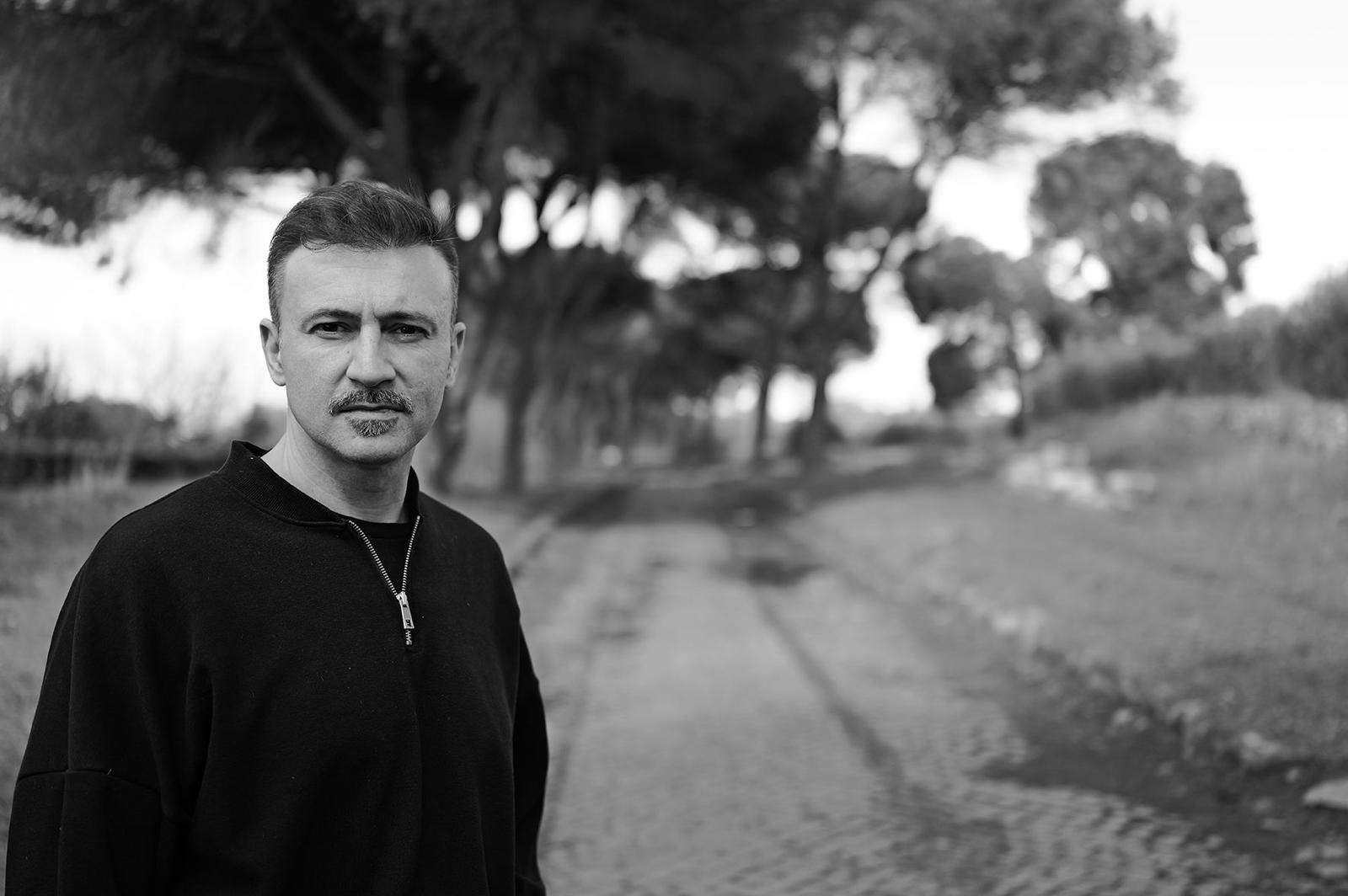
Ghenie also lives and works in the capital, where she has her own studio along the Via Appia. The context in which she works—marked by the presence of aqueducts, ancient ruins, and the Roman countryside alongside the contemporary city—serves as the starting point for an exploration of the invented landscape. The work engages with a long lineage in European art history, ranging from the idealized and classical landscapes of the 17th century to subsequent Romantic and modern interpretations of nature and ruins.


In particular, the artist draws on the tradition of the “capriccio” and the legacy of Giovanni Battista Piranesi—a genre in which real and imaginary elements are juxtaposed to construct recognizable scenes without being strictly descriptive. Rome is thus used as a source of memory and reinvention, simultaneously a real place and a mental space. The encounter with classical beauty and Roman culture creates a short circuit between past and present: the goal is not to nostalgically revive the ancient canon, but to transform it into a contemporary language. The “Roman Capricci” take shape precisely from this tension, offering a personal and ironic reinterpretation of the genre.
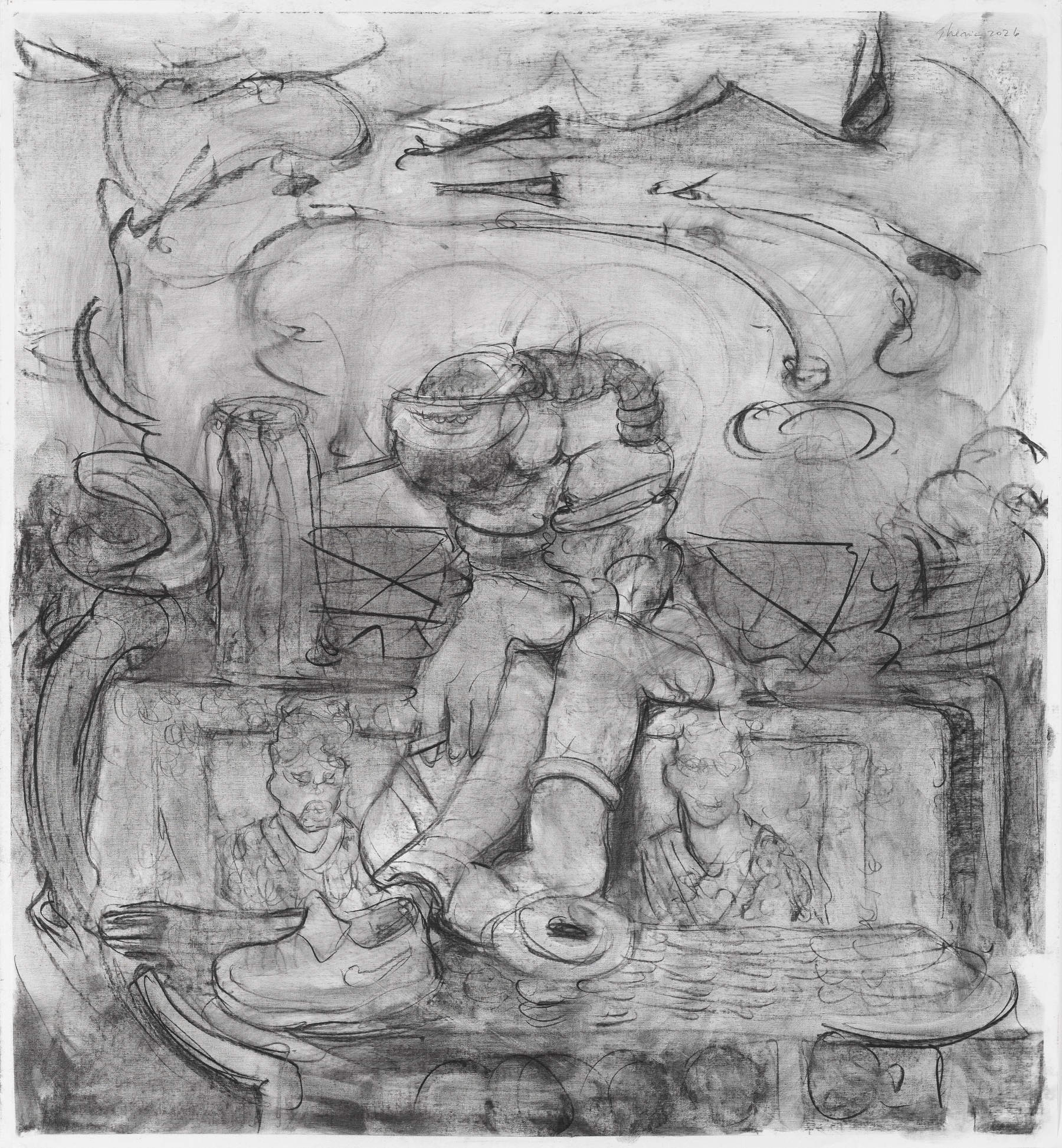
Ruins, too, play a central role. In a contemporary world characterized by technology and the ceaseless production of images, they become for Ghenie a sort of memento mori: traces of a bygone era that continue to challenge the present. The drawings are populated by invented architectures, ancient fragments, and fantastical apparitions; the artist himself sometimes appears in the works as the protagonist and guide on an imaginary journey through the city.
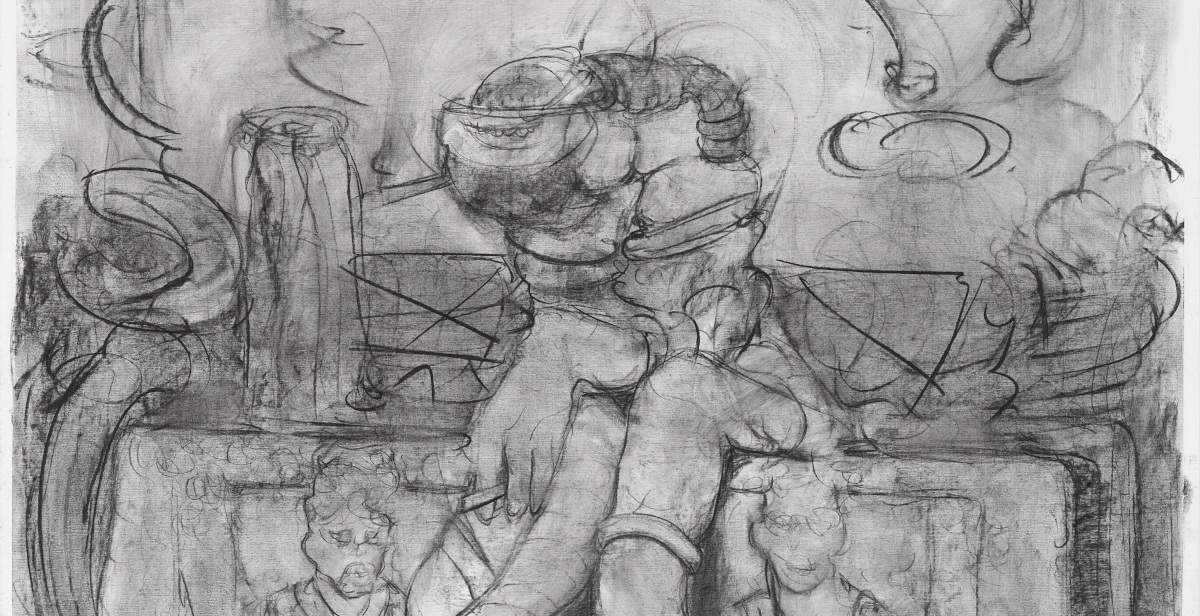
“Rome and its landscape have become, for Adrian Ghenie, a territory of observation and exploration: from the Via Appia, which he travels daily, to the ruins, to the Roman countryside, all the way to those fragments of the ancient city that enter his imagination to be transformed into something new,” says Alessandra Borghese, president of the Ghenie Chapels – Patronage for the Arts Foundation. “His work thus engages with a long tradition of European landscape art: one need only think of the idealized, classical landscapes of the 17th century by Nicolas Poussin and Claude Lorrain, right up to the picturesque and melancholic Romanticism of Jean-Baptiste Camille Corot. The works on paper and cardboard, created primarily in charcoal through erasures and continuous revisions, also attest to the extraordinary quality of her drawing and lend them an almost painterly density. This artistic journey also led to an artist-in-residence program at the historic print shop of the Istituto Centrale per la Grafica, where Ghenie worked with engravers Fabio Ascenzi and Matteo Maria Borsoi on the creation of a new etching: a work that will be presented in the exhibition and subsequently added to the Institute’s permanent collections.”
The new work is derived from a detail of the large painting created by Ghenie in the Church of the Madonna della Mazza in Palermo, dedicated to the martyrdom of Father Pino Puglisi. The residency at the printmaking studio also provided an opportunity to engage with the history and techniques of printmaking, translating the artist’s exploration into a work created through etching and a dry-line drawing with charcoal.
*Capricci romani* is part of the research, conservation, and promotion activities of the Istituto Centrale per la Grafica, which is dedicated to the study of graphic heritage and, in particular, the iconography of Rome and its surrounding area. Its collections include the world’s most important collection of intaglio printing plates, with nearly 24,000 metal and wood plates, approximately 45,000 historical prints, and collections of particular significance, including the Piranesi Collection and the Barberini Collection. This heritage documents the construction and transformation of the city’s image across the centuries.
In recent years, the Institute has also developed several projects dedicated to the representation of Rome, building on the exhibition *Roma veduta: Panoramic Drawings and Prints of the City from the 5th to the 19th Century*, curated by M. Gori Sassoli in 2000. Among the most recent exhibitions are *Regina Viarum: The Appian Way in Prints from the 16th to the 20th Century*, curated by Gabriella Bocconi and held in 2023–2024, and *Maarten van Heemskerck and the Charm of Rome: Visual Journeys Through the Eternal City, curated by Tatjana Bartsch, Rita Bernini, and Giorgio Marini in 2026. Adrian Ghenie’s exhibition fits into this context as a further reflection on the transformations of Rome’s image and on the ways in which the city is observed, interpreted, and reinvented by contemporary artists.
Statements
“When I walk along the Via Appia, I notice the details of a stone bearing an ancient inscription; I study it and think about how I might represent it,” says Adrian Ghenie. “I often look at it in wonder, and with the desire to understand how I might incorporate it into a work of contemporary art—far removed from any notion of classical, hedonistic, or museum-bound Roman culture. For me, it’s a mystery.”
“With *Capricci romani*, the Istituto Centrale per la Grafica renews its mission as a place where the knowledge and preservation of cultural heritage engage in dialogue with contemporary artistic research,” states Fabio De Chirico, director of the Istituto Centrale per la Grafica. “Adrian Ghenie engages with Rome, with its memory, and with a visual tradition that finds one of its most significant points of reference in the Institute’s collections and in the work of Piranesi. Of particular importance was the opportunity to welcome the artist to our printmaking workshop, where his collaboration with the Institute’s printmakers led to the creation of a new etching that will become part of the ICG’s collections. This achievement fully embodies the Institute’s mission: to preserve and study the history of graphic arts and, at the same time, to help shape its present.”
Notes on the Artist
Born in Baia Mare, Romania, in 1977, Adrian Ghenie currently divides his time between Rome and Berlin. In 2015, he represented Romania at the 56th Venice Biennale. Among his most recent exhibition projects are solo shows at Galerie Judin in Berlin in 2025 and 2021, at the Albertina Museum in Vienna and the Kupferstich-Kabinett in Dresden in 2024, at the Tim Van Laere Gallery in Antwerp in 2023 and 2020, and at the State Hermitage Museum in St. Petersburg and Palazzo Cini in Venice in 2019.
In 2022, two site-specific paintings created by the artist were permanently installed in the historic Church of the Madonna della Mazza in Palermo, as part of an independent project curated by Alessandra Borghese. Ghenie’s artistic exploration is not limited to painting. The artist has also developed installations conceived according to the “room-within-a-room” model, such as *The Dada Room* (2010), now part of the permanent collection of the S.M.A.K. in Ghent, and *The Darwin Room* (2013–2014), held in the collection of the Centre Pompidou.
Throughout her career, she has also presented solo exhibitions at Villa Medici in Rome in 2017, at CAC Málaga in Spain in 2014, at the Museum of Contemporary Art in Denver in 2012, at the Stedelijk Museum voor Actuele Kunst in Ghent in 2010, and at the National Museum of Contemporary Art in Bucharest in 2009. She has also participated in numerous group exhibitions, including those organized by the Tim Van Laere Gallery in Antwerp in 2016, 2019, and 2020; by the Centre Pompidou in Paris and the Fondation Vincent van Gogh in Arles in 2016; by the San Francisco Museum of Modern Art in 2012; by Palazzo Grassi in 2011; and by Tate Liverpool in 2008.
Ghenie’s works are now part of several international public collections, including those of the Centre Pompidou in Paris, the Tate in London, the San Francisco Museum of Modern Art, and the Long Museum in Shanghai.
 |
| Adrian Ghenie views Rome through a whimsical lens: previously unseen works on display at Palazzo Poli |
Warning: the translation into English of the original Italian article was created using automatic tools. We undertake to review all articles, but we do not guarantee the total absence of inaccuracies in the translation due to the program. You can find the original by clicking on the ITA button. If you find any mistake,please contact us.