





When snow covers a landscape, it seems to take away rather than add: it erases details, softens colors, alters distances, and makes it harder to distinguish what belongs to observation from what arises from perception. It is above all in this uncertain territory, between precision and suspension, that one can recognize the painting of Alessio Nebbia (Castello d’Annone, 1896 – Cuneo, 1975), a Piedmontese artist who, for most of his life, viewed the mountains as a subject to be understood in its most concrete aspects and, at the same time, to be transformed into a poetic experience. The Pirra Art Gallery in Turin is dedicating the exhibition *Incanti* to him, a show that brings together 24 oil paintings and offers a reinterpretation of his artistic practice through the theme of landscape. The exhibition opens on Friday, October 23, at 5 p.m. and will remain open through November 29, 2026, while the accompanying catalog helps reconstruct the figure of a reclusive artist, deeply connected to 20th-century Alpine culture and capable of combining painting with a highly distinctive technical background.
Nebbia was born in Castello d’Annone, near Asti, on February 9, 1896, and found his way to the mountains through a path that initially did not seem destined for painting. In Turin, he attended the School of Arts and Crafts, but he lacked the financial means to devote himself to artistic studies as he would have liked; he therefore found work as a mechanical draftsman, while continuing to cultivate his interest in art on his own by visiting exhibitions and museums. Meanwhile, he began to experience the mountains firsthand. He joined the mountaineering association Giovane Montagna and participated in excursions organized by the Turin, Ivrea, and Aosta chapters. In those years, the association brought together young people passionate about mountaineering and the mountain environment, including Pier Giorgio Frassati, Natale Reviglio, Renato Chabod, and Abbot Joseph Henry. For Nebbia, however, this connection to the mountains was not merely a sporting or recreational interest: it gradually helped shape his personal and artistic path.
In 1925, dissatisfied with his work as a mechanic and by then convinced of the importance the mountains had come to hold in his life, he left Turin and moved to Courmayeur. There he would build an essential part of his artistic practice, developing a knowledge of the region that preceded and accompanied his maturation as a painter. His technical training initially played a decisive role: before painting came to occupy the center of his work, Nebbia devoted himself to photography and to depicting the great Alpine massifs through maps and models characterized by remarkable precision. Among other works, he created an orthorama of the Mont Blanc range and models of the Matterhorn, Monte Rosa, Mont Blanc, and the entire Aosta Valley. However, these were not merely technical exercises: his interest in the geography of the region led him to study and describe the characteristics of mountain landscapes, as evidenced by several articles published in the magazine *Giovane Montagna*, dedicated to Rocciamelone and Valtournenche. Even before painting the mountains, Nebbia had thus developed an analytical way of observing them: understanding their structure, measuring their forms, and comprehending their conformation.
In Courmayeur, this pursuit also took on a professional dimension: in 1926, Nebbia opened the Bottega d’Arte Alpina on the main street, near the pharmacy; it was a shop catering to tourists, hikers, and mountaineers, offering photographs, guidebooks, maps, models, and materials useful for exploring the area. The Bottega d’Arte Alpina thus became the hallmark of his work depicting Alpine landscapes, initially focused on Mont Blanc and later expanded to include the Matterhorn and Monte Rosa. The growth of the Cervinia ski resort also offered new opportunities for his work: beginning in 1938, Nebbia worked as a photographer under the name “Foto Cervino” in what was then the town center, next to the shop run by Leo Gasperl and near the historic chapel.
It is significant that painting did not come to occupy the central role in his work until the 1940s: by that point, Nebbia was able to draw upon a knowledge of the landscape —gained through mountaineering, photography, cartography, and the construction of scale models—to serve his artistic expression. His painting, therefore, did not stem from a casual glance at the mountains, but from a deep familiarity with their forms.
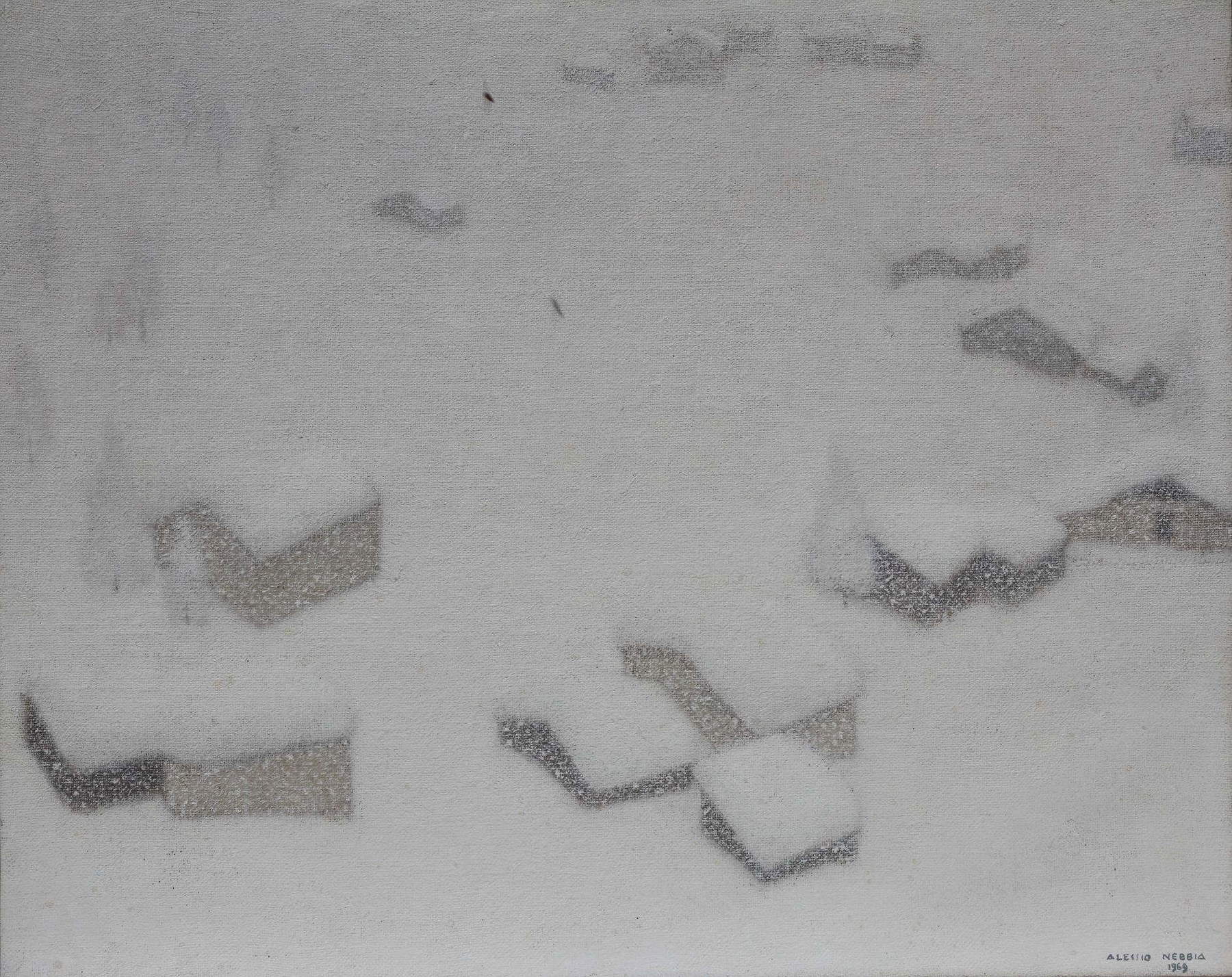
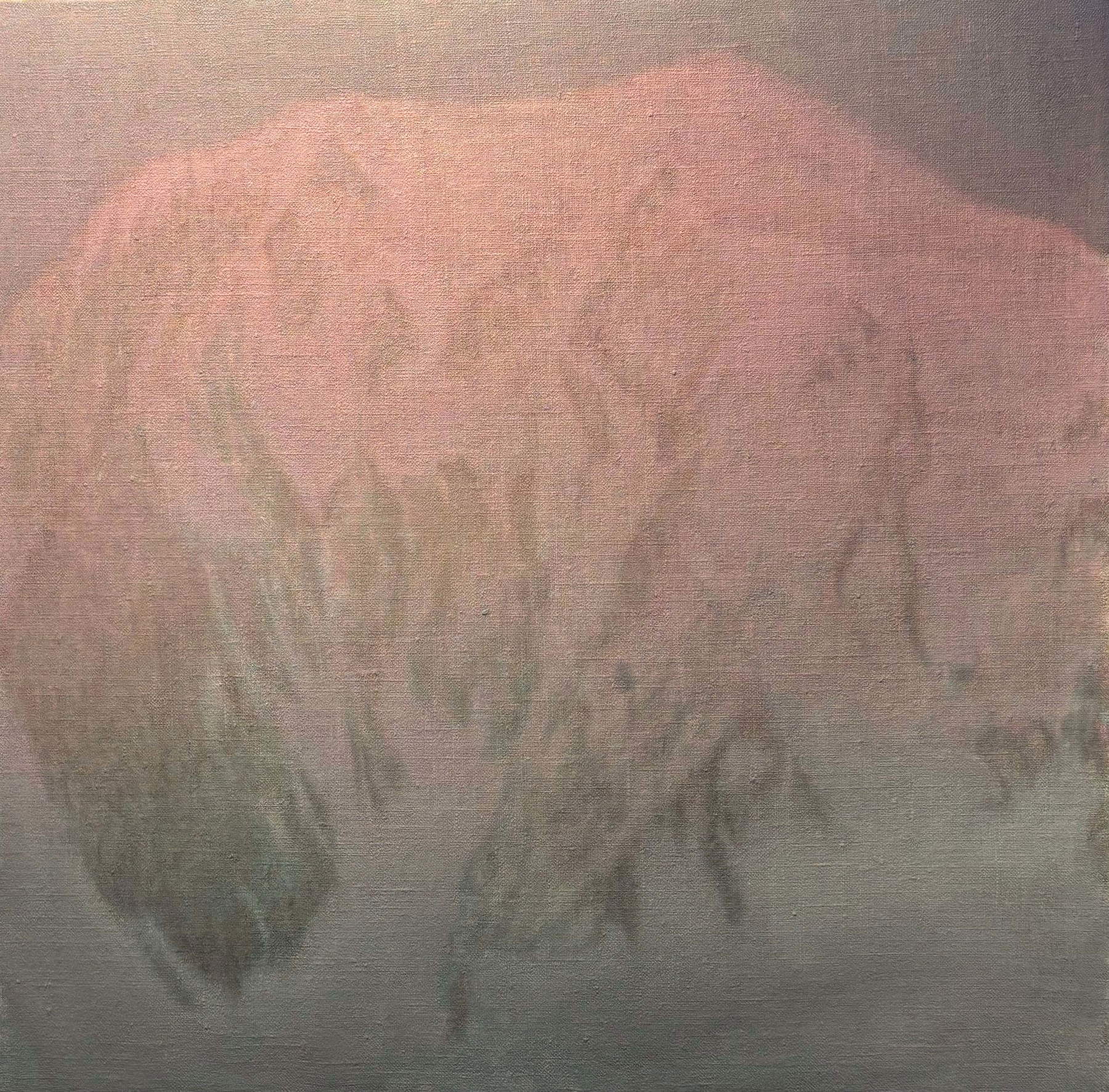
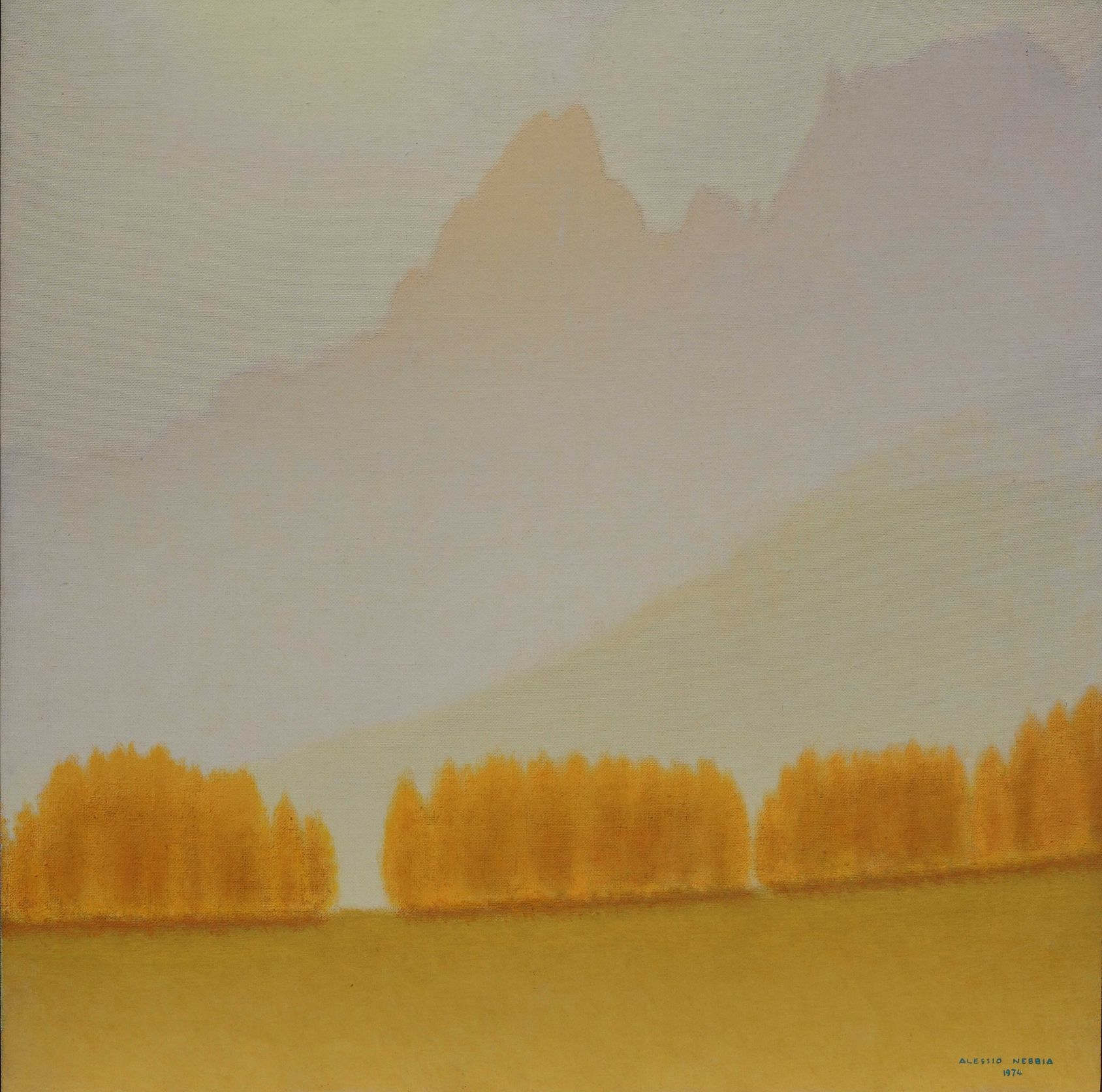
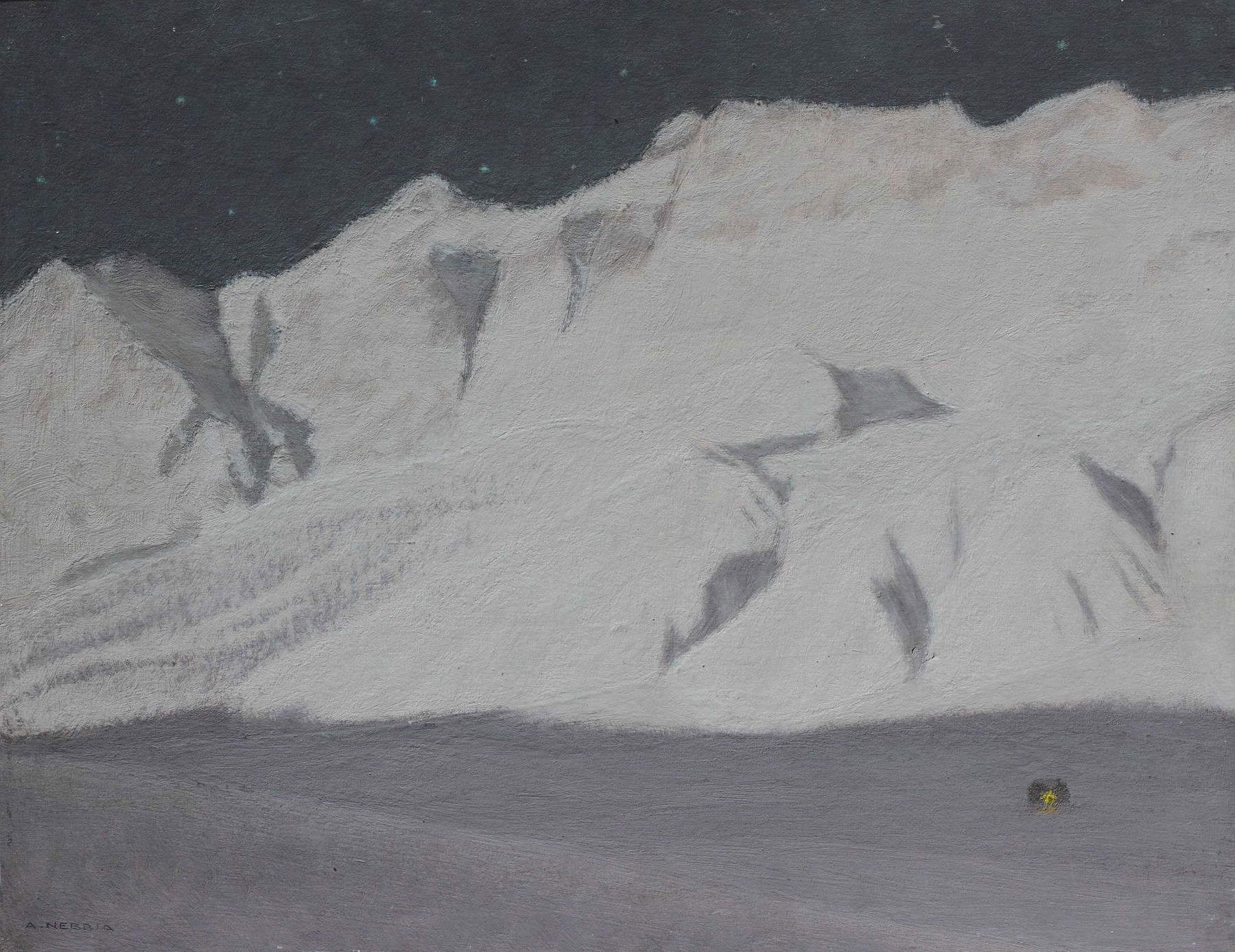
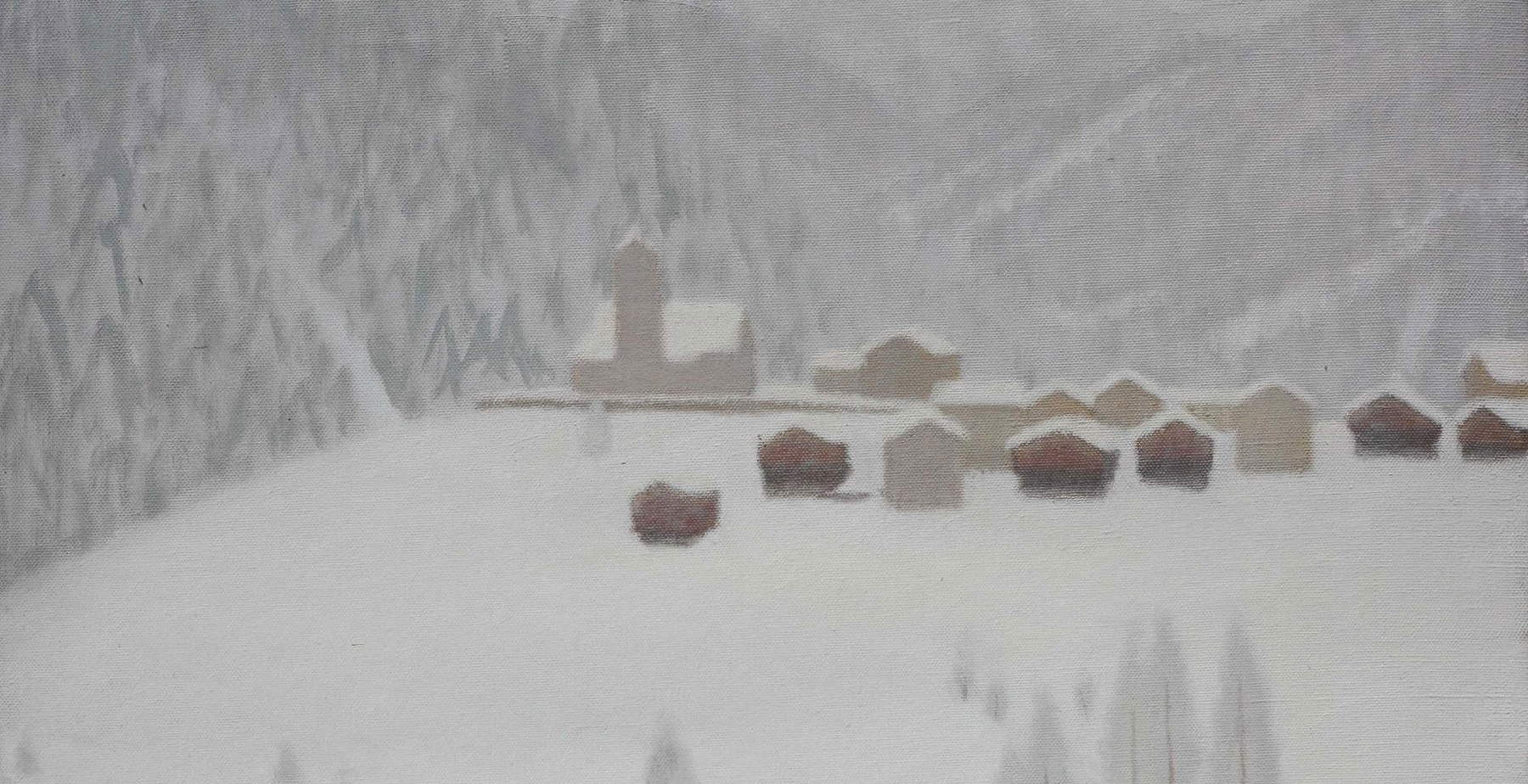
His training as a painter was influenced by the work of several artists active in Piedmont in the early 20th century, from Cesare Maggi to Giuseppe Bozzalla, from Mario Reviglione to Felice Vellan, and another important influence was Giovanni Segantini. In Nebbia, however, his observation of the landscape remained tied to a particular demand for precision—a trait he also inherited from his previous technical work—which did not, however, translate into a simple naturalistic reproduction. It is precisely in the gap between description and interpretation that one finds one of the most characteristic elements of his painting: the precision with which Nebbia renders the landscape does not, in fact, seem to have as its sole objective the faithful reproduction of its appearance. Rather, technique becomes the tool through which reality is progressively transformed into a more ethereal image, especially in snow-covered landscapes. Works such as *After the Snowfall* and *Snowfall in Valmalenco* demonstrate this way of looking at the mountains: the snow alters the relationship between forms, softens contrasts, and introduces a sense of suspension into the scene. The natural elements remain recognizable, but their precision does not fully capture what the painting seeks to convey. The landscape seems to go beyond a mere recording of reality and take on an almost metaphysical character.
This element also emerges in the paintings dedicated to high-altitude mountains, such as *Notturno*, *Alba sul Monte Bianco*, and *Cervino*. These are works in which the painterly texture, the muted colors, and the balance of the composition combine to create a contemplative atmosphere. The mountain, therefore, is not merely the subject depicted: it becomes the setting through which Nebbia can engage with a more intimate dimension of the landscape. The title *Incanti* refers precisely to this ability of painting to shift the perception of the landscape from mere observation toward an evocative dimension. The technique remains evident, as does a precise knowledge of the territory, but the result is not a documentary view. In the transition from reality to image, the landscape takes on a different quality, in which description and poetry remain inseparable.
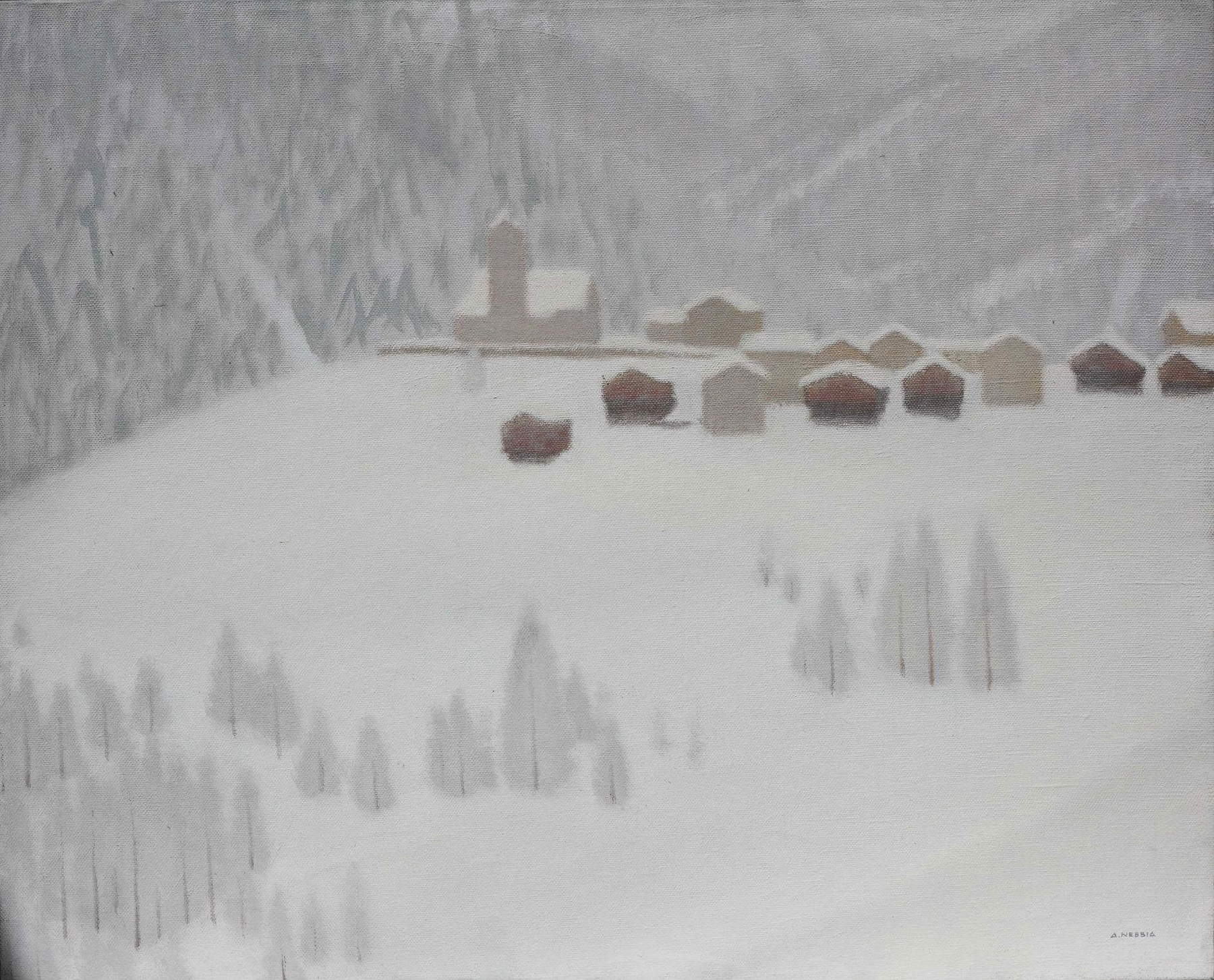
The mountains were undoubtedly Nebbia’s preferred subject, but not his only one. Throughout his career, the artist also explored watery landscapes—from the Cinque Terre to Ischia and Ponza, all the way to Lake Geneva—as well as the hills of Piedmont. The variety of locations, however, did not alter the hierarchy of his interests: the mountains, observed in their various aspects—from villages to high peaks and from winter landscapes to views of the great massifs—remained the focus of his artistic exploration. The themeof water, however, also offers a useful insight into the breadth of his conception of landscape: Nebbia was not, in fact, interested exclusively in the monumentality of the Alpine peaks. Seascapes and lake views reveal his attention to environments in which the relationship between space, atmosphere, and light takes on different characteristics. His predilection for the mountains, however, remains the aspect that most profoundly defines his artistic identity.
In the postwar period, Courmayeur also became a meeting place for other painters. Nebbia often painted alongside artists of diverse backgrounds and experience, including the Swiss painter Jean Hurzeler and Ange Abrate, who was of French origin and later became a naturalized French citizen. For a time, they were also joined by the Dominican friar Angelico Pistarino, a painter from Turin. His interaction with these artists took place within an environment where the mountains represented not only the subject of their paintings but also the actual setting in which the artists worked.
Nebbia’s first exhibition was held in Courmayeur in 194; following that show, his works began to attract the attention of critics and gallery owners, and his exhibition activity continued in the years that followed. Solo exhibitions became particularly frequent starting in the 1960s. Among the notable events in his exhibition history are those held in Aosta in 1952, 1962, 1979, and 1982. Nebbia’s story is thus that of an artist who turned to painting after having developed an understanding of the landscape through various mediums. And his painterly precision can also be understood in light of this background: the landscape is observed with the attention of one who knows its structure, yet rendered with the sensitivity of one who recognizes something that goes beyond visible form. It is this combination that distinguishes the paintings in which the mountain appears snow-covered or bathed in the light of dawn and dusk: far from the spectacular effect of the Alpine vista, Nebbia tends to reduce visual clutter and construct images in which silence seems to become part of the composition. The muted colors and soft texture contribute to this impression, as does the balance with which the elements of the landscape are arranged.
The exhibition at the Pirra Art Gallery focuses primarily on this aspect of his work, featuring 24 oil paintings. The exhibition allows visitors to rediscover the main themes of his artistic exploration and, above all, to observe how descriptive precision coexists with a gradual poetic transformation of reality. Nebbia spent his final years in Cuneo, where he died on October 18, 1975. Fifty-one years after his passing, *Incanti* once again turns its attention to a painter deeply connected to the Alpine landscape and 20th-century mountain culture, presenting a selection of works in which the technical and poetic dimensions remain closely intertwined.
 |
| Alessio Nebbia: A 20th-Century Mountain Painter Rediscovered in Turin |

Warning: the translation into English of the original Italian article was created using automatic tools. We undertake to review all articles, but we do not guarantee the total absence of inaccuracies in the translation due to the program. You can find the original by clicking on the ITA button. If you find any mistake,please contact us.






















 IT
IT FR
FR DE
DE ES
ES CN
CN


