




by Redazione 13/10/2026



Categories: Exhibitions / Disclaimer
The Gypsotheca Antonio Canova Museum in Possagno is presenting an exhibition on the funerary monument that the sculptor designed for Admiral Horatio Nelson but never completed.


A monument that was never completed, one of Britain’s most celebrated national heroes, and the creative process of one of the greatest sculptors of the Neoclassical period. Antonio Canova and his ambitious project to honor British Admiral Horatio Nelson are the focus of the exhibition *A Grand and Immortal Work*, scheduled from November 1, 2026, to April 25, 2027, at the Museo Gypsotheca Antonio Canova in Possagno, in the province of Treviso.


Conceived and curated by Paolo Mariuz, the exhibition traces the development of the funerary monument dedicated to Nelson (1758–1805), the famous Royal Navy commander and hero of the British victory at Trafalgar. Although the work was never completed, the project kept Canova intensely occupied between 1806 and 1808, giving rise to a series of studies, drawings, and experiments that today allow us to gain deeper insight into his working method and his conception of modern heroism.
The exhibition’s title draws on the words used by the poet and musicologist Giuseppe Carpani in a letter addressed to Canova in 1806, in which he announced the imminent commission of a monument intended to celebrate the British admiral. This account serves as the starting point for an exploration that reveals the complexity of a project that remained on paper and in its preparatory models, yet is rich in artistic and cultural significance.




The exhibition does not merely document the various stages of the monument’s conception; it also offers a reflection on how Canova interpreted the figure of the contemporary hero, relating it to classical, epic, and mythological traditions. In his vision, the protagonists of modern history could be elevated to the stature of the great heroes of antiquity, while the figures of mythology came back to life through the events of the present.
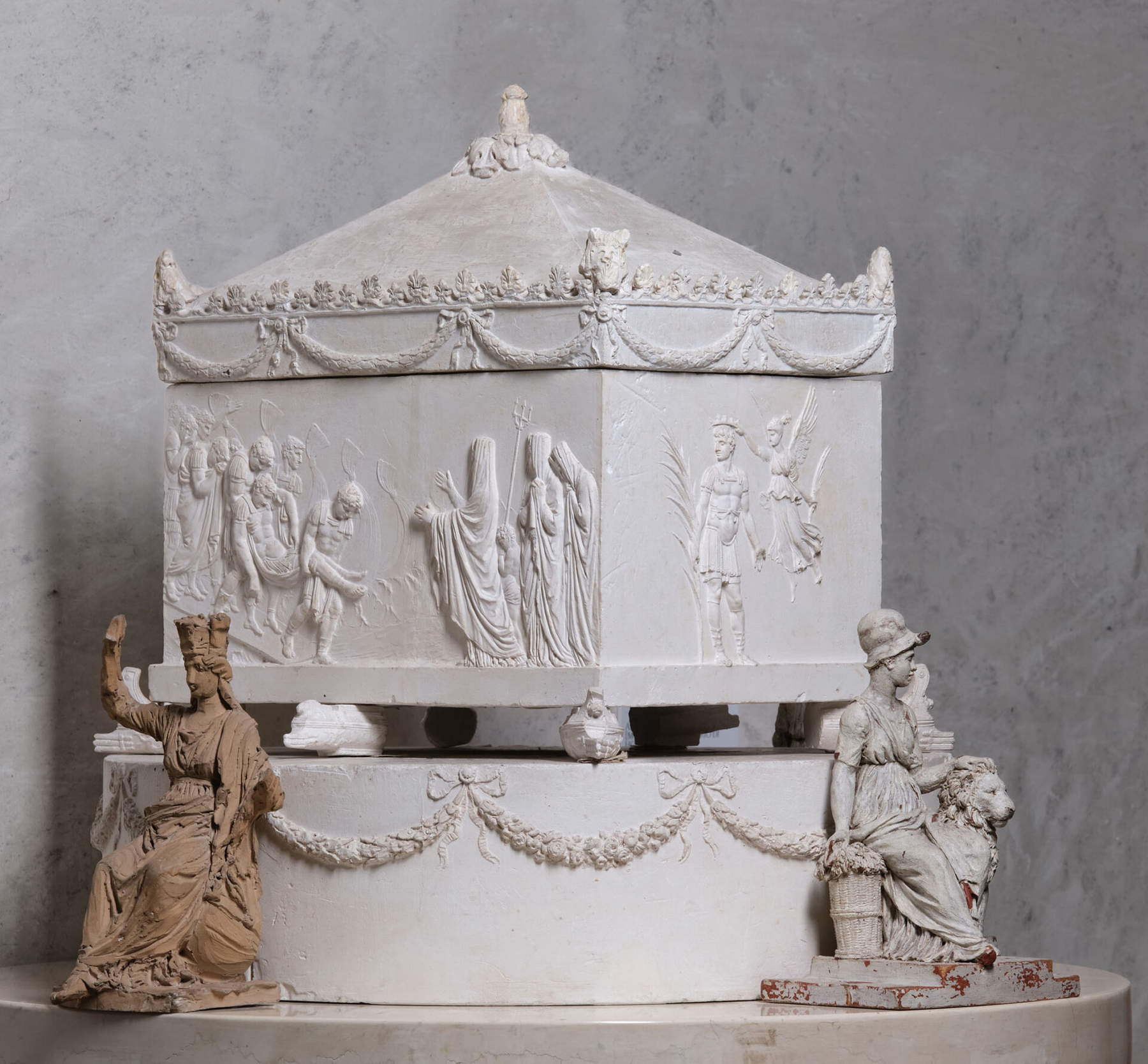
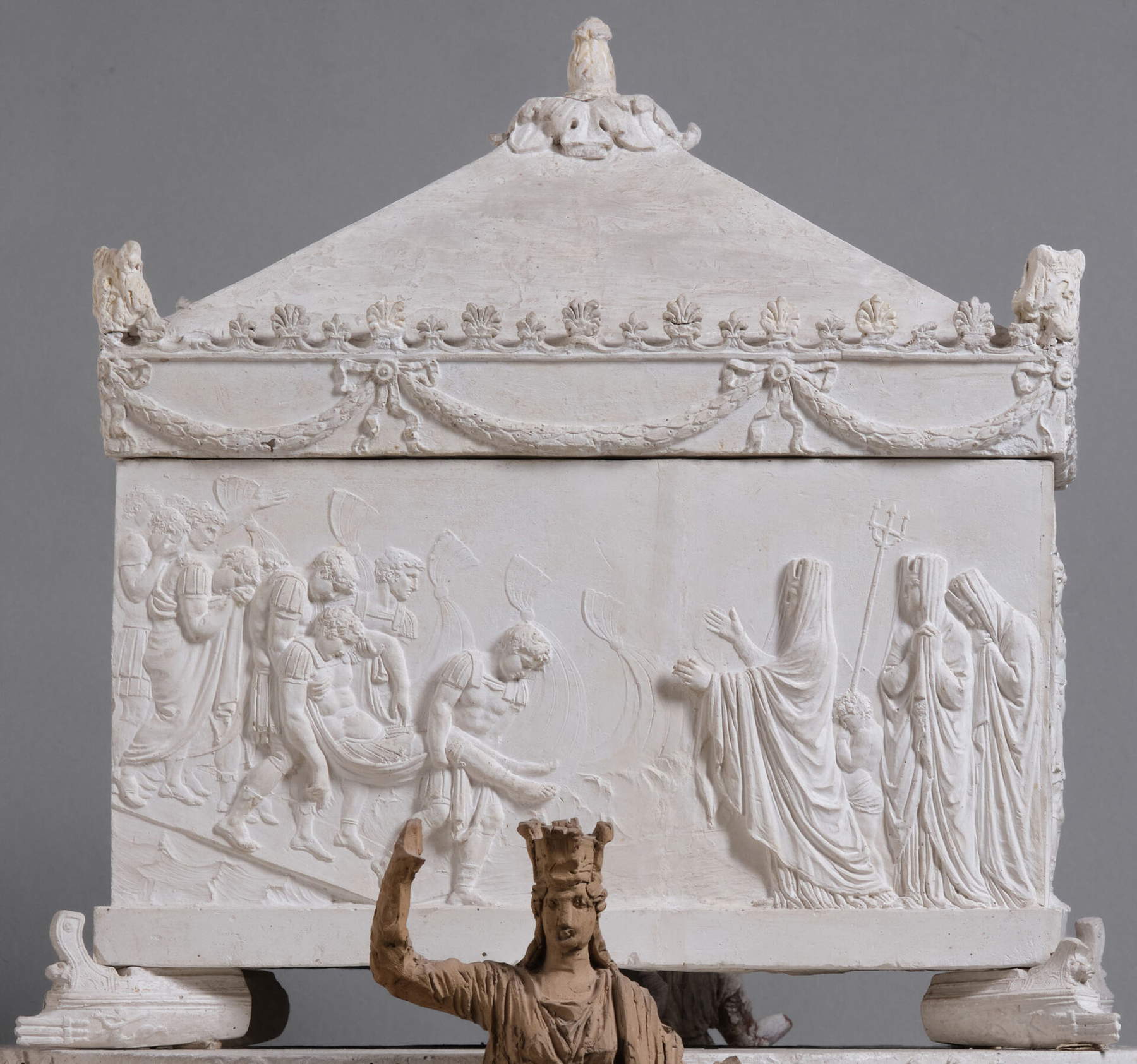
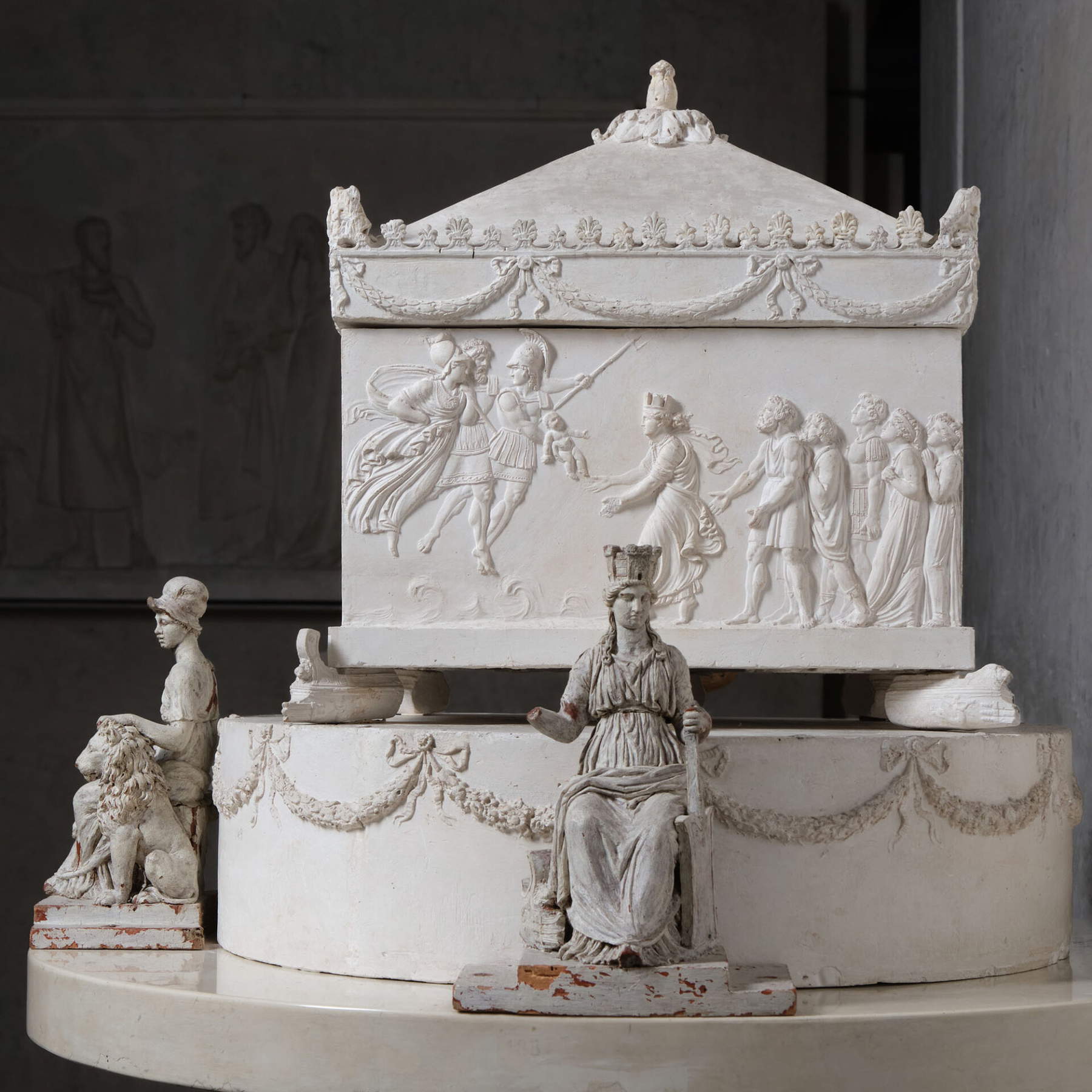
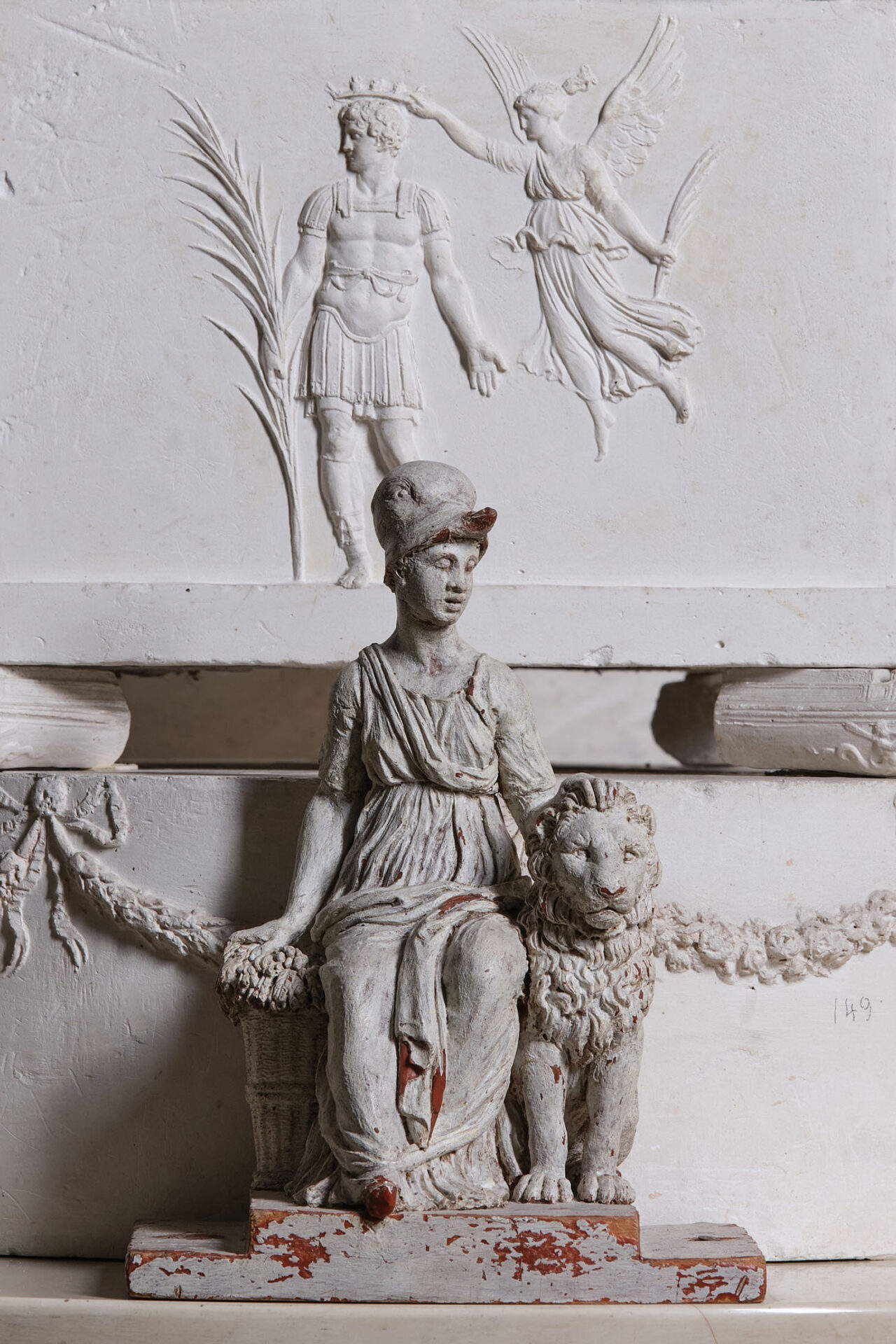
The exhibition begins with the drawings, which are fundamental records of the artist’s initial ideas and the starting point for the creation of his sculptures. Through these preparatory studies, visitors can trace the evolution of the monumental concept, from the earliest compositional solutions to the gradual refinement of the forms. Next is the plaster model of the monument, featuring the personifications of the continents—an element that helps define the universal dimension attributed to the figure of Nelson.
A central role is also given to the monochrome drawings illustrating the bas-reliefs conceived for the various sides of the sarcophagus: The Birth of the Hero, The Landing of the Casket, and The Glorification. Housed in the municipal collections of Bassano del Grappa and Venice, these works document the transition from the pictorial conception to the subsequent sculptural and engraving realization of the project. By comparing drawings, models, and representations of the reliefs, the exhibition offers insight into how Canova developed his creative concepts, testing solutions and details before arriving at the final definition of the forms.
Among the exhibition’s most significant new features is the first-ever public presentation of a small plaster bas-relief recently discovered in the Gypsotheca’s storage facilities. The work depicts Minerva, Neptune, and Mars presenting the infant hero to England and constitutes new evidence of Canova’s design for the Nelson monument. At the base of the relief is an inscription that clarifies its function and unfulfilled destiny: “Bas-relief from the model for the Monument to Admiral Nelson / never executed. By Antonio Canova.” The bas-relief was restored specifically for the exhibition by Passarella Restauri, making it possible to display it as part of the section dedicated to the work’s genesis.
Another group of particular interest consists of three red wax models on slate from the Museum’s collection, depicting The Birth, The Landing of the Body, and The Glorification of Nelson. Though small in size, these works are characterized by extremely refined modeling, allowing visitors to observe up close the moment when artistic invention translates into details and formal solutions. The three wax sculptures are being presented following a major conservation restoration project, carried out to address the fragility of the material, cracks, flaking, and surface deposits that were compromising their preservation. The work was carried out by Passarella Restauri under the supervision of the Superintendence of Archaeology, Fine Arts, and Landscape for the Provinces of Padua, Treviso, and Belluno. The public also played an important role, having been involved through a crowdfunding campaign promoted by the Museum in collaboration with Italia Patria della Bellezza. The campaign raised 5,550 euros thanks to more than seventy donations.
The final section of the exhibition explores the cultural context in which Canova conceived the monument between 1806 and 1808. A selection of works, drawings, and engravings highlights the formal and conceptual links between the representation of ancient heroes and that of protagonists of contemporary history. In the design for Nelson, the British admiral is placed within a symbolic dimension that transcends the celebration of a single historical figure. The reference to mythological tradition becomes a means of attributing universal significance to his figure, in accordance with a vision in which the present engages in a continuous dialogue with classical antiquity.
The exhibition is open to the public Tuesday through Friday from 9:30 a.m. to 6:00 p.m.; Saturday and Sunday from 9:30 a.m. to 7:00 p.m. Closed on Mondays. Guided tours of the exhibition, beginning Sunday, November 1, will be held every Sunday at 4:30 p.m.
|
| Canova and the Unbuilt Monument to Nelson: An Exhibition in Possagno Reconstructs the Creative Process |
Warning: the translation into English of the original Italian article was created using automatic tools. We undertake to review all articles, but we do not guarantee the total absence of inaccuracies in the translation due to the program. You can find the original by clicking on the ITA button. If you find any mistake,please contact us.