



by Redazione 22/07/2026



Categories: Exhibitions / Disclaimer
From July 22 to October 18, 2026, Castel Sant’Angelo will host “Herculaneum: The Art of Living,” an exhibition dedicated to the city near Vesuvius, featuring over 70 archaeological artifacts, many of which come from the storage facilities of the Herculaneum Archaeological Park and are being displayed to the public for the first time.
From July 22 to October 18, 2026 , Castel Sant’Angelo will host “Herculaneum: The Art of Living,” an exhibition dedicated to exploring daily life in the ancient Vesuvian city preservedby the eruption of Vesuvius in 79 A.D. The exhibition features artifacts from the storage facilities of the Herculaneum Archaeological Park, many of which are rarely displayed to the public, offering a journey that reconstructs the customs, habits, and practices of the Herculanean community through everyday objects, food, furnishings, and exceptionally well-preserved material evidence.
The exhibition is curated by Massimo Osanna, Head of the Department of Cultural Activities at the Ministry of Culture; Federica Colaiacomo, director of the Herculaneum Archaeological Park; Luca Mercuri, Director of the Pantheon and Castel Sant’Angelo Institute—National Museums of the City of Rome, and Francesco Sirano, Director of the National Archaeological Museum of Naples. The project stems from a collaboration between Castel Sant’Angelo and the Herculaneum Archaeological Park and builds upon the exhibition *From Eggs to Apples. The Culture of Food and the Pleasures of the Table in Antiquity, on display in the frescoed rooms of Villa Campolieto in Herculaneum. For the monumental spaces of the Mole Adriana, the project has been completely reimagined and expanded, broadening the narrative from food to the entire experience of daily life in the Roman city.


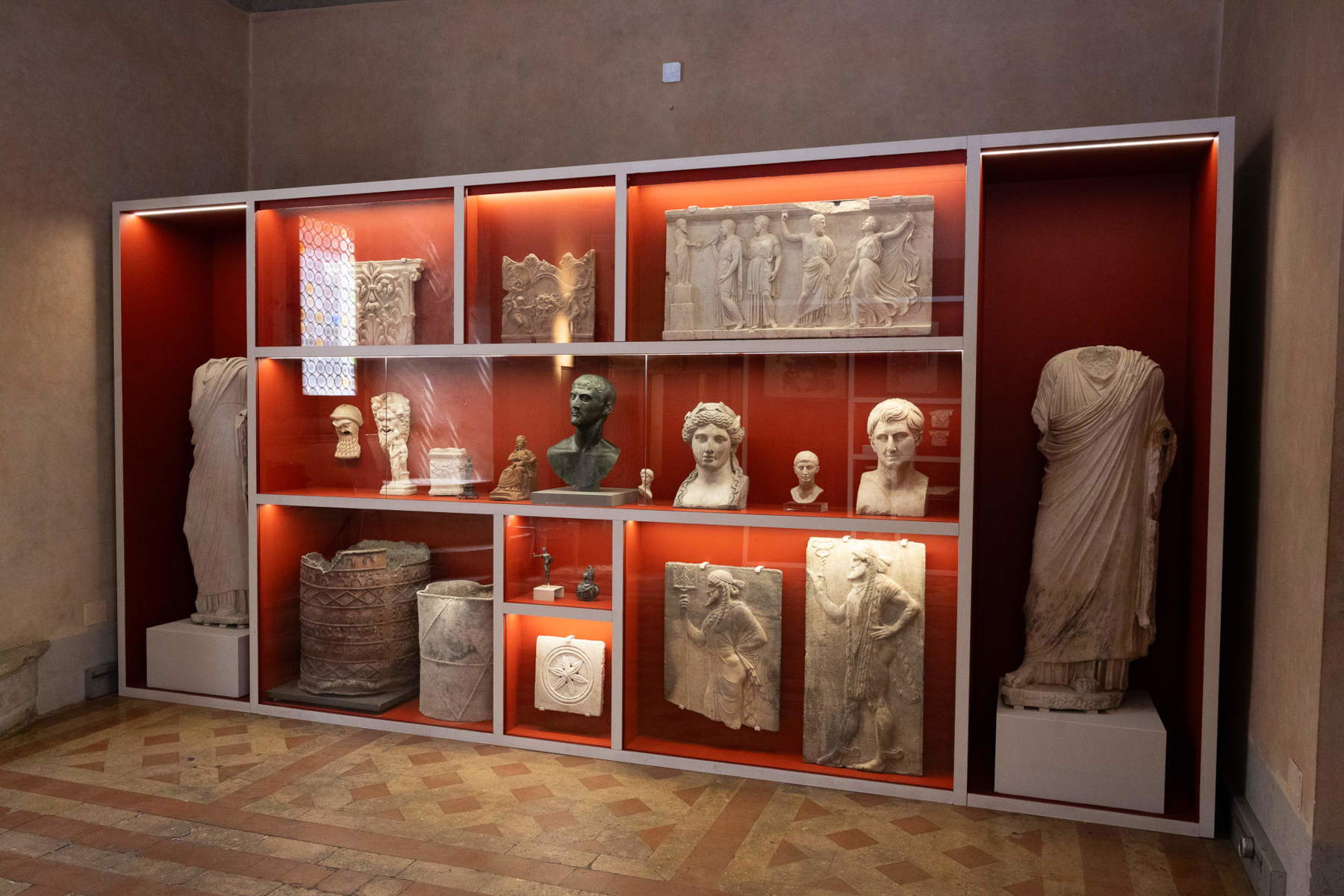
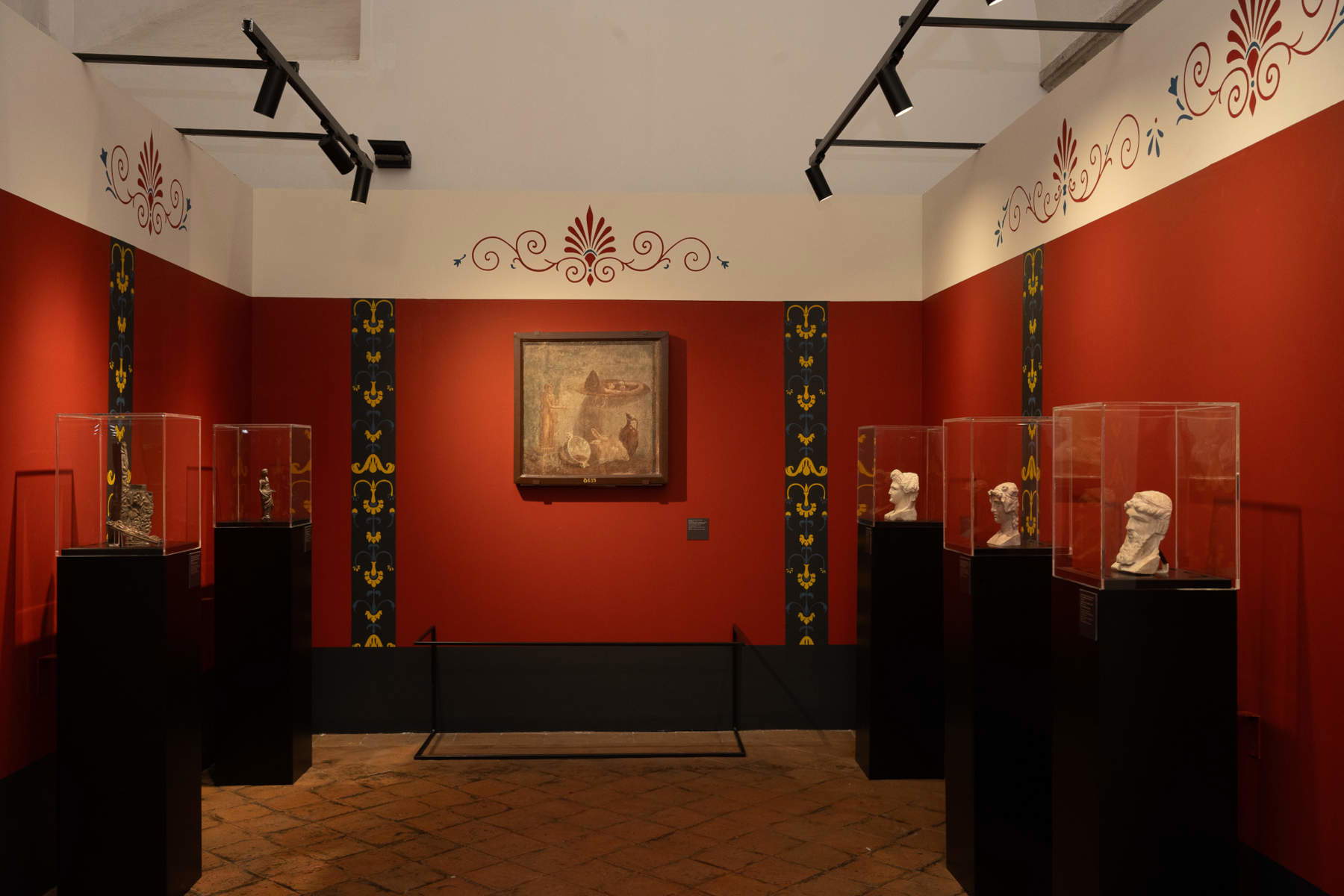
The exhibition is divided into seven sections and brings together over 70 archaeological artifacts, many of which have until now been stored in the Archaeological Park’s vaults and are being presented to the public for the first time on this occasion. The exhibition begins with a Wunderkammer—a chamber of wonders inspired by Renaissance collections—featuring 42 particularly valuable artifacts, including statues, busts, frescoes, jewelry, and everyday objects. Together, these artifacts offer a glimpse into the quality of life, artistic production, and cultural level achieved by Herculaneum shortly before its destruction by Mount Vesuvius.
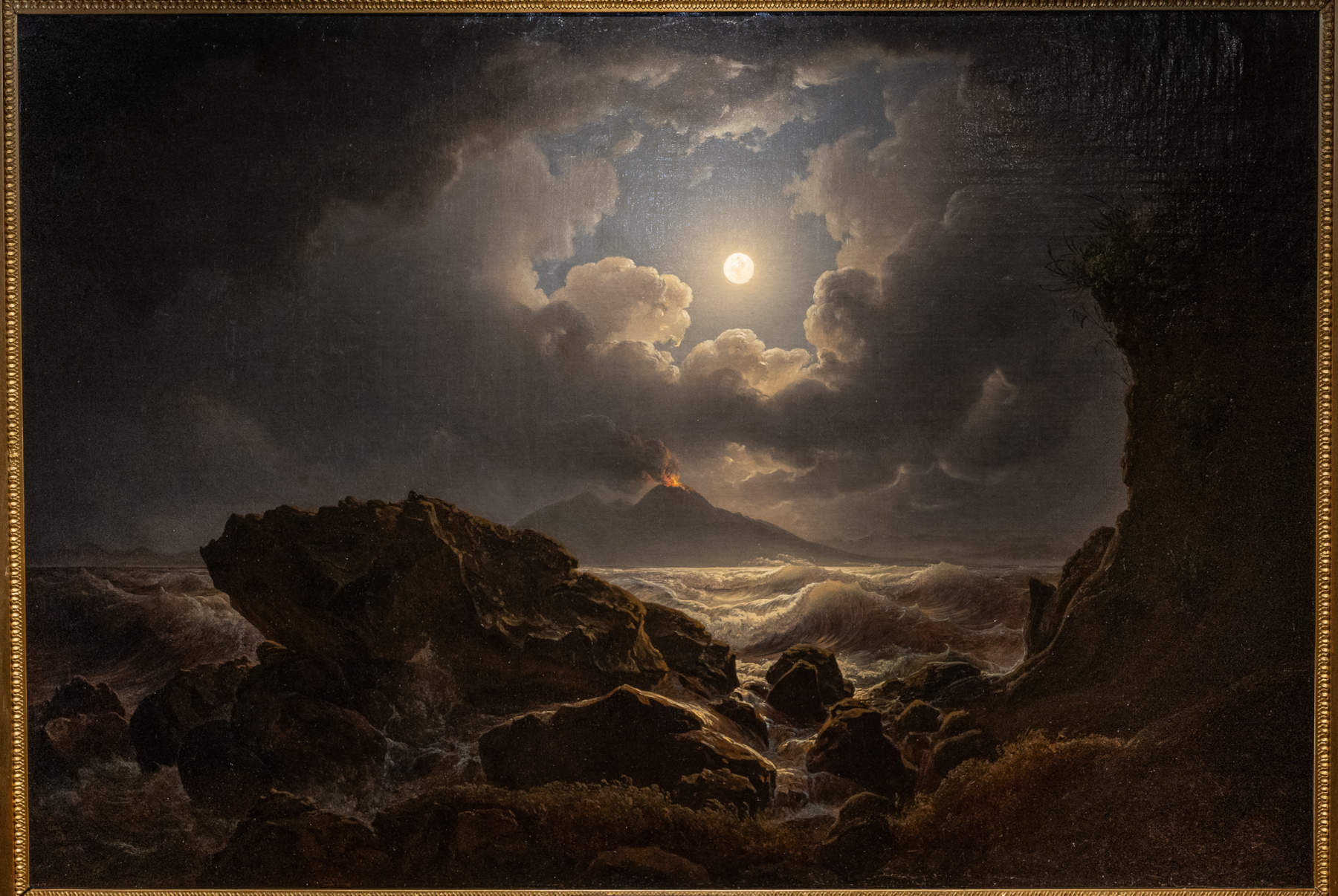
Visitors then enter the heart of the event that sealed the city’s fate through an immersive room dedicated to the eruption. Audiovisual content, paintings, prints, and decorative arts illustrate how the image of Vesuvius was shaped in the Europe of the Grand Tour. Alongside the views made famous by Pierre-Jacques Volaire are on display the tempera painting created by Giacomo and Antonio Baseggio in 1784, Joseph Reb ell’s *Moonlit Storm in the Gulf of Naples* from 1822, and a rare porcelain piece from the Poulard Prad manufactory—works that bear witness to the fascination the Vesuvian landscape held for European artists, travelers, and scholars.
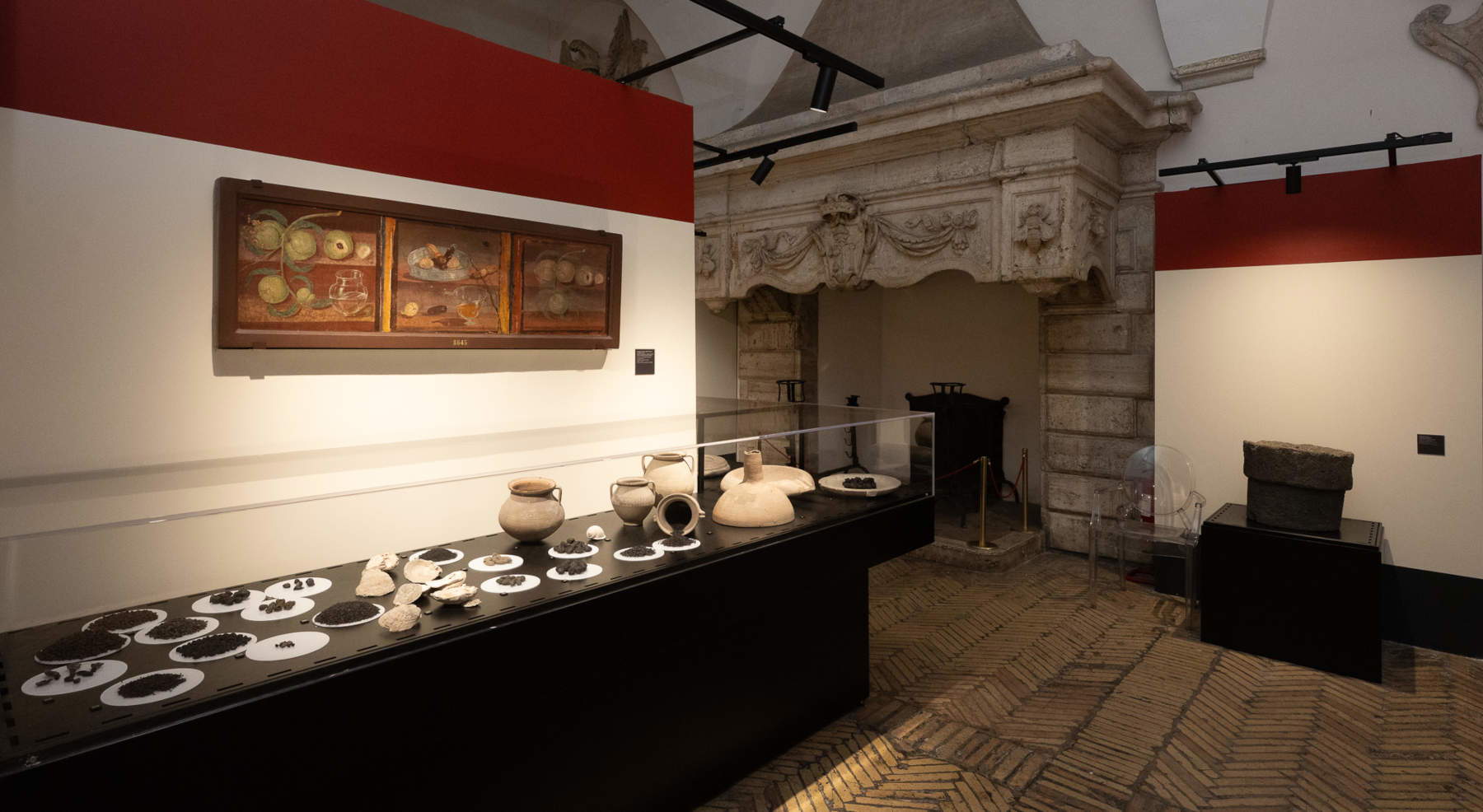
The exhibition thus reconstructs the city in its everyday life, focusing on the shops and thermopolia—establishments dedicated to the sale of food and beverages ready for consumption. Audiovisual installations and archaeological finds illustrate these public spaces, while some of the most significant objects document food-related activities. Of particular note are the loaves of bread charred by the eruption, preserved almost intact and similar to those depicted in the famous Pompeian fresco of the distribution of bread, along with the baking trays from the oven of Sextus Patulcius Felix, part of a set of 25 molds discovered in Herculaneum.
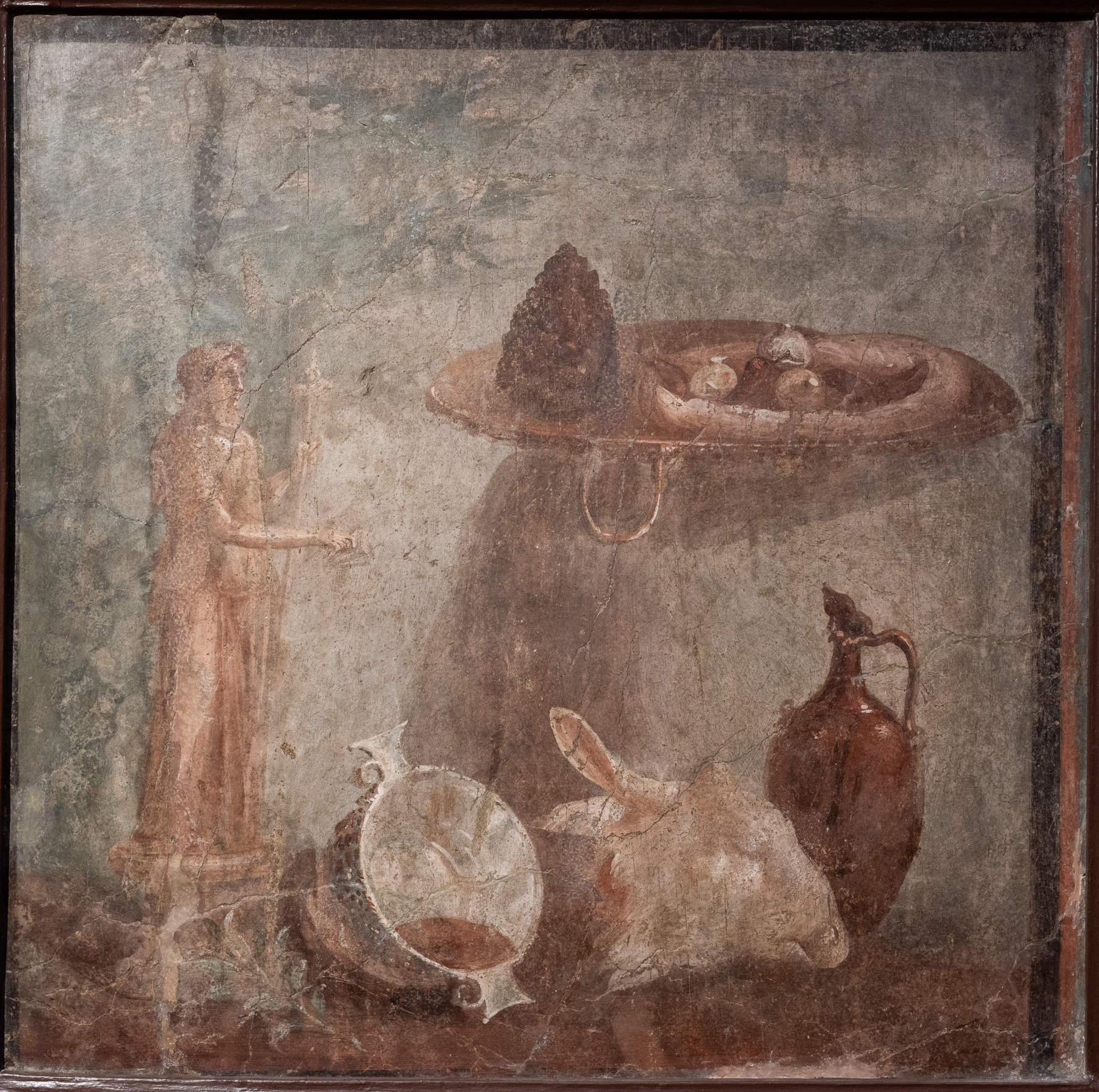
The tour continues inside the domus, in the rooms used for food preparation and storage. Mortars, pots, saucepans, and organic remains—including grains and legumes recovered during the excavations—allow for a particularly precise reconstruction of the diet of the ancient city’s inhabitants. One section is also dedicated to wine, one of the most important products of Roman Campania, mentioned even by Pliny the Elder, who celebrated Falernian wine as one of the most renowned wines of his time. Wine is presented in its religious context, linked to the cult of Bacchus.
The tour concludes in the banquet hall, where a marble sundial introduces the three main meals of the Roman day— ientaculum, prandium, and cena. On display around it are bronze bells, glass, bronze, and silver tableware, and one of the exhibition’s most unique artifacts: the larva convivialis, a small skeletal figurine that was placed on the table to remind diners of the brevity of life and the importance of enjoying the pleasures of the banquet according to the Epicurean tradition.
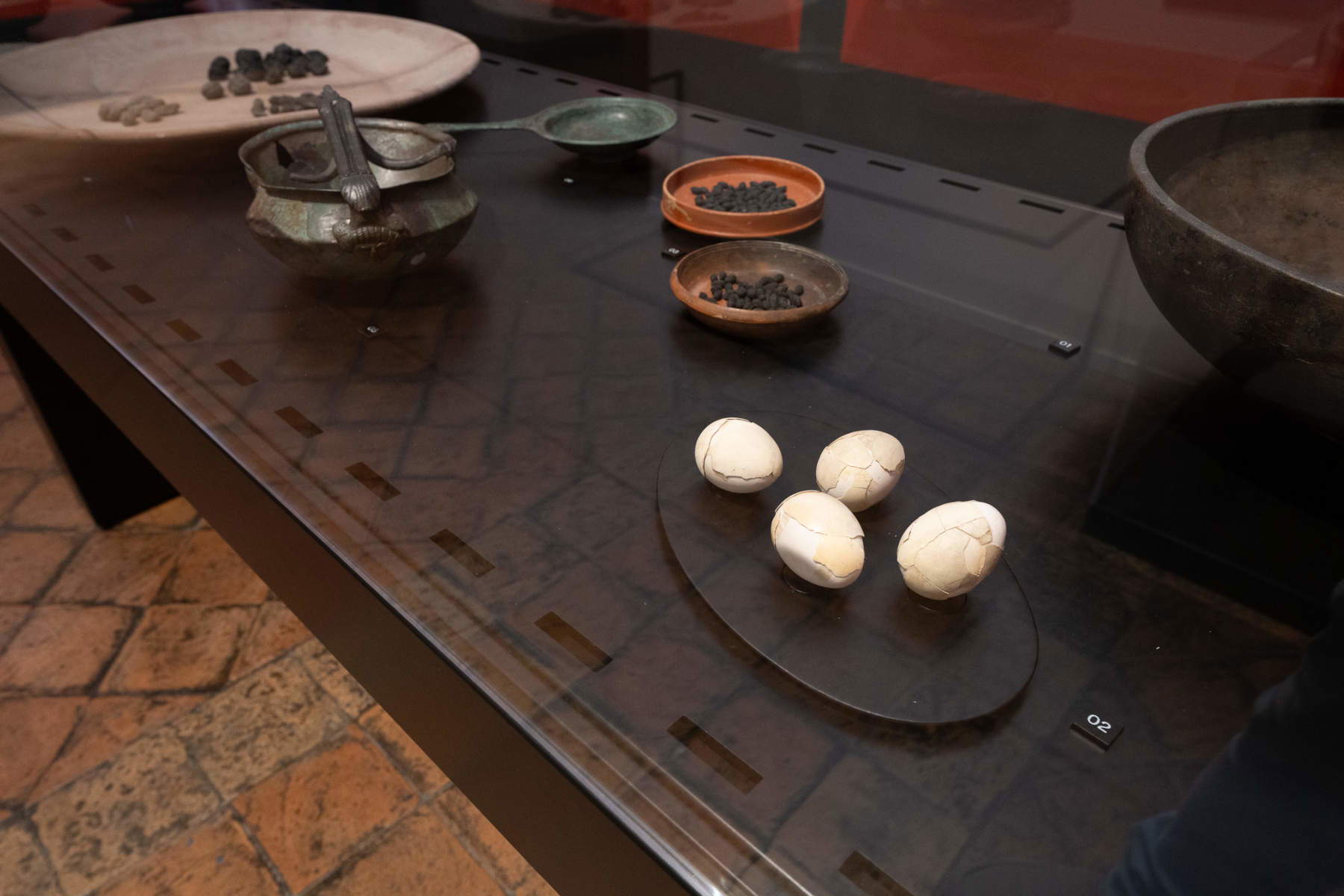
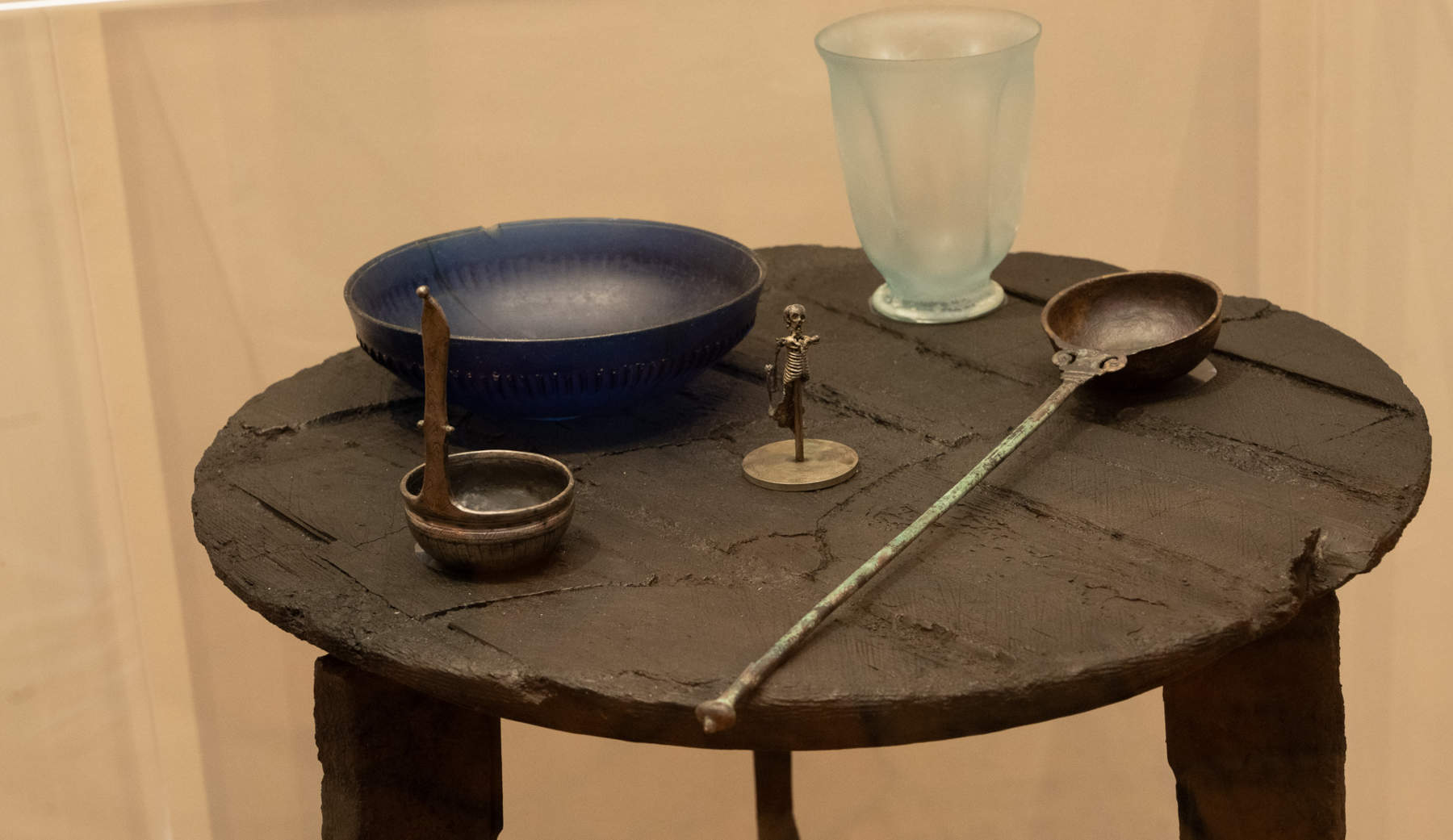
The choice of Castel Sant’Angelo as the venue for the exhibition aims to create a dialogue between two sites characterized by a rich historical stratification. On one hand, the Mole Adriana, a monument that over the centuries has served as an imperial mausoleum, a fortress, a papal residence, and a museum; on the other, Herculaneum, a city frozen in time by the eruption of 79 AD. The pyroclastic flow that engulfed the town near Vesuvius has, in fact, preserved buildings, objects, food, and organic materials, transforming a catastrophic event into an unparalleled source of knowledge about the Roman world. Through a dialogue between archaeological finds, multimedia installations, and immersive settings, the exhibition thus offers a glimpse into daily life in ancient Herculaneum.
Statements
“With this initiative,” comments Luca Mercuri, Director of the Pantheon and Castel Sant’Angelo—National Museums of the City of Rome—and curator of the exhibition. “Castel Sant’Angelo reaffirms its mission as a meeting place for diverse cultural heritages, institutions, and audiences. This exhibition stems from a collaboration that demonstrates how dialogue between museums can generate high-quality cultural projects capable of expanding opportunities for learning and enhancing heritage through new visitor experiences. For Castel Sant’Angelo, it is a source of particular satisfaction to bring to life an exhibition project that connects two entities of extraordinary value and offers visitors a rich and original cultural experience. It is also part of an increasingly broad and diverse cultural program that, through exhibitions, events, and initiatives, reaffirms the Castle as a vibrant place, open to dialogue across different eras, languages, and audiences.”
“Herculaneum, like Pompeii, offers an extraordinary testament to life in a Roman city,” comments Massimo Osanna, Head of the Department of Cultural Activities and curator of the exhibition. “The unique preservation conditions resulting from the eruption of 79 A.D. have preserved buildings, furnishings, and everyday objects, making it possible to reconstruct the activities, dietary habits, and social interactions of its inhabitants. The exhibition presents this heritage through the findings of the most recent research, offering the public new tools for understanding Roman society and its daily life. Bringing this story to Rome expands opportunities to learn about a unique archaeological context and reaffirms the role of museums as places of research, dialogue, and engagement.”
“Bringing Herculaneum to Castel Sant’Angelo means allowing the ancient city to embark on an almost natural journey,” comments Federica Colaiacomo, Director of the Herculaneum Archaeological Park and curator of the exhibition. “These are two places that history has buried under different layers—one of ash and lava, the other of continuous functions and transformations—and which today are once again telling each other’s stories. In this exhibition, we wanted to present to the public not just the monuments, but life itself: the everyday gestures, the flavors, and the everyday objects that make Herculaneum one of the most intimate and vivid testimonies of the ancient world. This project stems from a dialogue between our institutions, and I thank them wholeheartedly for making it possible: to bring to Rome, in the heart of the capital, an authentic piece of the ancient Herculaneum residents’ way of life.”
“Herculaneum is an extraordinary open-air laboratory,” states Francesco Sirano, Director of the National Archaeological Museum of Naples and curator of the exhibition. “The richness of the materials uncovered, together with the quantity and variety of the preserved artifacts, sheds exceptional light on the topic of food in the ancient world. I am certain that the study of Herculaneum—the site where Western systematic archaeology began—will also allow us to delve deeper into and better understand many of the artifacts housed in the National Archaeological Museum of Naples. Herculaneum therefore continues to represent an inexhaustible source of knowledge and will continue to offer us new and important discoveries in the future.”
“Herculaneum: The Art of Living,” comments Alfonsina Russo, Head of the Department for the Promotion of Cultural Heritage, “is a concrete example of how collaboration among the institutions of the Ministry of Culture can generate projects of high scientific caliber while simultaneously reaching ever-wider audiences. The circulation of works, the sharing of expertise, and dialogue among museums strengthen the National Museum System, creating new opportunities for learning and promoting heritage through shared networks and initiatives. This is the direction in which we intend to continue investing: a form of promotion capable of connecting places, collections, and people, while expanding accessibility and cultural participation.”
Practical Information
Hours: Tuesday through Sunday, 9:00 a.m. to 7:30 p.m. (last admission at 6:30 p.m.). Closed on Mondays.
Tickets can be purchased via the Musei Italiani app.
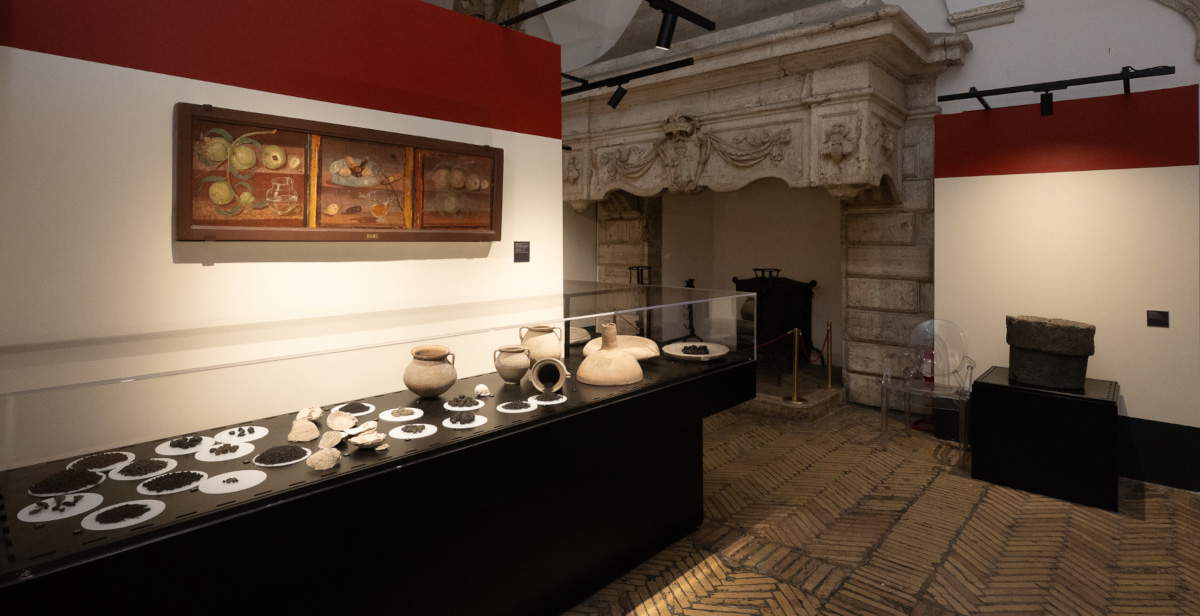 |
| Castel Sant’Angelo offers a glimpse into daily life in Herculaneum through an exhibition featuring more than 70 artifacts |
Warning: the translation into English of the original Italian article was created using automatic tools. We undertake to review all articles, but we do not guarantee the total absence of inaccuracies in the translation due to the program. You can find the original by clicking on the ITA button. If you find any mistake,please contact us.