



by Redazione 09/11/2026


Categories: Exhibitions / Disclaimer
A cultured and unconventional queen, the protagonist of one of the most famous religious conversions in European history. Palazzo Corsini in Rome is celebrating the 400th anniversary of the birth of Christina of Sweden with an exhibition that traces her life, her patronage, and the years she spent in Rome.

Four hundred years after her birth, a major exhibition at Palazzo Corsini in Rome traces the life and intellectual journey of Christina of Sweden (Stockholm, 1626 – Rome, 1689), highlighting the complexity of one of the most fascinating figures of 17th-century Europe. From November 13, 2026, to February 14, 2027, the Accademia Nazionale dei Lincei is dedicating an exhibition to the sovereign that aims above all to explore the long period she spent in the capital, where she lived for about thirty years after renouncing the Swedish throne and converting to Catholicism.


The initiative, organized under the High Patronage of the President of the Republic and with the support of the Ministry of Culture, is the result of a collaboration between the Accademia Nazionale dei Lincei, the Barberini Corsini National Galleries, the Vatican Apostolic Library, and the Istituto Centrale per la Grafica. The exhibition project aims to present a comprehensive portrait of Christina of Sweden, a sovereign with an independent spirit, driven by a deep thirst for knowledge, and capable of exerting significant influence on the society of her time.


Curated by Roberto Antonelli, Mino Gabriele, Marco Guardo, Maria Luisa Meneghetti, and Raffaella Morselli, the exhibition, titled “The Queen of Culture: Christina of Sweden in Rome,” is organized into six thematic sections. Before entering the exhibition, visitors can admire, in the first-floor atrium of Palazzo Corsini, a holographic reconstruction of the famous Hall of the Muses, a room that once housed eight ancient statues depicting the Muses, now housed at the Prado in Madrid. The exhibition design was created by Studio Susanna Nobili Architetti and brings together particularly significant loans from Italian and international institutions, including the Nationalmuseum and the Kungliga Biblioteket in Stockholm, the Château de Fontainebleau, and the Leiden University Library.

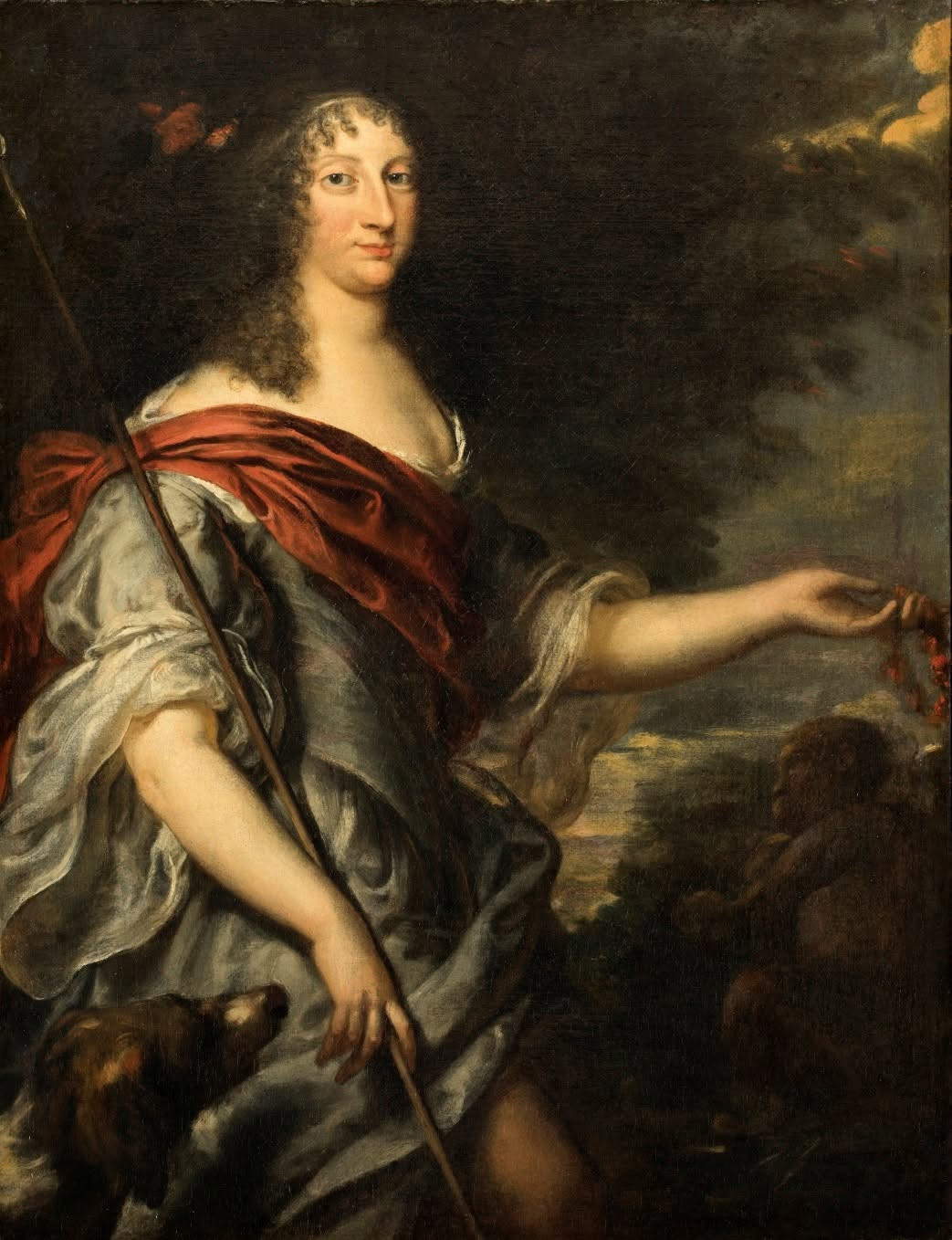
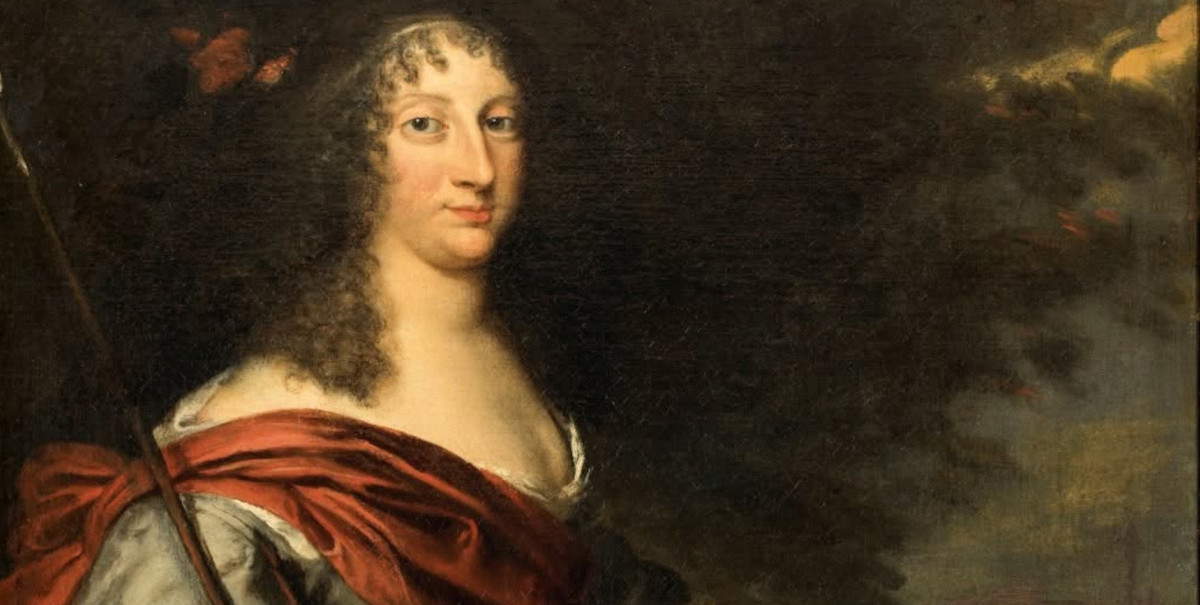
The first section, “Cristina in Sweden,” traces the sovereign’s life prior to her move to Italy through a selection of iconographic works. The works depict her in various settings: on horseback, in the guise of the goddess Diana, during her coronation ceremony, and at the moment of her Professio Fidei, which publicly affirmed her conversion to Catholicism.
With “Christina in Rome,” the narrative shifts to her arrival in the city in 1655. This event had significant religious, political, and symbolic resonance and also became a major media sensation. This section features prints depicting the queen on horseback and her procession, along with publications and accounts dedicated to the two stages of her entry into the city. The first took place privately through Porta Pertusa; the second unfolded as an official ceremony at Porta del Popolo, which had been restored for the occasion by Gian Lorenzo Bernini and his collaborators.
The relationship with the Church and with the highest echelons of papal power is the focus of the third section, Christina and the Papacy. Particular attention is given to the sovereign’s ties with the popes and with leading figures of the Roman Curia, including Cardinal Decio Azzolini. Thanks to her network of connections and her ability to gather information from various European courts, Christina succeeded in influencing the dynamics of the conclaves that led to the election of Clement IX Rospigliosi in 1667, Clement X Altieri in 1669, and Innocent XI Odescalchi in 1676.
During their respective pontificates, the queen intervened in major issues of international politics, sometimes assuming a mediating role in disputes and resolutely asserting the prerogatives associated with her royal status. Her relations with the popes were thus characterized by moments of collaboration, but also by particularly intense conflicts. Beyond the traditional image often attributed to her, Christina distinguished herself through her ability to foster communication between Northern and Southern Europe, championing a vision of the continent that transcended religious divisions.
The fourth section, “Christina: Patron and Collector,” explores the queen’s passion for the arts and learning. Over the course of her life, she amassed a considerable collection of paintings, sculptures, gems, tapestries, and precious objects, documented in inventories, accounting records, and appraisals. Equally important was her library, which reflected her interest in literature, the humanities, and the sciences. On display will be a selection of manuscripts from the Reginense Collection of the Vatican Apostolic Library, which are essential sources for understanding the breadth of the queen’s intellectual interests and the development of her book collection.
“Christina and Mythology, Astrology, Science, and Alchemy” is the title of the fifth section, dedicated to the knowledge and beliefs that influenced the sovereign’s culture. Christina embraced a worldview prevalent among Renaissance and Baroque courts, according to which the stars and planets—identified with the deities of classical mythology—Diana-Moon, Apollo-Sun, Mercury, Venus, Mars, Jupiter, and Saturn—exerted an influence on the events and behavior of human beings.
Her Roman residence, Palazzo Riario—now Palazzo Corsini—was located directly across from Villa Farnesina. The frescoes in the residence, commissioned by Agostino Chigi, celebrated classical mythology reinterpreted through a humanistic lens, in which deities, celestial bodies, and zodiacal signs combined to form a unified interpretation of the universe and individual destiny. This imagery is also reflected in many of Christina’s collecting choices, as she favored statues, gems, and manuscripts linked to mythological and astrological interpretations. Among these, the precious *Astromagia* manuscript—commissioned for King Alfonso el Sabio—stands out.
A special section is devoted to alchemy, which the queen herself described as “a mad passion.” Cristina was, in fact, constantly on the lookout for alchemists willing to assist her in her experiments. In Rome, she succeeded in creating a circle frequented by distinguished scholars, but also by less trustworthy figures involved in the activities of the “great distillery” and the various laboratories set up at Palazzo Riario. Other experiments took place at Villa Palombara, together with Marquis Massimiliano, a close friend and devoted supporter of the queen.
Important evidence of that period remains, beginning with the Porta Magica in Piazza Vittorio, an extraordinary stone monument of an esoteric nature. Added to these are illuminated manuscripts, handwritten texts, and printed books that belonged to the queen or were related to her interests, now preserved in the Verginelli-Rota Collection of the Library of the National Academy of the Lincei and the Corsiniana Library, rich in illustrative material of great interest.
The sixth section, Literature, Theater, and Music, explores Christina’s connection to the performing arts. Inside Palazzo Riario, the queen had a theater built on the second floor, which was soon to become one of the main hubs of musical life in Baroque Rome. Documents and historical accounts allow us to reconstruct some of the performances in which she participated or which she financially supported. Among these is *Vita humana, or the Triumph of Piety*, an opera by Giulio Rospigliosi—the future Pope Clement IX—staged in 1656 at the Barberini family’s palace.
The exhibition will conclude with a multimedia section dedicated to the portrayal of Christina of Sweden in cinema and contemporary culture. It begins with the famous 1933 film directed by Rouben Mamoulian, in which Greta Garbo played the queen, and concludes with the 1974 film *The Abdication*, directed by Anthony Harvey and starring Liv Ullmann. The film explores the spiritual relationship between Christina and Cardinal Azzolini, beginning with her religious conversion.
The narrative continues with an excerpt from the French documentary *Secrets d’Histoire: Christine of Sweden—Queen of Scandals*, produced by Stéphane Bern in 2012. The footage also shows Palazzo Corsini and, in particular, the alcove room—now part of the Corsini Gallery—where the queen died on April 19, 1689. The section also includes short video segments in which the curators explore some of the themes addressed by the exhibition.
Celebrations marking the 400th anniversary of the birth of Christina of Sweden will continue with an international conference organized at the headquarters of the Accademia Nazionale dei Lincei, scheduled for December 16–18, 2026. The final day will coincide precisely with the anniversary of the queen’s birth.
Accompanying the exhibition will be a catalog published by Treccani, edited by Maria Luisa Meneghetti, Raffaella Morselli, Mino Gabriele, and Marco Guardo. The exhibition was made possible thanks to the support of the Ministry of Culture, Intesa Sanpaolo, and the Friends of the Accademia dei Lincei Association.
The exhibition is open to the public Tuesday through Sunday from 10 a.m. to 6 p.m.
 |
| Christina of Sweden, the Unconventional Queen Who Chose Rome: A Major Exhibition Marking the 400th Anniversary of Her Birth |
Warning: the translation into English of the original Italian article was created using automatic tools. We undertake to review all articles, but we do not guarantee the total absence of inaccuracies in the translation due to the program. You can find the original by clicking on the ITA button. If you find any mistake,please contact us.