




by Redazione 28/11/2026



Categories: Exhibitions / Disclaimer
Over two hundred photographs, original prints, contact sheets, and documents trace the Milanese photographer’s artistic journey, from his shots of the suburbs in the 1950s to his documentation of the artistic avant-garde, and on to his experiments with photographic materials. The exhibition runs from December 11, 2026, to May 2, 2027.


Over two hundred photographs chronicle fifty years of work by one of the leading figures in Italian photography of the second half of the 20th century. From December 11, 2026, to May 2, 2027, the Castello Sforzesco in Milan will host a retrospective exhibition dedicated to Enrico Cattaneo (Milan, 1933–2019), tracing his career through images, original prints, contact sheets, historical documents, and experimental works. Organized by the Civic Photographic Archive of the City of Milan, the exhibition traces the various directions of the artist’s exploration: from documenting the contemporary art scene to investigating the expressive possibilities of the photographic medium.


The exhibition project began in 2025, when Luisella Cattaneo, the photographer’s sister, donated her brother’s archive to the Civic Photographic Archive, a testament to a lifetime of work. This collection is supplemented by loans from the Museo del Novecento, the Fondazione Culturale San Fedele – Museo San Fedele, the Cattaneo heirs, and private collectors. The exhibition is produced by the City of Milan – Culture, Castello Sforzesco, and Silvana Editoriale, and is curated by Silvia Paoli, curator of the Civic Photographic Archive, and Giorgio Zanchetti, professor at the University of Milan.


The exhibition, organized into thematic sections, highlights the two dimensions that characterize Cattaneo’s work: that of a photographer attentive to the art scene of his time, and that of a researcher interested in the nature and limits of the photographic language. His training dates back to the 1950s, during his engineering studies at the Polytechnic University of Milan, where he also came into contact with Toni Nicolini and Franco Vaccari. It was a period that Cattaneo himself described, with irony and affection, as that of “Enrico the amateur.” Photography thus became a tool for observing a city in transformation, especially on its outskirts: the suburbs of Milan, the reconstruction sites, the waterways of the Martesana and the Naviglio Pavese, the rubble and dirt-filled spaces where children played as new residential neighborhoods sprang up.


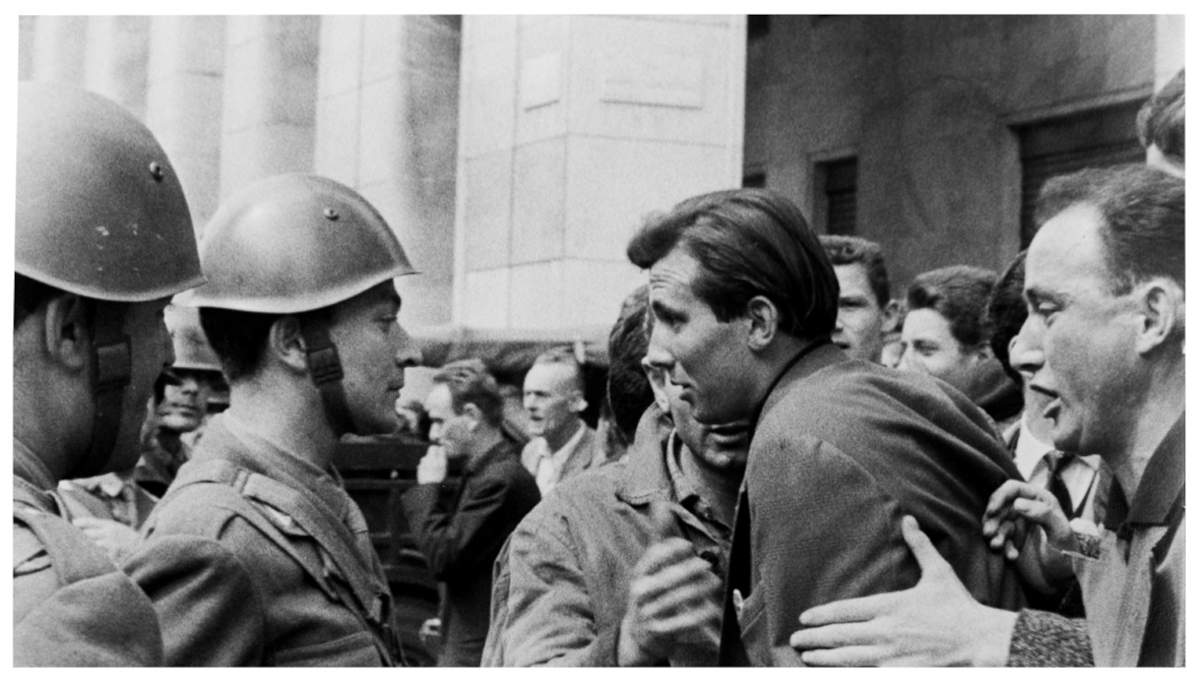
These early works break away from classical composition and the landscape aesthetics dominant at the time. Cattaneo turns his lens toward marginal places, industrial dumps, and abandoned objects, documenting the transformations of the landscape and the traces of human intervention. As early as the late 1950s, a sensitivity to environmental issues thus emerged, along with an interest in what normally remains on the margins of representation. His encounter with the painters of Existential Realism and his shared experience with his colleagues in Gruppo 66 marked an evolution in his artistic vision. His images gradually became more ethereal and intimate: fog and human figures—often barely recognizable—helped transform urban space into a suspended environment.
In 1963, upon turning professional, Cattaneo became a permanent fixture in the Italian and international cultural scene. For over fifty years, he documented exhibitions, performances, happenings, and moments of daily life in artists’ studios, chronicling some of the major movements that shaped twentieth-century art. His work thus chronicles Lucio Fontana’s Spatialism, Nouveau Réalisme, Fluxus actions, Visual Poetry, Arte Povera, and Conceptual Art.
Among the artists he photographed are Mauro Staccioli, Alik Cavaliere, Giancarlo Sangregorio, Franco Mazzucchelli, Francesco Somaini, Gino De Dominicis, Alighiero Boetti, and Enrico Baj. His collaborations with gallery owners such as Arturo Schwarz, Franco Toselli, and Giorgio Marconi were also significant. Alongside this work, he focused on the public and social dimensions of art: Cattaneo documented major exhibitions, sculpture in urban spaces, the crowds at vernissages, and the Venice Biennale. His photography, however, was not limited to merely recording events and works of art. His relationship with the artists and his direct immersion in their work environments become part of a process of critical interpretation, which intertwines with a personal exploration conducted both through off-camera interventions and in the darkroom.
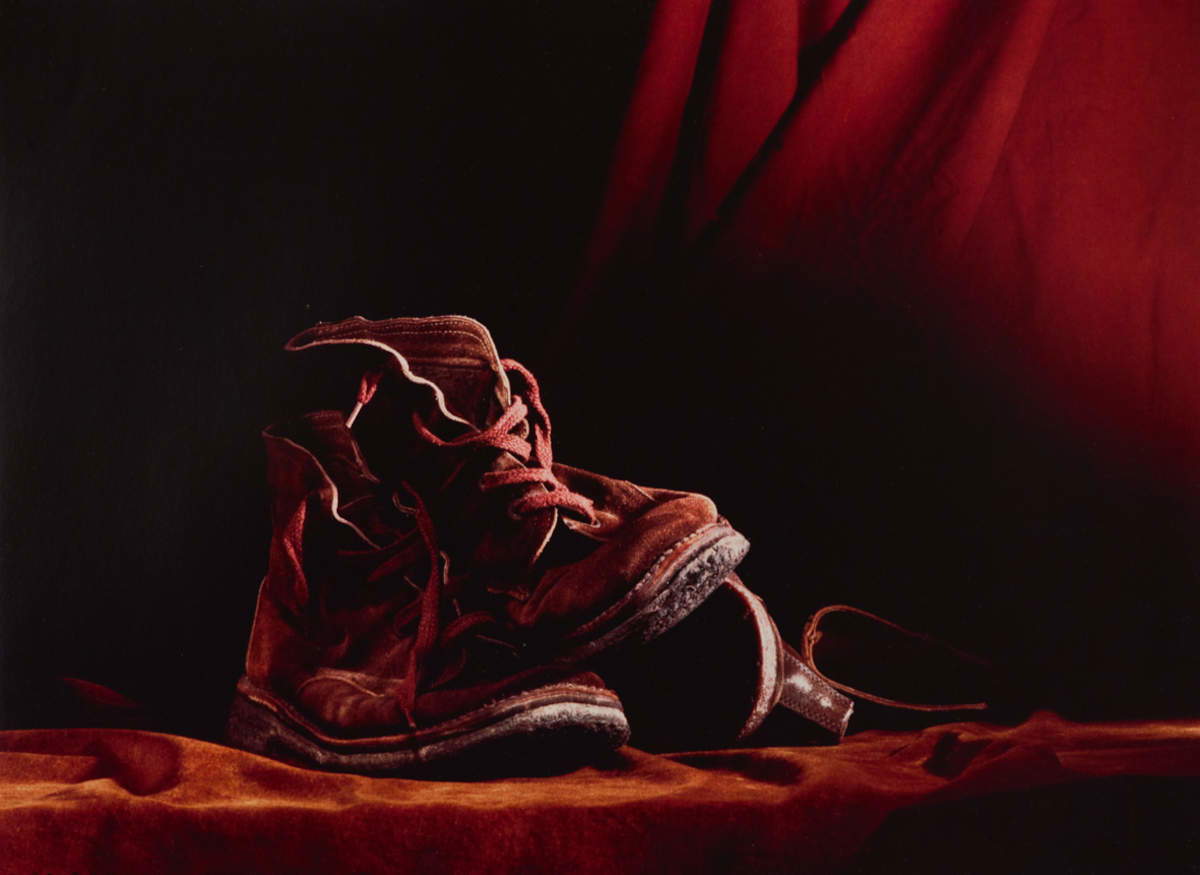
It is precisely this experimental dimension that occupies a significant part of the exhibition. Among the works on display are the *Pagine*, created in the 1970s by repurposing scraps of photographic paper that, during the printing process, had become stuck together, torn, and blackened due to the effect of unfixed light. Through these materials, Cattaneo transcends the traditional two-dimensionality of photography and brings the physical texture of the medium to the forefront, transforming light into matter.
The exhibition also includes other series that document the directions of his artistic exploration, such as *In Regress*, *Paesaggi-Chimifoto*, and *Germinazioni*. Also on display are still lifes featuring everyday objects—recovered or photographed directly on the street—as well as the *Guerrieri*,*Maschere*, and *Tolle* series. Alongside the photographs, the exhibition presents contact prints, historical documents, and unique works. Video contributions, in-depth documentaries, and archival interviews also allow visitors to trace the artist’s journey through his own words.
Accompanying the exhibition is a bilingual catalog, in Italian and English, published by Silvana Editoriale. The volume includes essays by Sofia Brugo, Giuliano Manselli, Silvia Paoli, and Giorgio Zanchetti, along with a text by Luisella Cattaneo dedicated to the memory of her brother, as well as scholarly notes and images of the works featured in the exhibition.
 |
| Enrico Cattaneo: Fifty Years Behind the Lens—Milan Rediscovers a Leading Figure in Photography |
Warning: the translation into English of the original Italian article was created using automatic tools. We undertake to review all articles, but we do not guarantee the total absence of inaccuracies in the translation due to the program. You can find the original by clicking on the ITA button. If you find any mistake,please contact us.