





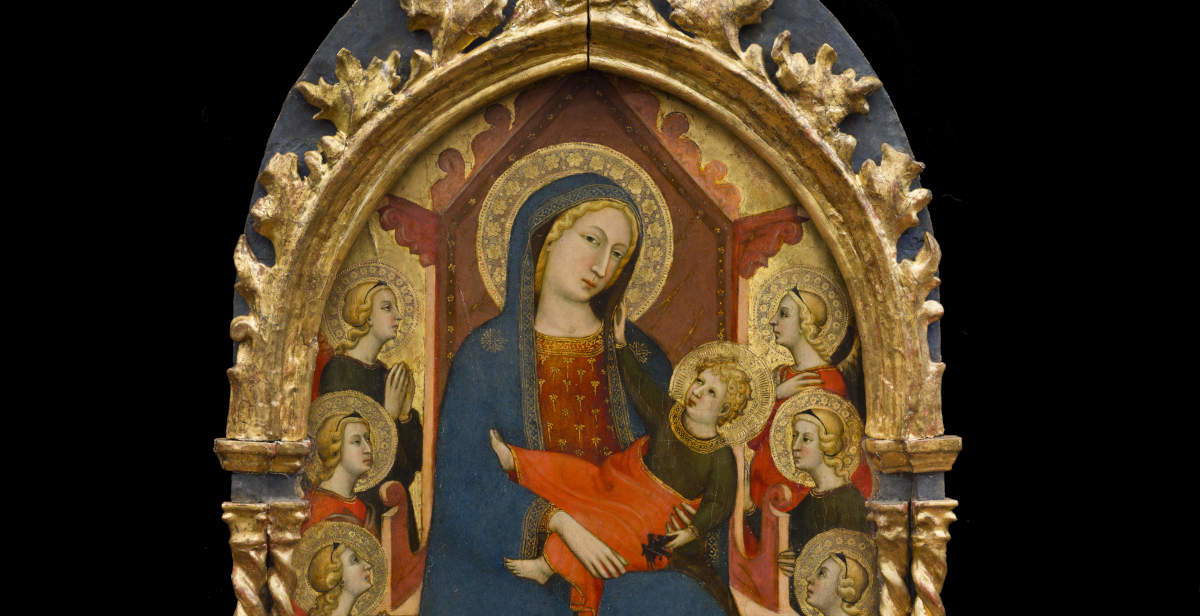
Two paintings attributed to the Master of 1416 will be on display together from October 6, 2026, to March 14, 2027, in the first-floor galleries of the Accademia Gallery in Florence. The Madonna and Child with Saints Peter, Anthony the Abbot, Julian, and John the Baptist and the Madonna and Child with Eight Angels are being presented following a process of study, diagnostic testing, and restoration, as part of a temporary exhibition integrated into the museum’s permanent collection.
The exhibition is part of the “Restored Works on Display” project, carried out as part of the cultural heritage preservation and promotion activities sponsored by the Ministry of Culture. The initiative is designed to return works from the collections to the galleries following major conservation interventions, while also showcasing the research and procedures involved in the conservation of the paintings. Following the Triptych by Spinello Aretino, the project now focuses on two panels by the Master of 1416, comparing their artistic styles, formal solutions, and conservation histories.
The exhibition is curated by Elvira Altiero, an art historian, and Eleonora Pucci, a conservator, both staff members of the Accademia Gallery in Florence and the Bargello Museums. The exhibition design is by architects Roberto Lembo and Giorgios Papaevangeliu and was implemented by Galli Mostre. A video by Domenico Spampinato documents the various stages of the work, illustrating through images and in-depth analysis the main conservation challenges, the investigations conducted, and the solutions adopted.
The two restoration projects were entrusted to different conservators and specialists. The *Madonna and Child with Saints* was restored by Elisabetta Bianco, with Roberto Buda working on the wooden support, while the *Madonna and Child with Eight Angels* was restored by Lucia Biondi, with Alberto Dimuccio working on the support. The diagnostic surveys were carried out by Paolo Triolo-Geospectra srl and Ottaviano Caruso, respectively.
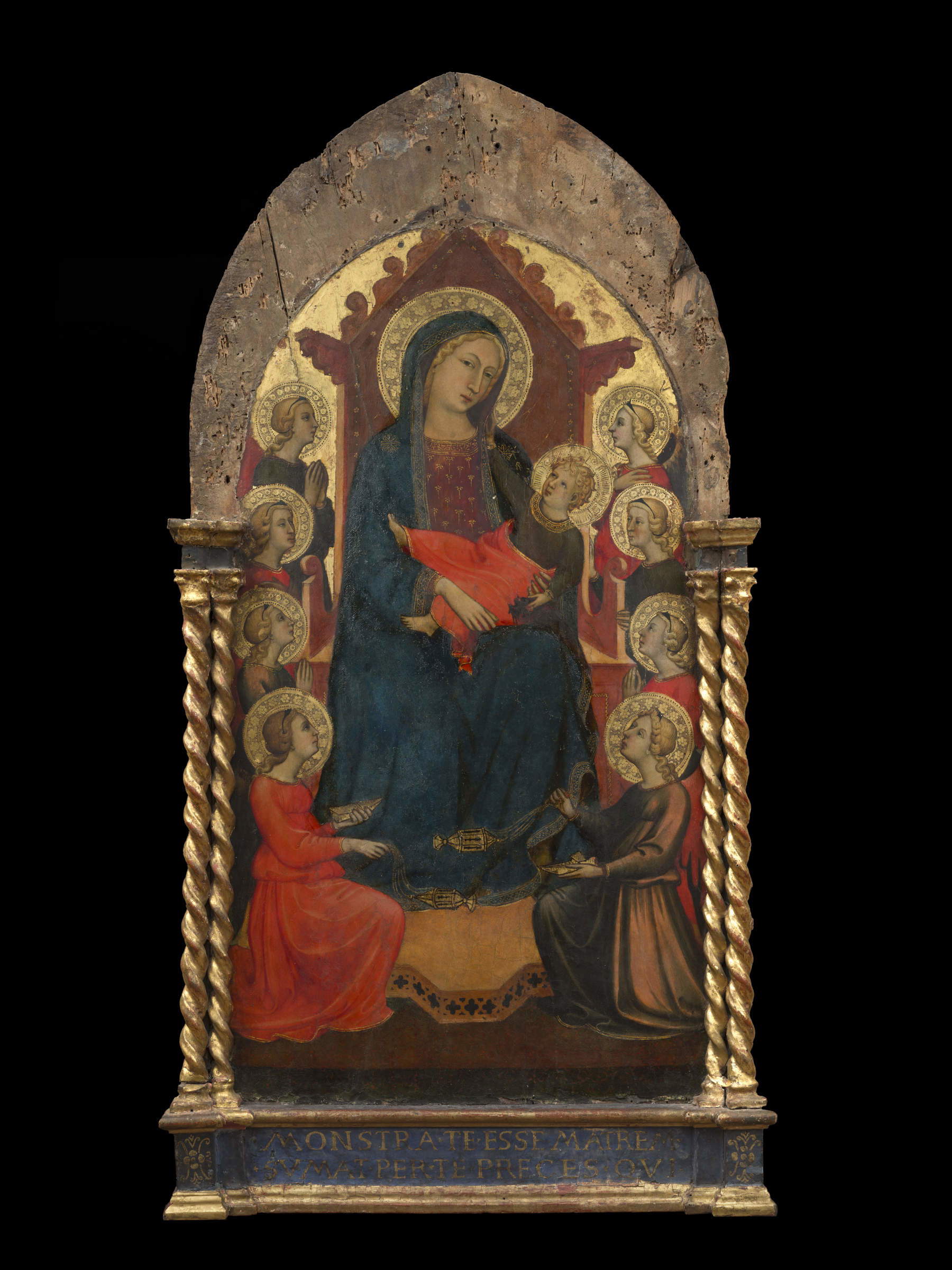
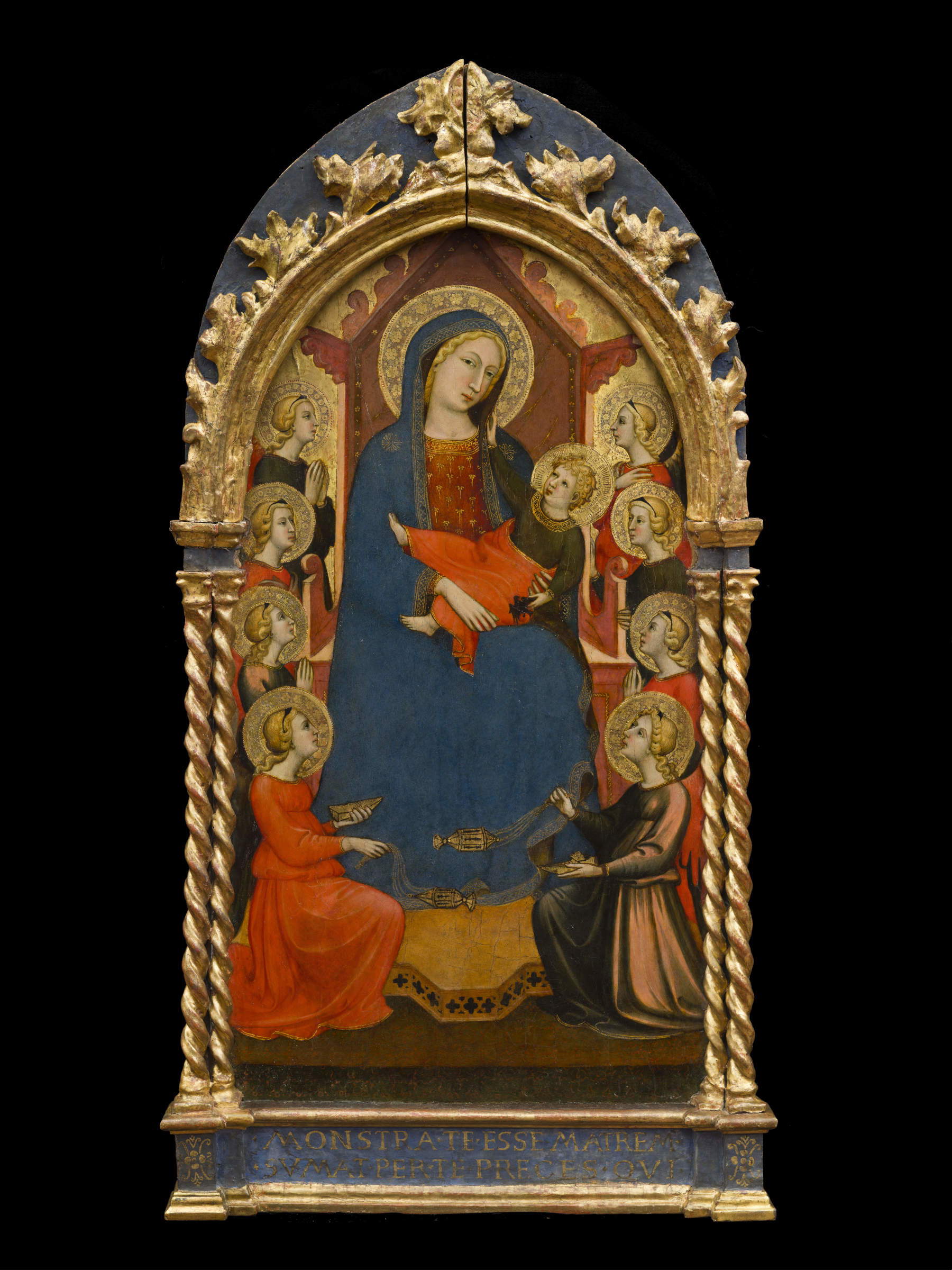
The conventional name “Master of 1416” refers to an anonymous painter active in Florence during the first quarter of the 15th century, possibly identifiable as Bartolomeo di Pietro, who is documented from 1412 to 1427 and was the nephew of Lorenzo di Niccolò di Martino. These two works allow us to observe some of the characteristics that define his artistic style, which remains tied to the Neo-Giottesque tradition yet is open to the innovations of International Gothic. The elongated figures, flowing drapery, and refined color schemes also reveal the influence of Lorenzo Monaco.
“Restoration is a pivotal moment in the life of a work of art: it allows us to preserve it, but also to reexamine it and gain a deeper understanding of it,” states Andreina Contessa, General Director of the GAMB. “The investigations conducted during the restoration process can indeed reveal details, colors, and information about the technique and material history that had become less evident over time. Presenting these two panels at the conclusion of their conservation journey means sharing with the public not only the visible result but also the wealth of knowledge that the restoration has made possible. With ‘Restored Works on Display,’ we aim to make this process part of the visitor experience and demonstrate how much study, expertise, and attention are required to preserve and pass on our collections.”
The Madonna and Child with Saints Peter, Anthony the Abbot, Julian, and John the Baptist is a key reference point for reconstructing the artistic personality of the Master of 1416. At the base of the panel is the inscription “MCCCCXVI d’agosto,” from which the conventional name by which the painter is identified today derives. The altarpiece was likely commissioned by the Arte dei Beccai, the guild that brought together merchants, butchers, and meat sellers. This hypothesis is further supported by the presence of Saint Peter, patron saint of the guild, depicted alongside the Virgin Mary in a prominent position. Saint Anthony the Abbot, on the other hand, was associated with the guild as the protector of animals, while Saint John the Baptist and Saint Julian were among the most venerated saints in Florence. The work arrived at the Gallerie Fiorentine in 1782 from the Chamber of Commerce, the body tasked with collecting the works of art preserved in the former headquarters of the guilds following the reforms of the Lorraine government. Since 1915, the panel has been on display at the Galleria dell’Accademia.
The recent restoration focused primarily on the recovery of the paint film, which had been compromised by previous, particularly aggressive cleaning treatments and the presence of extensive overpainting. The restoration made it possible to rebalance the surface and restore the legibility of details and color qualities that had been altered.
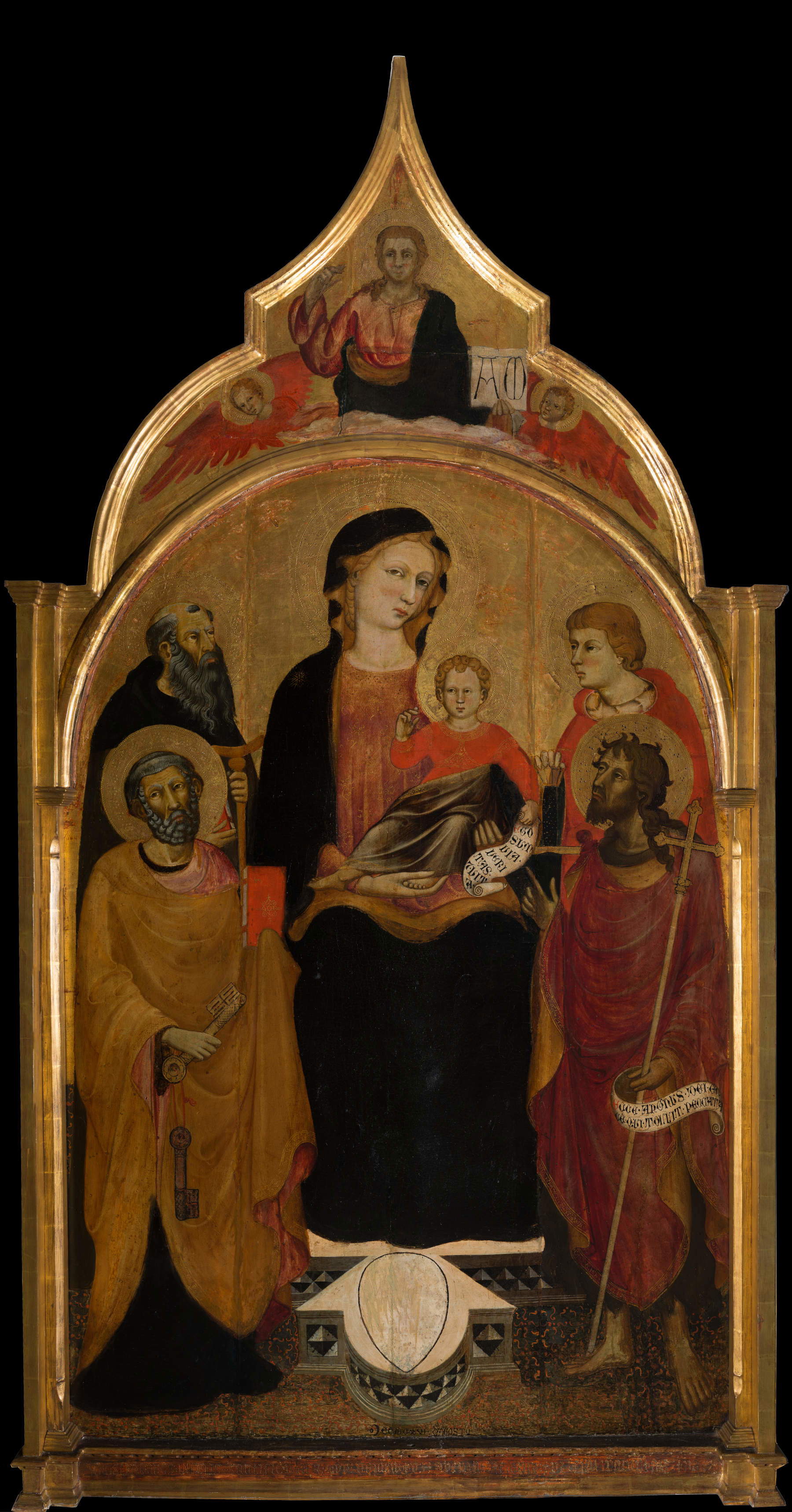
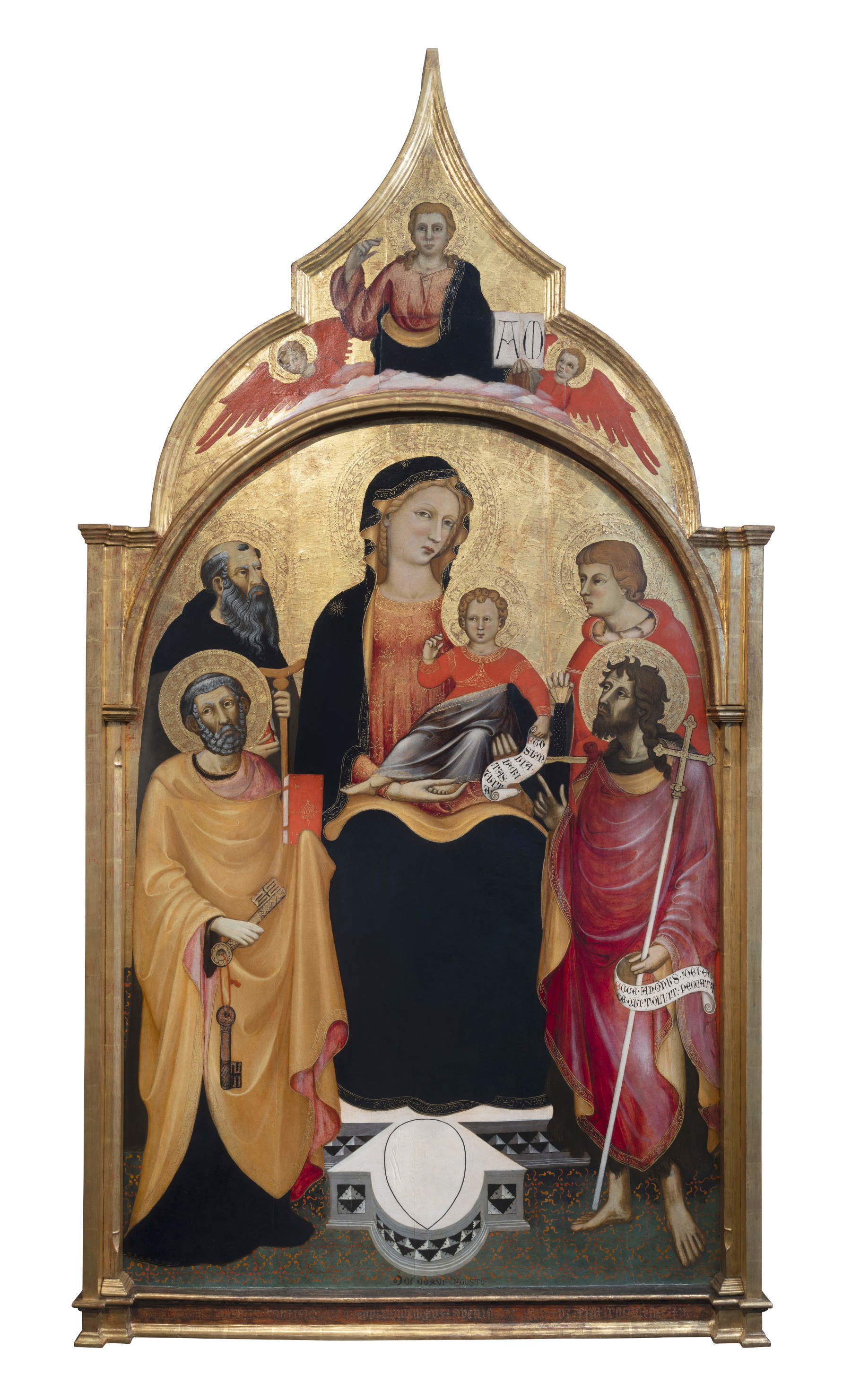
The second panel, the Madonna and Child with Eight Angels, on the other hand, presents a different relationship with the Florentine figurative tradition. The painting is a smaller-scale version of the famous Madonna painted by Bernardo Daddi in 1347 and preserved in Orcagna’s tabernacle at Orsanmichele. The image, which was particularly venerated, served for a long time as a model for devotion and for the city’s artistic production. Here, too, the 14th-century model coexists with more contemporary elements. In fact, the painting shows an openness toward the International Gothic style, evident in particular in the iridescent quality of the angels’ robes, which echoes the color schemes developed by Lorenzo Monaco.
Originally from the convent of Santa Apollonia, the panel was acquired by the Italian government in 1865, following the dissolution of ecclesiastical institutions. In 2017, it entered the collections of the Galleria dell’Accademia, and following recent conservation work, it is now on public display for the first time. The restoration of this work also utilized laser technology, applied selectively to the painted surface. The restoration brought to light the original color of the Virgin’s mantle. At the same time, the restoration and reassembly of the frame helped restore the visual unity and stability of the work as a whole.
The two restoration projects thus addressed different challenges and employed distinct methodologies, making it possible to restore the works’ legibility and gain new insights into their history. The joint presentation offers visitors the opportunity not only to view the results of the interventions but also to learn about the various phases of study, diagnosis, and treatment that accompany the conservation of these works over time. Finally, the exhibition draws attention to the core group of the so-called “Primitives,” consisting of the masters who preceded the full emergence of the Renaissance style. Their works represent one of the historical cornerstones of the Galleria dell’Accademia’s collections, within which the two panels by the Master of 1416 are now on view again following restoration.
 |
| Florence: Two Paintings by the Master from 1416 Are Once Again on Display at the Accademia Gallery Following Restoration |

Warning: the translation into English of the original Italian article was created using automatic tools. We undertake to review all articles, but we do not guarantee the total absence of inaccuracies in the translation due to the program. You can find the original by clicking on the ITA button. If you find any mistake,please contact us.





















 IT
IT FR
FR DE
DE ES
ES CN
CN


