



by Redazione 24/11/2026



Categories: Exhibitions / Disclaimer
More than twenty years of Spanish artistic exploration, from the postwar period to the 1970s, told through paintings and sculptures by leading figures of the avant-garde. The exhibition at the Spanish Embassy in Rome features a selection from the Contemporary Art Collection of the “la Caixa” Foundation.


From the Surrealist experiments of Joan Ponç and Modest Cuixart to the compositions of Joan Miró, including the abstract works of Eduardo Chillida and Antoni Tàpies: post-World War II Spanish art takes center stage in Rome with the exhibition “Fragments, References, and Passages.” Spanish Artists in the Contemporary Art Collection of the La Caixa Foundation (1940–1976). Hosted in the spaces ofthe Embassy of the Kingdom of Spain, the exhibition is open from November 18, 2026, to February 14, 2027, and brings together paintings and sculptures from the Fundación “la Caixa” collection, selected for their artistic quality and the international renown of their creators.


Curated by Òscar Pina, head of content for the Foundation’s ArtHub and Collection Department, the exhibition traces some of the key artistic movements that transformed the Spanish art scene from the 1940s to the mid-1970s. This was a period of great ferment, preceding the establishment of the Foundation’s own Contemporary Art Collection, founded in 1985. The initiative is part of an agreement between the Foundation and the Spanish Ministry of Foreign Affairs, created with the aim of promoting Spanish culture through a series of exhibitions organized at European diplomatic missions. Rome is one of the main stops on this program, which seeks to foster new opportunities for cultural exchange through the language of contemporary art.


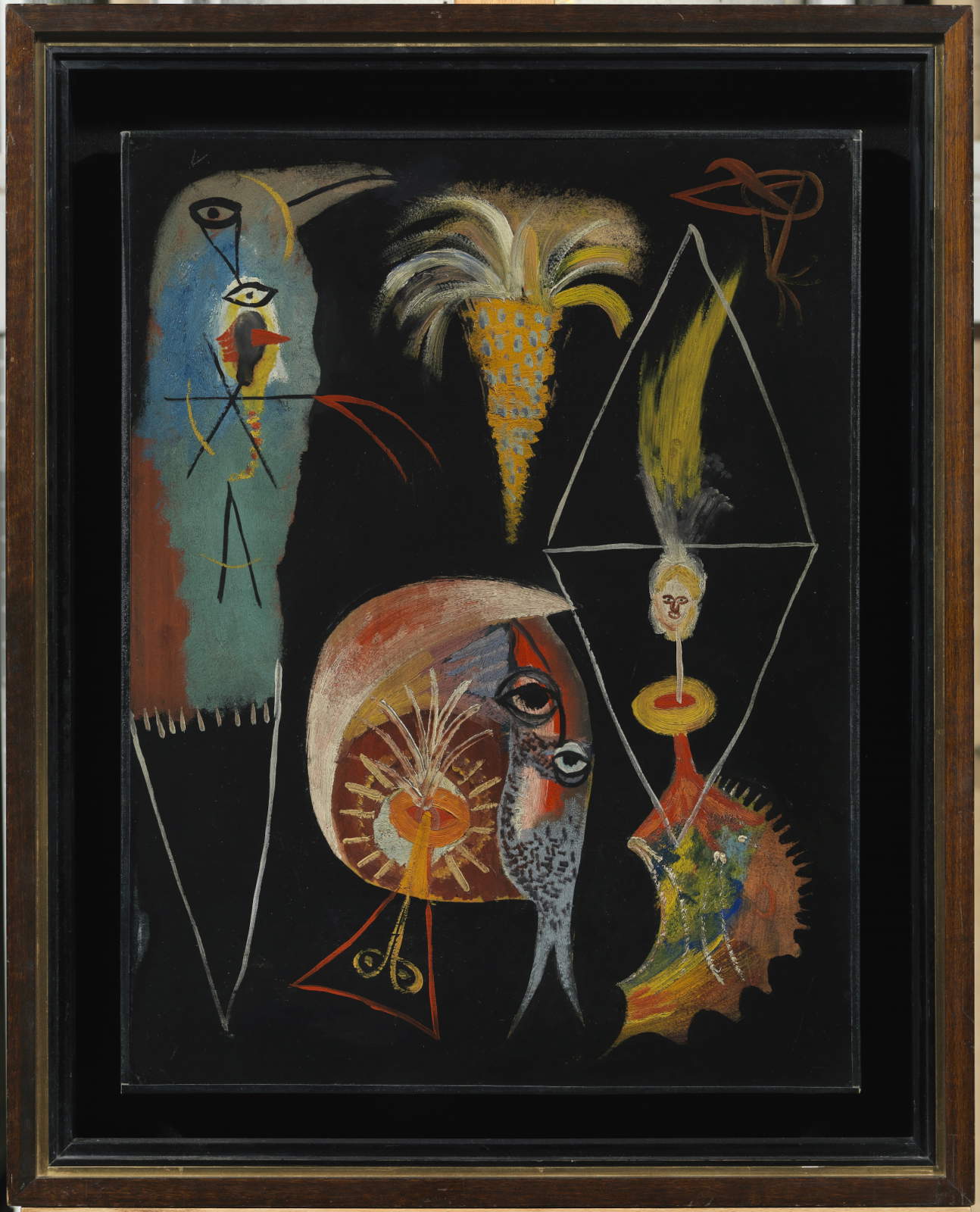
The exhibition begins with works by Joan Ponç and Modest Cuixart, both members of the Dau al Set group, one of the first Spanish artistic movements to distance itself from the academic models supported by the Franco regime.


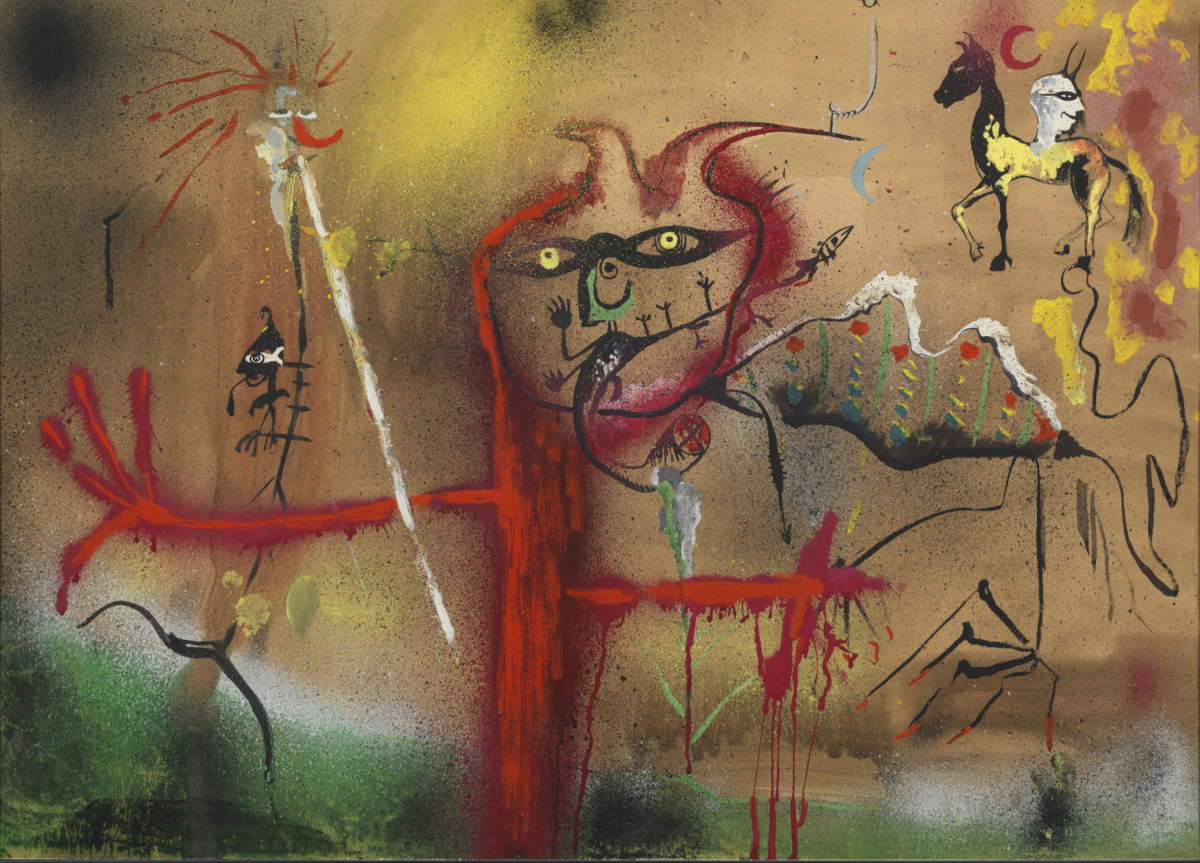
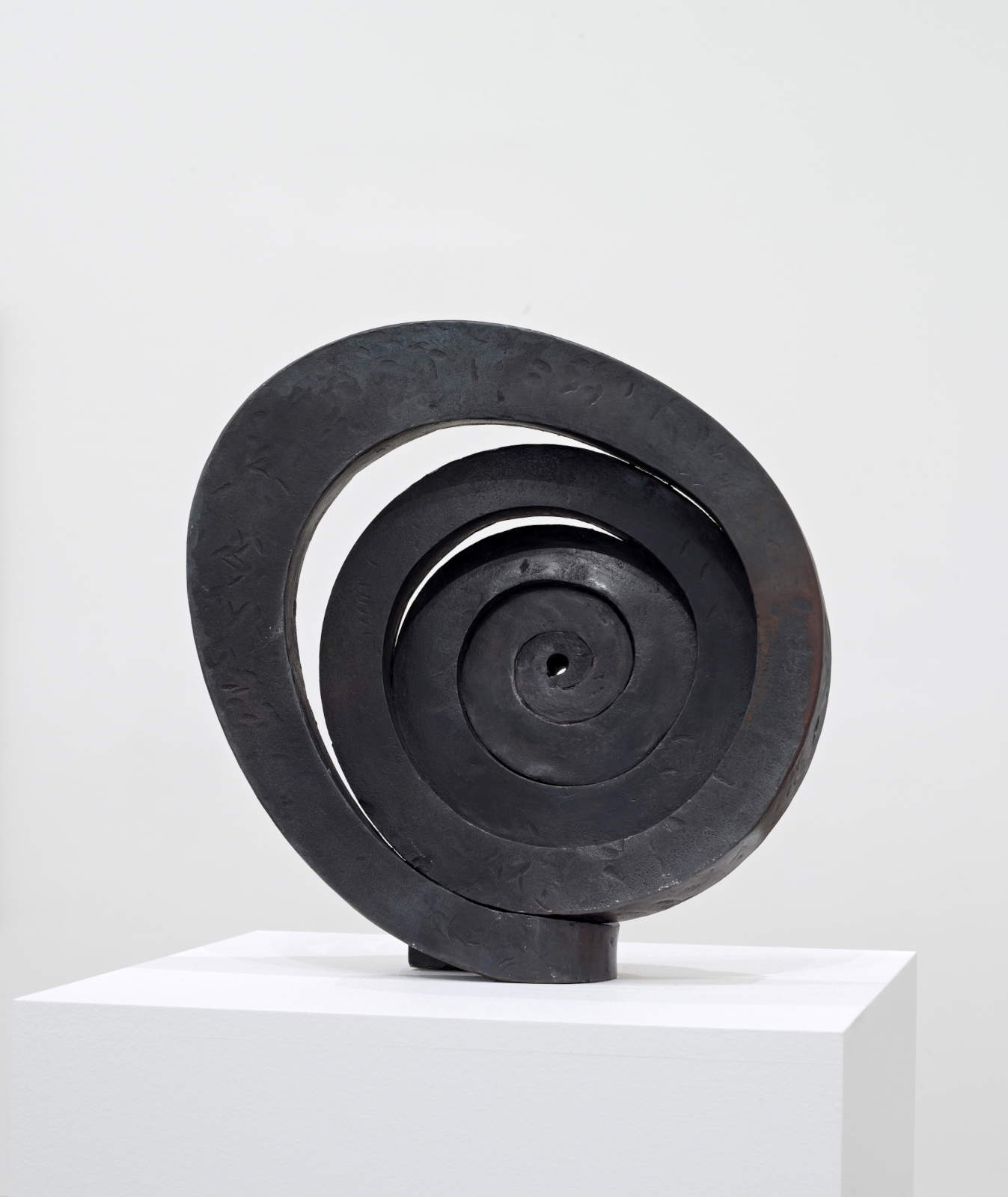
Among the works on display is Ponç’s *Personatge en Vermell* (1947), in which the bright red color enveloping the central figure evokes associations with repression and the postwar atmosphere. Next to this work is an untitled painting created in the same year by Cuixart, characterized by a sensibility close to the surrealist atmospheres that distinguished the collective’s artistic exploration. Rounding out this first section is *Il bacio – Maternità* (1951) by Eudald Serra, a leading figure and pioneer of sculptural experimentation within the post-World War II Spanish avant-garde. The exhibition continues with *Alborada* (1952) by Pablo Palazuelo, a large-scale canvas considered one of the most significant works for the development of geometric abstraction in Spain. The exploration of form and space is also evident in the sculptures of Martín Chirino, Jorge Oteiza, and Eduardo Chillida, each recognizable for their distinct sculptural language and personal interpretation of abstraction.
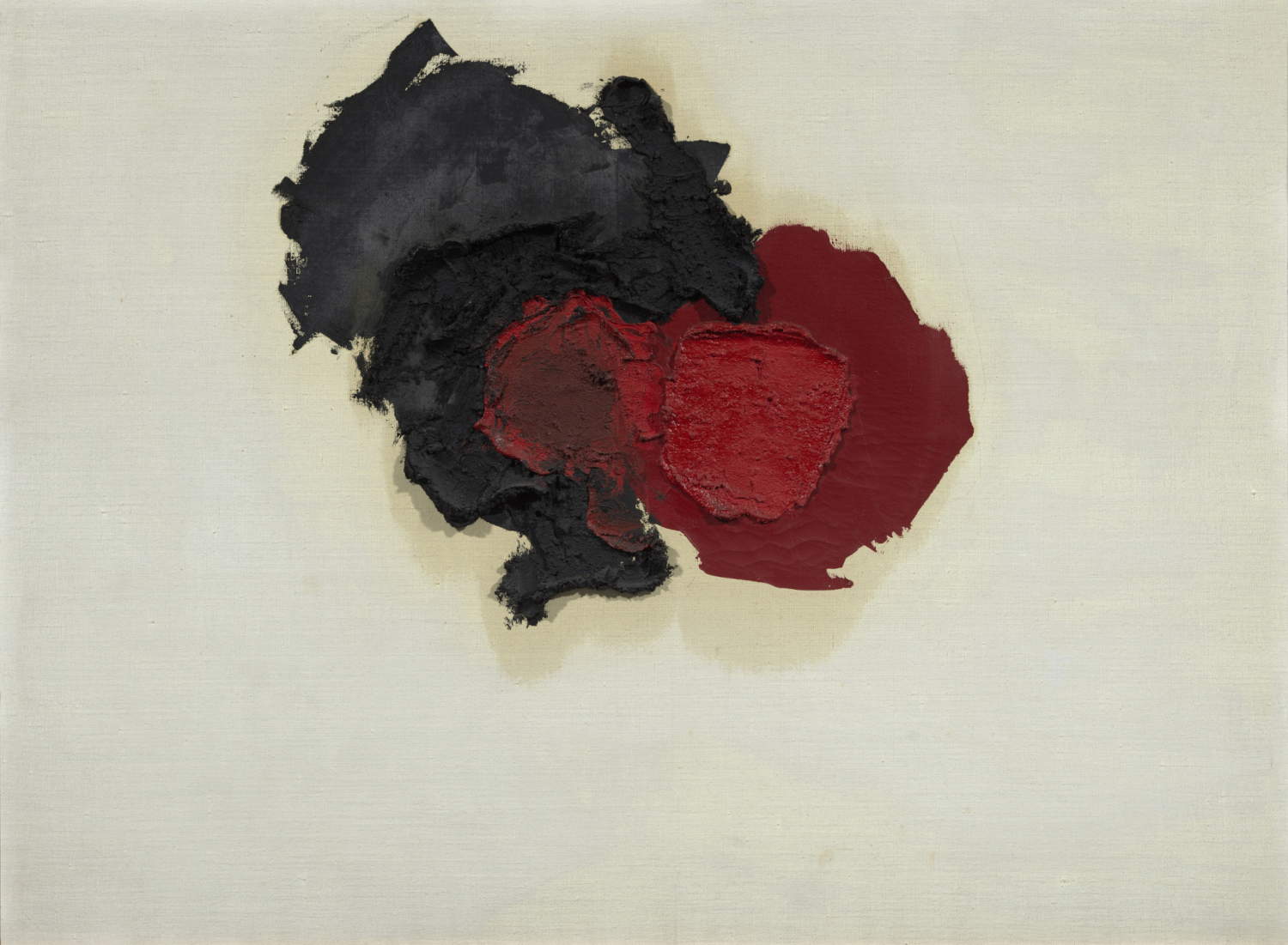
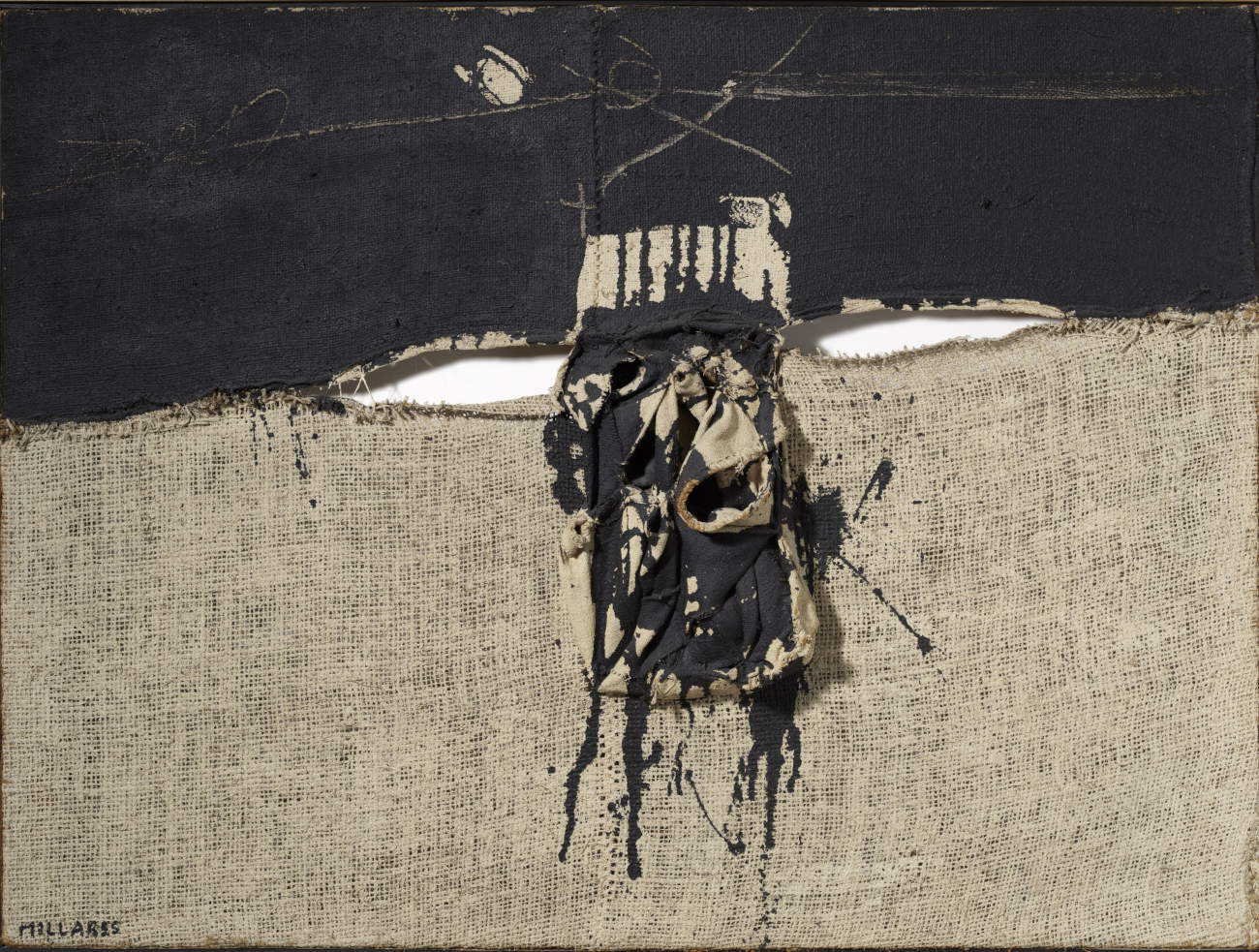
Another section is dedicated to the artists of the El Paso group and the leading figures of Informalism, a movement that played a decisive role in the international dissemination of Spanish art in the second half of the 20th century. The exhibition features works by Luis Feito, Manuel Millares, Gustavo Torner, and Antoni Tàpies, artists who embodied a period characterized by experimentation with materials and the breaking of traditional artistic conventions. The exhibition concludes with two works that connect different generations and artistic languages. On one hand, Joan Miró’s *Vers l’évasion* (1972), in which the symbols and stars typical of his visual universe reappear; on the other, *Menina-Miró* (1976) by Equipo Crónica, a sculpture that reinterprets one of Diego Velázquez’s famous figures through motifs and allusions inspired by Miró’s imagery. The work introduces an ironic element and evokes the experiments of European New Realism.
The exhibition is hosted at the new headquarters of the Chancellery of the Spanish Embassy in Italy, inaugurated in October 2025 within the historic Palazzo di Santiago degli Spagnoli in Piazza Navona.
Following its run in Rome, the exhibition will travel to other European capitals—to be determined—as part of an agreement with the Spanish Ministry of Foreign Affairs. The traveling exhibition was designed with a particular focus on sustainability and the efficient use of resources. The choice of sustainable materials and a modular exhibition design makes it easier to adapt the exhibition structure to different venues, optimizing both time and materials. The management of the installation phases will also follow similar criteria: the work will be entrusted to a small team of specialized professionals, with a preference for involving local workers to limit travel and support the economies of the regions involved.
The collaboration with the Ministry of Foreign Affairs is part of the Fundación “la Caixa”’s broader commitment to promoting contemporary art and enhancing cultural heritage. Founded in 1985, the Foundation’s Contemporary Art Collection has now been active for over forty years and is preparing to find a new permanent home at the ArtHub, a space designed to house the works and facilitate their conservation, study, and dissemination.
With a collection of approximately 1,100 works and a strong international focus, the collection includes works by artists such as Gerhard Richter, Antoni Tàpies, Cindy Sherman, Doris Salcedo, and Mona Hatoum. It is considered one of Europe’s leading private collections dedicated to contemporary art and carries out its activities through independent exhibition initiatives and collaborations with major museums and cultural institutions. The “la Caixa” Foundation is also one of Europe’s leading philanthropic institutions and operates in various fields, ranging from research to education, and from social programs to culture.
|
| From Joan Miró to Antoni Tàpies: The Postwar Spanish Avant-Garde in Rome, Featuring Works from the La Caixa Foundation |
Warning: the translation into English of the original Italian article was created using automatic tools. We undertake to review all articles, but we do not guarantee the total absence of inaccuracies in the translation due to the program. You can find the original by clicking on the ITA button. If you find any mistake,please contact us.