





How can everyday life be transformed into a representation that conveys the desires, emotions, and contradictions of existence? This is one of the questions that runs through the work of Giandomenico Tiepolo, the focus of the exhibition *Giandomenico Tiepolo (1727–1804). A New World, on view at the Gallerie d’Italia in Vicenza from October 9, 2026, to January 17, 2027. Organized by Intesa Sanpaolo to mark the 300th anniversary of the artist’s birth, the exhibition offers a comprehensive reinterpretation of his work, restoring full recognition to a figure who has for too long been viewed primarily in the shadow of his father, Giambattista Tiepolo.
Curated by Carolina Brook, Valter Curzi, and Fabrizio Magani, the exhibition is presented under the patronage of the City of Vicenza and in collaboration with the Martin von Wagner Museum at the University of Würzburg. It brings together 68 works from major international museums and collections, including the Prado in Madrid, the Louvre in Paris, the Kunsthistorisches Museum in Vienna, the Morgan Library & Museum in New York, the Gallerie dell’Accademia in Venice, and the Istituto Centrale per la Grafica in Rome. Among the loans is also a pantoscope from the Museo del PRECINEMA in Padua.
The exhibition traces the main stages of Giandomenico’s career, from his early days working alongside his father on large-scale decorative projects to his mature works. What emerges is the evolution of an independent artistic language, capable of renewing the Venetian artistic tradition through a keen observation of everyday life, the human landscape, and the theatricality of existence.
An important role is also reserved for the travels that contributed to the artist’s development, from the Veneto to Germany and on to Spain. These diverse geographical and cultural experiences shaped the development of his painting, drawing, and engraving, demonstrating how the great decorative legacy of the 18th century could be transformed into a more narrative, intimate, and human-centered artistic exploration.
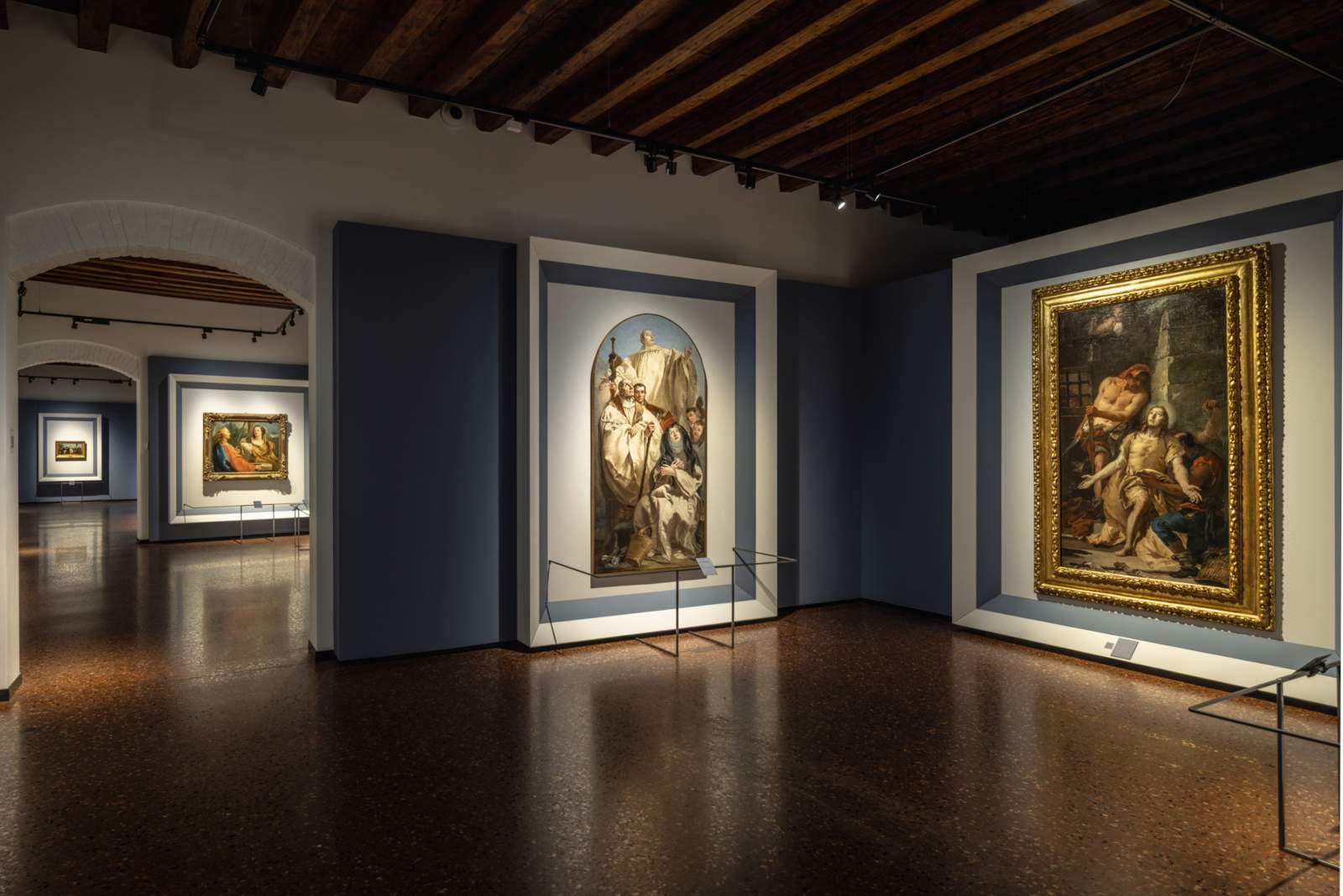
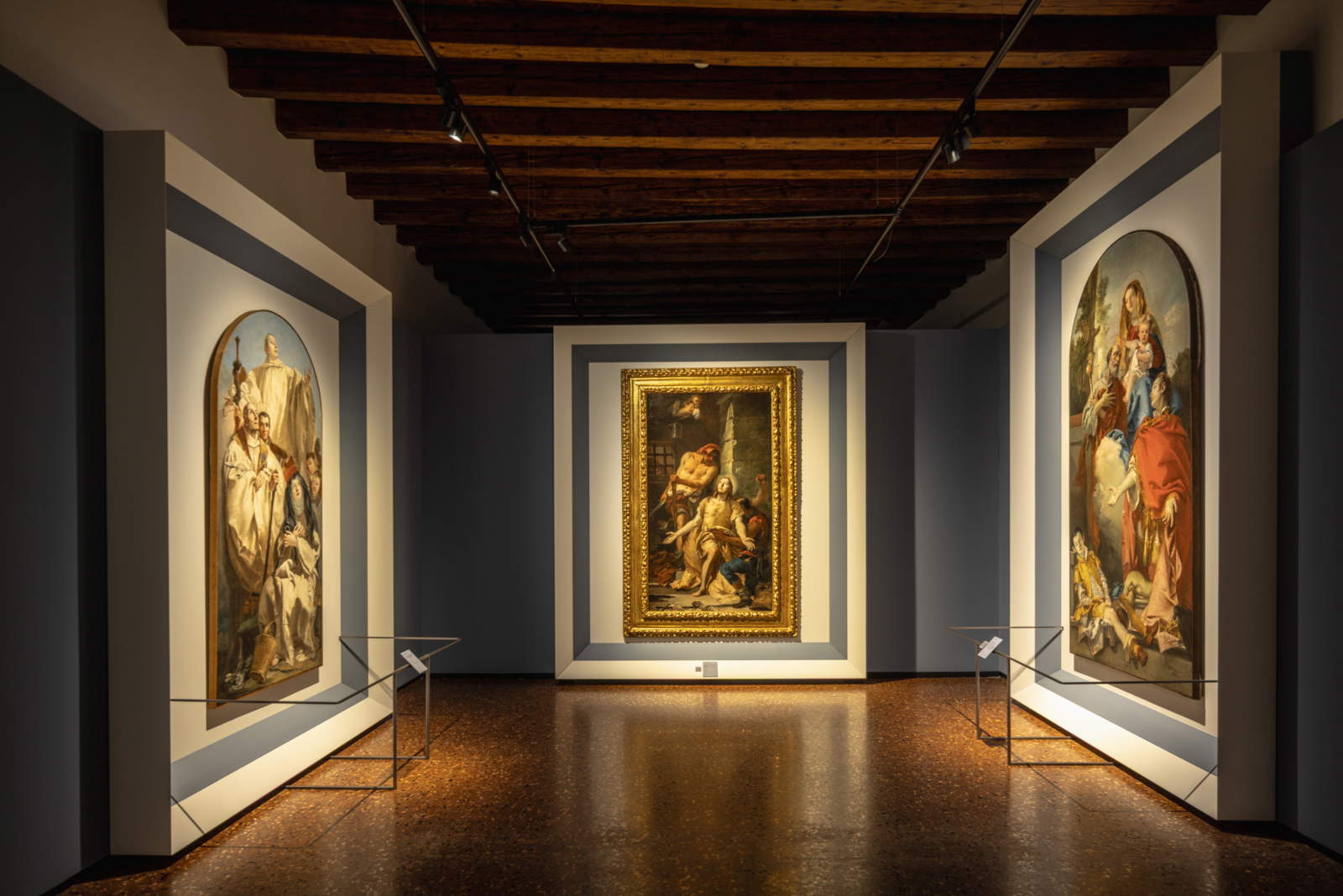
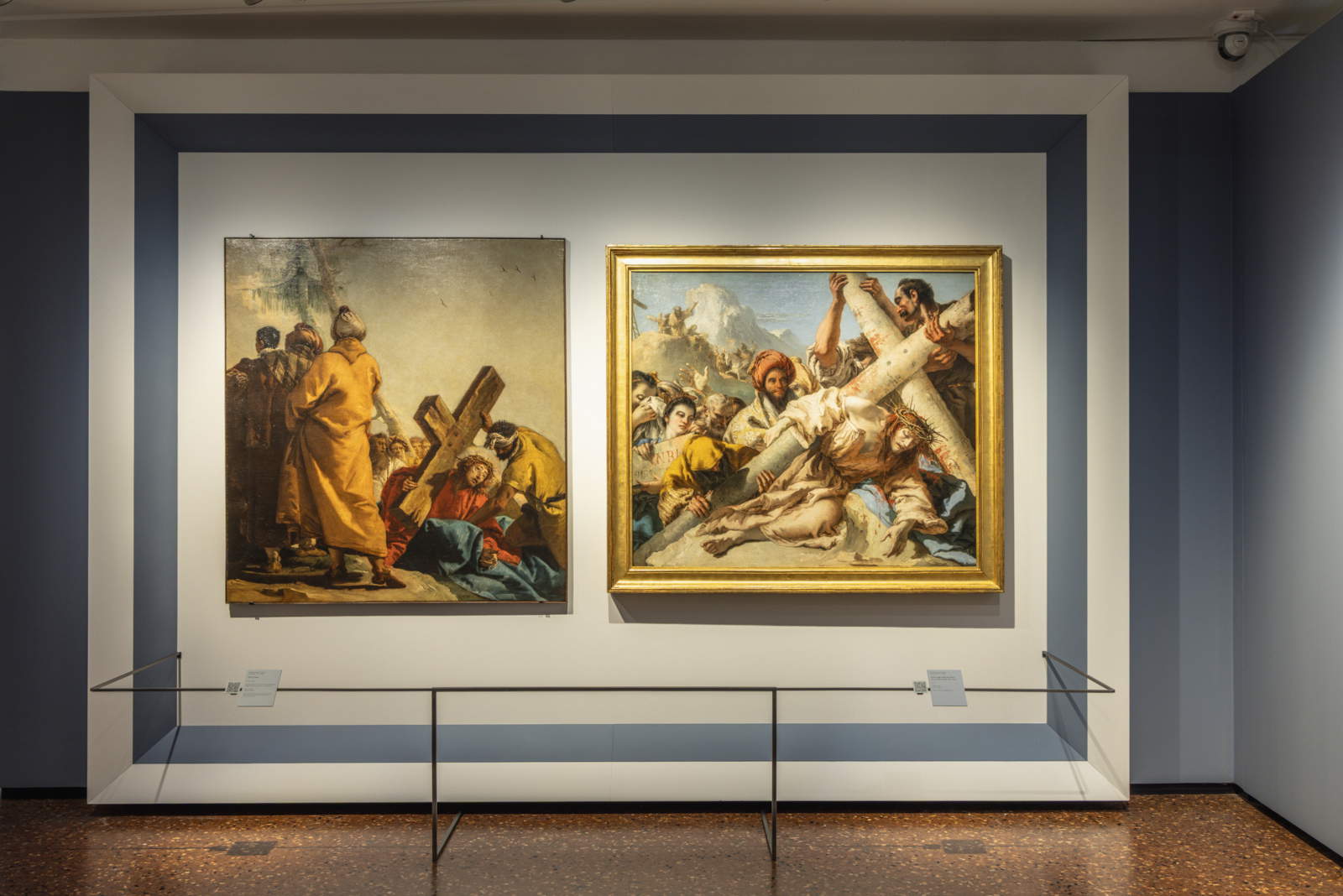
The exhibition explores the various aspects of his body of work. In his religious paintings, light and the spontaneity of emotion lend the figures a particular emotional intensity. The engraving series *Idee pittoresche* and *Divertimento per li regazzi*, on the other hand, attest to the richness of his graphic imagination, while the drawings inspired by his father’s models reveal extraordinary technical mastery. The *Teste di carattere*, with their expressive exploration, also display a sensibility that resonates with Rembrandt’s legacy.
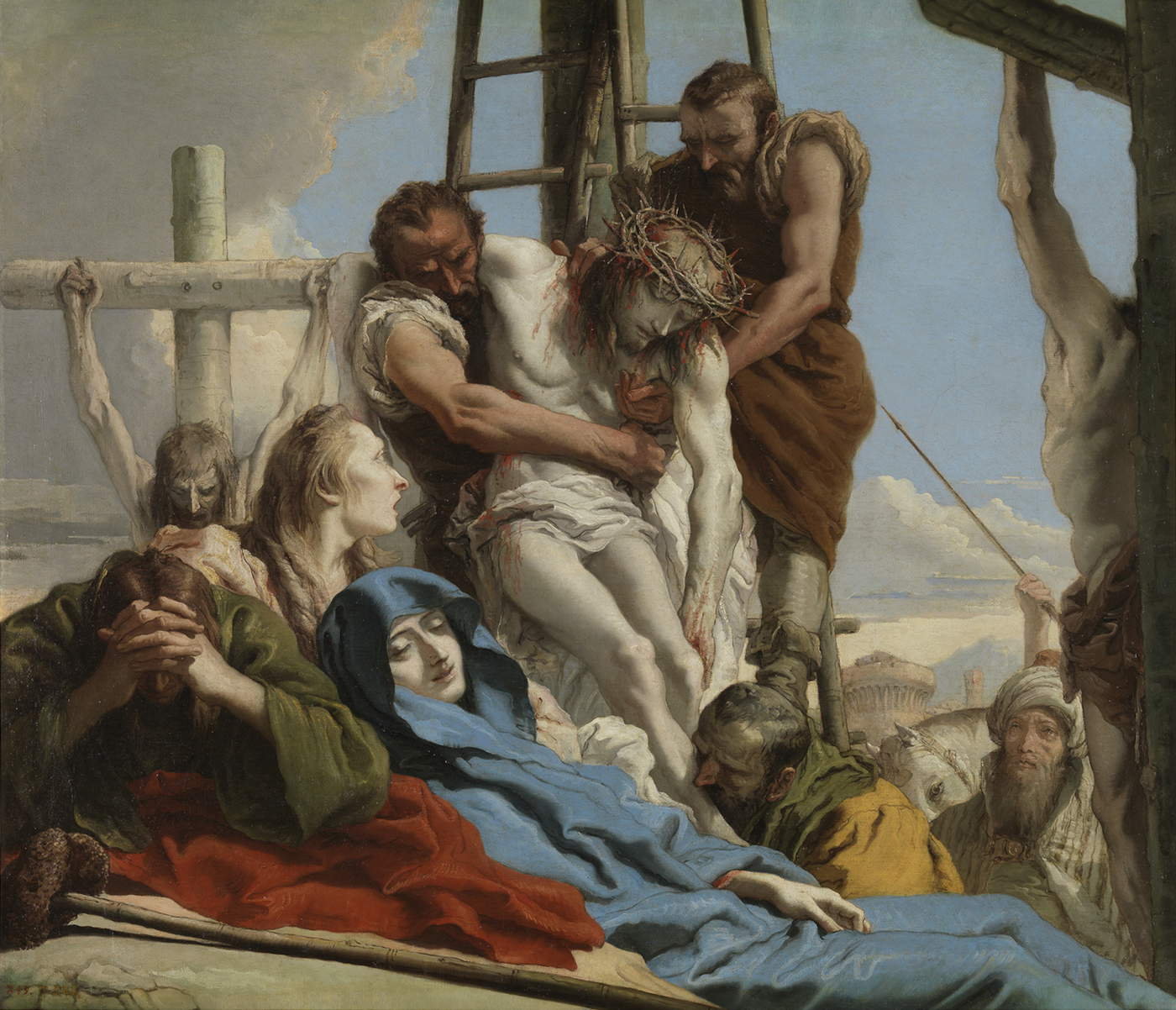
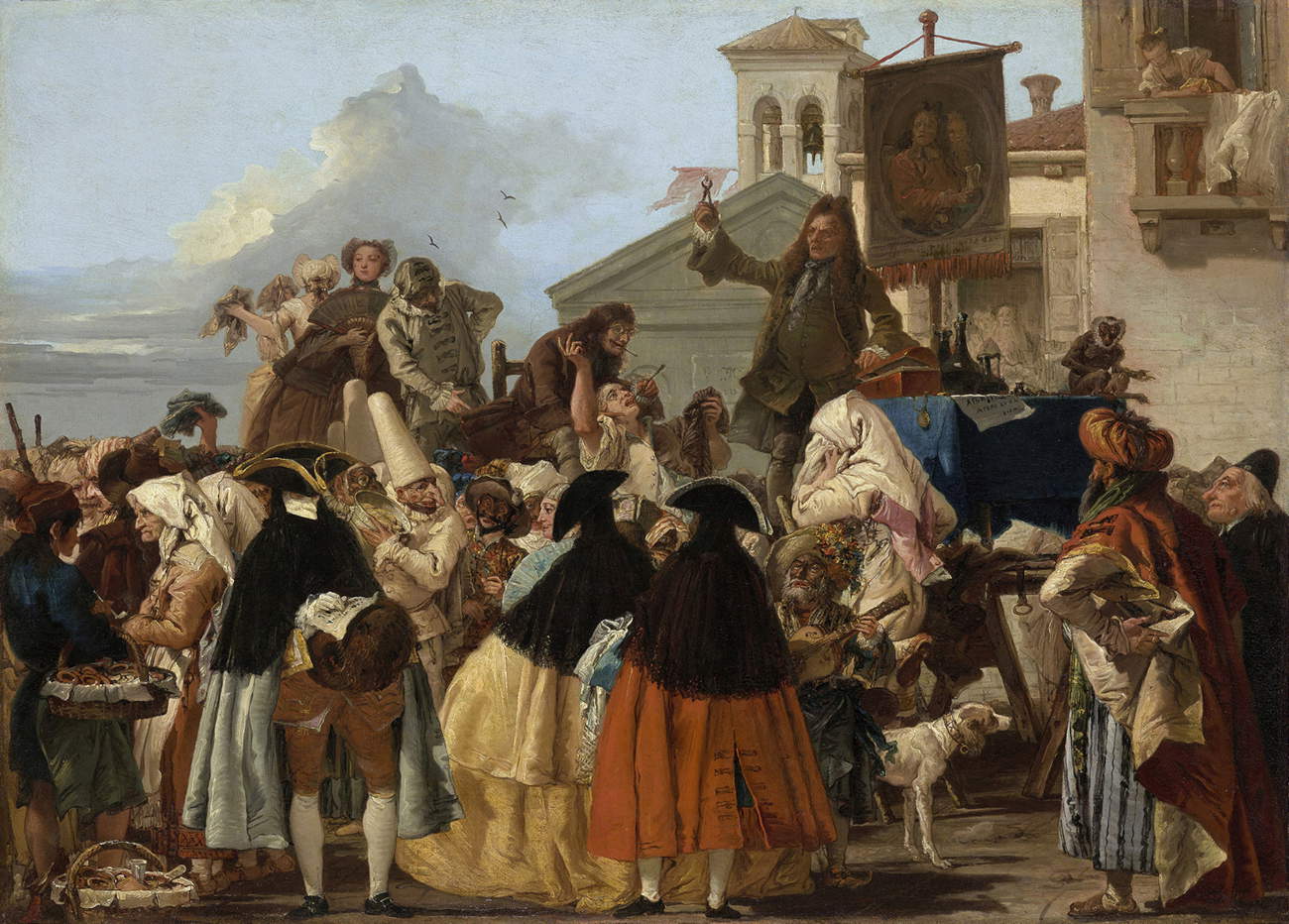
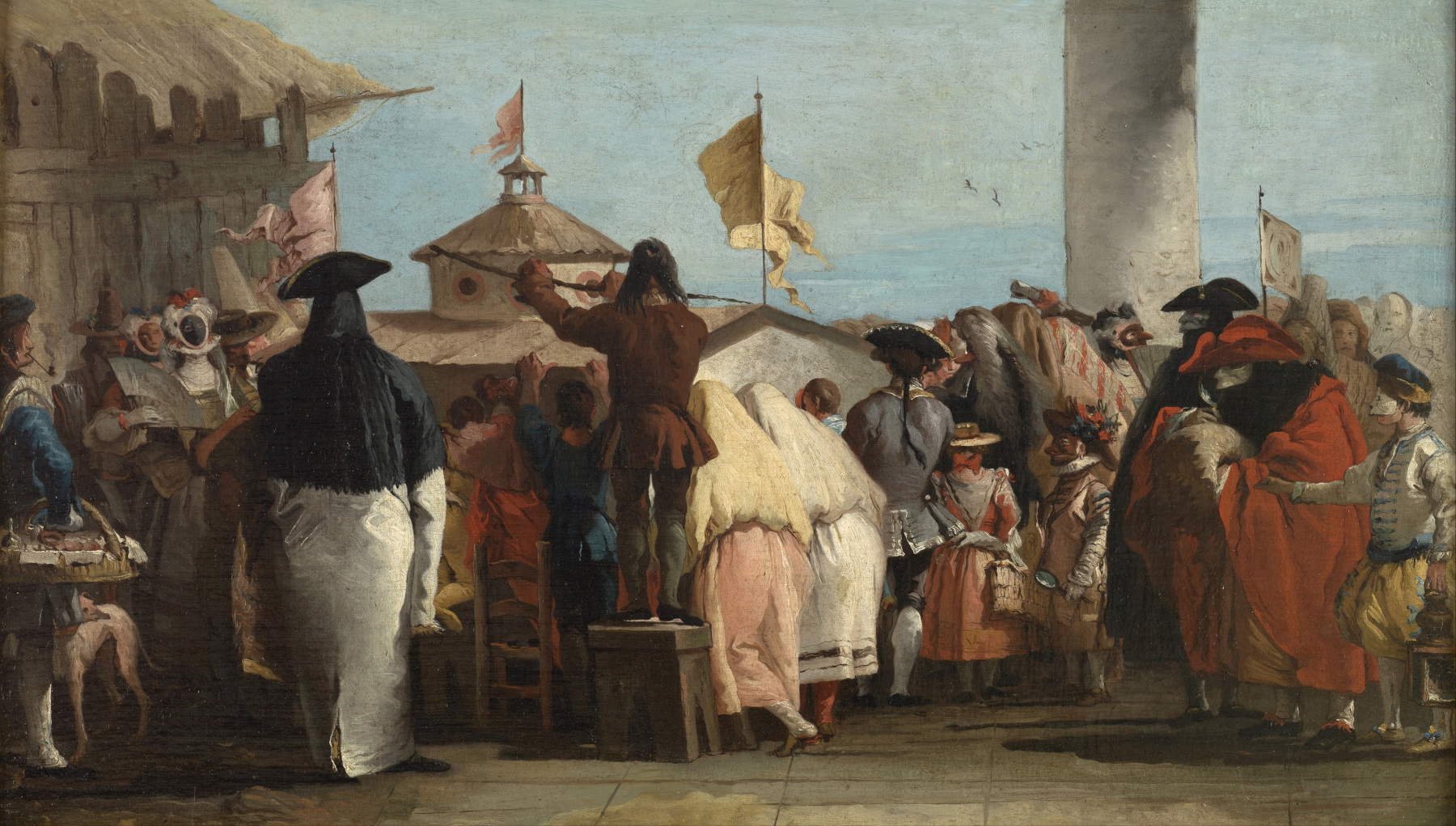
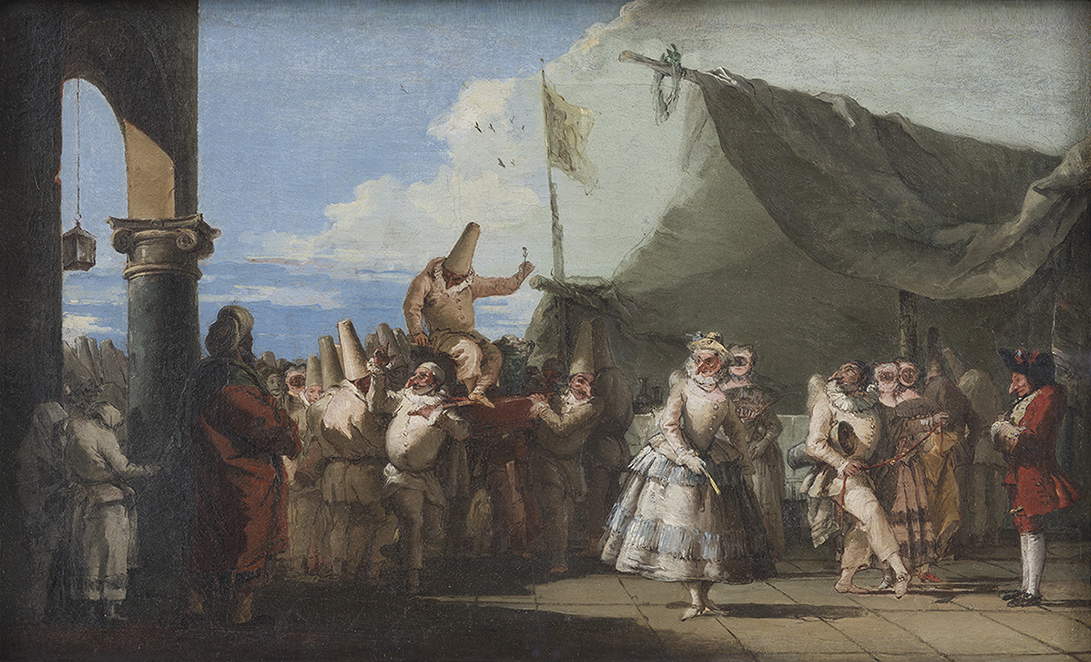
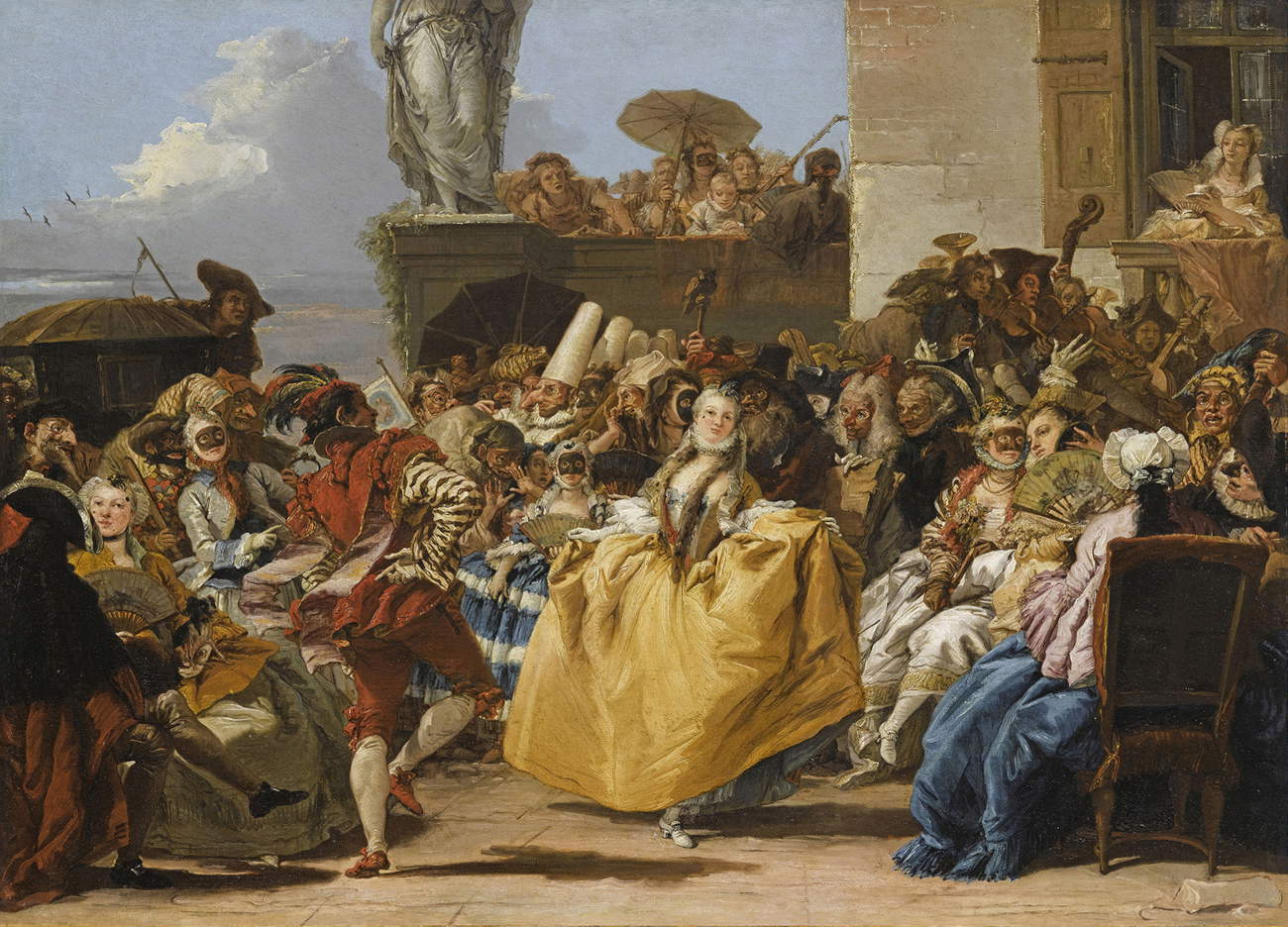
At the heart of the exhibition are the genre scenes, among the most innovative aspects of Giandomenico’s art. In his paintings, 18th-century Venice becomes a stage for gestures, encounters, and attitudes observed with irony and empathy. Everyday life thus takes on narrative value and becomes a tool for exploring the society of the time.
The work *Mondo Novo*, on loan from the Prado Museum in Madrid and chosen as the inspiration for the exhibition’s title, is emblematic. The scene depicts a crowd gathered around an optical device, drawn by the chance to view images and discover distant realities. It is precisely in his ability to capture people’s curiosity, habits, and emotions that an essential aspect of Giandomenico’s modernity lies. His gaze is not limited to describing Venetian society; it also conveys its psychological nuances, alternating between lightheartedness, empathy, and a subtle critical spirit.
One of the most significant expressions of the artist’s later career is found in the Pulcinella cycle, created at the family villa in Zianigo. Here, the mask of the Neapolitan folk tradition becomes an ambivalent figure—at once comic and melancholic—through which Giandomenico constructs a fantastical and deeply personal universe. The 18th-century repertoire is reworked into a meditation on time, memory, and the human condition. Far from the spectacular grandeur of Baroque frescoes, the artist develops an increasingly marked expressive freedom, endowing the scenes and characters with a poetic dimension that seems to anticipate modern sensibilities.
*A New World* thus aims to move beyond the image of Giandomenico as merely his father’s heir. Although trained in Giambattista Tiepolo’s workshop, the painter was able to forge an independent vision, in which the observation of everyday life intertwines with fantastical invention and a profound attention to the human condition. The world evoked by the title is not only that depicted in one of his most famous works, but also a new perspective on existence, capable of shifting the focus from grand history to the faces, gestures, and emotions of ordinary people.
Accompanying the exhibition will be a comprehensive program of #INSIDE initiatives, featuring historical and artistic insights, musical events, and art-and-drink gatherings. The public can also participate in themed tours, guided visits, and family workshops, while a dedicated educational program has been organized for schools, featuring guided tours and creative workshops.
The exhibition extends beyond the museum galleries, engaging the city through the Vicenza Tiepolo Card, created to mark the third centenary of the artist’s birth. The Card connects the Gallerie d’Italia – Vicenza to the Foresteria of Villa Valmarana ai Nani, the Palazzo Chiericati Museum, and the Palladio Museum, offering a cultural itinerary through sites linked to the region’s artistic history. Discounts are available for visitors, along with the opportunity to take part in special guided tours.
The exhibition catalog is published by Società Editrice Allemandi. The Gallerie d’Italia – Vicenza are part of Intesa Sanpaolo’s museum project, which also includes locations in Milan, Naples, and Turin, under the leadership of Michele Coppola, the Bank’s Executive Director of Art, Culture, and Historical Heritage and General Director of the Gallerie d’Italia.
“Bringing an exhibition to Vicenza that, drawing inspiration from the permanent collections, allows visitors to rediscover an eccentric 18th-century Venetian painter,” said Coppola, “means affirming the Gallerie d’Italia as a vital part of the city and reaffirming the bond between Intesa Sanpaolo and its museum with the Vicenza community. We are working to enrich the region’s cultural offerings, alongside local institutions and open to dialogue with international partners, such as the University of Würzburg Museum. Alongside the great Giambattista, Giandomenico Tiepolo also deserves renewed attention: dedicating an exhibition to him on the occasion of the 300th anniversary of his birth makes this project a particularly significant opportunity to explore his personality and role within the broader landscape of European painting.”
The exhibition is open to the public Tuesday through Sunday from 10 a.m. to 6 p.m. Closed on Mondays.
Tickets: Full price 5 euros, reduced price 3 euros; free admission for affiliated organizations, schools, visitors under 26, Intesa Sanpaolo Group customers, and on the first Sunday of every month.
|
| Giandomenico Tiepolo, the Genius Beyond His Father: An Exhibition in Vicenza Rediscovers the Painter’s Originality |

Warning: the translation into English of the original Italian article was created using automatic tools. We undertake to review all articles, but we do not guarantee the total absence of inaccuracies in the translation due to the program. You can find the original by clicking on the ITA button. If you find any mistake,please contact us.

























 IT
IT FR
FR DE
DE ES
ES CN
CN


