



by Redazione 30/10/2026


Categories: Exhibitions / Disclaimer
Bottegantica, in Milan, is presenting the exhibition “Futurism 1918–1944” from October 30 to December 4, 2026, dedicated to the movement’s developments in the 1920s, 1930s, and 1940s, featuring works by Balla, Depero, Fillia, and Tato.

From October 30 to December 4, 2026, the Bottegantica Gallery in Milan will host “Futurism 1918–1944,” an exhibition dedicated to the movement’s developments during the interwar years. The exhibition, curated by the gallery and on view at its location at Via Alessandro Manzoni 45, examines the transformations of one of the longest-lasting and most multifaceted artistic movements in 20th-century Italian art, moving beyond its early avant-garde phase.


The exhibition opens, in a sense, with Giacomo Balla’s *Colpo di fucile* (1918), a work in which the swiftness of the drawn gesture captures the explosion and preserves the echo of Futurism’s heroic phase. The end of World War I marked a decisive turning point for the movement, which was called upon to redefine its concept of modernity in a profoundly changed context.
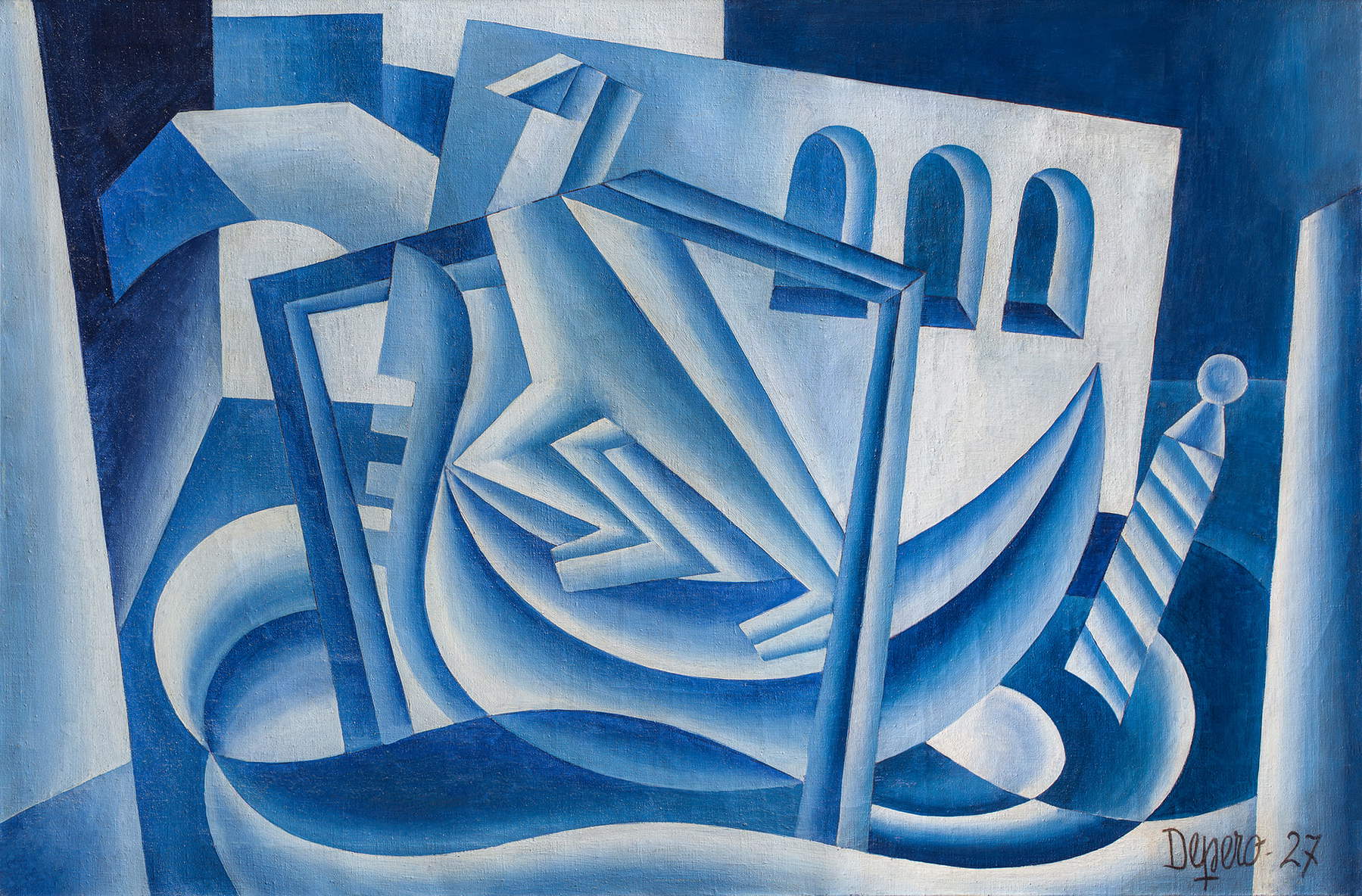
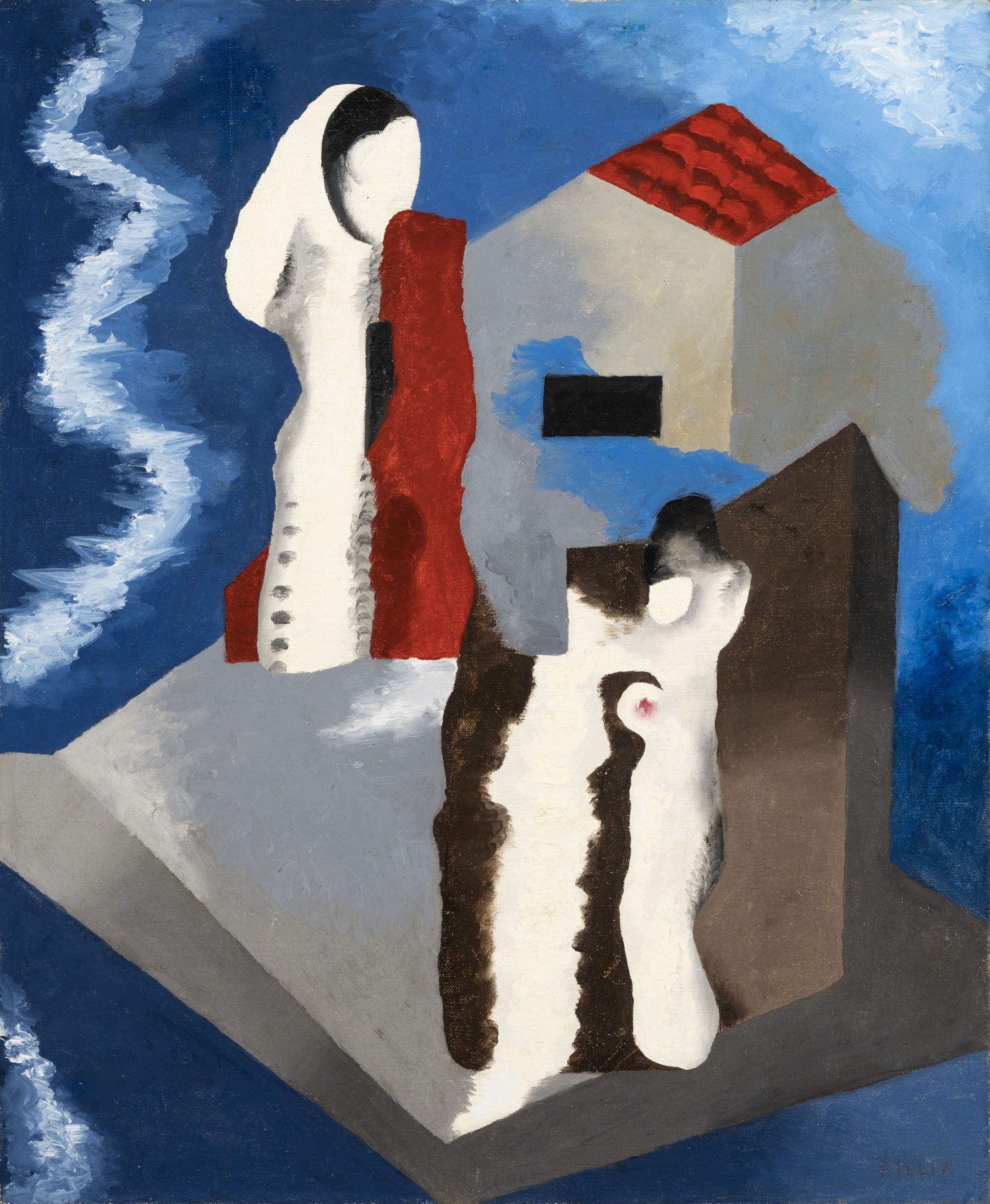
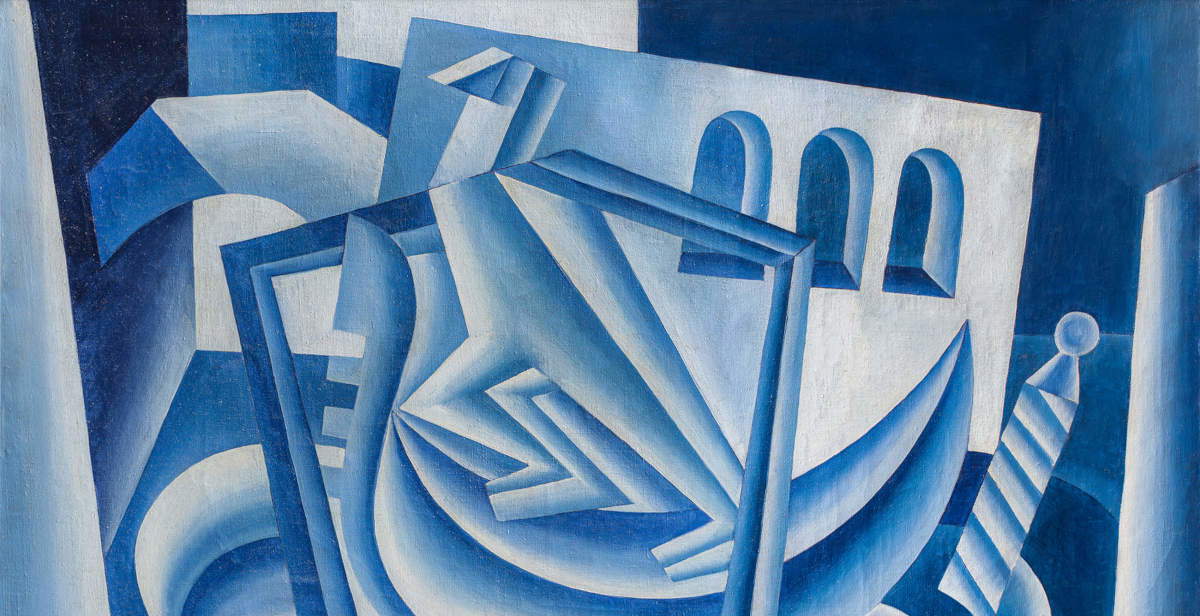
In the 1920s, engagement with the European avant-garde fostered the emergence of a post-Cubist and mechanical visual language. An example of this is Fillia’s *Femminilità* (1928), in which the human figure is combined with forms derived from the imagery of the machine. A more playful and fairy-tale-like interpretation emerges, however, in Fortunato Depero’s * * (1927), a work presented in 1960 by the Galleria Blu in Milan in one of the first exhibitions dedicated to post-World War I Futurism.



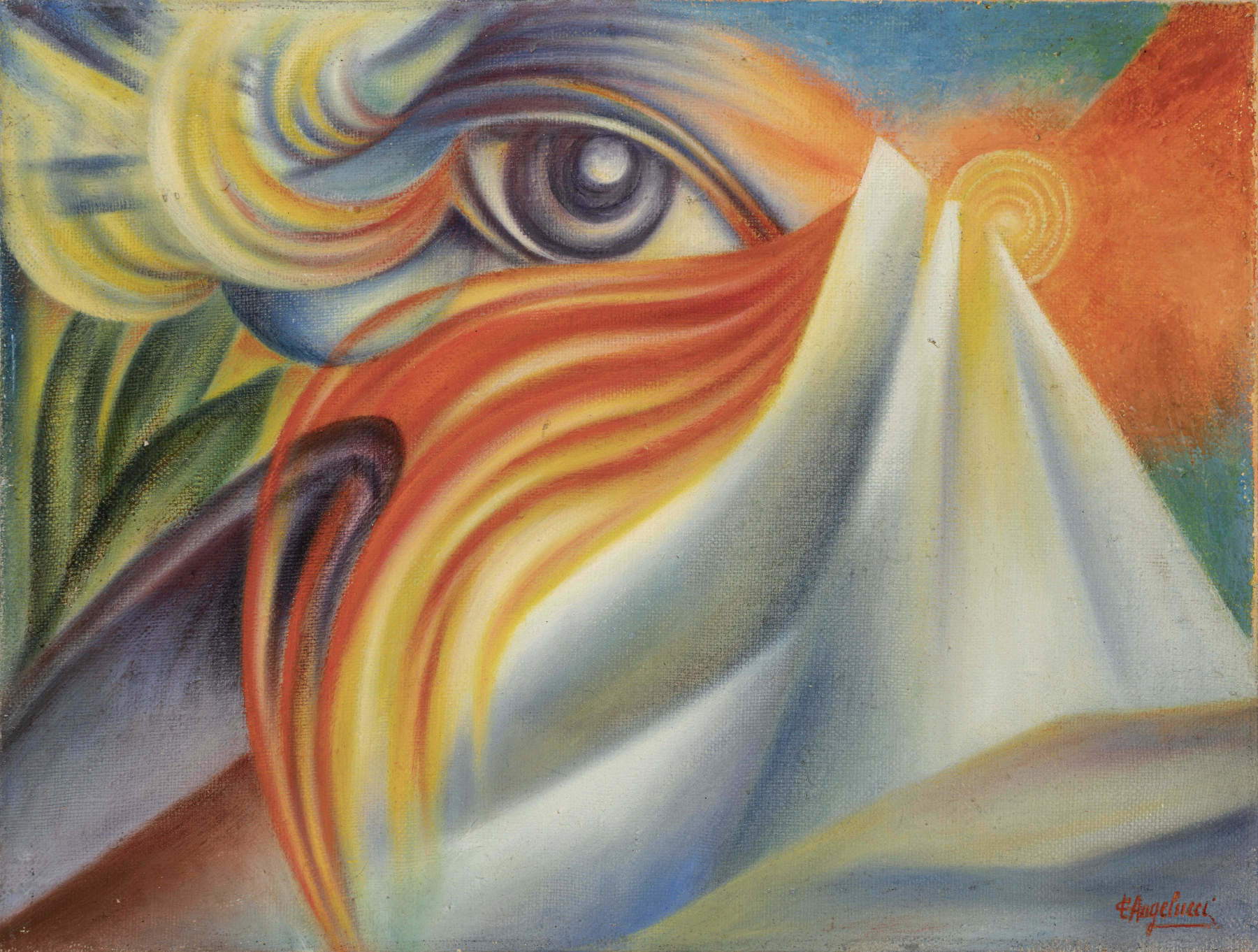
The exploration of the applied arts, initiated with the 1915 Manifesto of the Futurist Reconstruction of the Universe, continues in Thayaht’s Decorative Motifs. These works—which may have been studies for ceramics or textiles—combine geometric rigor with chromatic experimentation. Experimentation with materials and techniques also includes Farfa’s paper painting, represented by *Mani e riflessi variopinti* (1924), and Tulli’s collage, which engages with the imagery of aeropainting.
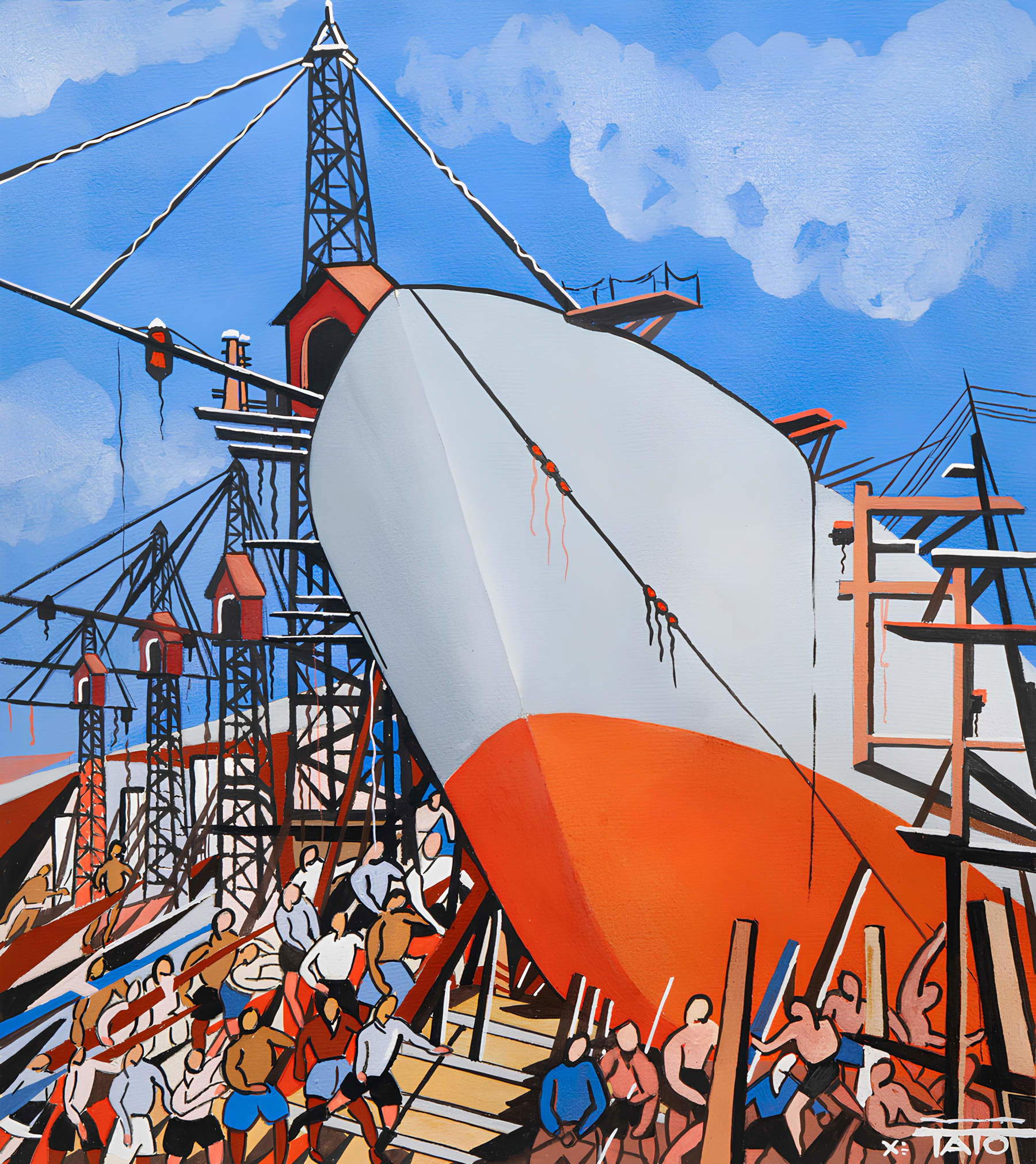
In the 1930s and 1940s, the perception of space and shifting viewpoints took on a central role. Tato, one of the leading exponents of Futurist aeropainting, is represented by a famous *Aeropittura*, exhibited in 1933 at the Golfo della Spezia National Painting Prize, and by tempera illustrations on paper dedicated to politics and labor during the twenty-year Fascist regime, including *Work* (The Launching of the Ship) (1932). These works also document the relationship between Futurist imagery, public communication, and the representation of contemporary society.
Related to this context is the work of Carlo Vittorio Testi, a painter, illustrator, and graphic designer who became involved with Futurism in the early 1930s; his work *The Marchers* (1930) is on display. Two theatrical sketches by Tato, presented in the Italian Futurist Theater hall at the 1928 Venice Biennale, also attest to his interest in the stage as a meeting place for painting, architecture, light, and movement.
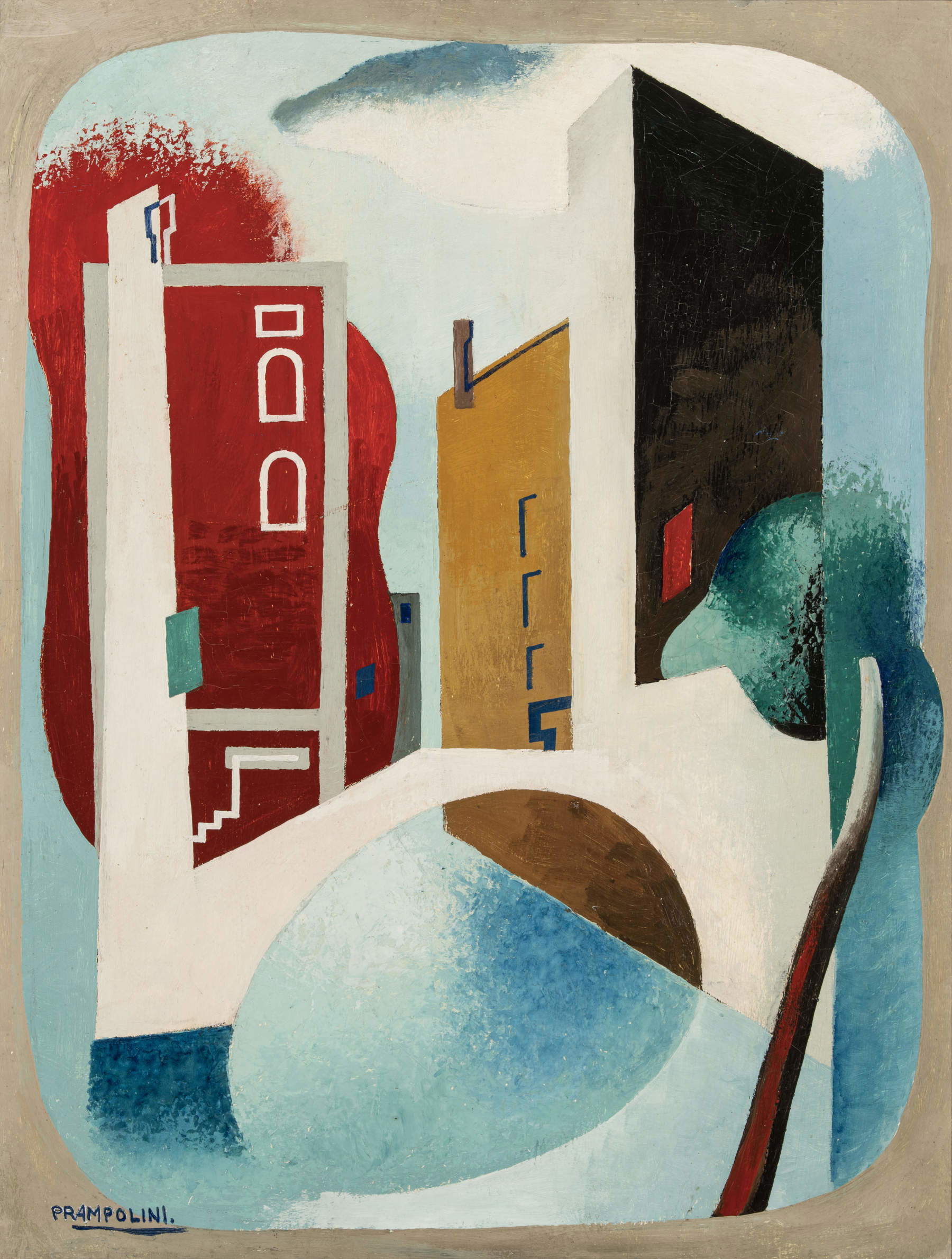
Rounding out the exhibition is Enrico Prampolini, a central figure in the movement’s transformation, whose work spans painting, theater, and graphic design, moving toward a cosmic and abstract conception of space. The exhibition is open Tuesday through Saturday, from 10 a.m. to 1 p.m. and from 3 p.m. to 7 p.m. The exhibition will be accompanied by a richly illustrated catalog, featuring an essay by Tommaso Carletti dedicated to the rediscovery of Futurism between the two world wars in private galleries during the late 1950s and early 1960s. The press preview is scheduled for Thursday, October 29, at 11 a.m.
 |
| How did Futurism change between the two world wars? An exhibition in Milan explores this question |
Warning: the translation into English of the original Italian article was created using automatic tools. We undertake to review all articles, but we do not guarantee the total absence of inaccuracies in the translation due to the program. You can find the original by clicking on the ITA button. If you find any mistake,please contact us.