



by Redazione 10/11/2026


Categories: Exhibitions / Disclaimer
Through January 31, 2027, the facade of the tower at the Governor’s Palace in Parma will host UNICHE, a digital exhibition curated by Serena Tabacchi and Cesare Biasini Selvaggi. Twelve international artists explore the possibilities of artificial intelligence, code, and new visual languages.


In Parma, the facade of the Palazzo del Governatore tower is becoming a testing ground forcontemporary digital art. Through January 31, 2027, every day from 4 p.m. to midnight, the building overlooking Piazza Garibaldi will host UNICHE. Featuring twelve international female artists working with code and artificial intelligence, this video mapping exhibition brings the work of twelve leading figures in the international digital art, artificial intelligence, and new media art scenes into the public space.


The project, curated by Serena Tabacchi and Cesare Biasini Selvaggi, is a collateral exhibition of LEI: Portraits of Women, from Van Gogh to Modigliani and Beyond. Masterpieces from the National Gallery of Modern and Contemporary Art, currently on view in the halls of the Governor’s Palace. Produced by the City of Parma with the support of the Cariparma Foundation and the Emilia-Romagna Region, and with a contribution from Iren, UNICHE brings together works by Sasha Stiles (1980, Pasadena, United States), Krista Kim (1976, Toronto, Canada), Sofia Crespo (1991, Buenos Aires, Argentina), Sarah Zucker (1985, Cleveland Heights, United States), Sara Ludy (1980, Orange, United States), Linda Dounia (1994, Mbour, Senegal), Ivona Tau (1990, Vilnius, Lithuania), Anne Spalter (1965, Providence, United States), Rosa Menkman (1983, Arnhem, Netherlands), Chiara Passa (1973, Rome), Kamilia Kard (1981, Milan), and Jenni Pasanen (1993, Finland).


Through the technique of projection mapping, the tower’s historic architecture is transformed into a dynamic visual canvas, upon which the works engage in a dialogue with history and the urban context. The project invites reflection on contemporary artistic languages, focusing on issues such as the relationship between artificial intelligence and creativity, ecological memory, speculative biology, and computational aesthetics. The research of the twelve artists thus forms a collective exploration of the expressive possibilities of digital technologies and the transformations in the way images are produced and perceived.


The exhibition begins with *Structures of Being* (2024) by Sofia Crespo, which reworks the building’s architectural elements through organic forms in constant metamorphosis, drawing inspiration from Antoni Gaudí’s vision and his ability to translate the structures of nature into architecture. The relationship with the natural world reappears in Linda Dounia’s *Once Upon A Garden* (2021–2024), a speculative archive created using artificial intelligence that reconstructs the visual memory of extinct or endangered plant species.
Physicality and the relationship with technology, on the other hand, are at the heart of Kamilia Kard’s *La danza del sesto petalo* (2026), while Krista Kim’s *Continuum* (2017) transforms the screen into a contemplative space, evoking Zen gardens through subtle chromatic transitions. The exploration of virtual landscapes continues with Sara Ludy’s Clouds series, comprising *Deep Pond*, *Sky Lapis*, and *Sky Ruby* (2017–2018): through generative processes, the artist simulates organic phenomena and creates moving paintings and artificial cosmic spaces. In *Horology* (2026), Rosa Menkman, on the other hand, addresses the theme of the algorithm, interpreted as a new contemporary myth and a tool through which to interpret reality.
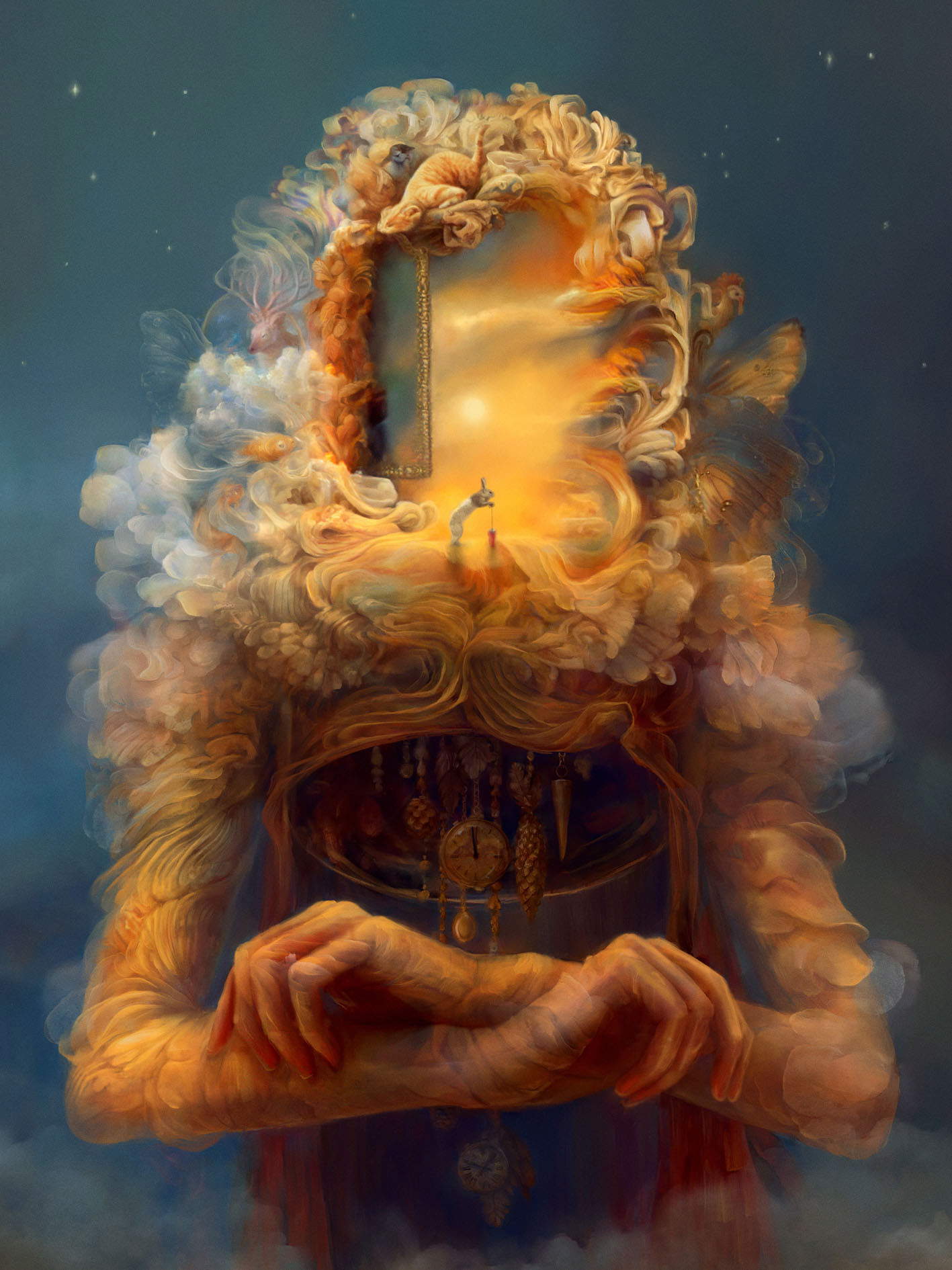
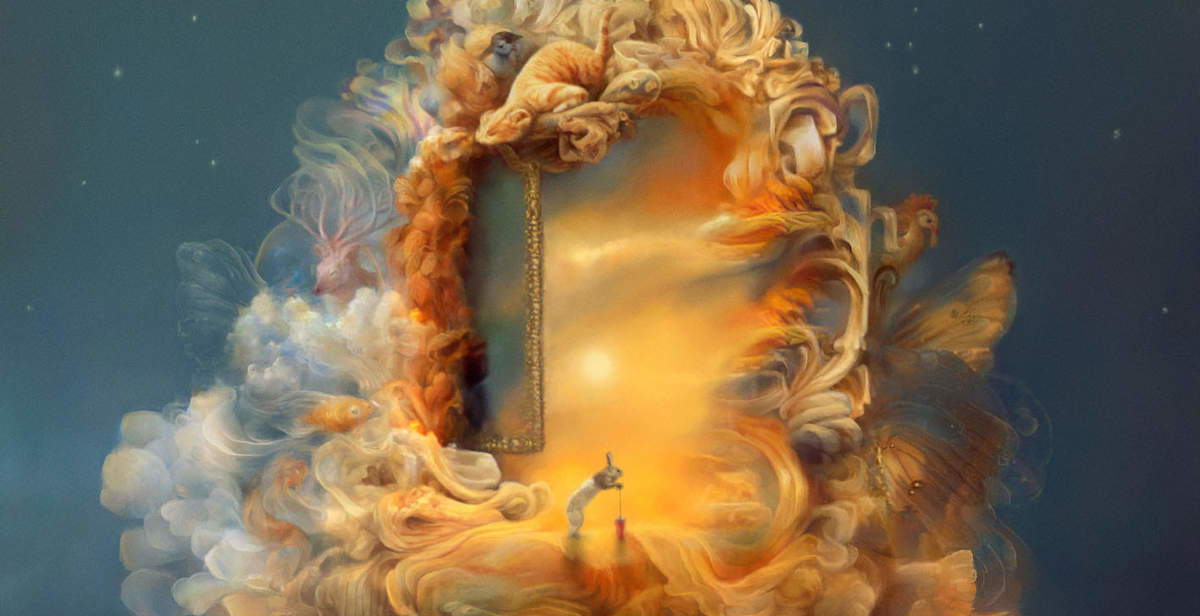
The dialogue between human and digital creativity also emerges in Jenni Pasanen’s *Mirror Mirror* (2022), a work in which the two dimensions merge into a fluid relationship between human and machine. Chiara Passa’s animations— *Abstract Class* and *Null Void 0* (2017) and *Dimensioning* (2015)—reimagine architecture as a living entity, challenging the separation between physical and virtual space.
The cosmic dimension characterizes Anne Spalter’s *Meet Me in the Sun* (2018), which reworks materials from NASA’s archives into a psychedelic kaleidoscope dedicated to the Sun, taken as a universal symbol of unity. In *Khutulun* (2026), Sasha Stiles, on the other hand, draws on the figure of the legendary Mongolian warrior, forging a connection between poetry, tradition, and technological experimentation.
Ivona Tau addresses the identity and representation of the female body in *UnBeautiful* (2024) and *Bi(t)ological Clock* (2025), works in which the artist uses artificial intelligence and blockchain to challenge aesthetic standards and reflect on biological time. The exhibition concludes with Sarah Zucker’s works *Shadow Bodies* (2019) and *The Dance of the Rendered* (2021), which draw on VHS aesthetics and glitch art to explore digital presence as a possible extension of the human nervous system and its shadows.
 |
| In Parma, twelve female artists are transforming a historic tower into a video-mapping installation about AI |
Warning: the translation into English of the original Italian article was created using automatic tools. We undertake to review all articles, but we do not guarantee the total absence of inaccuracies in the translation due to the program. You can find the original by clicking on the ITA button. If you find any mistake,please contact us.