





The National Gallery in London is dedicating its first-ever exhibition to the portraits of Jan van Eyck, one of the greatest figures of the Northern Renaissance. The exhibition, titled “Van Eyck: The Portraits,” will run from November 21, 2026, to April 11, 2027, and will bring together masterpieces from Europe’s leading museums. The exhibition is an unprecedented event: all ten portraits attributed to the artist—half of the twenty extant autograph portraits—will be on display. It offers a unique opportunity to trace the evolution of Van Eyck’s portraiture and understand the influence he exerted on 15th-century European painting.
Among the highlights of the exhibition is one of the most exceptional loans ever granted: the Portrait of an Elderly Man, a drawing created around 1438 and housed at the Kupferstich-Kabinett of the Staatliche Kunstsammlungen in Dresden. It isthe only drawing by Jan van Eyck to have survived to the present day andthe only confirmed preparatory study for a Flemish painting from that period. Executed in silverpoint and goldpoint on primed paper, the drawing reveals the artist’s creative process with extraordinary precision, thanks to its meticulous color annotations and the refined rendering of the face. For the second time ever, it will be reunited on this occasion with the painting to which it is linked, the Portrait of an Elderly Man (a Scholar?), housed at the Kunsthistorisches Museum in Vienna.
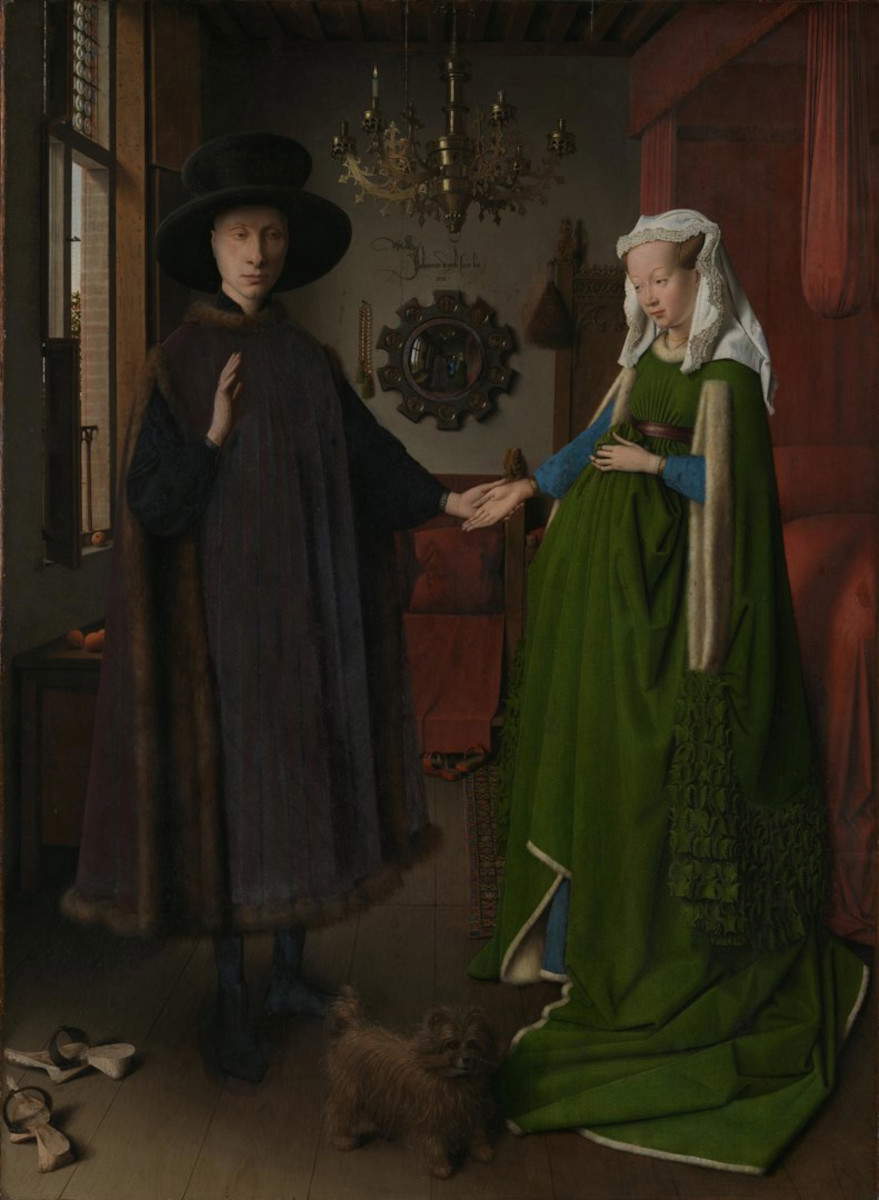
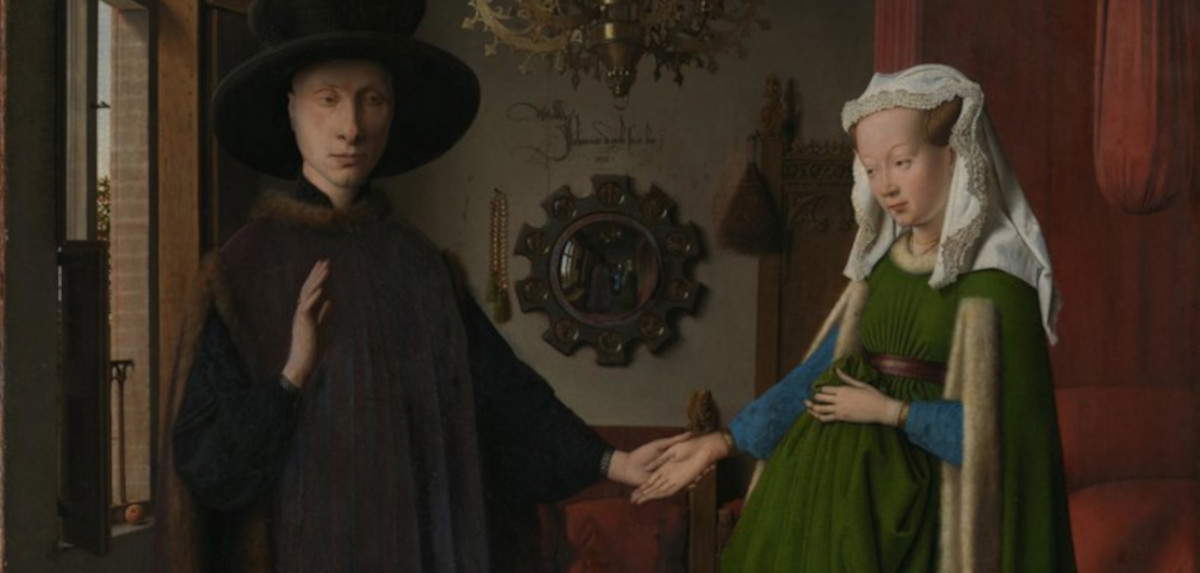
Among the most anticipated events of the exhibition is the reunion of the world-famous *Portrait of the Arnolfini Couple* from 1434—one of the National Gallery’s iconic works—with the *Portrait of a Man (Giovanni Arnolfini?)*, dated circa 1435–1438, from the Gemäldegalerie in Berlin. This will be the first time the two paintings have been exhibited together. The fact that Van Eyck portrayed the same person on two occasions is almost unique in the painting of that era and suggests a particularly close relationship between the artist and his subject.
The exhibition will also offer the opportunity to admire the Portrait of a Man (self-portrait?), from 1433, recently restored and part of the National Gallery’s collections, alongside the Portrait of Margaret, the Painter’s Wife (1439, Musea Brugge). The latter is considered one of the earliest dated portraits of a woman who was not a member of the aristocracy and represents a significant moment in the history of European portraiture, marking the transition from an exclusively dynastic tradition to a broader focus on the bourgeoisie, artisans, and the artist’s personal circle.
Alongside the paintings, four drawings will also be on display, including Rogier van der Weyden’s Portrait of a Young Woman (c. 1435–1440, British Museum), likely created in response to the innovations introduced by Van Eyck. Two other drawings by artists from his circle will illustrate the spread of his artistic language and allow visitors to compare techniques, style, and the conception of portraiture in 15th-century Flemish painting.
The exhibition will also be enhanced by the inclusion of portraits by Jan de Leeuw and the aforementioned *Portrait of an Elderly Man* (a scholar?), both exceptionally loaned by the Kunsthistorisches Museum in Vienna. This is the first time the Viennese museum has simultaneously loaned its Jan van Eyck paintings for a single international exhibition.
Thanks to these reunions and the numerous loans from European institutions, “Van Eyck: The Portraits” stands as one of the most important exhibitions ever dedicated to the Flemish master. An opportunity to explore the origins of the modern portrait and rediscover the technical innovation, psychological insight, and extraordinary powers of observation that made Jan van Eyck one of the foremost figures in the history of Western art.
“Some stories have no beginning. Portraiture is one of them. It burst onto the scene, already fully formed, in the 1430s under the brush of Jan van Eyck. None of the stylized likenesses that preceded his work would be considered a portrait today: we wouldn’t recognize the subjects if we met them on the street. Everything changes with van Eyck. By pushing the limits of oil painting to convey a convincing illusion of reality, we suddenly find ourselves face-to-face with individuals pulsing with life, every single detail of their appearance captured, subjects who look at us and speak to us through elaborate, multilingual inscriptions. The ability of these portraits to disorient us with their precision and vividness remains intact to this day. “Yet, just as van Eyck defined the nascent genre of portraiture, he also subverted it with his cryptic inscriptions and the interplay of materials in his frames and reverse sides,” said Emma Capron, curator of Flemish and Early German paintings at the National Gallery.
“Van Eyck is one of the pillars of the National Gallery’s collection and a pivotal figure in the history of European art. His portraits reflect a remarkable sensitivity toward his subjects and extraordinary technical virtuosity in their execution. This will be an exceptional opportunity to see them all brought together in one place,” concluded Gabriele Finaldi, director of the National Gallery.
 |
| London: The National Gallery Hosts the First Exhibition on Jan van Eyck’s Portraits, Bringing Together 10 Masterpieces from Across Europe |

Warning: the translation into English of the original Italian article was created using automatic tools. We undertake to review all articles, but we do not guarantee the total absence of inaccuracies in the translation due to the program. You can find the original by clicking on the ITA button. If you find any mistake,please contact us.
























 IT
IT FR
FR DE
DE ES
ES CN
CN


