




From October 3 to December 8, 2026,Matera will host *The Sea Is Closer Than You See*, a site-specific group exhibition dedicated to the relationship between contemporary art, digital technologies, artificial intelligence, and Mediterranean culture. The project is curated by Chiara Canali, in collaboration with Simona Spinella, and is part of the TERRE IMMERSE program —Matera, Mediterranean Capital of Culture and Dialogue 2026.
The exhibition is sponsored by the Matera Basilicata 2019 Foundation and the City of Matera, with support from the Ministry of Culture, as part of the Matera Mediterranean Capital of Culture and Dialogue 2026 program. The initiative is organized in collaboration with the National Museums of Matera, the Basilicata Regional Promotion Agency, MUSMA, and TAM, and has received institutional patronage from the Embassy of the Republic of Cyprus and the Embassy of the Republic of Latvia.
The project begins with a question: How far can the sea be from a place that belongs so deeply to the Mediterranean? Guiding the research is one of the statements contained in the TERRE IMMERSE Dossier: “direct access to the sea is not a prerequisite for belonging to the Mediterranean.” From this perspective, belonging to the Mediterranean does not depend exclusively on geographical proximity to the coast, but encompasses a network of relationships, exchanges, migrations, memories, economies, cultures, and transformations that extends even into inland areas.
Matera, a city in Basilicata far from the coast, is thus reinterpreted through the lens of its own geological and cultural history. The calcarenite of the Sassi preserves the memory of an ancient marine presence and tells the story of seabeds that subsequently emerged, while cisterns, water collection systems, and underground spaces bear witness to a millennia-long relationship with a resource crucial to human settlement. The sea, though not visible, is thus present in the very fabric of the city.
The exhibition’s title derives from this distance, which is only apparent. *The Sea Is Closer Than You See* does not identify a sea to be reached, but rather a sea already inscribed in the territory and its stratifications: in stone, in images, in memories, in bodies, in human journeys, and—in the contemporary world—also in data flows and algorithmic systems.
The works by Studio Azzurro, Andrea Crespi, Martin Romeo, Valentinaki, Leonardo Antonio Avezzano with Valentin Ammann, Baris Gencel, Giuseppe La Spada, Silvio Giordano, and Julius Horsthuis employ different artistic languages, ranging from video installation to photography, from holography to sound installation, from generative art to artificial intelligence, and from computer vision to immersive environments.
The exhibition also interprets the four core themes of TERRE IMMERSE — Stratifications, Isolations, Contaminations, and Transhumance —as four distinct lenses through which to view the contemporary Mediterranean. The sea is viewed as a territory of geological and cultural sedimentation, a space of relationship between center and periphery, a place of encounter and hybridization, but also a theater of mobility, migration, and the circulation of people, languages, and knowledge.
In Chiara Canali’s curatorial reflection, Franco Cassano’s *Pensiero meridiano* takes on particular significance, interpreting the Mediterranean as a space where differences enter into relationship. Even the etymology of *mediterraneus*—that which lies “in the midst of the lands”—is taken as a lens for interpretation: the sea represents not only a separation but also a means of communication. From this perspective, distance from the coast does not equate to distance from the Mediterranean.
Matera is thus regarded as a sort of Mediterranean “archive-city,” in which different times, cultures, and geographies overlap. The exhibition does not present a unified image of the Mediterranean nor does it rely on its traditional tourist iconography; rather, it emphasizes its plural, layered, fluid, and conflict-ridden nature, highlighting connections between territories, communities, and natural systems.
The exhibition unfolds across four venues in Matera’s historic center: Palazzo Lanfranchi, the TAM – Tower Art Museum, MUSMA – Matera Museum of Contemporary Sculpture, and the APT’s Basilicata Open Space, housed in Palazzo dell’Annunziata. These various institutions form an exhibition constellation that directly engages the urban landscape. The itinerary traverses the Sasso Caveoso and the city on the plain, moving from the cliff to the urban landscape and establishing connections between stone, water, memory, data, and the landscape. Water serves as the central theme of the experience, without, however, taking on a single form or an exclusive meaning.
At Palazzo Lanfranchi, in the two immersive rooms dedicated to the Levi and D’Errico collections, the exhibition begins with “WATER: Always different, always the same” (2026) by Giuseppe La Spada. The video installation collects and reworks fifteen years of images of water, transforming them into a liquid map that connects waters from different Mediterranean cities and territories.
In the D’Errico Room, Silvio Giordano’s *Lucania 2026* (2026) engages in a dialogue with Carlo Levi’s *Lucania ’61 *. Through artificial intelligence, the work reinterprets the sense of community centered around the figure of Rocco Scotellaro and the relationship with the territory, addressing themes such as depopulation, emigration, and the future prospects of Basilicata.
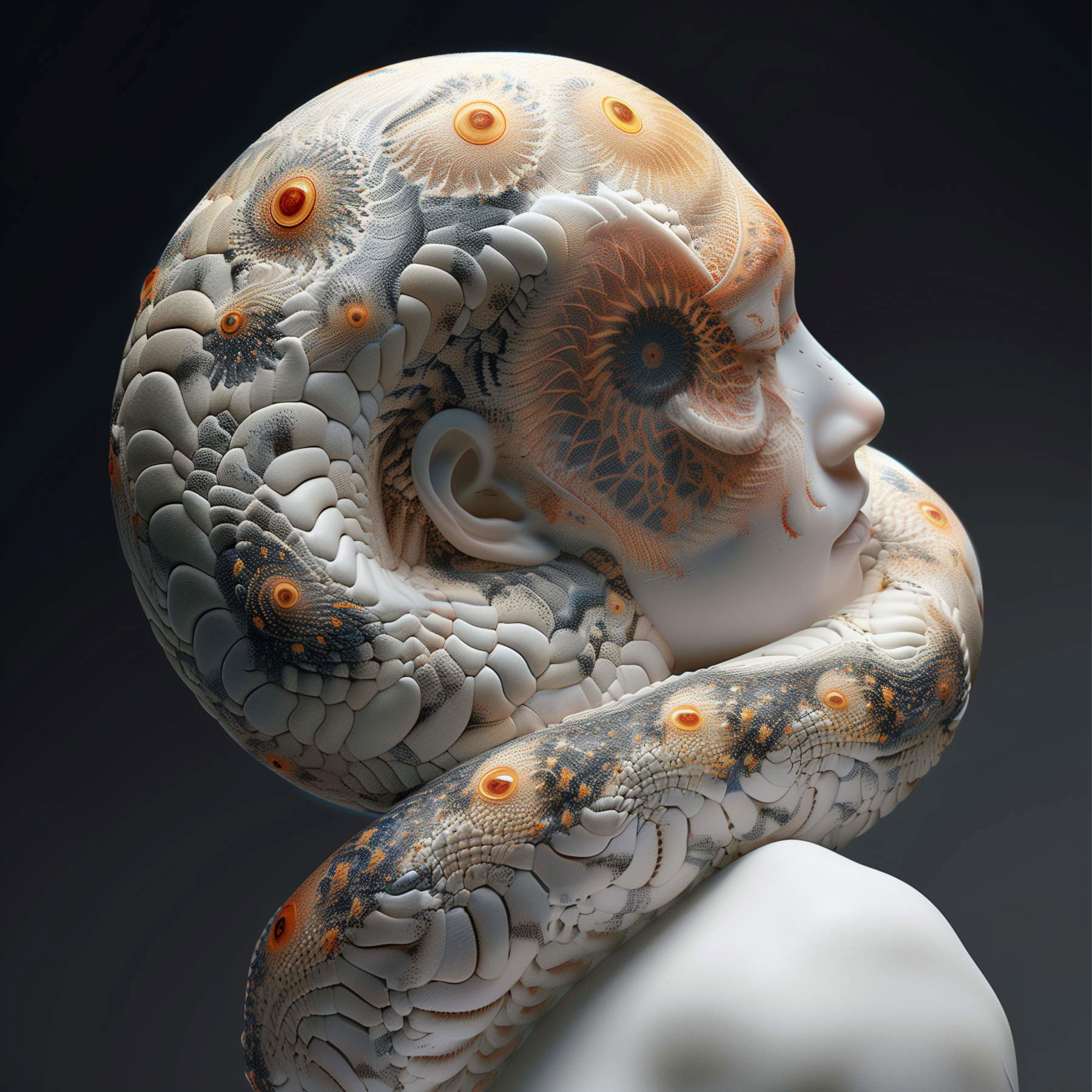
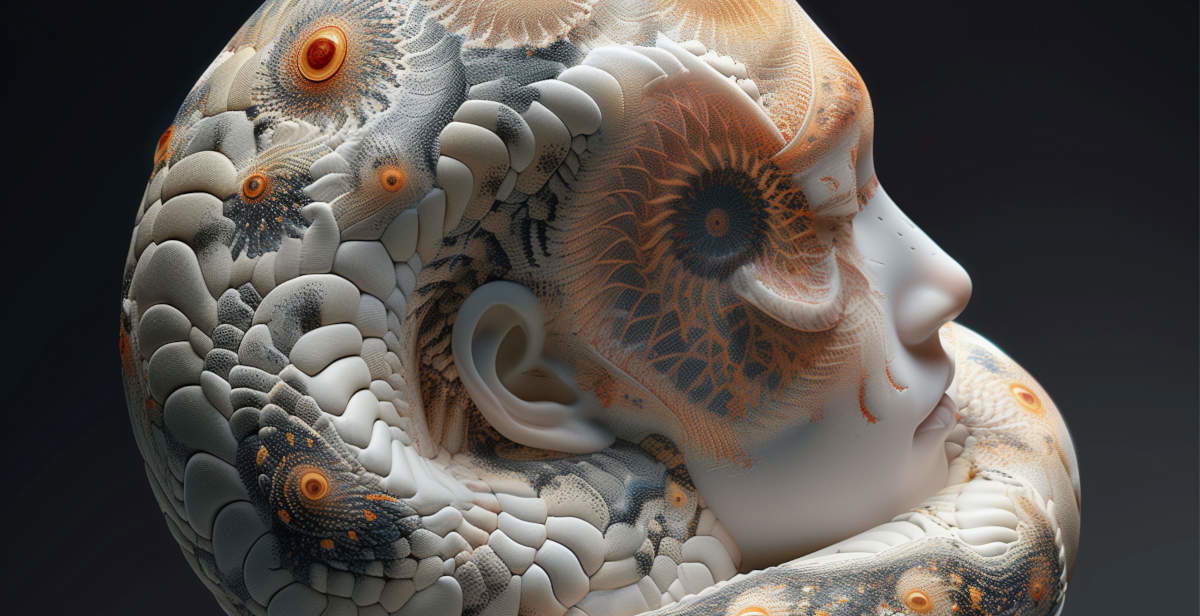
At the TAM Museum, Cypriot artist Baris Gencel presents *The Forgotten Sea & Memory of Stone*, an installation that uses artificial intelligence to reinterpret the geological and marine memory of Matera. Human faces, corals, shells, and minerals are interwoven within a visual narrative that connects body, water, and stone, transforming them into an imaginary archive of marine, fossil, and biological forms.
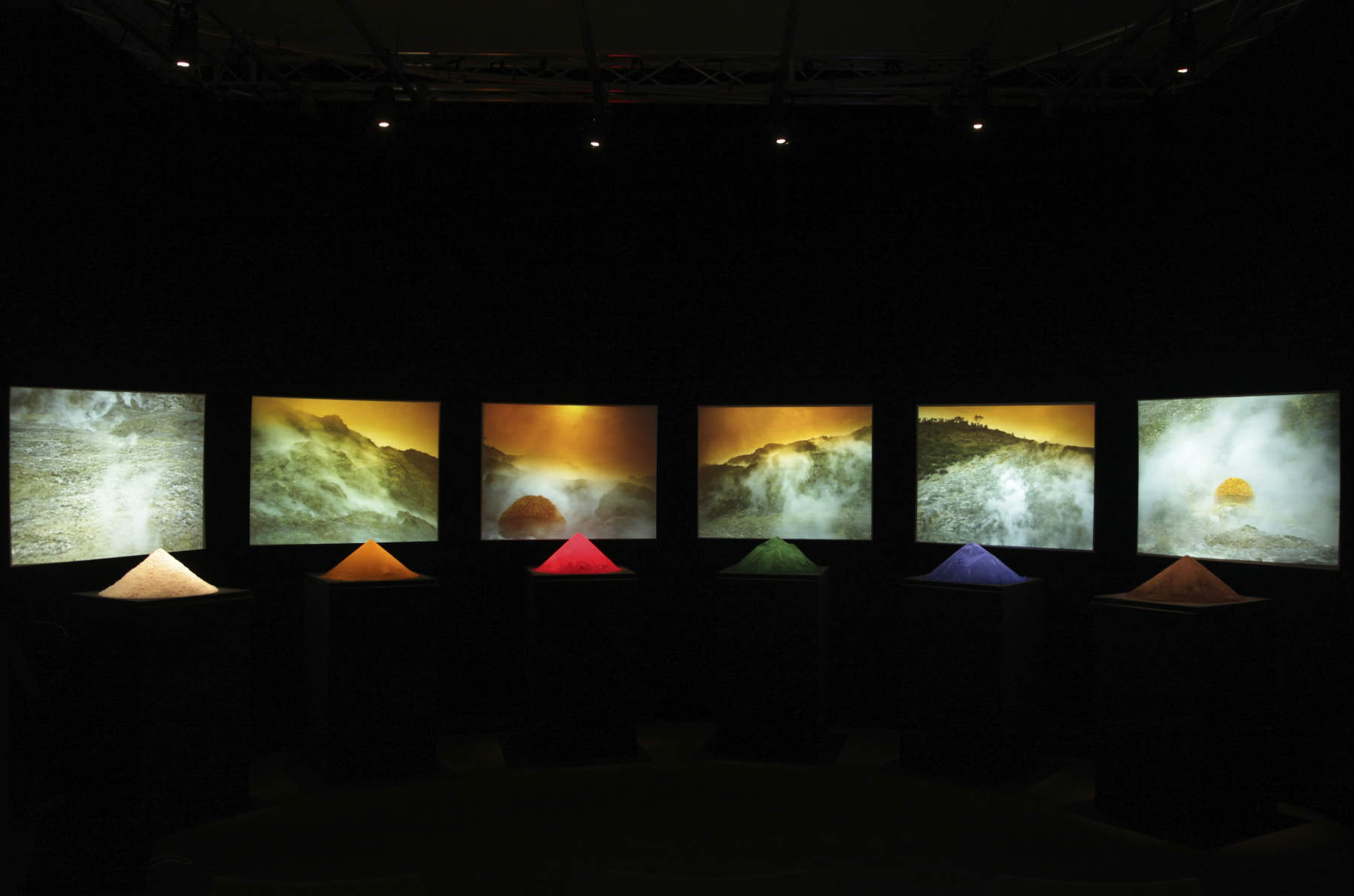
At MUSMA, the relationship between matter, memory, and technology is explored through various works. Studio Azzurro presents *Il Colore dei gesti. Sinfonia Mediterraneo*, a large-scale audiovisual fresco inspired by the gestures of Mediterranean labor and craftsmanship. The hands of fishermen, luthiers, potters, weavers, and other artisans serve as the starting point for a reflection on a language capable of transcending cultures and territories, connecting knowledge, symbols, and memories.
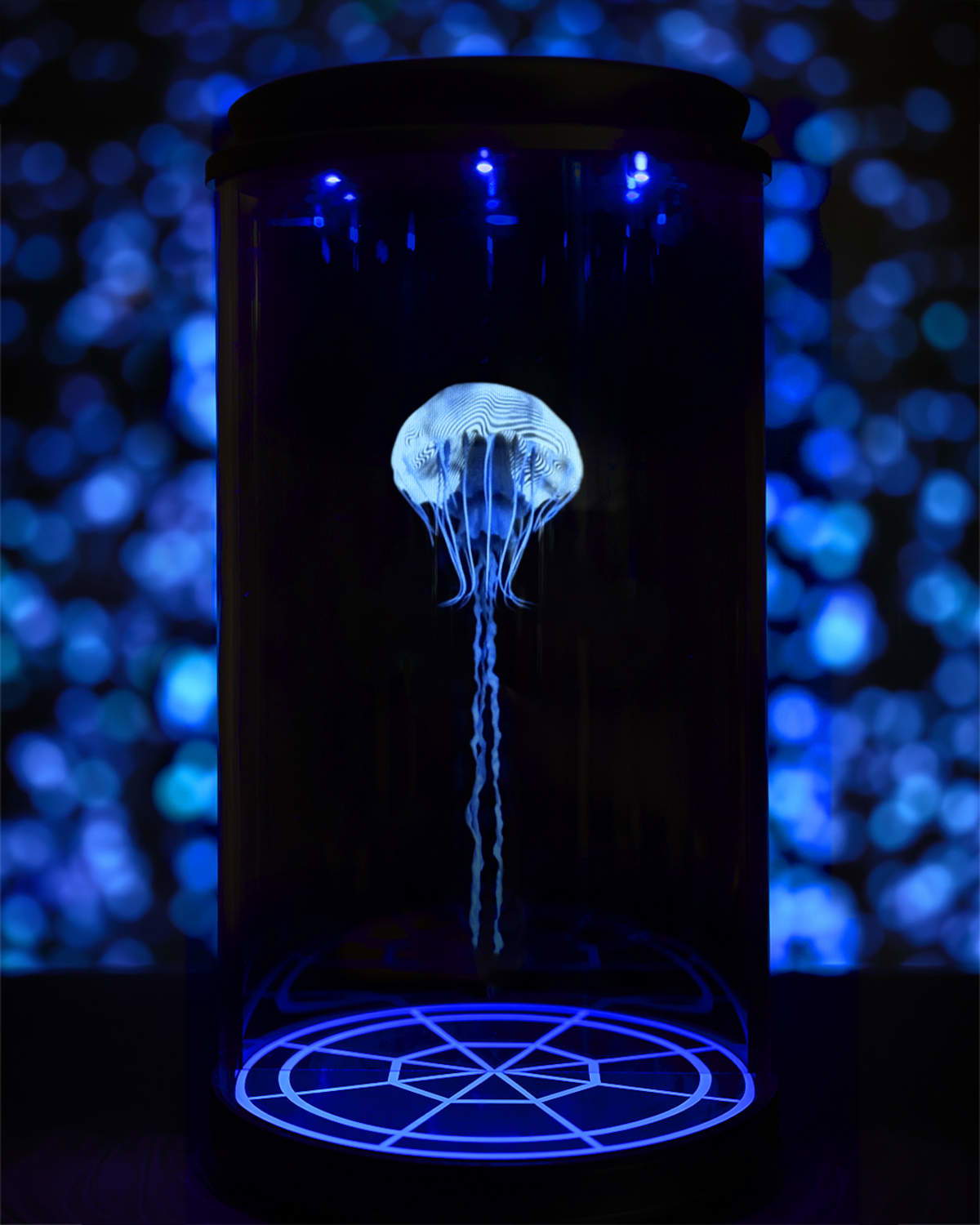
Andrea Crespi presents *Thetis*, a holographic presence inspired by the jellyfish and the mythological figure of Thetis, suspended between nature, myth, and technology. The project is sponsored by the One Ocean Foundation and ZEITGEIST19.
Latvian artist Valentinaki presents Liquid Blue, an environmental sculpture made of wood, resin, and pigment. The sculptural material is paired with an original soundscape by Nikola Negorod and Glauk Sound technology, transforming the liquid element into physical vibrations and acoustic waves.
With *Anthropic Cloud*, Martin Romeo creates an artificial cloud made of Murano glass, wood, and electronics. The work translates the invisible flows of air traffic and anthropogenic transformations of the atmosphere into a perceptual experience, bringing phenomena that are not normally directly perceptible into the exhibition space.
The exhibition at MUSMA concludes with Leonardo Antonio Avezzano’sTEMET, featuring Valentin Ammann—a project developed from field research in the Algerian Sahara and at the Tassili n’Ajjer site, a UNESCO World Heritage Site. Through photography, documentation, advanced technologies, and Tuareg knowledge, the project refocuses attention on prehistoric rock art and ancient European and Mediterranean history, addressing migration, cultural exchange, and trade.
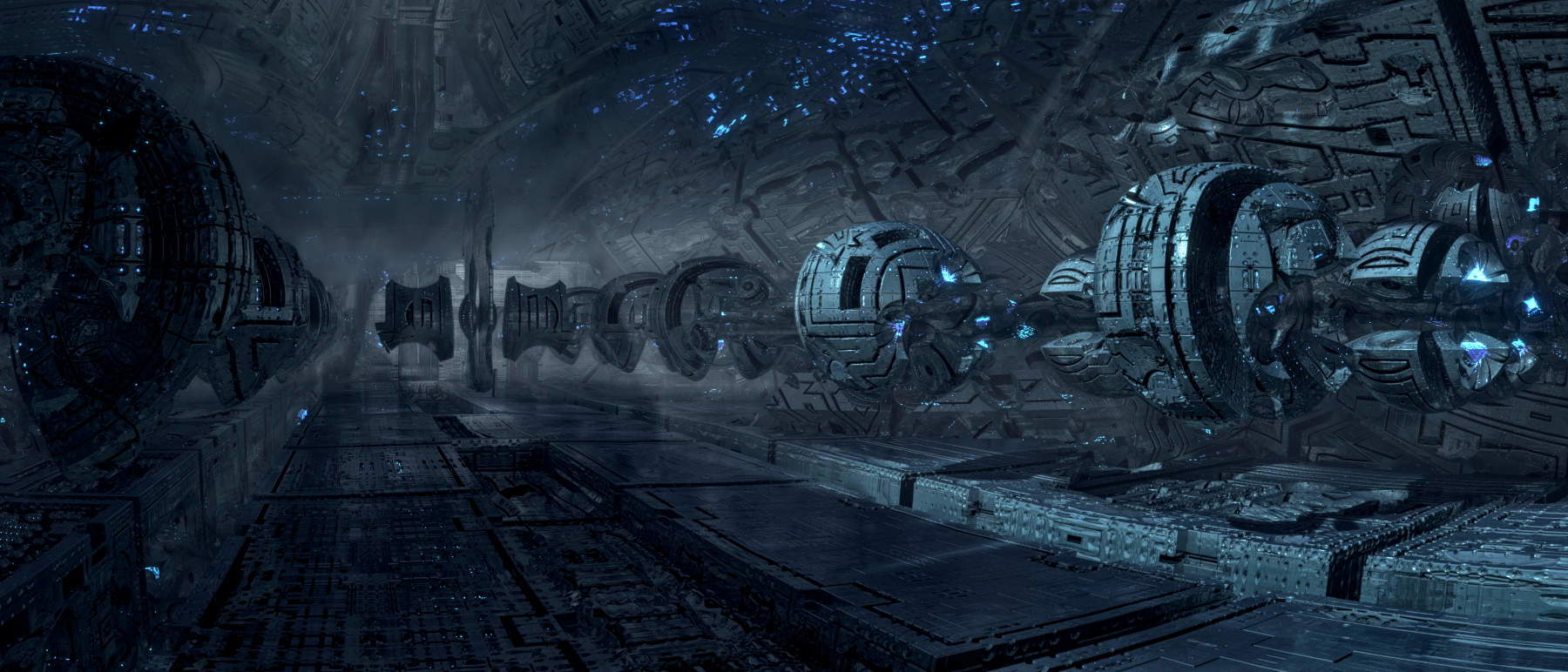
At the Basilicata Open Space – APT, in Palazzo dell’Annunziata, Julius Horsthuis’s *Foreign Nature* (2022) concludes the itinerary with an immersive environment generated through the art of fractals. Organic structures, coral-like forms, abyssal landscapes, and cosmic configurations compose a digital universe that challenges the boundaries between the natural and the artificial, and between the microcosm and the macrocosm.
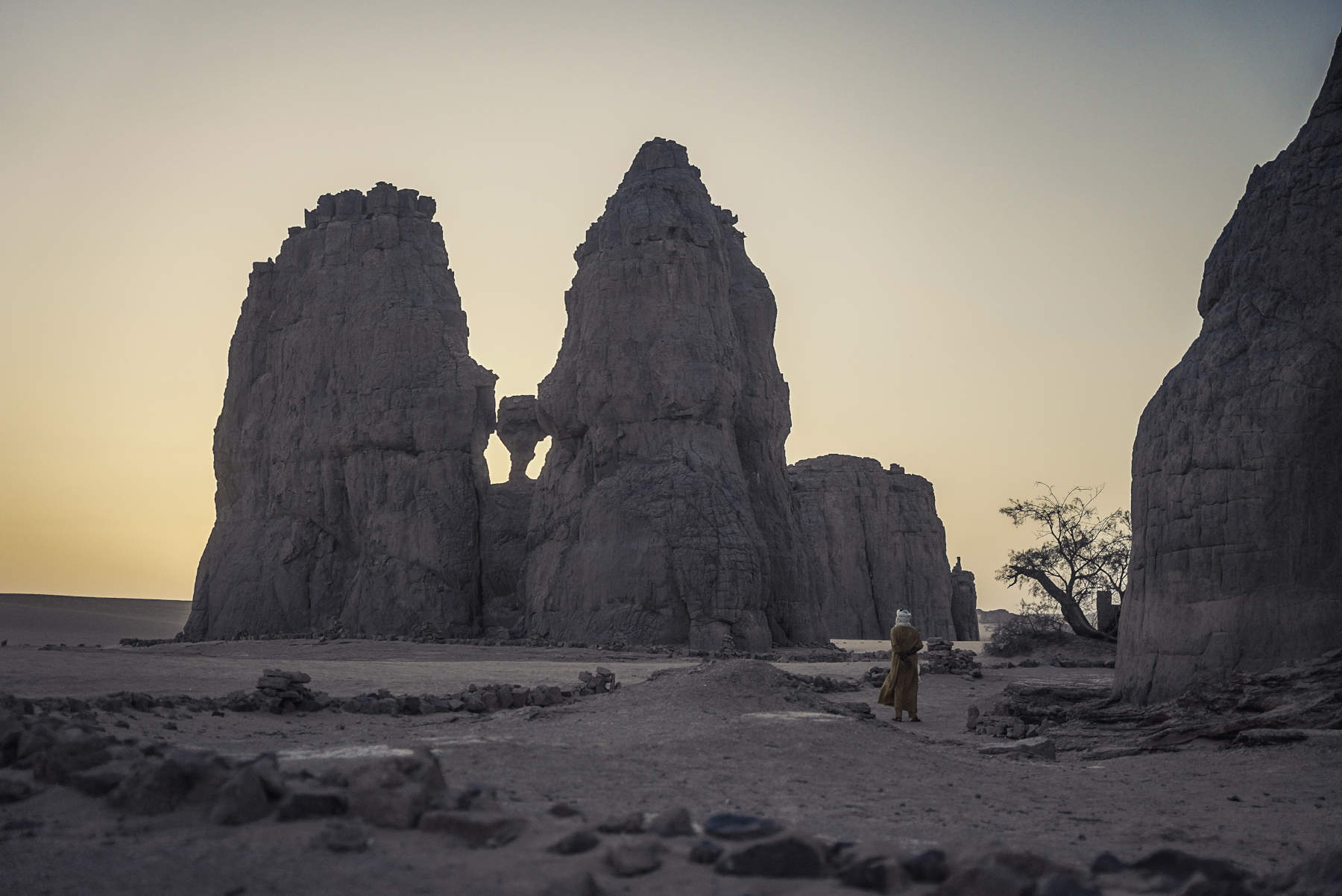
At the heart of the exhibition project, therefore, lies the subversion of the idea that one must see the sea to belong to the Mediterranean. The Mediterranean is interpreted as a relational space, in which connections spread across the land via trade routes, migration paths, cultural exchanges, languages, religions, technologies, economies, and, today, digital infrastructure.
This perspective takes on particular significance in the case of Matera, where the distance from the coast coexists with a Mediterranean presence inscribed in its geology, history, and culture. The calcarenite of the Sassi is a sedimentary rock of marine origin, while the rock-cut architecture and underground systems reveal methods of adaptation to the environment and water management developed over the centuries.
Among the concepts addressed by the exhibition are coast and hinterland, mobility and crossing, stratification and cross-fertilization, the South and marginality, migration, ecology, and plural identities. Here too, the reference to Franco Cassano’s“ ” (Mediterranean Thought) allows us to interpret Matera not as a peripheral location with respect to the Mediterranean, but as a point from which to develop a different interpretation of the Mediterranean space: the border is not merely a line of separation, but also the place where differences come into contact.
This interpretation is complemented by the historical perspective of Peregrine Horden and Nicholas Purcell, who view the Mediterranean as a constellation of distinct micro-ecologies and territories linked by continuous networks of connection. Matera can thus be reinterpreted as a Mediterranean network of ecological, cultural, anthropological, and historical relationships.
Another point of reference is Predrag Matvejević’s* n Mediterranean Breviary*, from which derives a method of observation grounded in concrete traces: ports, words, objects, architecture, rituals, materials, and paths. It is this tangible dimension that the exhibition aims to bring back to the forefront, replacing the abstract image of the Mediterranean with an interpretation grounded in sediments, gestures, movements, memories, and relationships. This also underlies the decision to deliberately move beyond the postcard-perfect image of the Mediterranean. In place of the blue sea and the tourist horizon, we see deserts, stones, bodies, artificial clouds, data, fossils, rock art, communities on the move, and waters capable of traversing different territories.
The digital component is not merely a set of techniques used by artists but is presented as a curatorial and epistemological methodology. Immersive video, generative fractals, holography, computer vision, data tracking systems, sound technology, and artificial intelligence are used to make perceptible phenomena that are normally beyond direct experience. Digital technology thus becomes a tool for visualizing the invisible: atmospheric flows, the movement of water, data, climate change, lost memories, and images erased by time.
In *WATER: Always different, always the same*, Giuseppe La Spada uses computer vision and motion analysis to transform images of water into data regarding speed, trajectories, flows, and turbulence. The work thus contrasts the sensory perception of the human eye with the analytical perception of the computational eye. In *Anthropic Cloud*, Martin Romeo uses flight path data to make tangible the presence of invisible infrastructure traversing the atmosphere. In this case, technology allows for the translation of a global phenomenon into a local experience, while also introducing an environmental and geopolitical dimension.
In *The Forgotten Sea & Memory of Stone*, Baris Gencel uses artificial intelligence as a tool to interpret the geological memory of Matera. The generated images transform the human face into a fossil, coral, shell, and organism, constructing an ideal genealogy that connects water, memory, networks, and intelligence.
The comparison between past and present, on the other hand, is central to Silvio Giordano’s *Lucania 2026 *. Artificial intelligence not only modifies a pre-existing image but also introduces a temporal rupture within Carlo Levi’s *Lucania ’61 *. Technology thus becomes a tool for examining the transformation of the Lucanian community, from the collective dimension depicted by Levi to contemporary dispersion and depopulation.
Overall, the exhibition presents artificial intelligence as a language through which to explore memory, identity, the environment, and social transformations, avoiding the temptation to reduce it solely to technological innovation. Data and algorithms are embedded within a broader reflection on the concept of “crossing”: just as water connects different territories, data links distant places; just as memory leaves traces embedded in the landscape, algorithms collect, process, and recombine traces of reality.
 |
| Matera and the Invisible Sea: An Exhibition Explores the Mediterranean Through Art and Artificial Intelligence |

Warning: the translation into English of the original Italian article was created using automatic tools. We undertake to review all articles, but we do not guarantee the total absence of inaccuracies in the translation due to the program. You can find the original by clicking on the ITA button. If you find any mistake,please contact us.
























 IT
IT FR
FR DE
DE ES
ES CN
CN


