





The Fayum portraits—the famous faces painted on funerary panelsin ancient Egypt—are among the most celebrated images of antiquity, but in Italy they are also among the hardest to see, at least all together, given their rarity and fragility. There are fewer than a thousand of them in the entire world, and they are extremely delicate objects—painted on thin wooden panels and affixed to the faces of mummies—known for their exceptional realism. Well, from November 5, 2026, to May 2, 2027, nearly fifty of these portraits will be brought together in Rome, at the Ara Pacis Museum, for the exhibition *The Power of the Portrait: Egypt and Rome—The Faces of Fayum*. The core collection arriving in the capital includes works that have never left Egypt, among them the famous “Tondo of the Two Brothers,” considered one of the masterpieces of ancient painting. For the first time, Egypt will, in fact, loan nearly all of the Fayum portrait panels held in its collections, allowing the exhibition to juxtapose works from Egyptian collections with those from the Louvre, the Getty Museum, the Metropolitan Museum of Art, and other international institutions. This is therefore the second time in a year that a portion of ancient Egypt… has arrived in Rome: the exhibition follows the one on the treasures of the Pharaohs, which was held at the Scuderie del Quirinale.
In total, over 110 works will be on display, including painted panels, shrouds, funerary masks, marble sculptures, plaster casts, and ancient gold and silver artifacts. The exhibition will focus on portraiture in Roman Egypt and how this form of representation developed within a society where Egyptian traditions and Roman culture came into contact.
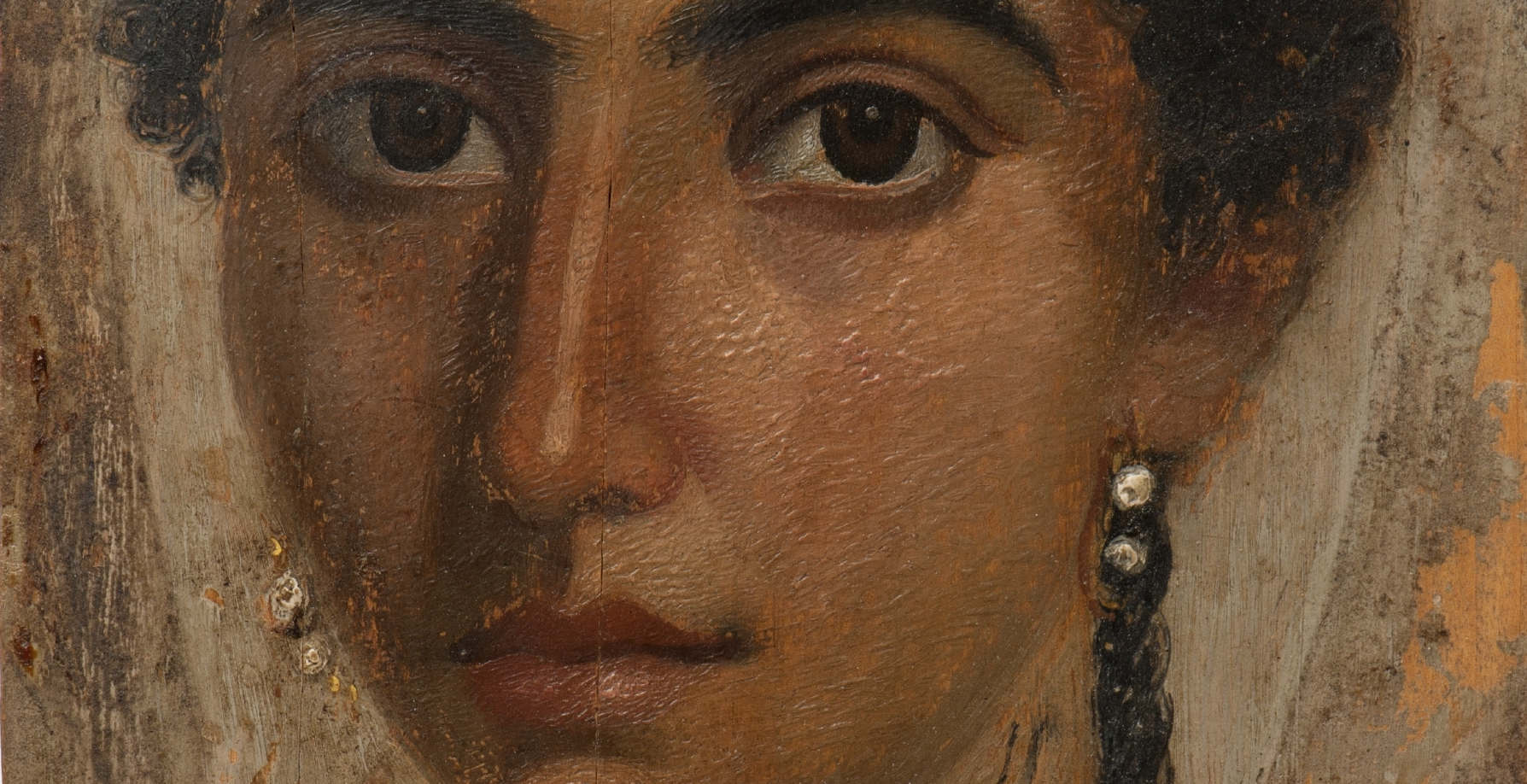
The Fayum portraits occupy a special place in the history of ancient art precisely because of their ability to capture individual faces: they were painted on wooden panels just a few millimeters thick, using tempera or encaustic, a technique that involved mixing pigments with hot wax. The images were then placed on the face of the deceased, among the mummy’s bandages. Their funerary function did not prevent these small panels from achieving an extraordinary immediacy in the depiction of their subjects. The face, in fact, becomes the focal point of the image and retains a strongly individualized presence, even while belonging to a ritual context linked to death. It is this relationship between personal identity, representation, and funerary function that the exhibition at the Ara Pacis aims to explore through a particularly extensive collection of works.
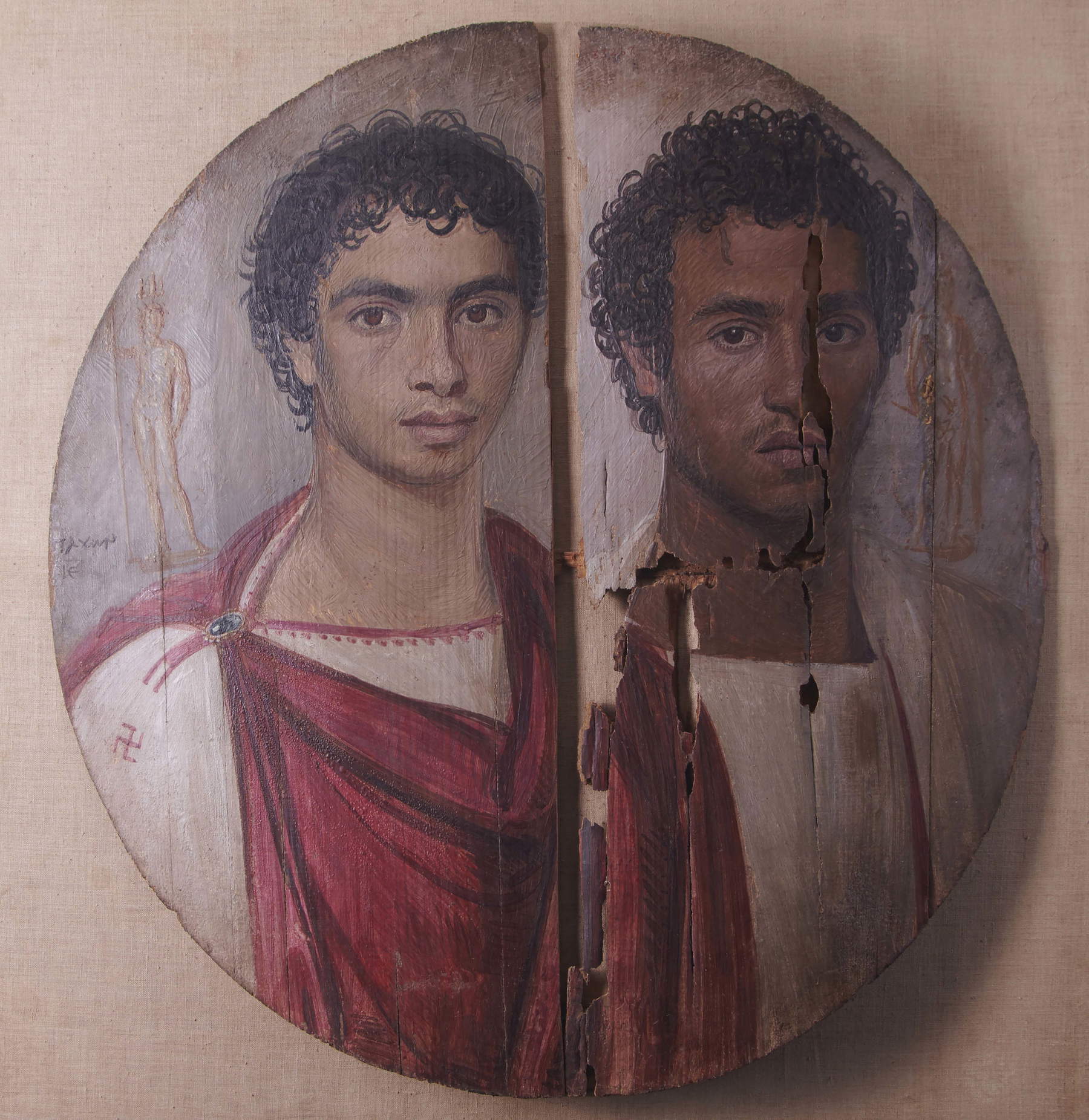
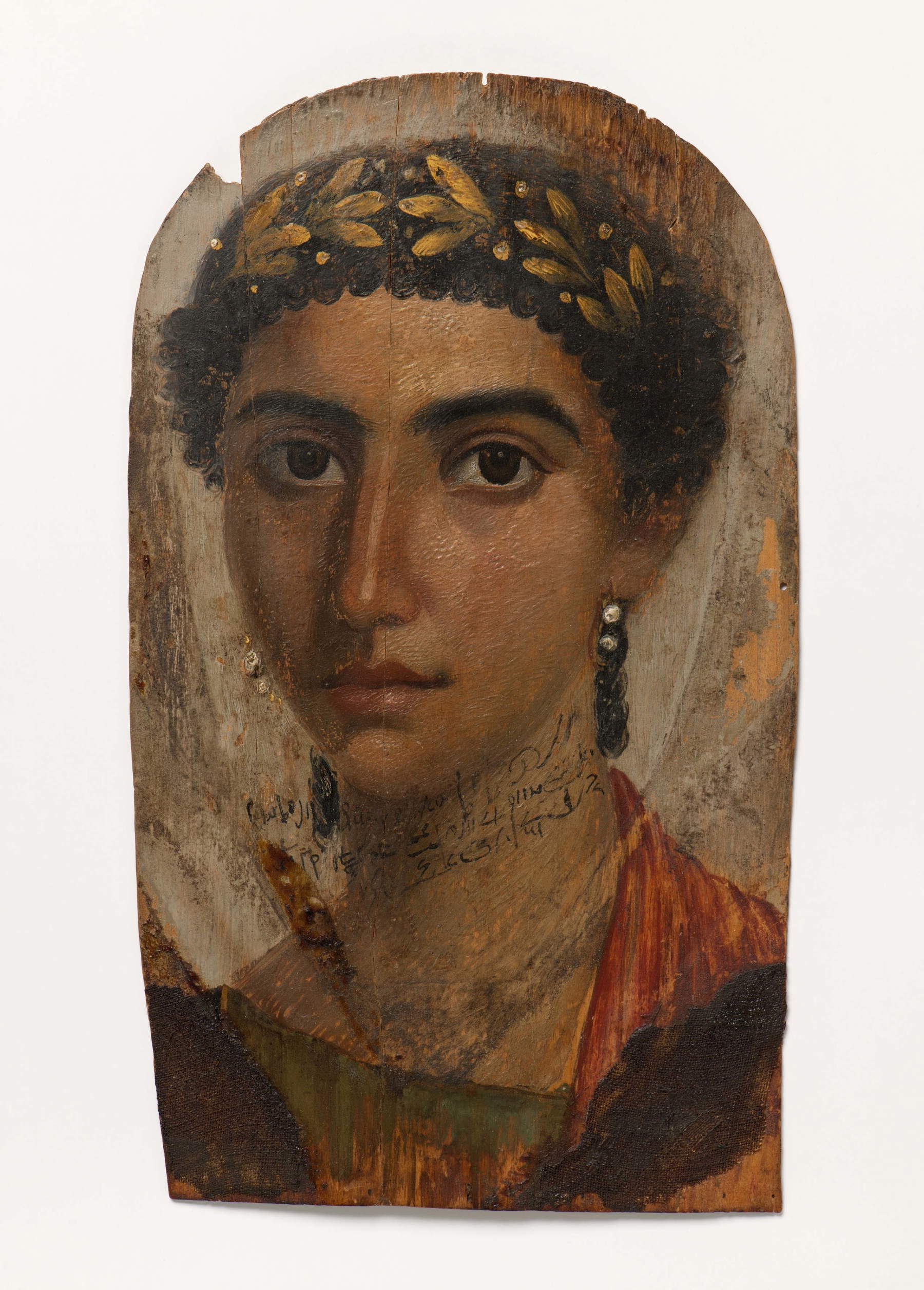
These are unique objects also due to their material characteristics: the wooden panels on which the faces are painted are often just a few millimeters thick and were placed on the face of the deceased, among the mummy’s bandages; their surface might have been prepared with a layer of plaster, and in some cases, they still bear traces of an underlying drawing. Two techniques were primarily used for painting:encaustic, which is wax-based, and tempera with animal glue. In some cases, gold leaf was also used to depict jewelry and garlands, but hybrid techniques and variations on the main methods are also documented. The difference between the two main techniques is still visible on the surface of the works: portraits executed in encaustic often feature intense colors and relatively broad brushstrokes, while those in tempera exhibit more subtle tonal transitions and a more opaque, chalky color palette. It can be said, however, that in both cases, the quality of the painting lies in the ability to build volume through light and shadow, while the gradations of skin tone, highlights, and shadows contribute to giving the figures a three-dimensional quality and a particularly striking sense of naturalism.
The name by which these works are known derivesfrom the Fayyum Oasis in Egypt, where most—though not all—of the portraits were discovered. The images belong to a specific period in Egyptian history: they were produced from the end of the 1st century B.C. to the middle of the 3rd century A.D., thus during the Roman era. It should be noted that, although there is a long Egyptian tradition of depicting the deceased, the Fayyum portraits constitute a distinct phenomenon both due to the geographical concentration of the finds and their chronology; however, the reasons why this tradition ceased are not yet known. Moreover, their significance does not depend solely on the fame they have attained over time: along with the frescoes preserved at Herculaneum and Pompeii, the paintings in the Tomb of the Diver at Paestum, and certain funerary depictions from Vergina in Central Macedonia, the Fayyum portraits represent one of the principal surviving examples of ancient painting, and their preservation allows us to observe aspects of painting technique that have been lost in most works of antiquity. The age of the subjects depicted is also a distinctive feature: most of the faces portray very young people, and subjects over the age of 35 are rare, 40 at most, and this has been attributed to the low life expectancy of the time (studies of mummies have revealed a strong correlation between the age and sex of the people depicted and those of the deceased with whom the portraits were associated).
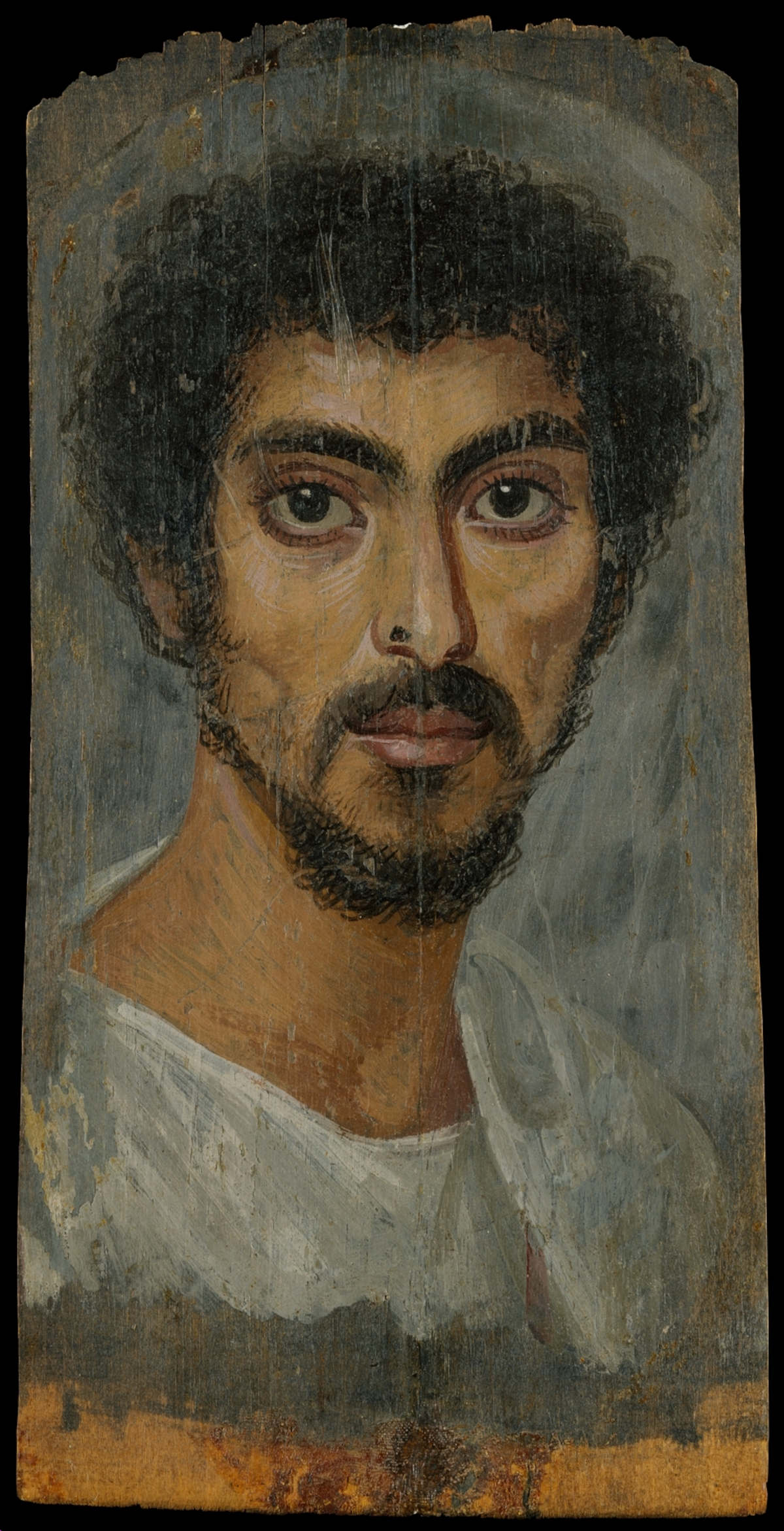
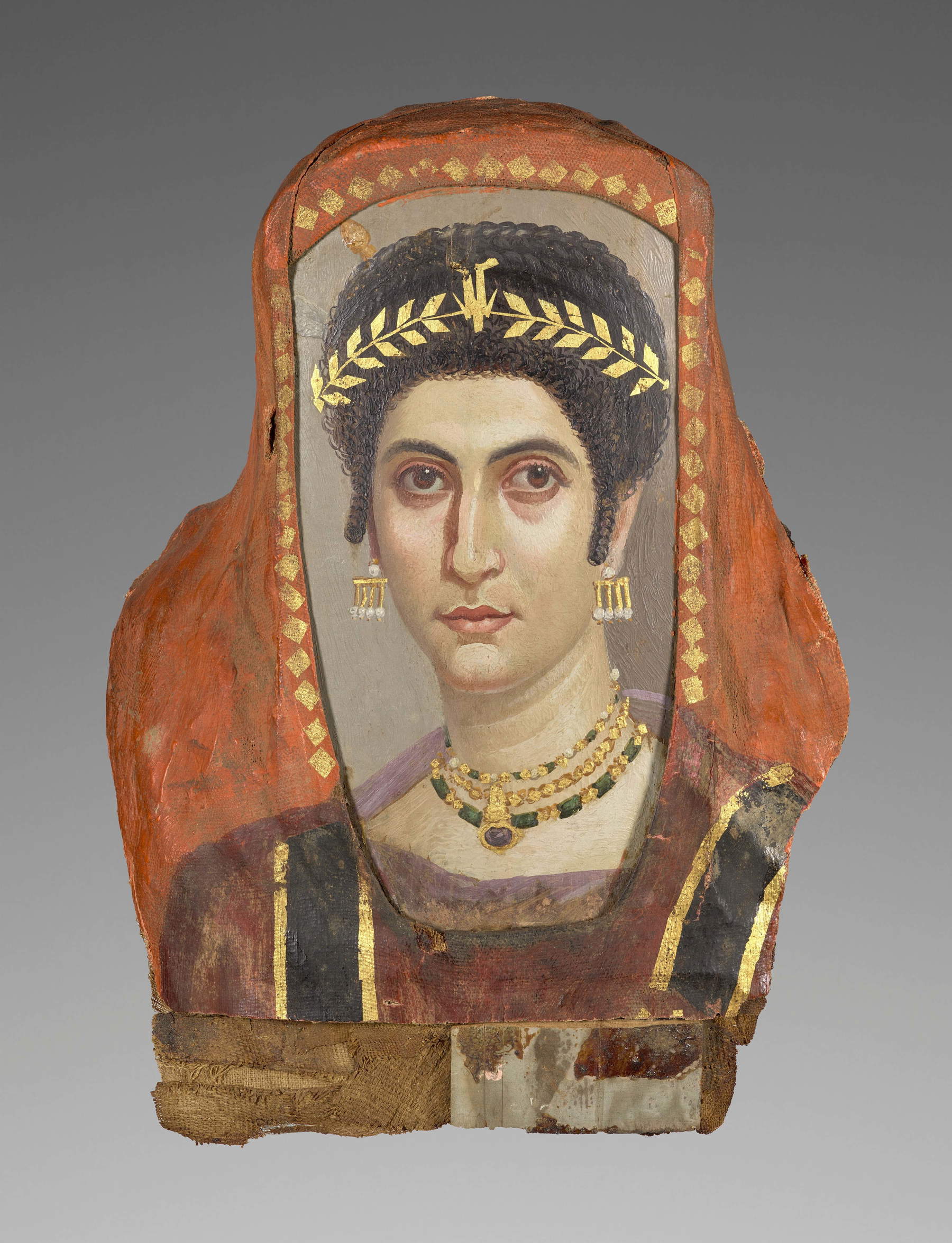
The rarity of such loans makes the project all the more significant: the panels are, in fact, very fragile artifacts and rarely leave the institutions that house them; so much so that the gathering of nearly fifty portraits in Rome represents an unusual occasion, made possible by an international loan program involving museums and collections from various countries. The group from Egypt represents the most significant core of the exhibition: the works will arrive from the collections of the Egyptian Museum in Cairo and other Egyptian institutions, and, as part of the project, panels that have never before left the country will also be on display in Rome. Among these, as mentioned earlier, is the “Tondo of the Two Brothers,” one of the best-known paintings in the entire Fayum tradition: the work underwent restoration in Egypt by Italian conservators as part of the exhibition project, and its presence in Rome will therefore be linked not only to this exceptional loan but also to the conservation work carried out in preparation for the exhibition.
In addition to the Egyptian core collection, there will be twenty-three works from the Louvre, including painted panels and rare linen shrouds. Other loans will come from the Getty Museum, the Metropolitan Museum of Art in New York, the Landesmuseum Württemberg in Stuttgart, and other international institutions. The exhibition will also feature works from Italian collections: lenders include the National Archaeological Museum of Florence, the Capitoline Museums and the Centrale Montemartini, the Giovanni Barracco Museum of Ancient Sculpture, the Museum of the Fabric of St. Peter’s, the Archaeological Parks of Pompeii and Herculaneum, and the Libero D’Orsi Museum. Also on display will be works from the Lugdunum Museum in Lyon, the Eton College–Myers Collection, the Kom Aushim Museum, and the Hurghada Museum.
Further linking the project to contemporary archaeological research will be the inclusion of a portrait of a young man recently unearthed during excavations by the Italian archaeological mission of the University of Salento in Egypt. The work will be on public display for the first time and will also serve to connect the rich tradition of funerary portraits preserved in museums with new archaeological discoveries.
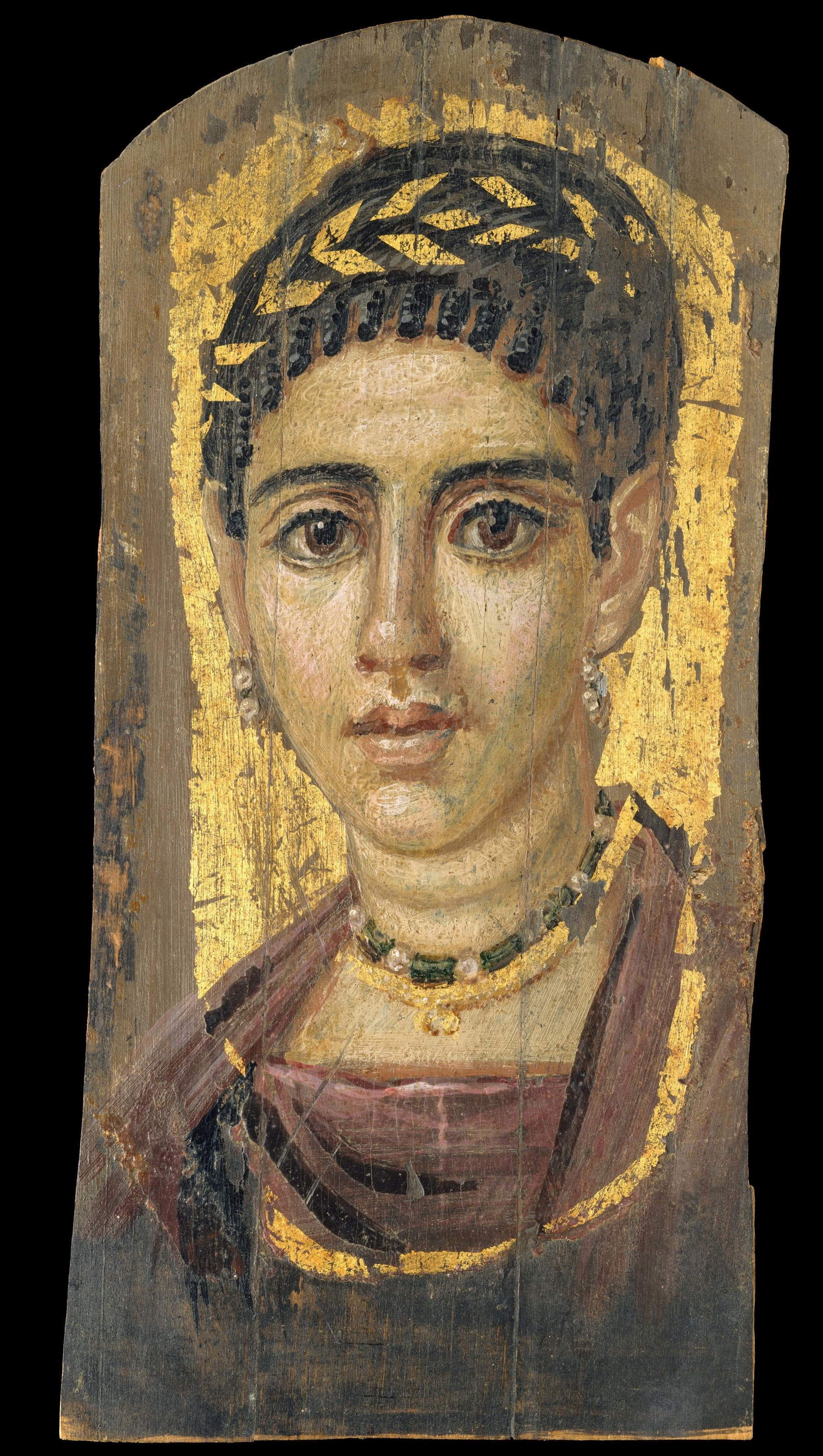
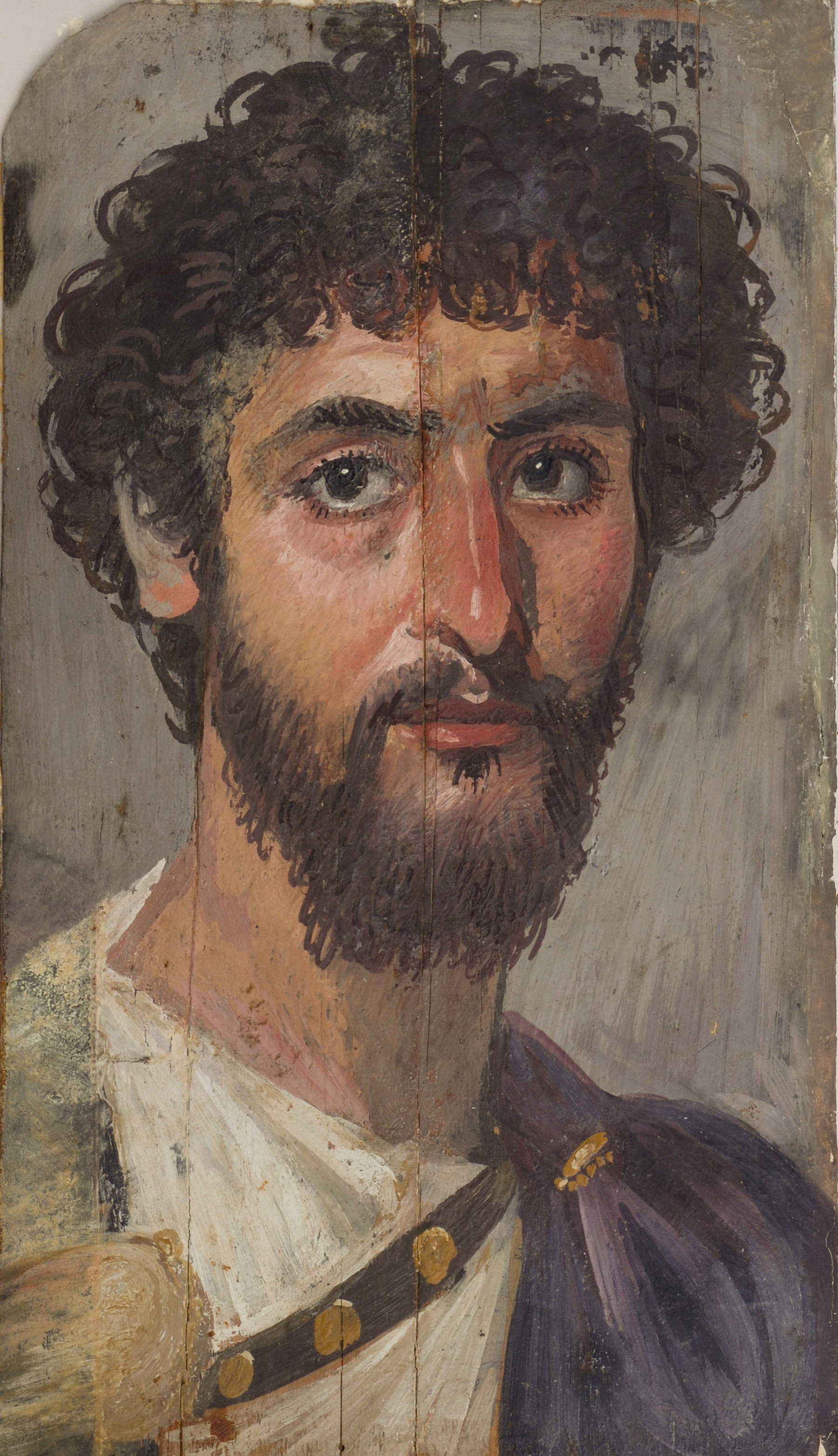
The exhibition’s title, The Power of the Portrait, shifts the focus from the purely aesthetic aspect of the paintings to the function that the image of the face assumed in the Roman world of Egypt, while the subtitle, Egypt and Rome, refers instead to the cultural context in which these works were created, in a region where different traditions converged and gave rise to artistic forms characterized by remarkable diversity. The collection of works will also allow visitors to observe the various ways in which the face could be depicted and incorporated into a funerary context: the painted panels will be displayed alongside shrouds, funerary masks, and other objects, thereby broadening the perspective beyond the individual portrait. The Ara Pacis exhibition will therefore not be limited to bringing together a series of famous faces from antiquity, but will connect the painted images with other artifacts linked to funerary practices and the representation of the deceased, thereby making the portraits the starting point for exploring a broader culture of the image, in which the face played a central role.
The exhibition is curated by Claudio Parisi Presicce and Laura Petacco and is sponsored by Roma Capitale, the Department of Culture and Coordination of Initiatives Related to Holocaust Remembrance Day, and the Capitoline Superintendence for Cultural Heritage. Organization is entrusted to the Capitoline Superintendence and the temporary consortium of companies MondoMostre – Civita Mostre e Musei, in collaboration with Zètema Progetto Cultura. The project will be accompanied by a catalog published by Allemandi Editore. For visitors, the Ara Pacis Museum will be open daily from 9:30 a.m. to 7:30 p.m., with last admission one hour before closing. Advance ticket sales for the OPEN ticket are already open, priced at 17 euros plus a 1-euro advance booking fee.
 |
| Nearly 50 Fayum portraits on display in Rome: a major exhibition featuring rare works |

Warning: the translation into English of the original Italian article was created using automatic tools. We undertake to review all articles, but we do not guarantee the total absence of inaccuracies in the translation due to the program. You can find the original by clicking on the ITA button. If you find any mistake,please contact us.


























 IT
IT FR
FR DE
DE ES
ES CN
CN


