



by Redazione 24/11/2026



Categories: Exhibitions / Disclaimer
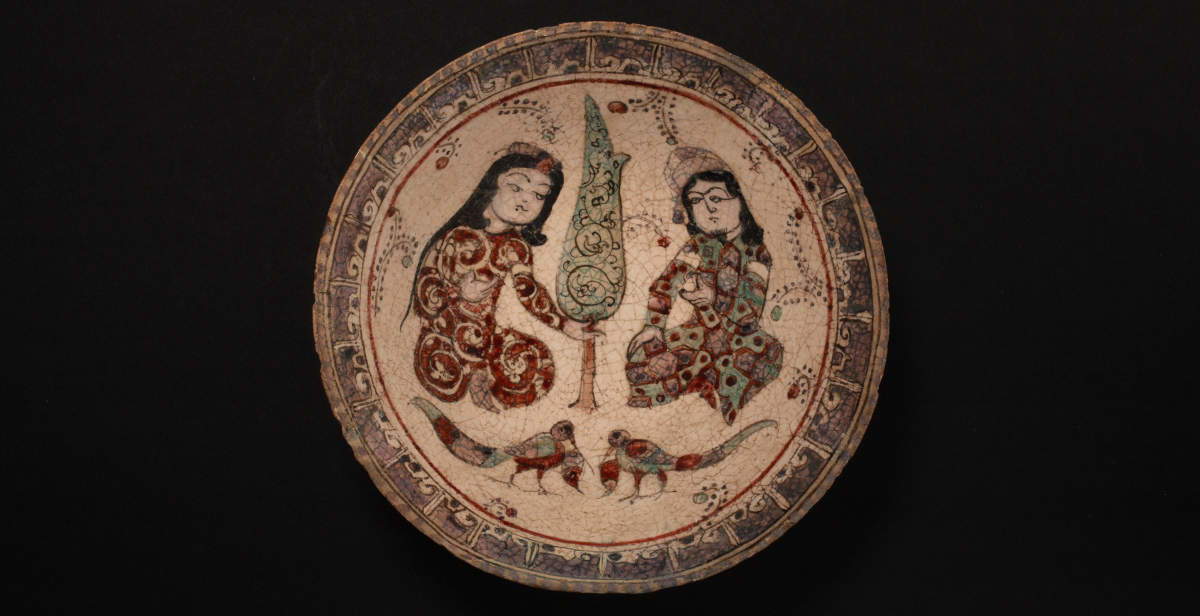
From November 23 to December 20, 2026, the exhibition *The Mongol World: Ilkhanate and Persian Art, curated by Veronica Prestini, will bring thirteen works from the collections of the MAO in Turin to the Chinggis Khaan National Museum in Ulaanbaatar (Mongolia), illustrating the transformations in Persian ceramics between the 12th and 14th centuries, before and after the Mongol conquest.


From Persia to Mongolia, thirteen ceramics from the collections of the MAO Museum of Oriental Art in Turin chronicle the artistic and cultural transformations of medieval Persia. From November 23 to December 20, 2026, the Chinggis Khaan National Museum in Ulaanbaatar (the capital of Mongolia) will host *The Mongol World: Ilkhanate and Persian Art, an exhibition curated by Veronica Prestini and organized by the Fondazione Torino Musei and the MAO, which offers an exploration of Persian artistic production between the 12th and 14th centuries, spanning the transition from the period preceding the Mongol conquest to the formation of the Ilkhanate, a Mongol state founded in the 13th century.


The exhibition invites visitors to consider the Mongol expansion beyond its military and political dimensions, focusing on the cultural, artistic, and social consequences that affected the conquered territories. In the 13th century, the conquest of Persia and the subsequent emergence of the Ilkhanate integrated the region into a network of trade extending from China to the Mediterranean. The encounter between local traditions and influences from other parts of Eurasia thus fostered new forms of production and visual expression, without leading to the disappearance of pre-existing artistic languages.


The thirteen works selected from the MAO’s Islamic collections document precisely this process of continuity and transformation. The artifacts bear witness to the ability of Persian culture to preserve and reinterpret its technical and figurative heritage within a profoundly changed political and cultural context.


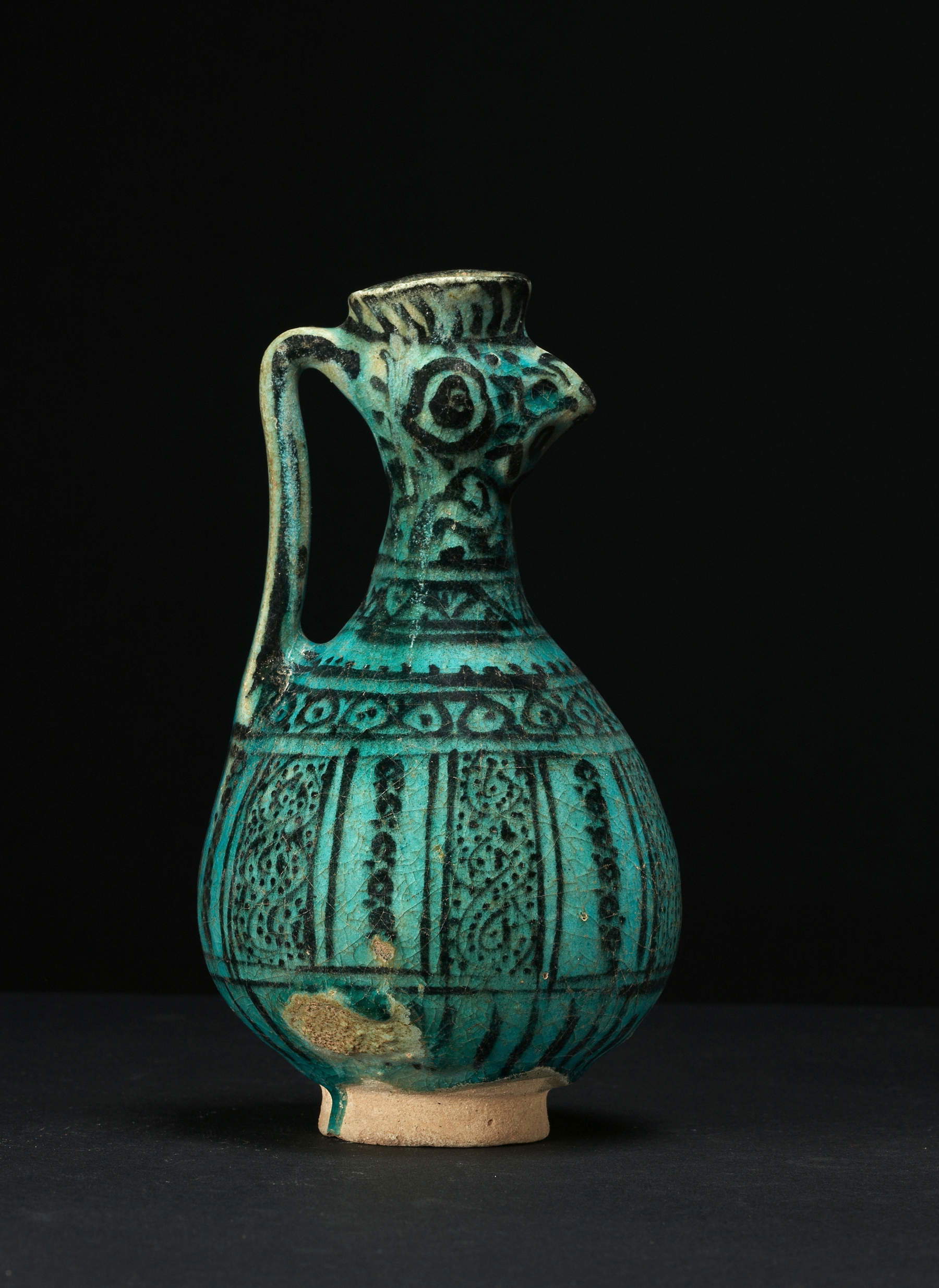
The exhibition features various types of medieval Persian ceramics, produced between the 12th and 14th centuries. Among the works on display are mina’i ceramics from Kashan, characterized by a rich color palette and intricate craftsmanship. Considered among the most significant artistic expressions of Persia prior to the Mongol conquest, these works form the starting point of the exhibition and offer insight into the traditions with which the Mongol world came into contact during its expansion toward the West.
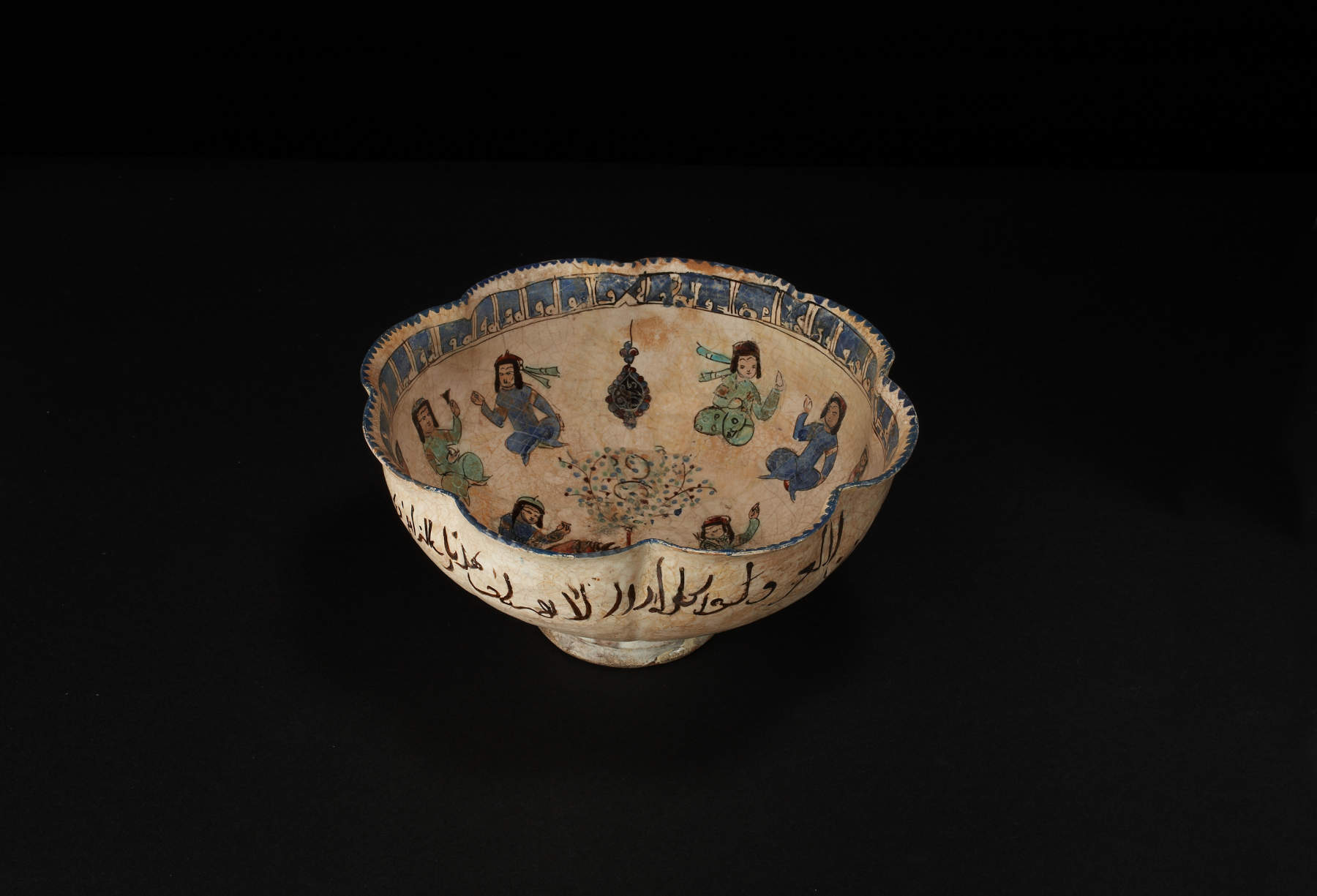
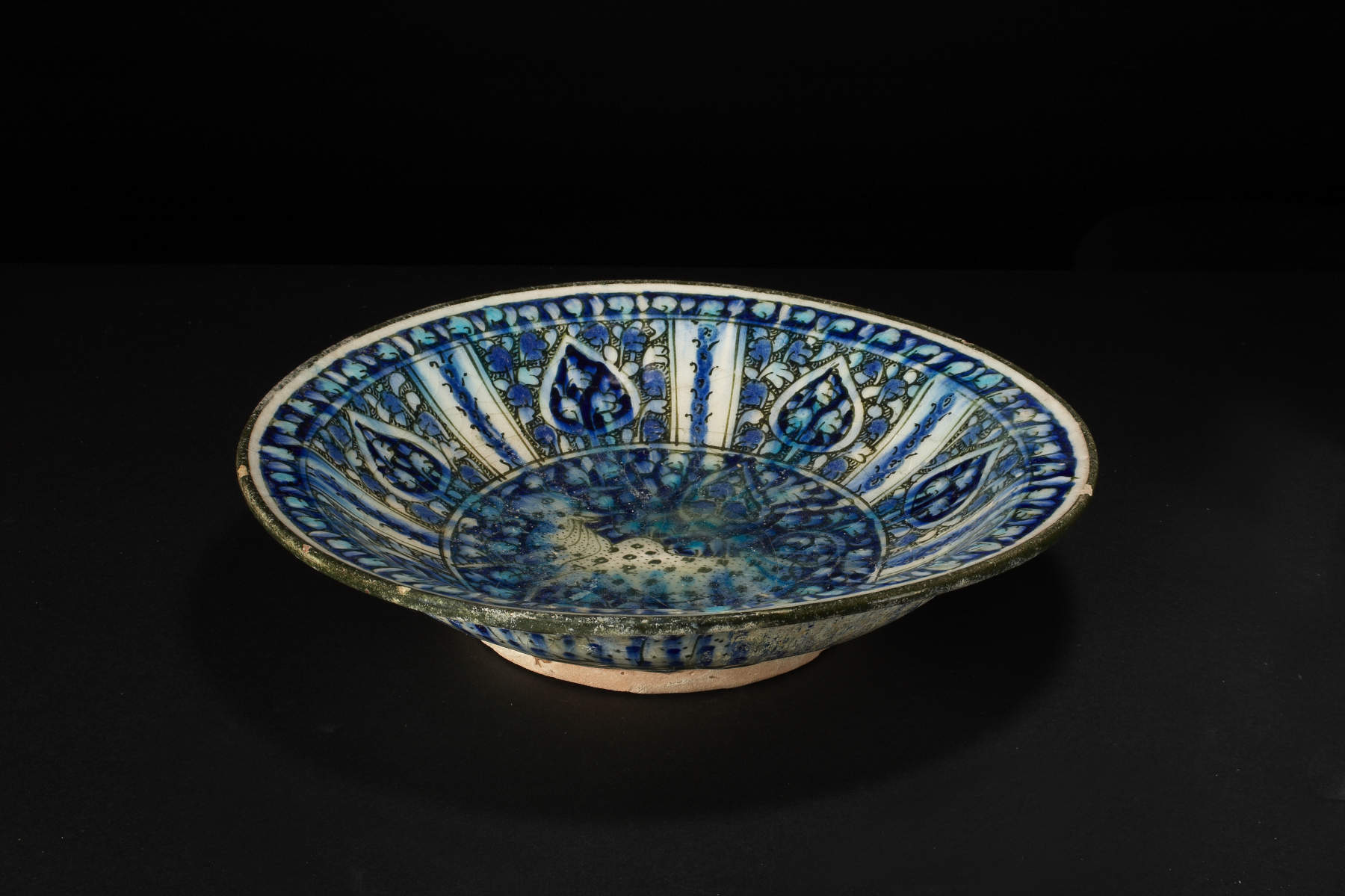
These pre-Mongol artifacts are complemented by pieces from the Ilkhanid period, including Lajvard ceramics, recognizable by their intense blue—inspired by lapis lazuli—enriched with polychrome and gilded decorations. These works document the evolution of Persian ceramic production during a period characterized by the circulation of new ideas, technologies, and figurative motifs. A tradition deeply rooted in the region thus continued to develop, opening up to influences from other cultural contexts.
One section is dedicated to architectural ceramics, through which it is possible to reconstruct part of the decorative richness of medieval Persian buildings. Tiles with Quranic inscriptions, fragments decorated with lustre, and muqarnas elements reflect the interplay between architecture, calligraphy, and ornamentation, documenting the technical mastery achieved by Persian craftsmen between the 13th and 14th centuries.
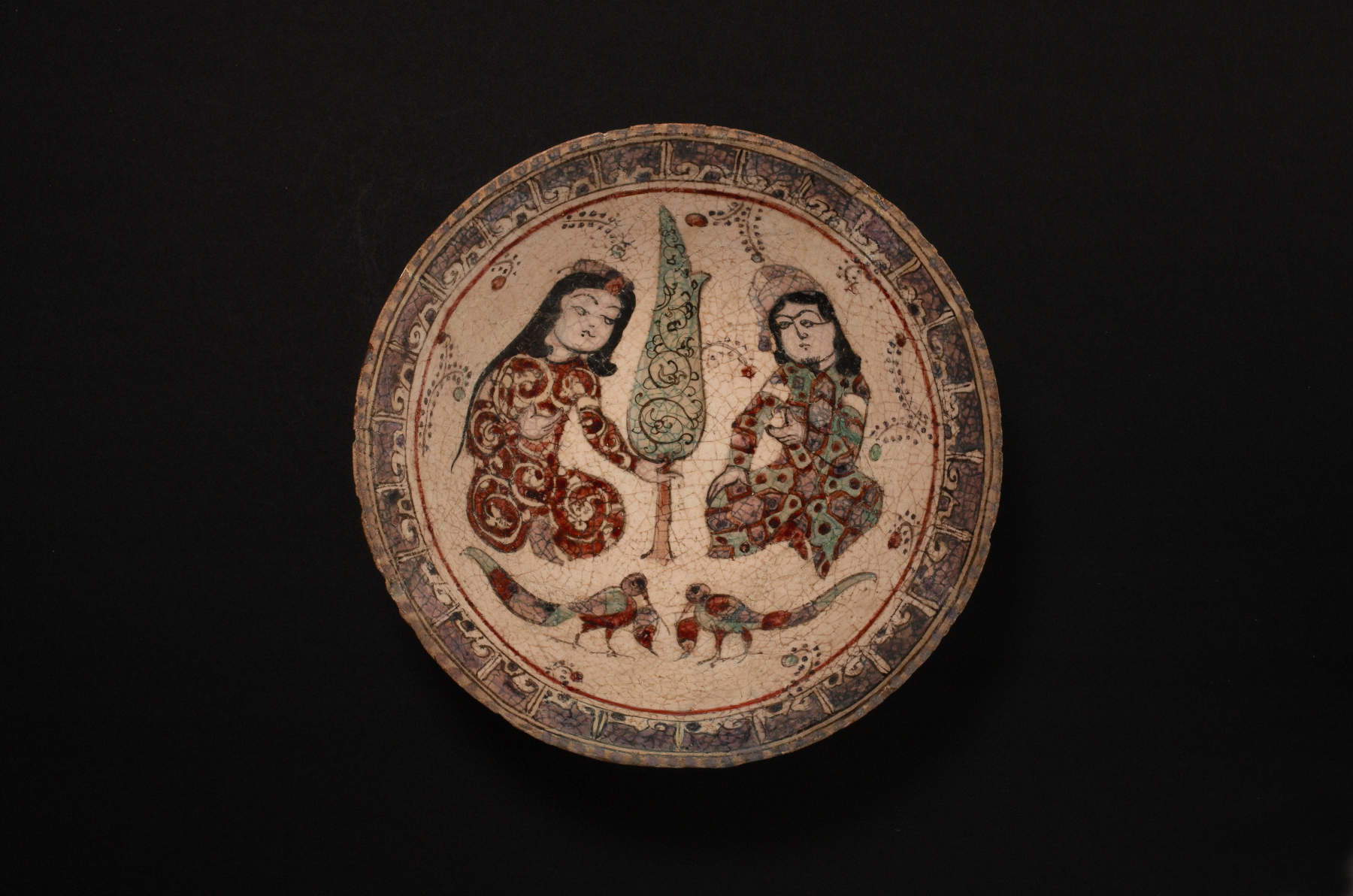
Rounding out the selection are two jugs with spouts shaped like rooster heads, examples of the variety found in the figurative and zoomorphic repertoire of Persian ceramics. Their inclusion highlights a decorative tradition that was not limited to geometric and epigraphic motifs but also encompassed subjects inspired by the animal kingdom.
The exhibition venue takes on special significance in relation to the exhibition’s content. Hosting works from medieval Persia in Ulaanbaatar allows them to be placed within the historical context of the Mongol Empire and to connect territories that are geographically distant today but were once part of the same network of relationships. The Chinggis Khaan National Museum thus becomes an integral part of the scholarly project, offering a perspective on the history of Mongolia and the regions that fell within the sphere of influence of the Eurasian empire.
Through these works, *The Mongol World: Ilkhanate and Persian Art* explores the interconnected nature of medieval Eurasian cultures and the processes of transformation sparked by the encounter between different traditions, techniques, and languages. The exhibition also highlights the role of museum collections as tools for knowledge and research, as well as opportunities for cultural diplomacy and the building of relationships among institutions, scholars, and international audiences.
The exhibition in Mongolia is part of FTM Ambassador, the sixth cultural initiative of the Fondazione Torino Musei, dedicated to internationalization within the framework of the 2023–2026 Strategic Plan. The program was created to strengthen the international presence of Turin’s Civic Museums and to promote the Foundation’s heritage, expertise, and projects within global cultural networks.
Over the 2024–2026 period, FTM Ambassador has led to the organization of 14 exhibitions in ten countries across Europe and Asia, involving international museums and cultural institutions. Venues included ESEA Contemporary in Manchester, the Gwangju Museum of Art in South Korea, the Mitsubishi Ichigokan Museum in Tokyo, the National Museum of Modern Art in Kyoto, the Museum of Wu in Suzhou, the Tianjin Museum, and the Art Museum Riga Bourse. The program has also involved Italian Cultural Institutes and diplomatic missions—including embassies and consulates—across four continents. Twelve additional exhibitions are already planned for the period 2027–2029.
Through networks and partnerships with museums, cultural institutions, and international organizations, FTM Ambassador develops traveling exhibitions, co-productions, and exhibition projects, complementing them with initiatives for cooperation and the exchange of expertise. The goal is to highlight the collections and research activities of Turin’s museums, fostering new opportunities for dialogue between cultures and institutions and strengthening the presence of Turin and Piedmont on the international cultural scene. The collaboration with the Chinggis Khaan National Museum represents another step in this journey, which aims to consolidate institutional and scientific relationships through the circulation of cultural heritage and knowledge.
Statements
“The scale and international relationships of a museum,” says Massimo Broccio, president of the Fondazione Torino Musei, “are essential components today, and *The Mongol World: Ilkhanate and Persian Art* represents, in this sense, a new and significant milestone in the path toward internationalization that the Fondazione Torino Musei is pursuing with conviction. Bringing a significant portion of the MAO’s collections to Mongolia means highlighting the heritage preserved in Turin within a historical and cultural context of extraordinary relevance, while also strengthening cultural cooperation based on dialogue between institutions, the sharing of research, and the building of lasting relationships between countries and communities. The exhibition thus offers the opportunity to transform the collections into tools for mutual understanding and for comparing cultural heritages that, although they now belong to geographically distant regions, share a deeply intertwined history.”
“Since my arrival at the MAO,” adds Davide Quadrio, director of the MAO Museum of Oriental Art, “I have viewed the museum as a place that interprets Asia not only as the continent from which the works we house originate, but as a space of relationships, cross-pollination, and cultural exchange. *The Mongol World: Ilkhanate and Persian Art* fully embodies this perspective, offering an interpretation of history that goes beyond the narrative of conquest to focus on the processes of transformation, cross-fertilization, and the circulation of ideas. Building on themes already explored in projects such as *Tradu/izioni d’Eurasia* and *Lustro e lusso dalla Spagna islamica*, the thirteen works arriving in Mongolia illustrate how cultures transform through encounter.”
“The MAO exhibition in Ulaanbaatar,” comments Giovanna Piccarreta, Italian Ambassador to Ulaanbaatar, “which follows the Zanabazar exhibition hosted by the Turin museum, represents an important moment of intercultural and interreligious dialogue and museum cooperation, promoting a global vision of art history capable of transcending traditional boundaries.”
 |
| Persian Art at the Mongol Court: Turin’s MAO Brings Thirteen Works to Mongolia |
Warning: the translation into English of the original Italian article was created using automatic tools. We undertake to review all articles, but we do not guarantee the total absence of inaccuracies in the translation due to the program. You can find the original by clicking on the ITA button. If you find any mistake,please contact us.