





In Rome, the Farnese Aviaries on the Palatine Hill will serve as the setting for a new journey through the history and imagination of antiquity with the exhibition *Sappho*, scheduled from October 16, 2026, to January 31, 2027. Sponsored by the Colosseum Archaeological Park, it is organized by Electa and curated by Silvia Romani. The project marks the second installment in a series of exhibitions dedicated to the most modern and relevant female figures of antiquity. The exhibition continues the exploration begun with *Penelope*, which was on view in the same spaces from September 19, 2024, to January 12, 2025.
The exhibition dedicated to Sappho focuses on the figure of the poetess from Lesbos and on the extraordinary ability of her image and her poetry to transcend the centuries, continually transforming themselves. Structured around two complementary sections—one dedicated to the historical and poetic Sappho, and the other to the legendary and popular Sappho— the exhibition fosters an ongoing dialogue between reality and myth, antiquity and modernity, with the aim of demonstrating how the figure of the poetess has been interpreted, reinvented, and projected into different eras and cultural contexts.
The first pavilion of the Farnese Aviaries is dedicated to the historical and poetic Sappho, reconstructed through material evidence from antiquity and through the enduring popularity of her image. Figurative vases, sculptures, paintings, and manuscripts allow visitors to trace the various representations of the poetess, revealing the profile of a woman fully aware of the power of poetry and its ability to transcend time. It is no coincidence that the ancients celebrated Sappho as the “tenth Muse,” recognizing her exceptional role in the poetic tradition.
The exhibition, however, is not limited to presenting the works; it offers a deeply sensory experience built around two central images from Sappho’s poetic and symbolic universe: the plunge and the moon. The plunge is presented as an extreme and ambivalent gesture, suspended between the idea of death and that of immortality. The image is evoked through both visual and auditory dimensions, transforming into an experience capable of engaging the visitor and suggesting the complexity of the relationship between body, desire, loss, and memory. The moon, on the other hand, is a recurring presence in Sappho’s poetic fragments and in their subsequent literary and artistic legacy. In the exhibition, it becomes an element that is both architectural and symbolic, accompanied by musical cues that help create a contemplative, nocturnal atmosphere, evoking the distinctive sensibility of Sapphic poetry.
Inside the first pavilion, ancient artifacts engage in a dialogue with contemporary art, which serves as a bridge between past and present. The contemporary works act as a sort of temporal and conceptual hinge, allowing visitors to connect the weight of mythological tradition with the relevance of Sappho’s figure today.
The second pavilion, on the other hand, shifts the focus from the historical Sappho to her transformation into a legendary figure. Here, the exhibition explores the numerous survivals and metamorphoses of the poetess’s image from the nineteenth century through to contemporary popular culture. Sappho gradually becomes an icon, a muse, and a projective figure, taking on different forms within the Art Nouveau and Art Deco imaginaries, Victorian culture, and subsequent modern reinterpretations. The exhibition thus demonstrates how her figure has been continually rewritten and adapted to the sensibilities of different eras. The layout of the second pavilion also contributes to the construction of this imagery. The space takes on the appearance of an artificial, indoor garden, populated by images and photographs that evoke the atmosphere of nineteenth-century gardens and early modern representations of femininity.
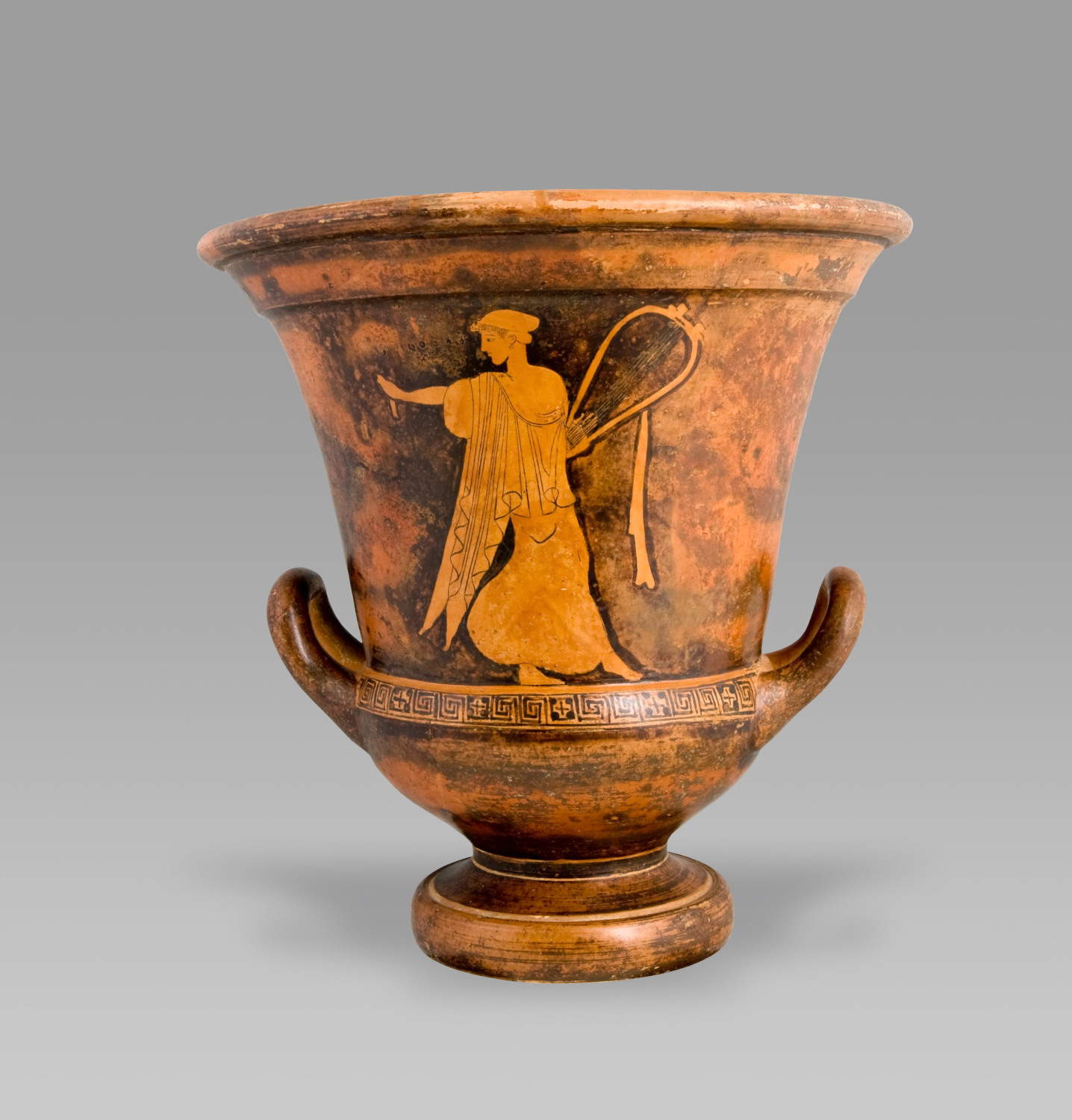
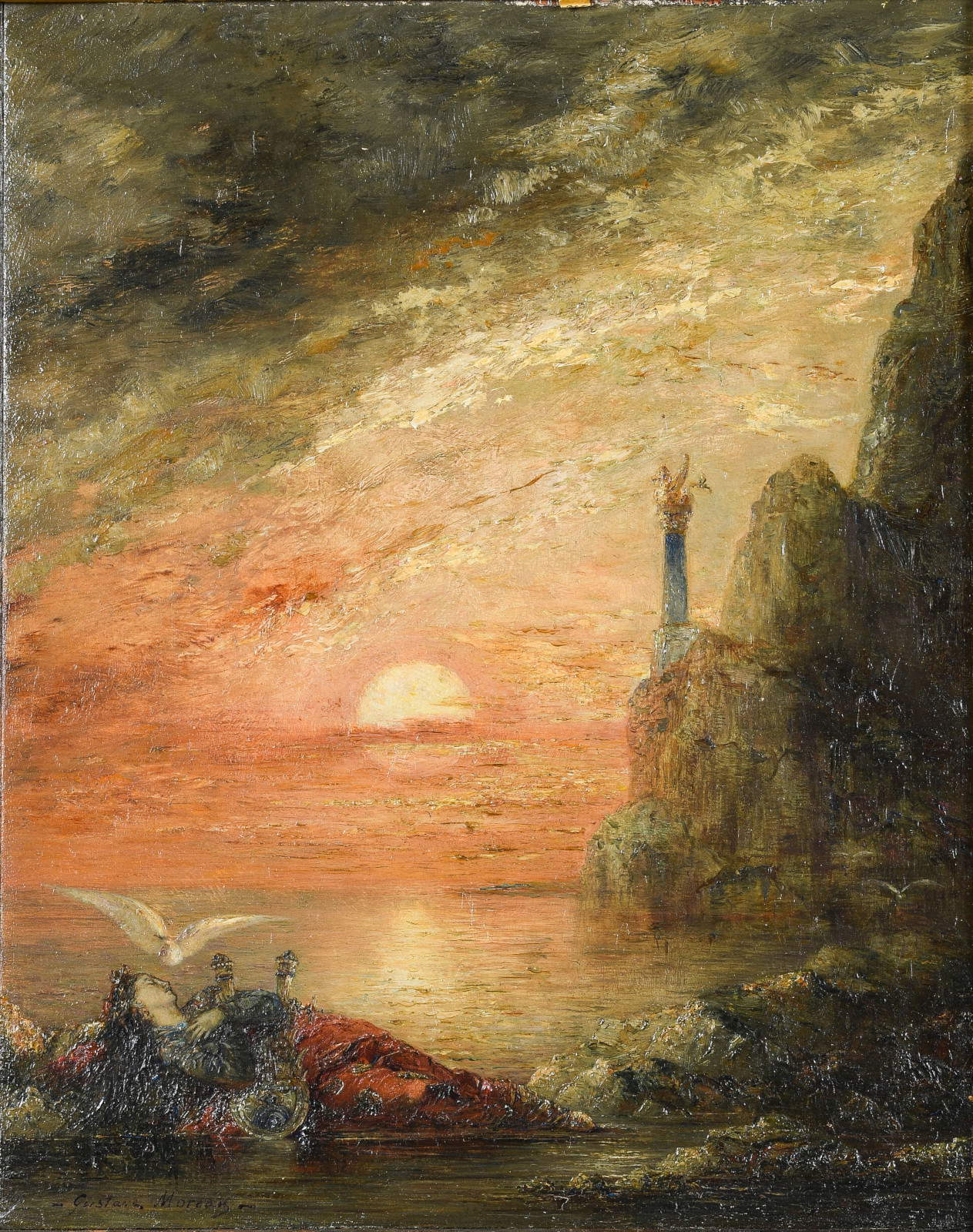
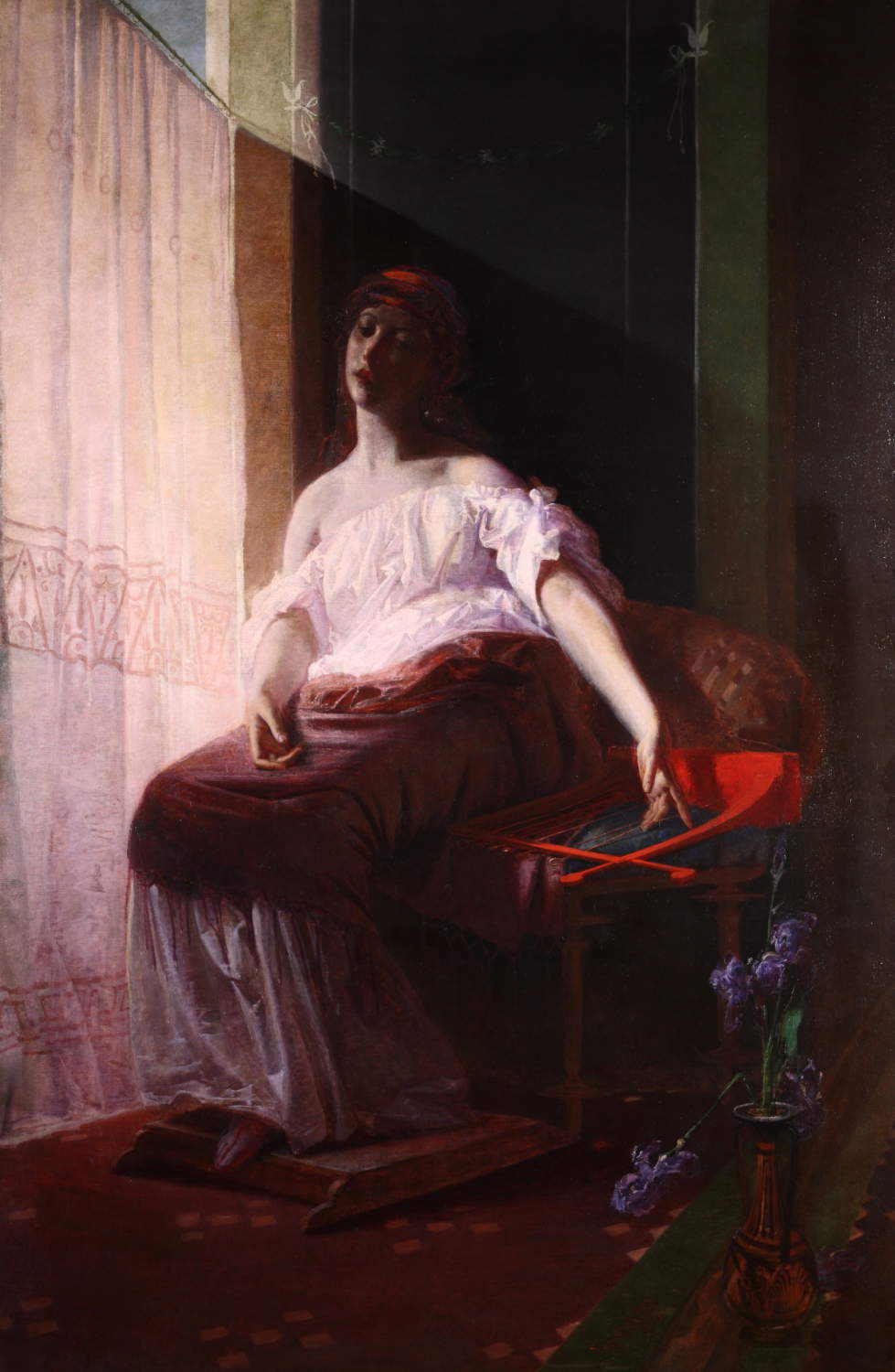
![Burri ΣΑΠΦΩ [Sappho], a book containing poems translated by Emilio Villa and 10 original lithographs by Alberto Burri, 1973–1982 (Private collection)](https://cdn.finestresullarte.info/rivista/immagini/2026/fn/mostra-saffo-roma-burri.jpg)
The choice of the Farnese Aviaries is no coincidence. The unique nature of these spaces, suspended between historic architecture and garden, offers an ideal setting for portraying Sappho—not through an attempt to reconstruct a biography that is necessarily fragmentary and partly unattainable, but through a sensory and imaginative experience.
The exhibition thus offers a multi-layered interpretation of the figure of Sappho: on the one hand, the archaic poetess emerges, deeply connected to her natural landscape and to the sensory dimension of experience; on the other, the mythical figure, continually reinterpreted over the centuries. Finally, added to these is the modern and contemporary Sappho, transformed into an icon capable of transcending different artistic and cultural languages and speaking to ever-new audiences. The project thus demonstrates how her poetry and her image do not belong solely to antiquity but continue to generate new interpretations and new meanings.
The exhibition will be complemented by a catalog published by Electa, which will reflect the exhibition’s original interpretation. The volume will trace the various layers of Sappho’s figure, from the archaic poet immersed in her natural landscape and attuned to her surroundings, to the mythic figure continually rewritten, and finally to her transformation into a modern and contemporary icon.
 |
| Rome: An Exhibition on Sappho, the Poetess of Ancient Greece, at the Uccelliere Farnesiane |

Warning: the translation into English of the original Italian article was created using automatic tools. We undertake to review all articles, but we do not guarantee the total absence of inaccuracies in the translation due to the program. You can find the original by clicking on the ITA button. If you find any mistake,please contact us.























 IT
IT FR
FR DE
DE ES
ES CN
CN


