



by Redazione 04/11/2026


Categories: Exhibitions / Disclaimer
From November 4, 2026, to January 4, 2027, the exhibition project will take place at four iconic locations throughout the city, from the MAD Murate Art District to the Museo dell’Opera del Duomo. At its heart is a new series of “Naturografie” created by immersing natural fabrics in the river’s waters.

On November 4, 1966, the Arno River flooded Florence, causing extensive damage to the city’s historical and artistic heritage. Sixty years after that event, the relationship between the Tuscan capital and its river takes center stage once again in a contemporary art project by Roberto Ghezzi. From November 4, 2026, to January 4, 2027, ARNO – Stories of Reconciliation Between Florence and Its River, a multi-venue exhibition involving the MAD Murate Art District, the Museo dell’Opera del Duomo, the Cenacolo del Fuligno, and the Church of San Salvatore in Ognissanti. The exhibition begins at the MAD, a space owned by the City of Florence and managed by the MUS.E Foundation, and offers a reflection on the memory of the flood and the transformations in the relationship between humans and the environment.


The exhibition marks the final phase of Ghezzi’s artistic project, coordinated by Niccolò Mannini and project manager Debora Daddi, curated by Valentina Gensini for the spaces at the MAD Murate Art District, and with scientific coordination by Lucia Montuschi for the multi-site exhibition. The initiative is part of the MAD’s programming and the Riva Project, developed in collaboration with the Florence World Heritage Office and UNESCO Relations, the Ministry of Culture—Regional Directorate of National Museums of Tuscany, the Opera di Santa Maria del Fiore, the University of Florence, the CNR—National Research Council, and Inchiostro Nero ETS.


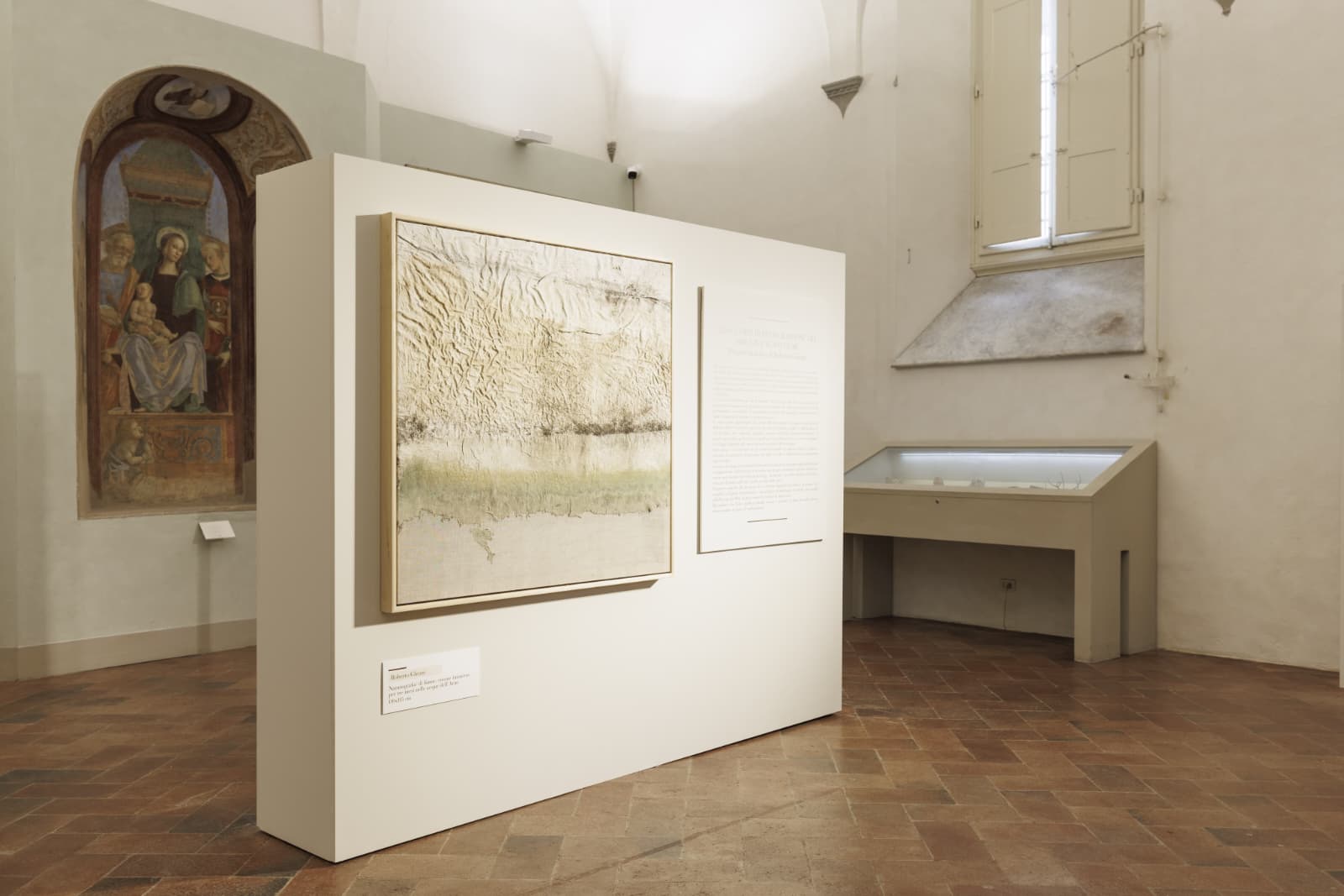
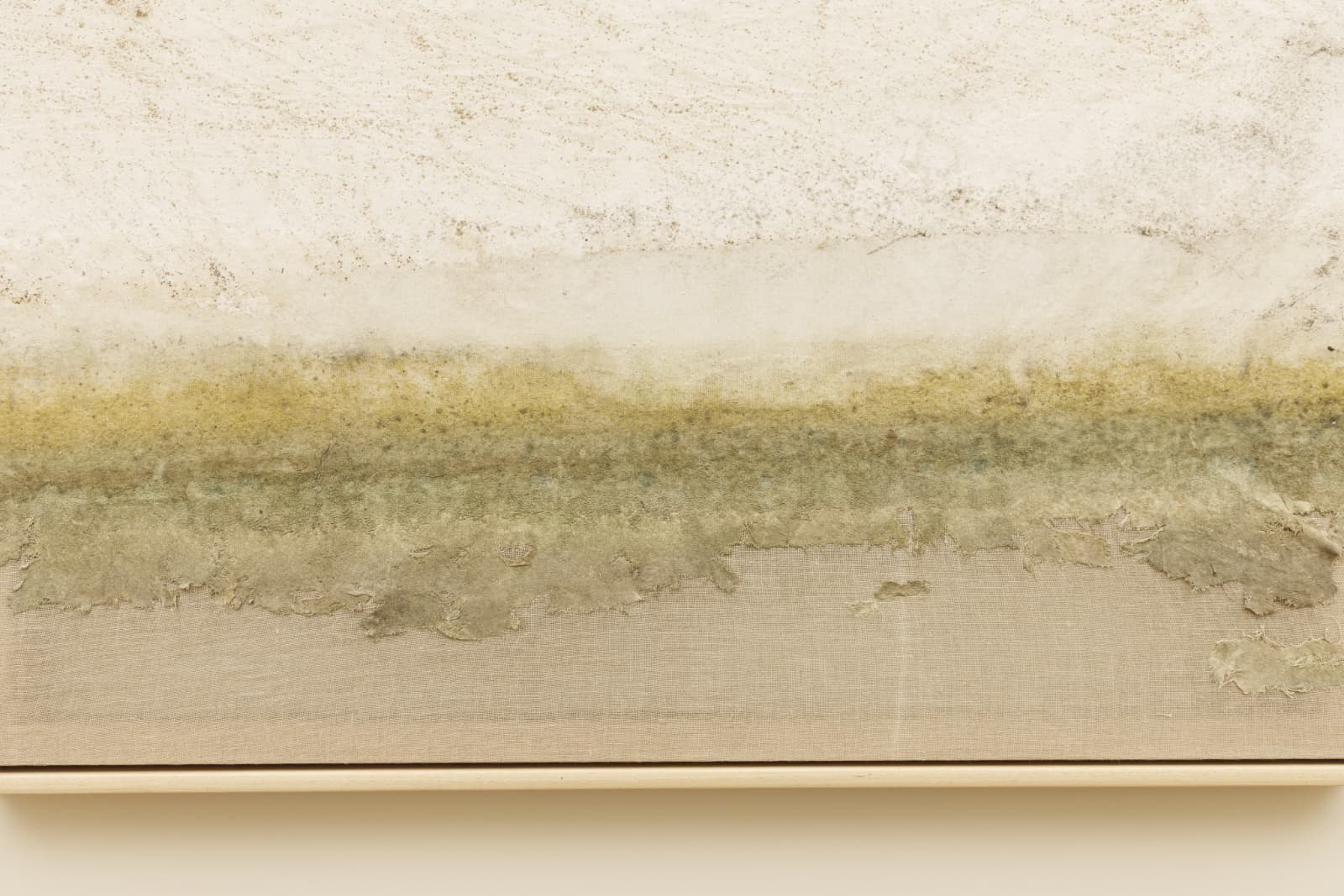
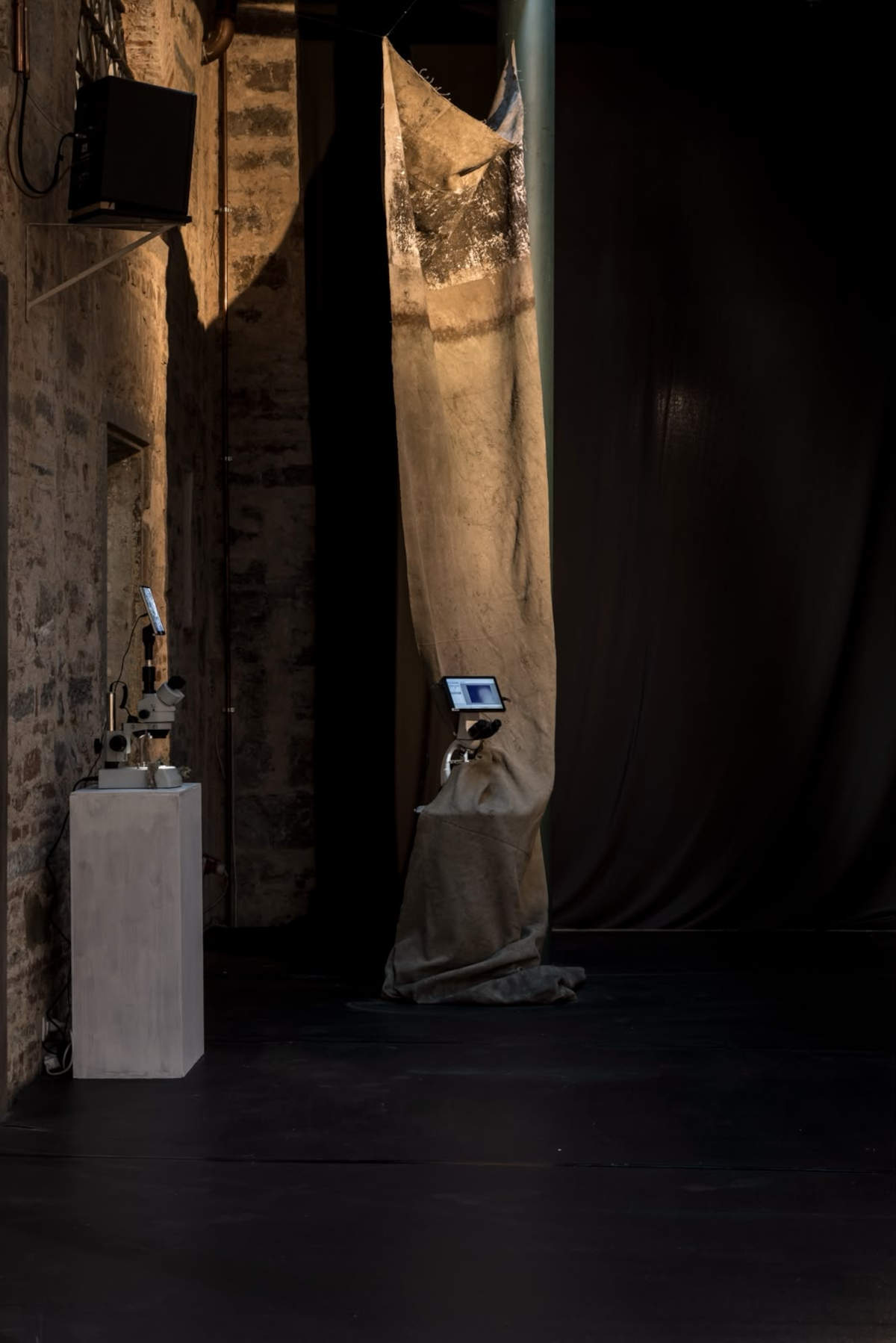
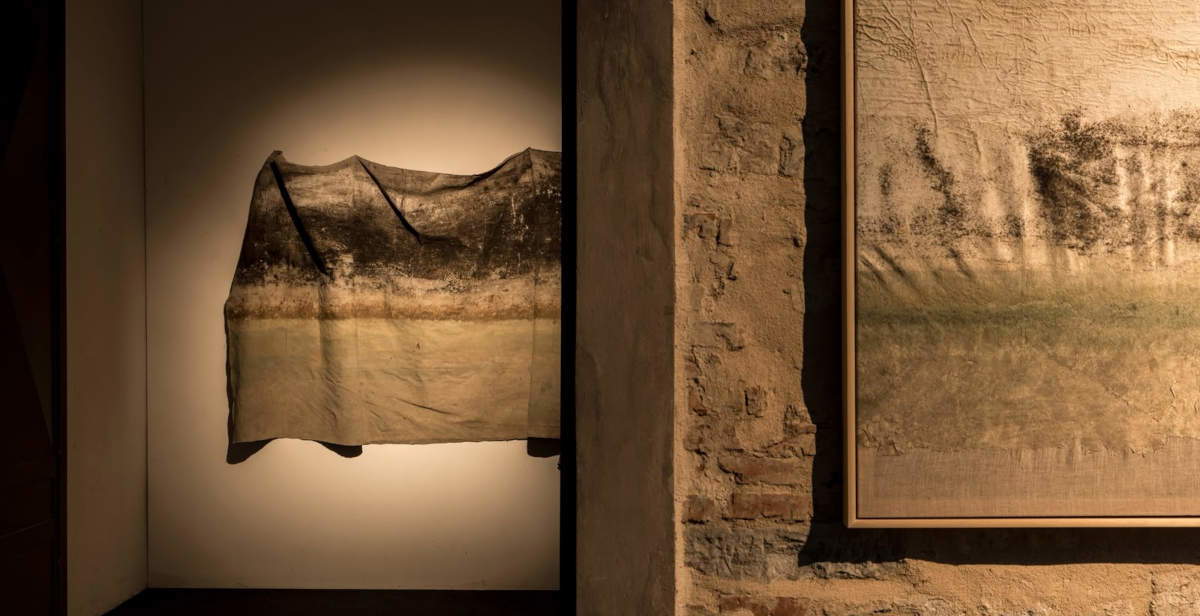
At the heart of the exhibition is a new series of “Naturografie,” created by the artist by immersing natural fabrics in the waters of the Arno. After years of research conducted in various geographical contexts—from Tuscany to the Blyde River Canyon in South Africa, from the Lofoten Islands to Svalbard, from Greenland to Patagonia—Ghezzi turned his attention to the river in Florence. From June 29 to September 28, 2026, at the ASD Canottieri Comunali Firenze, he entrusted the canvases to the action of the water, allowing silt, sediments, plant matter, and atmospheric conditions to directly interact with the surfaces.

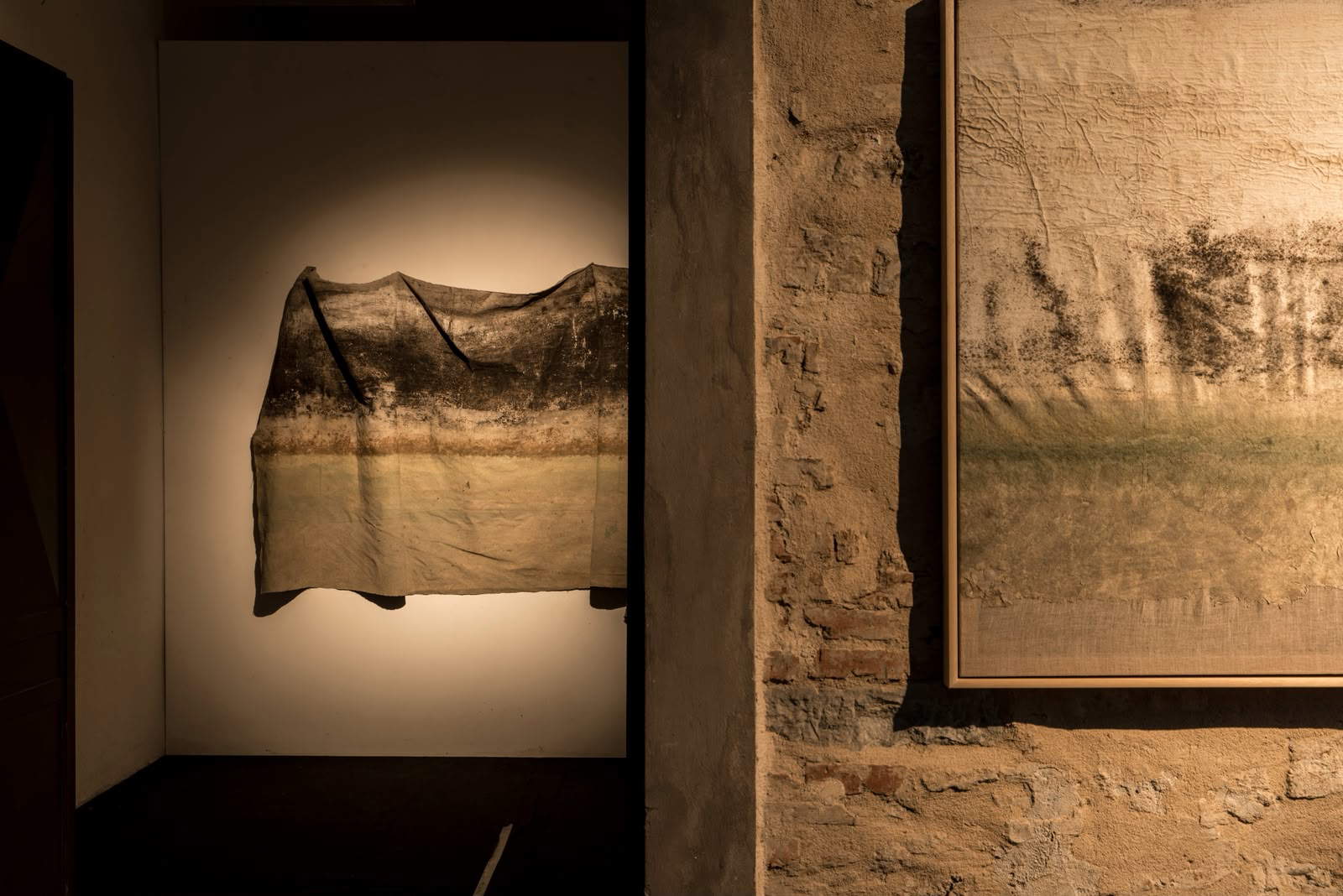
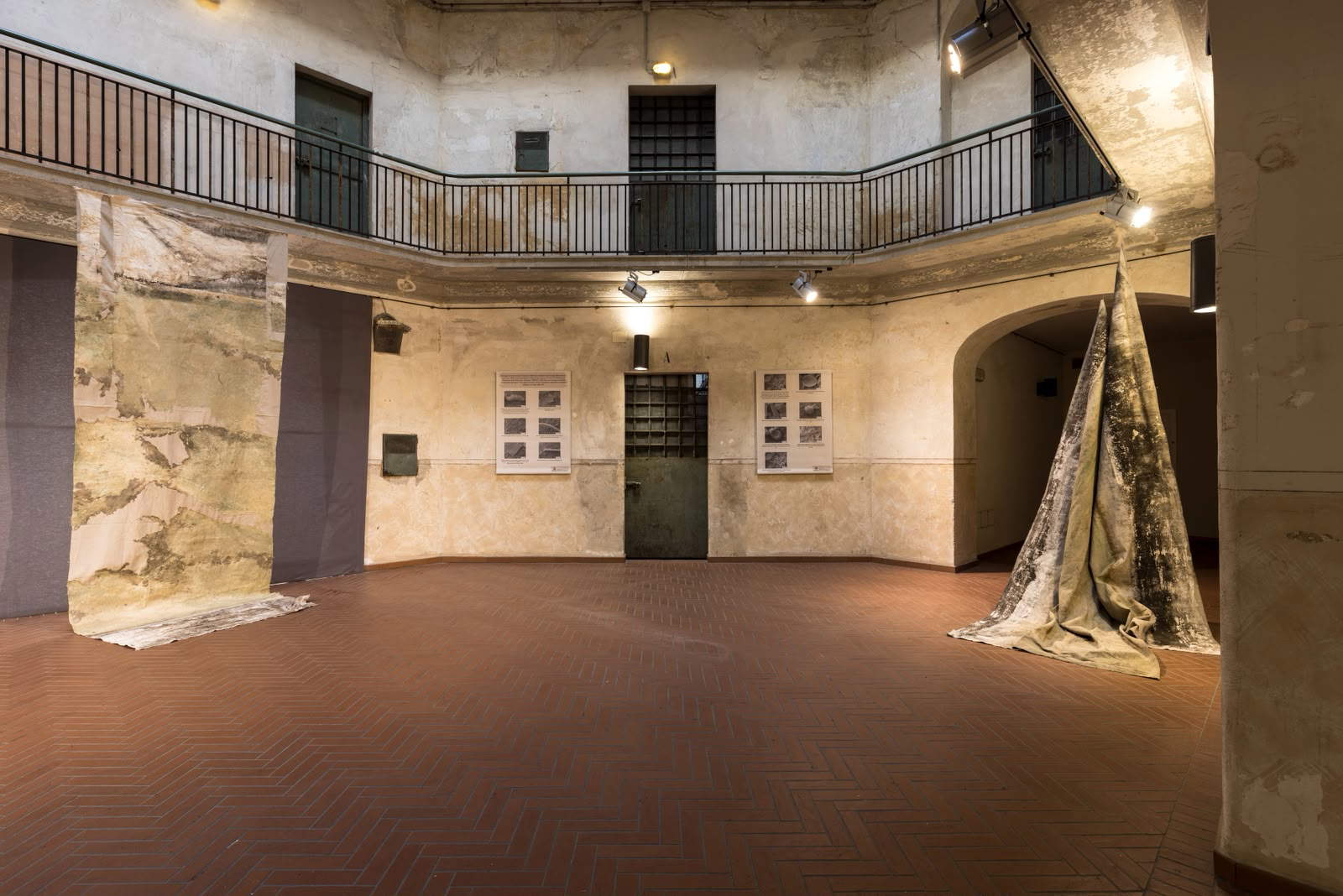
The result consists of works in which chromatic layers, organic traces, small plants, and lichens emerge, alongside signs attributable to human activity, such as microplastics. The surfaces thus become testimonies to the transformations of the river ecosystem and the relationship between the natural environment and human presence. The reference to the 1966 flood takes on central significance: the mud that flooded streets, homes, and cultural sites sixty years ago has now become generative material, capable of leaving traces and producing new forms of knowledge. The project does not aim to erase the memory of the destruction, but rather to address it through a perspective that recognizes the relationship between Florence and the Arno as a history marked by vulnerability, change, and the possibility of reconstruction.
The four exhibition venues were selected in part because of their connection to the flood and the subsequent recovery and restoration efforts. The MAD Murate Art District embodies a history tied to the complex’s various transformations, having begun as a cloistered convent and later serving as a prison. In the refectory of the Murate, Giorgio Vasari painted *The Last Supper*, which has become one of the symbols of the works damaged by the flood. During the 1966 emergency, the inmates fled the prison by climbing across the rooftops and found shelter in homes throughout the neighborhood.
At the Museo dell’Opera del Duomo, the water reached a height of about one and a half meters, severely damaging a collection that included large illuminated manuscripts belonging to the Cathedral and the Baptistery, wooden models of the dome and the facades of the Duomo, and important archival documents. The exhibition will be held in the Ticciati courtyard, in a space that also showcases the new conservation and preservation practices developed after the disaster.
At the Cenacolo del Fuligno, the floodwaters reached about two and a half meters, putting priceless works at risk, including Pietro Perugino’s *The Last Supper*. The rooms were subsequently used as a storage facility for the damaged artworks before the complex reopened in 1990. In the Church of San Salvatore in Ognissanti, however, the water rose to about three meters, devastating the furnishings and interiors and lapping at the frescoes by Domenico Ghirlandaio and Sandro Botticelli. Subsequent restoration work also made it possible to uncover previously hidden works of art.
The inauguration on November 4 will take place at various venues throughout the day: at 9 a.m. at the Cenacolo del Fuligno, at 11 a.m. at the Church of San Salvatore in Ognissanti, and at 4 p.m. at the Museo dell’Opera del Duomo. The day will conclude at 5:30 p.m. with the opening at the MAD Murate Art District and the Semiottagono delle Murate.
Alongside the artistic research, the project incorporates a scientific and educational dimension through guided tours, activities for schools, multimedia documentation, and interdisciplinary workshops organized in collaboration with the University of Florence. The goal is to engage diverse audiences in a reflection on the memory of the flood and on contemporary ecological issues.
The program “Dentro il contemporaneo”(Inside the Contemporary), born from a collaboration between Fondazione CR Firenze and MAD Murate Art District to encourage specific groups of citizens to engage with contemporary art, features five events. On Tuesday, November 10, at 4:00 p.m., there will be a tour for people over 65, titled ARNO – Stories of Reconciliation Between Florence and Its River, dedicated to the relationship between art, memory, and science. On Wednesday, November 25, also at 4 p.m., there will be an accessible and participatory tour for people with disabilities and their caregivers, focusing on Ghezzi’s works and the memory of the flood.
On Friday, December 18, at 1:30 p.m., as part of the “Pillole d’arte contemporanea” series, the event “Roberto Ghezzi and the Arno” will explore the artist’s work dedicated to the river. On Tuesday, December 22, at 4:00 p.m., seniors aged 65 and older can participate in the tour “The Tales of Water,” dedicated to the river as a guardian of memories and the relationship between humans and nature. Finally, on Saturday, January 2, at 3:30 p.m., “The Colors of River Water” will take place—a creative workshop for children and families.
The public program also includes a scientific seminar scheduled for Wednesday, November 18, at 5:00 p.m., featuring presentations by Valentina Raimondi and Guia Morelli on their respective research into the presence of microplastics and microfibers in the Arno. The exhibition catalog, produced in collaboration with Maschietto Editore, will be presented on November 18 at the MAD.
“ARNO – Stories of Reconciliation Between Florence and Its River” is made possible thanks to the support of Fondazione CR Firenze, CNA Firenze, and Exclusive Connection, with sponsorship from Unicoop Firenze and ML Systems, and technical sponsorship from Berti hi-tech smart solution and Canottieri Comunali Firenze. Votto Film is collaborating on the project.
Statements
“Sixty years after the 1966 flood, this exhibition offers us the opportunity to rediscover the deep bond between Florence and the Arno through an exploration that weaves together art, memory, and environmental awareness,” says Laura Sparavigna, councilor for civil protection. “The river is part of our city’s identity, its history, and its beauty, but it also reminds us of the fragility of our territory. In Roberto Ghezzi’s works, the water and mud that brought destruction sixty years ago become tools for telling this story from a new perspective. It is a meaningful way to remember the past and look to the future, with the awareness that living alongside the Arno means knowing it, respecting it, and cultivating a culture of prevention.”
“These works of fully realized material dimension,” explains Valentina Gensini, curator of the exhibition and artistic director of MAD Murate Art District, “take shape from the encounter between artistic intent and natural processes, emerging as self-portraits of the landscape—ecosophical imprints in which the artist relinquishes absolute control to open herself up to the action of climatic and environmental forces. The river becomes a living archive, capable of recording the passage of time and environmental transformations, but also an active subject with whom to establish a relationship based on listening and reciprocity. Sixty years after the flood of November 4, 1966, the mud of the Arno takes on a renewed symbolic significance. The material that disfigured Florence, deeply damaging its cultural heritage, is transformed into a vehicle for memory and knowledge: no longer a remnant of a painful and wounded memory, but a testament to a complex relationship between the river and the city, marked as much by vulnerability as by the possibility of renewal.”
“Hosting this new component of the Arno project at the Cenacolo del Fuligno,” emphasized Carlotta Paola Brovadan, regional director of the National Museums of Tuscany at the MiC, “truly embodies our Institute’s commitment: to protect and promote historical memory by transforming cultural sites into living spaces capable of engaging with the local community and its citizens. Roberto Ghezzi’s *Naturografie* offer us an opportunity to reflect on the relationship between Florence and its river: by rediscovering the role that the Cenacolo played as a guardian of the masterpieces damaged by the 1966 flood, this exhibition does not merely commemorate the past, but transforms it into a tool for raising awareness in the present and for reflection on the future, with an eye toward the challenges of the climate emergency and environmental responsibility.”
“At a historic moment marked by the climate emergency, Roberto Ghezzi’s ‘Naturografie’ project invites us to engage in a profound reflection on the future, starting from the present and the relationship that Florentines have today with their river,” states Marco Mozzo, Director of the Museum of San Marco and the Florentine Cenacoli. “The opportunity to host a section of the project *Arno: Stories of Reconciliation Between Florence and Its River* at the Cenacolo del Fuligno offers visitors, the citizens of Florence, and—in particular—the residents of the San Lorenzo neighborhood the chance to rediscover the extraordinary history of this place. For many years, the Cenacolo served as a storage facility for works of art damaged by the 1966 flood, helping to preserve them and making possible the subsequent restoration of famous masterpieces, including Vasari’s *The Last Supper*, which came from the Basilica of Santa Croce. Today, all that remains of that dramatic experience are black-and-white photographs and the memories of the conservators who worked there—precious testimonies to a period that profoundly shaped the history of this city’s rebirth and its relationship with the Arno.”
“Piazza del Duomo,” states Giuseppe Giari, Historical Archive of the Opera di Santa Maria del Fiore, “and the entire monumental complex were swept away by the fury of the waters, as everyone knows, but Roberto Ghezzi’s large canvas was placed in the courtyard of the Museo dell’Opera del Duomo, a place that symbolizes both the scarring inflicted by the flood and, at the same time, a point of rebirth, thanks to the presence of the ‘Angels of the Mud’ who, right here in the museum, provided the first aid to the countless damaged works of art and archival documents.”
“Hosting a work by Roberto Ghezzi in the Church of San Salvatore in Ognissanti takes on special significance because of the connection this place has with the memory of the flood,” states Fra Giuseppe, a Friar Minor (OFM) and Rector of the Church of San Salvatore in Ognissanti. “On November 4, 1966, water and mud flooded the church, and it took about six months of work to clean the rooms, salvage the artworks, and restore the flooring. Sixty years later, hosting here a work born from the very action of the Arno River itself means transforming the memory of that wound into an opportunity for reflection and reconciliation. This multi-site exhibition stems from the desire to create a link between several symbolic sites of the flood and Roberto Ghezzi’s artistic exploration, using his works to forge a path that bridges memory and the future. The value of the project lies precisely in this reconciliation: a river that deeply wounded Florence sixty years ago becomes today, through art, an opportunity for encounter, reflection, and new awareness. “It has been a privilege to help bring together such important institutions and sites in the city around a project that restores an active role to the Arno in the contemporary narrative of Florence.”
“It is a great honor for me to participate in the celebrations marking the 60th anniversary of the Florence Flood with this project,” says artist Roberto Ghezzi.“ARNO—Stories of Reconciliation Between Florence and Its River” stems from the desire to transform the memory of that wound into an opportunity for reconciliation: where the Arno brought destruction, I wanted to symbolically build a bridge toward a new alliance between humanity and the river. Over the past few months, it has been the Arno itself that has told its story and left its memory on the canvases, ultimately revealing an image we could never have foreseen: a small sprout emerging from the fibers of one of the works. For me, it has become the most authentic symbol of this project—a sign of hope and rebirth that embodies the very essence of the reconciliation we sought to convey.”
 |
| Sixty years after the Florence flood, Roberto Ghezzi entrusts the Arno with the creation of new works |
Warning: the translation into English of the original Italian article was created using automatic tools. We undertake to review all articles, but we do not guarantee the total absence of inaccuracies in the translation due to the program. You can find the original by clicking on the ITA button. If you find any mistake,please contact us.