


by Redazione 29/10/2026


Categories: Exhibitions / Disclaimer
In Florence, starting November 4, 2026, the Kunsthistorisches Institut in Florenz will display eight photographs by Ivo Bazzechi on the facade of its headquarters, dedicated to the 1966 flood. Unpublished archival documents also trace the Institute’s role in supporting the recovery of cultural heritage, including restoration efforts, international aid, and volunteer work.


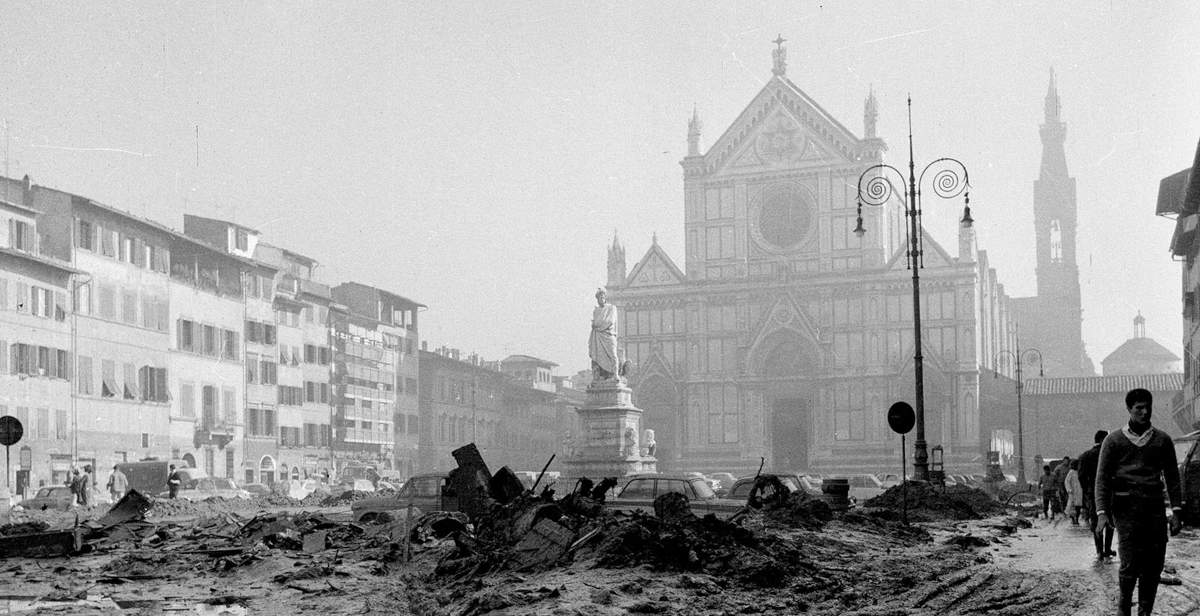
Sixty years afterthe flood that struck Florence on November 4, 1966, the Kunsthistorisches Institut in Florenz (KHI) is presenting a selection of eight photographs by Ivo Bazzechi (1920–1975) on the facade of its headquarters at Via Giusti 42–44. The installation, scheduled to begin on November 4, 2026, features images printed on large banners measuring over two meters on each side, documenting the devastation caused by water and mud, the efforts to restore the city’s artistic and monumental heritage, and the return to normal urban life. Rounding out the project are several previously unpublished documents from the KHI Archives, which trace the Institute’s contribution to the rescue and restoration efforts.


The photographs constitute a selection of the eighty images presented in 2006 by the Photo Library of the Kunsthistorisches Institut in Florenz in an online exhibition organized to mark the 40th anniversary of the flood. Twenty years after that initiative, the project revisits an event that remains highly relevant today, in light of technological advances in the field of conservation and increasingly critical global climate conditions. The decision to display the images on the building’s facade also expresses the Institute’s connection to Florence, the city that has been its home since 1897.


The KHI, an art history research institute and current member of the Max Planck Society, was directly involved in the emergency response. The flood reached the basements and ground floor of the headquarters on Via Giusti, with water rising to a height of 130 centimeters. The prompt intervention of the staff and fellows made it possible to save most of the library’s books stored in the flooded areas.


Documents recently discovered in the Institute’s archives provide further insight into the activities carried out to support the preservation of Florence’s cultural heritage. These include correspondence between the director and staff members and institutions in Florence, Europe, and the United States; notes; reports; cost estimates from restoration professionals; technical specifications for equipment; and newspaper clippings. In the days following the disaster, throughout 1967, and beyond, the KHI participated in the International Fund for Florence Committee, coordinating various initiatives.
The Institute provided the Restoration Office at the Fortezza da Basso with a car to facilitate travel, contributed to damage assessment by compiling and sharing reports, and coordinated donations from Germany. The aid included funds, equipment, and professional and scientific expertise for the stabilization and restoration of works in the visual and plastic arts, textiles, architecture, and books. Activities also included organizing groups of student volunteers from German universities.
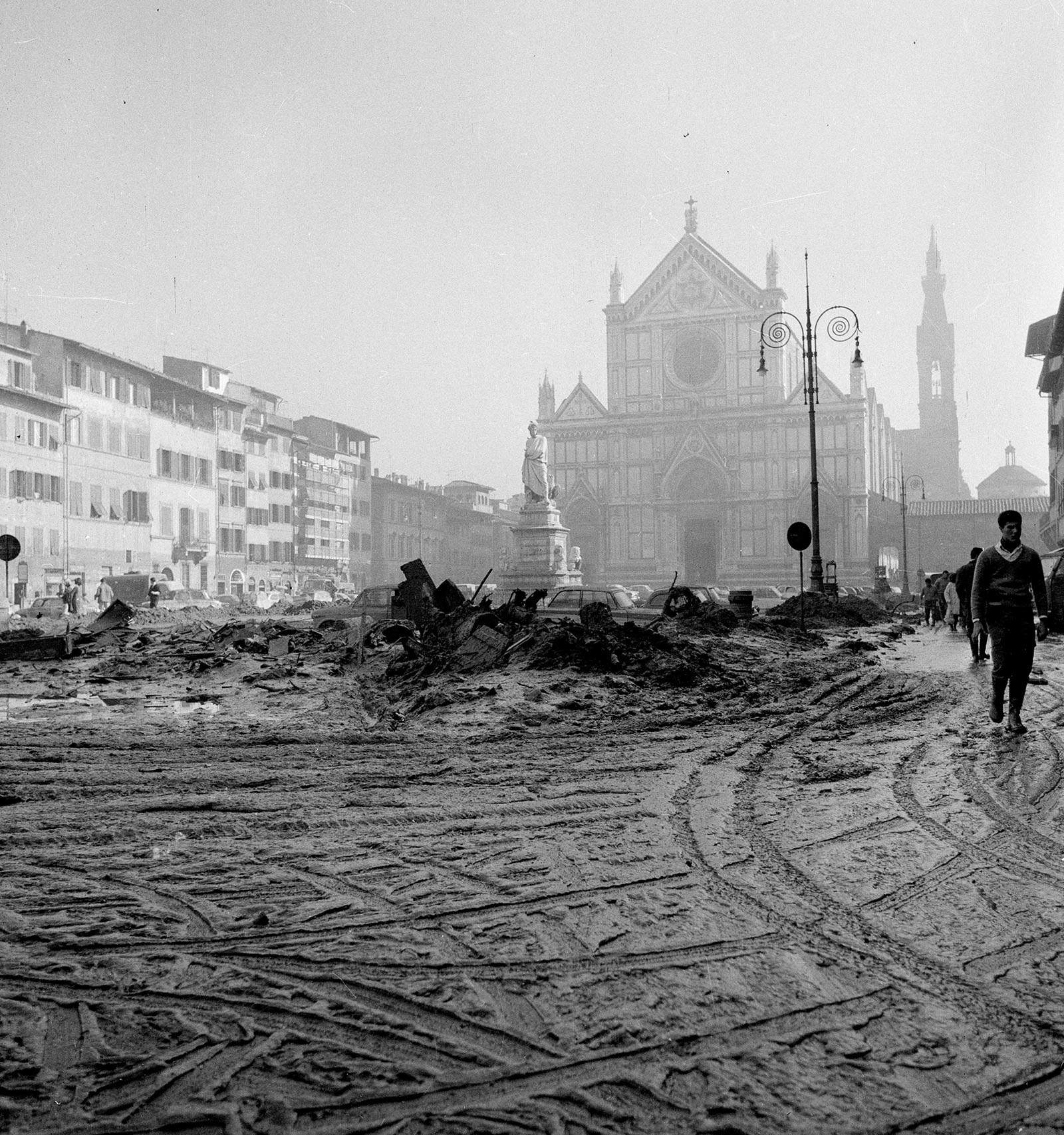
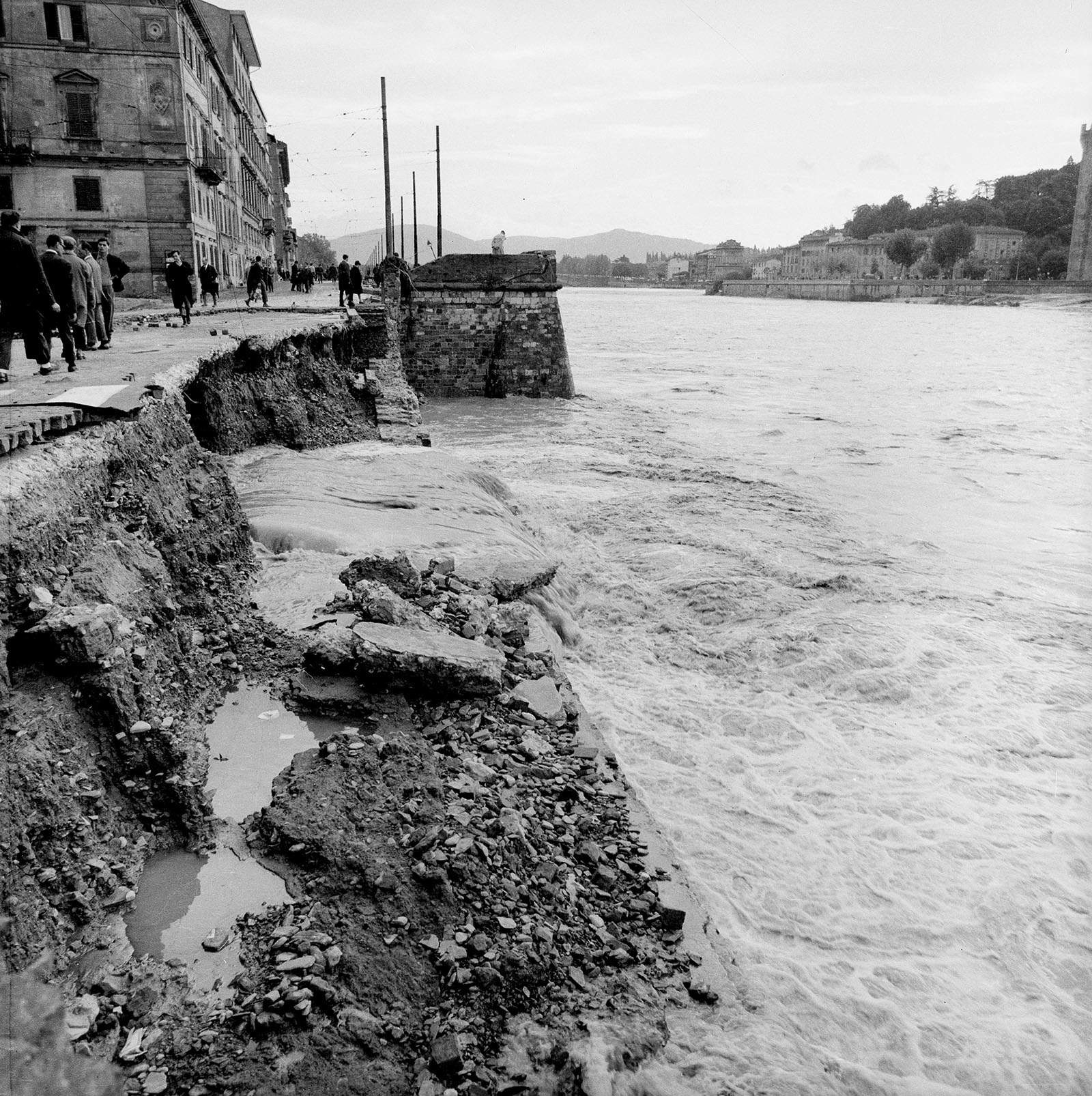
The photographic journey begins with the most dramatic hours of Friday, November 4, 1966—then a holiday marking the Day of the Unification of Italy—when the water reached its highest level in the area of the Duomo and the Baptistery. The subsequent images show the city after the waters receded and the damage concentrated in the areas near the Arno: the Stock Exchange in Piazza de’ Giudici, the Uffizi square, and Piazza Santa Croce after the initial cleanup of mud and debris. Other photographs document the Lungarno della Zecca Vecchia, still lapped by the current, and the interior of the Church of the Most Holy Apostles.
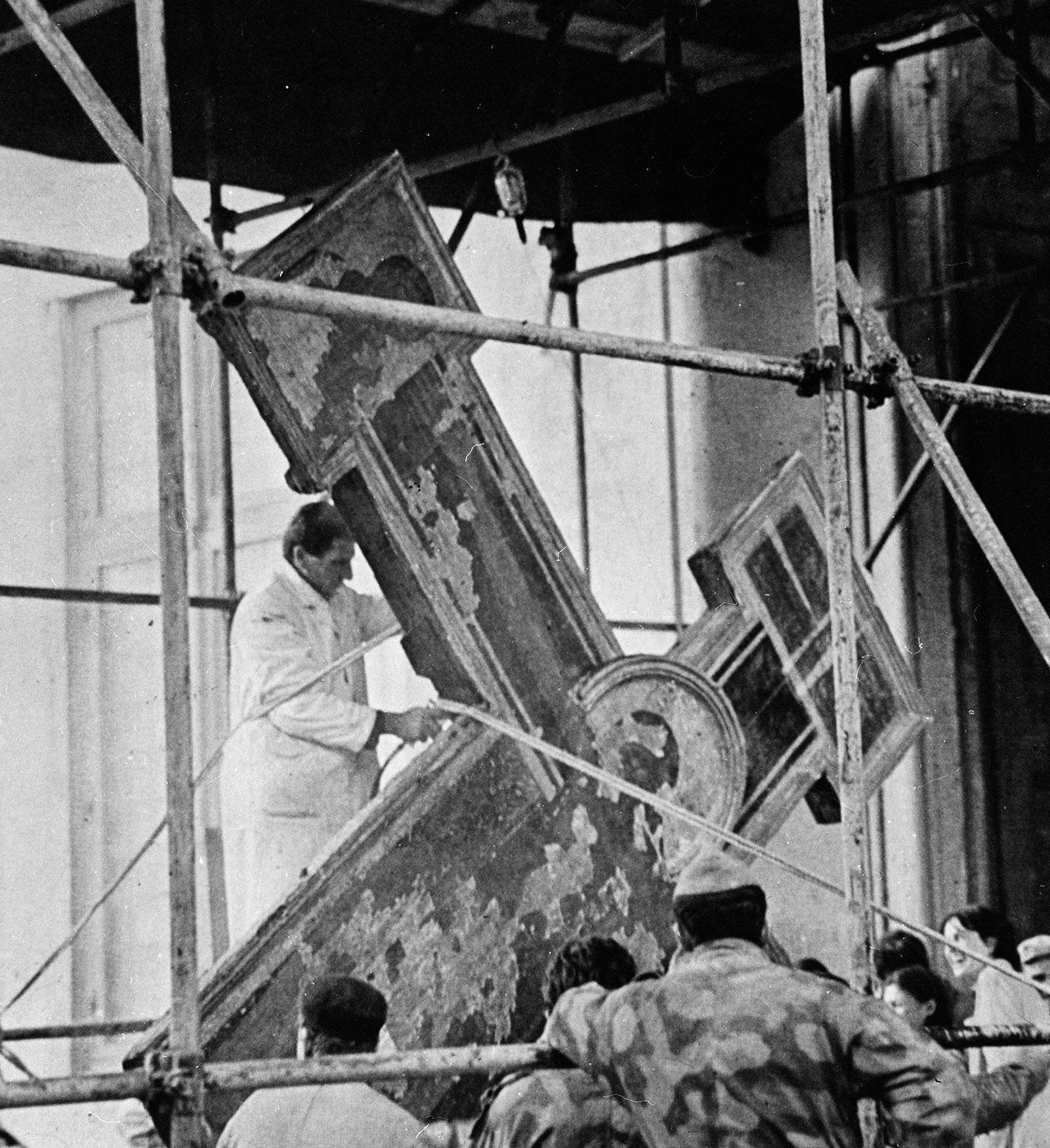
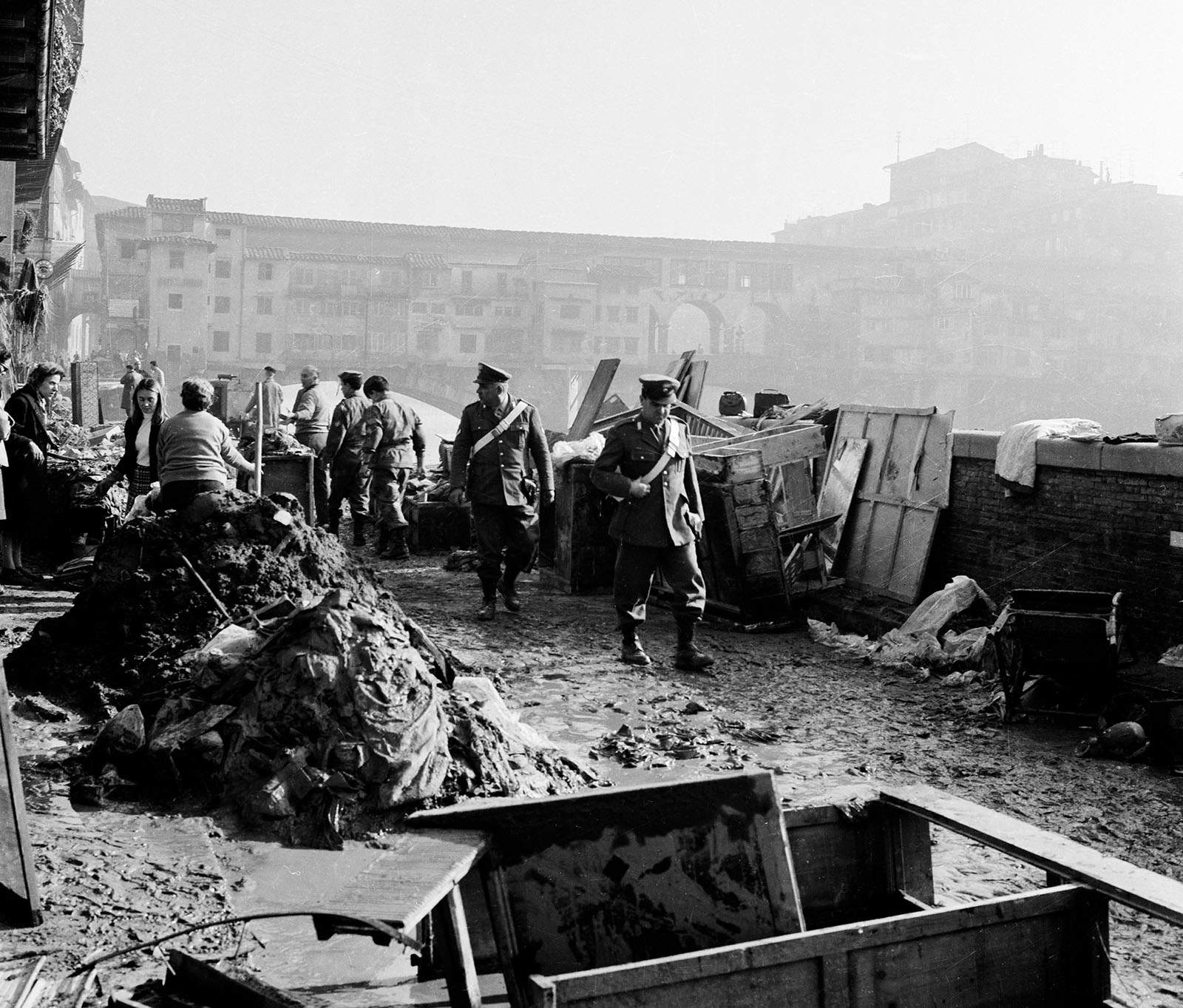
On the Lungarno degli Acciaiuoli, with the Ponte Vecchio in the background, restoration work overlaps with the construction site of the new Palazzo Acciaiuoli, still under construction following the destruction caused by German troops in 1944. Among the most significant images is that of the transfer of Cimabue’s Crucifix, painted in tempera on wood around 1272 and which has become one of the symbols of the flood’s aftermath. The photograph documents the relocation of the severely damaged work from the former refectory of Santa Croce to the Limonaia in the Boboli Gardens. The crucifix underwent a radical restoration that lasted ten years, at the end of which only remnants of the paint layer could be preserved.
All the photographs on display are the work of Ivo Bazzechi, a professional photographer active primarily in the 1950s and 1960s, who had his own studio in Florence. In 1975, the KHI Photo Library acquired approximately 5,500 of his negatives, of which about 4,700 have been digitized and made freely available through the Digital Photo Library. The Bazzechi Collection documents not only architectural monuments but also the city’s transformations during the delicate postwar period.
This initiative is part of the Kunsthistorisches Institut in Florenz’s program of activities aimed at the academic community and the general public, carried out in collaboration with Florentine, national, and international institutions. Historical research thus goes hand in hand with reflection on contemporary themes such as ecology, heritage, urbanization, migration and diversity, aesthetic and artistic practices, media, material cultures, digital transformation, and the future of museums.
Notes on the Artist
Born in Arezzo in 1920, Bazzechi trained as a photographer in his hometown and, after the war, moved to Florence, where he began working at Foto Locchi. In the early 1950s, he opened his own studio on Via Guicciardini. He devoted himself primarily to architecture and the city, collaborating with the cultural heritage authorities of Arezzo and Florence. A substantial portion of his body of work is also preserved at the Museo Galileo, for which he documented collections and exhibitions from 1955 to 1971. He died in Florence in 1975 in an accident.
 |
| The Florence Flood in Eight Photographs: The City’s KHI Reconstructs 1966 |
Warning: the translation into English of the original Italian article was created using automatic tools. We undertake to review all articles, but we do not guarantee the total absence of inaccuracies in the translation due to the program. You can find the original by clicking on the ITA button. If you find any mistake,please contact us.