








From July 25, 2026, to January 10, 2027, the Osvaldo Licini Study Center and House Museum in Monte Vidon Corrado ( Fermo) will host the exhibition *Zoran Mušič at the Osvaldo Licini House Museum*, curated by Daniela Simoni and Stefano Bracalente. The exhibition features a selection of the artist’s works, tracing his career spanning over thirty years through paintings, watercolors, lithographs, and engravings from the collection of Alberto Marcelletti—the result of a forty-year-long collecting endeavor dedicated to the work of Anton Zoran Mušič (Gorizia, 1909 – Venice, 2005).
Born in Gorizia in 1909, when the city still belonged to the Austro-Hungarian Empire, Mušič is considered one of the most significant figuresin European art of the second half of the 20th century. Trained at the Academy of Fine Arts in Zagreb, he developed an artistic language deeply influenced by the landscape of his childhood in Dalmatia, a region that would continue to resurface in his artistic work. The artist himself only realized how deeply that landscape had been etched into his memory during a stay in Spain, when his encounter with a similar environment made him understand the persistence of that inner image. His personal journey, unfolding in a border region, also helped make him an ideal bridge between East and West. In 1956, his work as an engraver and graphic artist received significant recognition with the Grand Prize for Graphic Arts at the Venice Biennale.
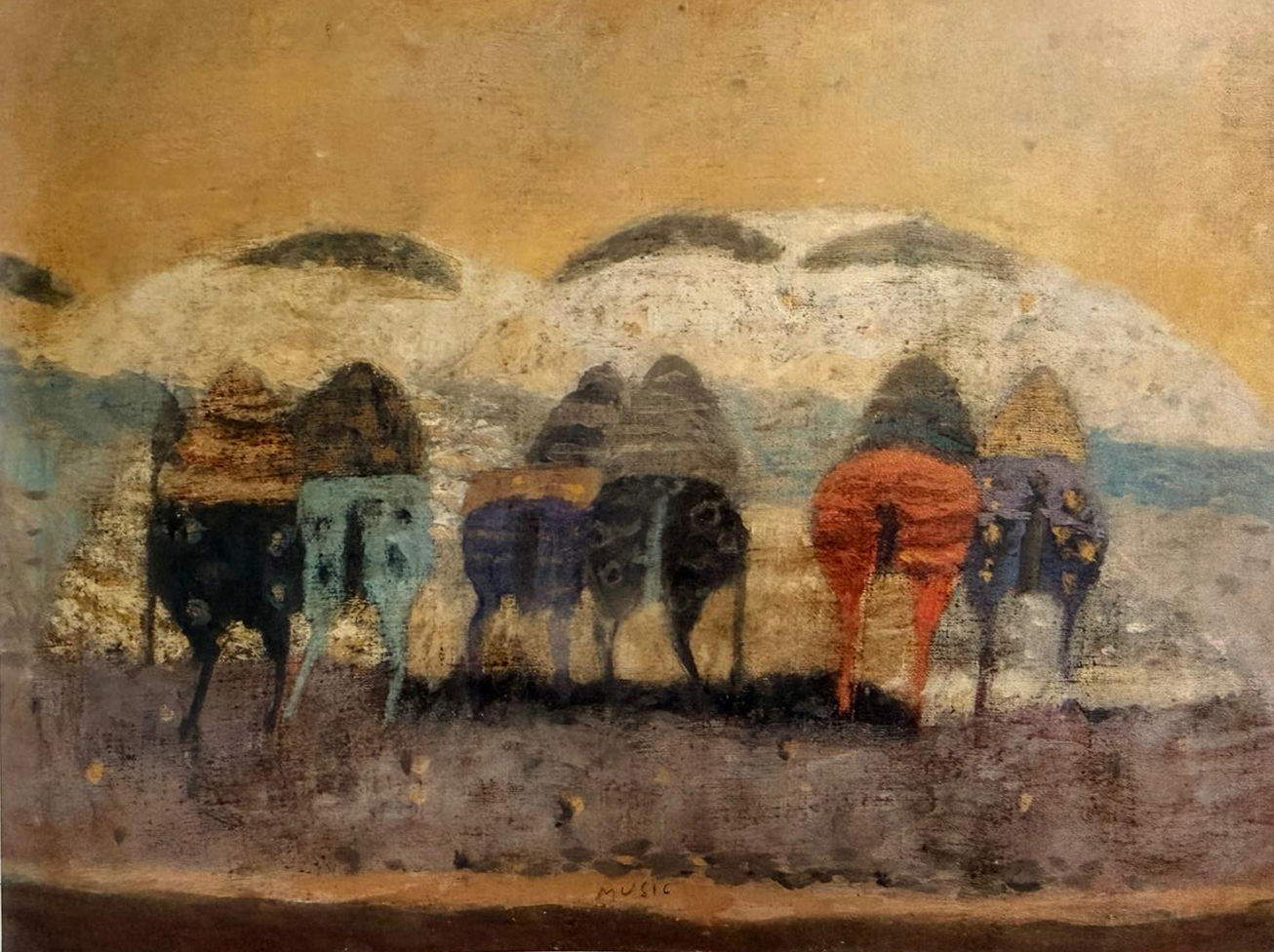
This exhibition draws parallels between Mušič’s work and that of Osvaldo Licini, identifying certain common themes despite the diversity of their respective artistic languages. The pursuit of essentiality, the reduction of the line to a primordial mark, the connection to the memory of one’s homeland, reflections on death, and the silent, transfigured nature of the landscape—suspended between a fairy-tale-like and melancholic dimension—are some of the elements that bring the two artists together. The continuous oscillation between figuration and abstraction and the striving toward a timeless dimension of the image are also aspects that the exhibition aims to highlight.
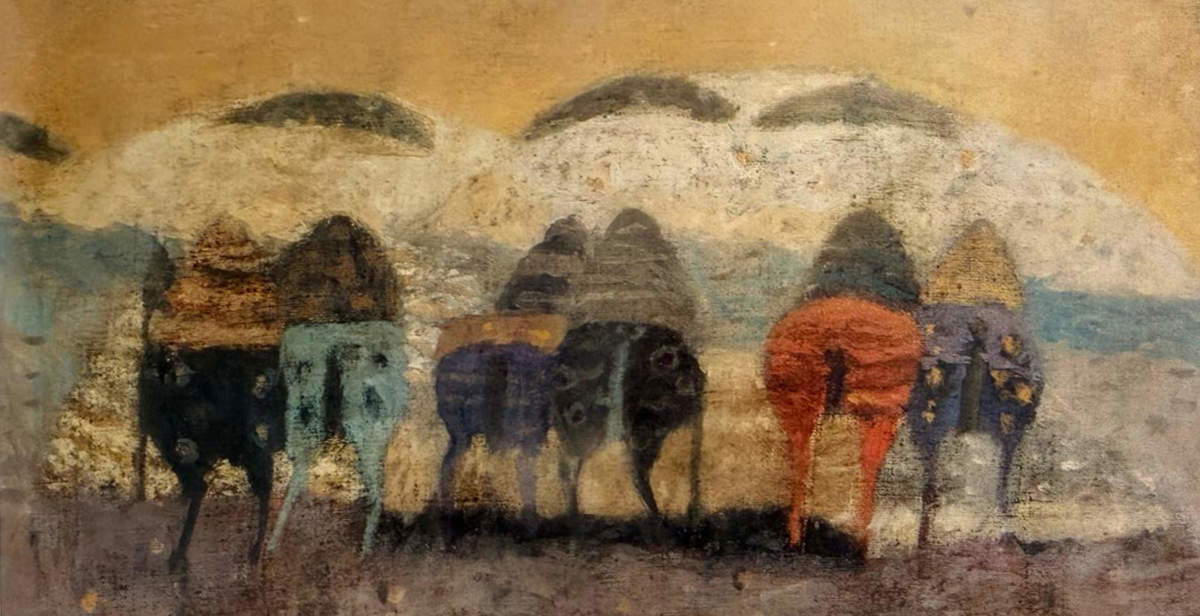
The exhibition follows a chronological and thematic organization and documents the main stages of Mušič’s artistic development from 1947 to the early 1980s. Alongside the famous Dalmatian ponies and donkeys—subjects that have come to define his work and are characterized by a minimalist rendering that evokes almost prehistoric images—the exhibition features the hilly landscapes of Umbria and the Siena region of Tuscany, the rocky vistas of the Karst and Dalmatia, and several views of Venice—the city where the artist settled and which he regarded as a privileged meeting place between Eastern and Western cultures. Also on display are several portraits of his wife Ida, a recurring figure in his work.
The exhibition also devotes particular attention to the evolution of Mušič’s artistic language, highlighting his gradual departure from naturalistic representation. This process is evident in the works belonging to the “Reti” series, where reality is gradually transformed into a symbolic structure, and in the “Terre dalmate” and “Terre d’Istria” cycles, in which the painterly material approaches informalist results.
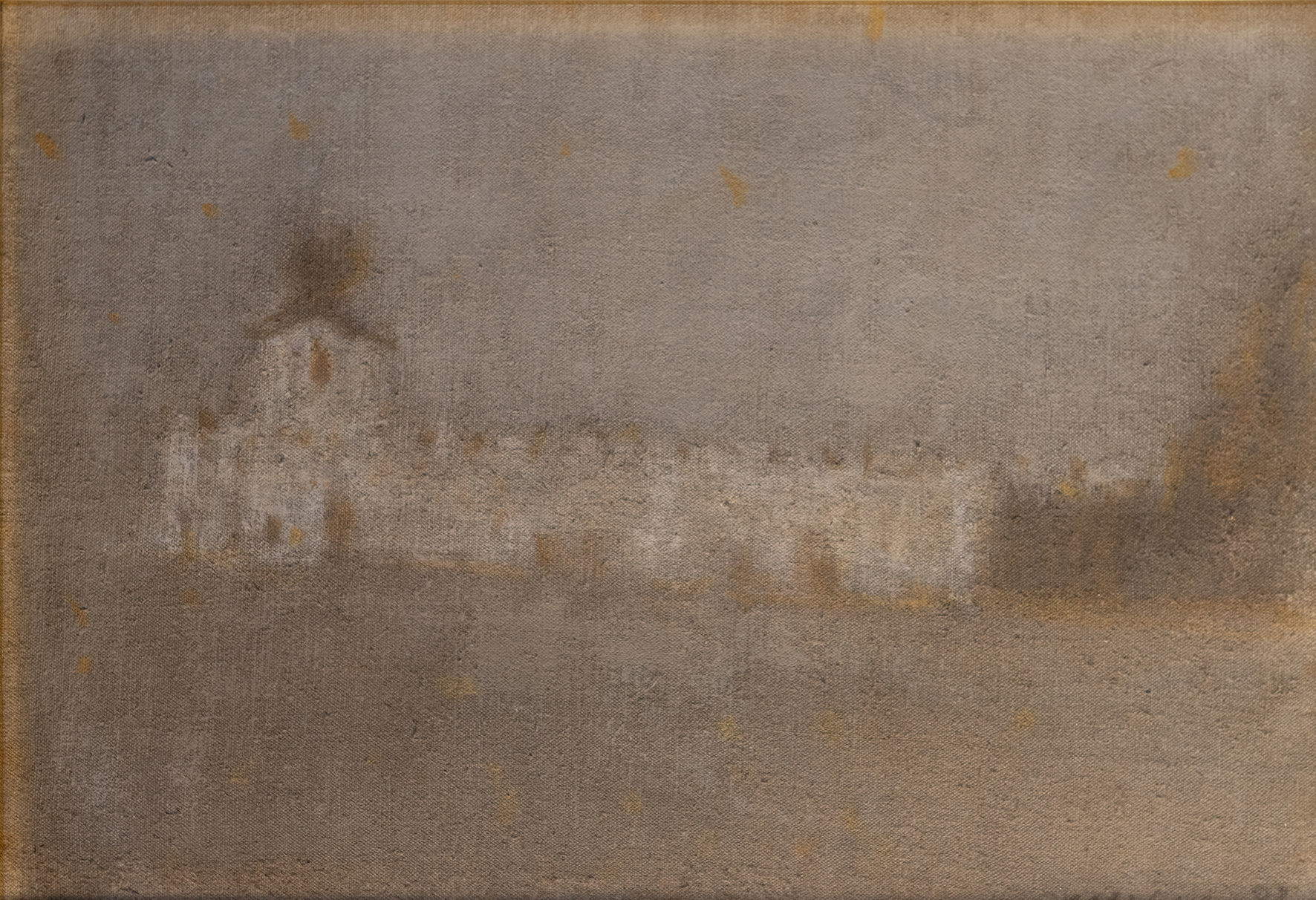
One of the central focal points of the exhibition consists of several etchings from the series *We Are Not the Last*, created in 1970. The works evoke the experience of deportation to the Dachau concentration camp, which the artist endured nearly thirty years earlier. After the war, that trauma profoundly shaped his artistic practice, leading him to progressively strip his images of all superfluous elements and to transpose the memory of the horror he had endured onto the landscape. In this series, the essential and measured line becomes the means through which to confront a memory destined to evolve into a universal reflection on violence and the human condition.
The exhibition is organized by the Licini Study Center in collaboration with the Municipality of Monte Vidon Corrado and the Marche Region, with the support of the Cassa di Risparmio di Fermo Foundation. The initiative is part of the Centro Studi Licini’s multi-year program, which, on the one hand, continues its in-depth exploration of the major figures of 20th-century art and, on the other, continues its investigation into the theme of the mark in contemporary art, a topic already addressed in previous exhibitions organized by the institution.
“I spent my youth in Dalmatia,” said Anton Zoran Mušič. “In this landscape where everything is dry, scorched, where there are only rocks, where there is almost no vegetation. I didn’t realize before that all of this had stayed with me. It wasn’t until I went to Spain and found a similar landscape there that I realized it. Something happened suddenly; it reminded me of something. Then it became clear to me: ‘This is your Dalmatian landscape; you’re home.’”
“A complex personality, like all restless souls—shy and reserved, aloof, seemingly detached—Music finds in art an opportunity to let himself go. Graphic design, in particular, amuses him,” observes Stefano Bracalente. “Enthusiasm guides him in his work. […] *We Are Not the Last* is a warning: what has been will continue to be as long as humanity cries out. This is why Music’s mark is barely there—discreet, simple, essential—and never makes a sound; indeed, it aspires to silence.”
“The works by Music on display allow us to trace the evolution of his artistic journey through his various series and to grasp the transformation of the inner image of a single subject rendered in oil, watercolor, and various graphic techniques,” states Daniela Simoni. “To understand the Giulian artist’s graphic work is to enter the beating heart of his creation, where his rejection of naturalistic description, the permanence of forms, and the repetition of a compositional syntax emerge even more clearly.”
 |
| Zoran Mušič at the Licini House Museum in Monte Vidon Corrado: Over Thirty Years of Research on Display |

Warning: the translation into English of the original Italian article was created using automatic tools. We undertake to review all articles, but we do not guarantee the total absence of inaccuracies in the translation due to the program. You can find the original by clicking on the ITA button. If you find any mistake,please contact us.














 IT
IT FR
FR DE
DE ES
ES CN
CN