



by Gabriele Landi 07/11/2026


Categories: Interviews / Disclaimer
From his early days in the late 1970s to his most recent works, Gianni Asdrubali—a painter with a career spanning several decades—discusses in this interview with Gabriele Landi a painterly exploration that begins with absence to generate new images and conceive of space in a radically different way. A reflection on the very meaning of making art, beyond categories and styles.

There comes a moment in the work of Gianni Asdrubali (Tuscania, 1955) when emptiness ceases to be something to be filled and becomes the principle from which everything originates. It is from this insight—which took shape in the late 1970s with *Muro Magico*—that a radical painterly journey began, one that is difficult to trace back to traditional movements, styles, or categories. Having established himself in the early 1980s, Asdrubali developed a body of work that deliberately remained on the margins of dominant trends, countering the notion of painting as narrative with a conception of the artwork as an autonomous organism, generated by the tension between presence and absence, form and anti-form. Over the decades, this artistic exploration has also led him to profoundly rethink the concept of space: the surface is no longer a boundary to be crossed, but becomes depth itself—a dimension that is both frontal and infinite. From his early experiments to the “Tromboloidi,” and on to his most recent works, his practice has continued to explore the possibilities of painting, eluding definitions and seeking a new image each time. In this conversation with Gabriele Landi, Asdrubali traces the stages of his artistic journey, reflects on the meaning of making art, and describes a practice that, as he himself states, does not stem from a commitment, but from a necessity and a pleasure: those of a child who continues to play. Asdrubali exhibited for the first time in 1982 at the Galleria La Salita in Rome, and went on to present his works in the most important venues, from the Venice Biennale—where he participated twice—to the Rome Quadriennale, the Fridericianum in Kassel, the Kunstmuseum in Darmstadt, the Museu de Arte Moderna in São Paulo, Brazil, and the MACRO in Rome. All of Asdrubali’s work must be viewed through a dynamic and scientific approach to thought: his work cannot be defined by either a theory or a “style,” because it depends on and deals with—as Flavio Caroli wrote—“that fundamental and contradictory knot that is life, and he delves right into it.”


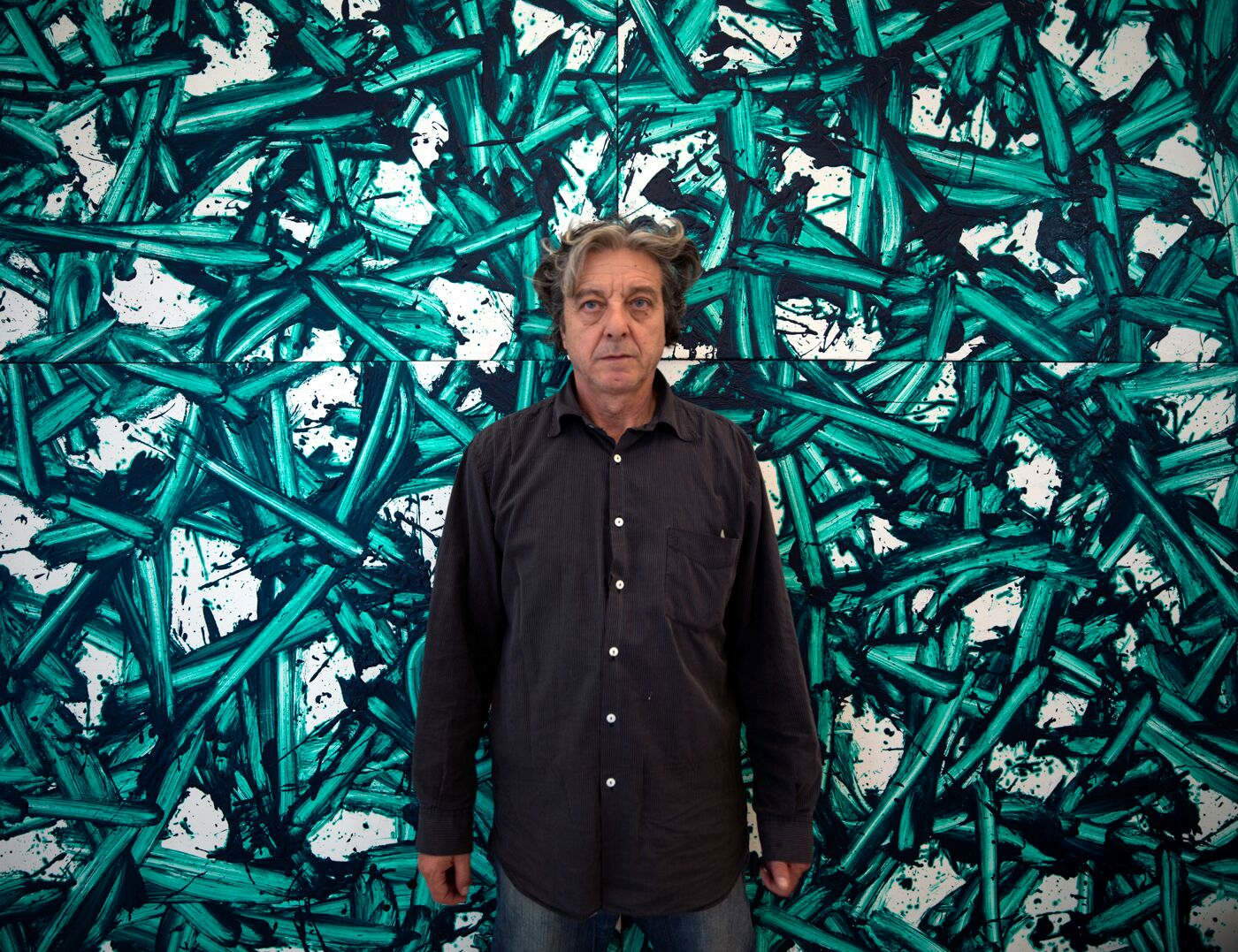
GL. Gianni, when did you create your first work?


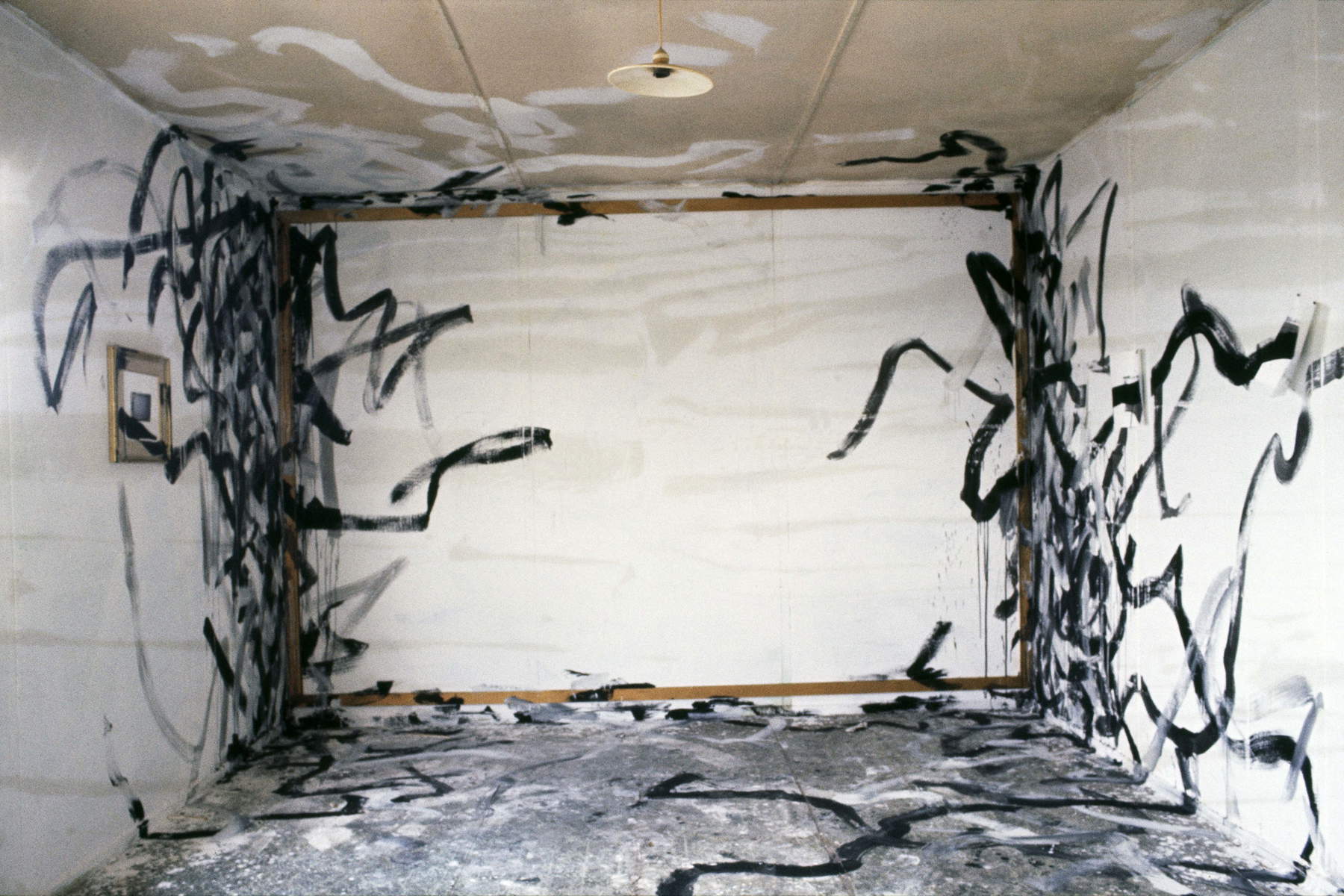
GA. My first work dates back to 1978–1979. *Muro Magico*: an empty room, assaulted in a combative action directed at the void itself. An action that, starting with a total invasion of that space, then moves backward to a state of zero, to the initial state from which everything had begun. The attempt to take center stage over the void failed—and rightly so. But in this failure, the realization becomes clear that the void is no longer a container to be filled with one’s own visions and narratives. An empty wall is no longer a support; it is “something else.” It is the realization that emptiness is an initial state that generates tension—the primal engine that unleashes instinct and thought to carry out a final, necessary, yet tragic action: tragic because that action is no longer the protagonist, as it once was, but is instrumental to the tension of the emptiness that gave rise to it. Consequently, everything changes. What changes is that it is the room filled with emptiness (and not the empty room) that acts to call for action: it calls upon man, as an instrument, in order to unleash a movement that seeks to make the sound of that original emptiness heard. Man’s liberation in this new consciousness no longer lies in his progressive, active protagonism, but in the annihilation of his own “self,” in burning himself up as an instrument in service of an “other” end. Even psychoanalysis took a century to understand that the problem was precisely meaning, the “self,” and that therefore the “pursuit of happiness” was achieved not by asserting one’s own “meaning,” one’s own identity, but rather, on the contrary, in consuming it, in annihilating it—like any other instrument—in something other than oneself. Then, in the early 1980s, I began to replace the term “emptiness” with “absence,” since emptiness in and of itself, in the absolute sense, does not exist. Every emptiness is traversed by infinite lines of force and energy that we cannot perceive with our eyes but which shape space and act upon us. What does exist, however, is the lack of things, and it is precisely in what is missing that everything begins: all our actions of “seeking” meaning are determined by the simple fact that there is nothing there. But if this absence, as I mentioned earlier, is the driving force—the origin of all fullness—paradoxically, this compact and full image reveals to us and makes us feel the utter silence of its origin. Hence, the ultimate and unpredictable result presents itself as a frontal image, where form and anti-form, movement and stillness, fullness and emptiness, affirmation and negation… everything is connected and fused into a single, contradictory truth. This was my starting point, and it’s clear how this beginning of mine—which stemmed from a scientific and dynamic approach to thought—was bound to clash with the prevailing postmodern climate of narrative and referential accumulation that was taking hold everywhere.

Your work began in the late 1970s: that period saw a return to figurative painting (the Transavantgarde, the Nuovi Nuovi, and Anacronismo were taking their first steps). Did you have any connections with these artists? Were you ever interested in their work?
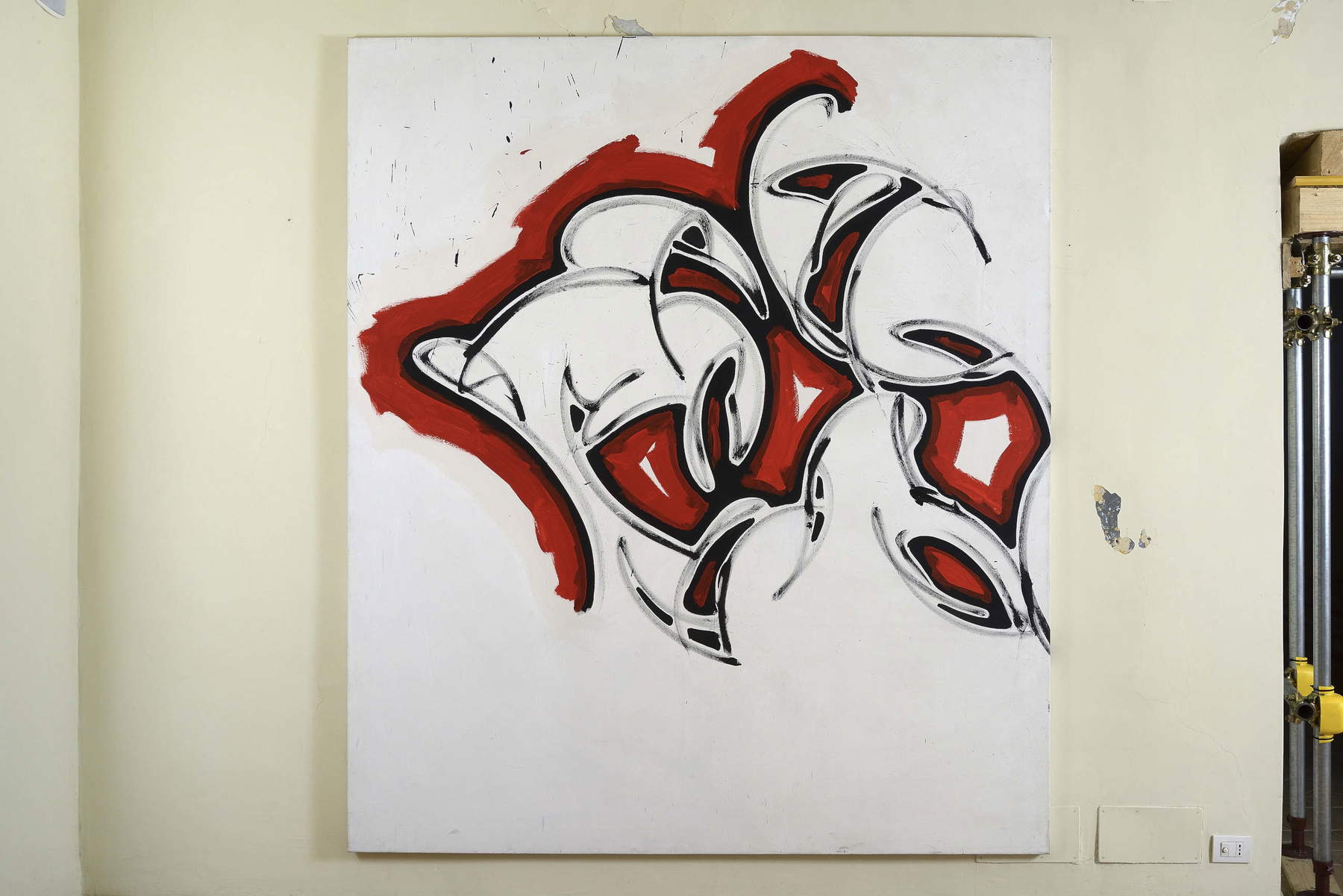
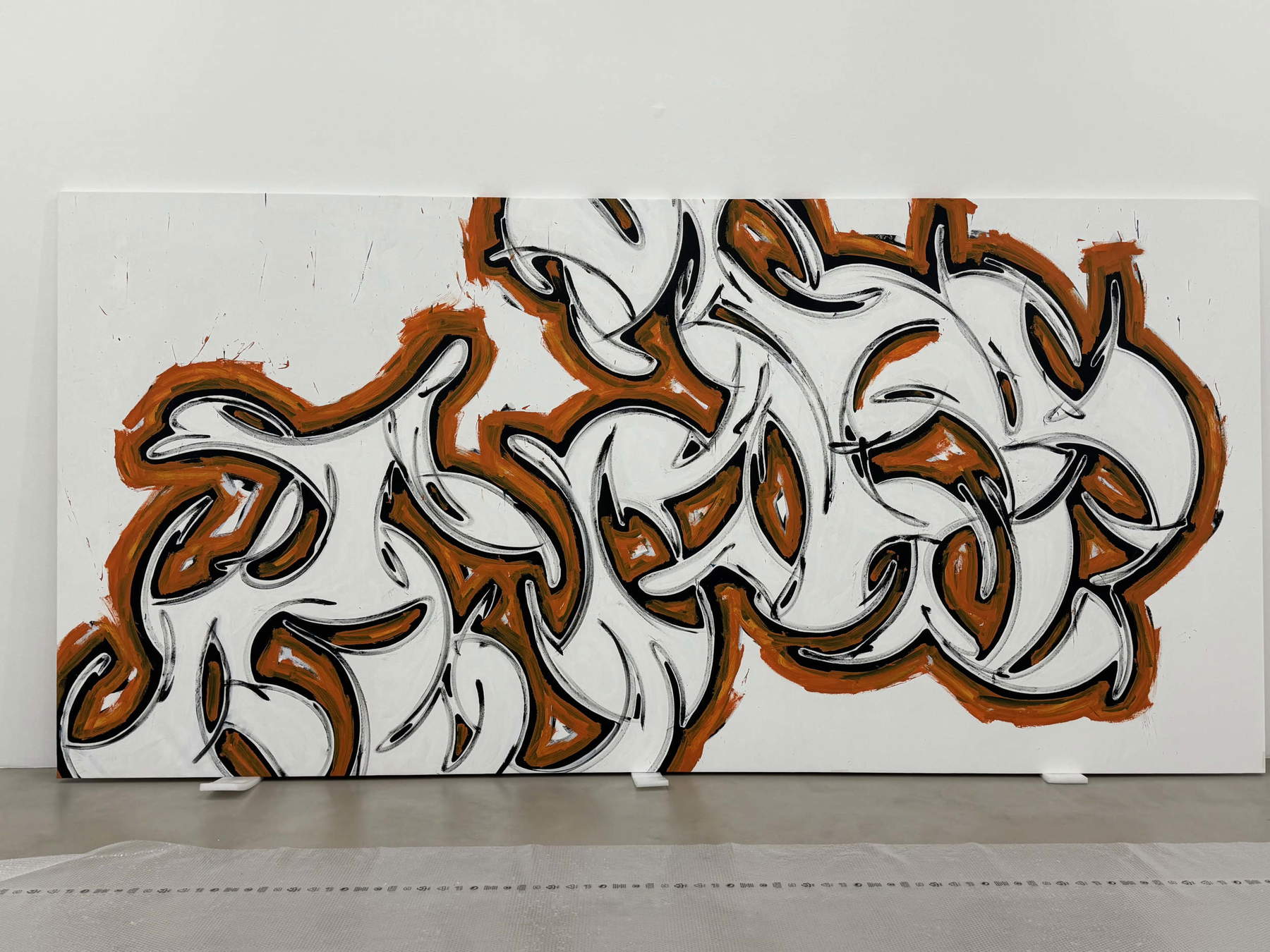
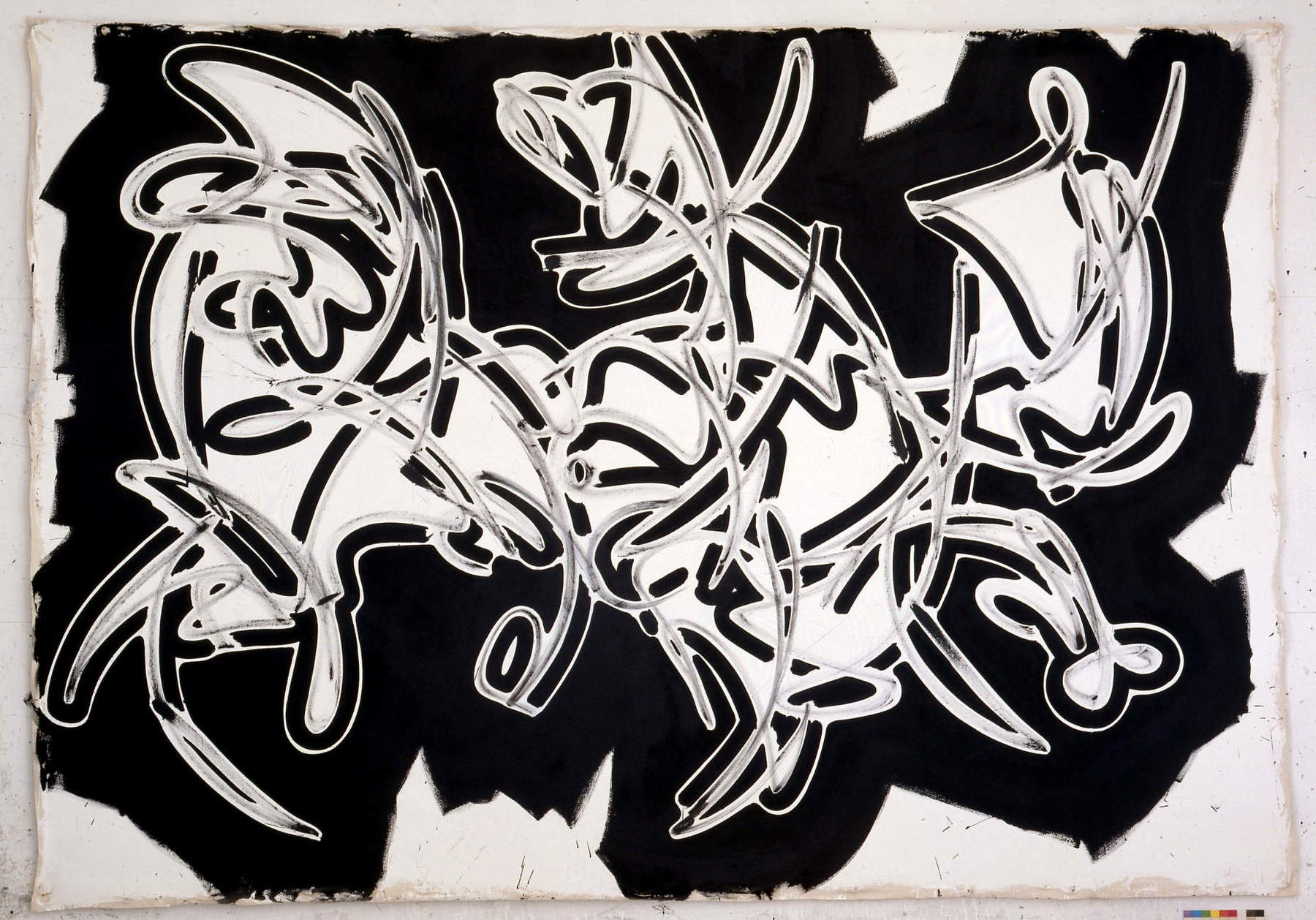
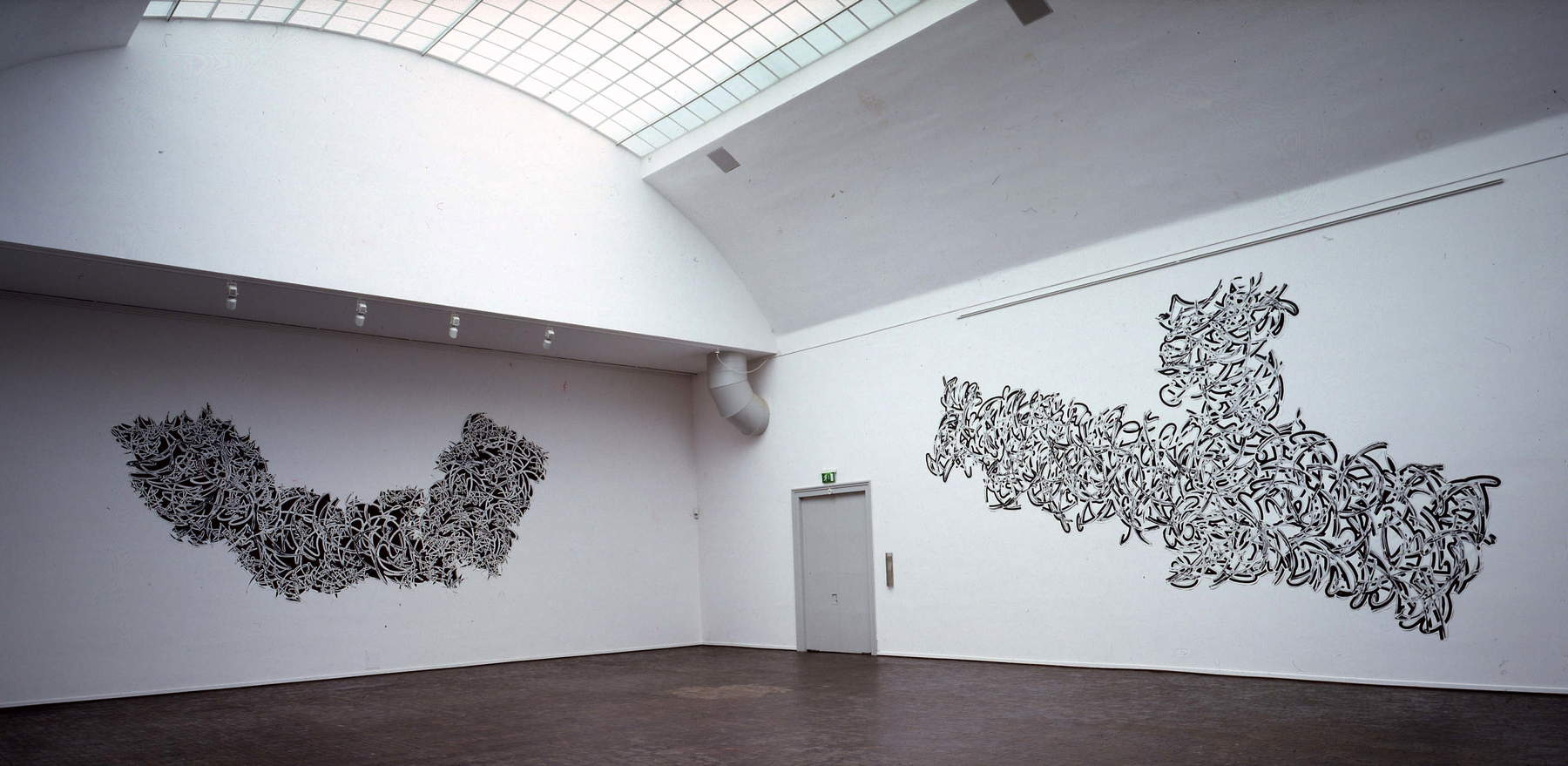
The return to painting means nothing; it’s not as if painting returns or doesn’t return—these are pseudo-cultural problems, fads… an artist appropriates the medium that suits them best. I use painting because it comes most naturally to me, but if the violin had been more suited to me, I would have used the violin. It’s the result that counts, and if it’s right, it transcends and nullifies the medium itself—it becomes something else. This is true for many artists—for example, video in Bill Viola’s work, nails in Castellani’s, the razor in Fontana’s, charcoal in Kounellis’s, or my half-burnt brush attached to a stick as if it were a broom. There are countless examples. The goal for an artist is always to reach that inaccessible zone, that threshold that connects the spoken with the unspoken. The problem, however, was not the return to painting—which, I repeat, means nothing—but rather the optimistic, Western failure of progress at all costs and as an end in itself. A veritable religion of money that has deprived the “sacred” and spirituality of oxygen and which, consequently, by fueling nihilism, has annihilated critical thought. And so the easiest path was that of the “restoration of the twentieth century,” of narrative accumulation, of citation, and so on. It is within this paradigm that postmodernism was born (and continues to this day), and in this restoration, all mediums are acceptable: from painting to video to installation. The Anachronists, the Transavantgarde, and the Nuovi Nuovi also have excellent artists, but I have never connected with them on a deep level. These movements were all postmodernist forms—a superficial and optimistic art. Now, pessimism and optimism are not philosophical categories, but it is nonetheless true that a necessary—and indeed tragic—action always springs from a lack, never from a state of fulfillment. In the early 1980s, I worked with the La Salita gallery, where the work was more on the margins—unintentionally in contrast to the dominant expressive conventions of the time—a creative exploration aimed more toward a “reset” of language. This erasure, however, was not an end in itself but (unlike Minimalism, “support surface,” or Italian analytical painting) merely a means to achieve a new image of the reality of reality; a portrait of reality in the very midst of its perpetual unfolding. So, what is real if not something that is constantly shifting? That affirms and denies itself in the very instant of its appearance? That is and is not at the same time? That exists not as a “thing” but as a pure interaction between the being and non-being of the thing? This body of work developed at the Galleria la Salita with Gianfranco Notargiacomo, from the generation preceding mine, and later with Mariano Rossano, with whom the “Astrazione Povera” group was founded, critically supported by Filiberto Menna. At the same time, even on a European level, the idea of a “new form” was taking shape; a few years later, in 1986, Flavio Caroli organized an international exhibition, *Nuove Geometrie*, at the Rotonda della Besana in Milan. However, my work, in the early 1980s, took a different turn; in fact, it has always been out of step with these labels (abstraction, composition, etc.). My intent, instead, was to find new tools, new cognitive instruments for interpreting the work: to move beyond the twentieth century and its styles. So words like composition, abstraction, construction… didn’t make much sense to me. In my vocabulary, I replaced these terms with “fusion,” “generation,” “interaction,” and “incarnation.” As Lorenzo Mango rightly observed—writing in the 1992 catalog entry *Figurazione futura, piccola storia del tromboloide* —my work “does not abstract but incarnates.”
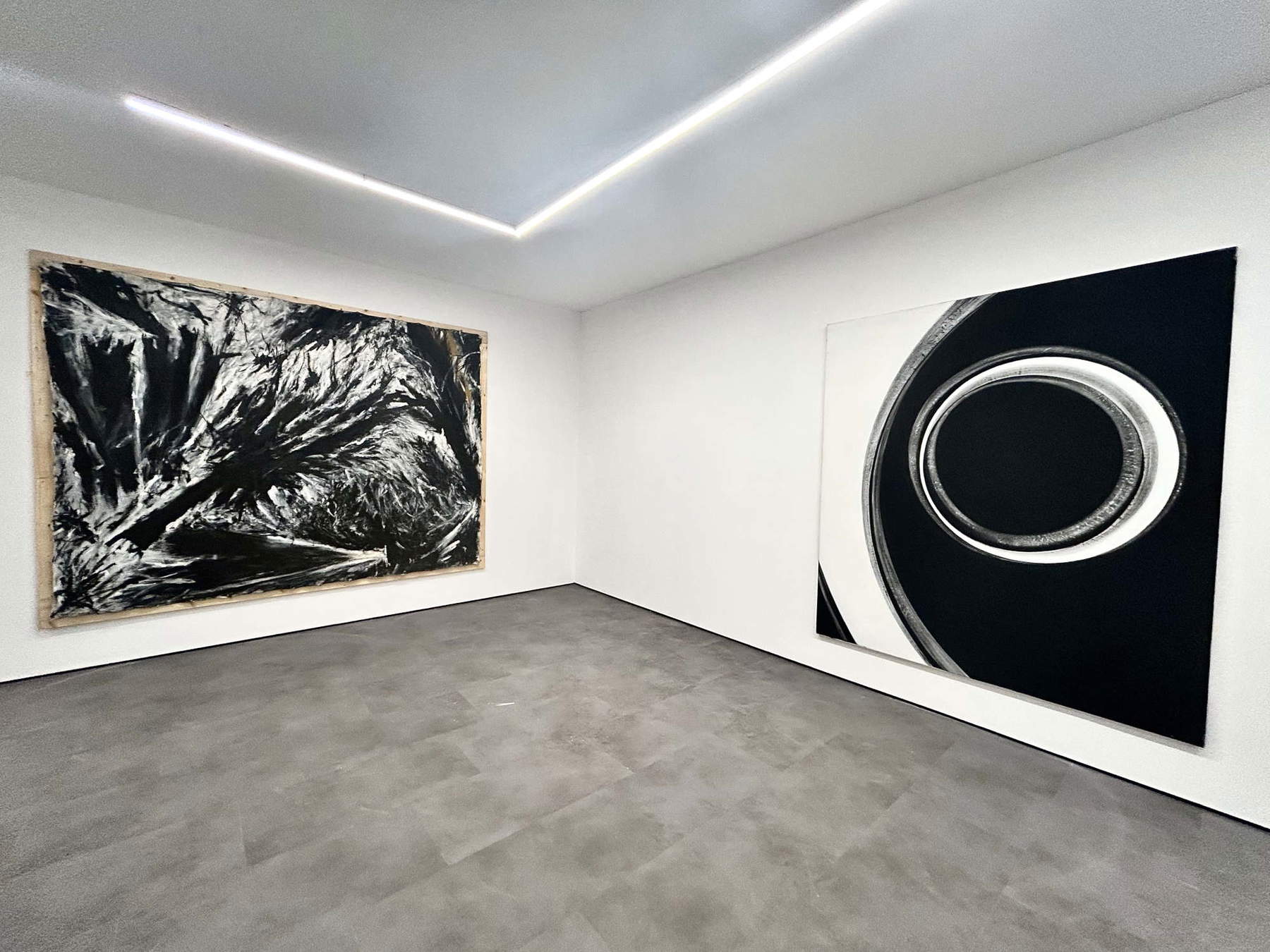
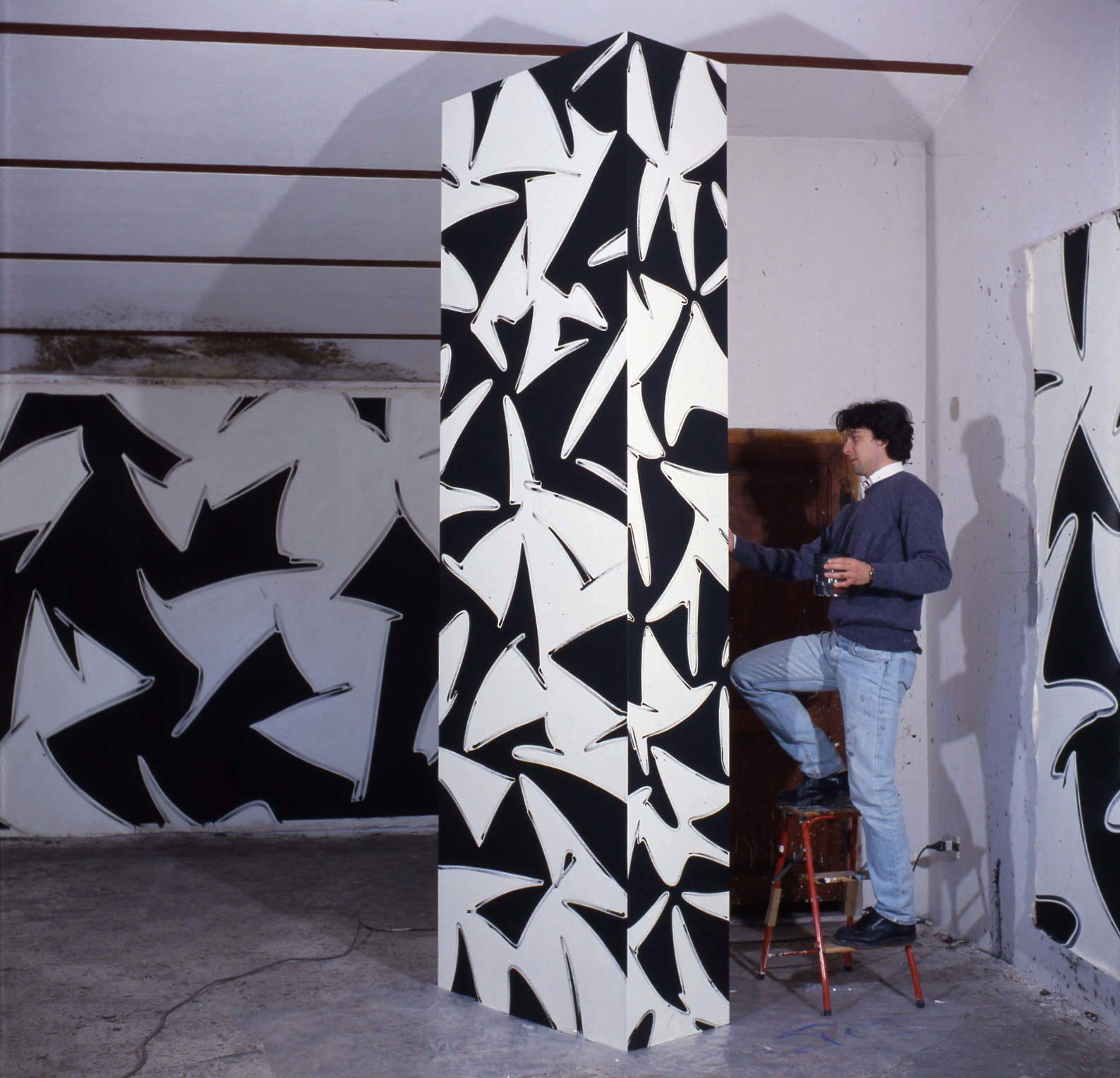
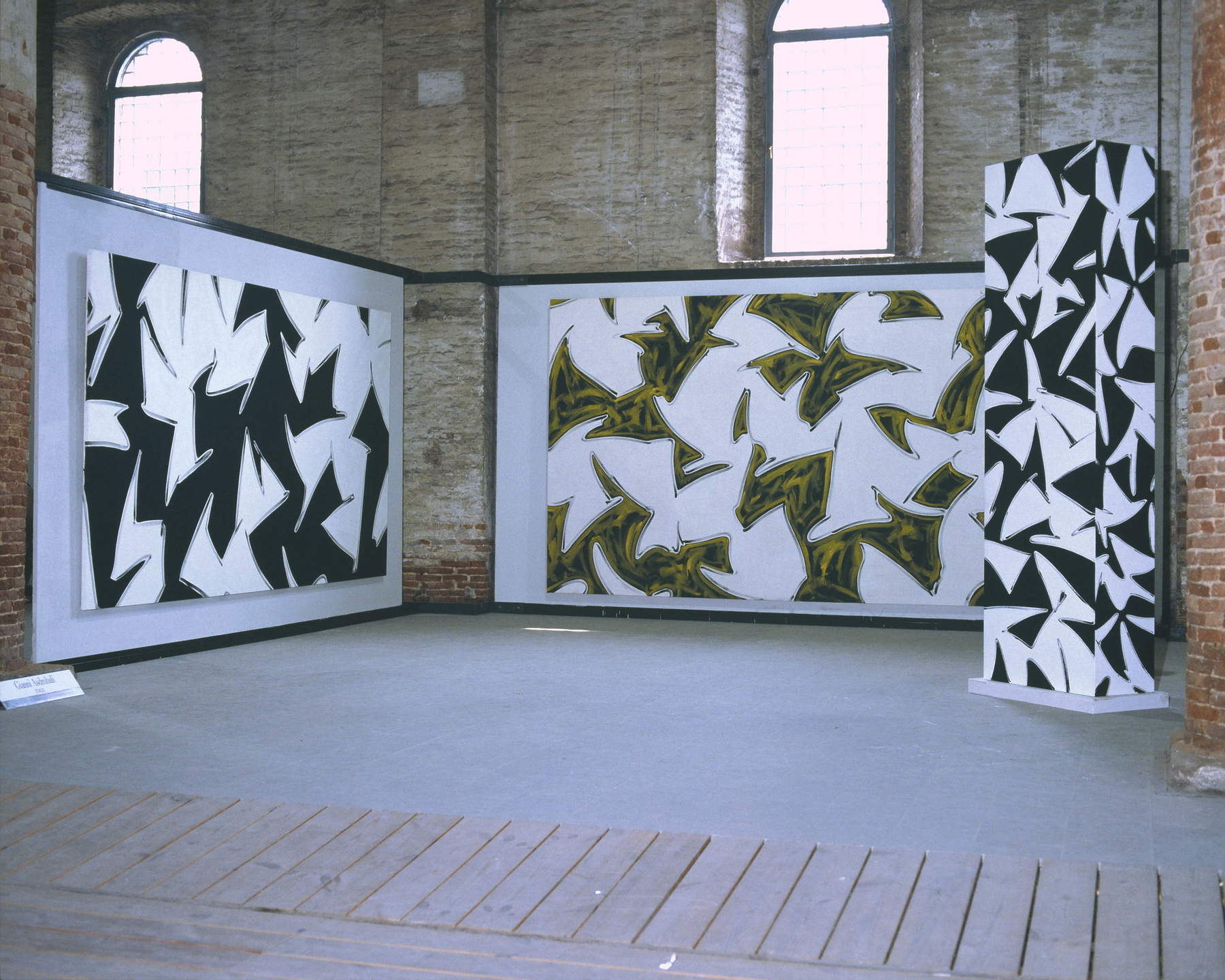
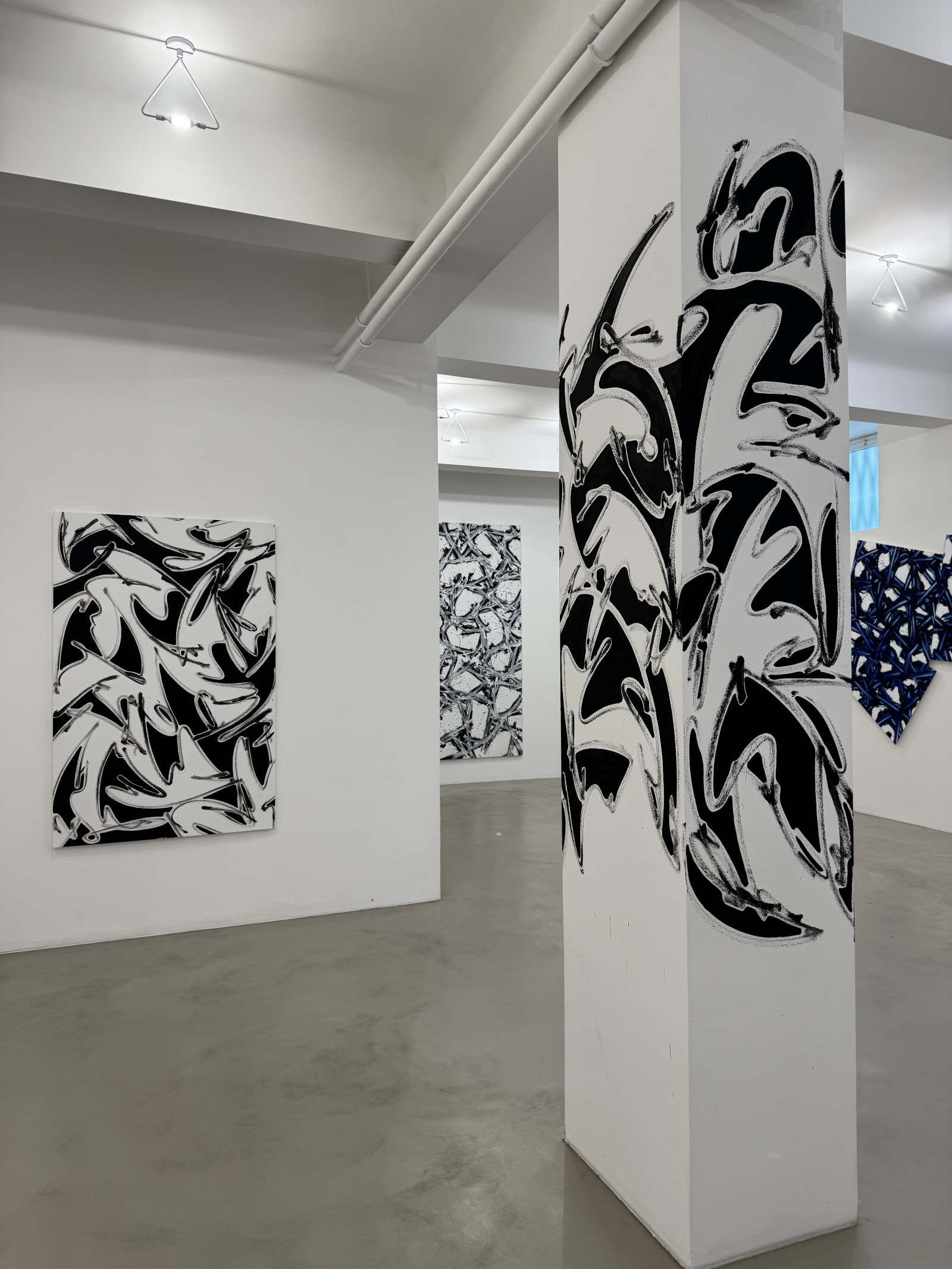
Is the energy released by the act of painting the driving force that compels you to invade the space?
No, as I mentioned at the beginning, the driving force is what is missing, not the energy released in the act of painting—the latter is secondary. It is not, as is commonly thought, that the artist possesses this innate energy and consequently expresses it on a blank canvas. It is the opposite: it is the blank canvas that triggers the impulse to act. As I said at the beginning, there is this awareness that the original driving force is what is missing. Just like any person who is motivated not when they are full of things, but when they lack something: a person, food, or something else. That is to say, thought is activated in humans as a consequence of a situation of absence or need, not of fullness; therefore, a struggle between the artist-as-instrument and the original absence is inevitable. The result, in my case, is a reversal of the origin into its opposite—from absence to presence, from abstraction to embodiment in a “body of meaning,” in a full, compact, dynamic image. But all this fluttering, invasion, and movement that appears in my work tells us—makes us feel—something unspeakable and absolutely static, still, timeless. All this “fullness” tells us of its origin, of something that is not. A paradox.
Keeping this tension alive for more than forty years can’t be easy...
It’s a way of life without commitment. There’s no commitment; I’ve never committed myself. The tension you speak of arises from both a necessity and a pleasure, as in a child at play. Except that the child eventually grows up, stops playing, and begins to “engage with life,” while the artist always plays because reason and madness are always interconnected. The artist lives his active “idleness.” In this regard, I’d like to quote a passage by Giorgio Agamben on the artist and an excerpt from Bruno Corà’s text on my exhibition at Palazzo Collicola in Spoleto. Agamben: “Art is nothing other than the way in which the anonymous figure we call the artist, by constantly engaging in a practice, seeks to constitute his life as a form of life: the life of the painter, the musician, the carpenter, in which, as in every form of life, nothing less than his happiness is at stake.” Bruno Corà: “For Asdrubali, too, the rule seems to hold true that applies to other Masters, for whom ‘the last work is the same as the first’—in the sense that the poetic element, at the heart of the archetype it manifests, does not evolve but always repeats itself, albeit in the form of diverse executional variations. All of this leads one to hypothesize that there exists, in some neural recesses of Asdrubali’s artistic identity, an ever-active and inextinguishable source of drive, a wellspring that demands to satisfy a continuous possibility of form—one that is always the penultimate and purest variation of that further possibility which has not yet come to mind or to light, but which awaits its fulfillment. One might almost say that, in the imagination of an authentic artist, the mythical spell that befell Sisyphus is renewed—but fortunately with a different fate—since for Asdrubali, as for Castellani or Johann Sebastian Bach, repetition and variation are the breath that renews itself within the work. And to verify what has been asserted thus far, it is worth asking through which stages Asdrubali has come to possess and exercise this language steeped in varied musicality— entirely his own, and which now appears to have reached a dialogic maturity in a spatial sense—one that, moreover—given its vigor and potential—also raises the question of where his visual logos is headed.”
Let’s talk about your most recent works. It seems to me that the space in which you exhibit your works, for example, no longer matters at all. Sometimes you display your works juxtaposed in a seemingly arbitrary way or upside down—small paintings on large walls… can you talk about this?
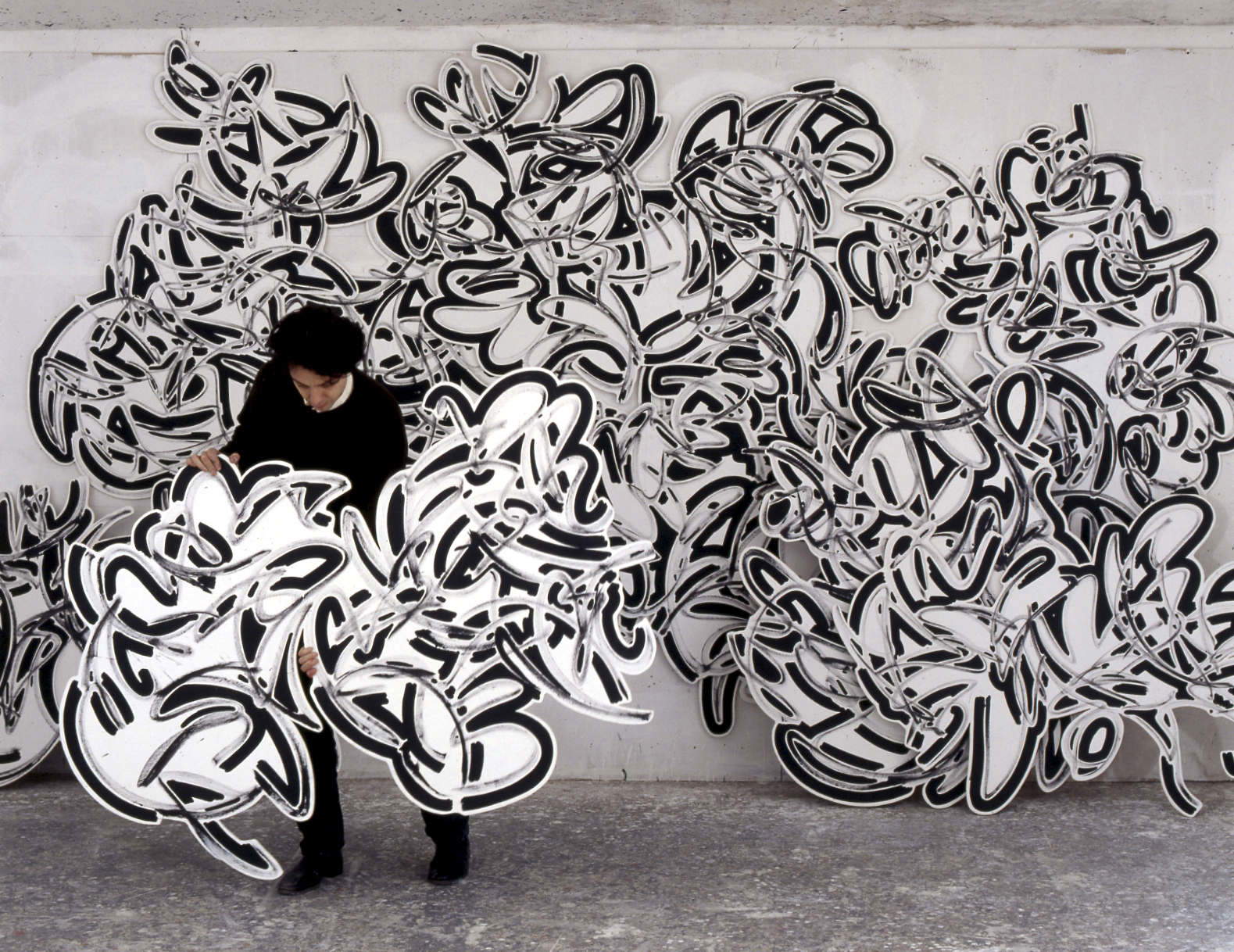
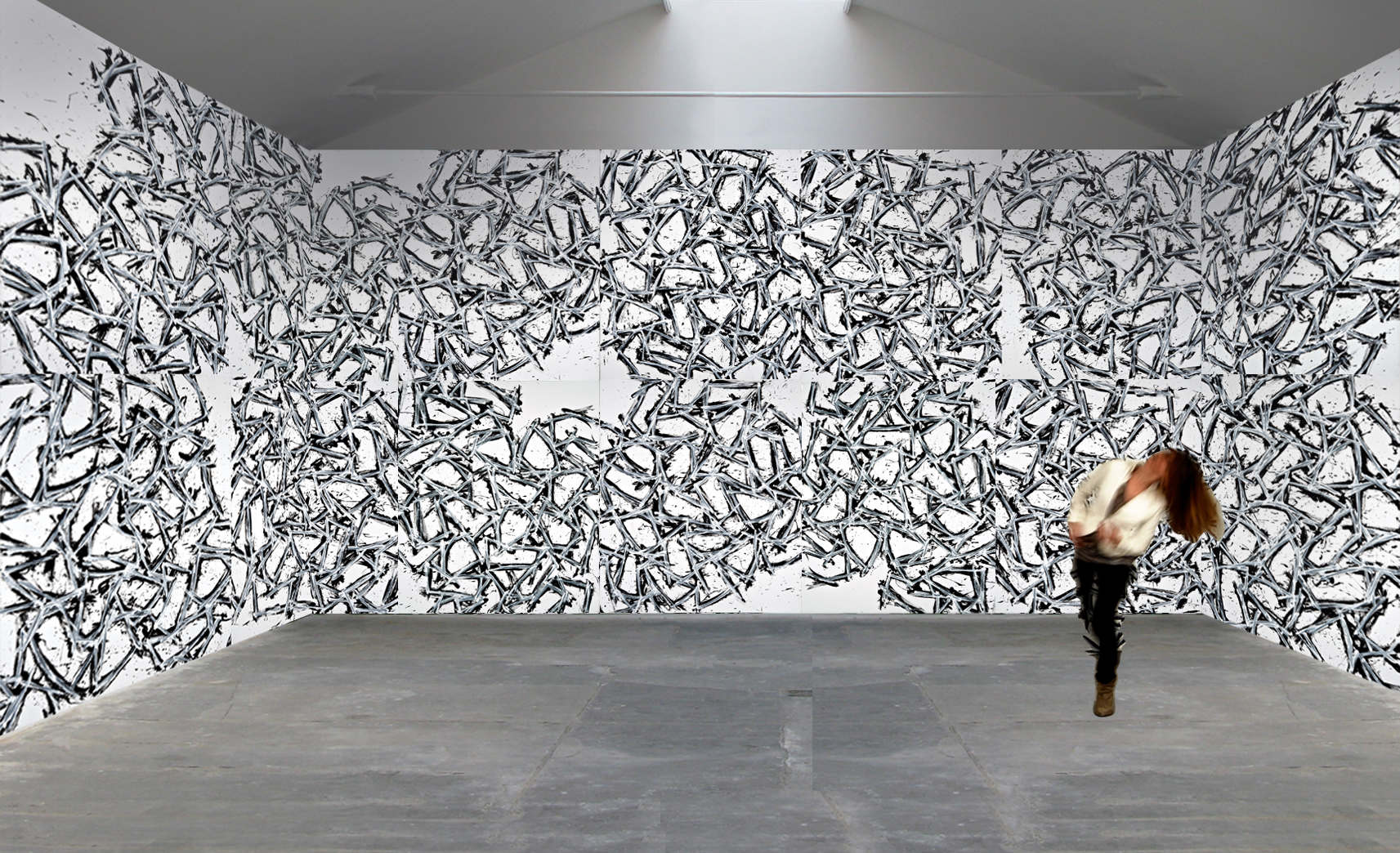
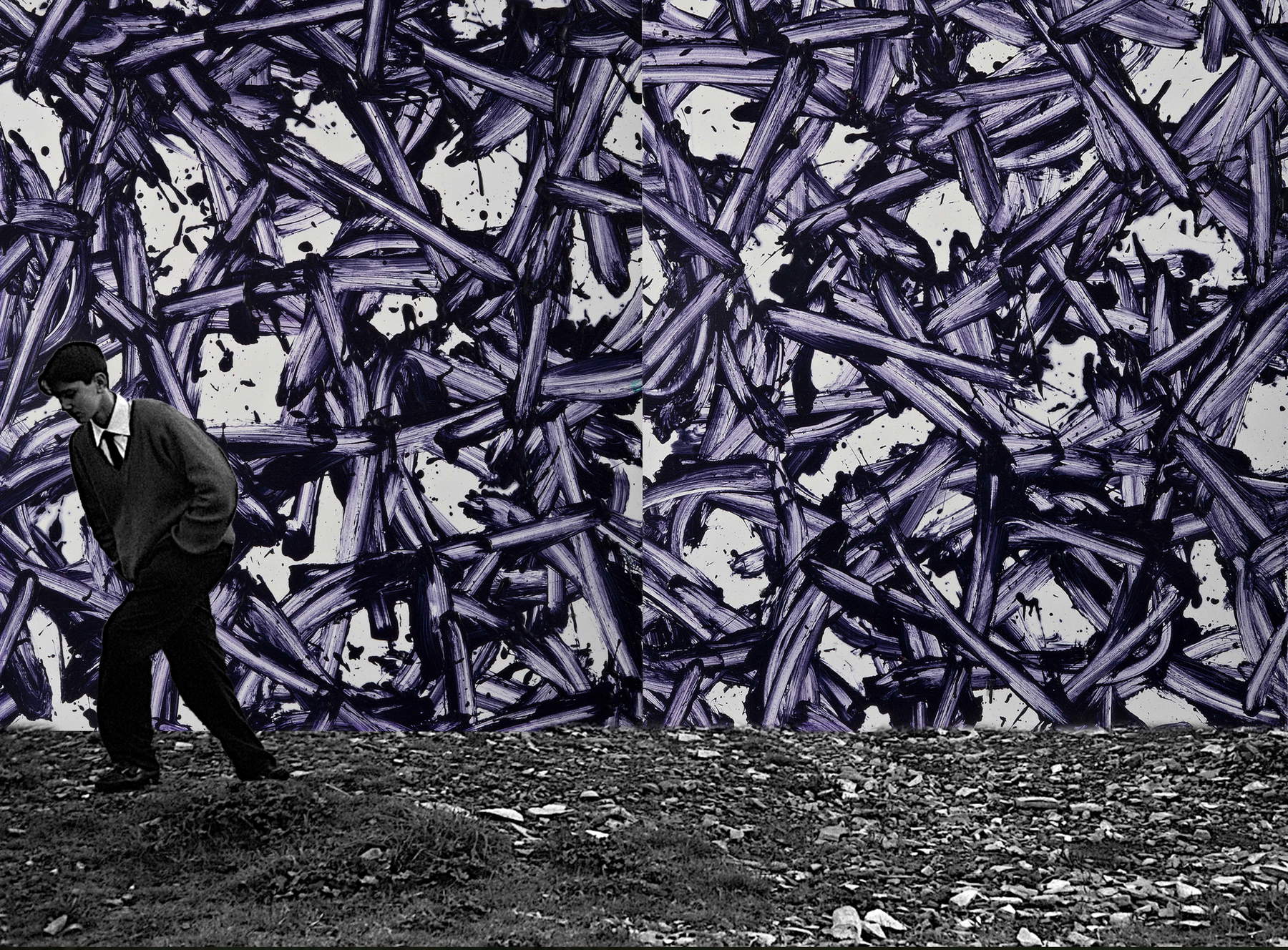
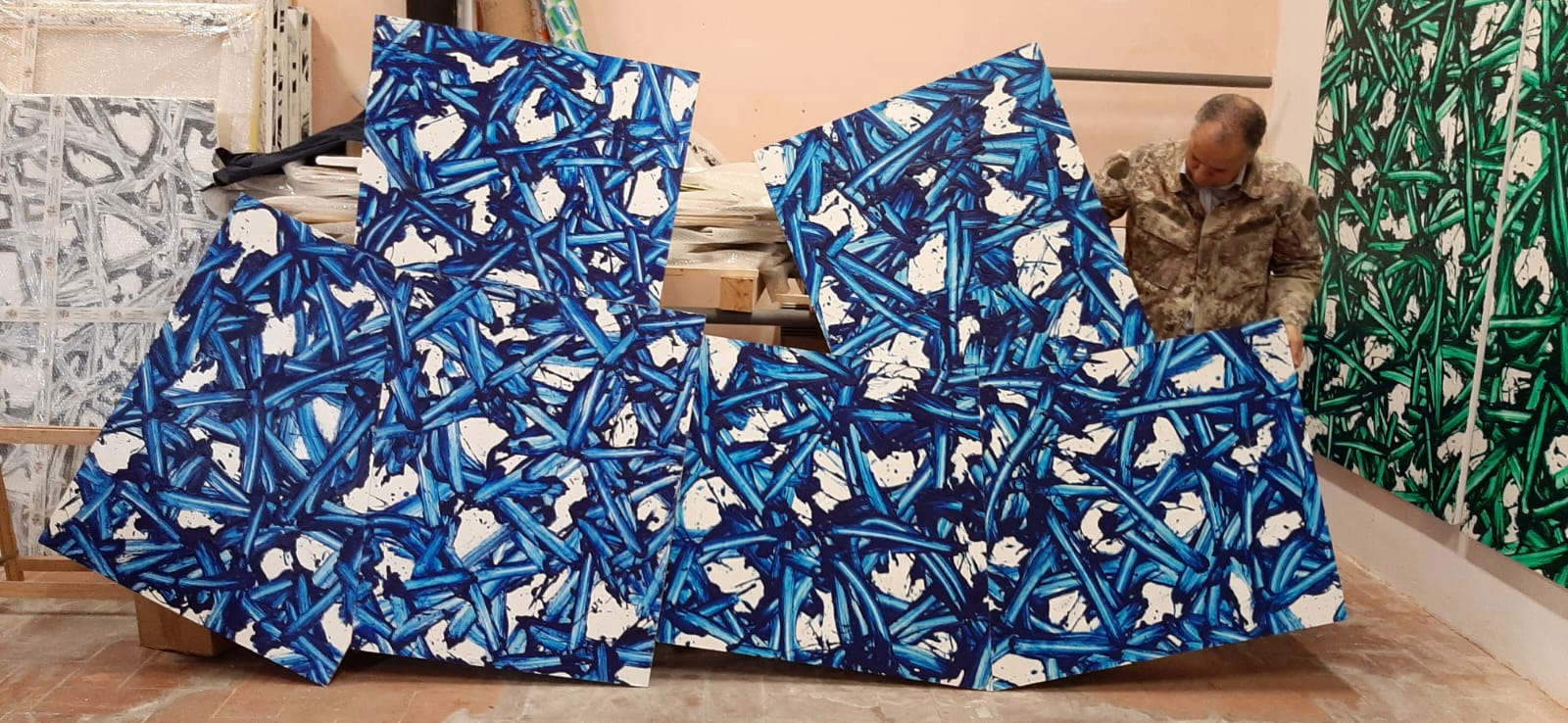
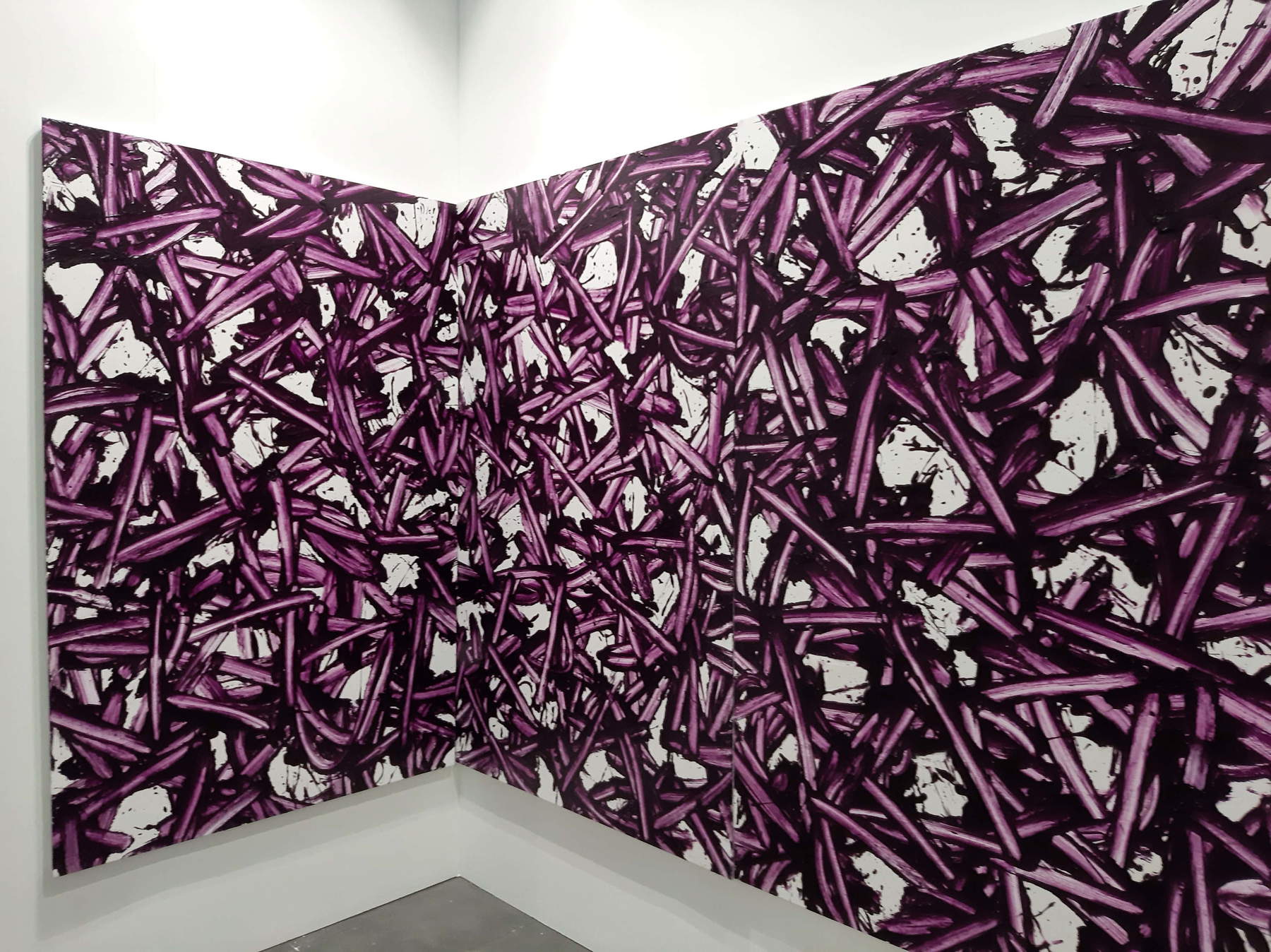
Yes, for me, the opposite of site-specific applies. I’ve never created a work specifically for or in relation to an exhibition space. Besides, an artist who consciously creates a work for a specific purpose strikes me as absurd. I don’t work with the exhibition space in mind; in art, there is no such thing as a place. It is the artwork that activates the inertia of the place, whether it’s a beautiful white gallery wall, a dirty, dark wall in a mechanic’s shop, a plaza, a landscape, or a place devastated by an earthquake, like the exhibition I recently staged at Palazzo Collicola in Spoleto. But for a work to create space—that is, to transform the surrounding space from passive to active—it must be highly autonomous, independent, and unique. It must be “ ”—that is, the work must not be tied to any context but must be the context itself. All the information from the world that passes through the artist’s mind and gives rise to the form/anti-form of the work is merely instrumental and does not take center stage in the work. All information, relationships, and interactions during the creative process must be set aside in favor of a birth—an ultimate result that is distinct from the initial information. Only if the work stands alone can it create a world; otherwise, it merely tells of the world. As for my most recent works—that is, from 1991 onward—I have often used the exhibition space as a challenge, to see if a work, even a small one, “held up” on a much larger wall, or if a larger work placed sideways on a smaller wall would work. Or works displayed one way and then later turned upside down, or by randomly changing their orientation. As in the digital application created by the Oramide research group (Alessio Spirli and Cecilia Tommasini), an interactive work titled *Zumber*, where the public can interact by animating a collection of my works. The image changes, yet it retains the same intensity, because the works themselves remain the same. The fact is that when I place these works—which are not related to one another—next to each other, a fusion of energy occurs, creating a larger unity, a greater singularity: one work + one work + one work + one work = a larger work. The result is always one, whether I remove or add. Other artists as well—I’m thinking of the minimalists—did something similar in the 1960s and 1970s, except that in their case, the individual work was a module, and this module was “designed from the outset” to be connected with other modules to form a larger or infinite whole. But that module only functioned as part of the whole and not on its own. In my case, however, each work is not a module but is complete in itself and can stand alone or alongside other works: one work can be in Palermo, another in Kabul, or both works can be placed side by side, merging into a single unit in any other location. But why does the work activate the inertia of any everyday space? Yet it is a work closed in on itself and not “open.” But it is precisely in its “finiteness”—in this closure that does not allow energy to escape freely—that this work emanates something beyond itself. The work opens through emanation, not through communication. A paradox: a work closed in on itself that communicates with nothing, that signifies nothing, yet opens up to something beyond itself. A limit without boundaries. A “sculpture” without dimensions—or with infinite dimensions—in a spherical frontality. Where the support is no longer a support, where the surface is depth itself. There is a quantum shift (which has always been present in my work) relative to the linear-Euclidean one. And in this curvilinear, interactive, generative storm, there is a need for new tools to interpret the work. As Marco Tonelli has noted on several occasions regarding my work: “In this sense, one would understand the absurdity of defining your work as abstract, since it is in reality constantly searching for figures, structures, textures, and intimate—and perhaps cerebral—granularities of space… Wouldn’t it make more sense to redefine his work in a new way: ‘quantum,’ ‘multidimensional’?”
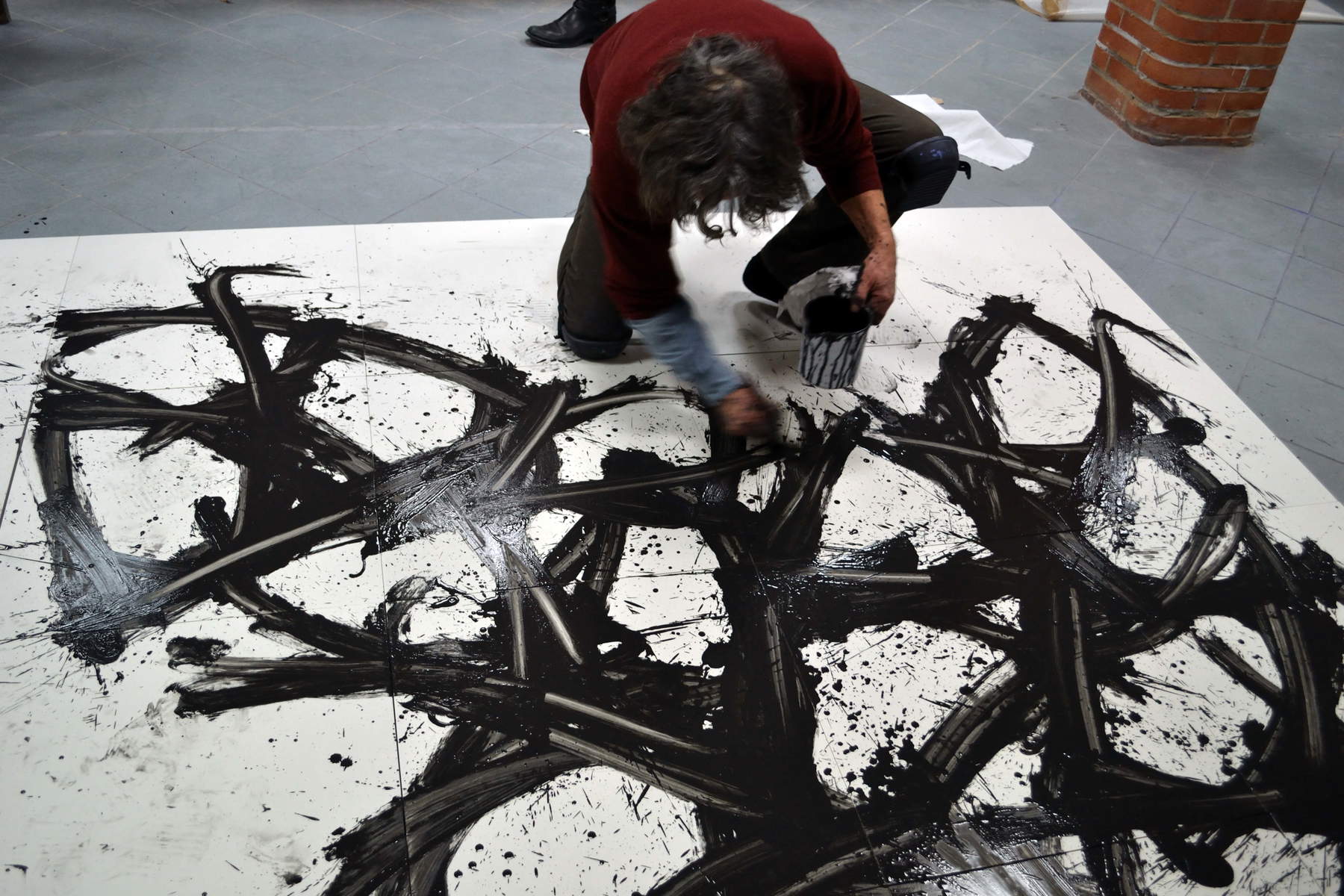
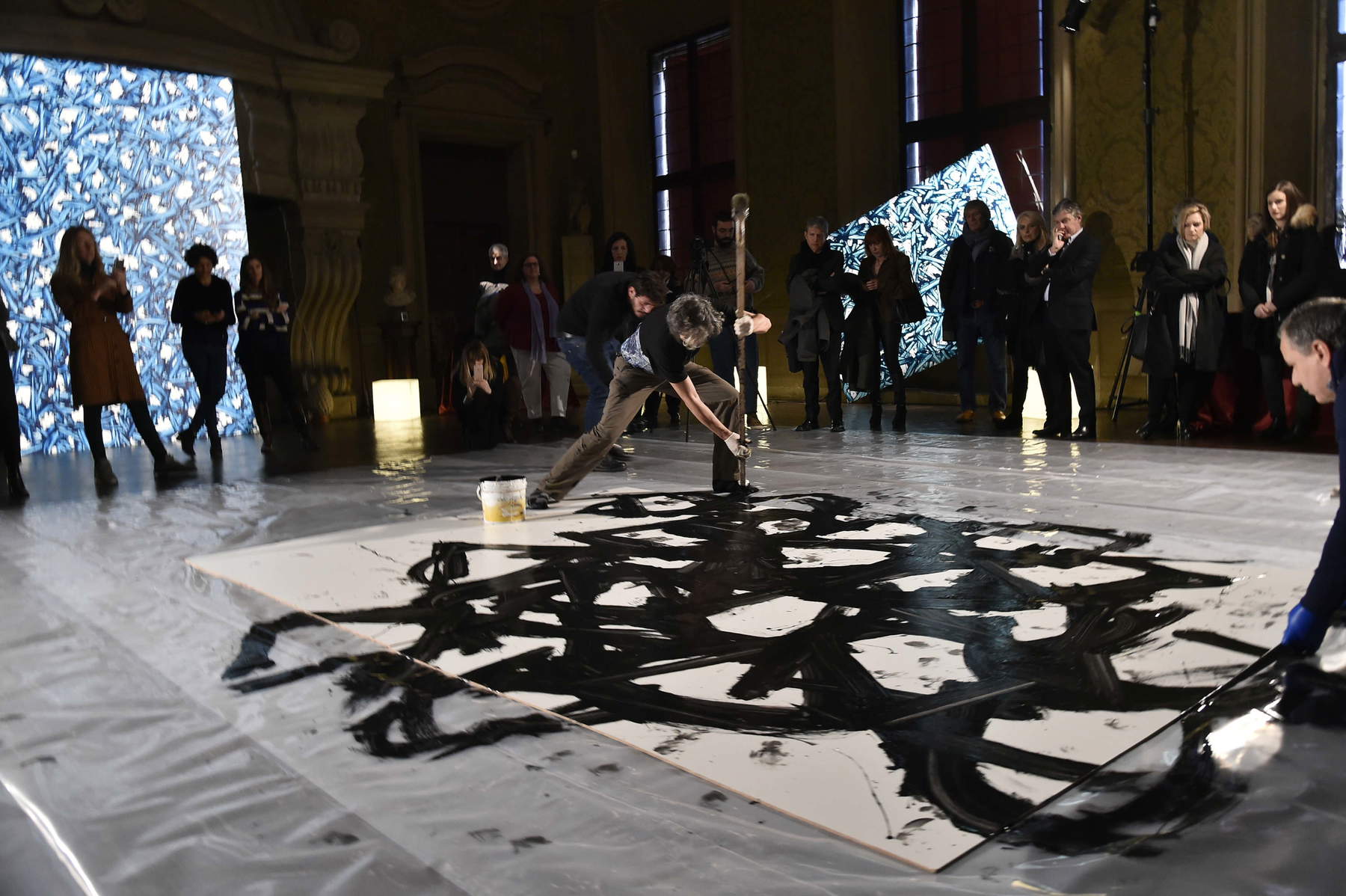
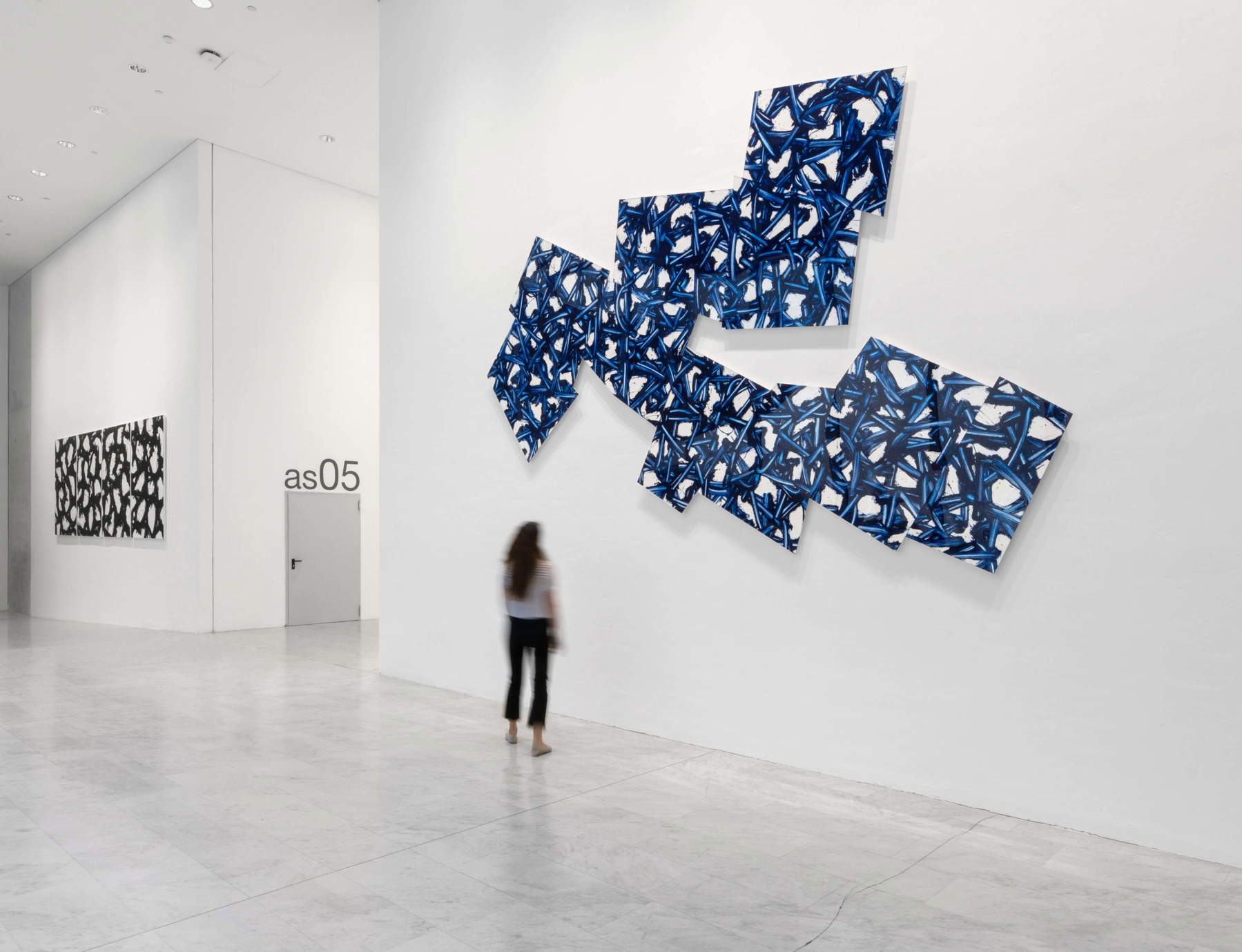
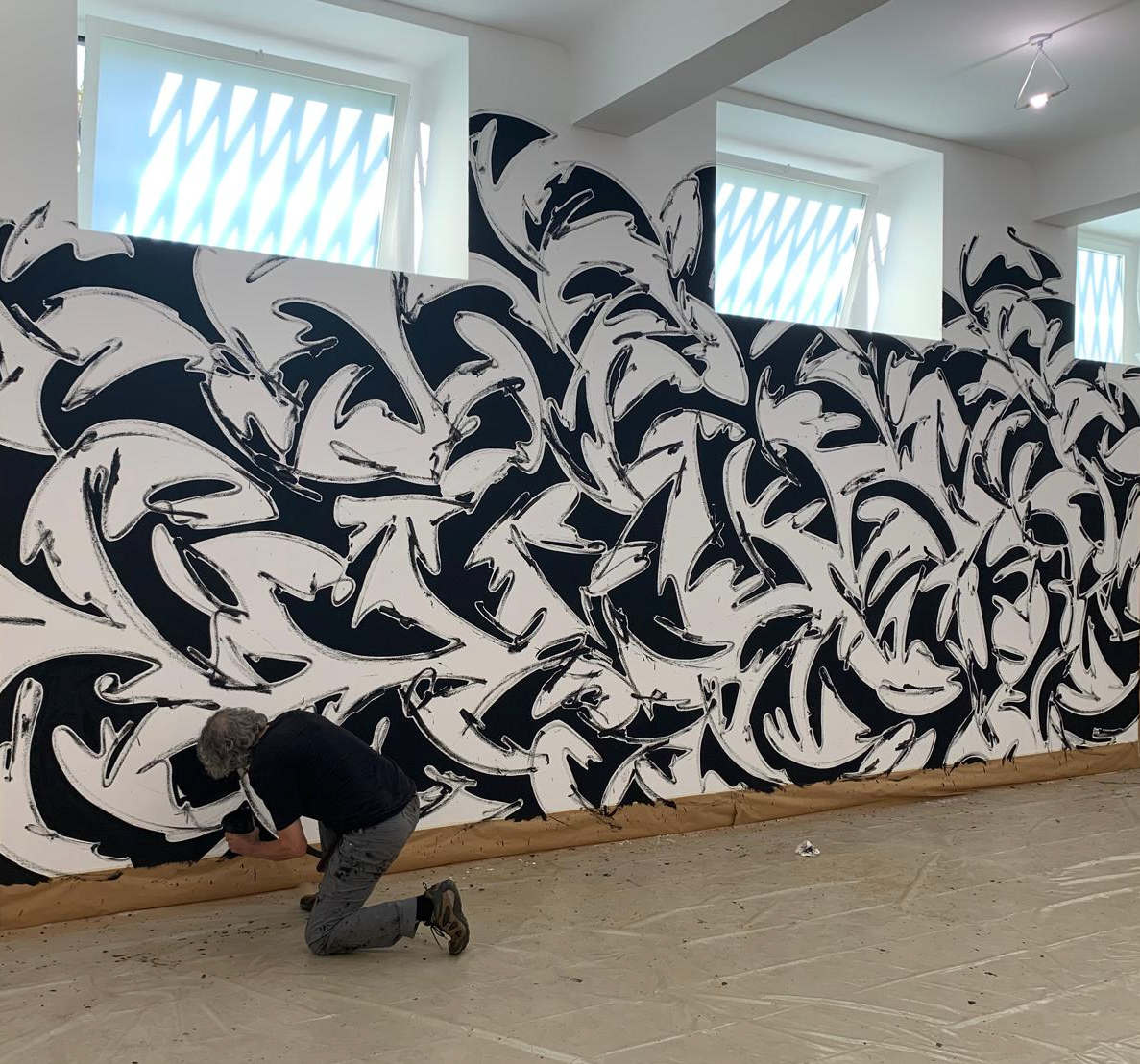
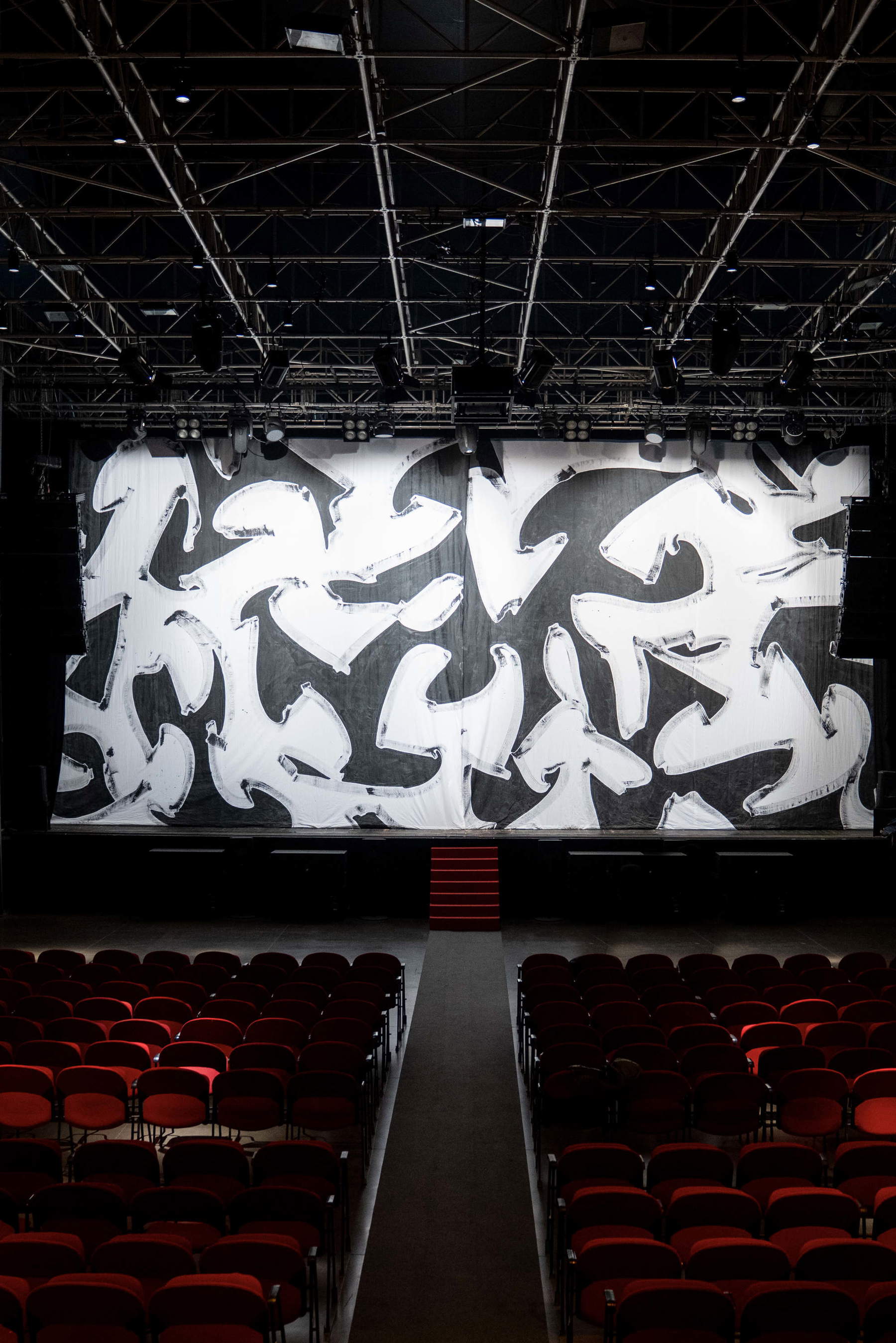
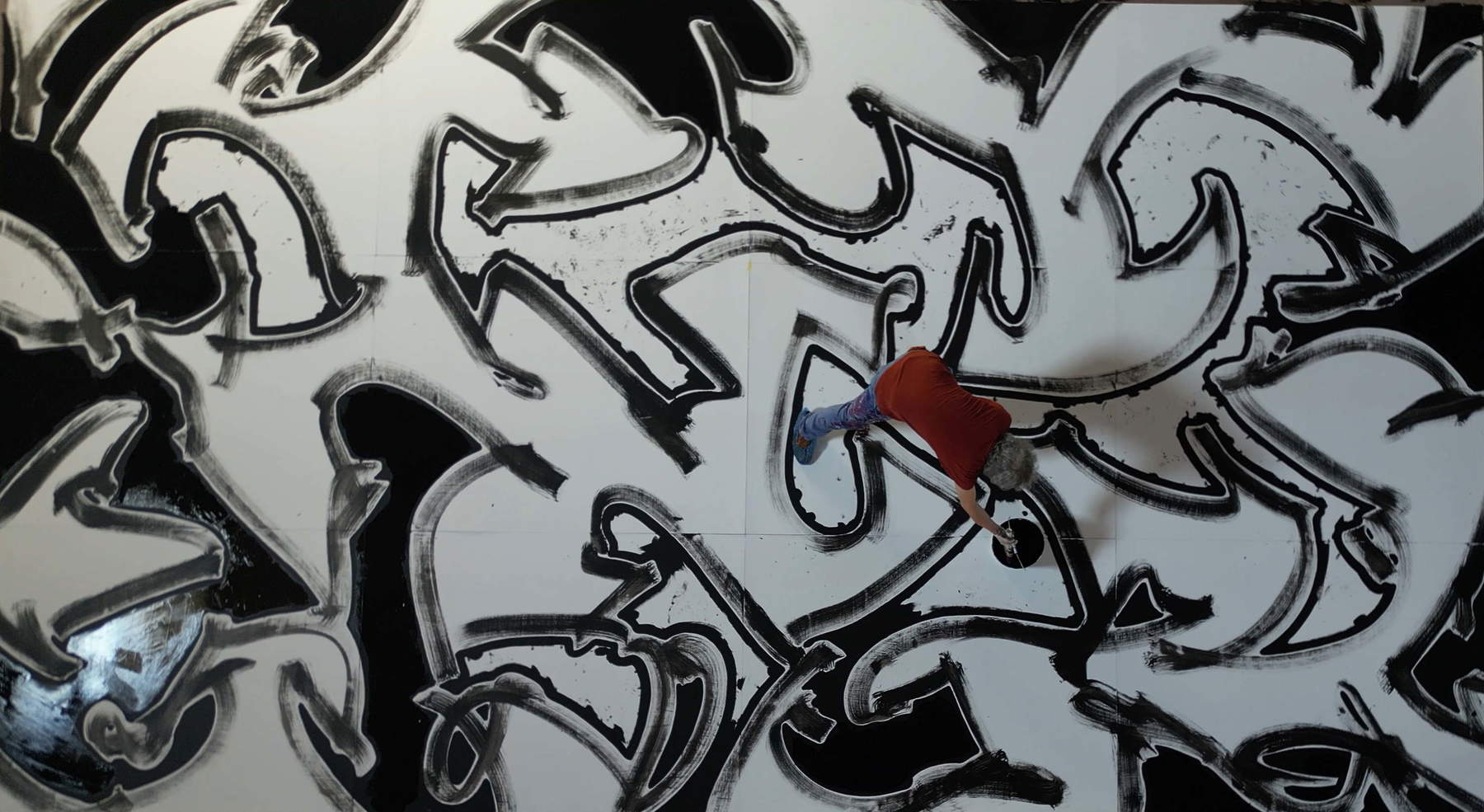
I saw a video in which you were painting, as if in a performance, in front of an audience: is this another of the multidimensional aspects of your work?
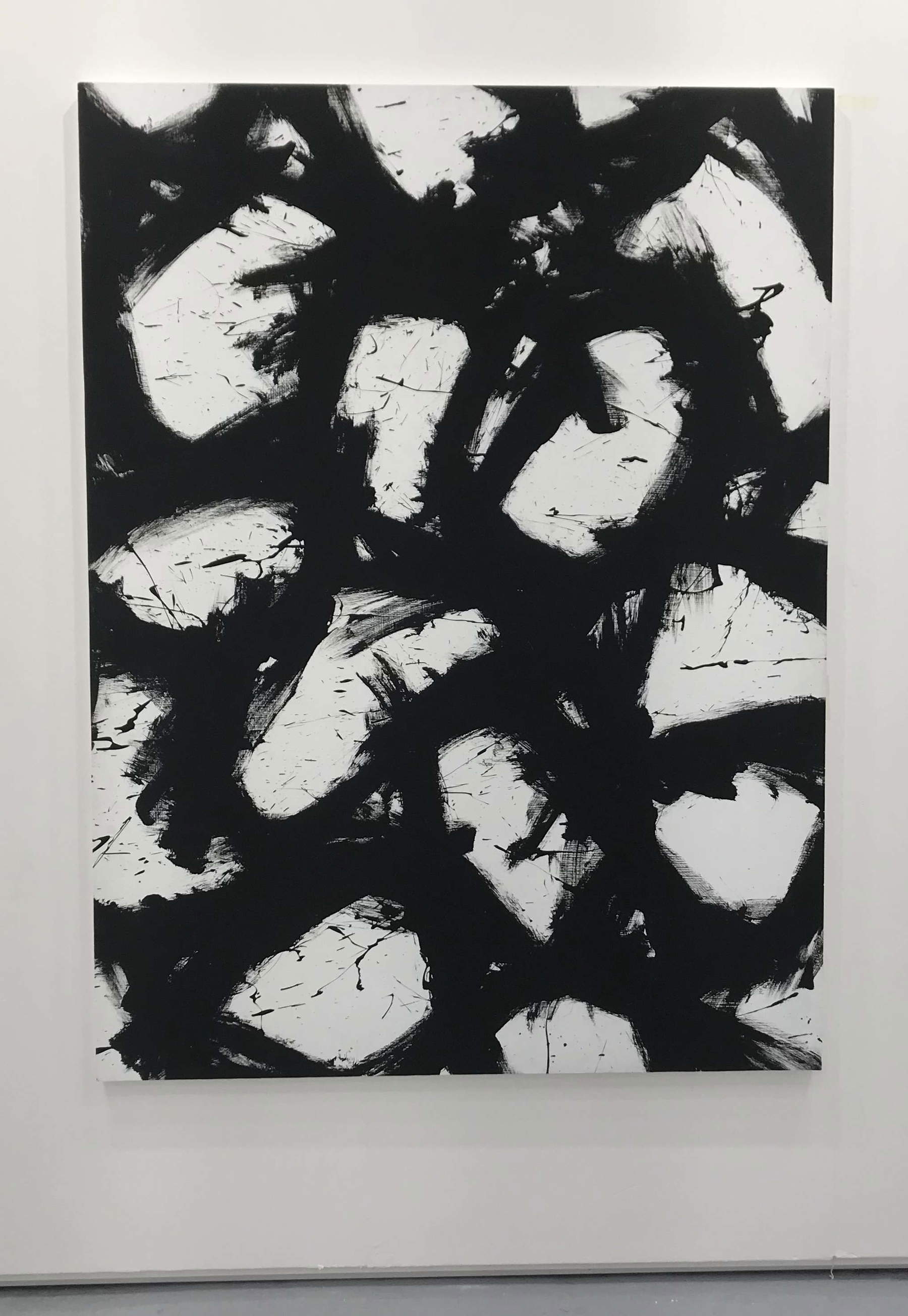
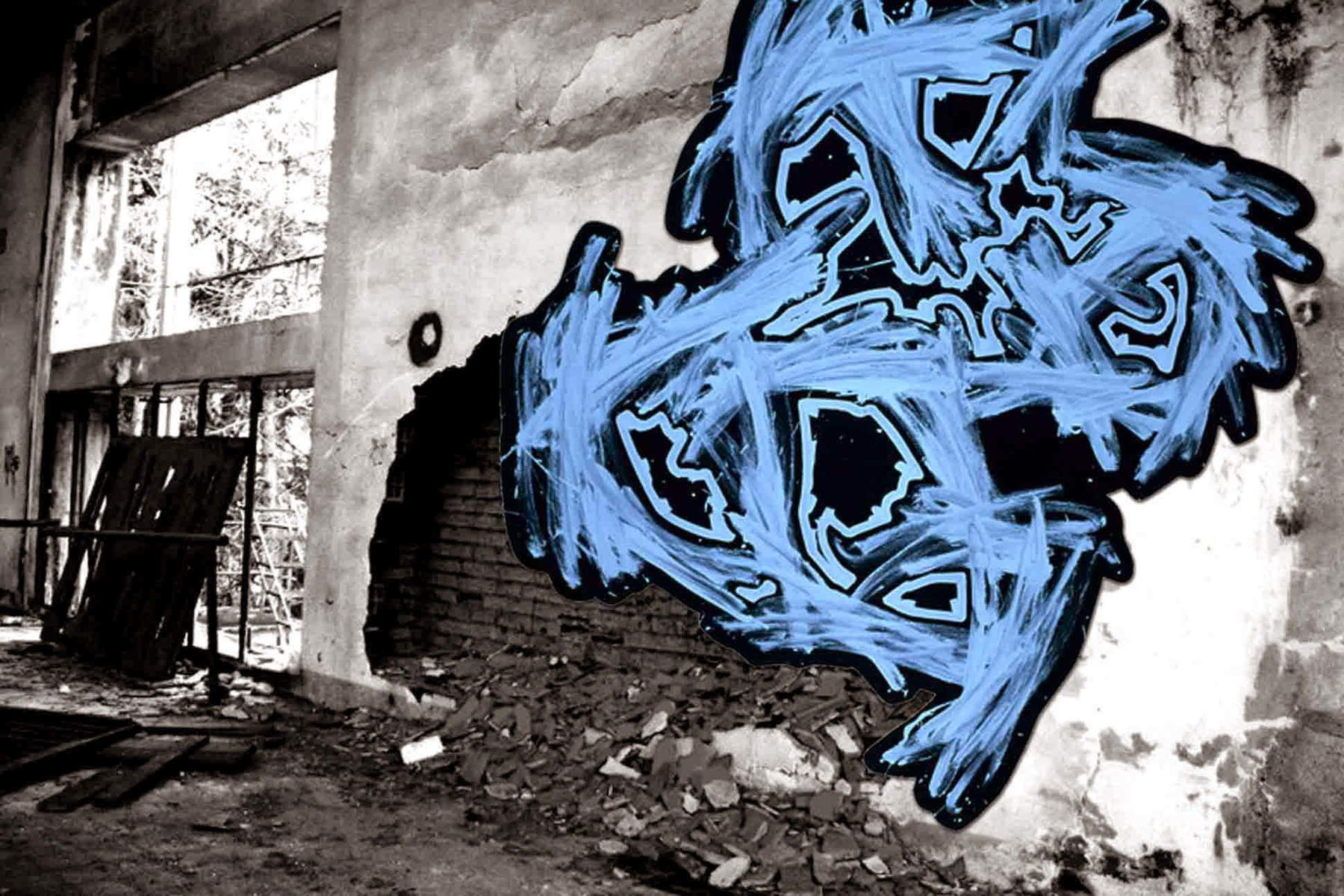
In a geometry that is no longer linear, as I’ve already said, terms like construction-deconstruction, composition, and relationship… must be replaced with generation, fusion, interaction, and the like… And this is not because we’re using the latest innovation, the latest technological device, or anything of the sort, but because the shift has taken place in the mind. In this vision, everything is multidimensional, because the dimensions are truly infinite and, at the very same moment, nullified within the surface itself. As I’ve said before, depth is the surface. In this reversal, the dimensions of high-low, right-left, above-below, front-back, and concave-convex are compressed—like an accordion—into the frontality of the surface: the infinite is in front, and at the same time, this frontality is deep and spherical. This “sculpture” has no need for dimensions. As Giovanni Carandente had rightly intuited at the 1988 Venice Biennale (“this painting that takes on the appearance of sculpture”), and Bruno Corà: “one must acknowledge that Asdrubali’s painting is certainly entirely frontal, right before the eyes of the observer, but to truly ‘see’ it, the gaze must penetrate it with an ideal ‘somersault,’ entering and exiting its spherical spatiality... thus a profound frontality.” This is also true of my performances, which take place in spaces of varying sizes. One is smaller, the other larger: the smaller one is a surface measuring 120 by 170 centimeters (which is the maximum width of my gesture) resting on a platform 45 centimeters above the ground. In the other, larger space—which can extend indefinitely—the action takes place directly on the ground with the aid of a stick to which several brushes tied together are attached. First, I perform an action across the entire area available to me; then I “cut out” the space that interests me, and later I decide on the frame. I define the space I have chosen with the frame’s boundary; this becomes the “painting,” which I will exhibit on its own or alongside other “slices of space.” I have never made a painting; I have made a space. But one could also say the opposite—that everything is a painting—because if I hang one of my works on a wall and this work activates the inert space of the wall, then in this case the wall becomes the painting. So in a square, so in a landscape, and so on and so forth, all the way to the entire universe, the universes: everything is a “painting,” but without boundaries.
And what about color?
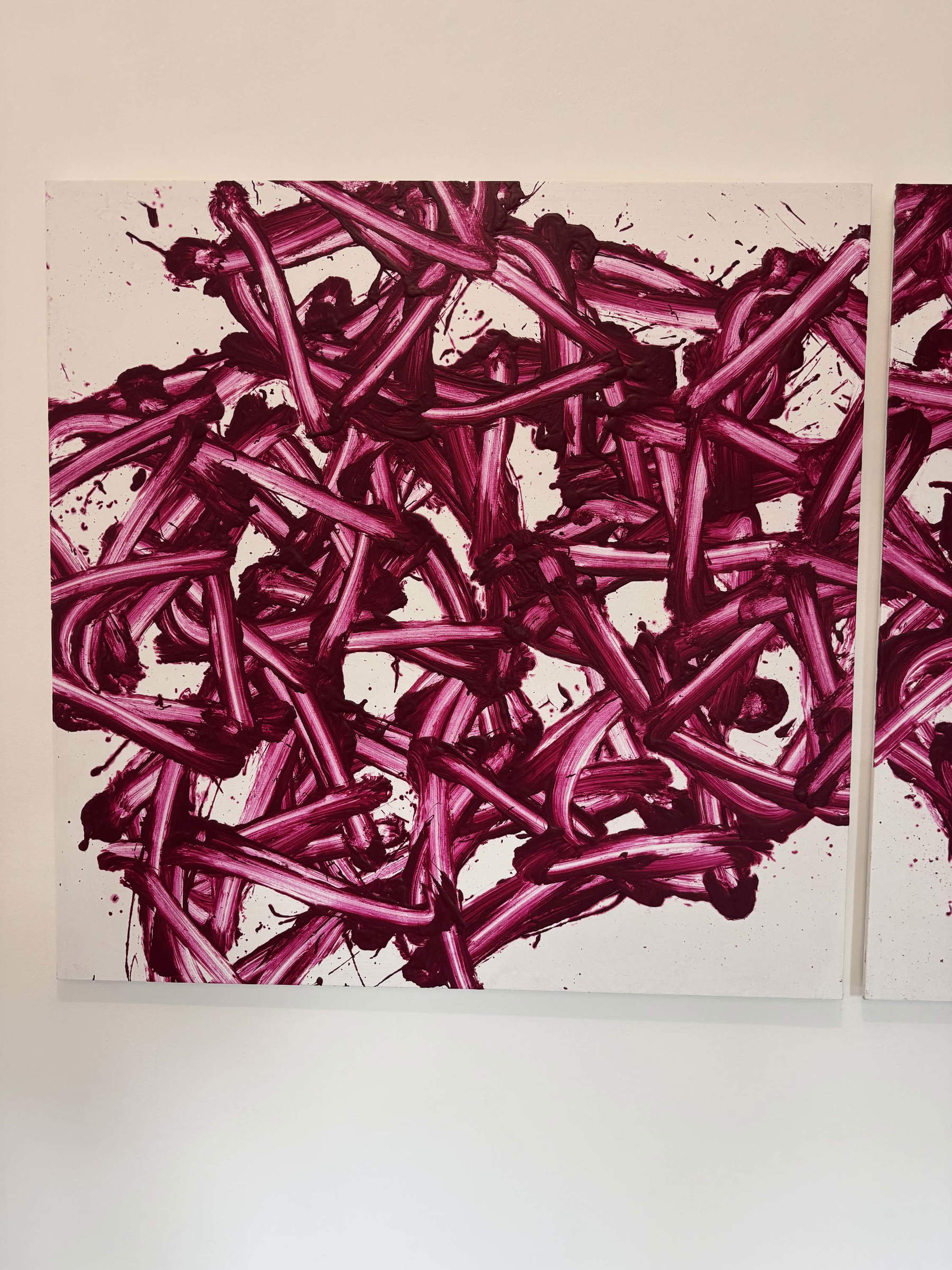
At a certain point in my artistic journey, starting in 2012, my works became more massive, and this occurred precisely through the use of color—shades ranging from the darkest to the lightest, all the way to the surface’s original white. An act of adding to subtract (as always in my work), but in a single process, in a single moment in space and time, where gesture, material, and color unite into a single whole. On this subject, I offer this brief account by Lorenzo Mango: “During the Tromboloidi period, but also in other phases of his work, Gianni’s process was divided into two phases: action and meditation. The first was linked to the gesture that acted swiftly on the surface, leaving a trace behind; the second corresponded to the moment when Gianni ‘finished’ the work, completing it, filling it in—in other words: composing it. Today, for Zeimekke, the process has become unified: there is no longer an active “before” and a meditative “after,” but the gesture itself carries within it a construction, a composition that is already finished—one that, by the very logic of the painterly process employed, can no longer be altered. I would define this phase as a meditative action, determined not only by technical considerations but, perhaps even more so, by the fact that the method has become second nature, so that creating and meditating on form have become one and the same. A brief note on these “Zeimekke”—a topic generally overlooked when discussing Asdrubali and one that, to me, seems extremely important. Having worked for many, many years (and still doing so) with black and white, whenever—as in this case—Gianni uses color, we tend to limit ourselves to pointing out how the reductive nature of the mark functions even in the presence of a different color palette. Instead, I believe we need to give the question of the color range more careful consideration. In *Zeimekke*, Asdrubali uses reds and blues with hints of purple and green. But it is not enough simply to name these colors; otherwise, one might assume they play a role solely as primary or complementary colors, and the discussion would stop at the—admittedly important—issue of the reduction of expressive tools. Instead, it seems to me that color has a significance all its own, one of great importance. Whatever it may be, it possesses a saturated, particularly intense hue—a homogeneous tonal incisiveness that is at once vivid and somber. Whether a painting is green, red, or blue is by no means irrelevant. Color possesses a very strong sensory personality that enables the interplay of capturing, through the mark, the force lines of space along a different perceptual wavelength. It touches the senses and, through them, the viewer’s entire inner sensibility in a unique and specific way.”
Warning: the translation into English of the original Italian article was created using automatic tools. We undertake to review all articles, but we do not guarantee the total absence of inaccuracies in the translation due to the program. You can find the original by clicking on the ITA button. If you find any mistake,please contact us.