


by Gabriele Landi 20/10/2026


Categories: Interviews / Disclaimer
From everyday drawings to interventions in public spaces, French artist Nicolas Muller explores the tensions between convention and freedom, architecture and nature, control and the unexpected. In this conversation with Gabriele Landi, Muller explains how even the most fragile traces can undermine established orders.


What can a mark reveal when it is erased? And how can a fragile imprint call into question the solidity of a wall, a building, or a system of rules? The artistic practice of French artist Nicolas Muller (Strasbourg, 1983) transforms drawing into a field of tension between order and the unexpected, control and freedom. Using graphite, erasers, bleach, and salvaged materials, the artist explores the possibilities of transforming surfaces and objects, altering their function and balance. His childhood experience, marked by proximity to a prison environment, resurfaces in a practice that questions the boundaries imposed on spaces and bodies, without ever reducing itself to a direct representation.

Nicolas Muller lives and works in Geneva, where he has developed an artistic practice that spans drawing, sculpture, and installation. His work has been exhibited primarily in France, Switzerland, and Germany. In 2023, the Musée Ariana in Geneva granted him carte blanche to create an installation across the 1,000-square-meter exhibition space. His works are part of the collections of the Musée Jenisch in Vevey and the FMAC and FCAC in Geneva. The recipient of several public commissions, he recently created *Autour*, an installation on the facade of the Rotrou high school in Dreux. In this conversation with Gabriele Landi, the artist traces the origins of his artistic practice and explains how drawing, material, and the traces left by bodies can challenge the apparent stability of spaces and their rules. From drawings to interventions in public space, a reflection thus emerges on the capacity of the smallest gestures to crack seemingly solid structures and open up new possibilities for relating to our surroundings.


GL. Let’s start from the beginning. Often, there are episodes from childhood that we recognize in hindsight as formative—or as the first signs of a way of being in the world that reveals a certain aptitude for art. Was that the case for you as well?
NM. In hindsight, there are several elements that seem important to me. I’ve always drawn. As a child, I could spend hours copying images from magazines, comic books, video games, or photographs. I loved those long, quiet moments. I also grew up in a rural area. That environment perhaps fosters a certain sense of observation, of contemplation, and a slower relationship with time. The other important factor concerns the environment in which I grew up. My father worked at a detention center, and during my teenage years, we moved into staff housing adjacent to the prison. The concrete perimeter wall enclosed our small plot of land, which served as a garden. In hindsight, I believe that this juxtaposition between a very rigid and authoritarian geometry and an organic, domestic environment profoundly shaped my perspective. I find this tension reflected in much of my work today. Nothing really predestined me for art. In my youth, I rarely visited art exhibitions, and art played little role in my daily life. Enrolling in art school was therefore a massive cultural catch-up for me. There, I discovered a field of exploration of great richness, with the feeling that an entire world was opening up to me.
What prompted you to choose an art school?
I wanted to focus my studies on drawing. After high school, I imagined myself leaning more toward comics or illustration. I didn’t really know what an art school was or what to expect there, but I was eager to explore. This choice of direction was also a way to break away from the environment in which I’d grown up and discover another world. I gradually expanded my practice to include other media, such as sculpture and installation, while keeping drawing as my anchor.
Did you meet people during your studies who influenced your path in one way or another?
Yes, several. First and foremost, the students I studied with at the École supérieure d’art de Lorraine in Metz. We quickly began collaborating, organized group exhibitions, and developed micro-publishing projects. Independent publishing played an important role in my journey. Since I was producing a lot of drawings, it allowed me to circulate them without relying exclusively on exhibition spaces. At that time, the work of the independent publisher FLTMSTPC (Fais-le toi-même si t’es pas content) was a real source of inspiration and contributed greatly to my artistic awakening. I also think of the bookstore Un regard moderne in Paris, which quickly became a very important place for me, as it did for many other artists. Finally, the post-diploma program at HEAD in Geneva marked another decisive milestone. Finding myself alongside young artists from different schools and backgrounds led me to question certain aspects of my work. I realized that the references, concerns, and even the codes of artistic creation vary depending on cultural contexts, even when they are geographically close. This distancing from my educational environment allowed me to develop a more unique and radical artistic practice.
What years are we talking about?
Between 2004 and 2008.
What did your work consist of during that period?
A lot of drawings, often characterized by a dual approach in their execution. On the one hand, a slow, repetitive, and mechanical process; on the other, something more incisive and spontaneous, like a form of escape. I was also drawn quite early on to architectural space and site-specific artistic responses.
Drawing certainly plays a central role in your artistic practice—would you like to elaborate on this aspect?
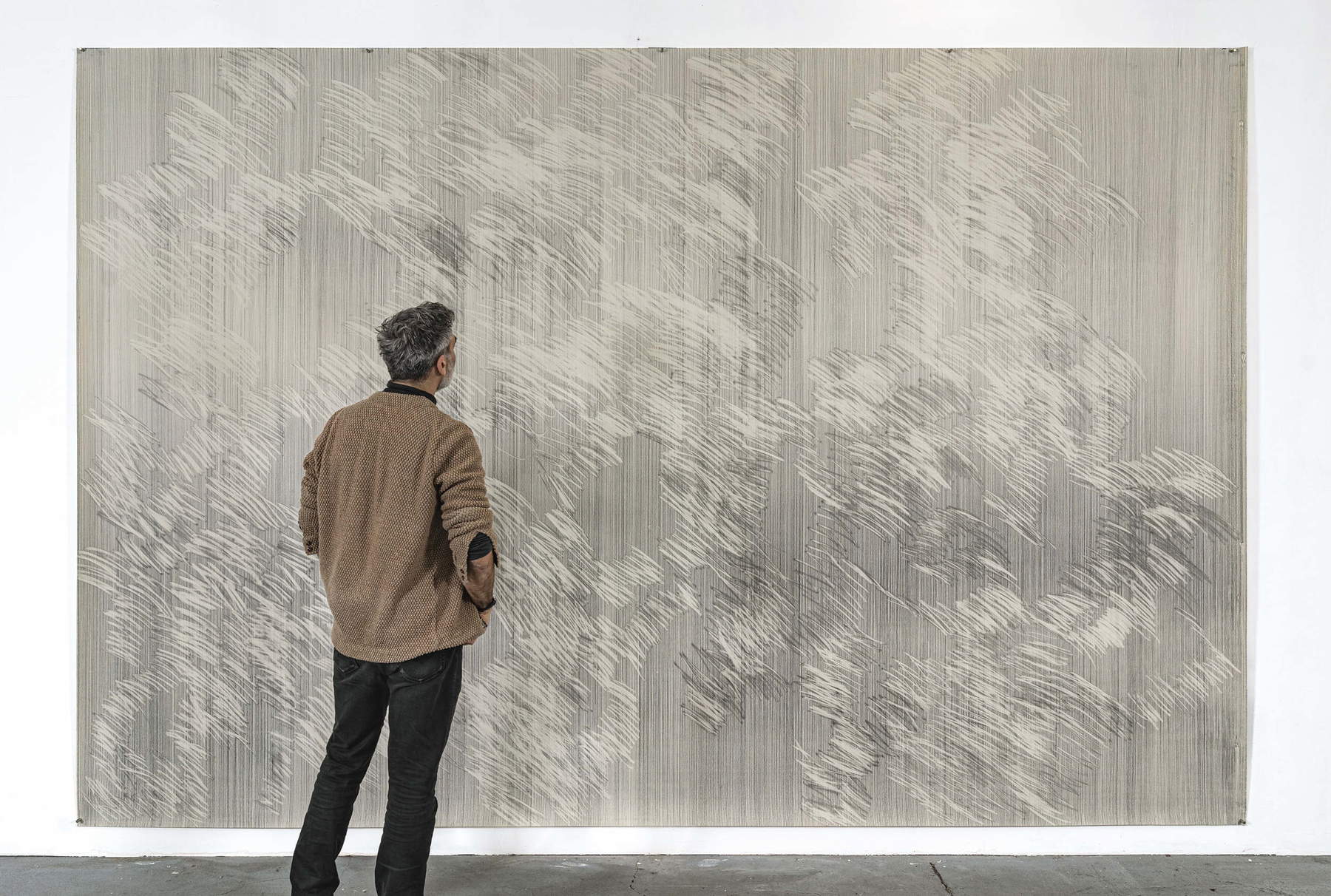
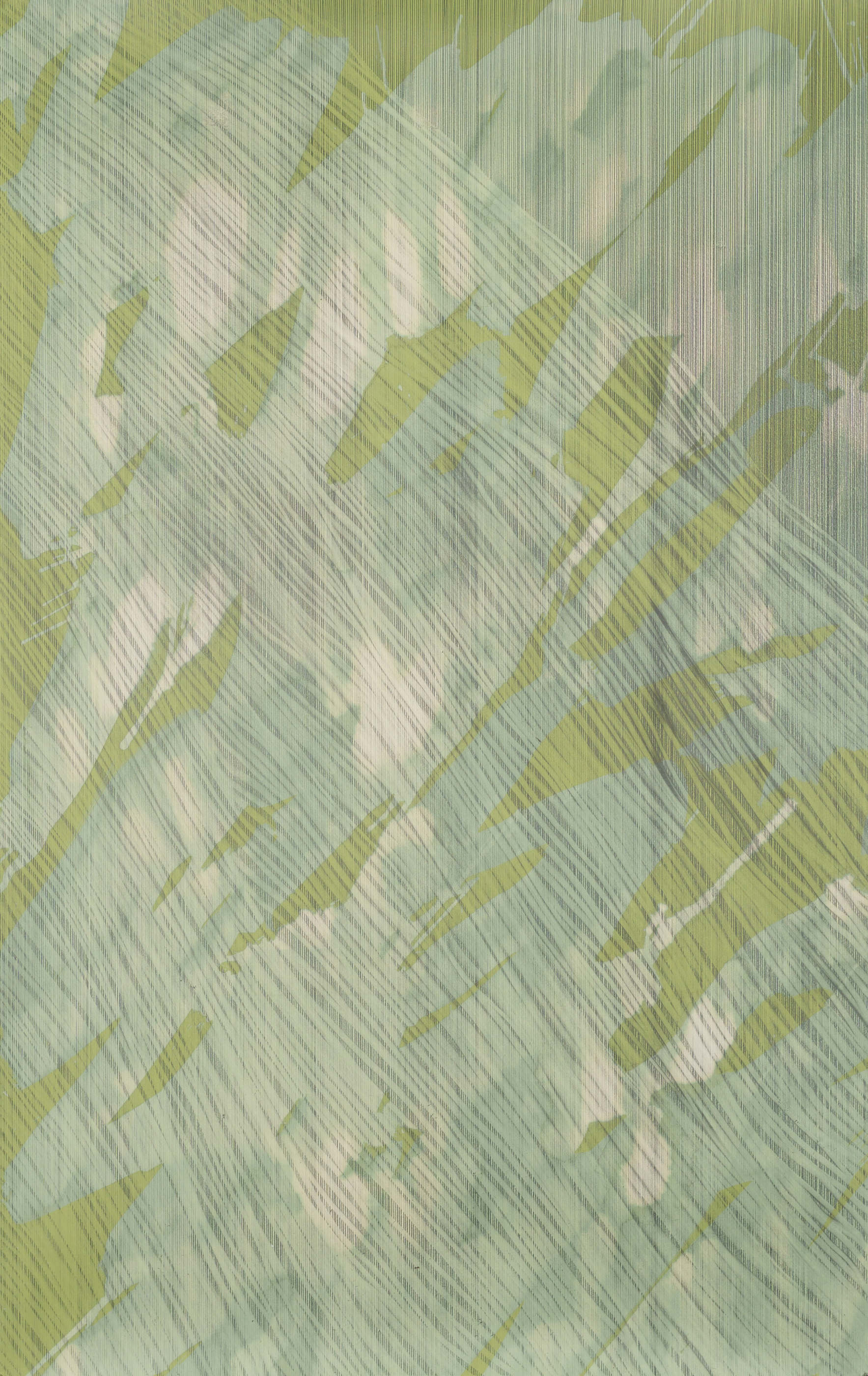
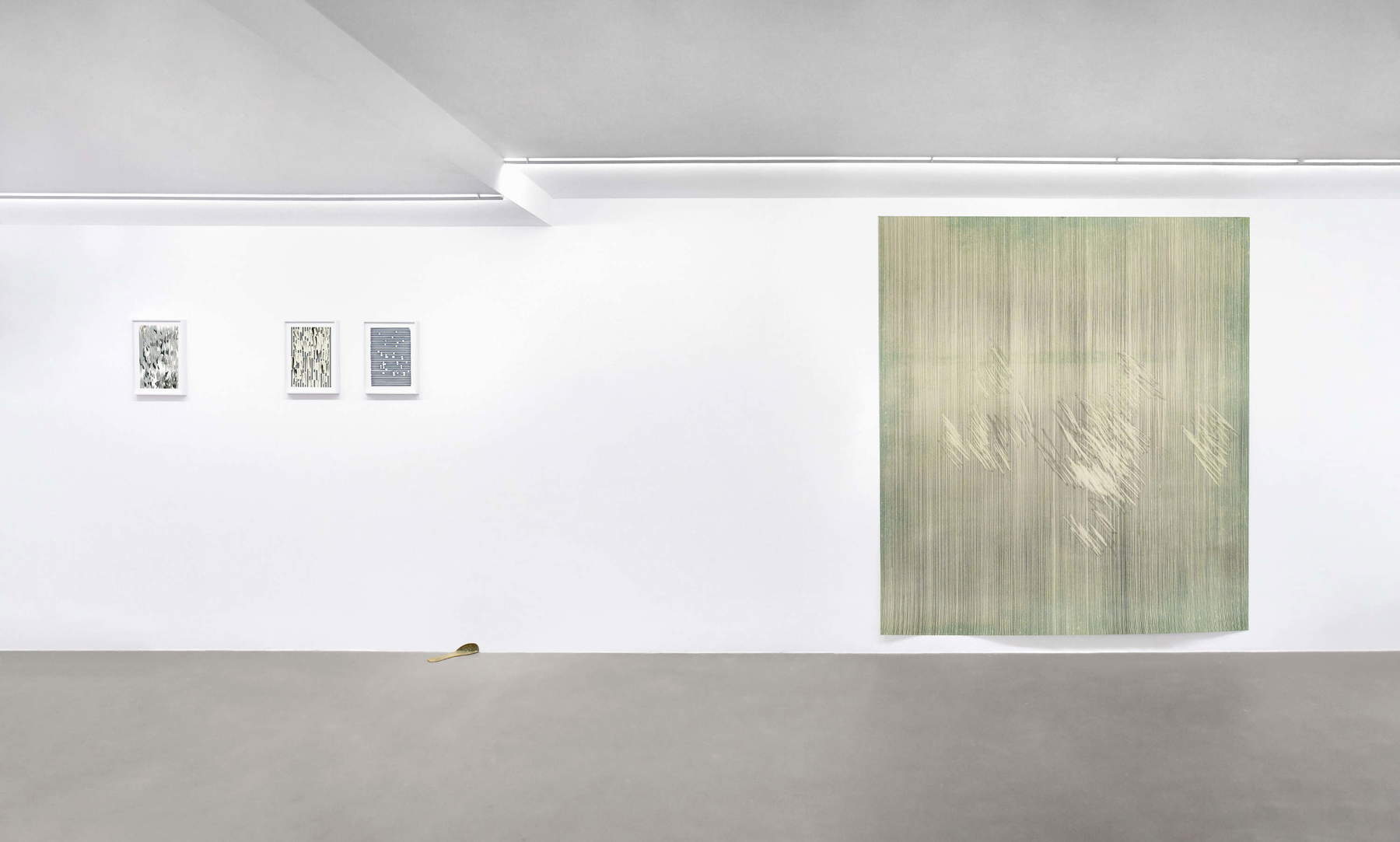
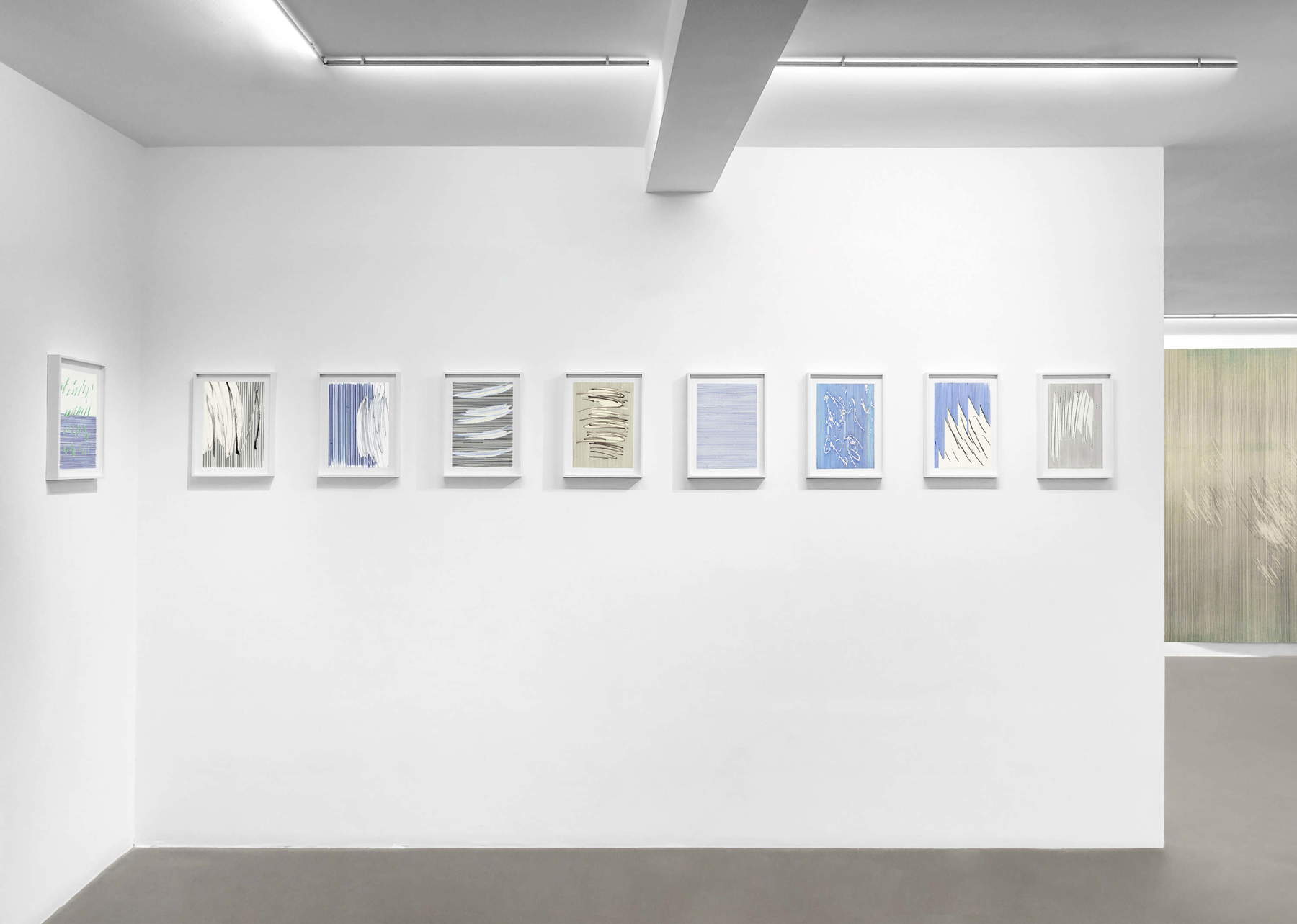
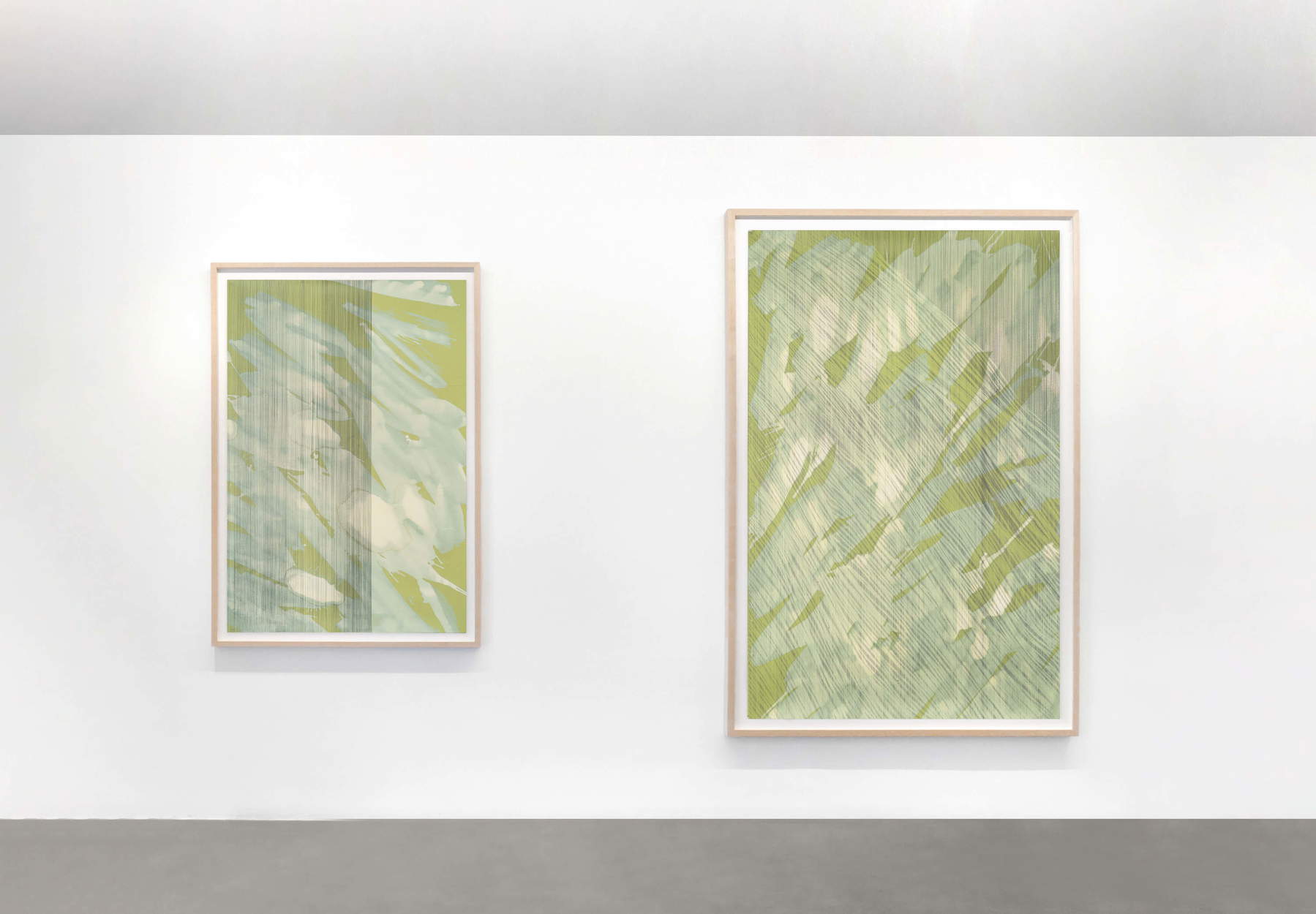
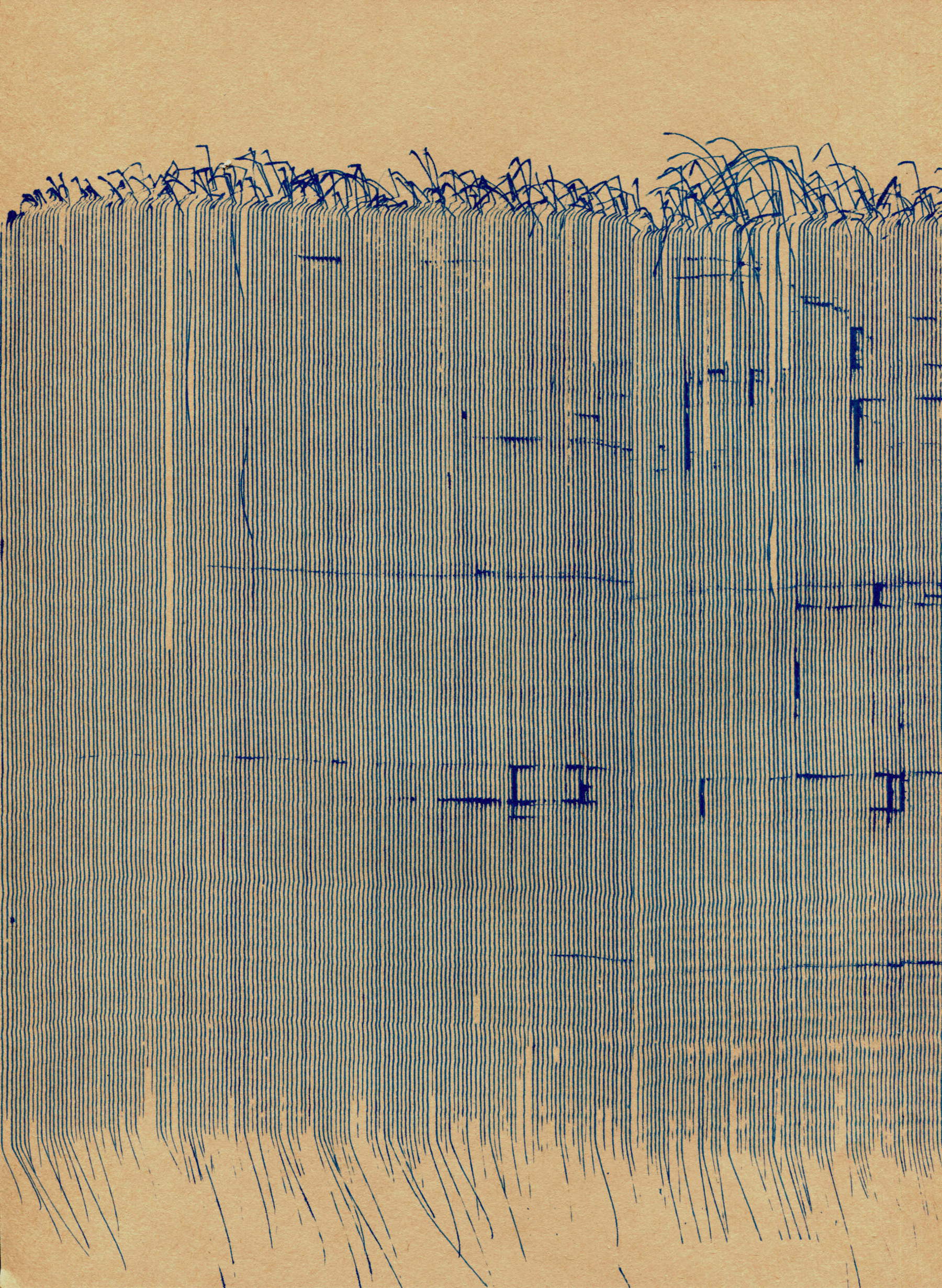
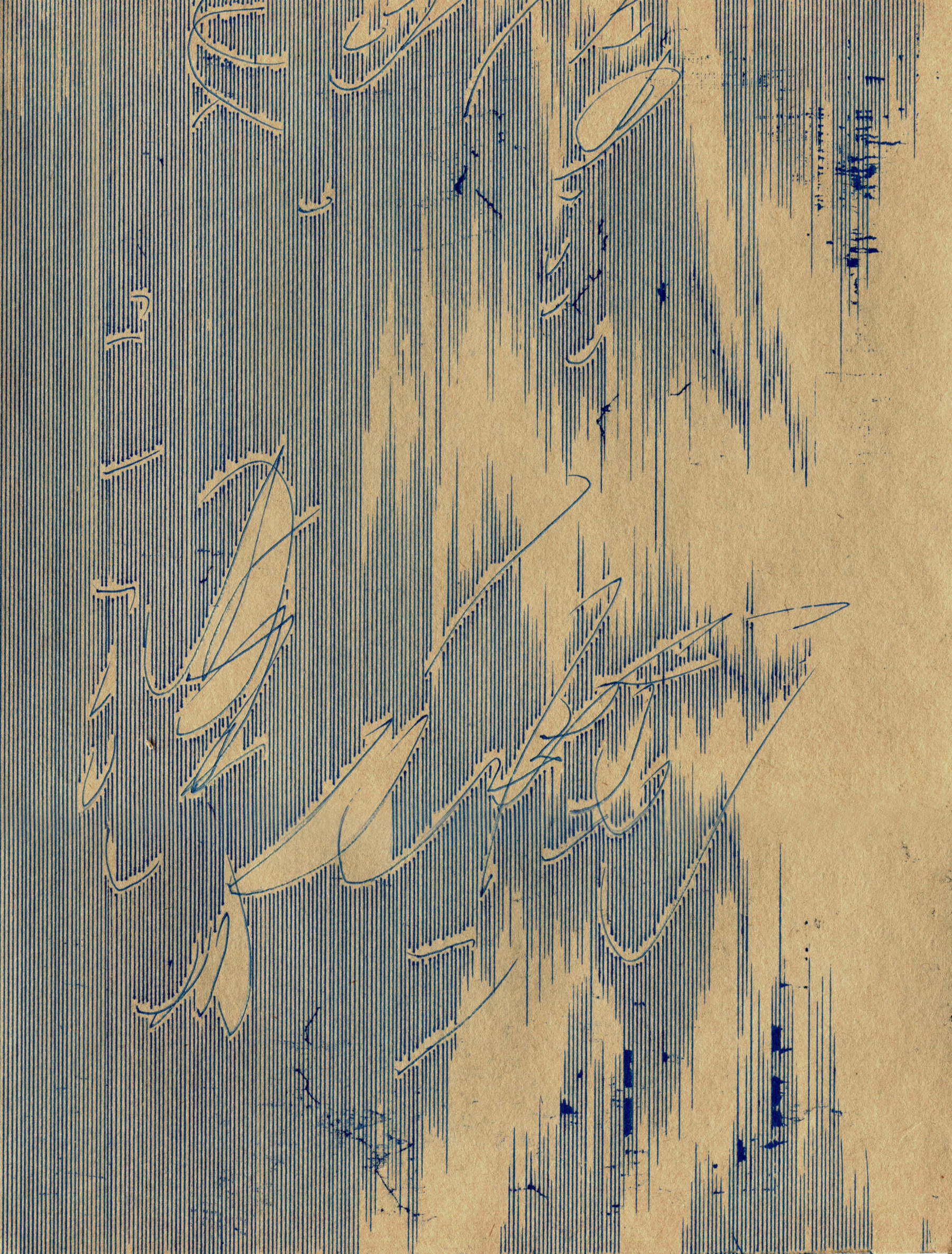
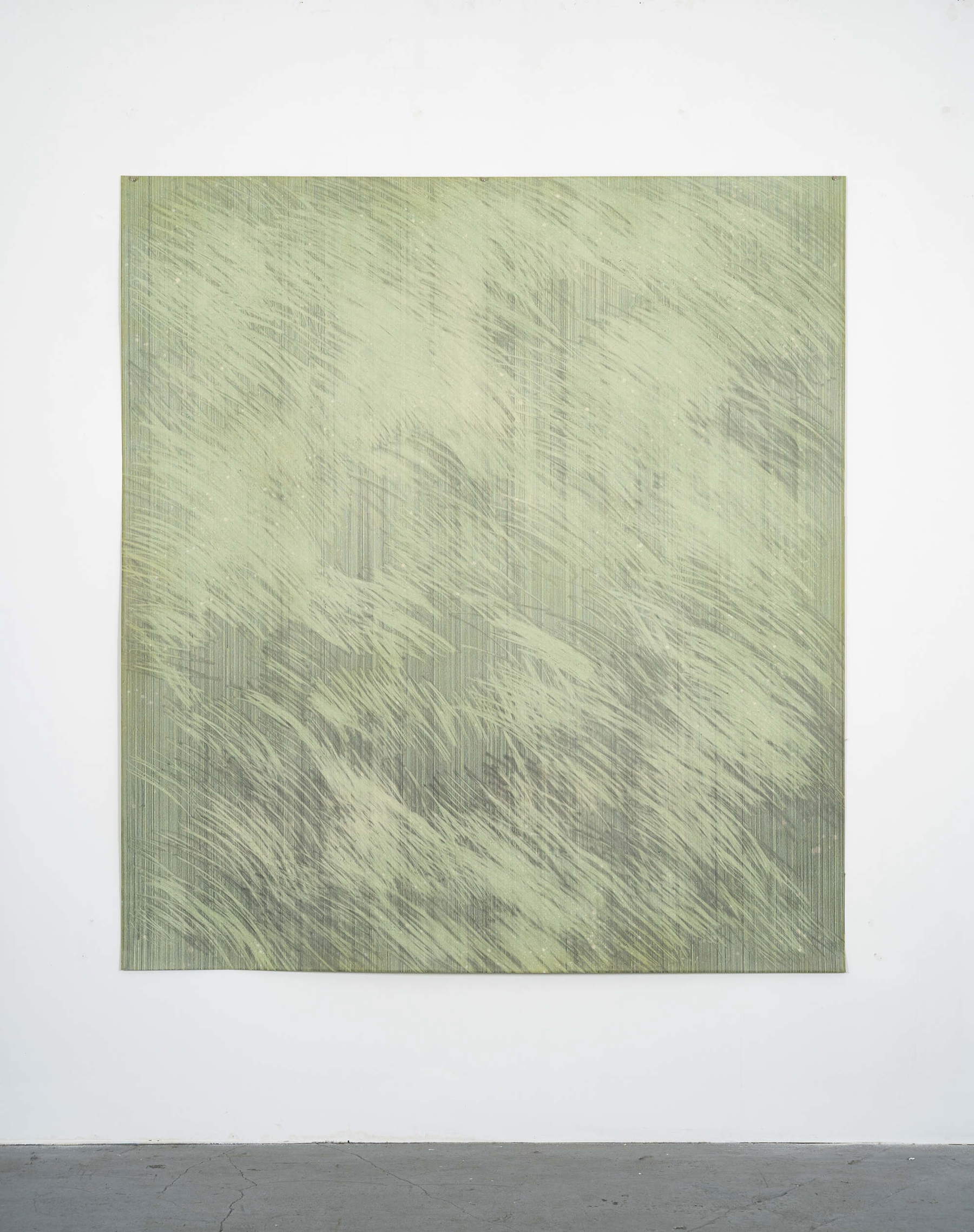
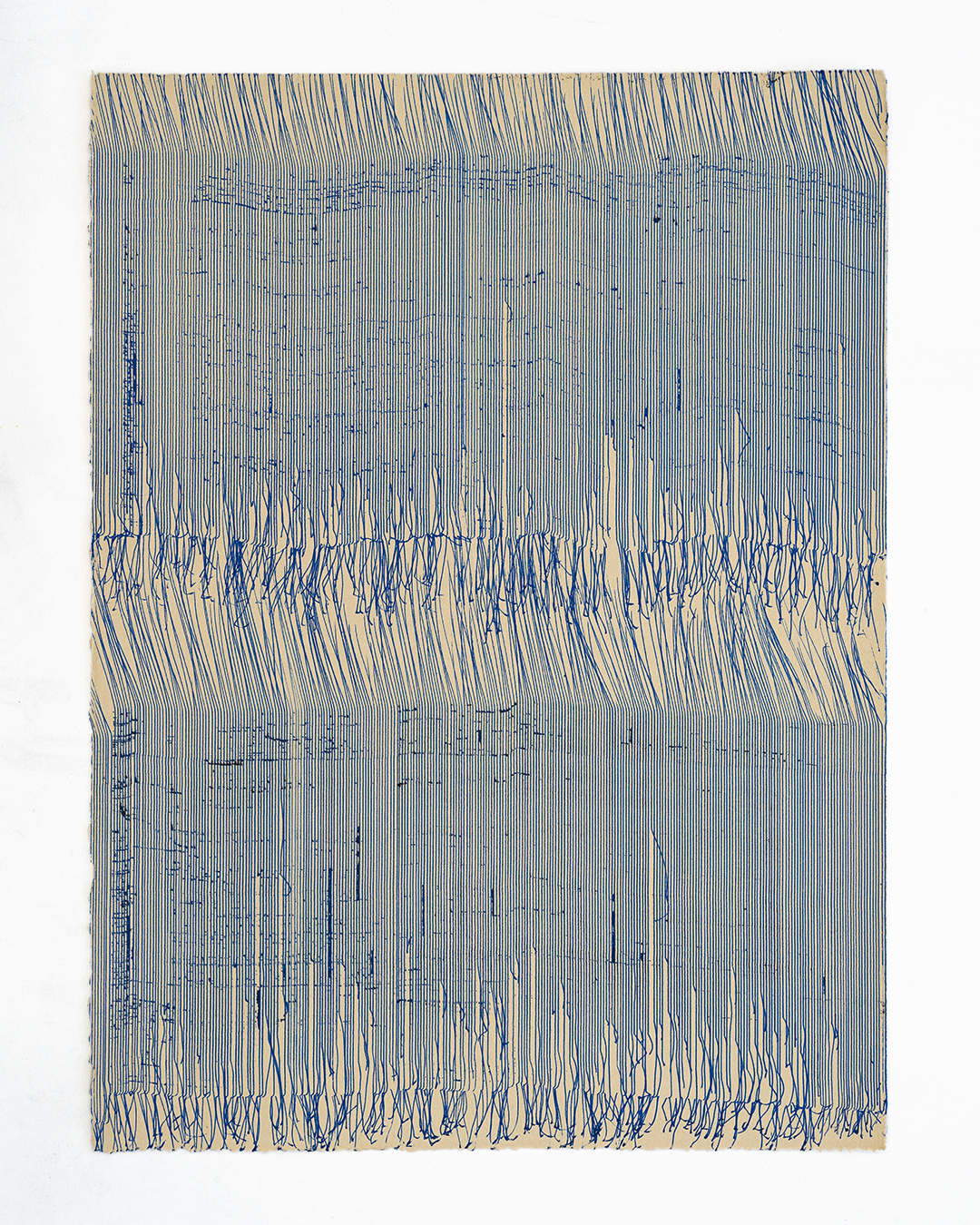
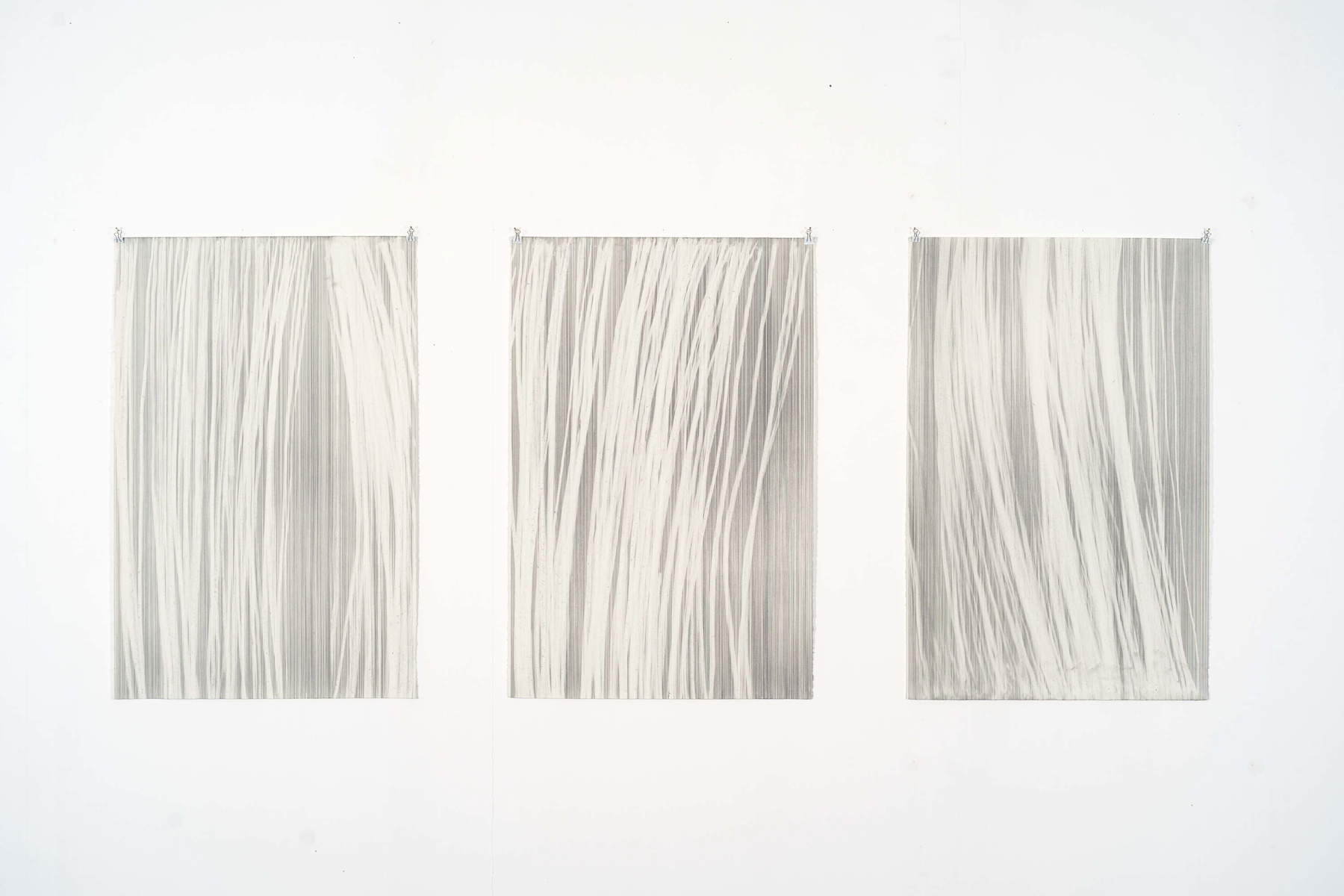
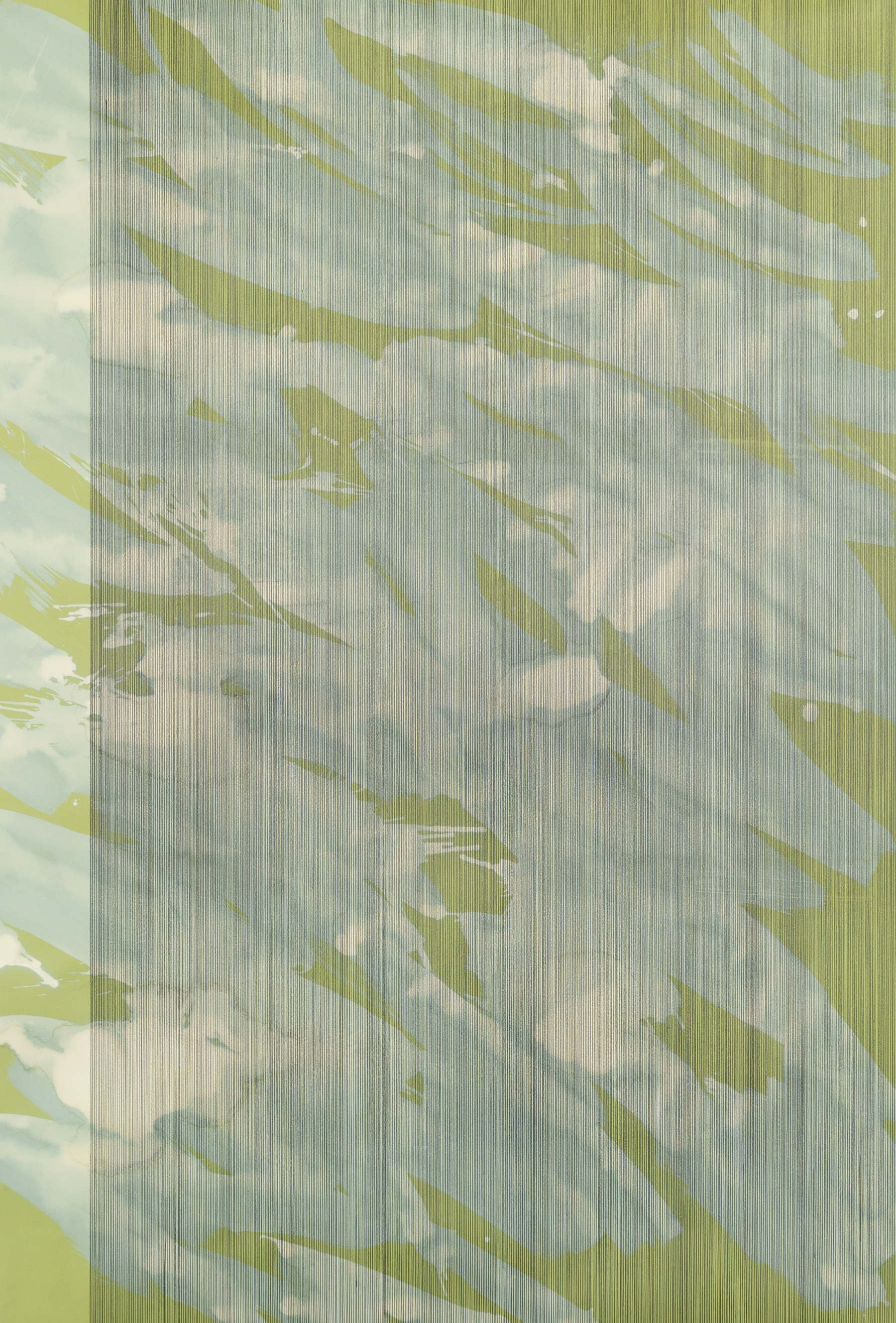
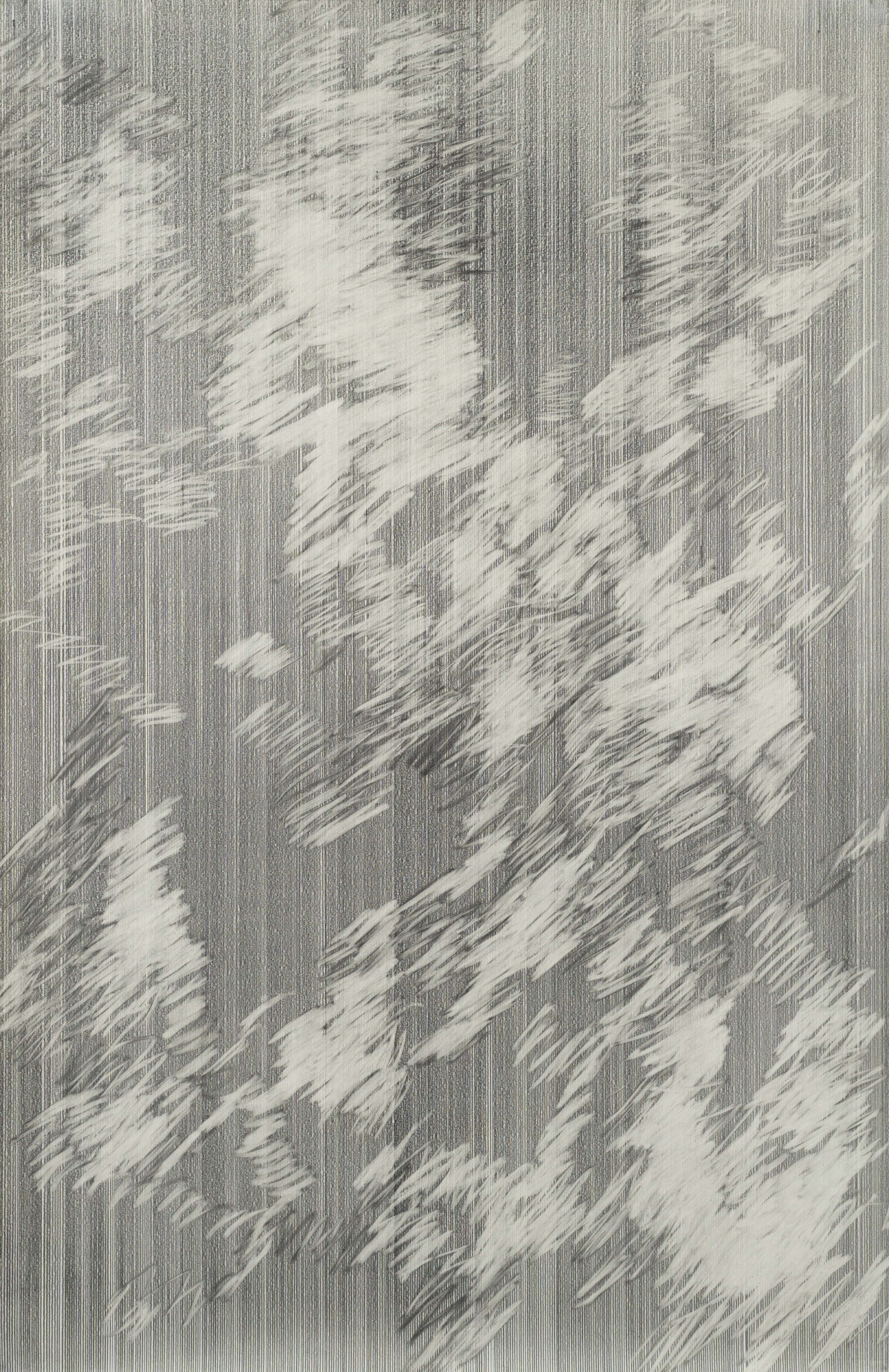
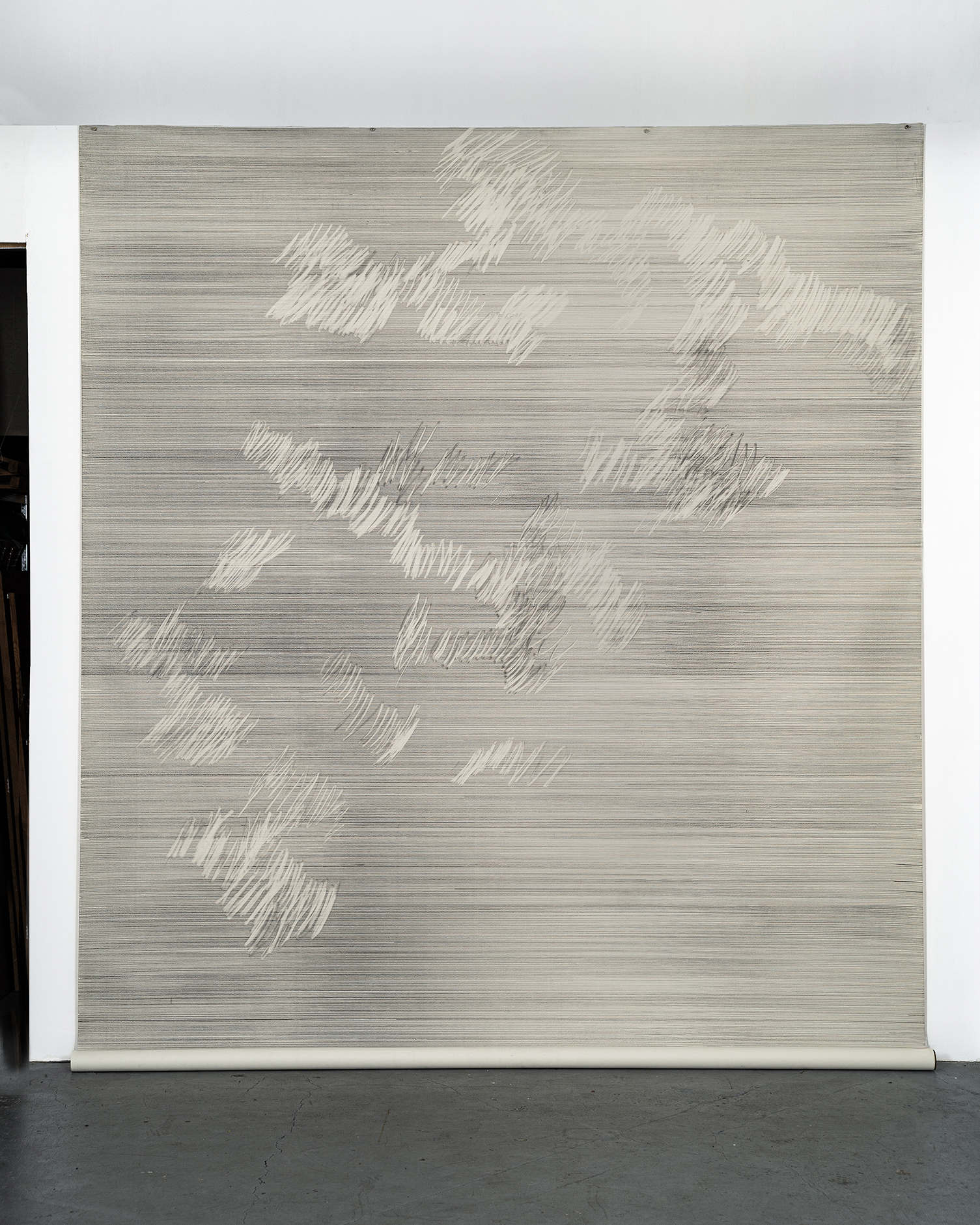
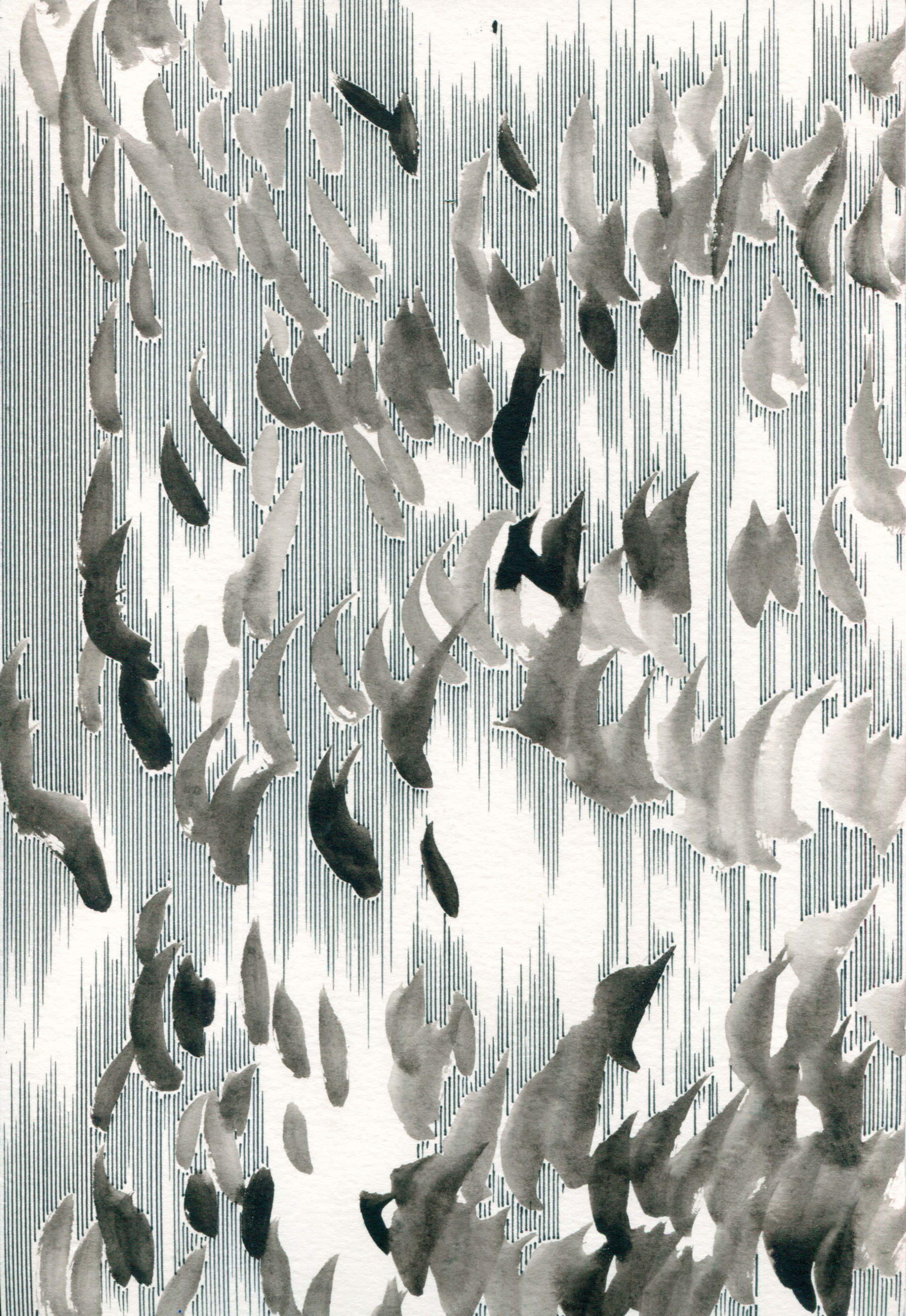
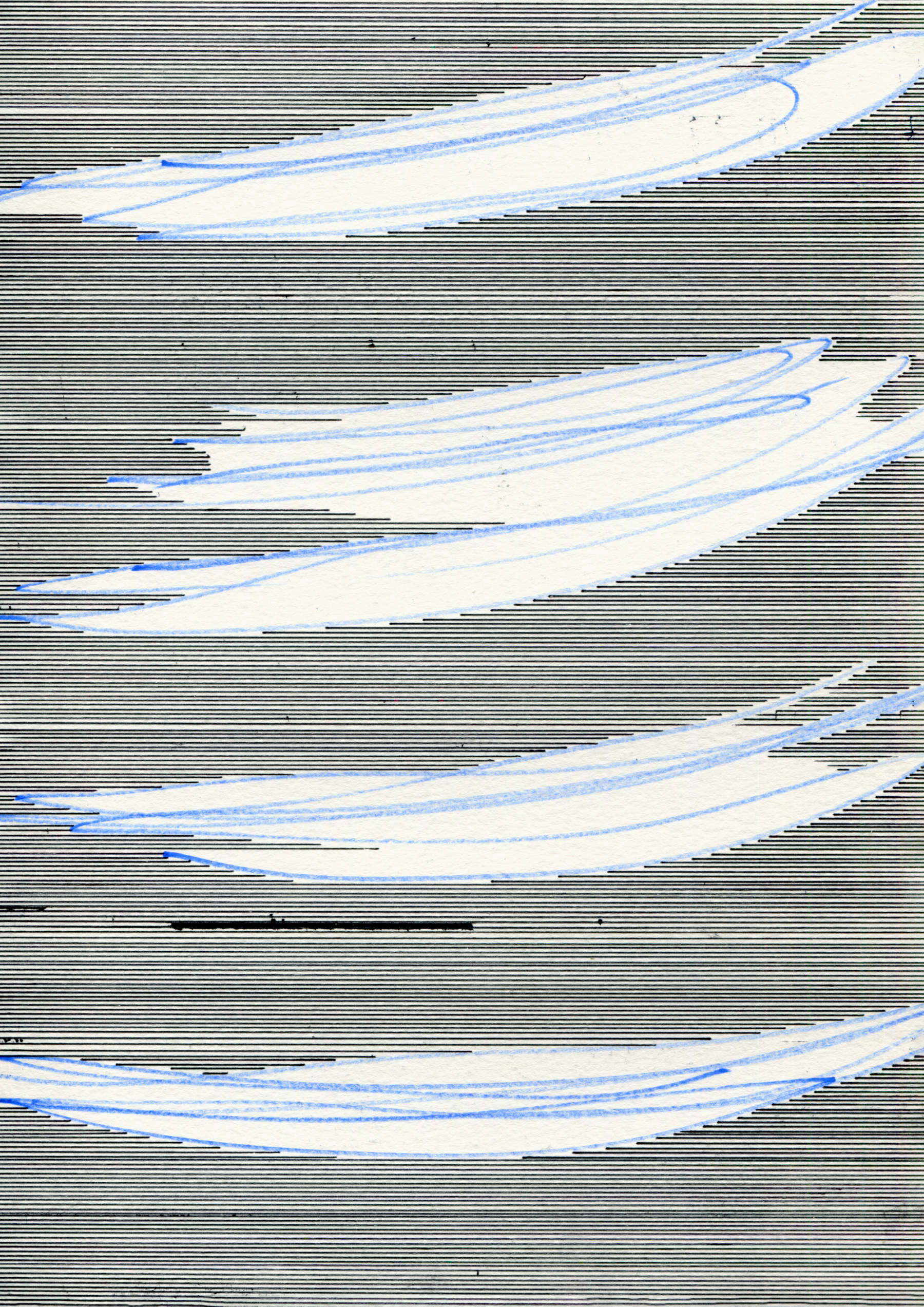
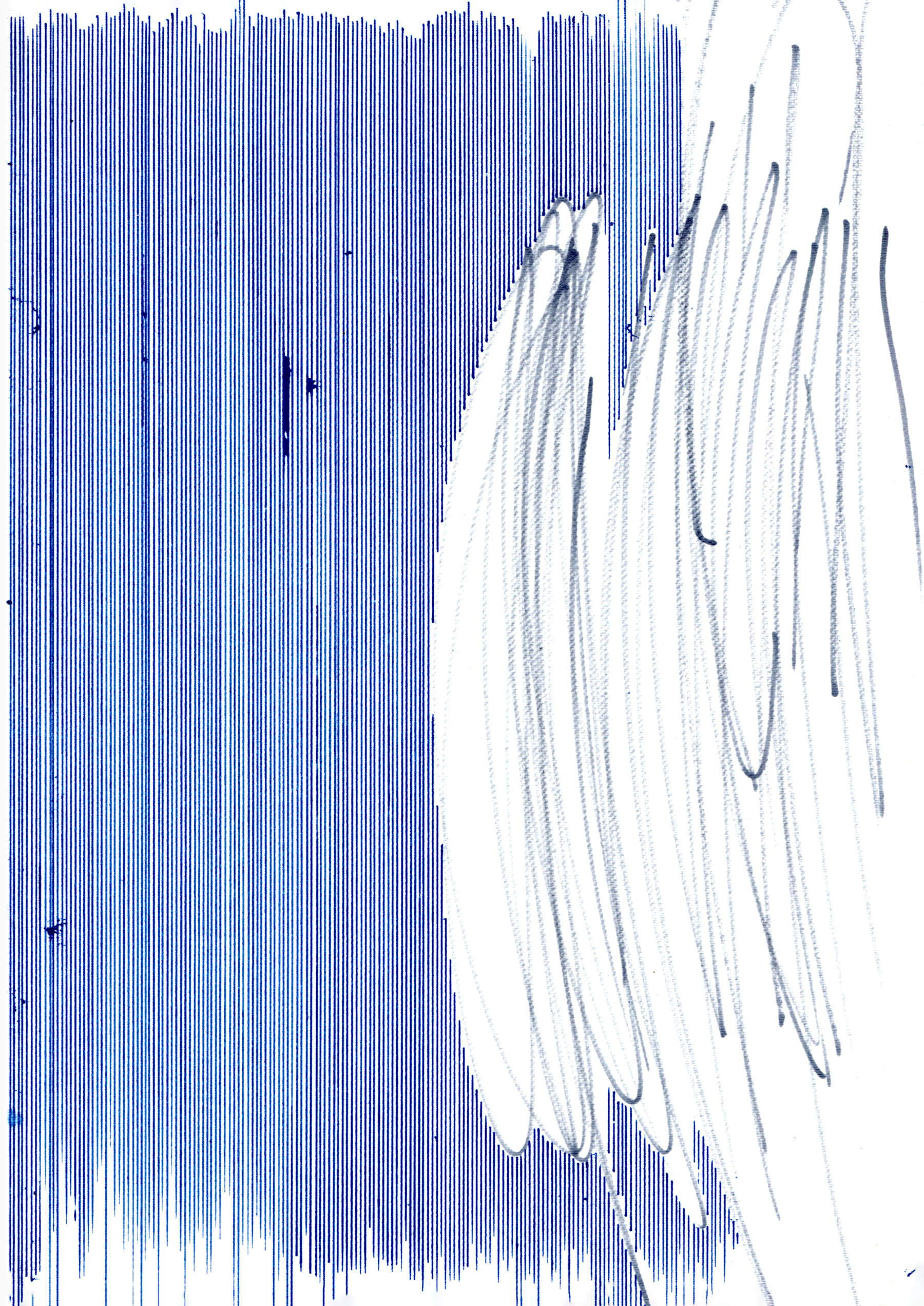
I draw almost every day. I draw on both small formats and enormous sheets of paper that completely cover the studio wall. Drawing also comes into play in the early stages of my sculpture projects or interventions in public spaces, in the form of sketches or preparatory drawings. I also create wall drawings. For several years now, I have deliberately limited my palette of tools to graphite, erasers, sometimes bleach, and, of course, paper. I appreciate working with rudimentary tools, using minimal means. In this deliberate limitation lies a form of poetry in the essential: seeking to make the most of a basic foundation to bring out complexity, if not outright monumentality. On one of the walls of my studio, I have devised a drawing apparatus equipped with a parallel ruler that allows me to methodically trace a multitude of vertical lines. Once the paper is entirely covered by this graphite grid, I intervene with the eraser—often blindly—with the intention of removing as much material as possible. I stop when the eraser is completely worn down. It is the tool itself that determines the end of the drawing. The eraser ceases to be a tool for correction and becomes a drawing tool, thereby contradicting the rigor of this initial grid. The erasure is never complete. It leaves behind a whisper of lines—the memory of this order. My work explores the dialogue between a highly constrained order and forms of disorder or liberation. The drawing thus becomes the space where formal authority is progressively challenged by its own erasure. It is undoubtedly there that the prison-like world that accompanied my childhood reappears as a watermark, along with a reflection on what it encloses and what escapes it, on the norm and on what contradicts it.
You often use color in your works. What role does it play?
Color is rarely an element I add to my work. It is more often a property of the medium itself. I use handmade papers in shades of beige, ochre, or brown, as well as mass-dyed industrial papers. The simple choice of these supports introduces a chromatic dimension and a contrast with the black or blue ink I use, or with the gray of the graphite. For several months now, I’ve been working on large-format sheets of green industrial paper (a sort of marsh green). This time, color becomes a true area of experimentation. Even before drawing, I treat the paper by bleaching it to varying degrees using bleach, more or less diluted. It is not a matter of adding color, but of modulating the paper’s chromatic intensity to reveal a whole range of shades. The uniform surface is thus transformed into a more organic and unstable material, which can evoke a plant world or a colonization of lichens. It is only after this initial treatment that I create the graphite drawing, before erasing it in turn with an eraser. Some drawings are thus based on a double erasure: first, that of the support’s color, and then that of the linear texture. I like the idea that two successive layers are progressively altered. This layering of erasures creates a new depth in the drawing. As for the use of bleach, I’m just as interested in what it produces visually as in what it evokes. It is an ordinary, inexpensive, and rudimentary product, used for cleaning and radical disinfection. It belongs to a world of functional and public spaces: schools, hospitals, prisons… these spaces convey imagery and run discreetly through my work, without ever directly constituting its subject.
Do these imagery you allude to—which do not become the subject of your work but pass through it lightly—fuel this work through their materiality, by analogy?
I wouldn’t call it a light influence. The prison world, and issues of norms, boundaries, and control, are deeply intertwined with my work. Their materiality fuels my practice. So, when I create large drawings on sheets over four meters long, I often feel as though I’m working on the skin of a wall. The paper, due to its thinness, becomes a sort of membrane—the skin of a prison’s perimeter wall—while the bleaching with bleach evokes the alterations, patinas, or plant growth that transform architectural surfaces. The choice of green paper and the use of graphite also contribute to this tension. One evokes the living, the other the built environment. But this is not merely a formal opposition. What interests me is the way these two worlds end up influencing one another. The bleaching transforms the surface of industrial paper into an almost organic material, while the graphite texture—gradually altered by the eraser—introduces randomness into a standardized and orderly system. The drawing thus becomes the space where distinct logics coexist. These dualities also echo the way we conceive of our urban spaces today, where the built environment and the living world are organized according to a new equilibrium. My work does not directly address urban planning, but it is interested in these intermediate states, these surfaces where boundaries become more porous and where what seemed stable begins to waver.
We then move on to in-situ interventions, as Daniel Buren also calls them. Could you tell us about the work you created for the Rotrou High School in Dreux?
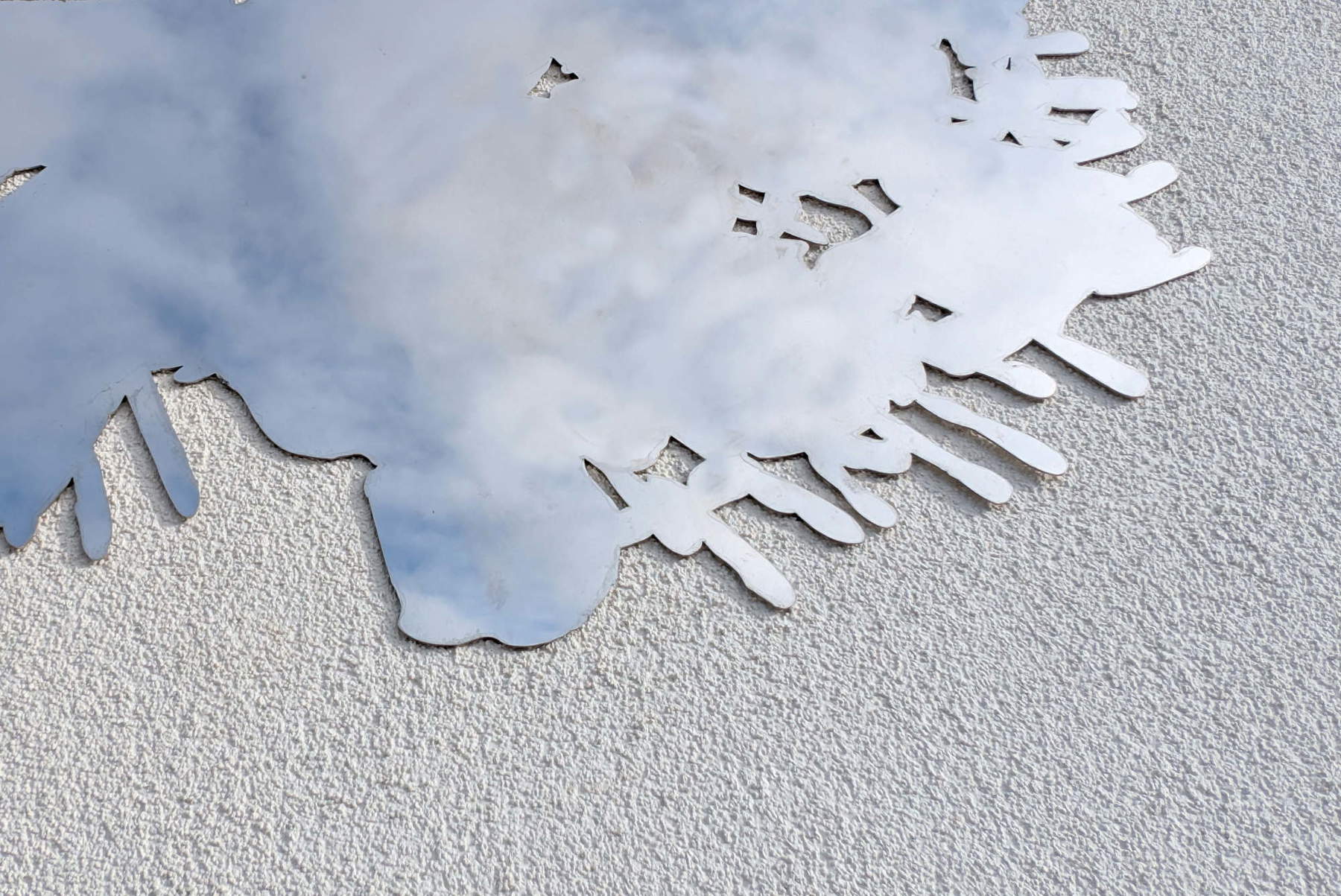
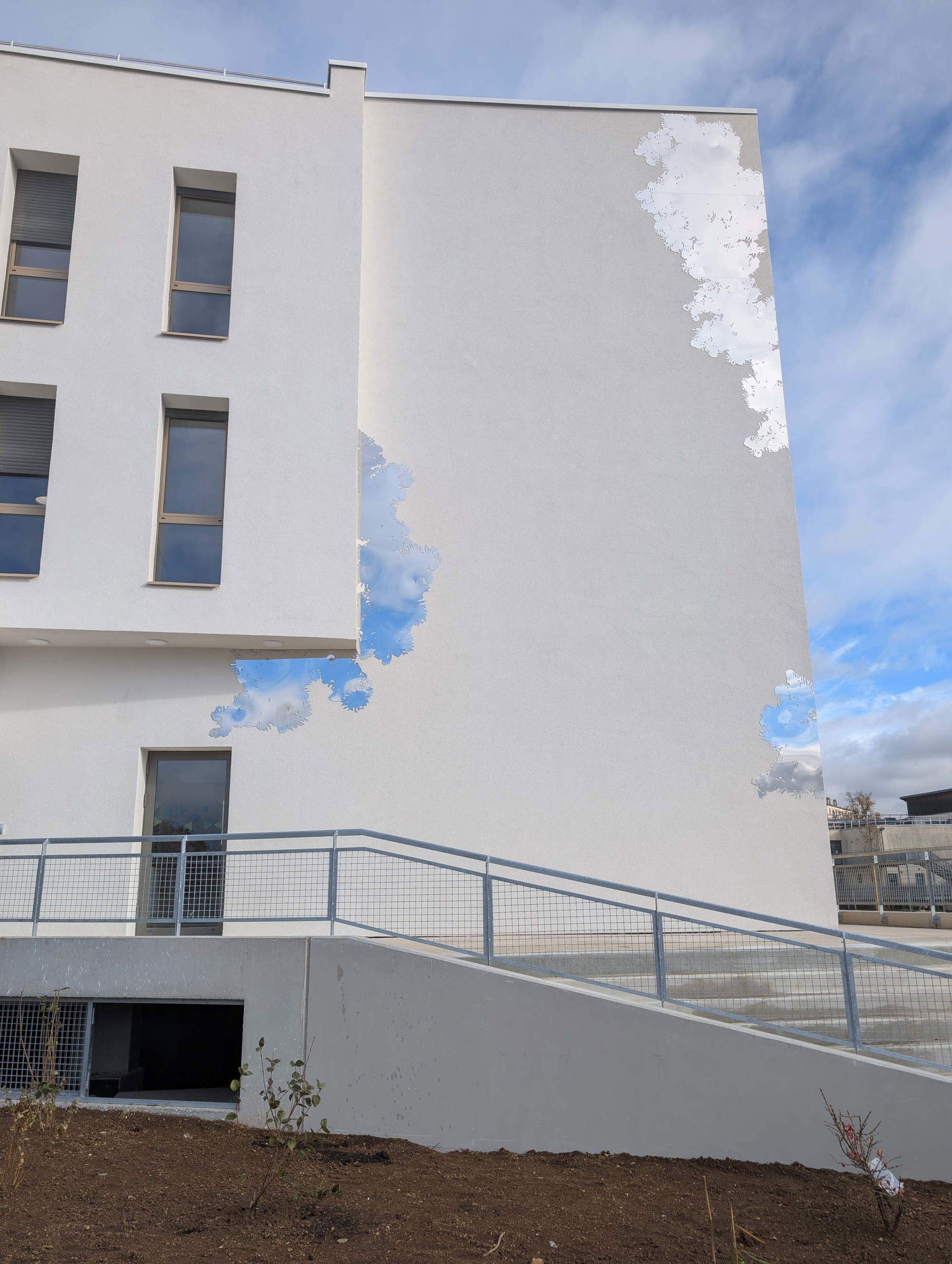
The work is titled *Autour*. It is a public commission created as part of the “1% for Art” program on the facade of the Rotrou High School in Dreux [Editor’s note: a French program established by law in 1951 that requires 1% of the funds allocated by the state for a new public building to be set aside for art, in order to finance a work integrated into the structure]. It takes the form of three irregular shapes cut from mirror-polished stainless steel sheets. Composed of students’ handprints collected during a participatory workshop, they suggest a collective movement and interact with the geometric precision of the facade. When combined, these handprints form abstract silhouettes in which each individual gesture becomes part of a shared dynamic. The mirror-polished steel surfaces reflect the surroundings and create an impression of depth. Echoing Jean Rotrou’s *Le Véritable Saint Genest*, in which the theater reveals its own artifice, the mirrored surface in turn blurs the boundaries between reality and representation.
The theme of the imprint often recurs in your work: shoes, hands, fingerprints. Is this a way to create participatory works by involving a large number of people in their creation, or is there something else?
Yes, it’s a way to kick off the creative process and engage the people who frequent the space. But I’m also interested in the imprint for what it is. I appreciate its ephemeral nature, its fragility, its material insignificance in the face of massive, pragmatic architecture. It is the memory of a passage, of a body, of an often unpredictable movement within a delimited, compartmentalized, or controlled space. Working with these fragile marks means engaging in a struggle on equal terms. In these traces left by bodies, there is a form of sensitive, silent resistance that runs through much of my work.
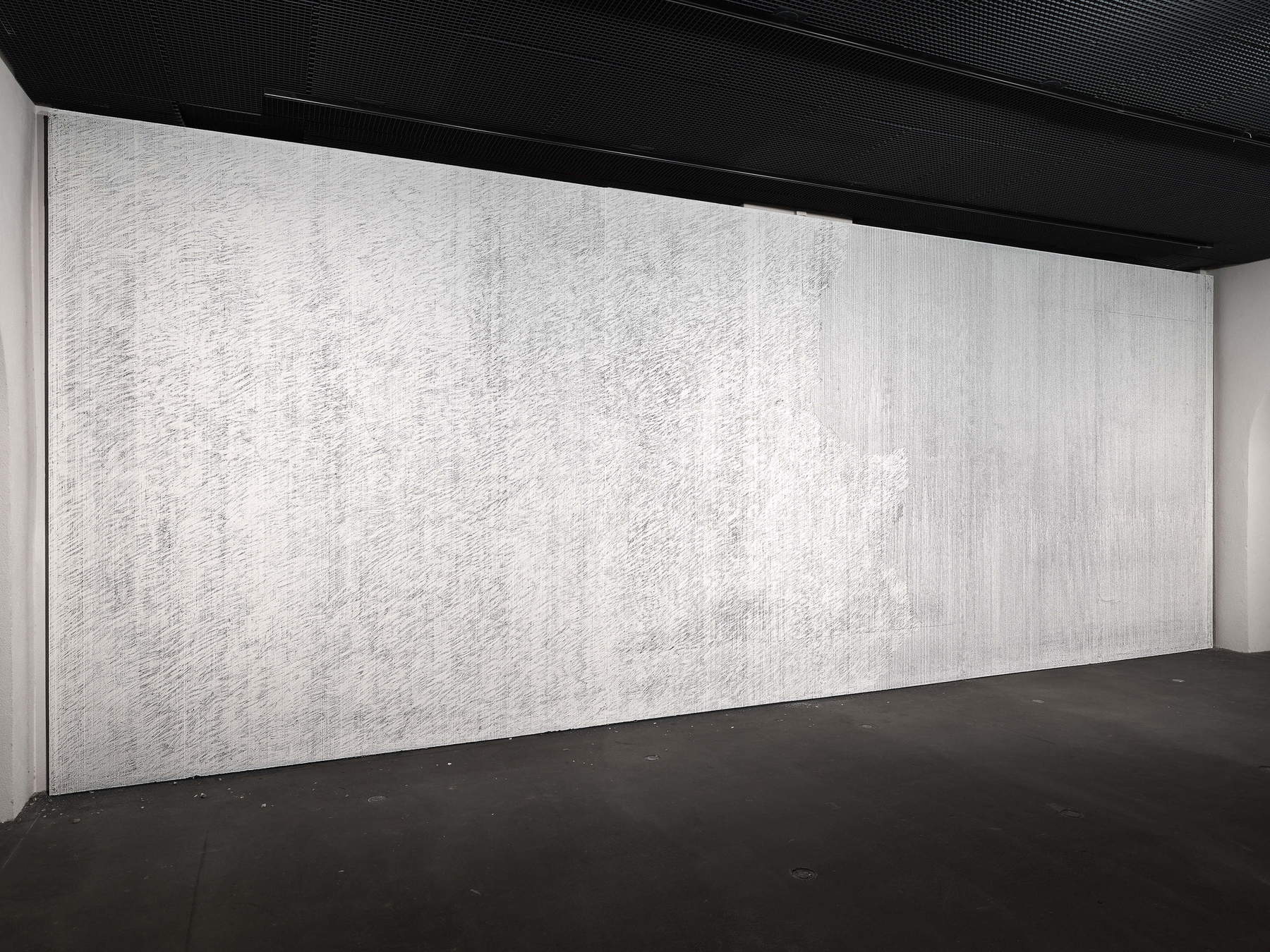
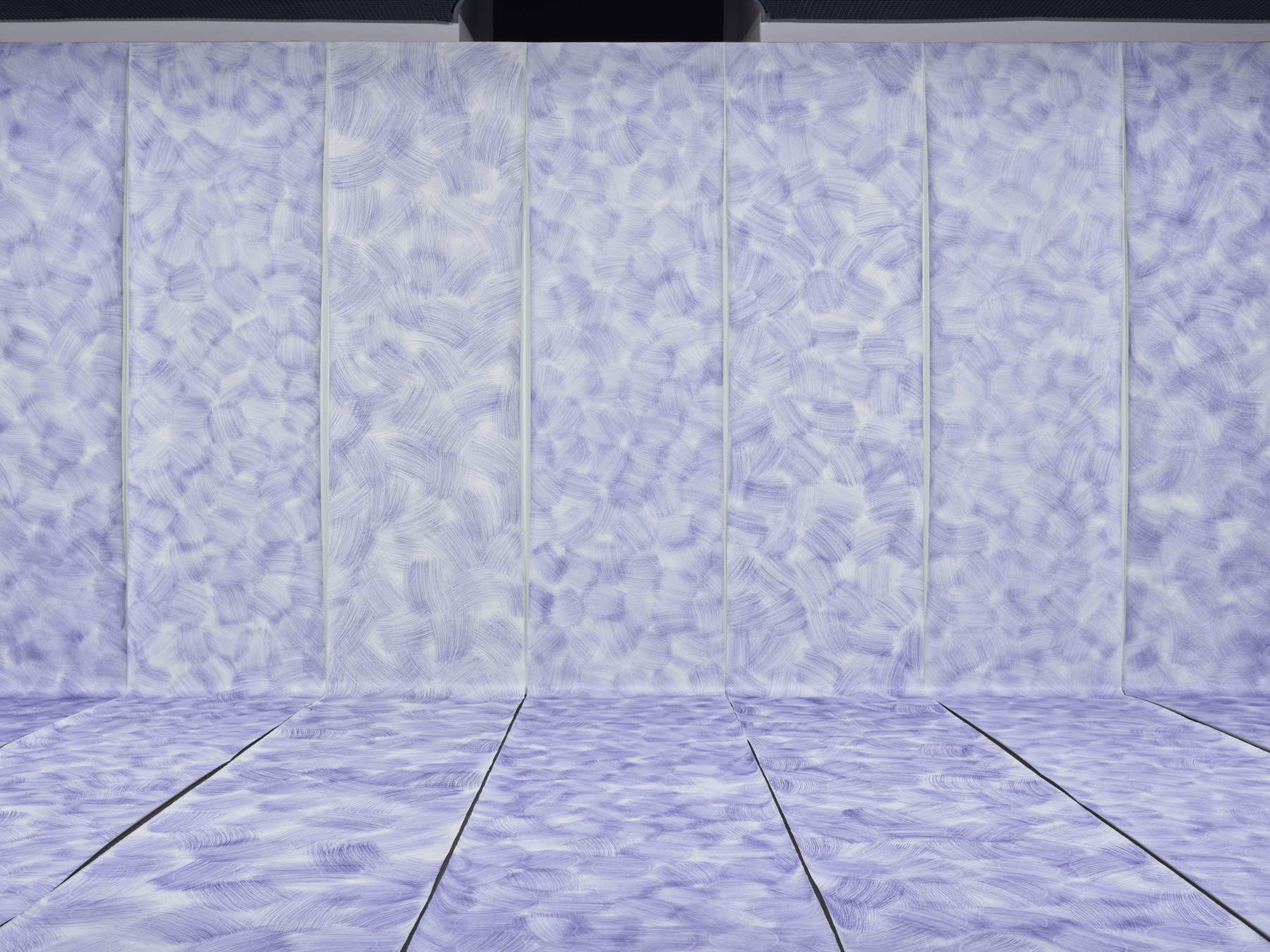
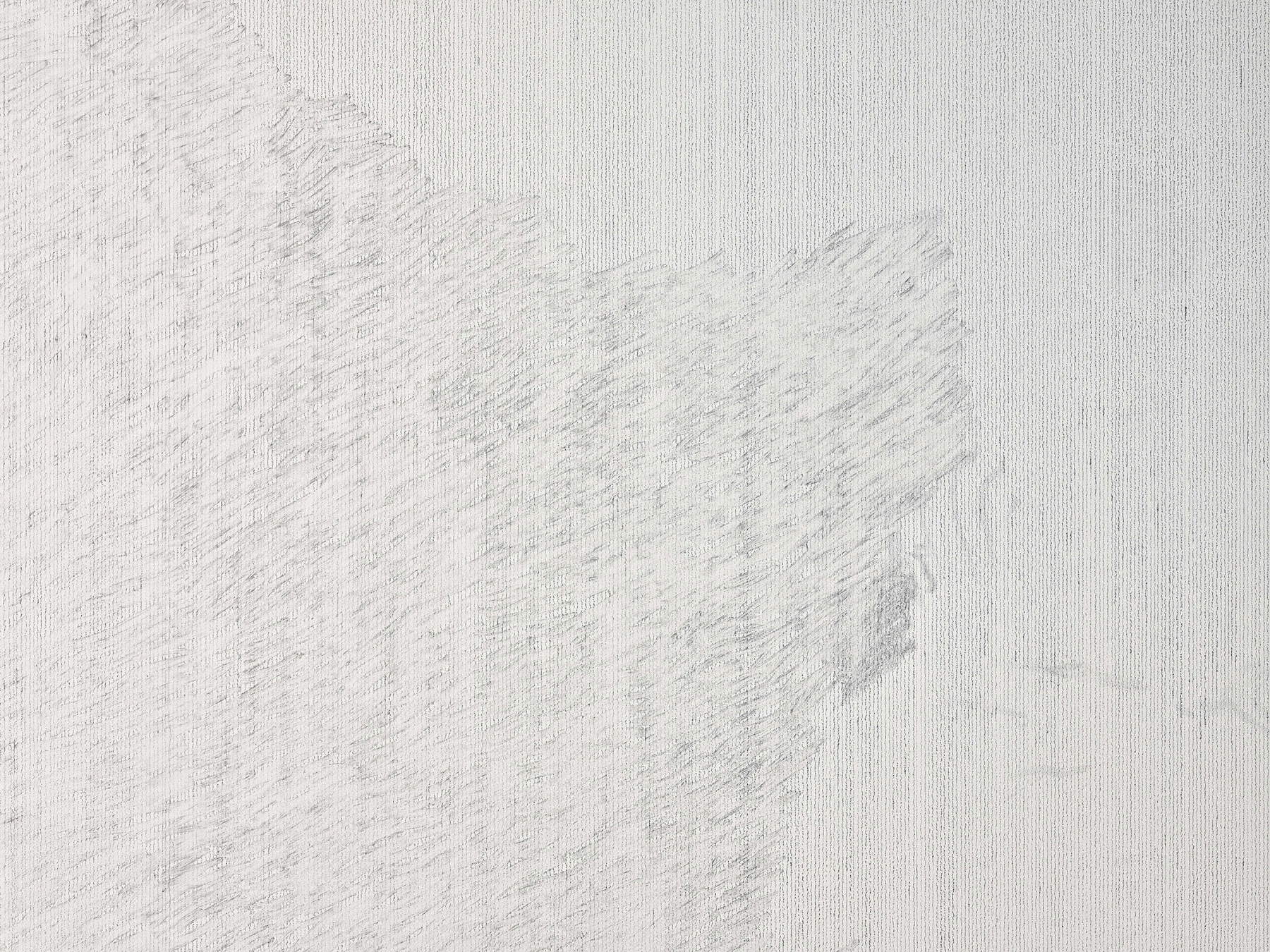
For example, in the work *Revenir* featuring the benches in Vernier, there are enlarged fingerprints: Whose are they, and why did you choose to explore this direction?
For this project—and this is an exception—I used my own fingerprints. When greatly magnified, they become a landscape of organic lines and can evoke tunnels dug by worms or insects. The lines spill over the bench and seem to extend all the way to the next one. In addition to embodying the idea of wandering, *Revenir* (an anagram of *Vernier*) questions the role of seating in public space. A bench is never just a place to sit; it also encompasses the journey that leads to it and the one that departs from it. The fingerprints, milled into the wood, create a visual link between the different benches, trace a fictional route through the landscape, and connect diverse spaces within the city. Marking these benches with my fingerprint is also a way to highlight the ambiguous status of this object, situated on the threshold between public and private space. It is a place that is shared, but which one also temporarily claims as one’s own.
Your work also incorporates objects such as deformed bicycle wheels—and thus unusable for their usual purpose—or stools with wobbly legs... Are these found objects? What significance do you attribute to the way you arrange them in space each time? More generally, what role does the spatiotemporal dimension play in your work, and how do you manage it?
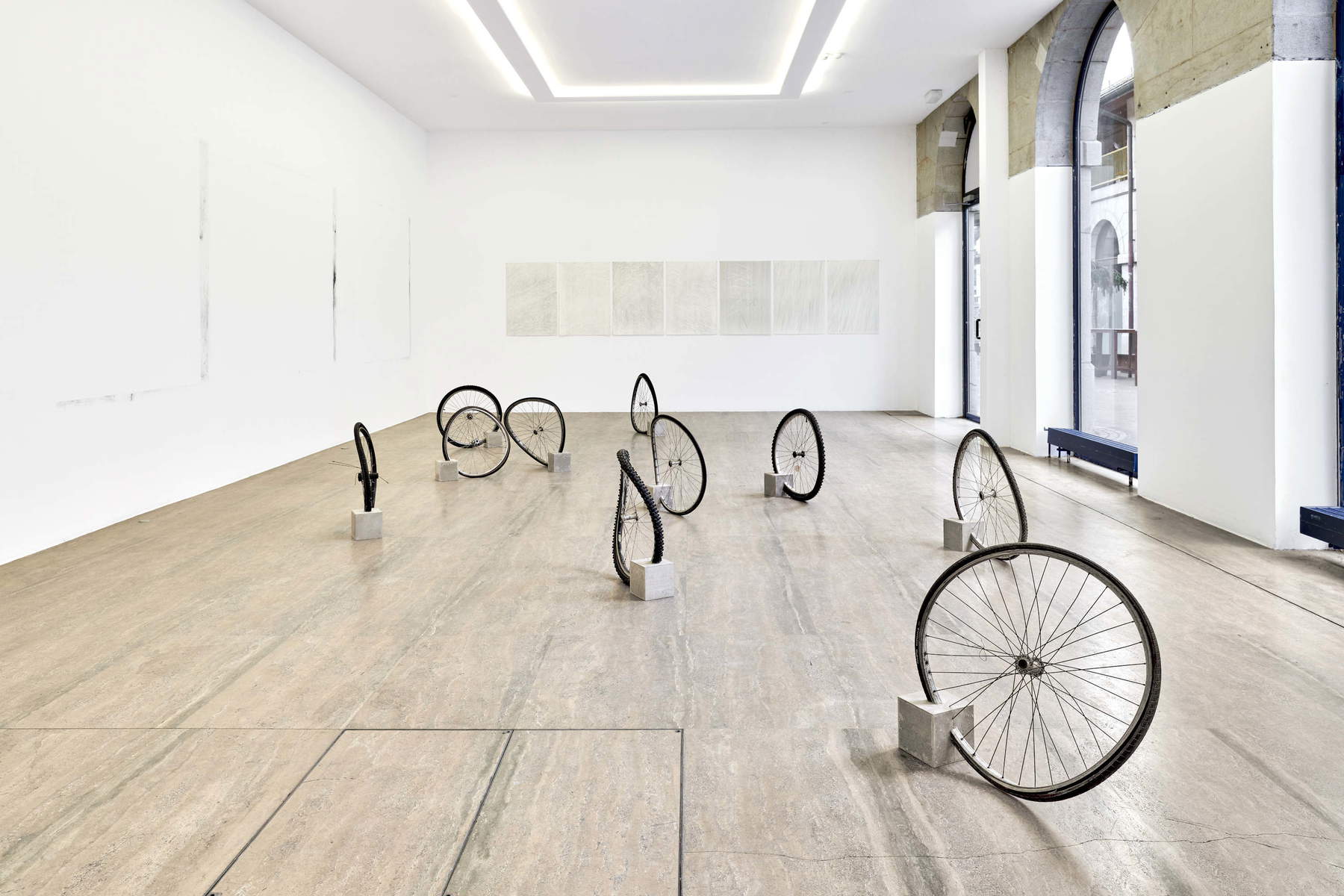
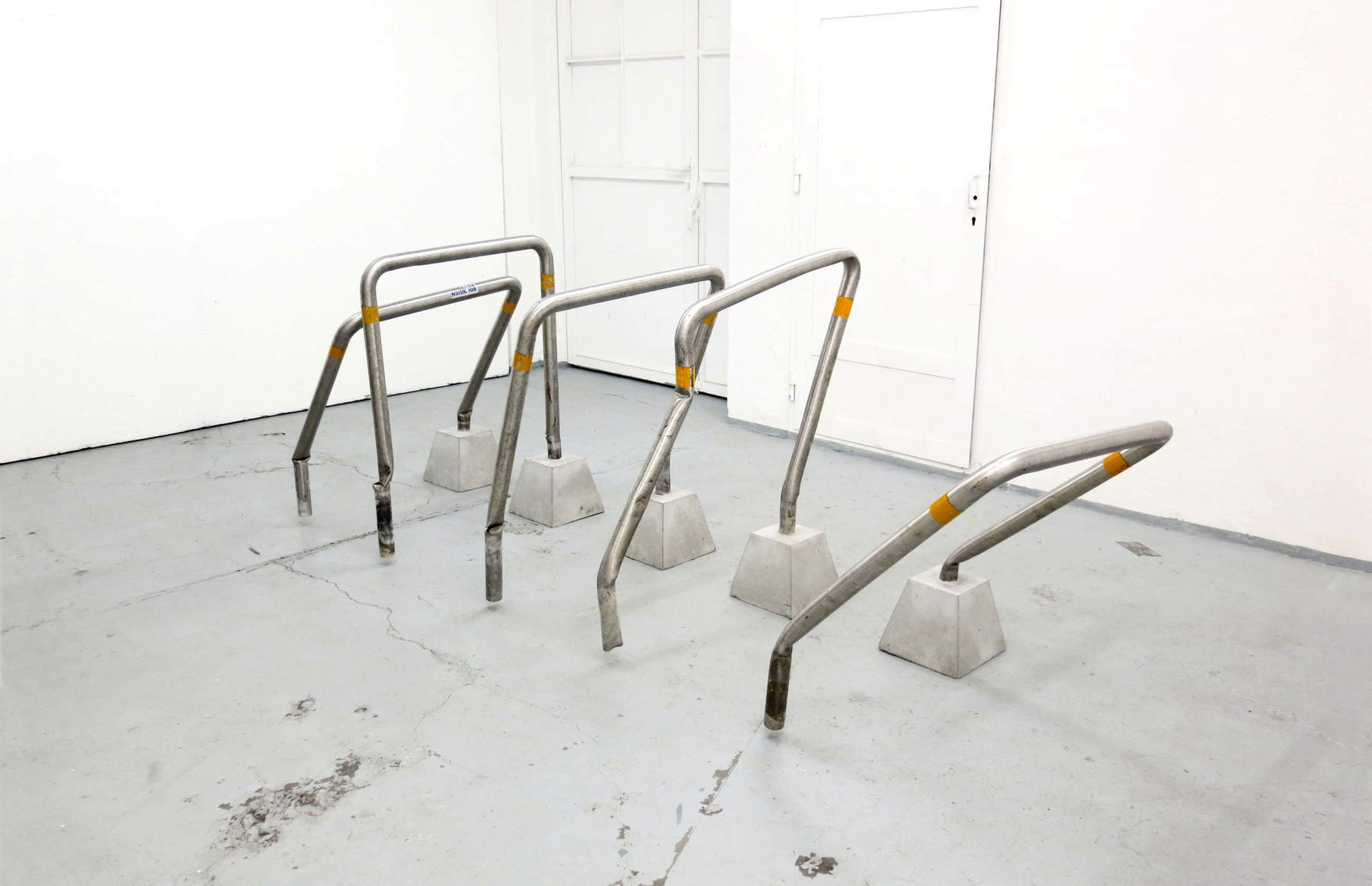
It varies, but most of these objects come from junkyards or recycling facilities. This is the case with the barriers, bicycle wheels, or other elements from public spaces. What interests me is that they were designed to perform a very specific function. Their geometry is, first and foremost, one of efficiency. Then an impact, wear and tear, or an accident disrupts this initial order. These deformations suddenly give them a singularity, almost an identity. I see this as a way to destabilize a standardized system. I sometimes add a concrete base to these deformed objects. It restores their verticality, but this regained stability remains ambiguous. It acts almost like the memory of a lost authority. The stools in the “Public” installation are part of a slightly different approach. I collected about forty identical stools before deforming them myself. The result is objects that end up resembling small animals, if not strange insects. They remain usable, but their balance becomes precarious. It is the visitor’s body that stabilizes them. The installation exists in various ways: as a landscape of objects scattered throughout the space, but also when it is activated—the moment visitors take possession of the stools, move them around, and sit on them to view the exhibition from their chosen vantage point. More generally, I consider these sculptures to be drawings in space, which extend and engage in a dialogue with the drawings hanging on the walls. They explore the same concerns: lines, structures, and sudden deviations. I like to think of an exhibition as a large drawing. The space becomes a blank sheet of paper on which I compose using rhythms, tensions, and clusters of objects, but also using pauses and empty spaces.
When you conceive an exhibition, are you interested in the idea of staging the work?
It seems to me to be absolutely fundamental. Starting with the same set of works, you can create an infinite number of different exhibitions. The way the works are arranged in the space influences how they’re received and reflects a specific intention. I create numerous scale models before every exhibition. Yet there are almost always major changes before the opening, once the space has delivered its verdict.
Warning: the translation into English of the original Italian article was created using automatic tools. We undertake to review all articles, but we do not guarantee the total absence of inaccuracies in the translation due to the program. You can find the original by clicking on the ITA button. If you find any mistake,please contact us.