




by Noemi Capoccia 15/10/2026



Categories: Interviews / Disclaimer
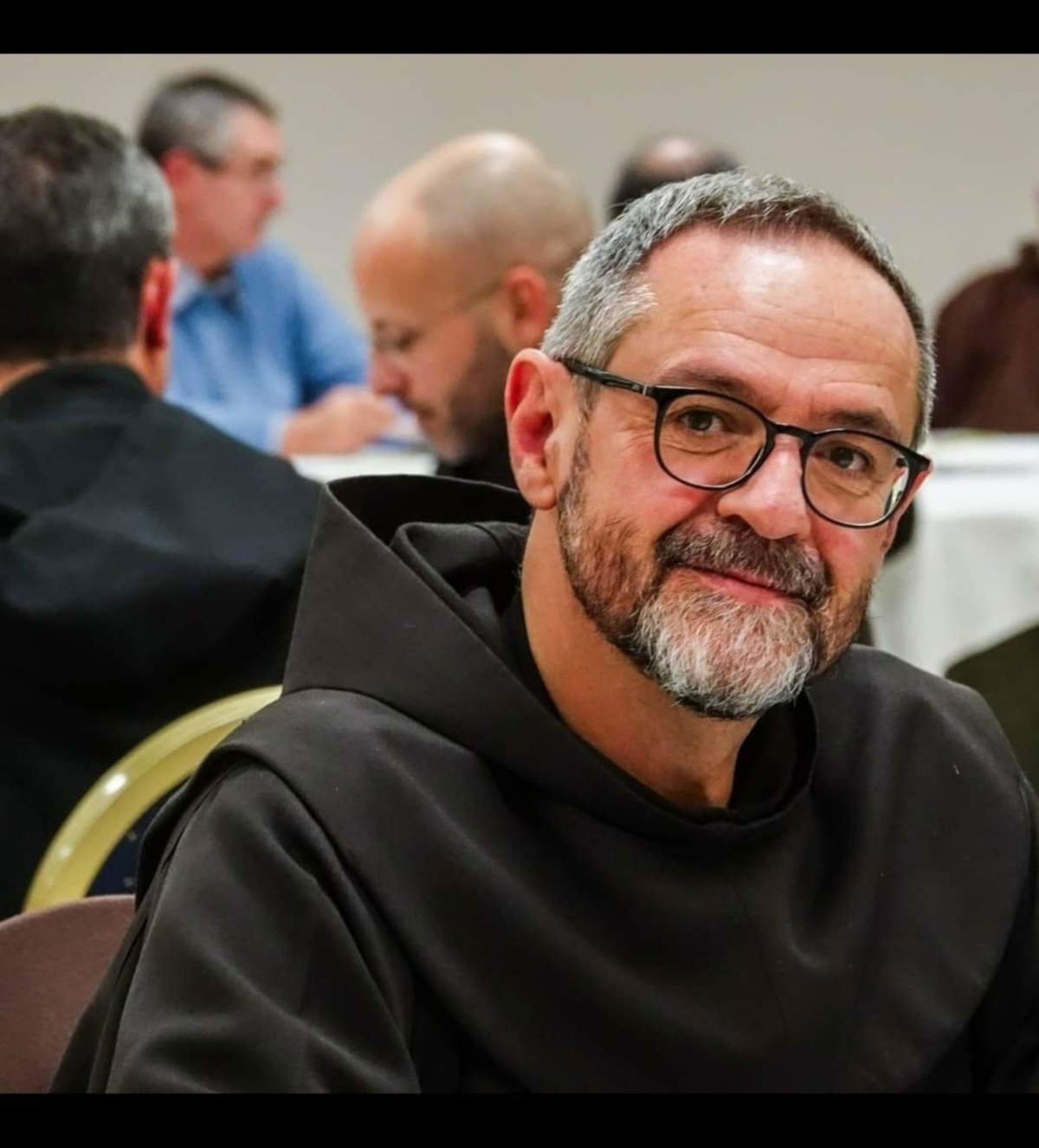
Balancing the welcome of visitors with the preservation of the spiritual dimension of sacred sites: Friar Francesco Piloni, guardian of the Sanctuary of San Damiano in Assisi and president of the San Francesco Foundation, reflects in this interview with Noemi Capoccia on the relationship between tourism and faith, the role of religious communities, and pastoral care at shrines.


Friar Francesco Piloni, a Friar Minor, is the guardian of the Sanctuary of San Damiano in Assisi and president of the St. Francis Foundation. His experience at Franciscan sites brings him face-to-face daily with an increasingly pressing issue: how to welcome the growing number of visitors without losing the spiritual nature of these places of worship. The Sanctuary of San Damiano in Assisi, linked to the history of Francis and Clare and to the composition of the Canticle of the Creatures, is a particularly significant case. The sanctuary is now a destination for a steadily growing number of tourists, yet it continues to be home to a religious community that preserves its atmosphere of prayer and keeps its original purpose alive. For Brother Francis, the distinction does not lie simply in the number of visitors, but rather in the place’s ability to offer an experience different from that of visiting a monument: silence, hospitality, the presence of the friars, the liturgy, and the opportunity to learn about the stories of Francis and Clare become tools to guide visitors toward a deeper experience. This also gives rise to a reflection on the relationship between promotion and sensationalization, on the organization of access, and on the need, in some cases, to set limits to protect the very nature of the sanctuary. This is an issue that concerns San Damiano, but also major sites of Christianity such as St. Peter’s and the Holy Sepulcher. In an interview with Noemi Capoccia, Friar Francesco also addresses the role of pastoral care in tourism and at shrines, the need to build a network among Franciscan sites, and above all, the possibility of transforming religious tourism into an experience capable of leading the visitor from a mere acquaintance with a place to a personal encounter with its message.


NC. The Church of San Damiano in Assisi is first and foremost a place of faith, but today it is also a tourist destination. When does the influx of visitors risk overshadowing the spiritual dimension of the place?


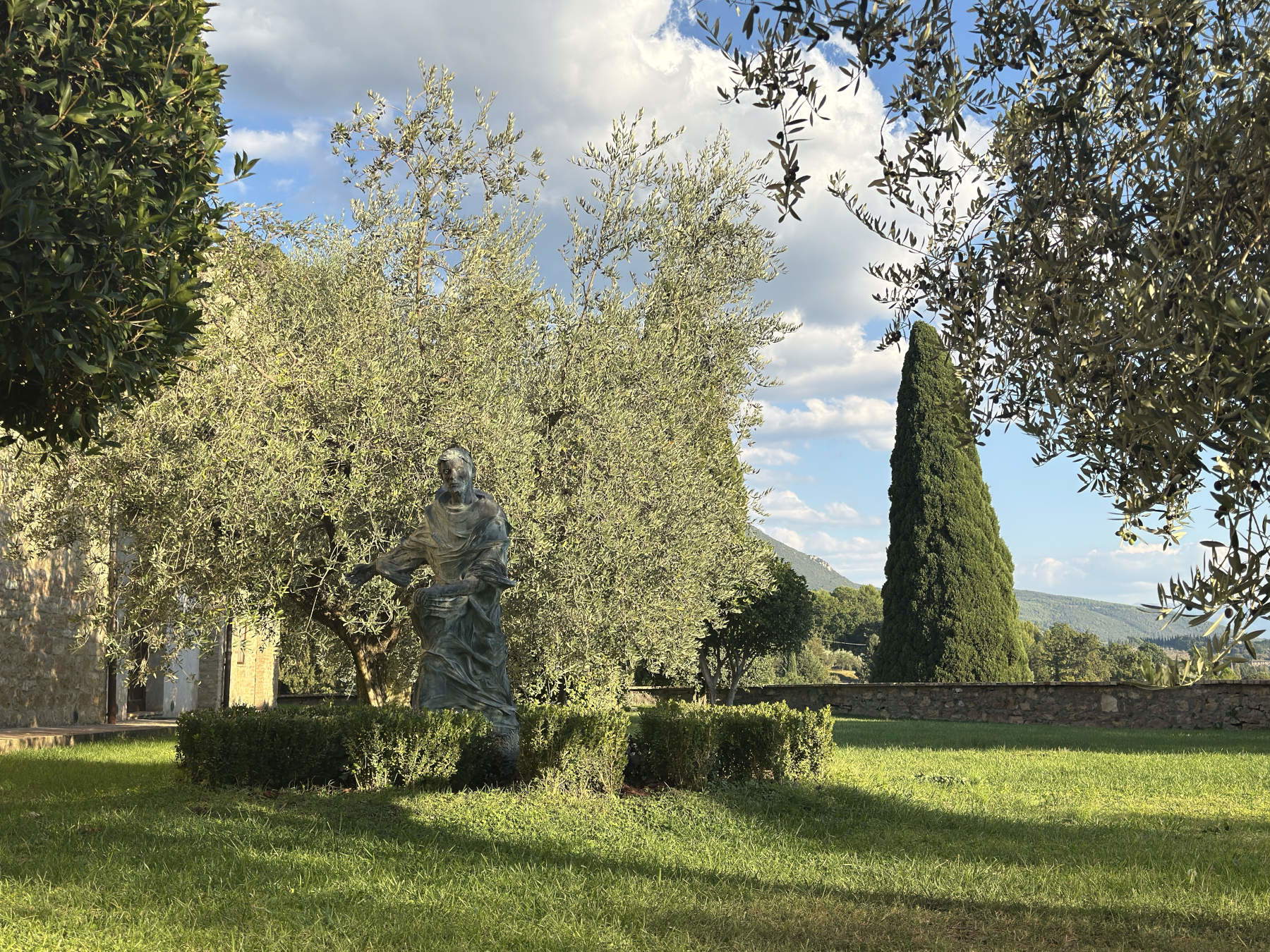
FP. Certainly, in recent years we have seen a marked increase in the number of visitors to our sanctuary of San Damiano. In any case, even though the number of visitors has increased considerably, the spiritual dimension of the place has remained intact, thanks in part to the setting in which San Damiano is immersed: the greenery, the olive trees, and the surrounding landscape. People arriving at the sanctuary—whether from the parking lot, which is about 200 meters away, or on foot along a path of at least one kilometer—inevitably enter a different realm. This walk leads them toward a more serene and peaceful atmosphere. The presence of greenery and such an intense and evocative landscape prepares them to experience San Damiano as more than just a tourist destination. It is a first step toward a realm of silence and listening, almost an encounter with something that, at first glance, may seem small and simple, but which then reveals itself to be much greater in the resonance it has on a personal level. Certainly, then, the place itself facilitates the transition from the simple tourist experience to the possibility of listening and encountering something deeper, beginning precisely with the environment surrounding the sanctuary.


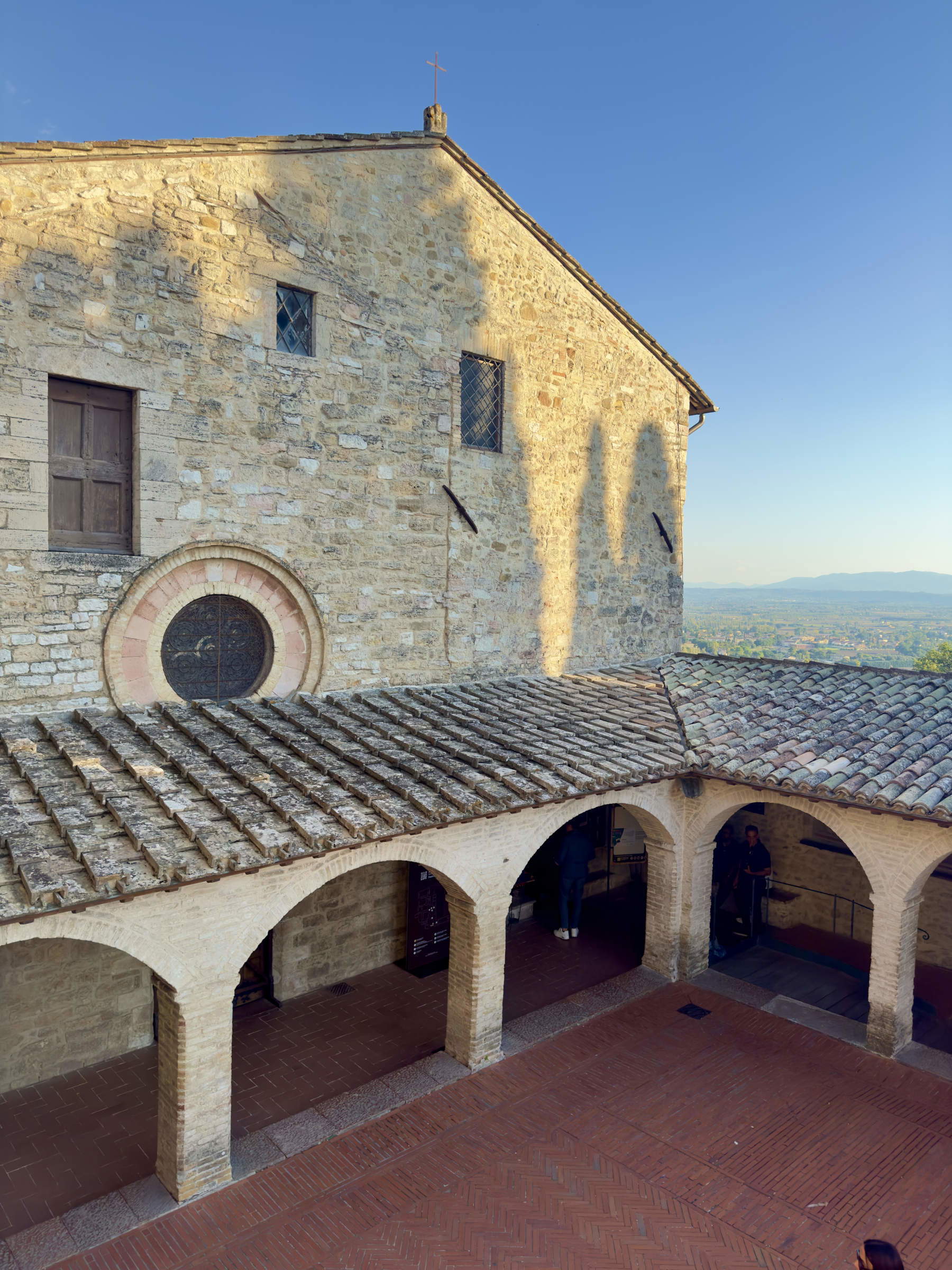
Many visitors come to San Damiano to see a place linked to the story of St. Francis and the Canticle of the Creatures, but not necessarily to experience it as a place of prayer. How important is it for those who enter here to be aware that they are in a place that is still alive from a religious perspective—and not merely standing before a monument?
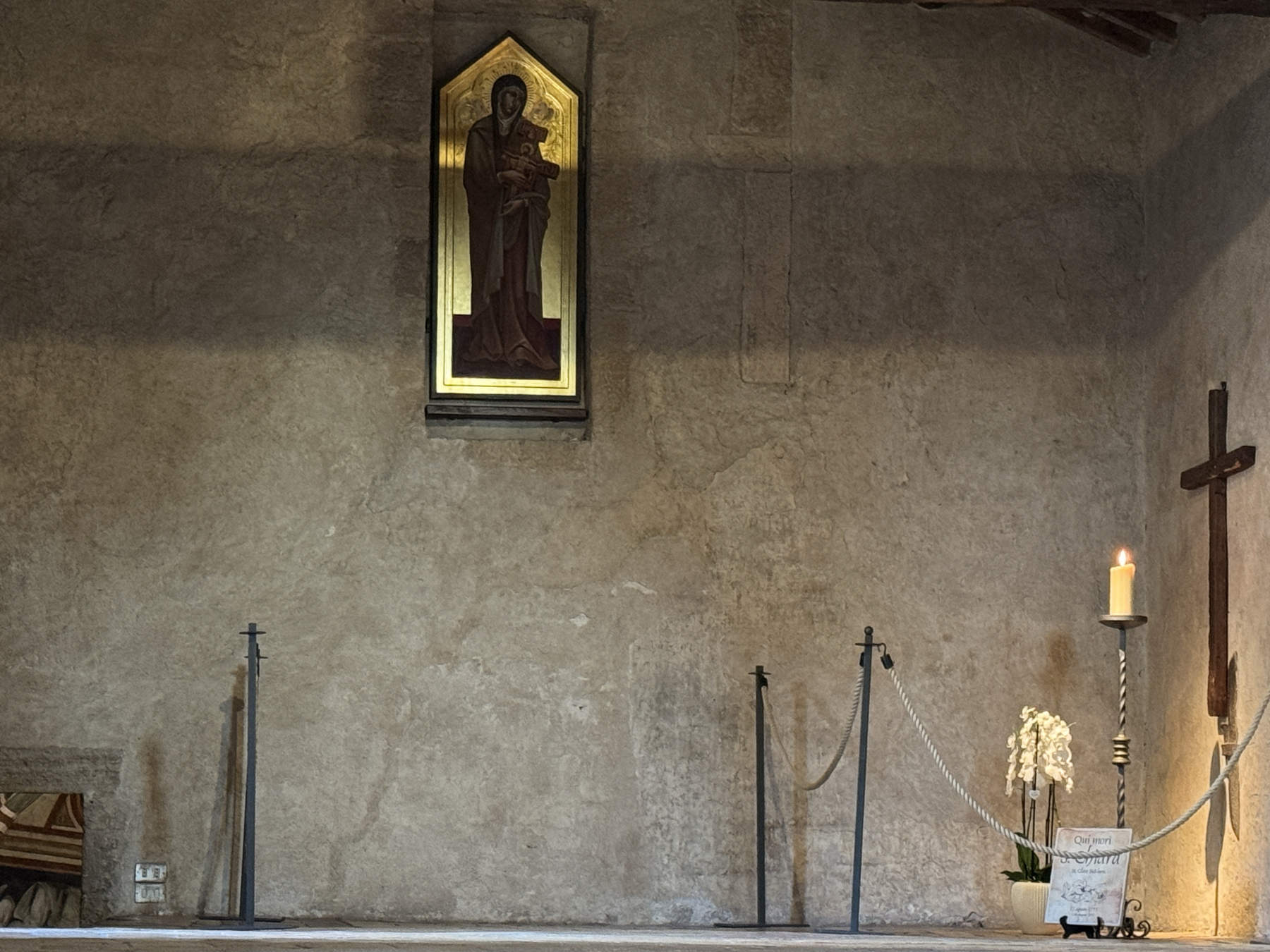
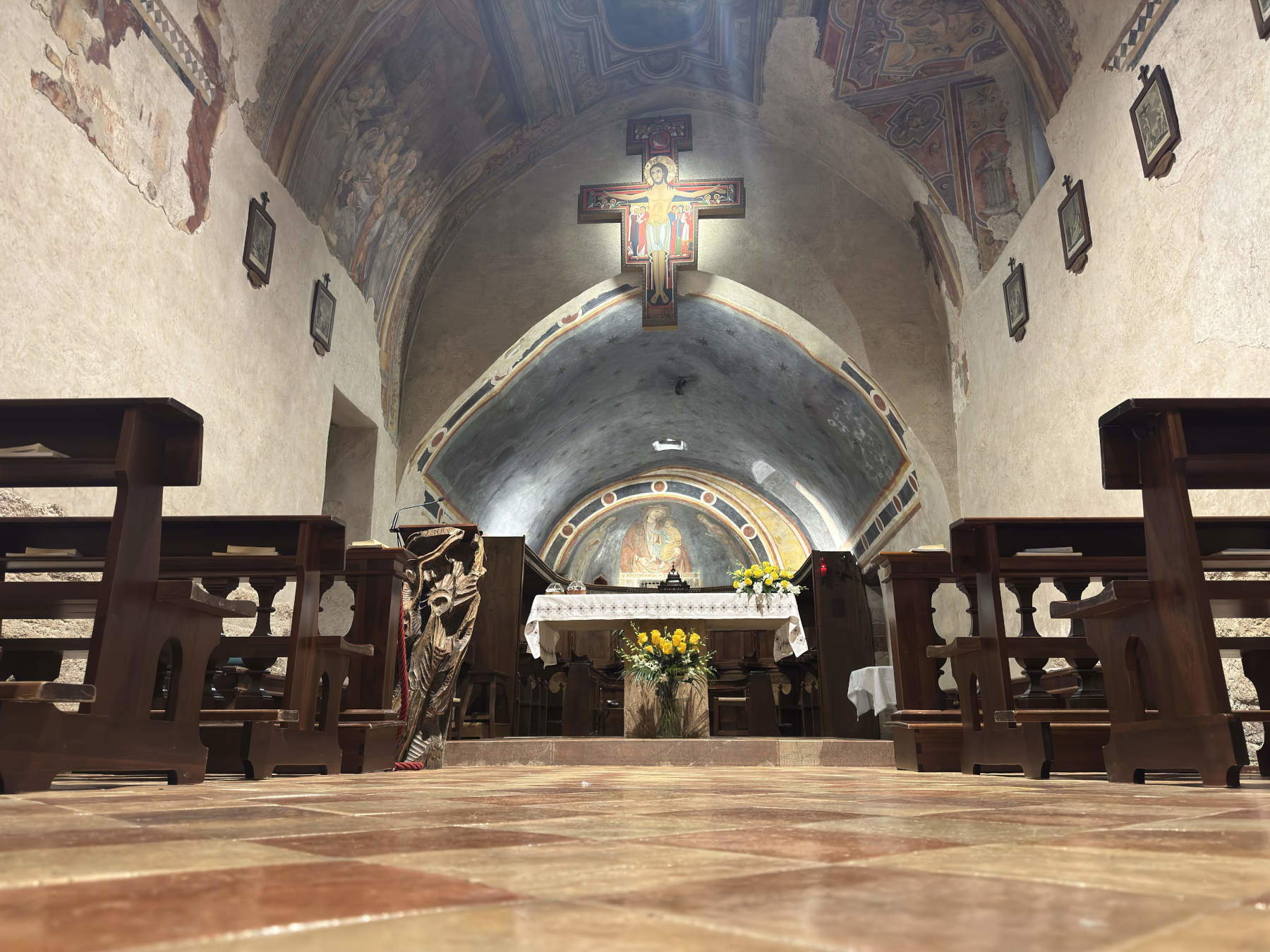
It is essential to understand that a sanctuary, generally speaking—as traced back to Sacred Scripture and the Bible—is a place where God manifests Himself. Even those who are distant from prayer, upon arriving at San Damiano, can sense the invitation to enter into a deeper dimension. There is a sign calling for silence and respect for the place: not everyone notices it, but many, nonetheless, spontaneously adopt this attitude. What, then, becomes extremely important for preserving San Damiano as a place of encounter with the story of Francis, Clare, and the Canticle? First and foremost, the constant presence of Franciscan friars and sisters who are able to welcome visitors. A welcome that begins with a simple greeting and a willingness to guide visitors through the site and help them understand it, so that they immediately grasp that San Damiano—beyond the monument itself—was a pivotal place in the lives of Francis and Clare. Clare would live there for forty-two years. For Francis, however, this place was especially significant at the very beginning of his journey, starting with his encounter with the Crucifix: those open eyes that met his own and sparked in him a cry of trust, a plea for help from the young Francis. San Damiano is also the place where the Canticle of the Creatures was composed. Thus, the welcoming atmosphere and the opportunity to hear the story of Francis and Clare become essential. Through this story, people are given true keys to wisdom, enabling them to connect these two witnesses with their own lives, with their questions about meaning, and with the search that each carries in their heart. With that darkness that was present in Francis and that, very often, also dwells in our own hearts, but also with that deep desire for praise and gratitude that springs from the Canticle of the Creatures. A warm welcome, then, but also guidance and, above all, keys to wisdom that enable visitors to experience the places they are visiting as places capable of forming them. In the guided tour led by the friars, there is not merely information, but information that leads deeper, toward a process of formation, so that a transformation may take place on a personal level. And many leave this place recognizing its absolute uniqueness. Why? Because San Damiano has led them toward interiority and depth, helping them to pause and set aside that risk of superficiality and haste that often causes us to miss the most important encounters with our deepest selves.
In your opinion, how can visitors be educated about the sacred without turning the religious experience into something imposed? At San Damiano, what tools, rules, or considerations are used to help those who arrive as tourists understand that they are not simply visiting a monument?
That’s a wonderful question, because San Damiano is certainly one of those places. It is a sanctuary, and like any sacred place, it does not need to impose a religious experience. Rather, San Damiano has the power to bring out a search for and a religious questioning even in someone who does not immediately consider themselves religious, but who comes into contact with the richness of the sanctuary’s languages. Every sanctuary, in fact, has many languages. There is the language of welcome, that of proclamation, that of the lived experience of witnesses such as Francis and Clare, and there is the language of the sacrament and the liturgy. But there is also the language of beauty, that of care, that of respect, and even that of the stones, which are capable of becoming the voice of all these languages. Everyone who arrives can grasp something different: some are moved by the liturgy, others by the welcome, still others by beauty, and yet others by the simplicity and humility of the stones and the places themselves. These are different elements that can strike different chords. You see, a sanctuary must speak multiple languages. One language will resonate more deeply than another, striking a particular chord, prompting reflection, raising the right questions, and creating those moments of wonder that we continually see in the people who arrive. The important thing is that the sanctuary remains open to truly speaking multiple languages, so that it can welcome everyone and allow each person to find in these places a sense of welcome, anticipation, and the feeling of being understood. To help those arriving as tourists understand that they are not simply visiting a monument, the first thing to consider is precisely how the sanctuary is organized. We have set visiting hours: from 10 a.m. to 12 p.m. and from 2 p.m. to 6 p.m. during the summer, while in winter, from 2 p.m. to 4 p.m. Why these hours? Because this alone conveys that a community lives here whose priority is prayer. The sanctuary adheres to these hours, while the church remains open nonetheless. Even through this simple organization, the priority of the place is communicated: the encounter with mystery, with the divine, with God. Another striking feature is that the hours of the day are marked by the bell, which calls people to prayer and silence. It is a very simple instrument, but it immediately helps people attune themselves to the spirit of the place. Care is also taken in organizing visits. Through the website, groups can be booked in advance to avoid overcrowding and to spread them out throughout the day. These are simple considerations, but they help maintain that mutual respect, that silence, and that sense of welcome that make every person feel truly welcomed by this place.
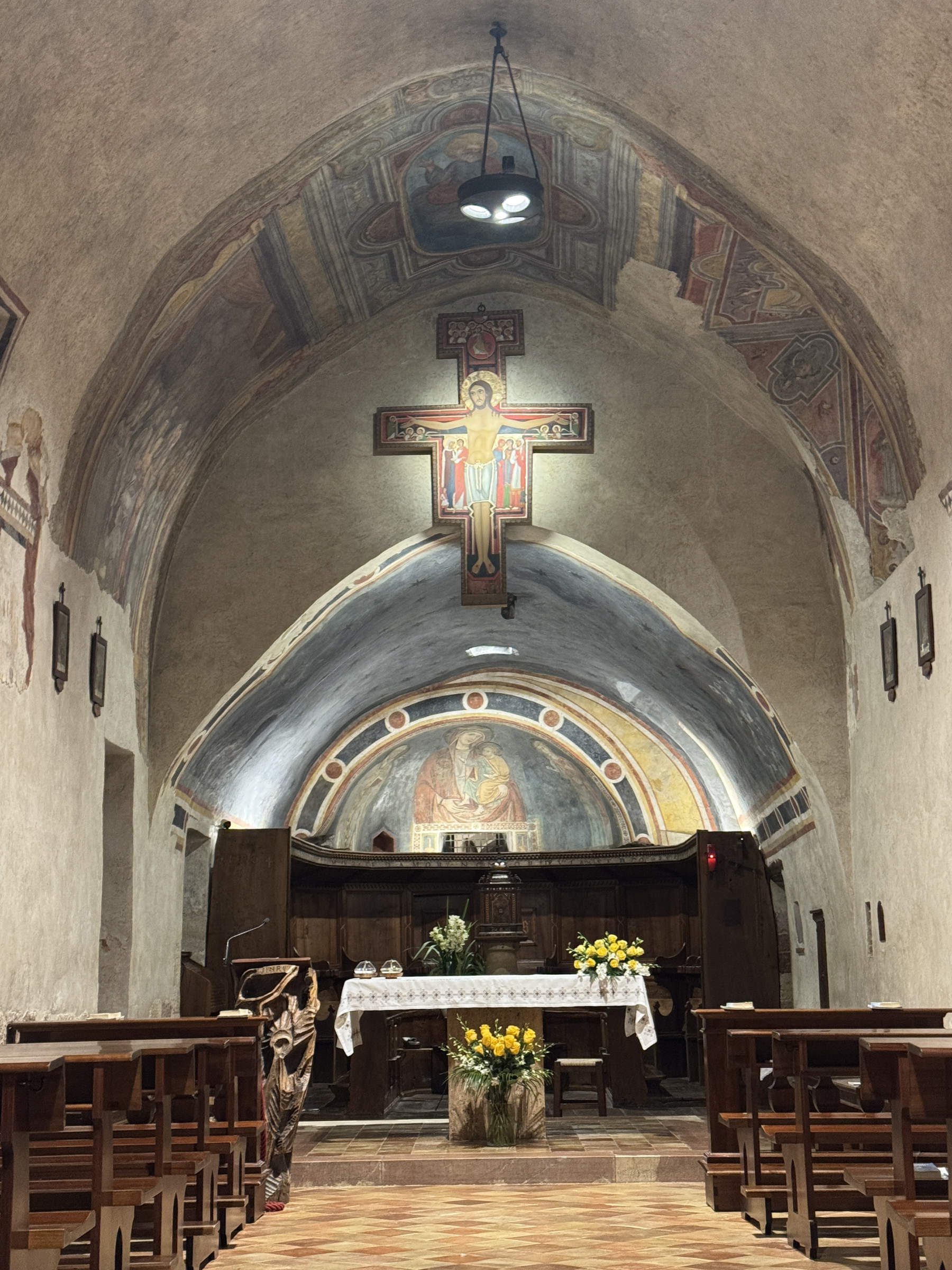
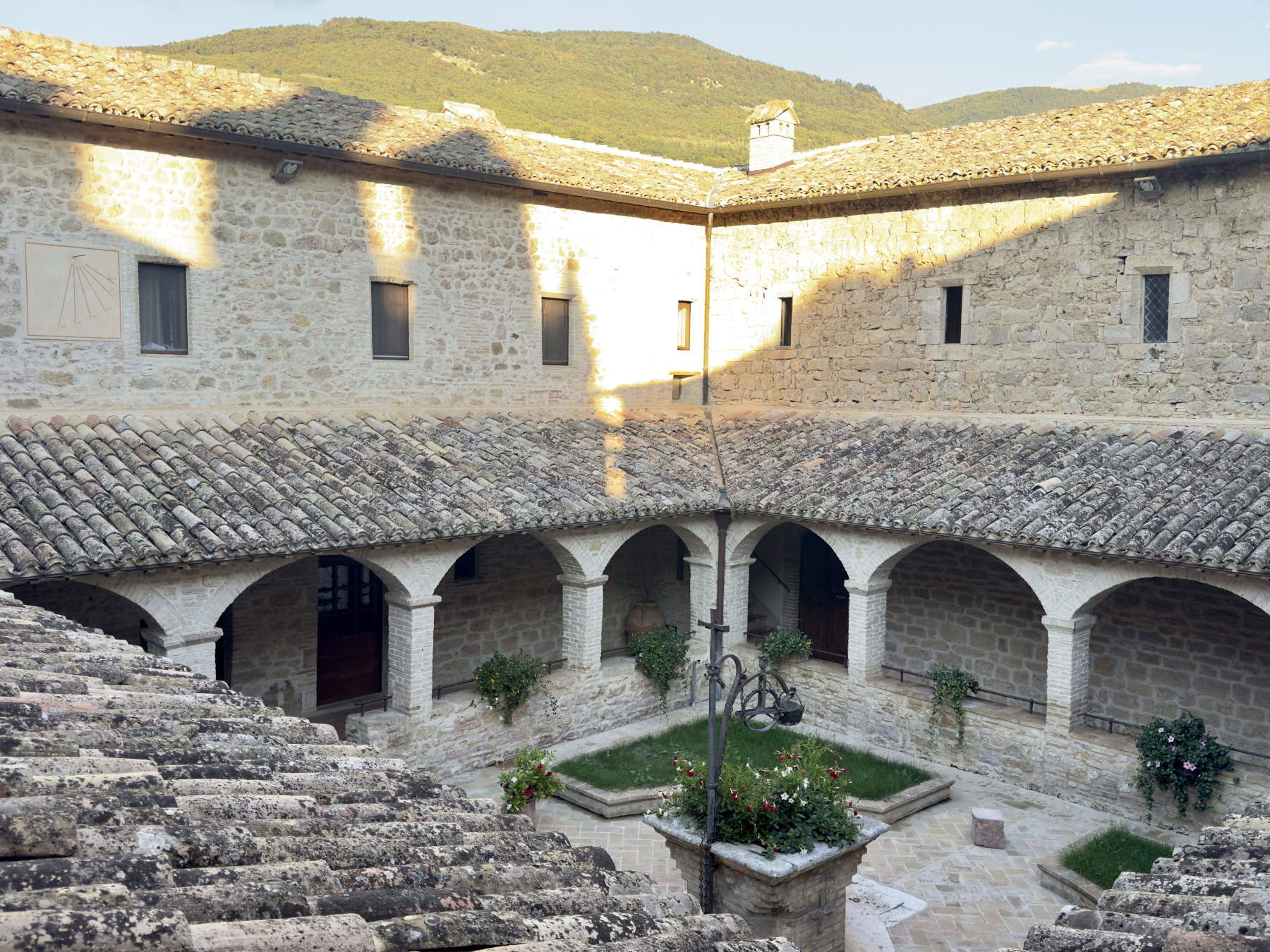
When a place of worship also becomes a tourist destination, the way it is experienced and perceived inevitably changes. To what extent can a sacred place be promoted without turning it into a tourist product? And where, in your opinion, does the line between promotion and sensationalization lie?
We’re very careful about this. San Damiano, like many other shrines where I’ve lived—both here and in Jerusalem—has one fundamental characteristic: it’s a community that lives and resides in the place. If it is left solely in the hands of volunteers—who are, of course, a precious help and a gift—or of outsiders and mere caretakers, there is a real risk that the place will become nothing more than a tourist destination, a monument, or a museum. The difference lies precisely in the line between promotion and sensationalization. What makes the difference is the community: it is the people who welcome visitors—the friars and those who live there—who care for the place and make visitors feel part of the sanctuary’s message, charism, and mission. A caretaker ensures, from an administrative standpoint, that everything runs smoothly and that the site is maintained in the best possible way. The community that inhabits it, however, brings it to life: it gives it a soul. It bears witness to the message and charism preserved by those places, those rooms, and those stones. By moving through them, the community reveals their vitality—that is, the life that was lived there—and connects that life with the people who pass through those same spaces today. In this way, it creates a bond between the past and the present. The balance, therefore, certainly lies in bringing these places to life at every level, keeping in mind the different “languages” I mentioned earlier. This process of bringing a place to life must not become a spectacle, but rather the transmission of a message—of a charism—that those living stones preserve. And to convey it, they need our presence, our physicality, our testimony, and that vitality that once touched us as well—that moved us and continues to move us. And it is precisely this emotion that can become a gift for those who arrive.
There is a paradox: to keep a place like San Damiano alive and protected, we need resources, attention, and therefore also visitors; at the same time, too many visitors can compromise its silence, its spirituality, and its very identity. If you had to pinpoint the balance between openness and protection today, where would you place it?
I would say that this is an issue we often address as a community, in our chapters, precisely to understand how we can best serve the sanctuary. From the Gospel I have learned—and we often remind one another of this—that we must not use a place like San Damiano for our own purposes, but rather serve San Damiano. And serving San Damiano means pausing, assessing how things are going, and, when necessary, taking steps forward: organizing the arriving groups with ever-greater care, while also remaining open to individual visitors. It means, for example, not delegating explanations entirely to machines, but ensuring that the encounter continues to be preserved. The encounter that took place between Francis and the Crucifix of San Damiano, and that between Clare and all the people who came here knocking to ask for prayers—it is precisely this dimension of encounter that we must preserve. This is why we are not afraid of the increase in visitors. It becomes a problem only if this increase is not accompanied by an offering that is continually rethought and refined. Things must be initiated, supported, and then evaluated. Maintaining the balance between openness and protection is therefore part of good management, which becomes even more necessary during periods of greater influx. It also means having the freedom—when many groups ask to visit—to say that the schedule is full and that there would be no staff available to accompany and guide them on their tour of the shrine, perhaps suggesting other days or times instead. Hospitality must always remain an option, but we must also explain that the site is small and carries a message that can be fully grasped only through respect for the place itself. We see that people understand all of this very well. In fact, many experience precisely this care and attention—not as a rejection, but as a form of care shown toward them. Because our desire is to offer them the best possible experience of a spirituality that needs space, that does not need haste, but rather time and the opportunity for encounter. An experience that can truly restore the sense of a lived-in space and time, yet always in keeping with the message of Francis and Clare.
Think of the Church of the Holy Sepulcher in Jerusalem, St. Peter’s Basilica in Rome, or the Cathedral of Pisa: places with a very strong religious and spiritual identity, yet traversed daily by large crowds of visitors. How do we prevent the tourist aspect from ultimately overshadowing the sacred one?
The risk is enormous, and I am well acquainted with the realities of both Jerusalem and Rome. For me—having accompanied pilgrims to Jerusalem twenty-four times and countless times to St. Peter’s and other sites in Rome—it is essential to consider everything that precedes the pilgrimage, the pilgrimage itself, and what comes afterward. In other words: the before, the during, and the after. I believe that a genuine pastoral approach to tourism—whether it involves slow tourism or a more fast-paced form—requires preparation. The fundamental keys must be provided before the experience, because they require encounter, information, and formation. When we simply turn these places into museums or monuments that are beautiful to look at but then remain insignificant in people’s daily lives, we have already lost an essential part of their purpose. I am convinced, however, that it is essential to ensure that what we visit has the capacity not only to touch us externally but also to touch us internally. And these keys must be offered beforehand, by connecting the message and meaning of that place with what people actually experience in their lives. If I go to St. Peter’s, for example, it is clear that the artistic dimension is an important language. But if I limit myself to that and do not explain who Peter was, what his experience was, who he was before arriving in Rome, what happened in Rome, and how, precisely from Rome, his experience then opened up to a universal dimension, I will have used only one of the possible languages. Instead, all forms of expression must be used, and we must also prepare for the time leading up to the experience. The night before, for example, we can outline the stages of the journey and the objectives of the pilgrimage. Precisely because these are religious sites, it is important to arrive prepared for their spiritual dimension as well. Upon arrival, it can be helpful to set the mood by reading a passage from the Gospel that recalls the events that took place there or, if visiting a shrine, by recounting the story of a saint, of Mary, or of the people associated with that place. And then set aside a personal space—even a small one—where each person can say a prayer, experience a moment of silence, seek an encounter, or simply leave a question for that place. The shrine is a place of grace, the place where God has revealed Himself. And that grace can answer our questions. Leaving a question there—entrusting it, offering it—means giving these places the opportunity not only to be visited, but also to, in turn, touch our deepest search for truth, meaning, and the future.
Given the transformation of many places of worship into major tourist attractions, is the Church asking itself enough questions about the risk that sacredness is gradually being subordinated to the demands of tourism? And, more fundamentally, do you think there is any reflection on which places should be protected—even by limiting access—rather than viewing openness to visitors as a value in and of itself?
Specifically, the Church has a pastoral ministry dedicated to tourism and shrines. The directors of these shrines meet regularly and work precisely to offer experiences capable of increasingly transforming visitors from tourists into pilgrims: people who arrive at these places and receive a message, a meaning from them. In our case, for example, we meet regularly—several times a year—as the directors of the shrines in Central Italy, where there are several Franciscan shrines. We strive to create a network and develop itineraries so that those who come to San Damiano can then find something different in Greccio, La Verna, the Hermitage of the Carceri, or the Porziuncola. The goal is to identify what makes each place unique, to recount the episodes and aspects of Francis’s experience specifically linked to that shrine, and to avoid repeating the same things at every site. In this sense, our networking efforts are expanding more and more. We’re coming from a period when everything operated in rather siloed compartments; now we are increasingly moving from silos to interconnected systems. The program, however, must become not only substantial but also capable of offering—through a new pedagogy of the shrines—something that enriches visitors not only in terms of knowledge but also in terms of meaning, the Gospel, and spirituality. Because there is a profound thirst. Many of the people who come to the shrines have a great thirst that is not necessarily—at least at first—a thirst for God. It is a thirst for truth, for something that is authentic and honest. They thirst for credible testimonies—and, precisely for this reason, ones that can be accepted and believed. They need points of reference. Then, by encountering the saint, his life, and his testimony—by encountering the Gospel or the Virgin Mary—they can come to delve more deeply into themselves as well. Because those places have given them something precious in their lives. There is also an important consideration regarding which places should be protected, even if that means restricting access. But we must be very honest: if a space can accommodate a hundred people, I cannot expect to let a thousand in just because I want to welcome them all. It is a matter of respect for the place and the message it holds. It’s a bit like having a 100-square-meter apartment: we all understand that we can’t throw a party for 300 people. The same applies to a shrine. We need to help people, educate them, and train them to interpret reality. This doesn’t mean we shouldn’t welcome them. It means recognizing that this place belongs to them as well and that, precisely for this reason, they also have a responsibility to care for it. When everything becomes excessive, when there’s always “just a little more,” we risk trivializing the message itself. I therefore believe that we must increasingly have the courage to be men and women capable, in the places entrusted to us, of saying: “This is so precious that only these people may enter today, while others will come at another time.” This, too, is a way of respecting the care of the place and of carrying out pastoral ministry that is not insatiable—one whose sole objective is not to increase attendance and, consequently, financial revenue. Because otherwise, we end up showing a lack of concern not only for the place but also for the person. Taking these steps rooted in reality and truth means restoring a beautiful mission to these places: offering an honest and authentic message and recognizing how important the people who visit them are—to the point of helping them, when necessary, even through discipline and regulation.
Warning: the translation into English of the original Italian article was created using automatic tools. We undertake to review all articles, but we do not guarantee the total absence of inaccuracies in the translation due to the program. You can find the original by clicking on the ITA button. If you find any mistake,please contact us.