




by Redazione 23/11/2026


Categories: Market / Disclaimer
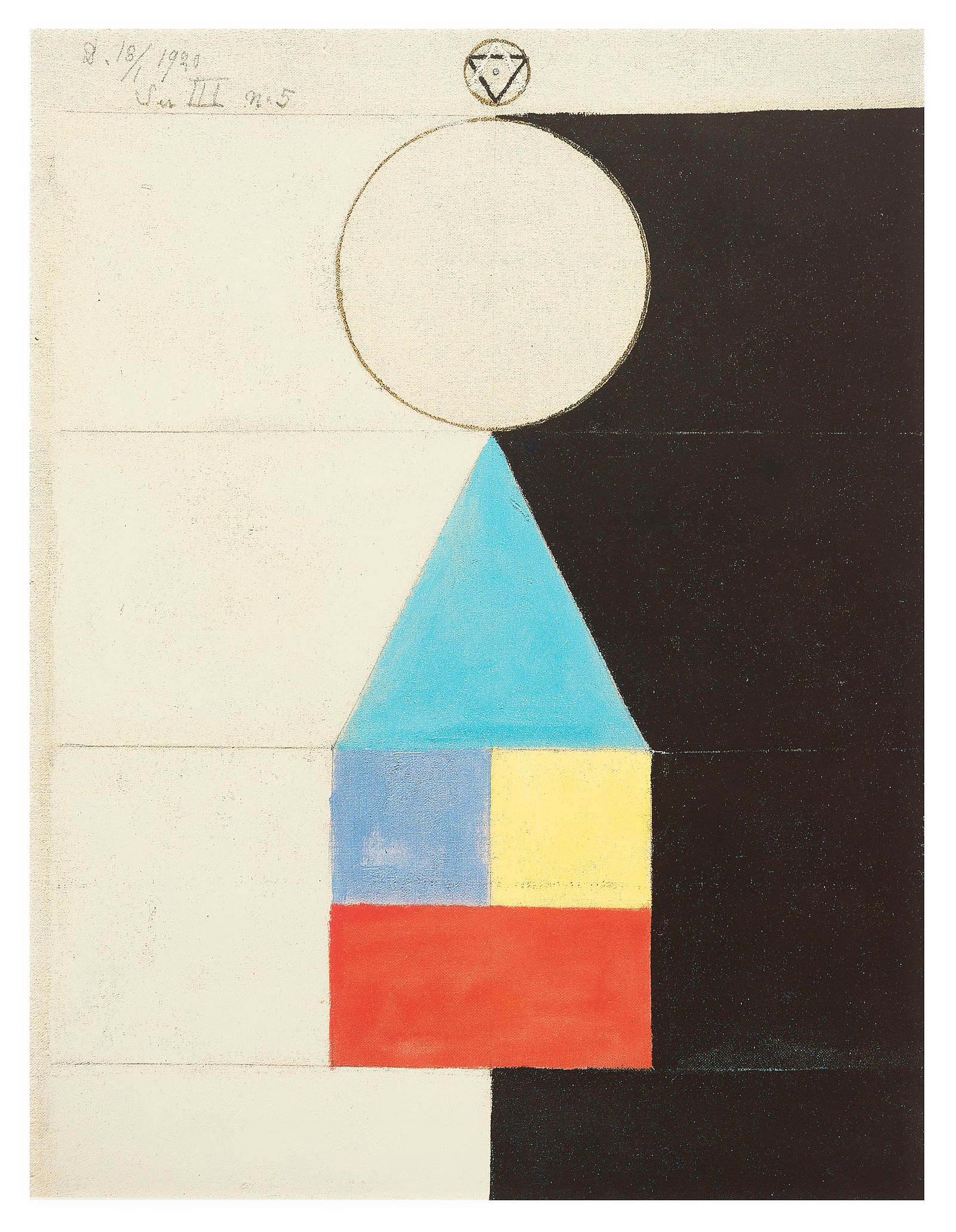
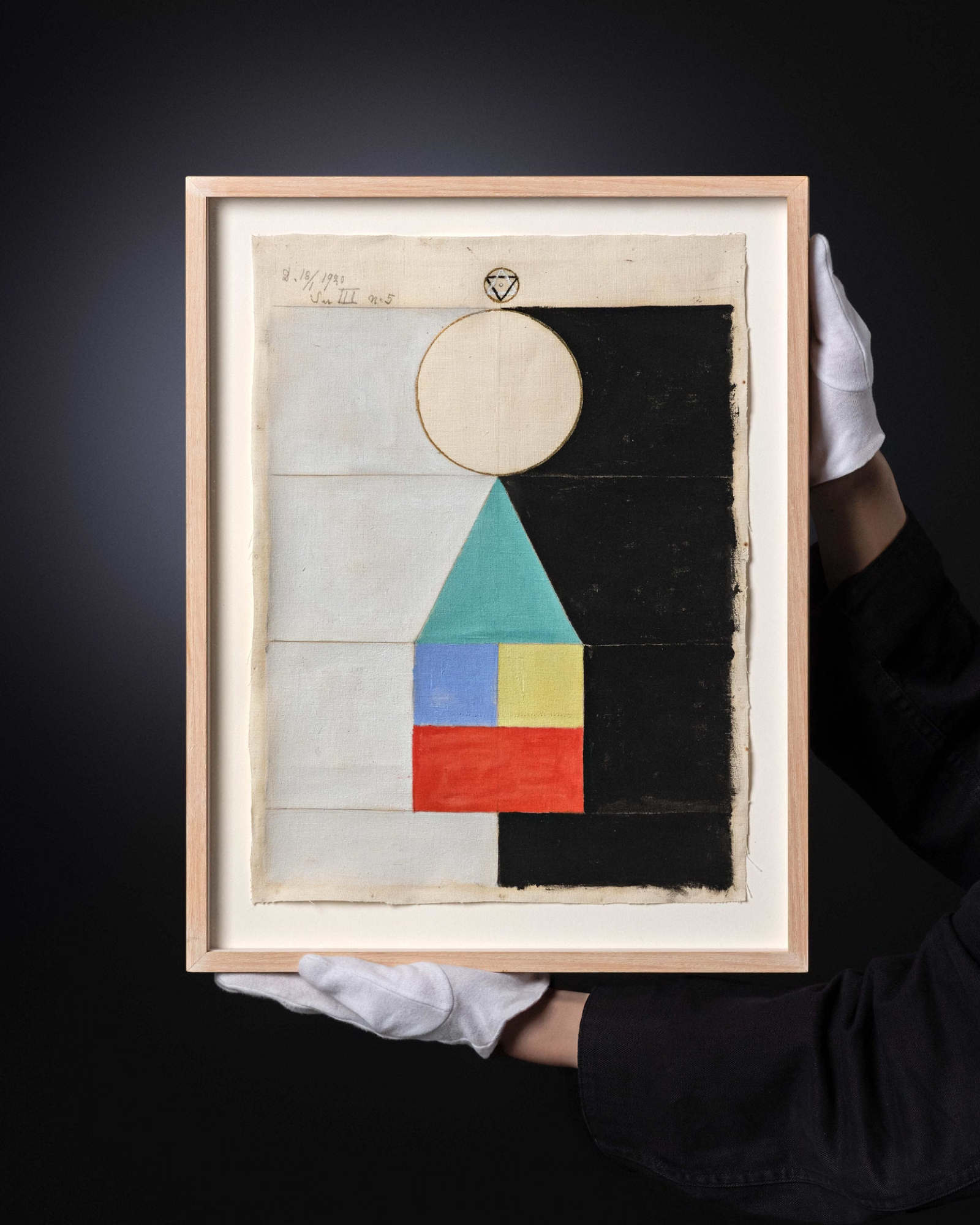
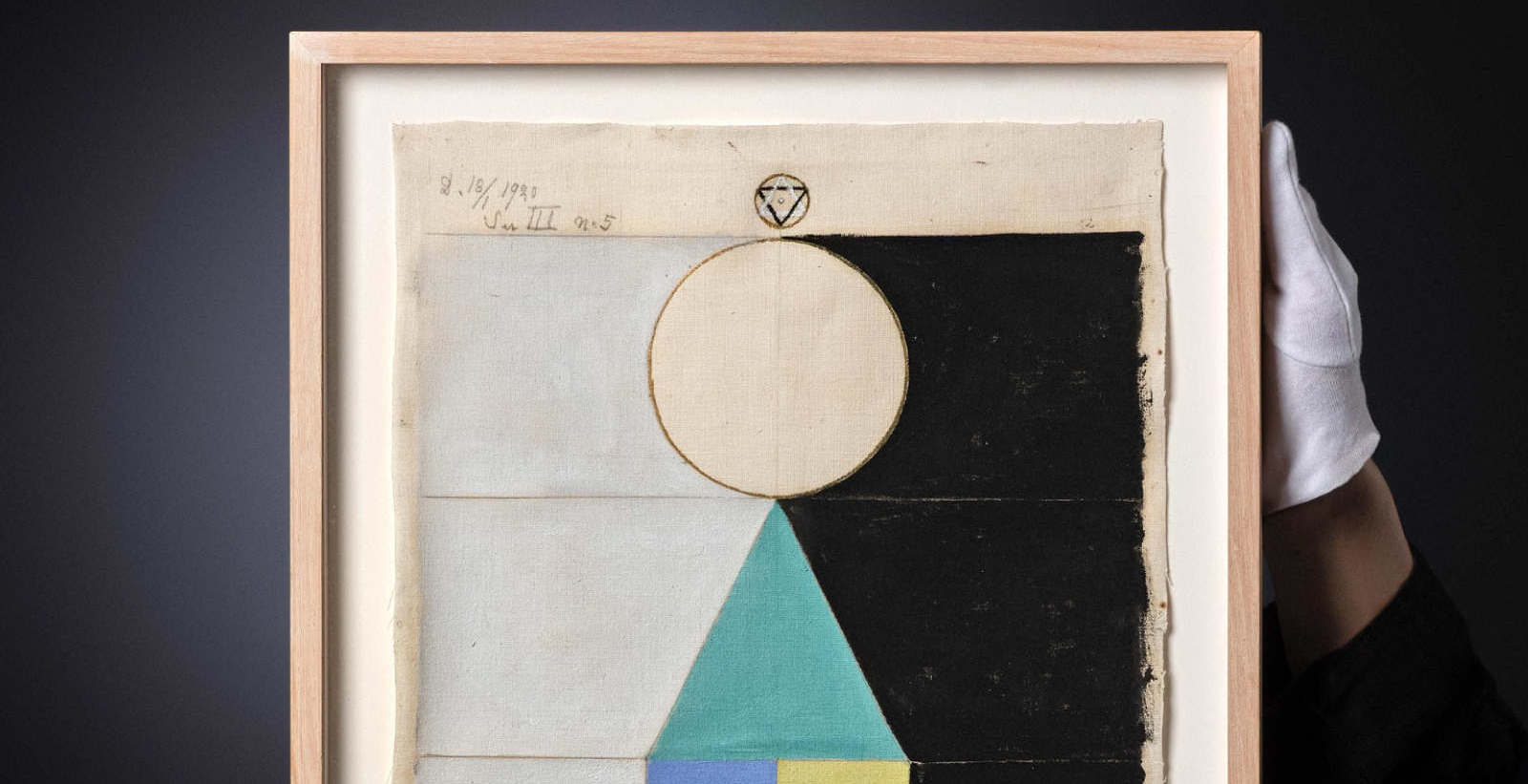
"Ser III No. 5," an abstract painting measuring 38.5 by 29 centimeters and created by Hilma af Klint in 1920, sold at Bukowskis in Stockholm for 128.9 million kronor, approximately 11.5 million euros. The estimate was 6–8 million kronor. Her abstract works had not appeared at auction for over thirty years, which also explains the extremely high price paid for the painting.

A canvas measuring 38.5 by 29 centimeters, painted in oil and graphite on January 18, 1920, has become the most expensive work of art ever sold at auction in the Nordic countries. It is *Ser III No. 5* by Hilma af Klint (Solna, 1862 – Danderyd, 1944), the Swedish painter who created abstract forms before Kandinsky but was only discovered by the general public forty years after her death. Last Thursday, November 19, at Bukowskis’ Modern Art & Design auction in Stockholm, the painting sold for 128.9 million Swedish kronor, approximately 11.5 million euros. The estimate was 6–8 million kronor—or 540,000–720,000 euros—and the final price exceeded it by more than sixteen times.
Several bidders competed fiercely for the painting, the auction house reported. The result far exceeded the artist’s previous auction record and, according to Bukowskis, marks a historic moment for the art market. “It is extraordinary in and of itself to sell an abstract work by Hilma af Klint,” commented Louise Arén, CEO of the auction house. “The exceptional final price marks a historic moment, and all of us at Bukowskis are incredibly happy and proud.”


Arén’s words are understandable given the rarity of the occasion. Hilma af Klint’s abstract works are almost never seen on the market: prior to this sale, only two of her abstract paintings had ever been auctioned, both more than thirty years ago. Most of her abstract and non-figurative works belong to the Hilma af Klint Foundation (Stiftelsen Hilma af Klints Verk). Ser III No. 5 is part of a small group of works that the Foundation decided to sell in the early 1990s. In 1995, it was purchased by a private collector, and it has remained in the same family ever since.

The painting also has an important exhibition history. As we reported in *Finestre sull’Arte*, in 1986 it was exhibited at the Los Angeles County Museum of Art in the exhibition *The Spiritual in Art: Abstract Painting 1890–1985*, on loan from the Foundation. It was on that occasion that af Klint’s abstract works were presented to the public for the first time, and they made a strong impression even though very little was yet known about her practice. The painting sold in Stockholm was thus part of the exhibition that revealed the artist to the world.
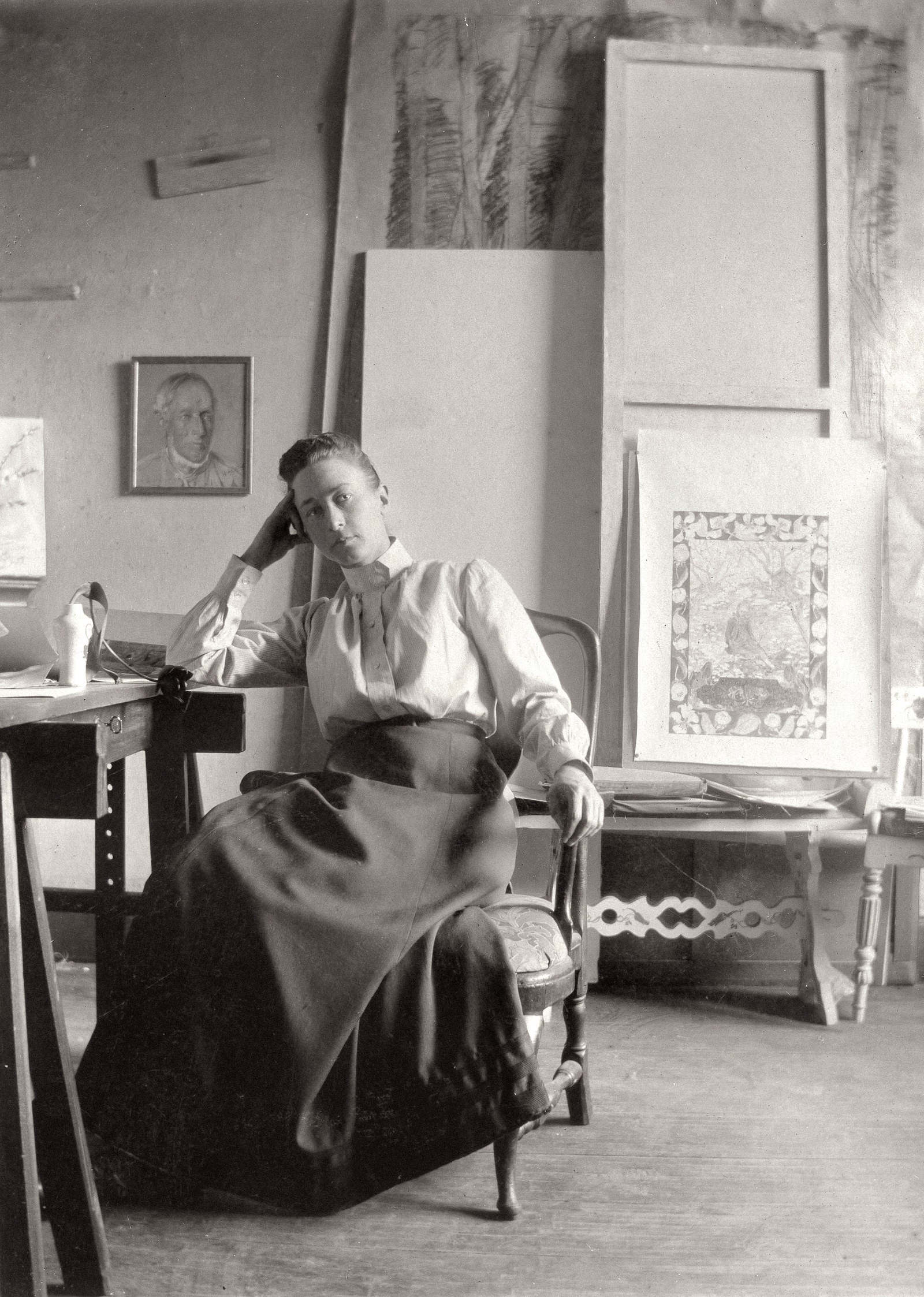
To understand why that revelation came so late, we must look back. Hilma af Klint, born in 1862, studied at the Royal Academy of Fine Arts in Stockholm from 1882 to 1887 under August Malmström and Georg von Rosen, as part of one of the first generations of women admitted to the institution. At first, she painted portraits, landscapes, botanical studies, and commissioned works. At the same time, however, she cultivated a strong interest in spiritualism and theosophy. Around 1896, she joined the group known as “The Five,” along with Anna Cassel, Sigrid Hedman, Cornelia Cederberg, and Mathilda Nilsson: the five women held séances and were convinced they were in contact with spiritual entities they called “the High Ones.”
This exploration marked a turning point in her career. In 1906, af Klint began painting abstract works and embarked on the “Temple Paintings” cycle—193 works created between 1906 and 1915 and shown to very few people during her lifetime. She later built a studio on the island of Munsö, on Lake Mälaren, and consulted Rudolf Steiner on several occasions. Ser III No. 5 dates from the years following the Temple cycle. Like the artist’s other abstract works, it is composed of geometric shapes, symbols, and fields of color. For af Klint, abstraction was a tool for exploring an invisible reality. Bukowskis draws parallels between her artistic journey and that of Kandinsky, Malevich, and Mondrian, who, during the same decades, also sought to combine abstract language with spiritual or philosophical ideas.
According to the auction house, the result confirms the growing international interest in Hilma af Klint’s legacy and her increasingly recognized place in the history of modern art. Bukowskis presents her as a unique figure in the history of international art. The price achieved in Stockholm also illustrates just how much her fortunes have changed. An artist who had shown her abstract works to very few people—and whom the public did not discover until 1986—now holds the record for the most expensive work ever sold at auction in the Nordic countries.
 |
| A small painting by Hilma af Klint sold for 11.5 million euros: a record in the Nordic countries |
Warning: the translation into English of the original Italian article was created using automatic tools. We undertake to review all articles, but we do not guarantee the total absence of inaccuracies in the translation due to the program. You can find the original by clicking on the ITA button. If you find any mistake,please contact us.