



by Redazione 20/07/2026



Categories: Modern Art / Disclaimer
From October 9, 2026, to January 17, 2027, more than 120 works will trace the creative journey of Willem de Kooning. The exhibition promises to be the most significant ever dedicated to the graphic work of the Rotterdam-born master.

One hundred years after Willem de Kooning (Rotterdam, 1904 – New York, 1997) from Rotterdam to the United States, the Rijksmuseum in Amsterdam symbolically brings one of the greatest figures in 20th-century art back to the Netherlands with one of the most important exhibitions ever dedicated to his work. From October 9, 2026, to January 17, 2027, the museum will host “Willem de Kooning at Work,” a major retrospective that offers a fresh perspective on the artist, placing drawing—a fundamental element of his creative practice—at the center of the narrative. The exhibition promises to be one of the most significant events dedicated to de Kooning in recent years and is the result of a collaboration between the Rijksmuseum, the Art Institute of Chicago, and the Willem de Kooning Foundation in New York. The exhibition, which brings together over 120 works from international museums and private collections, aims to trace the master’s artistic evolution across more than sixty-five years of his career, highlighting the central role that drawing played in his body of work. The announcement of the exhibition was made in recent days and underscores the symbolic significance of the initiative. Exactly one century after leaving Rotterdam in search of a new life overseas, Willem de Kooning returns, in a sense, to the city and country where he received his artistic training before becoming one of the most influential figures in 20th-century art.
For the Rijksmuseum, this is an exhibition of historical significance, designed to offer the most comprehensive overview ever presented of the artist’s graphic work. The exhibition layout places drawing at the center of the visitor’s experience, presenting it not merely as a preparatory phase for his paintings, but as the very core of de Kooning’s creative process. Alongside the drawings, visitors will be able to admire a selection of some of the artist’s most famous paintings and sculptures, in a continuous dialogue that allows them to understand how ideas, forms, and subjects evolved over the course of his long career.


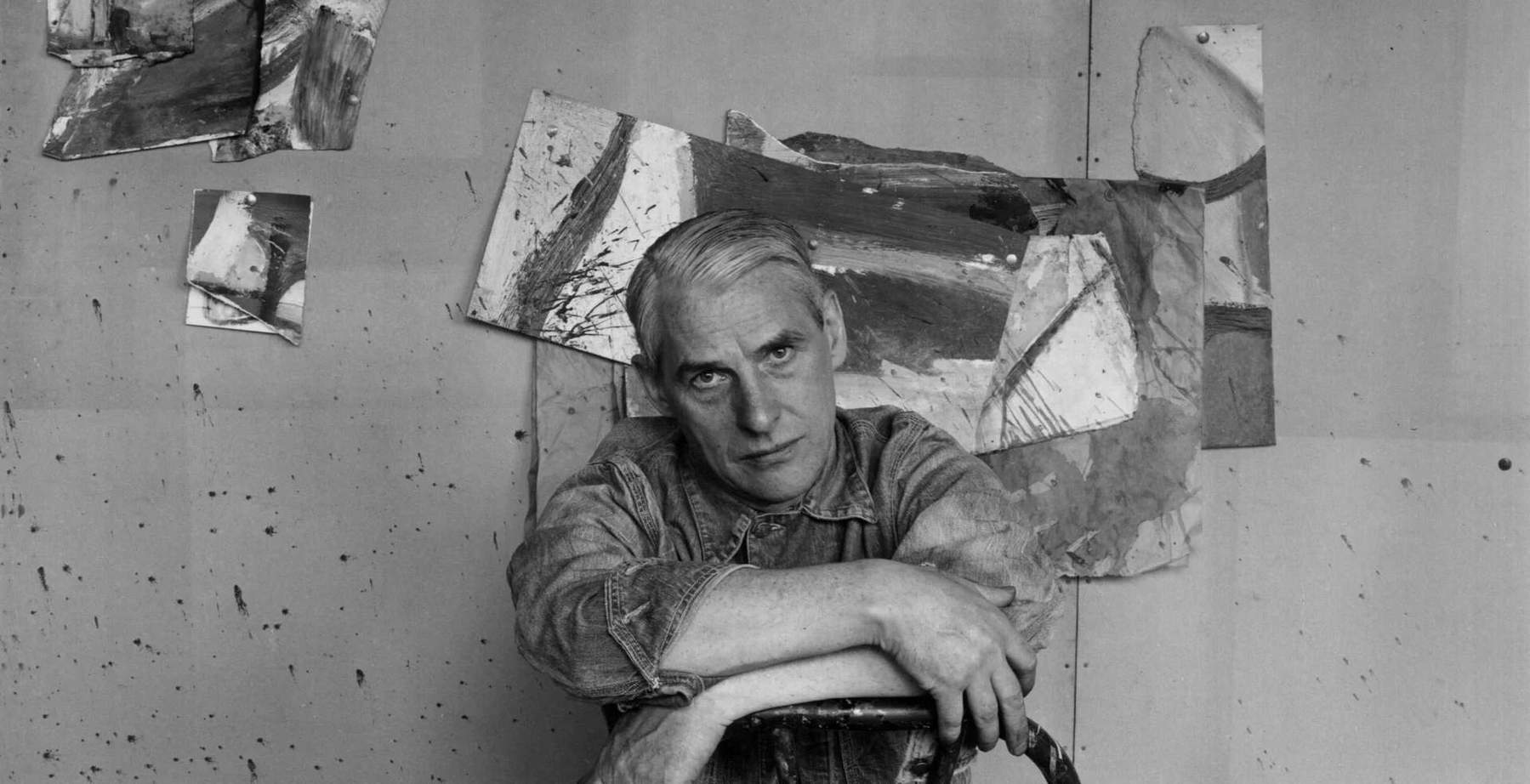
One of the most significant aspects of the exhibition will be the opportunity to observe de Kooning’s working method up close. The drawings—which are rarely shown to the public—allow visitors to follow the artist’s creative journey as he continually experiments, modifies, erases, repeats, and transforms his own intuitions. According to the curatorial concept, the creative process itself becomes the heart of the exhibition. Through the selected works, an artist emerges who was constantly engaged in the search for new expressive possibilities, unwilling to settle for established formulas, and always ready to reinvent his own artistic language.
The exhibition traces how de Kooning moved naturally from seemingly quick sketches in pencil or charcoal to works executed even with his eyes closed, and on to pieces in which the boundary between drawing and painting dissolves completely. The exhibition thus highlights an artistic practice in which each work represents a moment in a constantly evolving creative process.
Among the more than 120 works on view are some of the most important pieces from the artist’s entire body of work. On display will be *Reclining Nude (Juliet Browner)*, created between 1934 and 1938 and on loan from a private collection, along with *Itinerant Chapel* from 1951 and *Woman in a Rowboat*, created between 1964 and 1965, also from private collections. The selection also includes *Abstraction*, created between 1949 and 1950 and on loan from the Museo Nacional Thyssen-Bornemisza, *Pink Angels*, dating from around 1945 and on loan from the Frederick R. Weisman Art Foundation, and *Woman* (1983), on loan from the Museum Ludwig. These works are accompanied by some of the most representative masterpieces from de Kooning’s mature period, such as *Excavation* (1950), on loan from the Art Institute of Chicago, and *Clam Diggers* (1963), from a private collection.
According to the Rijksmuseum, the selection of works highlights the continuity of certain fundamental themes in the artist’s practice. Human figures and landscapes , in fact, run through his entire body of work, recurring repeatedly over the decades while taking on ever-changing forms and styles. The exhibition aims to demonstrate that these subjects are not static elements, but rather tools through which de Kooning continually questioned his own way of painting and drawing, transforming each work into an opportunity for experimentation.
Further enriching the initiative will be an exhibition layout with strong symbolic significance. In parallel with the temporary exhibition, two of the artist’s most famous paintings, *Woman I* and *Woman and Bicycle*, will be displayed in the Rijksmuseum’s Gallery of Honor. The presence of these two canvases in the space that the museum traditionally reserves for the great masters of Dutch painting represents a particularly significant recognition. In this way, Willem de Kooning will ideally become part of the history of Dutch painting, standing alongside the leading figures of the national artistic tradition housed in the museum’s permanent collections.
The initiative takes on special significance in light of the artist’s biography. Born in Rotterdam in 1904, Willem de Kooning developed a strong passion for drawing and painting at a very early age. During his formative years, he attended evening classes at the city’s Academy of Visual Arts and Technical Sciences, gradually honing his skills. At the same time, he worked as an apprentice in the decorative arts studio of Jan and Jaap Gidding, an experience that contributed to his professional growth and his understanding of artistic techniques. The turning point came in 1926 when, determined to seek new opportunities in the United States, he stowed away on a merchant ship bound for America. This decision was destined to radically change the course of his life and the history of 20th-century art. Once he arrived in New York, de Kooning faced several particularly difficult years. To support himself, he held various jobs, working as a house painter, illustrator, and store window designer. At the same time, however, he continued to devote himself to his artistic exploration, eventually choosing to pursue a career as an independent artist.
Recognition came in the late 1940s, when his work began to make its mark on the international scene. From that moment on, de Kooning became one of the central figures of the so-called New York School, a movement that brought together some of the most important figures in postwar American art. Among the artists with whom he shared that era were Jackson Pollock, Lee Krasner, Barnett Newman, and Mark Rothko—names destined to redefine the international contemporary art scene. Although generally associatedwith Abstract Expressionism, de Kooning consistently rejected any attempt to confine him to a single stylistic definition. His body of work spanned different artistic languages, always maintaining a strong drive toward change and experimentation.
The exhibition will be accompanied by two publications designed for different audiences. The scholarly catalog, edited by the Art Institute of Chicago, brings together new research on Willem de Kooning’s drawings and offers an in-depth analysis of their role within the artist’s entire body of work. Alongside the catalog, the Rijksmuseum will also publish a volume aimed primarily at visitors encountering de Kooning’s work for the first time or wishing to rediscover his artistic journey through a more accessible approach. The exhibition project will also be accompanied by a comprehensive program of public activities designed to explore the artist’s legacy and engage visitors of different ages and interests. Among the planned initiatives is a masterclass dedicated to the history of modern art, which will offer a historical and critical framework for the context in which Willem de Kooning worked and the role he played in the development of 20th-century art. The public will also be able to participate in a drawing workshop organized at the Teekenschool, the Rijksmuseum’s educational center, with the aim of introducing participants to the artist’s techniques and creative method.
The program will be complemented by an audio guide that will accompany visitors through the exhibition, explaining the works and exploring the main themes addressed by the exhibition. The realization of “Willem de Kooning at Work” was made possible thanks to the support of the Willem de Kooning Foundation, the Friends Lottery, Ammodo Art, the Art Mentor Foundation Lucerne, the Blockbusterfonds, the Rijksmuseum International Circle, the Friends of the Rijksmuseum, and the Dutch Ministry of Education, Culture, and Science.
|
| Amsterdam: The Rijksmuseum is hosting a major retrospective on Willem de Kooning |
Warning: the translation into English of the original Italian article was created using automatic tools. We undertake to review all articles, but we do not guarantee the total absence of inaccuracies in the translation due to the program. You can find the original by clicking on the ITA button. If you find any mistake,please contact us.