



by Redazione 01/09/2026



Categories: Modern Art / Disclaimer
From September 6 to October 11, the National Museum of Italian Judaism and the Shoah in Ferrara is exhibiting a previously unseen portrait of Amedeo Modigliani, painted by the artist and Red Cross nurse Matilde Levi Viterbo, who was a friend and relative of the Livorno-born artist.

There are very few paintings depicting Amedeo Modigliani (Livorno, 1884 – Paris, 1920), and among these, the one painted by his partner and painter Jeanne Hébuterne and a pencil drawing by André Derain stand out. However, there is another one, and on the occasion of European Jewish Culture Day, celebrated on Sunday, September 6, this little-known portrait will be on display at the National Museum of Italian Judaism and the Shoah in Ferrara, the MEIS. It is a painting by Matilde Levi Viterbo ( 1869–1959), a painter and Red Cross nurse who lived from 1869 to 1959, and has never before been shown to the public .
Both of Italian Jewish descent, Matilde and Amedeo were related by blood as well as by a friendship that, over time, would also bring their respective families together. The painting on display at the MEIS depicts a very young Modigliani, with a deep gaze and unruly hair, captured in a spontaneous moment. Matilde Levi Viterbo created the work while Amedeo was still a student at the Academy, before his move to Paris—the city where his artistic rise would begin and where he would experience the bohemian atmosphere of the time.


The network of relationships among the artists presented at the MEIS is, however, more complex, as the exhibition not only recounts the encounter between Modigliani and Levi Viterbo but also the artistic legacy that Matilde passed on to her son Dario Viterbo (1890–1961), who would go on to become a sculptor until the racial laws and the rise of Nazism once again upended his life’s prospects. The story of Matilde Levi and her son Dario conveys the sense of belonging that Italian Jews felt toward national culture and identity—a sentiment that developed after the end of the ghettos and the achievement of emancipation.
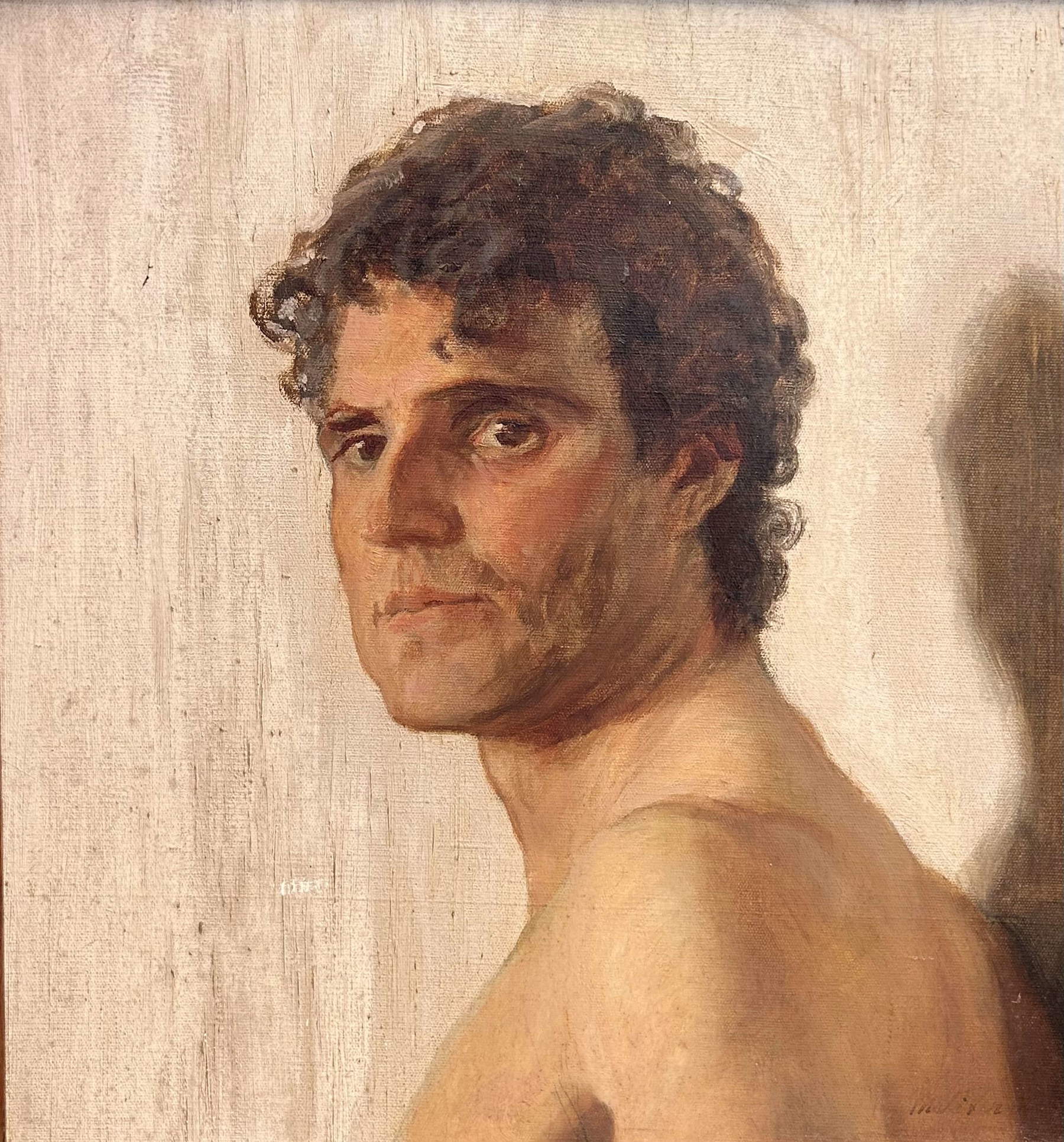
Driven by a deep sense of care and concern for others, Matilde served as a volunteer Red Cross nurse during World War I, contributing her efforts directly at the front. A painter, copyist, and miniaturist, she also encouraged her son Dario to pursue his artistic calling. After graduating from the Academy of Fine Arts in Florence in 1913, Dario devoted himself to sculpture and jewelry making, making a name for himself at the major Italian exhibitions of the time.
After moving to Paris in 1925, he exhibited alongside artists such as Giorgio de Chirico and Pablo Picasso, eventually securing a solo exhibition at the 1932 Venice Biennale. In the French capital, he hosted Giovanna, Amedeo Modigliani’s daughter, for a time, and together with the artist’s brother, Giuseppe Emanuele, he became involved with the group of Italian anti-fascists in exile in the city.
With the Nazi invasion of France in 1940, Dario Viterbo was forced to abandon his Parisian studio, where all his works were kept, and found refuge in New York. Unable to continue his work as a sculptor for a time, he developed a personal engraving technique— the so-called “chisel print”—which allowed him to achieve painterly effects through varying thicknesses of ink, using the same tools employed in jewelry making. During that period of great difficulty, as Viterbo sought a new artistic language, crucial support came from his wife, Ada Vera Bernstein, who established herself as a milliner, winning over the ladies of New York high society—from Eleanor Roosevelt to the wife of conductor Arturo Toscanini, Carla De Martini, both of whom were captivated by her hats. Despite the distance from Italy, Dario maintained an intense dialogue with his mother through long letters in which he recounted his artistic progress. The correspondence was interrupted during World War I but resumed at the end of the war, bearing witness to the deep bond that united mother and son until the end of their lives.
This story will be told at the MEIS through an exhibition located at the museum’s entrance, which will include a portrait of Modigliani from a private collection, two “chisel prints” created by Dario Viterbo after his escape from Europe, several objects that belonged to Matilde Levi Viterbo during her time as a Red Cross nurse, her anatomical studies, and various documents and volumes from the MEIS Library. For the occasion, four free guided tours will be organized on Sunday, September 6: two, at 11 a.m. and 6:30 p.m., led by MEIS curator Davide Spagnoletto, a scholar of Dario Viterbo’s work, and two others, at 12 p.m. and 4 p.m., led by museum guides. To make a reservation, call 342 5476621—available Tuesday through Sunday from 10 a.m. to 6 p.m.—or email eventi.meis@orologionetwork.it. The exhibition will remain open to the public through Sunday, October 11.
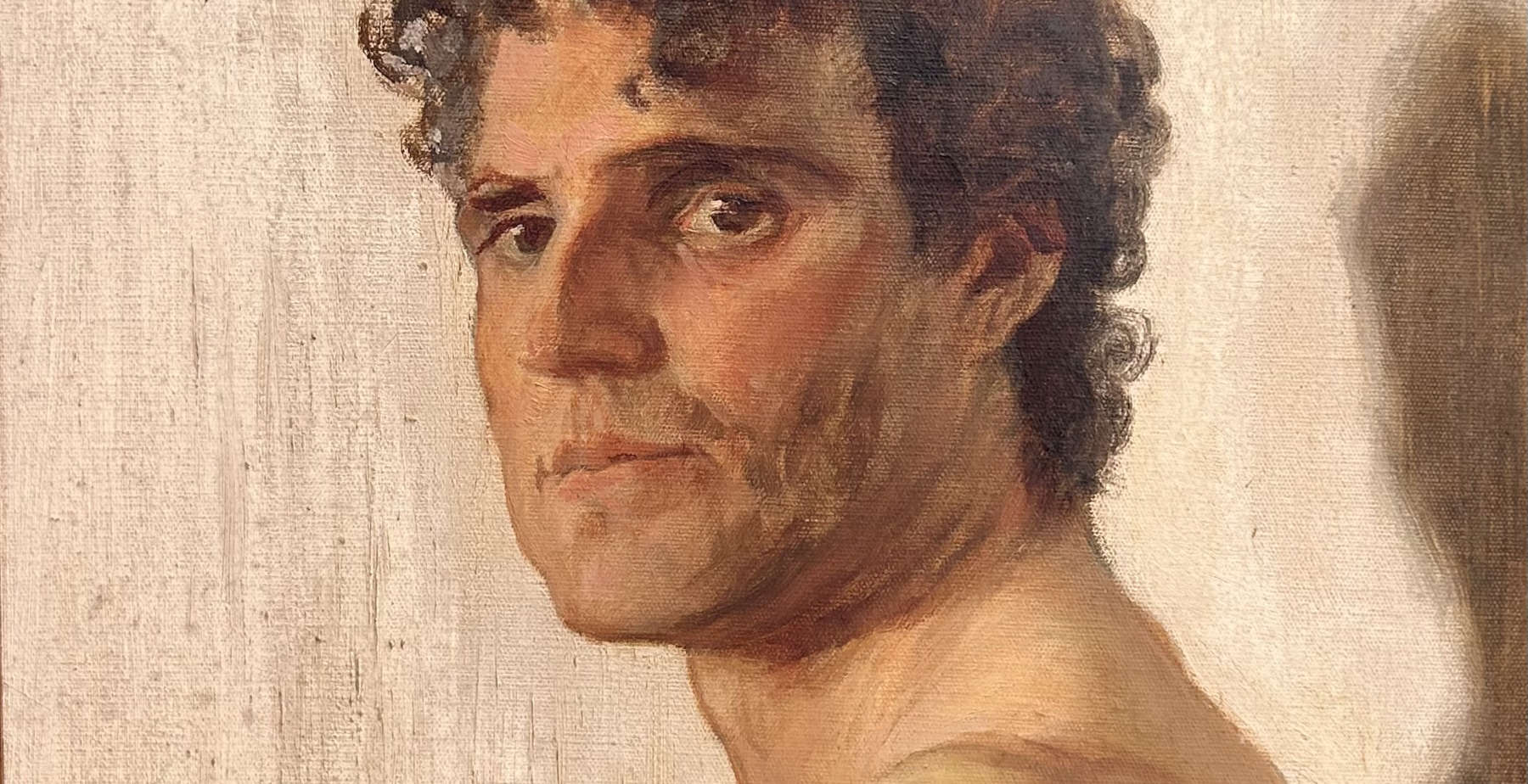 |
| Ferrara: A previously unseen portrait of the young Modigliani, painted by Matilde Levi Viterbo, is on display at the MEIS |
Warning: the translation into English of the original Italian article was created using automatic tools. We undertake to review all articles, but we do not guarantee the total absence of inaccuracies in the translation due to the program. You can find the original by clicking on the ITA button. If you find any mistake,please contact us.