



by Redazione 24/11/2026



Categories: Modern Art / Disclaimer
In 1918, Armando Spadini spent 1,000 lire—about 2,000 euros today—to buy Carrà’s *La musa metafisica*, and from that moment on, his painting changed. The Ricci Oddi Gallery in Piacenza is dedicating an exhibition of sixteen works to him, curated by Barbara Cinelli, focusing on the painter’s mature period.


Anyone who entered the Roman home of Armando Spadini (Florence, 1883 – Rome, 1925) around 1920 would have expected to find the walls covered with his paintings: children, nudes, flowers, sun-drenched meadows. In the dining room, which also served as a living room, there was, however, only one painting—and it wasn’t his. It was Carlo Carrà’s *La musa metafisica* ( *The Metaphysical Muse*), a painting described as “harsh, austere, and drab.” This is recounted by Ugo Ojetti, who that year, while preparing an article for the *Corriere della Sera*, had been unable to gain access to the painter’s studio. In his account, he imagines Spadini welcoming guests as follows: “Ah, so you thought that by entering my home you could revel in my serene paintings and my hundred works—all light, children, nudes, flowers, meadows, water, and smiles? Here’s a metaphysical painting by my friend Carrà. Isn’t that enough to quench your thirst? [...] I’m sorry, but I won’t let you up into my studio.”


For scholar Barbara Cinelli, that scene—even if literarily constructed—contains a truth: the metaphysical Muse had become for Spadini “the watchful guardian of a renewed, albeit secret, style of painting.” From this insight arises the exhibition *Armando Spadini. Modern Painter of the Twentieth Century, curated by the art historian at the Ricci Oddi Gallery of Modern Art in Piacenza from November 22, 2026, to February 28, 2027. Sixteen works are on display, almost all of them figure paintings created between the mid-1910s and 1922. The goal is to present a painter different from the one critics have long portrayed. “This exhibition,” explains Cinelli, “stems from the desire to bring Armando Spadini back into the spotlight as a painter, moving beyond the oversimplifications of the critical debate that has often reduced him to a historiographical footnote.”


The story begins in Rome in the spring of 1918, when, within a few days, two exhibitions opened that Cinelli’s essay in the catalog describes as “antagonistic.” On May 26, the Galleria L’Epoca exhibited the metaphysical paintings of De Chirico, Soffici, and Carrà. On June 3, at the Casina Valadier on the Pincio, an entire room was dedicated to Spadini. Scathing reviews and controversy followed. “Rome,” Mario Broglio wrote to Carrà, “has become a veritable battlefield, in whose tender sky rumble the thunderclaps of all the gods of wretched journalistic criticism.” The uproar was sparked above all by an article by Giovanni Papini published in *Il Tempo* on June 5. Papini, a close friend of Spadini’s since their Florentine years but also close to Soffici, Carrà, and De Chirico, dedicates the piece to Spadini, whom he presents as a painter far removed “from the mystery of hieroglyphs” and from the “mathematical nature of the abstract,” that is, “sound, simple, clear, Italian.” He devotes barely a few lines to the Metaphysicians. De Chirico did not take it well: he wrote to Carrà that Papini, after promising to discuss his paintings, “is now playing hard to get.” When he reads the article, he complains that “a certain Spadini” has been given center stage: “at the bottom of that column, he mentions me in passing; he didn’t even have the tact to omit my name.”


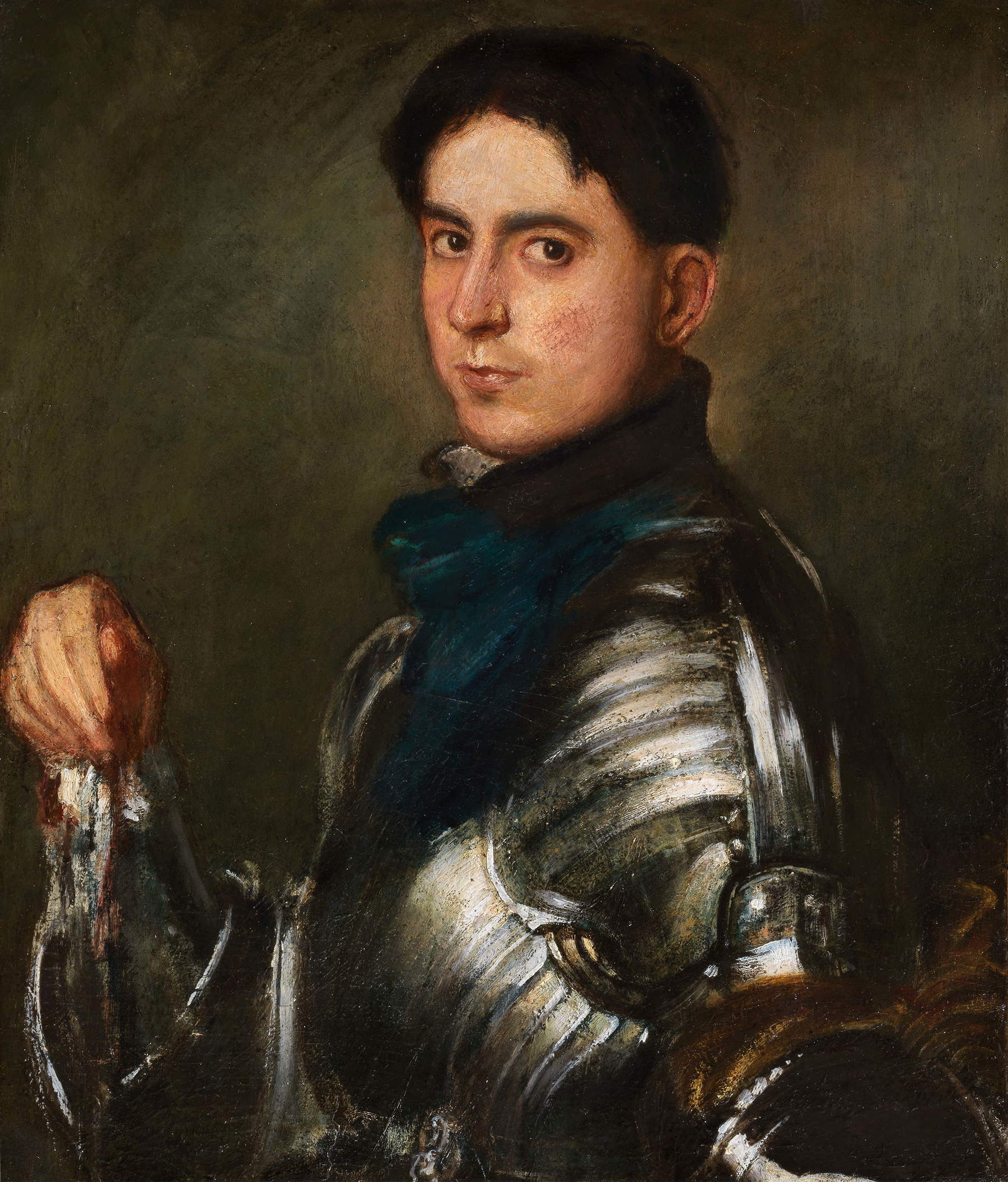
It was precisely in this climate that Spadini purchased Carrà’s *The Metaphysical Muse* and paid a thousand lire (nearly two thousand euros today), a sum that Carrà himself described as “unprecedented.” The episode is well known, but according to Cinelli, no one had ever linked it to the stylistic shift the painter underwent in 1918. The traditional explanation is based on a letter from Papini to Carrà dated August 9, 1918: “Know, if it matters, that I was the first to encourage Spadini to make that purchase you know about.” It has even been speculated that the purchase was intended to prevent the controversy from damaging the long-standing friendship between Spadini and Soffici.
Cinelli casts doubt on this version. He wonders whether Spadini, whose finances were still precarious, would really have spent a thousand lire just to calm things down. And why buy a Carrà, if the aim was to save his relationship with Soffici, who, moreover, commented on the matter with a biting remark (Spadini, “who sold a lot at the Pincio,” “had the good taste to buy one of your paintings”)? Papini’s letter also warrants a closer look. It arrived nearly two months after the events, is full of justifications for his silence regarding the *L’Epoca* exhibition, and the mention of the purchase appears only in a postscript—and even then, in parentheses. According to the scholar, it resembles a true excusatio. Carrà, on the other hand, recounted the purchase with sincere amazement. He wrote to Soffici that Spadini claimed to be happy to have the painting, and to Papini: “This event moved me: it is so rare in the annals of art.”
But the most convincing evidence lies in Spadini’s own words. In the letter in which he asks to purchase the painting, the painter admits bluntly: “I detest my own work.” And he adds: “The indifference I’ve felt toward contemporary painting has been shaken for the first time by your work.” Cinelli wonders why these words should be considered mere pleasantries or suggested by others: to deny an artist the ability to choose and judge for himself, she observes, means falling back into the prejudice that intellectual activity is worth more than manual and technical skill. For her, behind the purchase lies a genuine artistic need. And the works themselves, she concludes, are proof of this.
To understand the significance of that turning point, we must look back. Spadini had never regularly attended the Academy. Having left elementary school early, he had worked as an apprentice in a factory producing artistic terracotta and majolica, and later in the studio of Arturo Faldi, a well-known copyist of ancient paintings. From the ages of twelve to seventeen, he had attended the Professional School of Industrial Decorative Arts in Florence. According to Cinelli, these varied and disjointed experiences had left him with a dangerous ease in shifting from one style to another. In 1900, he had met Ardengo Soffici at Fattori’s Libera Scuola del Nudo, and in 1901, thanks to Adolfo De Carolis, he had joined the Florentine group centered around Papini’s magazine *Leonardo *. In 1910, he won the national art scholarship and moved to Rome, where the city offered a wide variety of artistic stimuli: the 1911 International Exposition, the Futurists’ first exhibition in Rome in 1913, and the Secession exhibitions featuring the Impressionist gallery. According to Cinelli, the painter failed to engage with that scene with sufficient determination, partly due to financial difficulties. In 1913, Papini urged him: “You must regain the fervor, the passion, the curiosity, and the flexibility you once had. You must understand that art is novelty, originality, exploration, and creation—and not a repetition, however perfect, of things already done.”
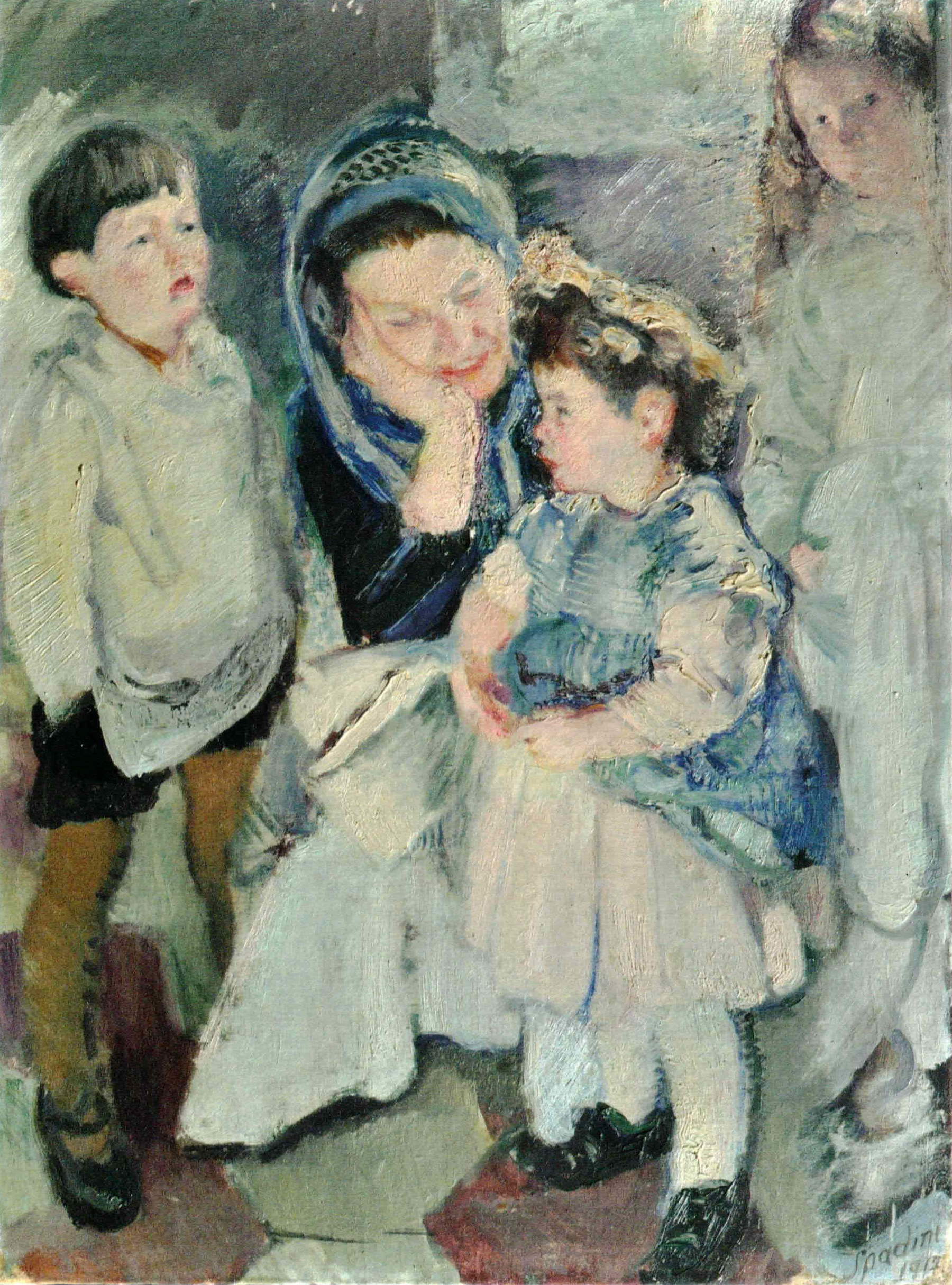
Between 1913 and 1917, Spadini produced many lackluster works. He sold barely sketched paintings to collectors and dealers “for a few baiocchi,” as Leonetta Cecchi Pieraccini recalls. At exhibitions, he displayed scenes of family intimacy and elegant crowds strolling in the Pincio. Thus was born—and has endured to this day— the image of the painter of wives, children, and breakfasts on sunny lawns. According to De Chirico, in those years Spadini was considered “the Italian painter and the wholesome painter par excellence.” Many of those canvases, which began appearing in major auctions of nineteenth-century collections in the 1930s, were subsequently absorbed into nineteenth-century Italian painting as a homegrown version of Impressionism. Added to this is the fact that there is no critical catalog of the artist’s work, making it difficult to understand which works conveyed his most authentic reflections during the war years, when his call to arms almost prevented him from working.
A clue, Cinelli argues, comes from an unexpected source: Roberto Longhi. Longhi is always cited for his scathing 1926 critique of Spadini, whom Longhi referred to as a “rosolaccio” (another name for the common poppy)—that is, “the most rebellious and showy flower in the garden of the nineteenth century,” the creator of an “Impressionism à la Andrea del Sarto.” But in that article in *Vita Artistica*, Longhi was writing about Carlo Socrate, who was very close to Spadini, and sought the roots of his style precisely in his own painting. In this way, he identified in Spadini’s paintings and drawings “the hidden skeleton, the invisible yet effective x- and y-axes,” which he defined with the oxymoron “that bubbling academy.” For Cinelli, this is the key to Spadini’s style: a color that seems undisciplined but is held together by a hidden structure, “almost bolted shut with iron bolts.”
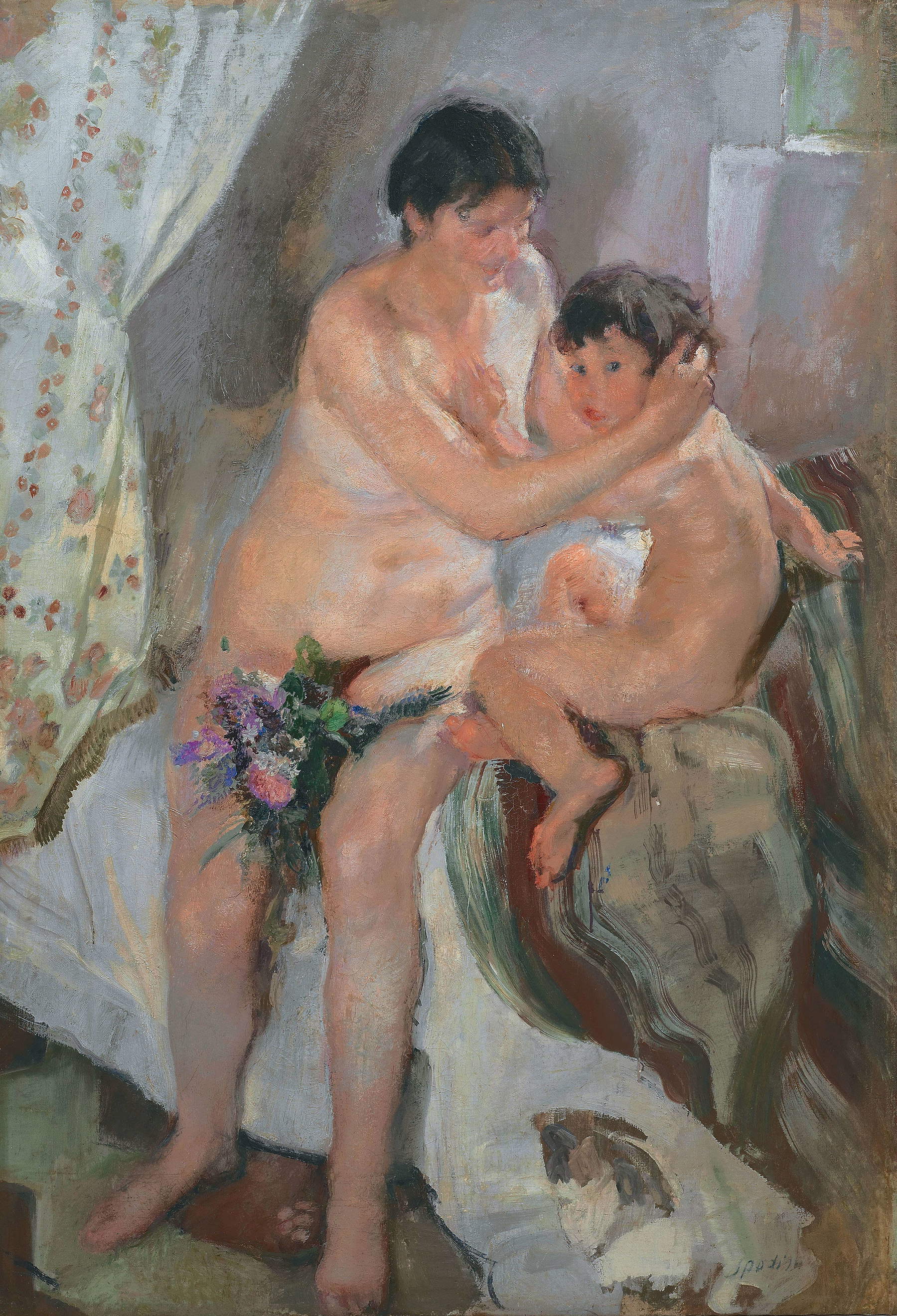
Traces of this exploration appear in a few works: *Children with a Dog* ( 1915 ) , with a new focus on formal values, and *Family Group* (1917) , which abandons plein air painting in favor of a sober, almost claustrophobic interior. *The Morning*, dated 1918 and on loan for the exhibition from the Galleria d’Arte Moderna in Mantua, was likely painted in the early months of that year. In the nude of little Maria, one senses echoes of sixteenth-century Mannerism, as if the painter needed to anchor himself to drawing so as not to succumb to the allure of a color that had become too easy for him.
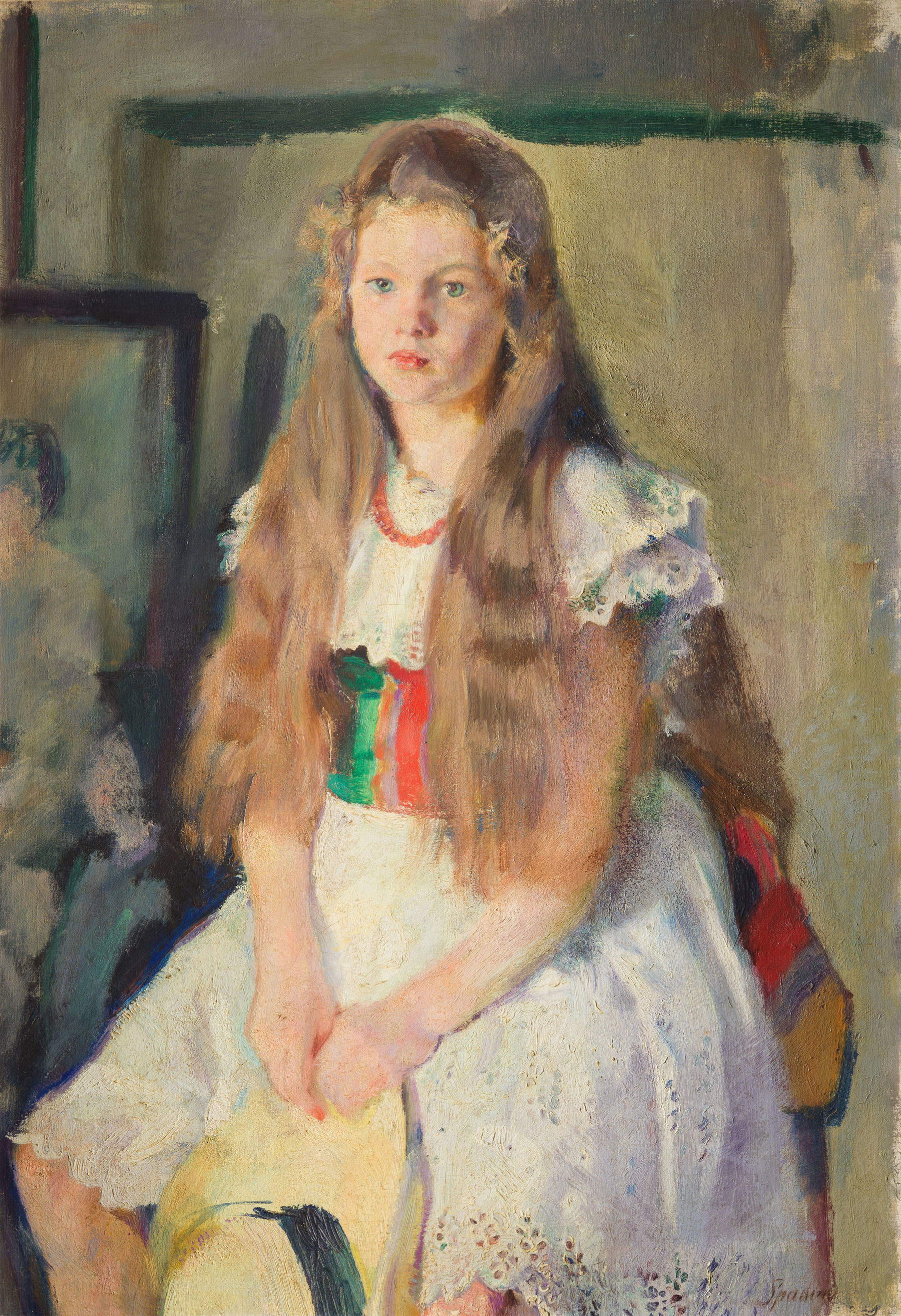
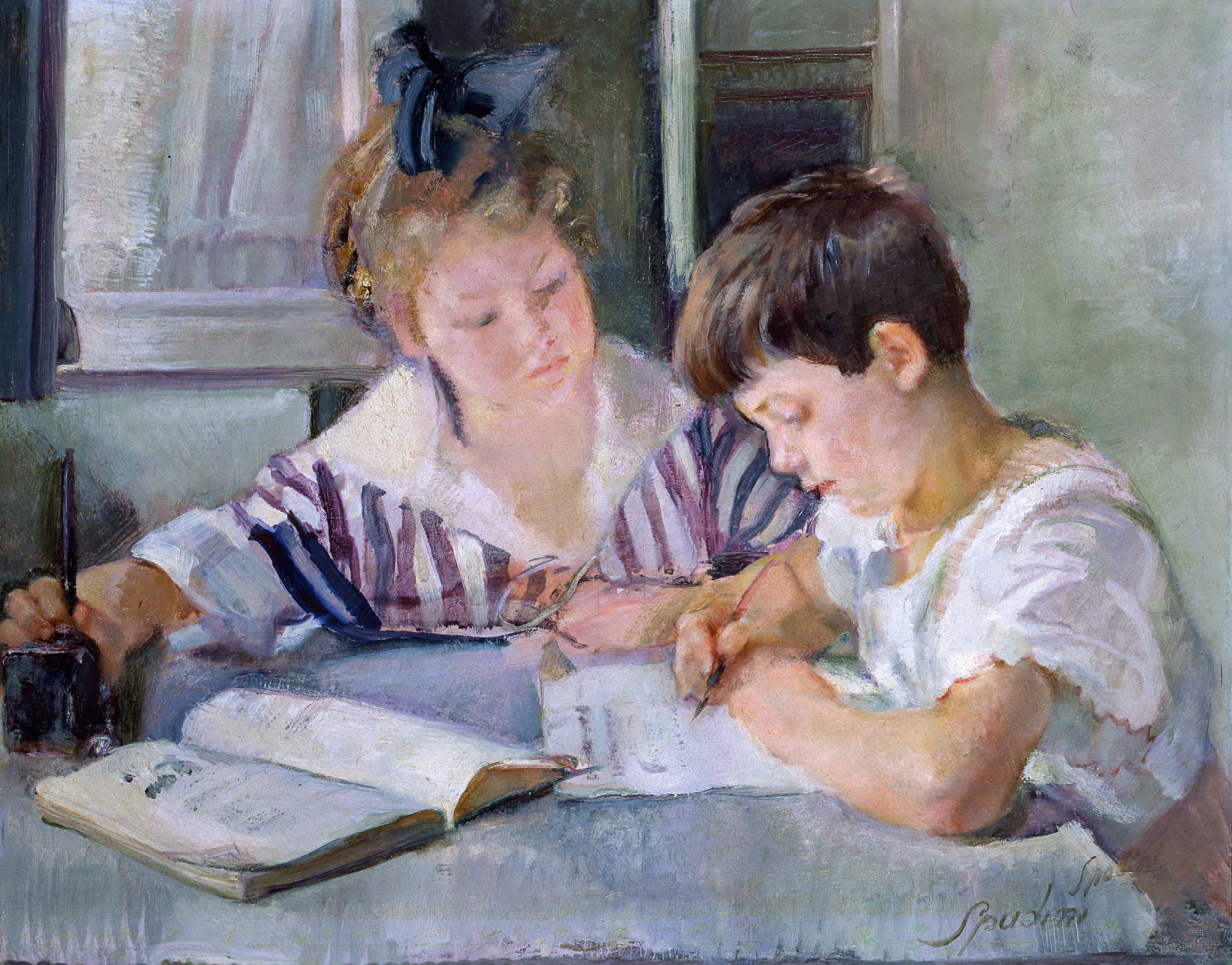
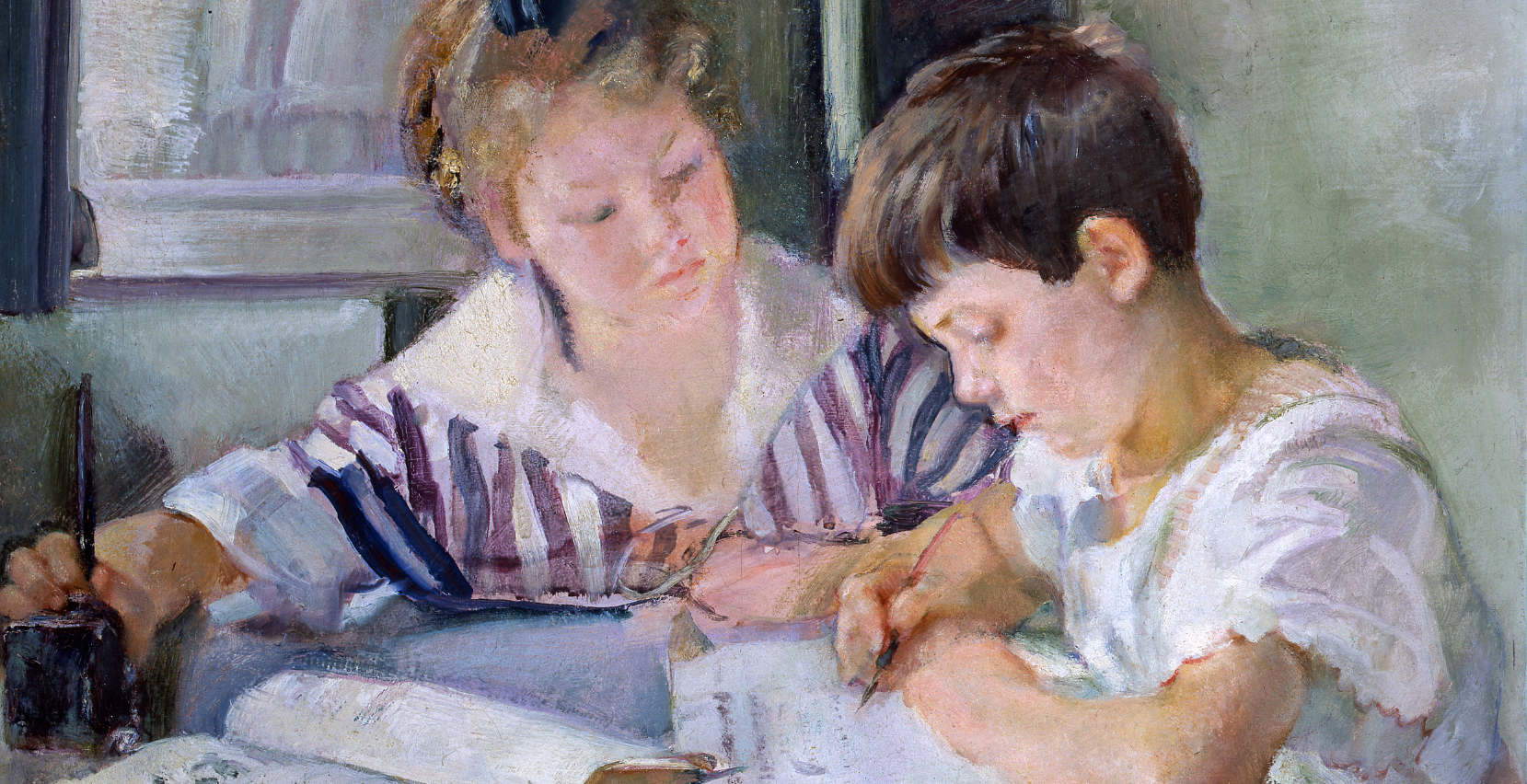
Then came the change, which Cinelli describes as both decisive and sudden. In May 1918, Spadini wrote to Leonetta Cecchi Pieraccini that he would not exhibit any of his “latest works” at the Pincio because he was not satisfied with them. The works that Cecchi’s catalog dates to 1918—namely *Nudes*, *Children Studying*, *The Hairdresser*, and *Anna in White*—all of extraordinary quality—must therefore be dated to at least the second half of the year, following his encounter with the metaphysical muse, and extend as far as around 1920. This is evident from the age of Anna, his daughter born in 1910, who appears almost adolescent in the last painting. In *Nudi* (Nudes), now at the Galleria d’Arte Moderna in Turin, the color palette becomes subdued and the iridescent reflections disappear. In *Children Studying*, the colors are reduced but still vivid—ranging from cobalt blue and violet to cadmium red and Roman ochre—in a composition where order and freedom are in balance.
On July 22, 1918, Spadini wrote to Carrà: “There is a misunderstanding about realistic art. I think about how the objects in your painting come to life. Of course, we have never thought of deceiving the eye, but rather of taking possession of reality to present it in our own way.” Cinelli sees the highest achievement of this reflection in *Anna in White*, on loan from the Galleria d’Arte Moderna in Milan: a figure as still as a household idol. It should not be read as a family portrait. Spadini himself, according to Leonetta Cecchi Pieraccini, said that “the art of portraiture” was “almost impossible” for him, and explained that he painted his wife and children to gain the “spiritual freedom” necessary for his work. For Cinelli, the painting is a response to the metaphysical Muse: standing before Carrà’s work, Spadini realized he could paint the visible world by making it a conduit for an inner life. It is no coincidence that it was Carrà himself who spoke, regarding his friend’s works, of surréalisme—that is, “an artistic expression capable of evoking a deeply evocative and human poetic revelation of reality.” And the scholar puts forward a hypothesis: the multicolored sash in *Anna in Bianco*, which contrasts with the white embroidery on the dress, might recall the yellow, orange, emerald green, and black pyramid behind the *Metaphysical Muse*, which at the time was hanging in the painter’s home on Via Emilio del Cavaliere.
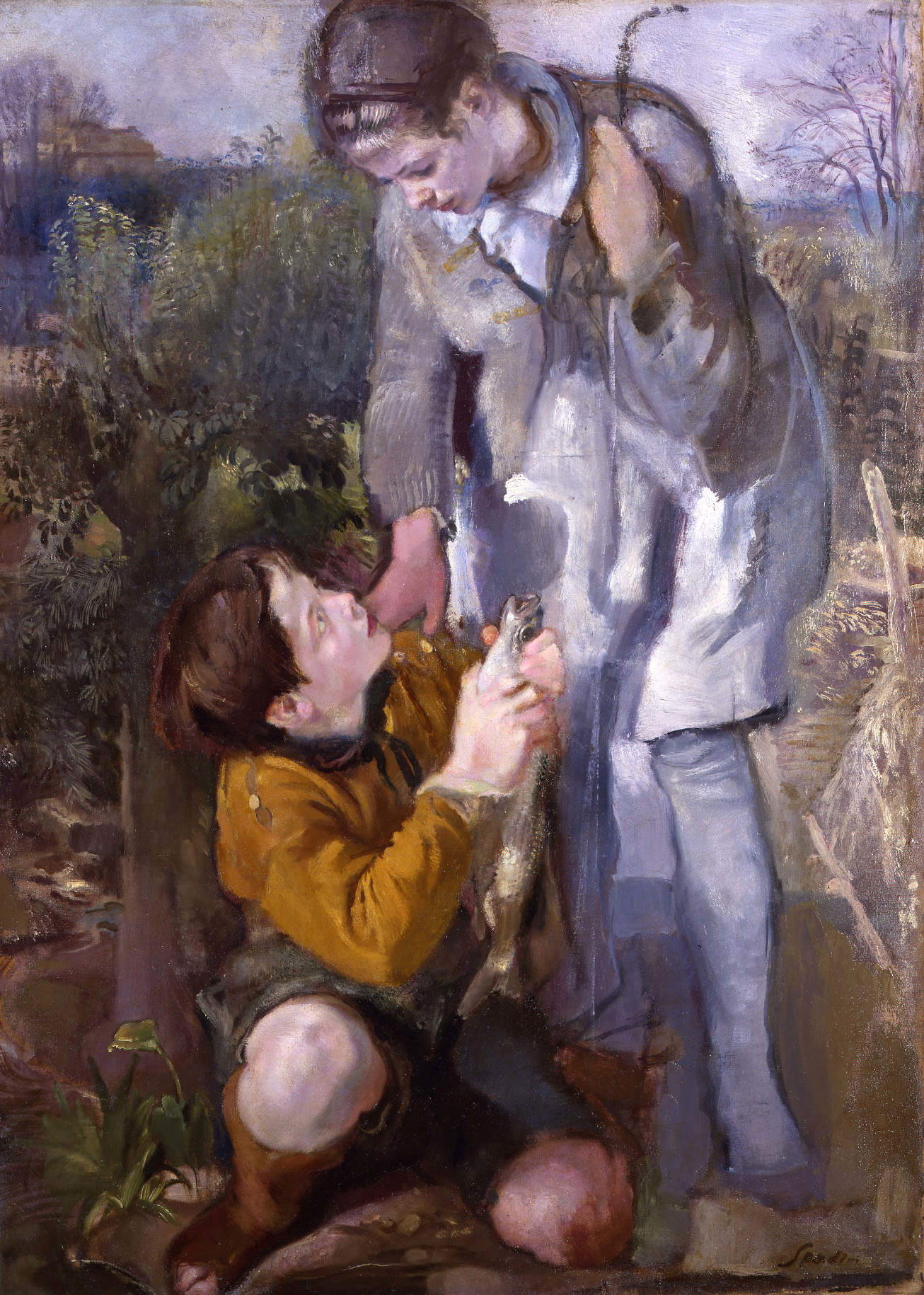
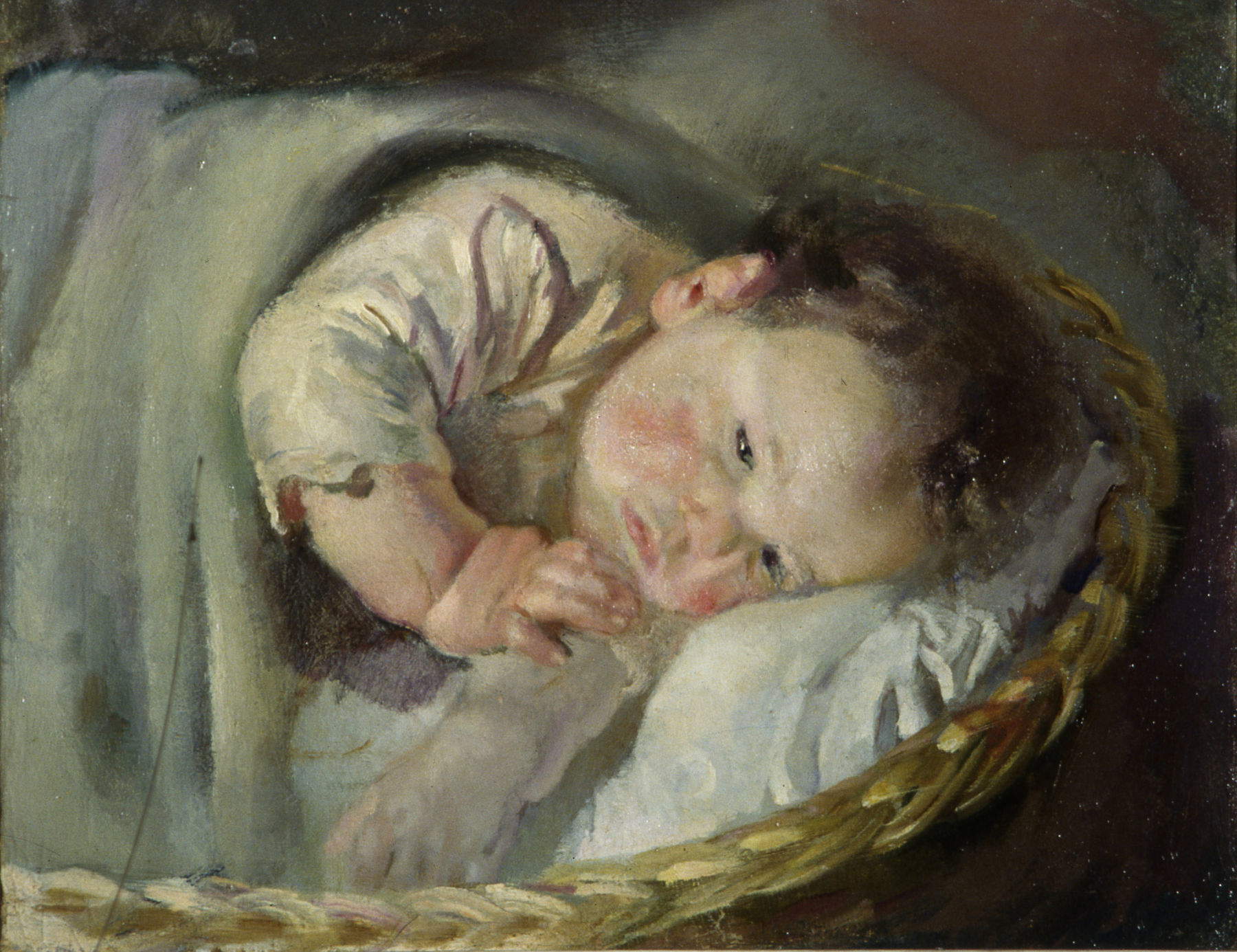
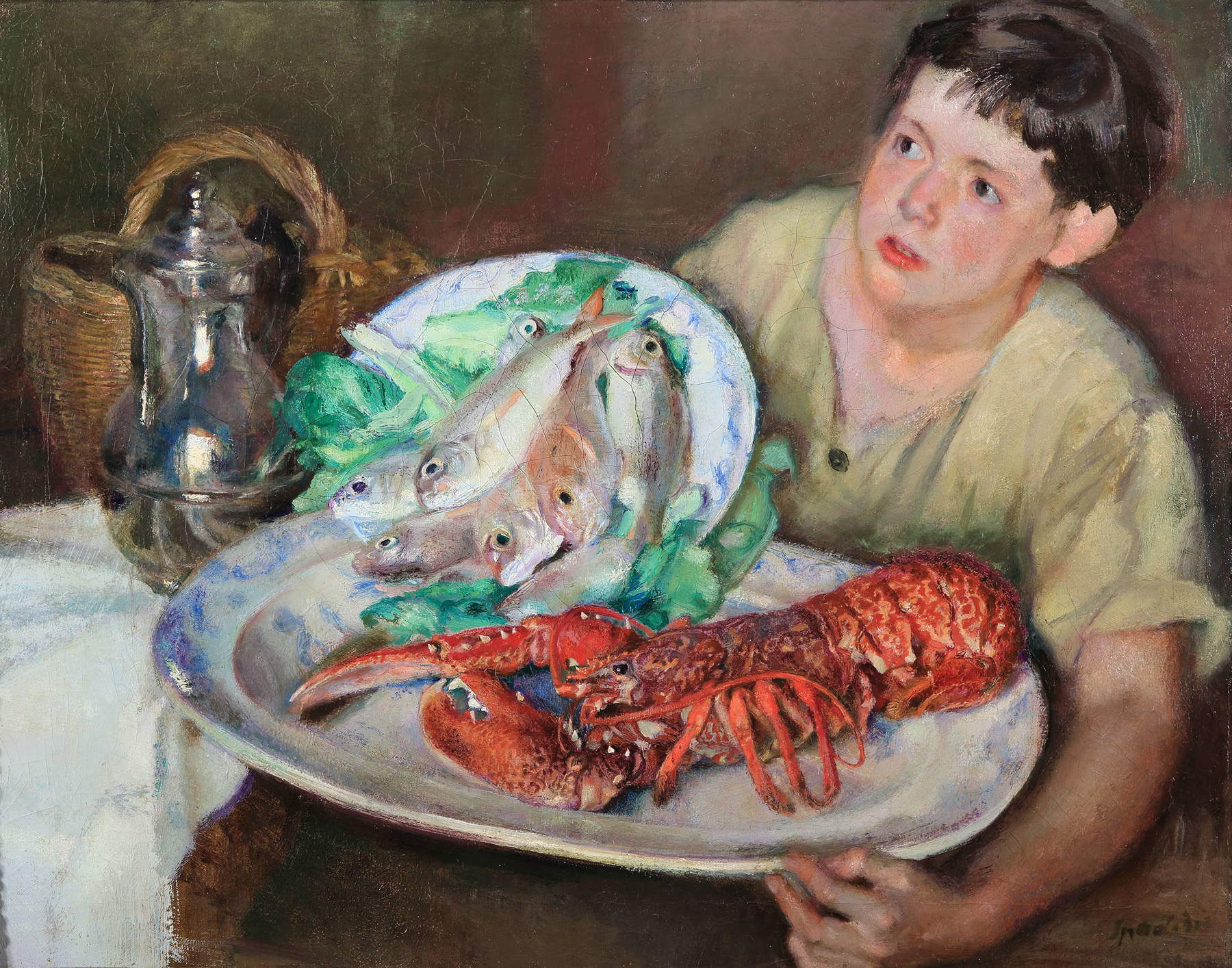
Almost no one saw those paintings, however. Spadini jealously guarded them in his studio, where he wouldn’t even let his friends in. *Children Studying* was exhibited for the first time at the 1924 Venice Biennale, *The Hairdresser* at the 1931 Quadriennale, while *Anna in White* remained in Emanuele Fiano’s collection until 1932. Meanwhile, against his will, older works that he did not like were being exhibited, as happened in Milan in the spring of 1919, and critics continued to judge those works: Melli harshly panned him in *Valori Plastici*. The painter’s reserve was so well known that it inspired a quip from Baldini: “Everyone knows that Spadini is our only great painter. All that’s left for us now is to see his paintings.”
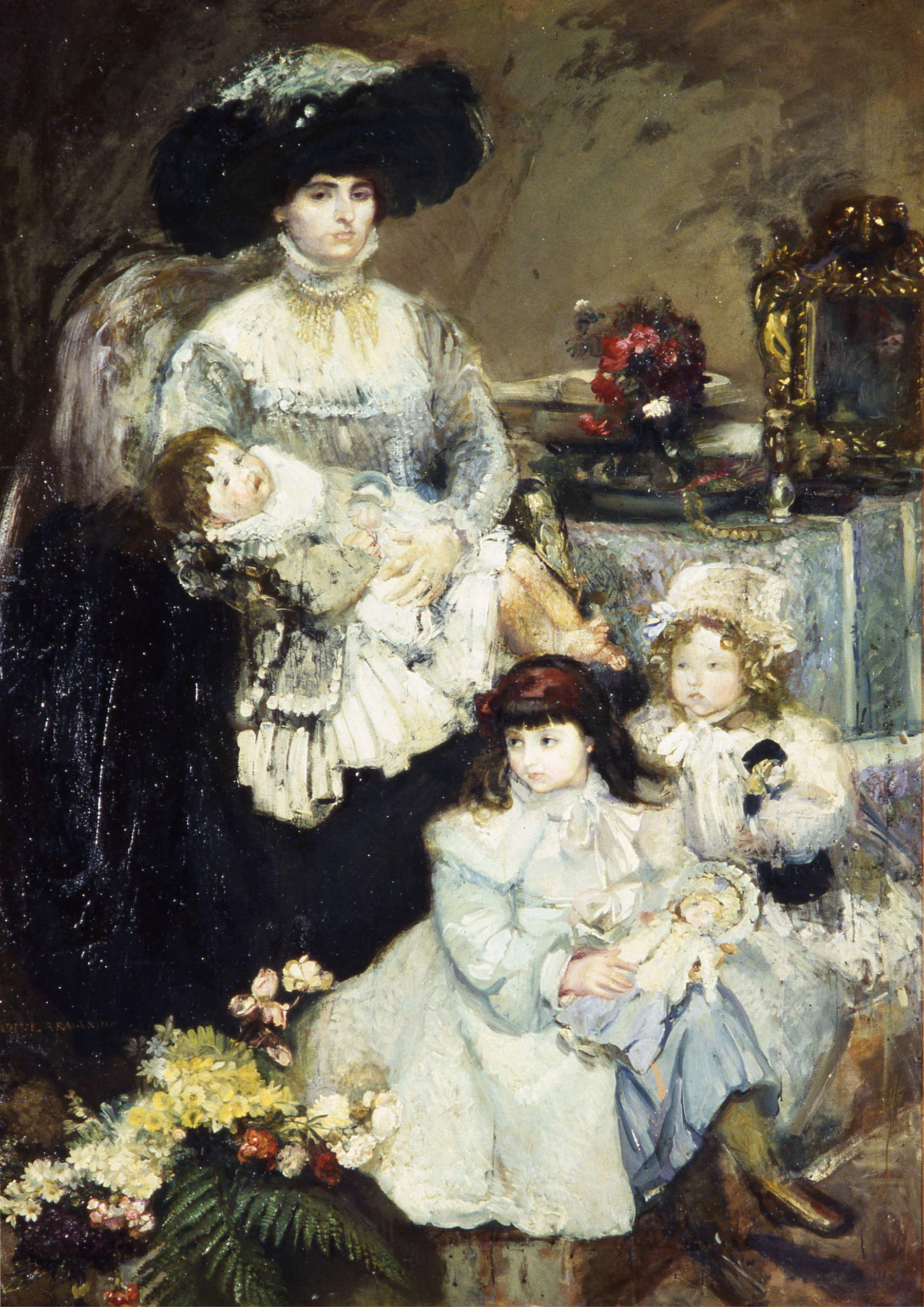
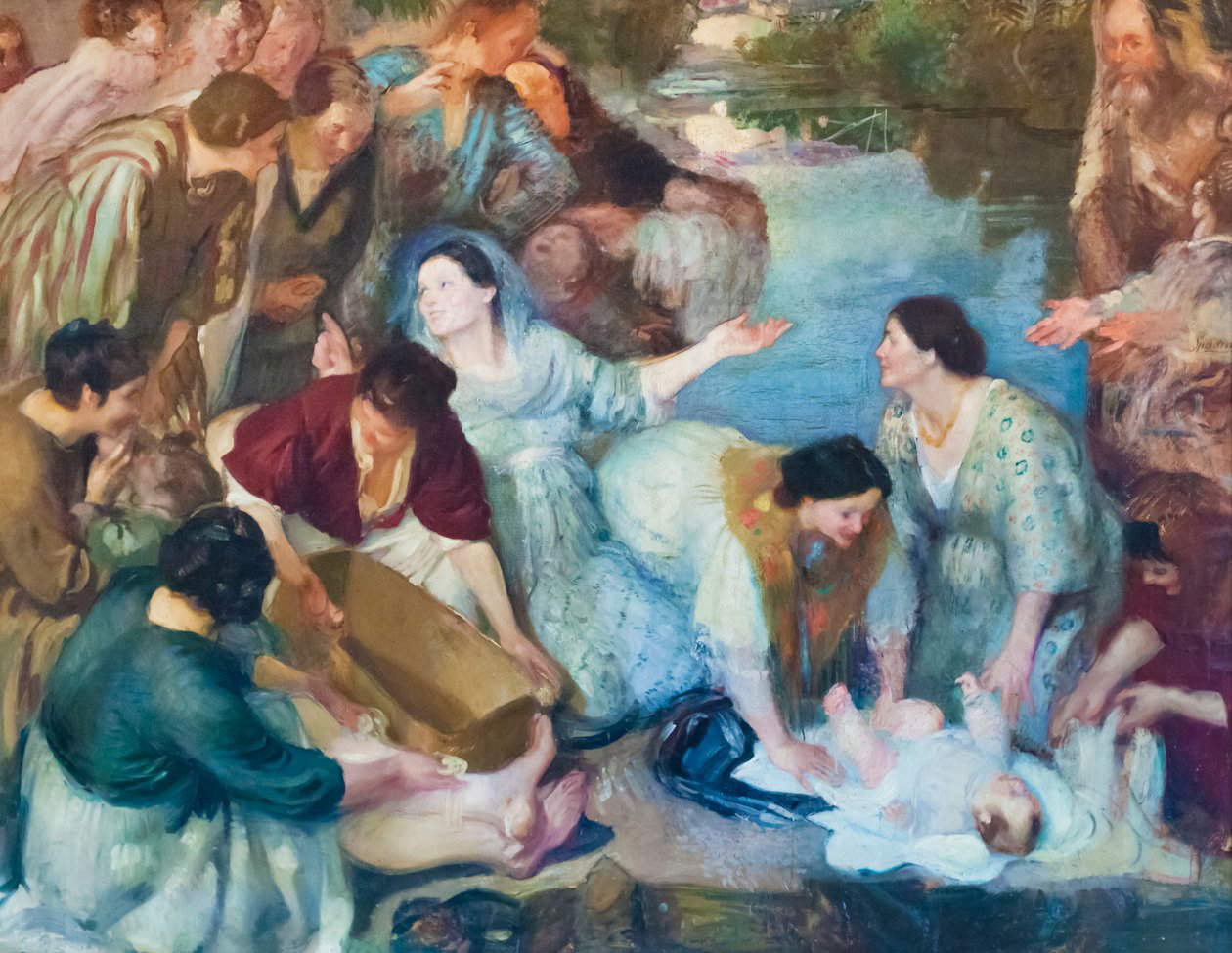
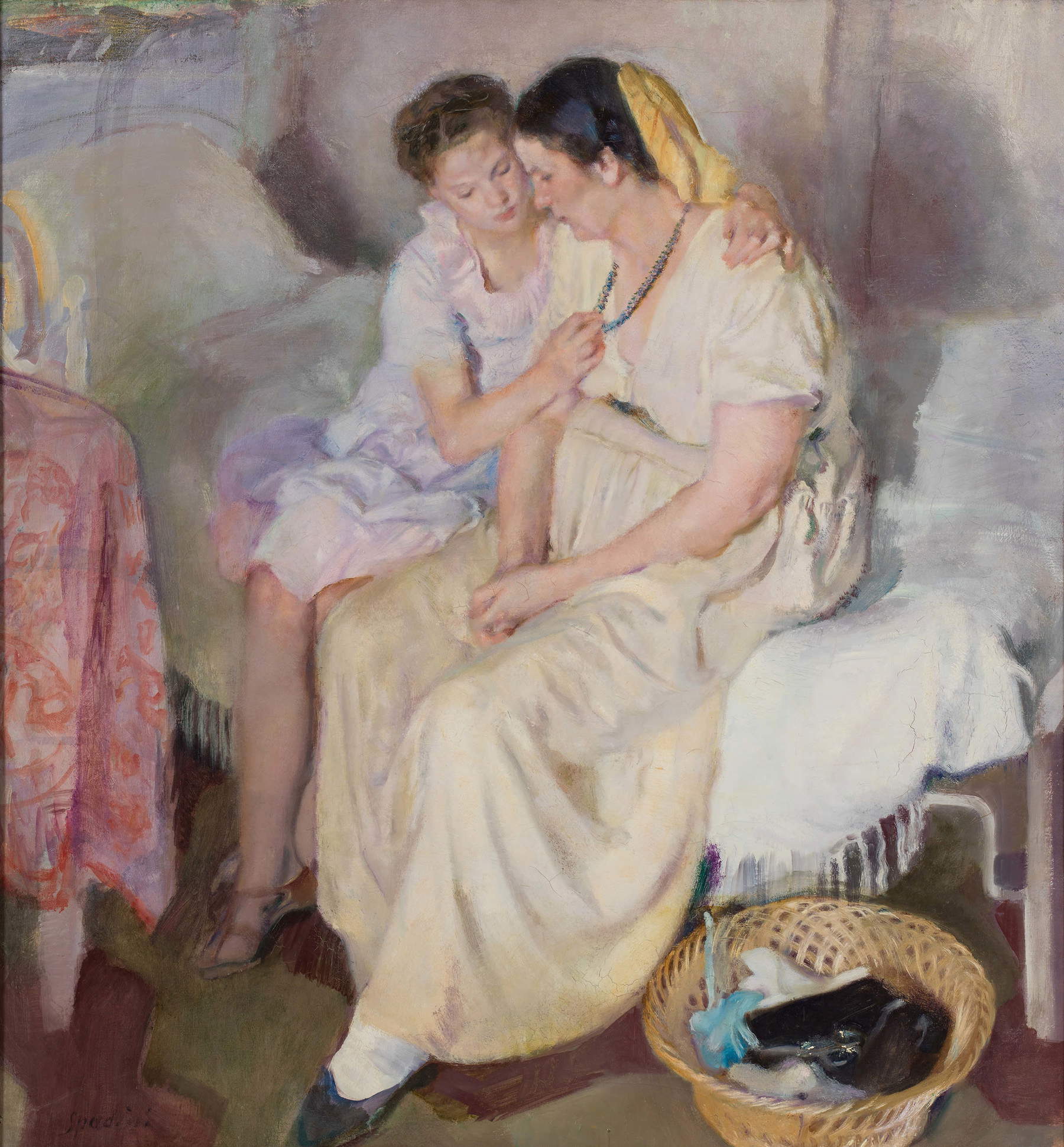
The exhibition in Piacenza begins with two works from the Ricci Oddi collection: *Portrait of Mrs. De Carolis with Her Daughters* (1908), purchased by Giuseppe Ricci Oddi in 1925, and *Lillo in a Cradle*(1921), acquired at the 1924 Venice Biennale. The exhibition begins out of chronological order with two paintings that foreshadow the artist’s mature ambitions. The first is the large De Carolis portrait, which, despite its still-unrefined composition, already reveals a taste for large formats and a constructive brushstroke. The second is the monumental *Moses Saved from the Waters* (1912), on loan from the Vatican Museums, painted during a period of despondency and financial hardship as he sought to renew his residency in Rome: a revival of the sumptuous Venetian painting of the sixteenth century, featuring figures in contemporary attire. Next are fourteen medium-to-large-sized canvases. Many come from the collections of Spadini’s earliest admirers, such as Emanuele Fiano and Olindo Malagodi, whose collections were later merged into that of Riccardo Gualino. Others come from major public museums, such as the Gallery of Modern Art at Palazzo Pitti, which is lending *Confidenze* (1919–1920). Among the lenders are also the Uffizi Galleries and the Bank of Italy.
The decision to focus on figure painting is deliberate. Scenes of mothers and children—often dismissed as anecdotal or sentimental—are, for the curator, the terrain on which Spadini explored formal issues: repeating the same domestic subjects allowed him to focus on form, refine his style, and achieve full freedom of expression. “The sixteen works brought together in Piacenza allow us to revisit the paintings and, through an analysis of his style and a comparison with his sources, to grasp the complexity of his artistic exploration and the full modernity of his painting,” says Cinelli. More than a retrospective, the exhibition aims to be a narrative of the artistic maturity of an artist who, in the 1920s, sought a balance between contemporary life and tradition, between a passion for color and the rigor of form. It follows the conference organized in 2025—on the centennial of his death— by the Academy of Fine Arts in Florence, the Ragghianti Foundation in Lucca, and the Soffici Museum in Poggio a Caiano, and decades after the major exhibitions of 1983 at the National Gallery of Modern Art in Rome and of 1995 in Poggio a Caiano.
“This exhibition represents an important opportunity for the Ricci Oddi Gallery of Modern Art to renew and deepen its relationship with the work of Armando Spadini, an artist to whom our collection is historically linked,” states Stefano Antonio Marchesi, president of the Ricci Oddi Gallery Foundation. The connection dates back to the gallery’s founder. Giuseppe Ricci Oddi (Piacenza, 1868–1937) had housed his collection in the family apartment on Via Poggiali. Around 1924, he decided to transform it into a public museum and, unable to find a suitable location, had architect Giulio Ulisse Arata construct a new building at his own expense on land provided free of charge by the city. The Gallery opened in 1931 and is one of the rare cases in which the building and the collection were created simultaneously. The works span from the 1830s to the 1930s, reflecting the founder’s preference for landscape and figure painting. As of April 2026, the museum has been renovated, following the redesign of its 22 galleries by Studio Piero Lissoni, twenty years after the last major renovation.
The exhibition is sponsored by the Emilia-Romagna Region and the City of Piacenza, with support from the Fondazione di Piacenza e Vigevano. The catalog is published by Officina Libraria. The Gallery, located at Via San Siro 13, is open Tuesday through Thursday from 9:30 a.m. to 1:00 p.m. and Friday through Sunday from 9:30 a.m. to 6:00 p.m. Full-price admission is 10 euros, and reduced-price admission is 7 euros; both include an audio guide for the museum and the exhibition.
 |
| Who Was Armando Spadini, Really? The Ricci Oddi Gallery in Piacenza Rewrites His Story |
Warning: the translation into English of the original Italian article was created using automatic tools. We undertake to review all articles, but we do not guarantee the total absence of inaccuracies in the translation due to the program. You can find the original by clicking on the ITA button. If you find any mistake,please contact us.