



by Redazione 18/11/2026


Categories: Museums / Disclaimer
An article in *The Guardian* has drawn attention to the Anima Mundi Museum of the Vatican Museums, which houses approximately 80,000 objects from Africa, Asia, Oceania, and the Americas. Many were acquired by Catholic missionaries and displayed at the 1925 missionary exhibition. The British newspaper wonders whether they were all donated or whether they tell a colonial story that needs to be clari


In a display case at the Vatican Museums, there is a small figurine carved in aCentral African country: the caption refers to it as a “twin figurine,” or “mpundu.” It was carved after a child’s death and entrusted to the mother, who washed it and fed it every day, convinced that her child’s spirit somehow remained within the statue. For those who made it, it was not a work of art to be admired, but something to be cared for; today, however, it is one of the objectsin the Anima Mundi, the Vatican’s ethnological museum, which houses some 80,000 objects from Africa, Asia, Oceania, Australia, and the Americas. And it is precisely Anima Mundi that has come under scrutiny by The Guardian. In a recent article focusing on objects like this one, journalist Joanna Moorhead posed a question: How did they end up in Rome, and who decided to part with them?

The Vatican Museums’ official response refers to them as gifts. In other words, many of these objects were “donated” to the Church by indigenous peoples at a time when Catholic missionaries wielded great power in the remote communities where they operated. The Guardian places that very word —“gifted”— in quotation marks. And the issue has resurfaced due to an anniversary falling exactly this month, which the Vatican, it seems, does not wish to celebrate.


The collection was established in 1925: that year, Pope Pius XI asked missionaries around the world to send cultural and sacred objects from the communities where they worked to Rome for an exhibition intended to showcase the spread of the Catholic Church across the globe. The exhibition lasted a year and attracted about one million visitors. When it closed, many objects remained in Rome. In November 1926, they became the core of the new Ethnological Missionary Museum, housed in the Lateran Palace. In 1973, the collection was moved to the Vatican Museums, where it remains today, and in 2019, the museum was renamed “Anima Mundi.”

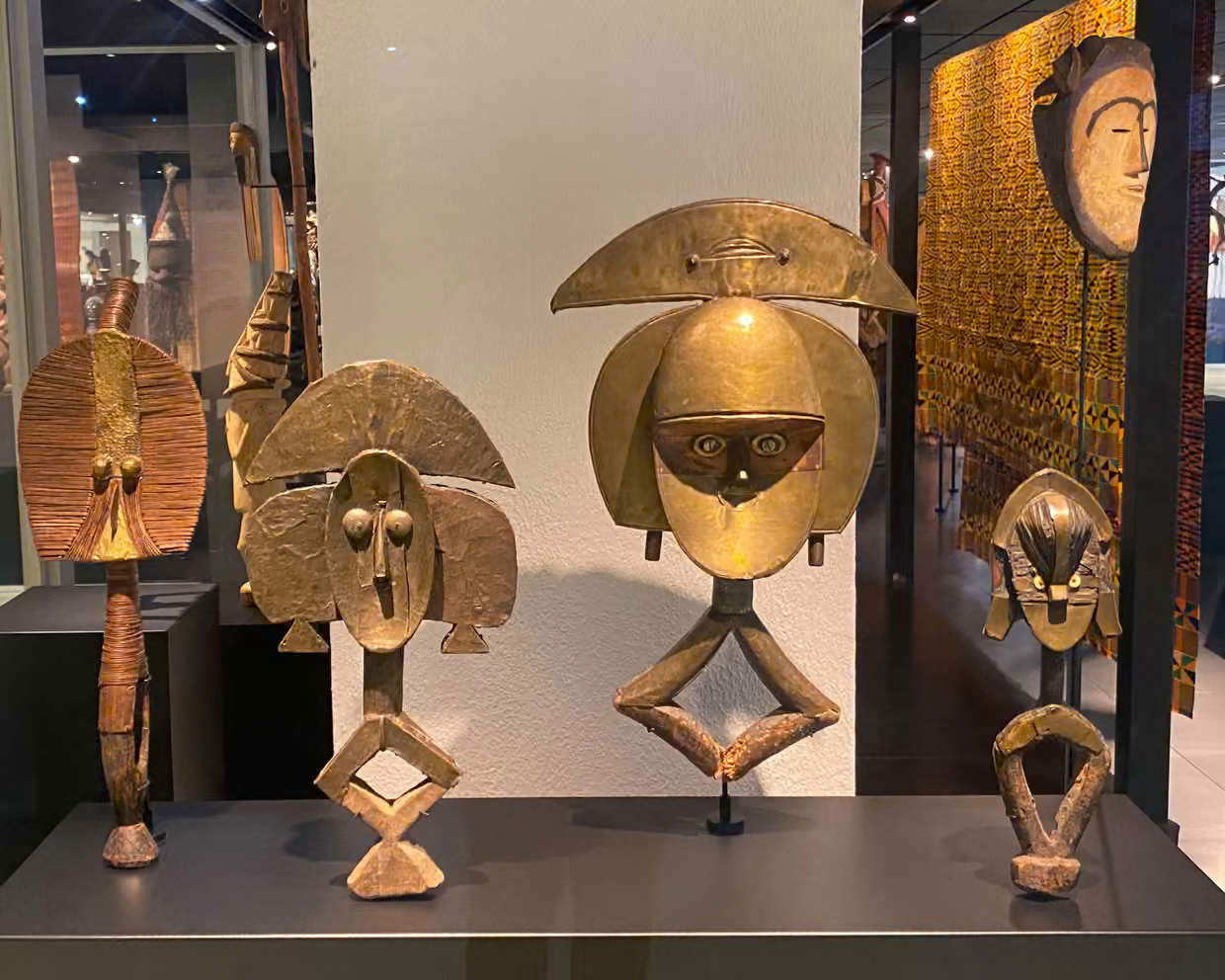
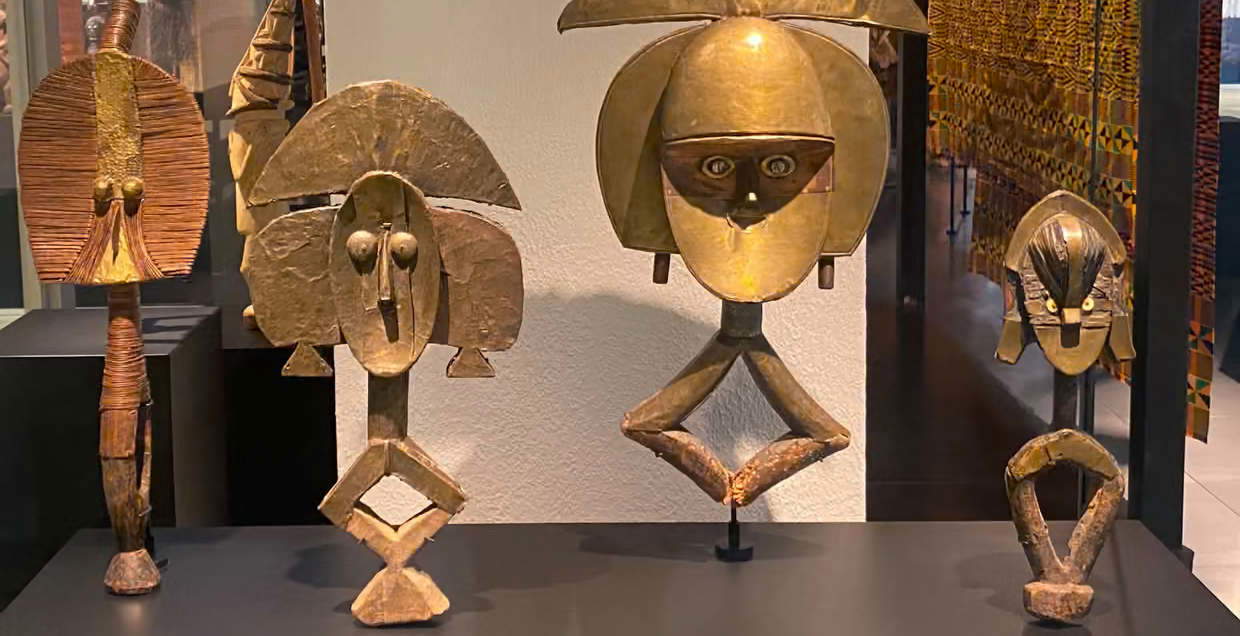
The centennial therefore falls this month, as Rome celebrates with great solemnity the 400th anniversary of the consecration of St. Peter’s Basilica. Around the museum, however, there is silence. A source within the Vatican told The Guardian that it was decided not to highlight this anniversary, and the Holy See declined to grant an interview for Moorhead’s article. Yet the collection is anything but meager: the Guardian reporter describes finding it nearly deserted, in a basement just a few steps from the main entrance to the Museums, while visitors in line were heading for the Sistine Chapel, the Raphael Rooms, or the Belvedere Apollo. On display in the galleries are balsa wood carvings by the Emberá people of Panama and Colombia, depicting protective spirits and ancestors, and a crocodile figure from Papua New Guinea, believed to represent the creator of all things. There are also carved funerary poles from Madagascar, a Polynesian reliquary, an Aztec sculpture of Quetzalcoatl, the feathered serpent god, and a supernatural being enclosed in a frame, displayed alongside artifacts from an area stretching from northern Namibia to Angola, Zambia, and the Democratic Republic of the Congo. Here, too, is the oldest object in all of the Vatican Museums: a stone cutting tool from South Africa, two million years old, among the oldest intentionally crafted objects known to man.
Many of the pieces served a specific ritual and funerary purpose. This is explained in the caption accompanying the sculptures of the Kota people of Gabon: they were guardians of the containers holding the skull and bones of an important man or woman. Those containers were brought out on special occasions, sprinkled with magical substances, and honored with sacrifices. The largest figure, according to the museum, may have been dedicated to the village’s founding ancestor.
This is the focus of criticism from Gloria Bell, an art historian at McGill University in Montréal, a descendant of Canada’s Métis people, and author of a book on the relationships between Indigenous and Romani artists and activists, *Eternal Sovereigns*. For Bell, *Anima Mundi* is “a disturbing colonial collection.” The scholar claims to have seen evidence that, in order to gather material for the 1925 exhibition, some missionaries “looted graves in Canada.” The idea that everything was donated is therefore, in her view, “a false narrative.” These, she stated, are “personal effects that have cultural value, not artifacts. They are regarded as ancestors, and when they were taken away, the bonds were severed,” she told The Guardian.
Bell also criticizes the way the collection is presented today. At the museum’s entrance, there is a large display case that she describes as a trophy case: “In the 1925 exhibition, the missionaries depicted Indigenous ancestors as the pope’s trophies, and even today, that visual equivalence is recreated in the museum.” Furthermore, in her view, there is a complete lack of explanation regarding how the missionaries operated. “Neither the texts in the exhibition space nor the catalog address the complexity of how the missionaries operated,” she stated. According to Bell, there is no acknowledgment whatsoever of the harm inflicted on Indigenous peoples by the missions in the First Nations, Métis, and Inuit communities of Turtle Island—the name Indigenous peoples use for the Earth. Bell describes those missions as “genocide.”
Some restitution has already taken place: in 2022, the Vatican returned three Peruvian mummies, and last year an Inuvialuit kayak and 61 other artifacts were returned to Canada, three years after Pope Francis apologized to Canada’s First Nations for the Church’s role in genocide and the suppression of Indigenous identity through the residential school system. Pope Francis also returned the Parthenon marbles, which belonged to the Vatican Museums, to Greece. For Bell, however, this is just the tip of the iceberg: many questions remain about the provenance of the collection, and the work of restitution is far from over. “It was a small step, but much more needs to change.” The scholar places some hope in the new pontiff: “I like to think that, as an American pope who worked for many years as a missionary in Peru, Leo XIV may be more aware of these issues.”
These concerns, after all, did not arise overnight. As early as 1925, someone contested the exhibition. The best-known case is that of Anthony Martin Fernando, an Australian Aboriginal who came to Europe to protest the treatment of his people and went to Rome to hand out flyers to visitors at the exhibition. Like many of those who later raised doubts about the Vatican collection—including Pope Francis—Fernando was a devout Catholic. For Gloria Bell, the centennial should mark a turning point in the museum’s history. “The 1925 exhibition—and the museum that grew out of it—is a monument to papal greed,” she said. “Pope Leo XIV could change things: he could—and should—take action.”
 |
| Do the Vatican Museums have a colonial history that has yet to be clarified? The Guardian takes a closer look |
Warning: the translation into English of the original Italian article was created using automatic tools. We undertake to review all articles, but we do not guarantee the total absence of inaccuracies in the translation due to the program. You can find the original by clicking on the ITA button. If you find any mistake,please contact us.