




by Redazione 23/11/2026



Categories: Museums / Disclaimer
The Egyptian Museum of Turin is opening a new immersive space with “ECO: Landscapes in Transformation,” an exhibition that weaves together archaeology, scientific data, and digital technologies to explore the changes in the Egyptian landscape and reconstruct the connection between the artifacts and their original contexts.


The Egyptian Museum of Turin is inaugurating its new immersive gallery, a space located in the basement and created as part of the architectural and exhibition renovation program launched to mark the institution’s bicentennial, which will be celebrated in 2024. The opening coincides with a significant anniversary in the museum’s history: it has been four hundred years since the arrival in Turin of the Mensa Isiaca, the work that in 1626 marked the beginning of the relationship between the city and ancient Egypt.


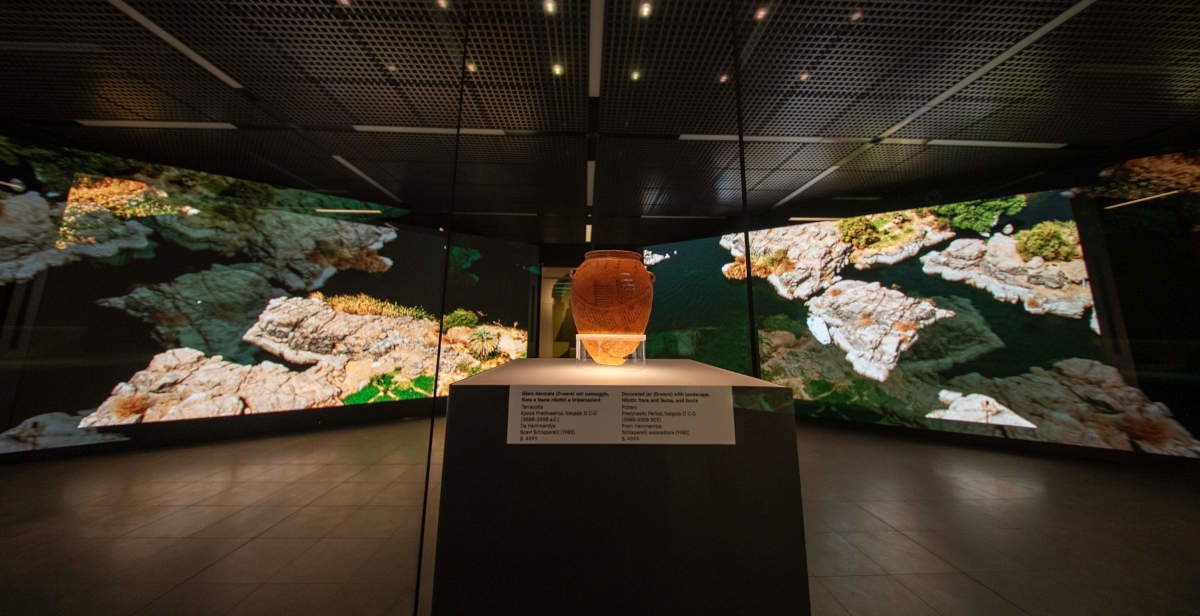
The hall features a 30-meter-long LED wall spanning the walls and is equipped with a spatialized sound design system and 360-degree projections. This is not merely a new exhibition space, but a venue designed to accommodate periodically updated content and various formats: educational exhibits, interactive and participatory activities, presentations on excavation and restoration campaigns, and events dedicated to research. It is a sort of adaptive narrative machine, intended to continually renew the ways in which the museum communicates its work.
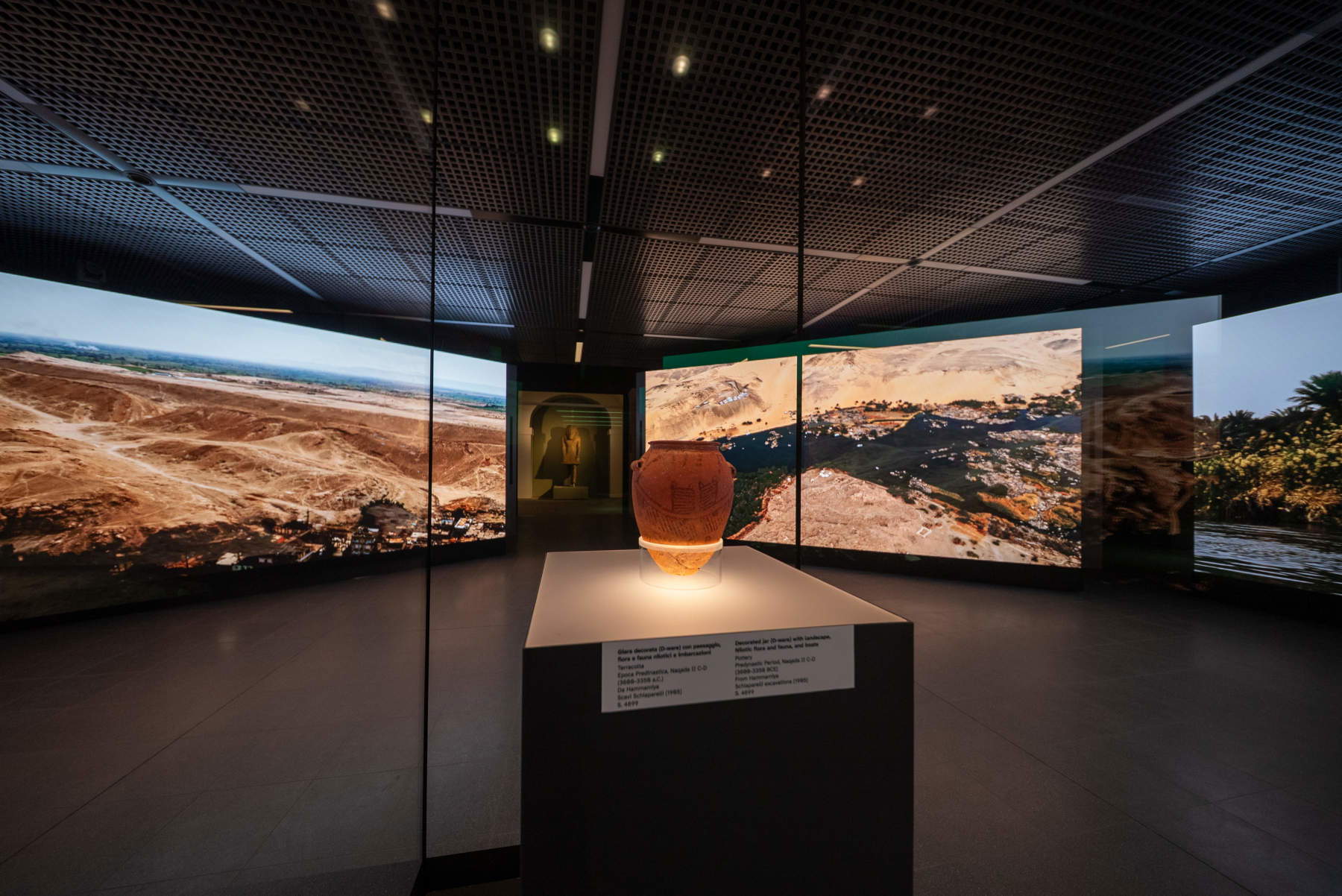
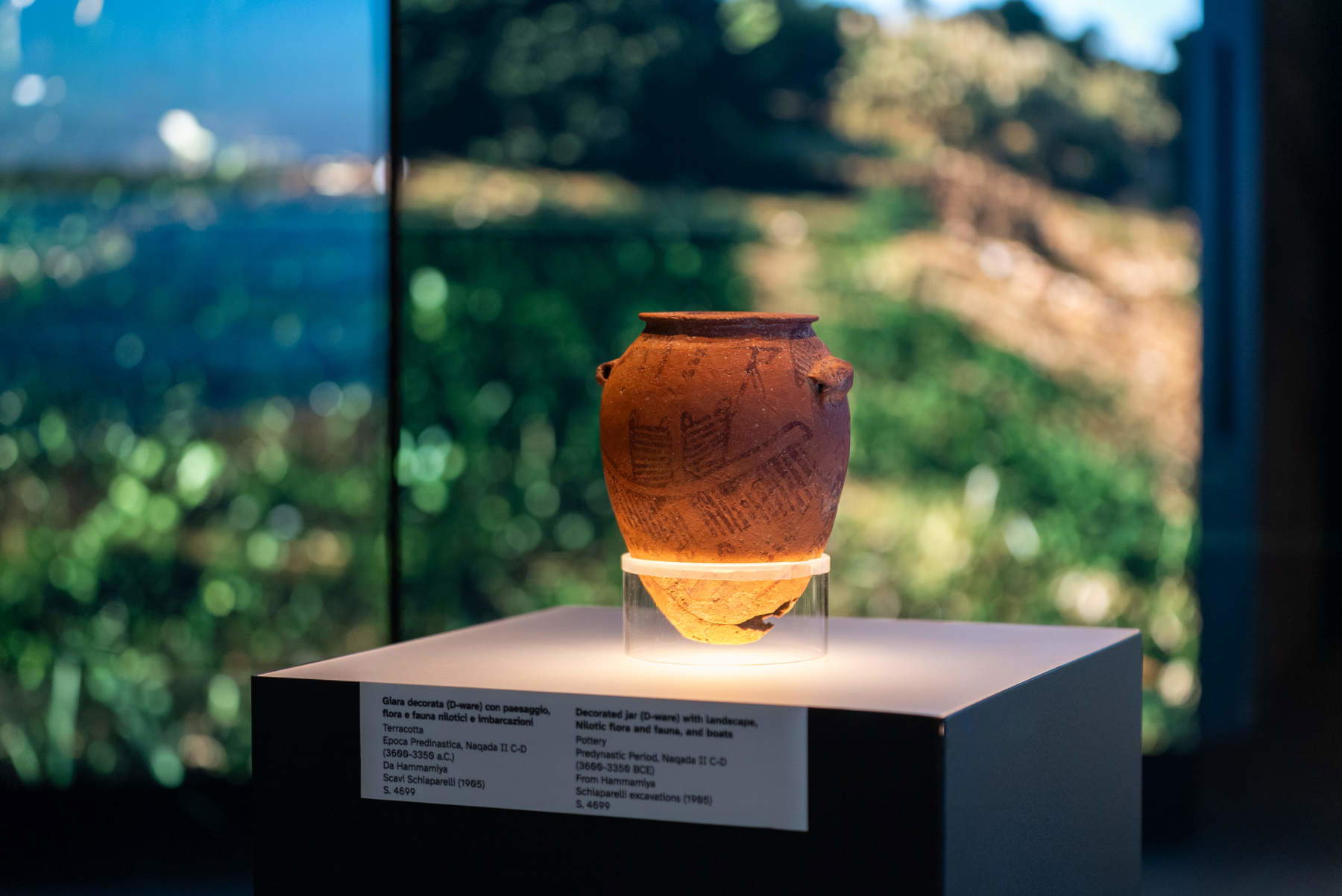
The new space is inaugurated by ECO. Landscapes in Transformation, the first curatorial project conceived specifically for the hall. The exhibition begins with a small predynastic vase discovered at the Hammamiya archaeological site, displayed in a showcase at the center of the room. Starting with the figures painted on the artifact, the narrative unfolds across the six digital walls—each five meters long—addressing a central issue for archaeological museums: the relationship between objects and the contexts from which they originate.




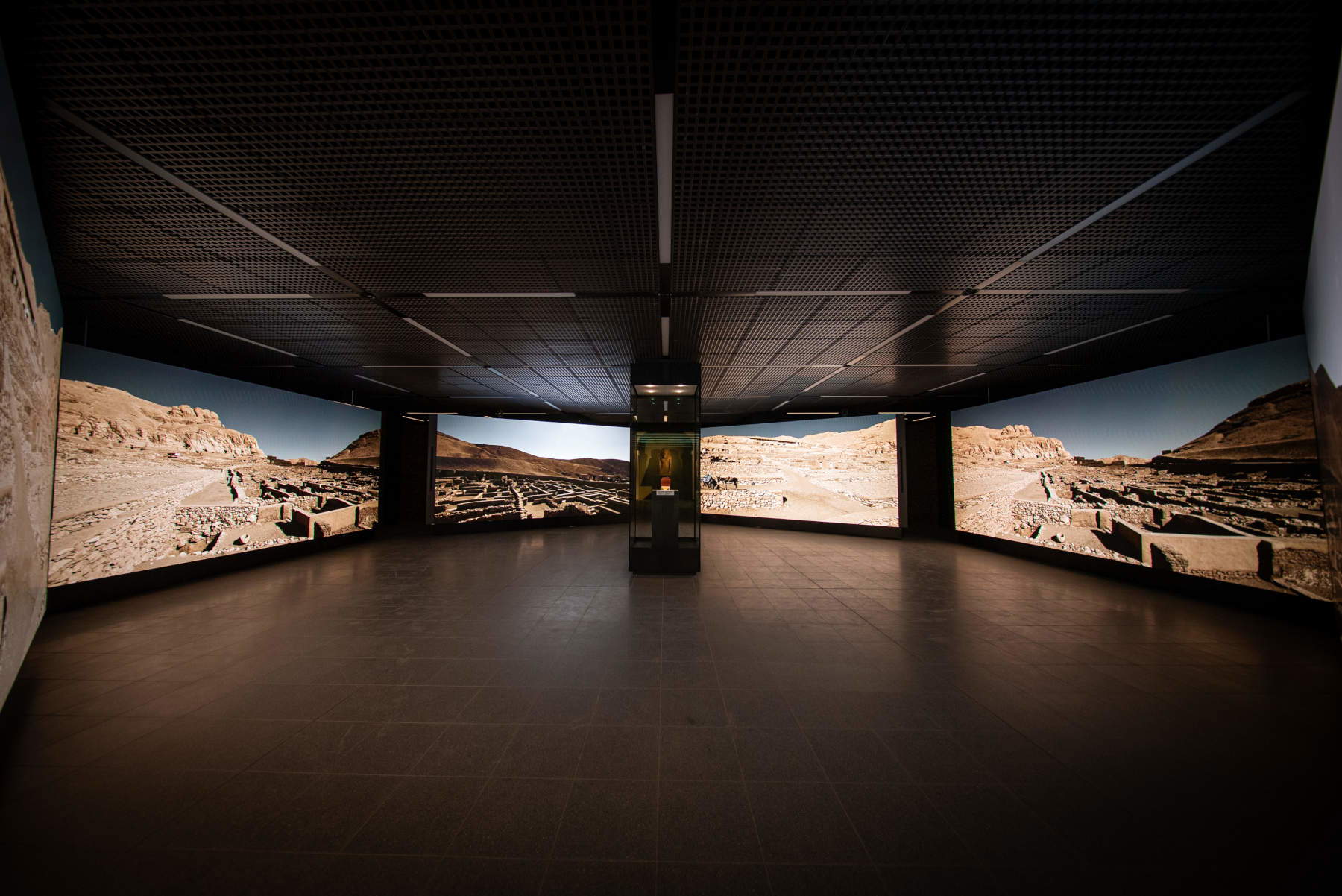
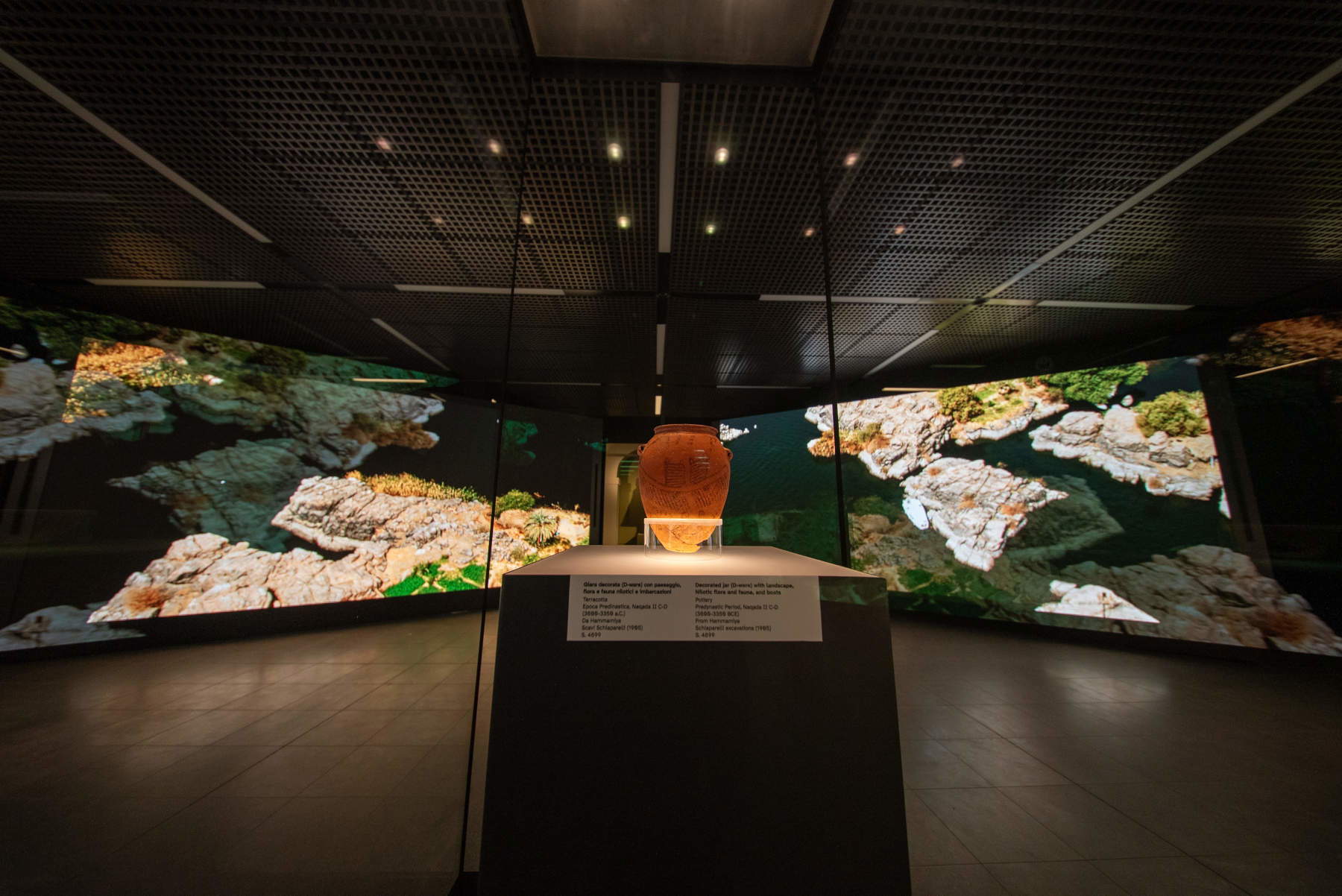
The project aims to restore to the collection a dimension that traditional display cases cannot convey: the landscape that gave rise to the objects and the relationships that bound them to the communities of their time. Each artifact is the result of a layered relationship between human beings and the land, a relationship interrupted by its transfer to the museum. Reconstructing this relationship means examining not only the preserved evidence but also the gaps and the information that time has erased.
The exhibition thus guides visitors on a journey of discovery through an Egypt in constant transformation, far removed from the static, timeless image often associated with pyramids, temples, and deserts. The landscape is viewed as the product of the interaction between climate, natural resources, settlements, human activities, beliefs, and symbolic representations. From the images on the vase, the viewer’s gaze expands to the cycles of the Nile’s floods, the millennia-long transformations of the Sahara, and the major astronomical phenomena that shape the climate and living conditions on Earth. Against this backdrop, communities have progressively reshaped the landscape, choosing where to live, farm, bury their dead, and practice their religious rites.
Archaeology, too, is part of this transformation. Excavation inevitably alters the sites it investigates, while the study, documentation, and display of artifacts help reshape the way the past is interpreted. Research proceeds through fragmentary evidence, hypotheses, and subsequent revisions, yielding reconstructions that cannot be considered definitive but remain open to new interpretations. At the end of the experience, the audience returns to observe the vase in the center of the room: the object has remained unchanged, but the newly acquired context allows them to view it from a different perspective.
“With ECO, we are inaugurating a space we envisioned to evolve alongside research, welcoming new stories and becoming a place for encounter and dialogue among disciplines, perspectives, and people,” states Enrico Ferraris, curator of the Egyptian Museum and coordinator of ECO’s scientific project. “This is perhaps the opportunity that I personally find particularly interesting to explore: not only continuing to learn about the worlds that came before us, but also discovering, together with our audience, new ways to question how we construct knowledge and how our own way of viewing and understanding the world changes as well.”
The technological component allows for experimentation with data-driven storytelling, a narrative method in which scientific data becomes an integral part of the visual composition. Astronomical, paleoclimatic, hydrological, and geomorphological datasets are correlated with archaeological evidence, iconographic collections, and photographic archives, including historical images from the excavation campaigns of the Italian Archaeological Mission conducted in the early 20th century.
Among the materials used are astronomical time series that reveal tens of thousands of years of Earth’s transformations, satellite data, and information on over 70 species and groups of flora and fauna, used to reconstruct the ancient green Sahara—a landscape crisscrossed by waterways and dotted with lakes that have since disappeared. The project also brings together nearly 500 iconographic symbols documented on over 600 predynastic vases, providing an overview of the imagery and systems of representation of the world at the dawn of Egyptian civilization.
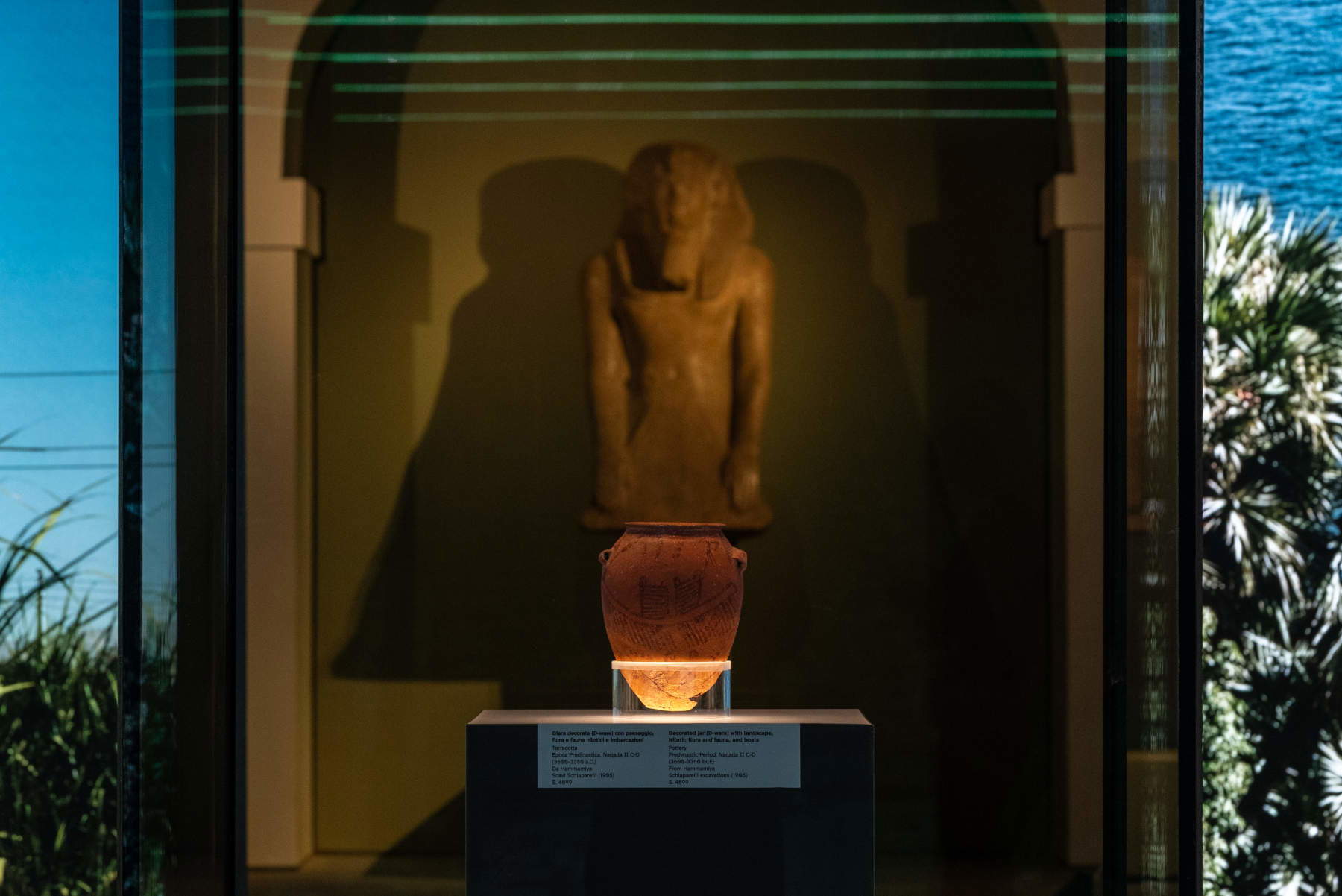
The goal is to engage the public in the museum’s working methods: observing objects, reconstructing connections to the territory, analyzing available data, and also recognizing the limitations of these reconstructions. Technology thus becomes a tool for bringing visitors closer to the processes through which archaeological knowledge is produced.
ECO was developed by an interdisciplinary research team at the Egyptian Museum coordinated by Enrico Ferraris and composed of Johannes Auenmüller, Paolo Del Vesco, Federica Facchetti, Cédric Gobeil, Martina Terzoli, Federica Ugliano, Divina Centore, and Tommaso Montonati. The group brings together expertise in field archaeology, the study of ceramics and material culture, historical and archival research, and museum communication. The project builds on the initial experiments launched with *Paesaggi/Landscapes*, presented at the Gallerie d’Italia in Turin in 2024.
The audiovisual system was developed by Acuson based on a design by RIBES Digilab and Robin Studio, which also oversaw the creation of the visual narrative based on scientific guidance from the museum team. The new gallery was created with the support of the Lavazza Group and the backing of Brightstar. Brightstar will also support the project through a series of free guided tours scheduled throughout the year.
The opening will also feature the “Immersive Nights” events: from November 23 to 29, from 7:00 p.m. to 10:00 p.m., visitors will have free access to the Egyptian Museum. Once all the work currently underway is completed, the immersive room will remain open to the public free of charge.
Other Renovations at the Museum and the History of the Mensa Isiaca
The inauguration of the hall coincides with the reopening of the Duse Atrium, located at the rear of the Baroque building, which was also part of the architectural renovation program overseen by the Rotterdam-based OMA architectural firm. The atrium is one of three entrances included in the project, along with those on Via Accademia delle Scienze and Via Maria Vittoria. The space has been completely renovated, featuring a new staircase named after the Egyptologist Ernesto Schiaparelli and the restoration of the Roman wall integrated into the structure. The overall project will culminate with the future construction of Piazza Egizia.
In the basement level, the historic rooms dedicated to the history of the Egyptian Museum are also reopening, featuring a new display for the Mensa Isiaca. This is a bronze altar table, decorated with inlays of threads and leaves in gold, silver, copper, zinc, tin, and niello. The surface and edges are covered with engraved figures and symbols inspired by Egyptian themes, with the goddess Isis enthroned at the center.
The work was likely created in Rome around the 1st century A.D. as an altarpiece for a temple dedicated to Isis near the Campus Martius. Its discovery sparked great interest and gave rise to numerous interpretive studies. At first, the engraved marks were considered hieroglyphs, but it was later realized that they were ornamental motifs without any specific meaning.
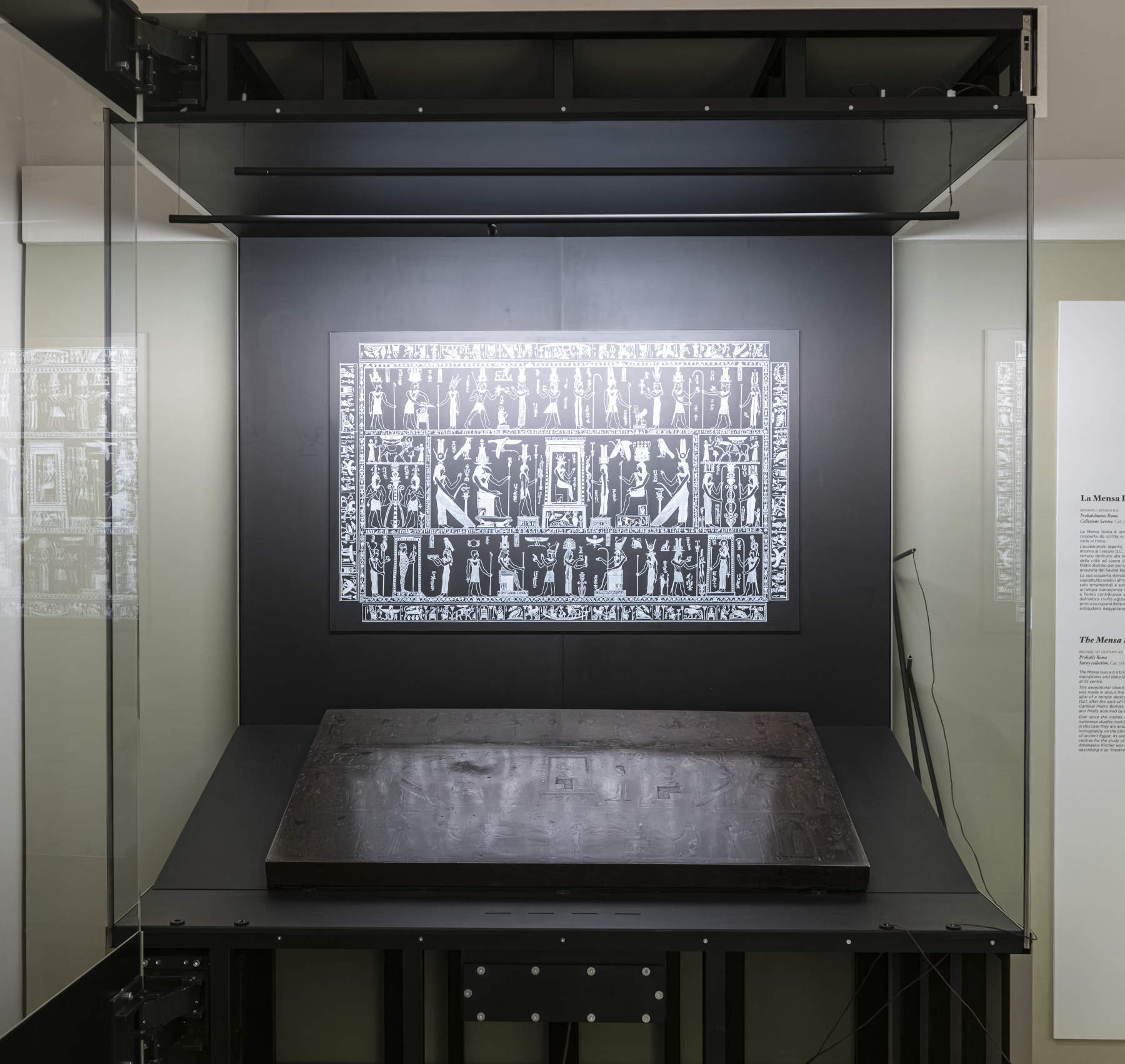
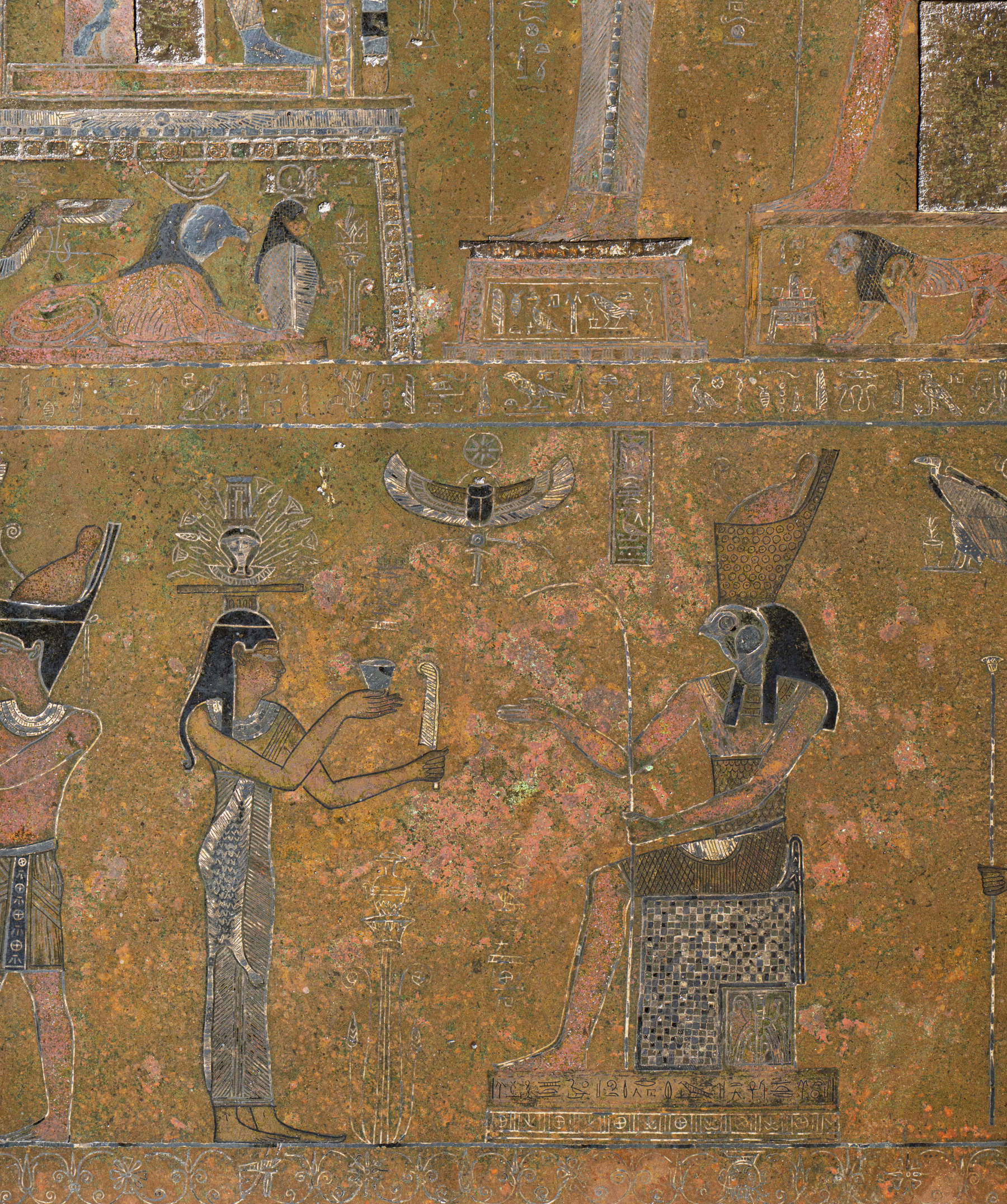
The earliest records of the tablet date back to 1527, when it came into the possession of Cardinal Pietro Bembo, from whom it derives the name “Tavola Bembina” by which it is known. In 1592, it was sold by the cardinal’s son to Duke Vincenzo Gonzaga and later entered the Savoy collection. Its arrival in Turin in 1626 marked the beginning of the city’s relationship with Egypt, a connection commemorated today, four centuries later.
Another new feature is the dedicated section on the stratigraphy of the archaeological excavation, set up near the rock-cut chapel of Ellesiya. An educational panel, accompanied by infographics, text, and videos, illustrates the methods and phases of the excavation, providing visitors with tools to understand soil stratification. This physical space is linked to the new website archeologia.museoegizio.it, which is entirely dedicated to fieldwork: from the selection of sites to be excavated to preventive archaeology, and the various professionals involved in research activities. Both spaces were created in collaboration with Gruppo FS and Archeolog, a non-profit association of Gruppo FS committed to the restoration and promotion of archaeological finds uncovered during railway and road construction projects in Italy.
Finally, the renewal also extends to the institution’s visual identity. The Egyptian Museum has updated its logo, once again enlisting the design firm Migliore+Servetto, which had previously handled the 2015 rebranding. This update accompanies the architectural and cultural transformation currently underway.
 |
| How has the landscape of ancient Egypt changed? The Egyptian Museum tells the story through an immersive exhibition space |
Warning: the translation into English of the original Italian article was created using automatic tools. We undertake to review all articles, but we do not guarantee the total absence of inaccuracies in the translation due to the program. You can find the original by clicking on the ITA button. If you find any mistake,please contact us.