



by Redazione 29/11/2026



Categories: Museums / Disclaimer
An initiative set to spark debate at the Kunstpalast in Düsseldorf, Germany: Through February 21, 2027, the museum will be transformed into a gym, and visitors can lift weights, run on treadmills, and use various exercise equipment right in front of the paintings. The museum describes itself as an institution on the move—and this time, in the truest sense of the word.


Usually, in a museum, you move from one painting to another by walking slowly. They don’t see it that way at the Kunstpalast in Düsseldorf, Germany, where they’ve come up with a unique initiative that’s sure to spark debate and raise some eyebrows: since November 5, visitors have been able to run, lift weights, or ride an exercise bike right inside the museum’s galleries. In the permanent collection galleries, alongside paintings, sculptures, and design objects, the museum has set up weight machines, exercise mats, treadmills, and other gym equipment. There are more than twenty workout stations, designed to build strength, endurance, and agility, all scattered throughout the museum. The initiative is called GYM. Fit with Art and will remain open until February 21, 2027. According to the museum, this is the first time in the world that an art museum’s collection has been transformed into a fully functional gym.


The idea, the museum notes, did not come out of nowhere. Exactly one hundred years ago, right here in the Kunstpalast, the city had dedicated a massive exhibition to the body and health. In 1926, Düsseldorf’s Ehrenhof hosted the GeSoLei, the “Great Exhibition for Health Care, Social Welfare, and Physical Exercise” (the name combines the initials of the three German words Gesundheitspflege, soziale Fürsorge, and Leibesübungen). With approximately 7.5 million visitors, it was the most-visited exhibition of the Weimar Republic. To host it, the monumentalEhrenhof complex—comprising the exhibition buildings, the current Tonhalle, and the Rheinterrasse—was built in just eighteen months based on a design by architect Wilhelm Kreis. GYM. Fit with Art celebrates that centennial by revisiting the same themes—health and physical activity—and does so within the very buildings created for that occasion.


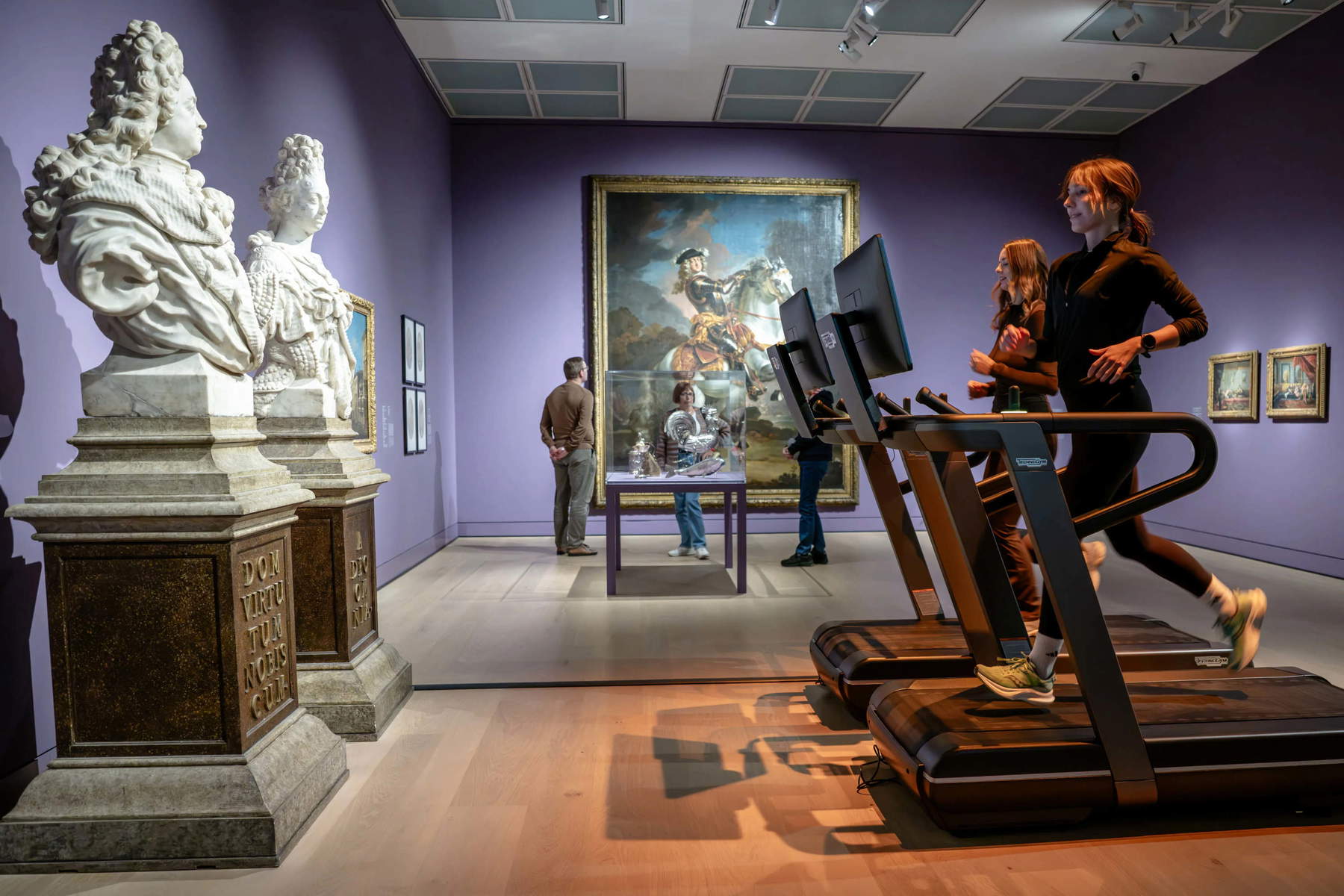
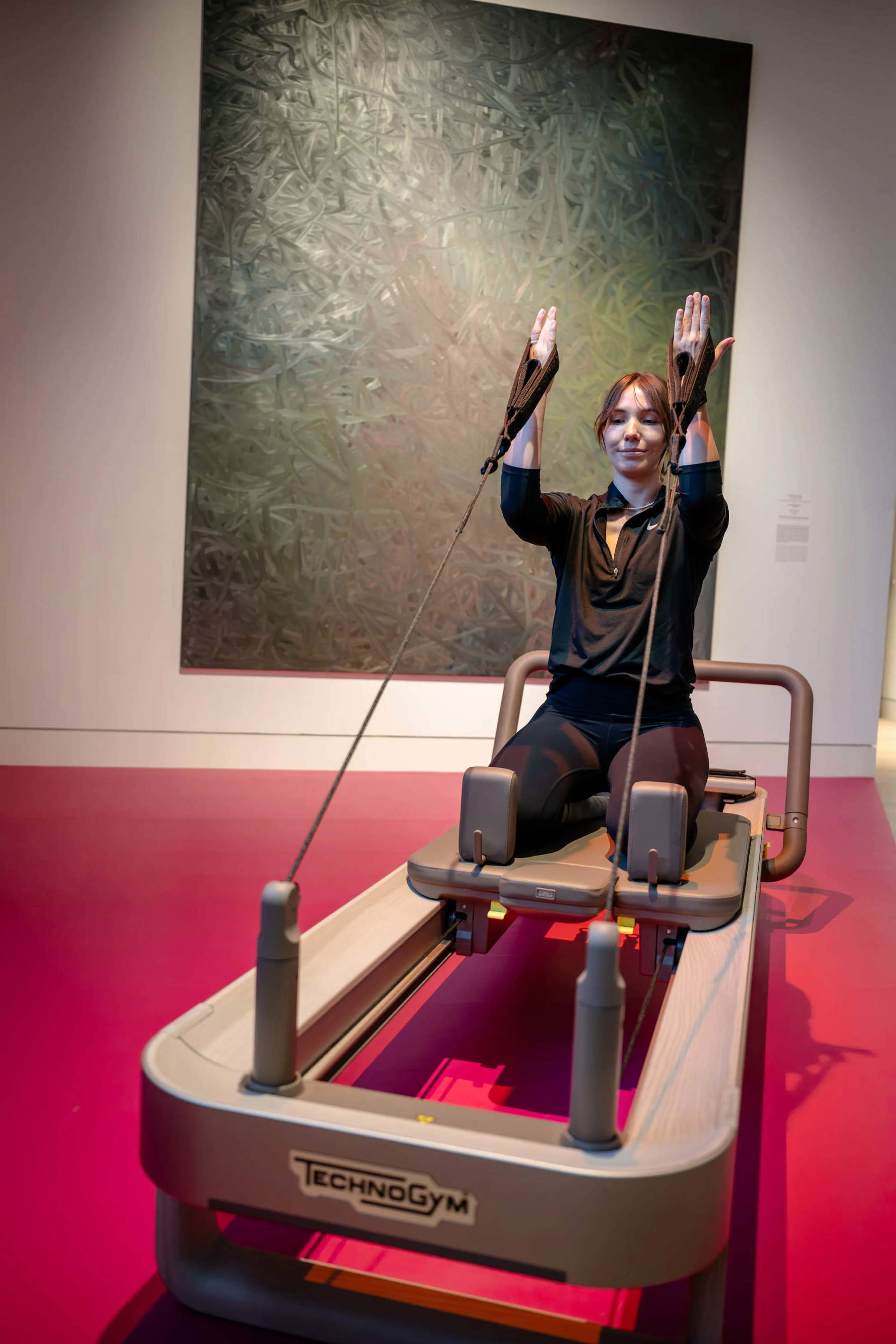
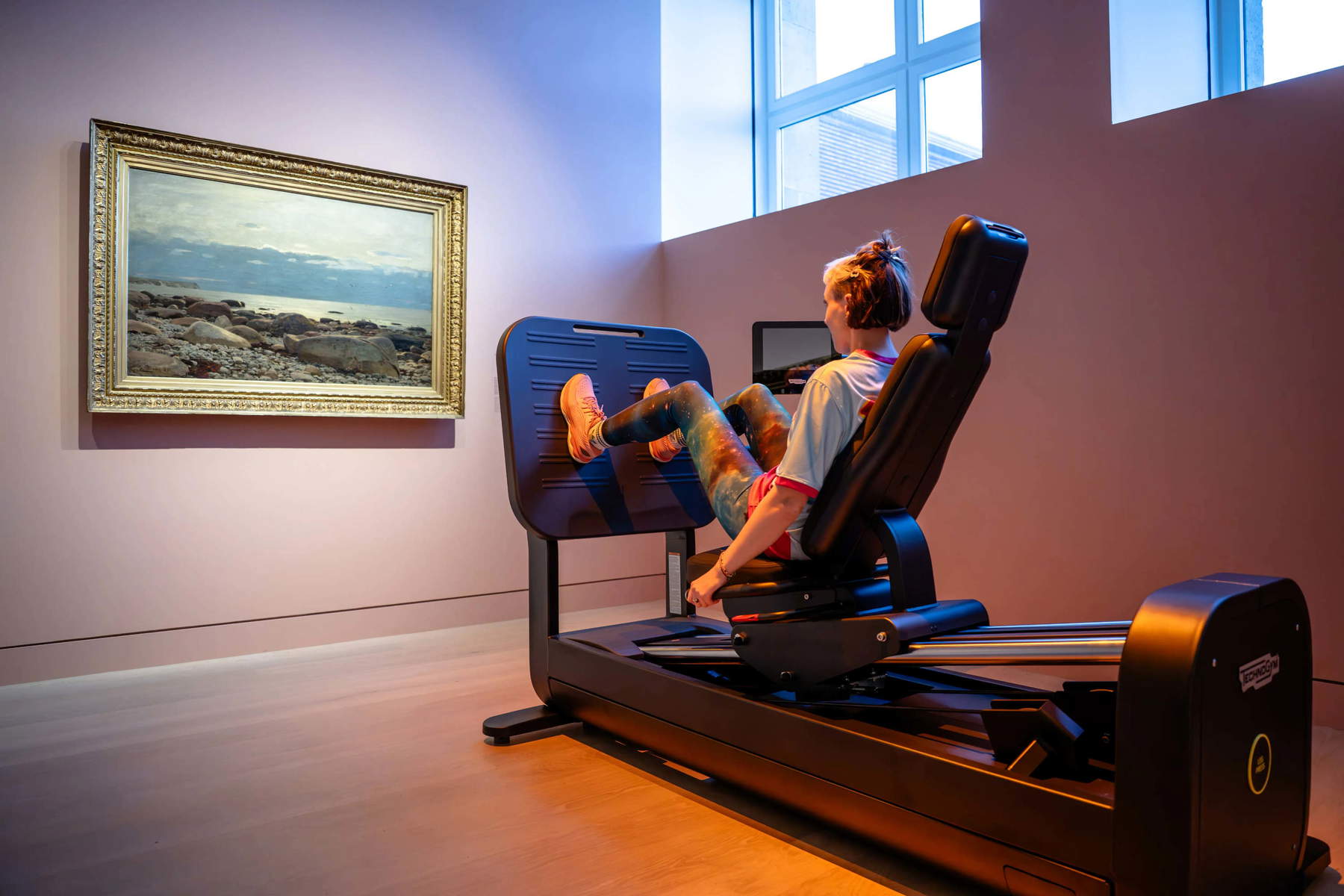
The history of GeSoLei is told in a parallel exhibition, “100 Years GeSoLei,” presented in the museum’s “Spot On” format. The two initiatives complement each other, according to the museum’s intentions. On the one hand, there is the historical context of an exhibition that, a hundred years ago, drew millions of people to the banks of the Rhine to learn about hygiene, healthcare, and sports. On the other hand, there is an experiment in the present: what happens if the museum asks visitors not only to look, but also to move?


The museum emphasizes that no one is obligated to exercise (and heaven forbid they should be). Interested visitors, however, can follow a real workout program, try a few individual exercises, or simply observe this unusual coexistence of art and fitness equipment. GYM. “Fit with Art,” explains the Kunstpalast, aims to be a space where different ideas about physical fitness, the body, and well-being come together—a place where you can work out, try new things, and break a sweat without any pressure to perform. Those who prefer to view the artworks are just as welcome: the idea is that everyone chooses how to spend their time at the museum.
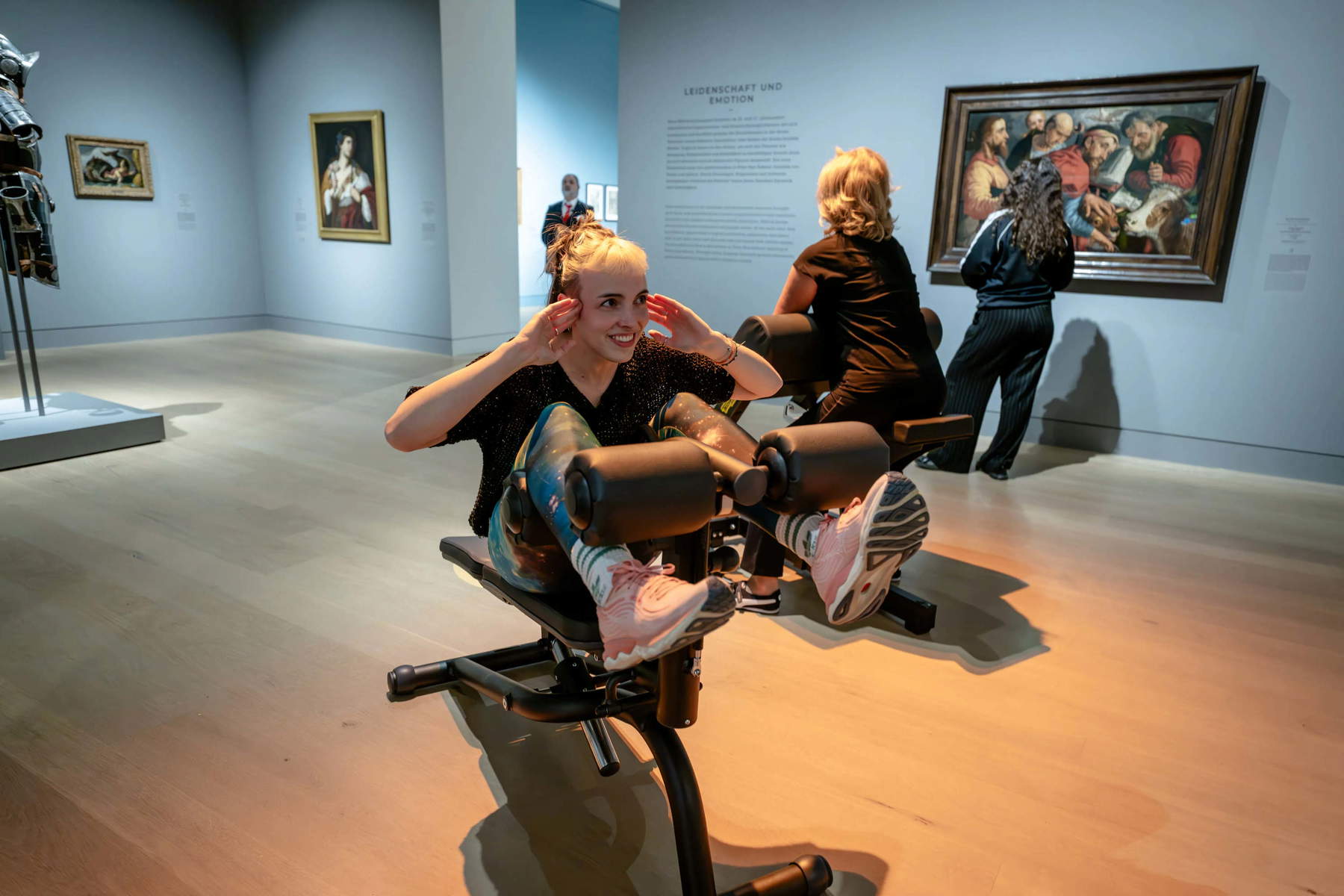
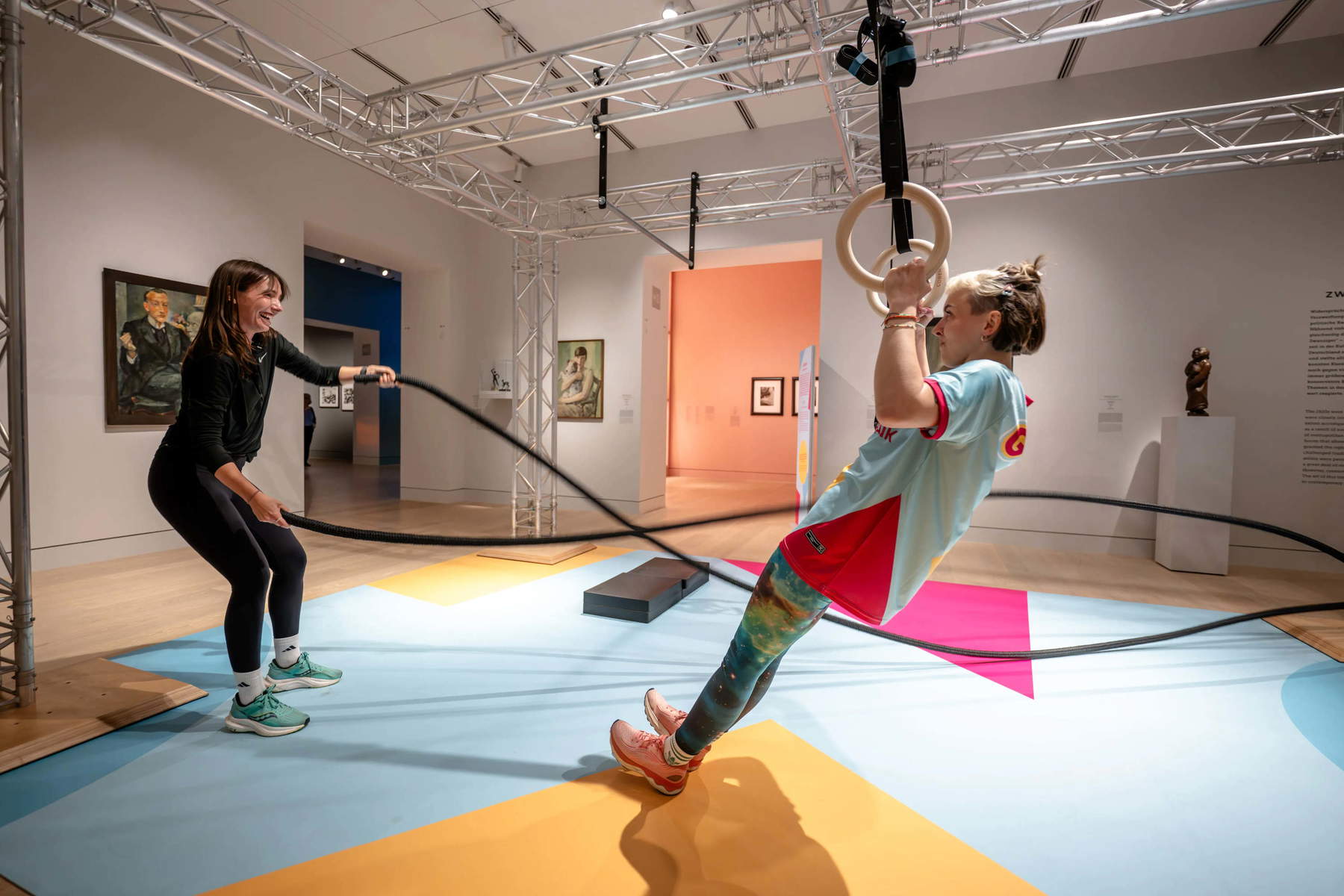
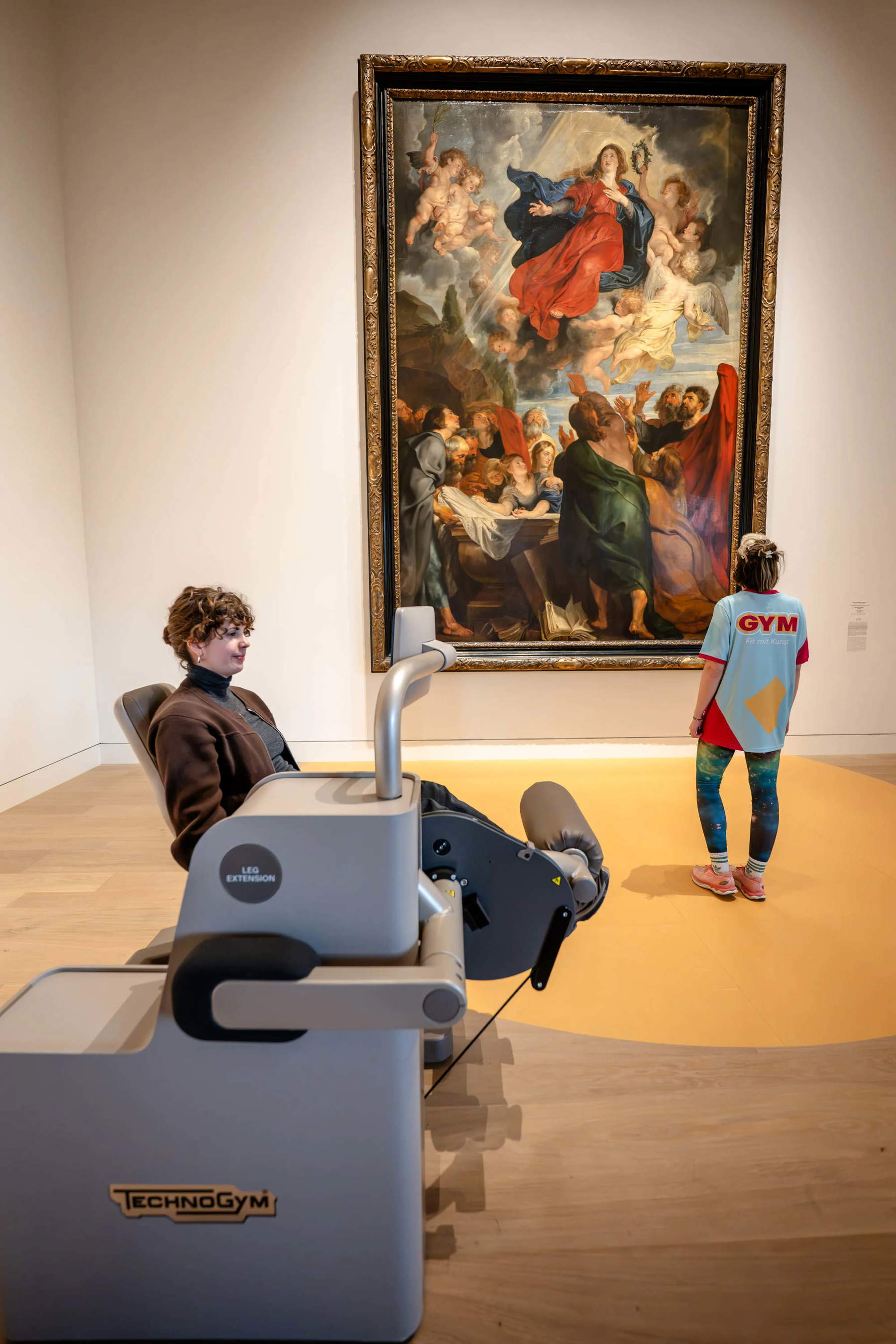
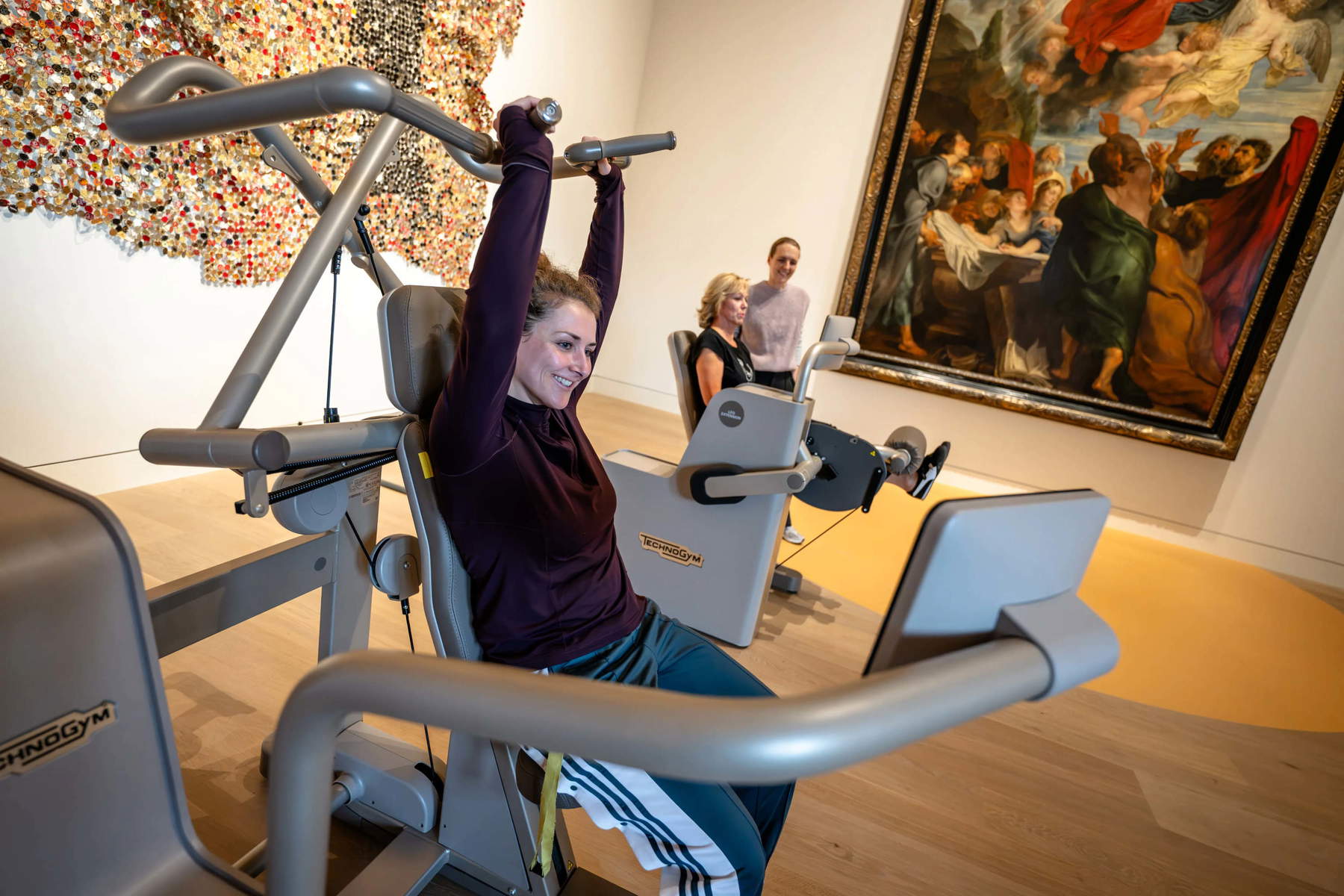
Access works just like at a gym. In addition to a museum ticket, you can use your Urban Sports Club membership to enter—the platform that lets you access various sports facilities with a single membership. The project is supported by TARGOBANK and is carried out in collaboration with Technogym, which the museum describes as the world’s leading manufacturer of fitness equipment.
The Kunstpalast describes its collection as “always in motion,” and this time the expression should be taken literally. For four months, the galleries that usually invite contemplation become a workout circuit. The museum thus becomes a place where the visitor’s body is no longer just that of a viewer, but also of someone exerting themselves. But what about the conservation conditions of the ancient works (the museum has a collection that includes over 800 works, among them pieces by Giovanni Bellini, Rubens, Bernini, Pietro da Cortona, and Friedrich) and the fact that those who enter the museum solely to view the artworks might not be particularly eager to see other visitors sweating and panting in the gallery? The museum’s press releases make no mention of these issues...
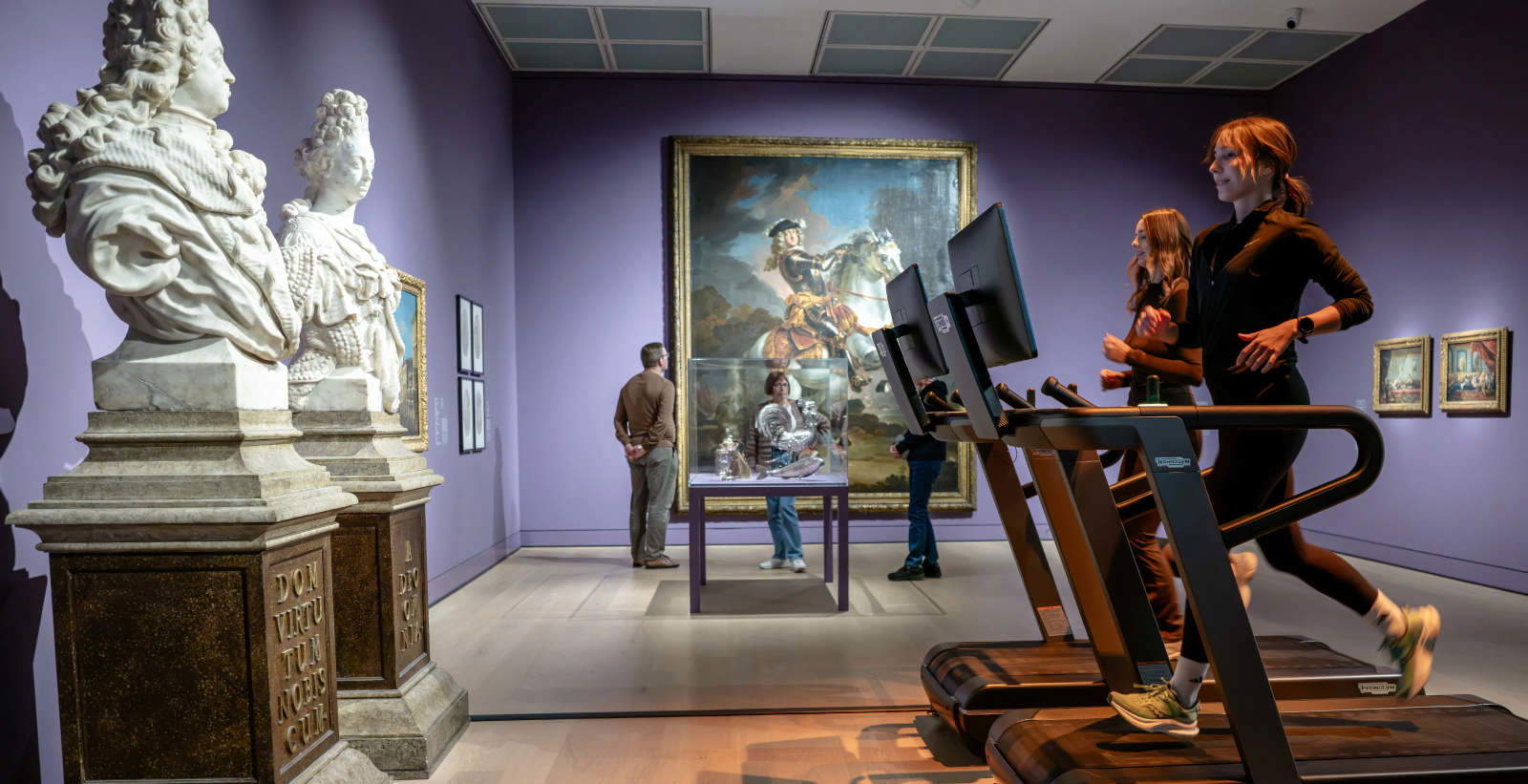 |
| In Germany, a museum is turning into a gym: it’s happening at the Kunstpalast in Düsseldorf |
Warning: the translation into English of the original Italian article was created using automatic tools. We undertake to review all articles, but we do not guarantee the total absence of inaccuracies in the translation due to the program. You can find the original by clicking on the ITA button. If you find any mistake,please contact us.