



by Redazione 17/11/2026


Categories: Museums / Disclaimer
On November 18, the Gallery of Modern Art in Milan will open a new exhibition dedicated to Francesco Hayez and Romantic historical painting. The centerpiece of the exhibition is the painting *The Fieschi Conspiracy*, on loan to the museum for ten years from a private collection.


The GAM in Milan is opening a new gallery to the public dedicated to Francesco Hayez and Romanticism. The redesigned exhibition, open to the public starting Wednesday, November 18, brings together works from the permanent collections, new acquisitions, paintings restored to public view, and loans, offering a journey through Romantic history painting and the role Milan played during the Restoration period. During that period, the city established itself as one of Italy’s leading artistic centers and a hub for the spread of Romantic culture, thanks in part to Hayez’s presence and work.

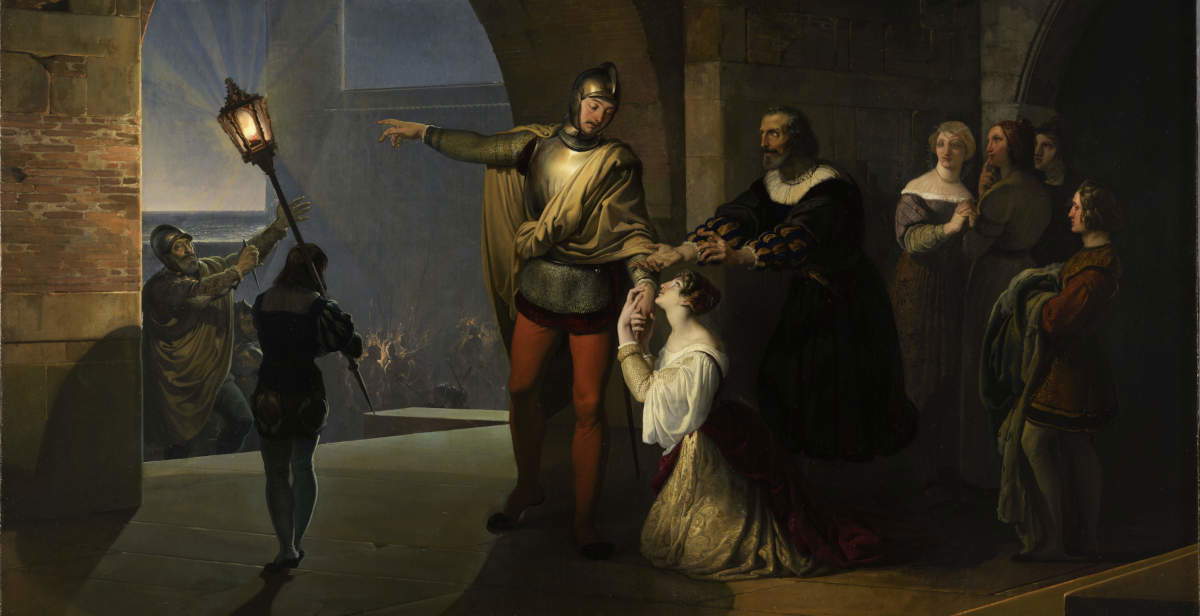
The centerpiece of the new gallery is *The Fieschi Conspiracy*, an important historical painting created by the Venetian artist in 1826, which has been included in the exhibition on a ten-year loan. The GAM already houses one of the most significant collections of the artist’s works, including *The Penitent Magdalene in the Desert* and several portraits, among them those of Matilde Juva Branca, Countess Antonietta Negroni Prati Morosini, and Alessandro Manzoni.
Commissioned by the Genoese patron Francesco Peloso, one of the leading collectors of his time, *The Fieschi Conspiracy* is inspired by an episode in Genoa’s history: the attempted coup d’état organized on the night of January 2–3, 1547, by Gian Luigi Fieschi against Andrea Doria and the Republic’s oligarchic government. Hayez chose to depict the moment when the protagonist bids farewell to his wife before taking part in the conspiracy, drawing inspiration from Friedrich Schiller’s 1782 play of the same name.




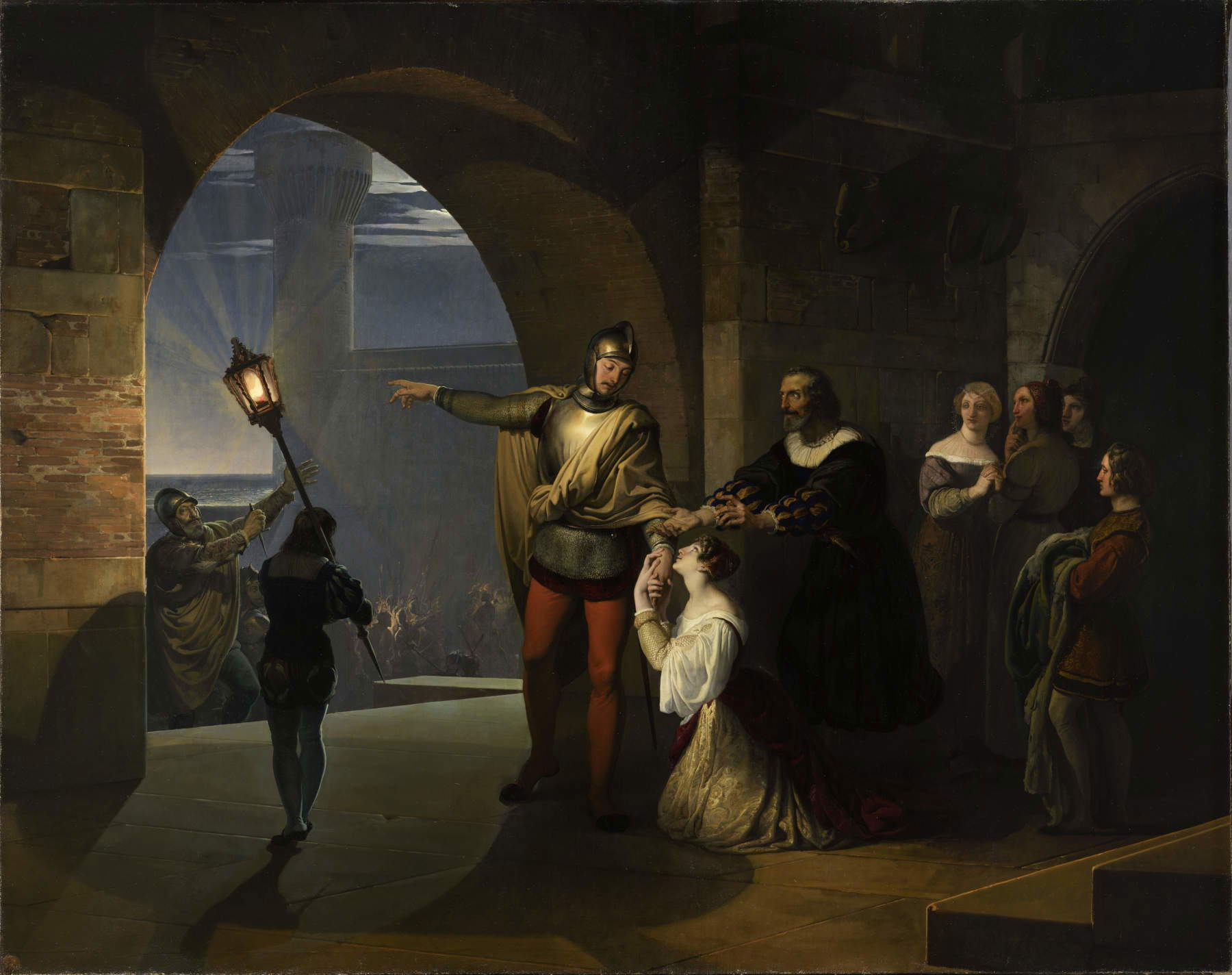
The painting, completed in 1826, received a positive reception from critics, who particularly appreciated the lighting effects of the nocturnal scene. To construct the composition, Hayez drew on the 16th-century Venetian painting tradition and, in particular, Titian’s *Martyrdom of Saint Lawrence *. From the latter, he borrowed the scenic device of the lamp illuminating the central group, in contrast to the moonlight in the background. In his autobiographical memoirs, the painter recalled the work’s success, highlighting the expressiveness of Fieschi’s wife and the effect produced by the interplay of the two light sources.
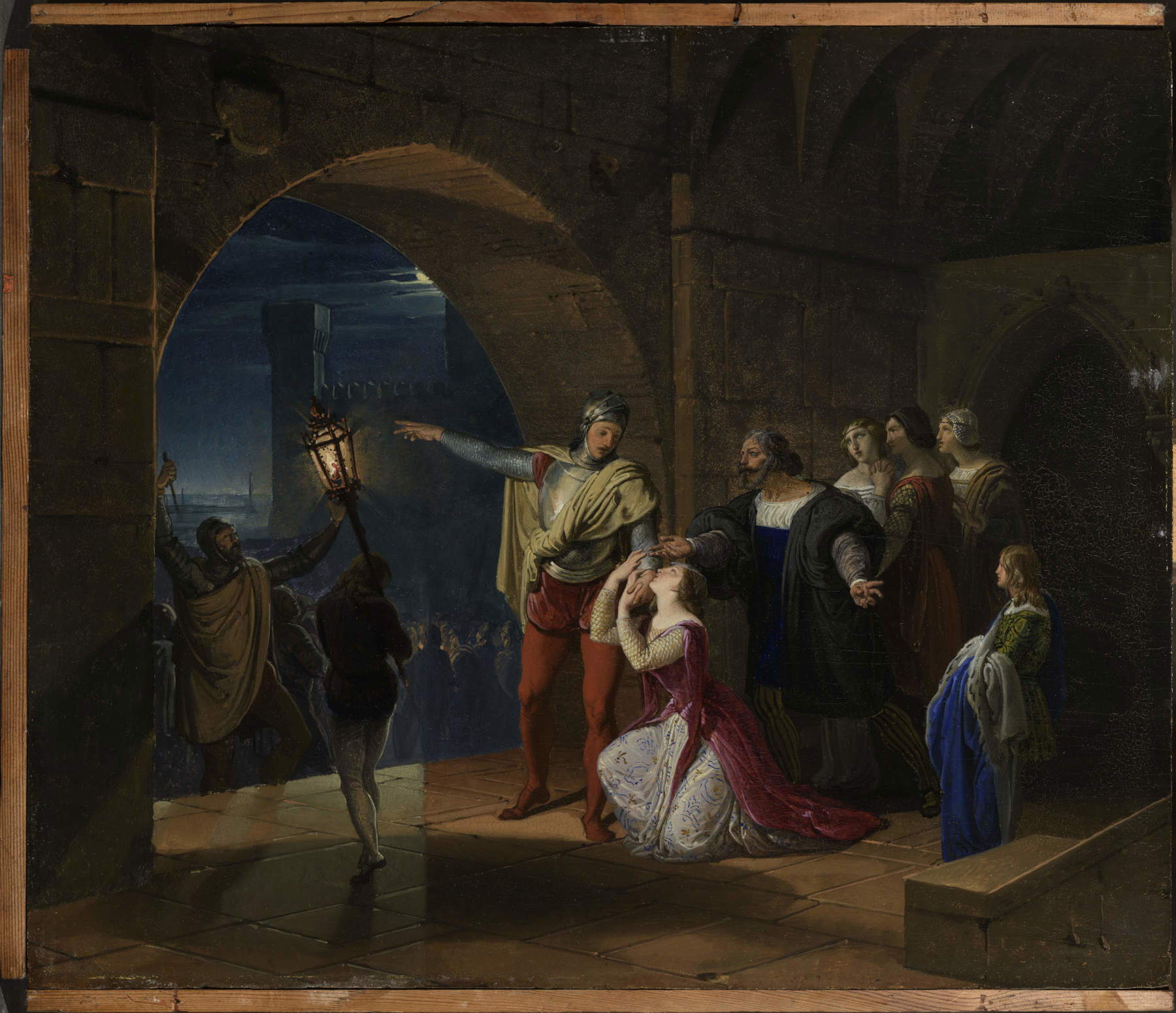
Alongside the painting, the preparatory sketch will also be on display, likewise on loan from the same private collection. The presence of both works will allow visitors to observe the development of the composition and the artist’s creative process. The exhibition will also place *The Fieschi Conspiracy* in relation to *The Penitent Magdalene in the Desert* (1833) and other examples of Romantic historical painting.
Among the new additions is *The Pazzi Conspiracy* by Carlo Arienti, acquired by the GAM in 2026. This monumental painting is one of the most significant examples of history painting developed under the influence of Hayez, both in terms of stylistic quality and narrative intensity. Commissioned by Count Alfonso Porro Schiaffinati, a young aristocrat with liberal leanings, the painting was presented to the Brera Academy in 1837, where it received a positive reception, and was subsequently sent to the 1855 Paris World’s Fair to represent Lombard painting on the international stage.
Inspired by Vittorio Alfieri’s play of the same name, the work depicts the conspiracy organized by the Pazzi family on April 26, 1478, against the Medici in Florence. Arienti chose to depict Raimondo Pazzi at the moment he is preparing to take part in the plot: his wife, Bianca de’ Medici, tries to hold him back along with their children, while his father, Guglielmo, encourages him to go on. The dramatic tension of the scene is accentuated by the characters’ poses, which evoke the language of theatrical melodrama. Long missing after being exhibited at the 1973 exhibition on Historical Romanticism in Florence, the painting thus returns to stand alongside the works of Hayez and other leading figures of 19th-century painting.
Rounding out the new exhibition is Mauro Conconi’s *Rinaldo and Armida*, a large canvas that had not been on view at the GAM since before the war and is now on display again following restoration work supported by the Friends of the GAM Association. Presented at the Brera Academy in 1844, the work is inspired by Torquato Tasso’s *Jerusalem Delivered* and depicts the moment when the sorceress Armida, instead of killing the sleeping knight Rinaldo, falls in love with him. A student of Hayez, Conconi reworked his teacher’s compositional and stylistic models, combining the troubadour aesthetic with the sensuality of Romantic painting.
The opening of the exhibition hall is accompanied by a program of in-depth discussions. On Tuesday, November 17, at 6:00 p.m., Professor Fernando Mazzocca, one of the leading scholars of the Italian Nineteenth Century, will lead a discussion dedicated to Francesco Hayez. This event kicks off a series of monthly talks that will continue through spring and will focus on the GAM’s new acquisitions, featuring art historians and experts.
“The GAM’s new exhibition layout,” says Councilor for Culture Tommaso Sacchi, “chronicles a pivotal period in Milan’s artistic history and presents the public with works of great value, some of which are on view again after many years. In recent years, we have significantly increased our investment in the GAM. Municipal funding has been supplemented by substantial contributions from private sponsors, which have made it possible to carry out renovation and enhancement projects for the museum and its collections. This commitment will yield further results in the spring of 2027, with the reopening of the second floor of the Villa Reale: the Grassi and Vismara collections will once again be accessible to the public in their original layout, designed by Ignazio Gardella and fully restored.”
 |
| In Milan, the GAM is redesigning the gallery dedicated to Hayez and Romantic painting |
Warning: the translation into English of the original Italian article was created using automatic tools. We undertake to review all articles, but we do not guarantee the total absence of inaccuracies in the translation due to the program. You can find the original by clicking on the ITA button. If you find any mistake,please contact us.