



by Redazione 13/11/2026


Categories: Museums / Disclaimer
On December 11, 2026, AGO—Modena’s new cultural hub housed in the former Sant’Agostino Hospital—will open to the public. The renovation project, designed by CRA–Carlo Ratti Associati and Italo Rota in collaboration with Politecnica, features an exhibition with over one hundred works and a permanent exhibition dedicated to the history of the historic hospital.


In the heart of Modena, a building that has cared for the sick and accompanied the development of medicine for over 250 years is preparing to take on a new role.The former Sant’Agostino Hospital is becoming AGO, a 22, 000-square-meter cultural hub dedicated to art, science, history, technology, and innovation. It is set to open to the public on December 11, 2026, with an international exhibition and a permanent museum exhibition dedicated to the complex’s history.


Sponsored by the Fondazione di Modena, the project is gradually returning one of the city’s most significant historic buildings to the public, transforming it into a cultural facility designed to house museums, archives, artistic and scientific collections, laboratories, and spaces for research, education, and community gatherings.
On Friday, November 13, Carlo Ratti led the national press on a first tour of the restored spaces of the former hospital, highlighting the results of the restoration and repurposing efforts. The project was designed by CRA–Carlo Ratti Associati in collaboration with Italo Rota and Politecnica Building for Humans, and interprets the transformation of the 18th-century complex as a process of adaptation to the needs of a contemporary cultural institution.




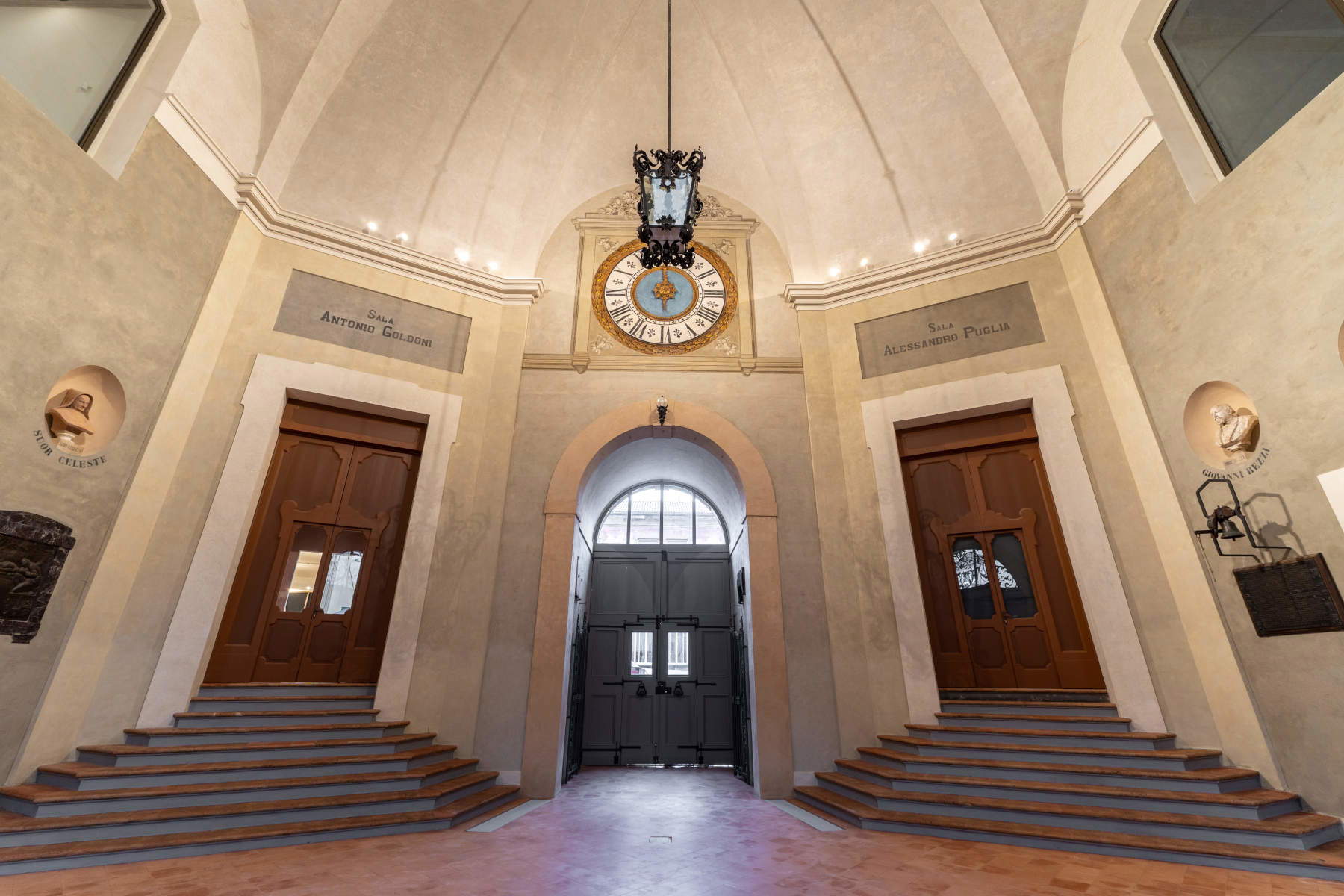
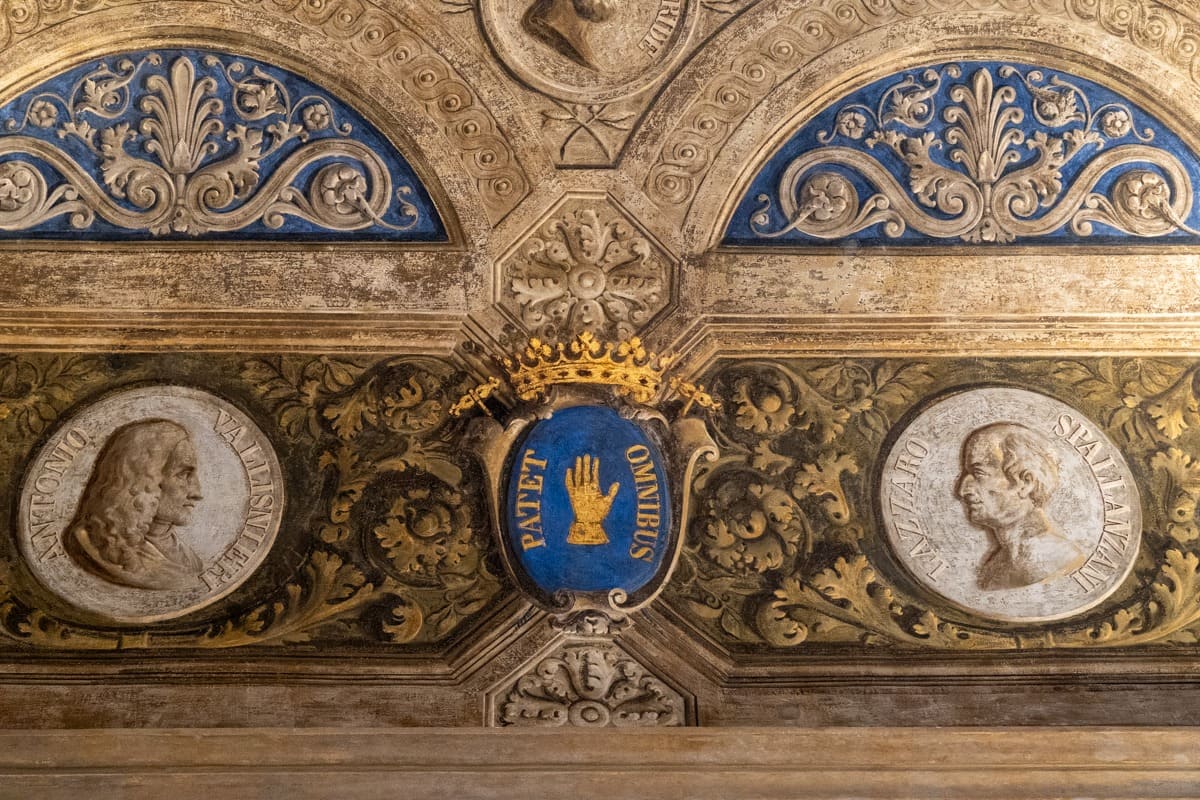
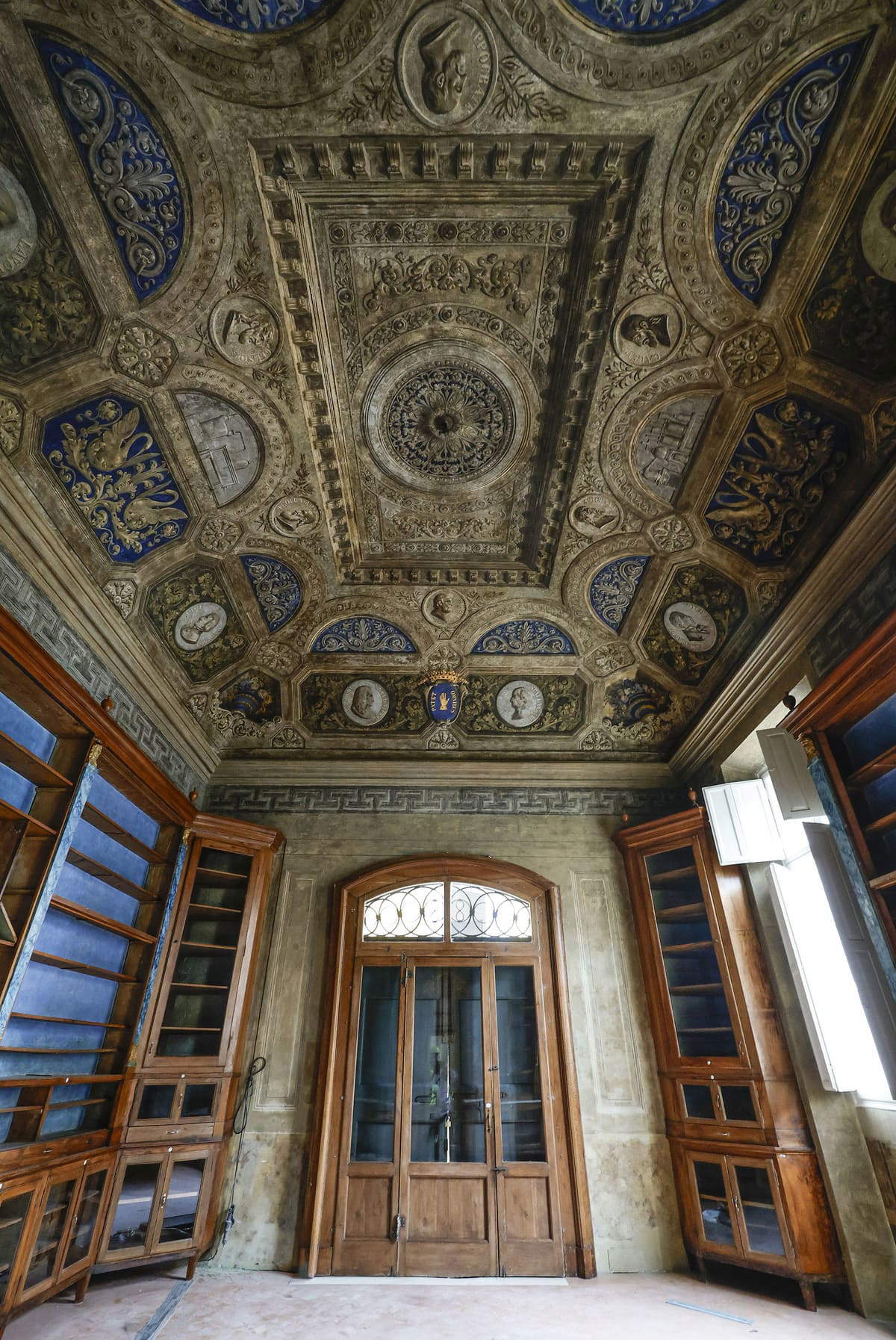
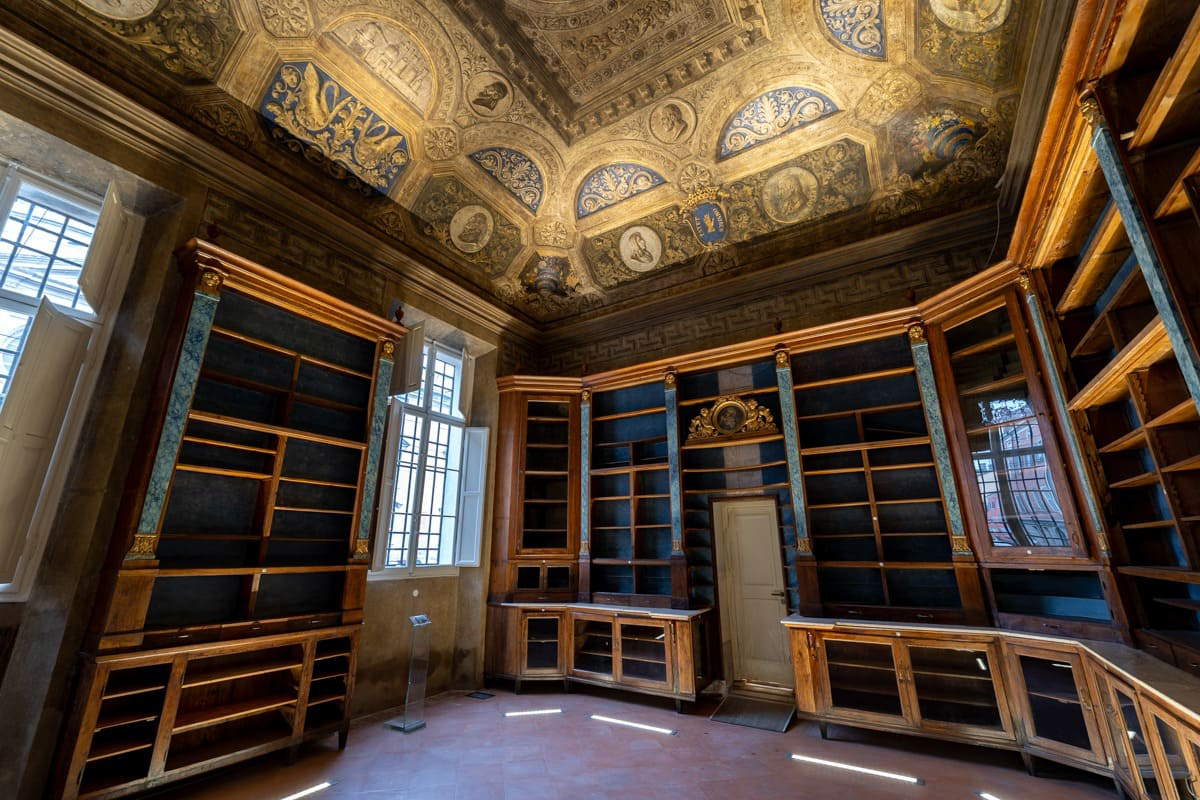
The building’s history began in 1753, when Duke Francesco III d’Este and the Community of Modena promoted the founding of the Grande Spedale. For over two and a half centuries, the complex served as a hub for healthcare, medicine, and research, as well as a place frequented by generations of citizens, professionals, and scholars. The architectural restoration provided an opportunity to unearth physical traces and evidence of life in the old hospital, making its history more accessible.
The project is based on the principle of so-called “dynamic reversibility,” an approach that seeks to reconcile the preservation of historic architecture with the possibility of modifying the functions and layout of the spaces over time. The interventions were designed to be targeted, minimal, and reversible, so as to allow the spaces to accommodate new uses without compromising the characteristics of the original building.
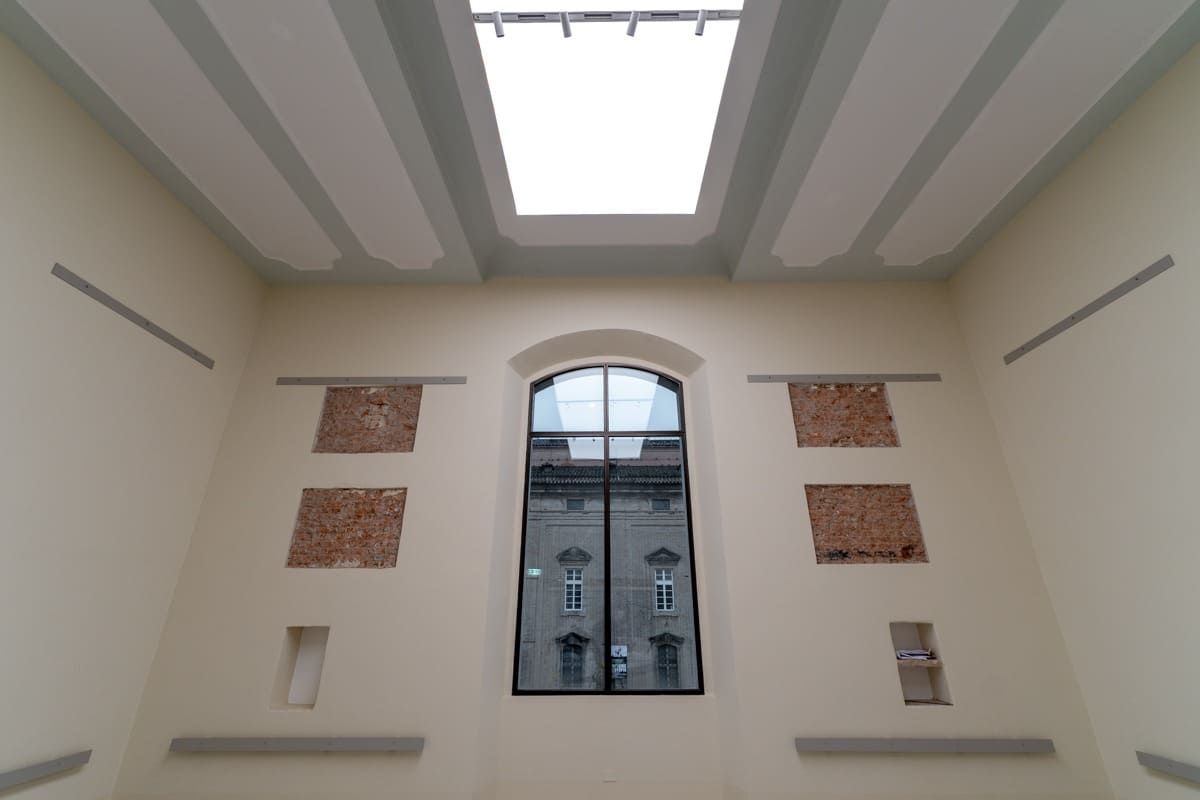
A significant part of the work involved removing the alterations and additions made over the centuries to meet the needs of hospital operations. Their removal made it possible to restore the legibility of the 18th-century layout, bringing to light historic surfaces, spaces, and architectural elements. Freed from the successive compartmentalizations, the spaces have regained a flexibility that allows them to host cultural events, exhibitions, and temporary installations.
Accompanying the opening will be “Collections Connections,” an exhibition curated by the AGO Foundation and CRA–Carlo Ratti Associati, in collaboration with critic and curator Aaron Betsky. The exhibition brings together over one hundred works by approximately sixty artists, bringing together masterpieces from the city’s collections, national and international loans, and site-specific works created for the occasion. The exhibition is organized around three themes— Living, Caring, and Exploring—which also form the conceptual pillars of AGO’s cultural project.
The works create connections across different eras, artistic languages, and disciplines. The city of the future imagined by Fortunato Depero as a new Babel is juxtaposed with the polluted metropolis painted by Mario Sironi, the “air factory” installation by the PNAT collective, and the photographs of Emilian cities taken by Olivo Barbieri and Gabriele Basilico.
The theme of care, on the other hand, finds expression in the juxtaposition of Paolo Mascagni’s 19th-century anatomical plates and the installation by British artist Anna Dumitriu, dedicated to the fragility of microorganisms. Birth is evoked by an Egyptian sculpture depicting Isis and a painting by the Scottish artist Caroline Walker depicting a celebration of the first diaper change. The theme of rebirth is also explored through a video by the Spanish artist Jordi Colomer, dedicated to the parade organized in Modena following the COVID-19 pandemic, juxtaposed with a 17th-century Flemish “Via Crucis” painted by Pieter Brueghel the Younger.
In the section dedicated to exploration, a 19th-century catadioptric microscope by Giovan Battista Amici enters into dialogue with a telescope photographed by Luigi Ghirri on the Gulf of Capri and with an installation by Swedish artist Batia Suter, who explores the representation of the cosmos through photography.
Alongside the inaugural exhibition, AGO will also present *Trame | Il Grande Spedale*, a permanent museum exhibition promoted by the Fondazione di Modena and dedicated to the history of the former Sant’Agostino Hospital and its restoration. The project offers a multimedia narrative that traces over 250 years of history, interweaving the institution’s story with the restoration and redevelopment efforts that shaped its transformation.
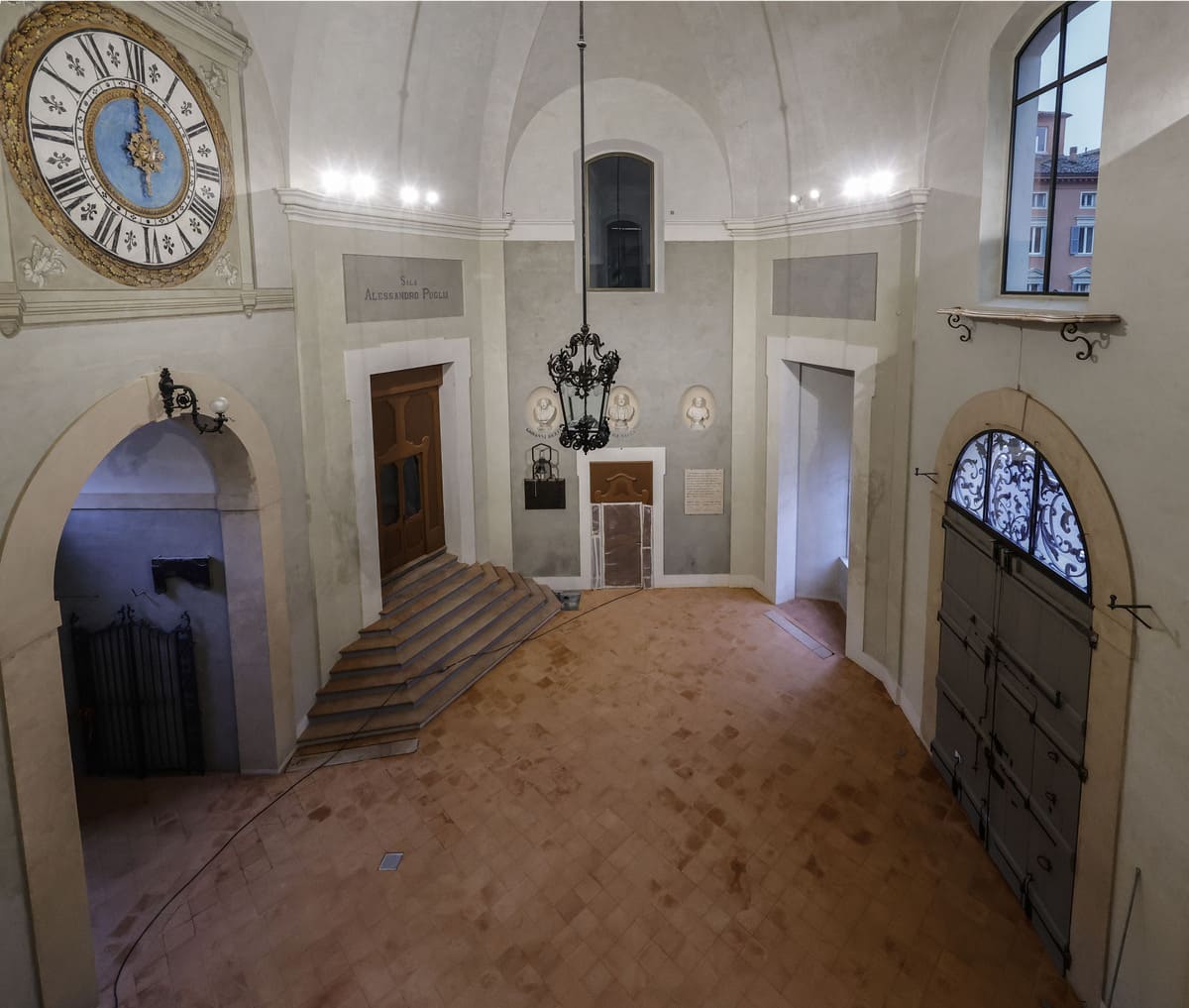
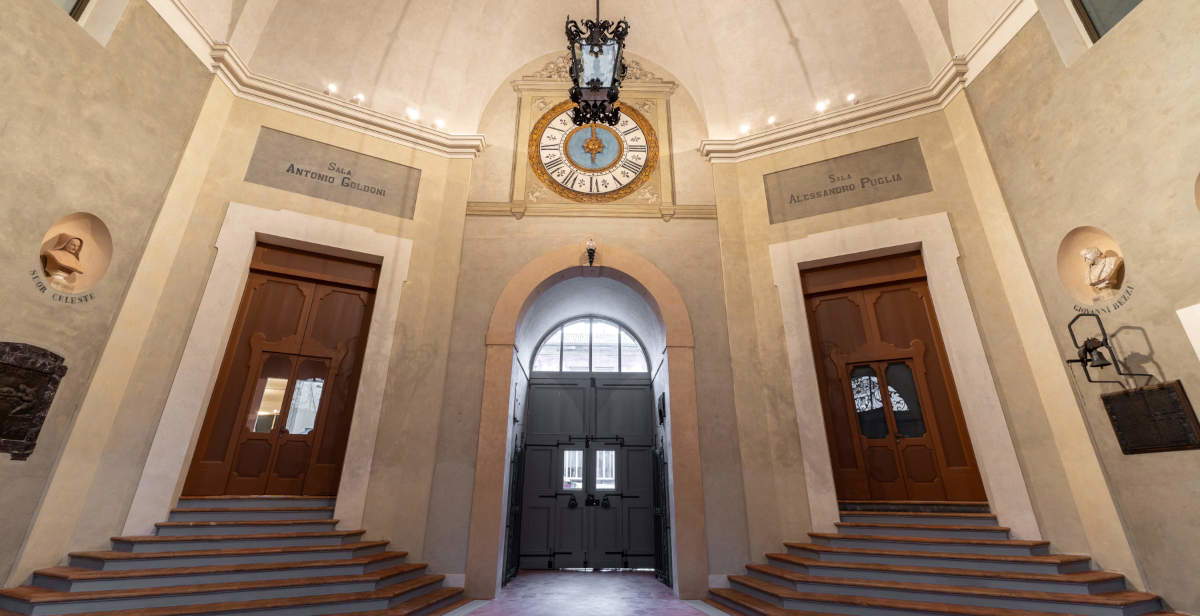
Among the most significant documentary elements are the discoveries made in the chamber housing the monumental clock—which had remained sealed for nearly a century—that have revealed fragments of everyday hospital life. A video mapping projection on the exterior surface of the vaulted ceiling of the Grand Atrium illustrates the architectural techniques and solutions used to construct the building in the 18th century.
The exhibition also delves into the history of medicine and healthcare through the figures who shaped the hospital’s history and the spaces of the Antica Farmacia and the Spezieria. Here, multimedia installations, interactive tools, and olfactory experiences offer insights into the pharmaceutical practices and scientific knowledge of the past.
The museum design is the work of Politecnica Building for Humans and Professor Francesco Doglioni, who are also responsible for the complex’s restoration. The exhibit design, multimedia installations, and visual identity were entrusted to the Dotdotdot studio.
The transformation of the former Sant’Agostino complex will continue even after AGO opens. The installation of the kinetic canopy over the Cortile delle Tenaglie—developed by CRA in collaboration with Chuck Hoberman and inspired by the geometry of origami—is scheduled for 2029. The structure will be able to change its configuration, transforming the courtyard into a reconfigurable public space.
 |
| In Modena, a historic hospital is being transformed into a 22,000-square-meter cultural center |
Warning: the translation into English of the original Italian article was created using automatic tools. We undertake to review all articles, but we do not guarantee the total absence of inaccuracies in the translation due to the program. You can find the original by clicking on the ITA button. If you find any mistake,please contact us.