





After two years of restoration and enhancement work, the Cassamarca Foundation is reopening the exhibition spaces at Casa dei Carraresi and Ca’ dei Brittoni to the city of Treviso. The 13th-century complex will once again permanently house a significant portion of the Foundation’s art collection, spread across more than 2,000 square meters. More than 200 works are featured in the new exhibition layout, which includes a section dedicated to 20th-century art and a special focus on the contemporary work of Grisha Bruskin.
The reopening, scheduled for October 2, 2026, also marks the first step in a project to enhance the Fondazione Cassamarca’s historic venues, which is set to develop progressively with the creation of a “Museum Without Walls” in the heart of Treviso. The project will subsequently involve Ca’ Spineda—which already houses part of the collection and will feature new exhibitions dedicated to still lifes, icons, and installations—and the Monte di Pietà, where the spaces are scheduled to open in 2027.
The new permanent exhibition is based on a selection of works from the Foundation’s collection, which has been acquired over time and enriched in particular by the bequest of Monsignor Gino Bortolan. Among the featured artists are Baj, Cagli, Fontana, Manzoni, and Plessi, alongside a significant representation of artists connected to the Venetian context, including Vedova, Tancredi, Santomaso, Saetti, Zoran Mušič, and Pizzinato. Professors Silvia Burini and Giuseppe Barbieri of Ca’ Foscari University of Venice contributed to the design of the exhibition.
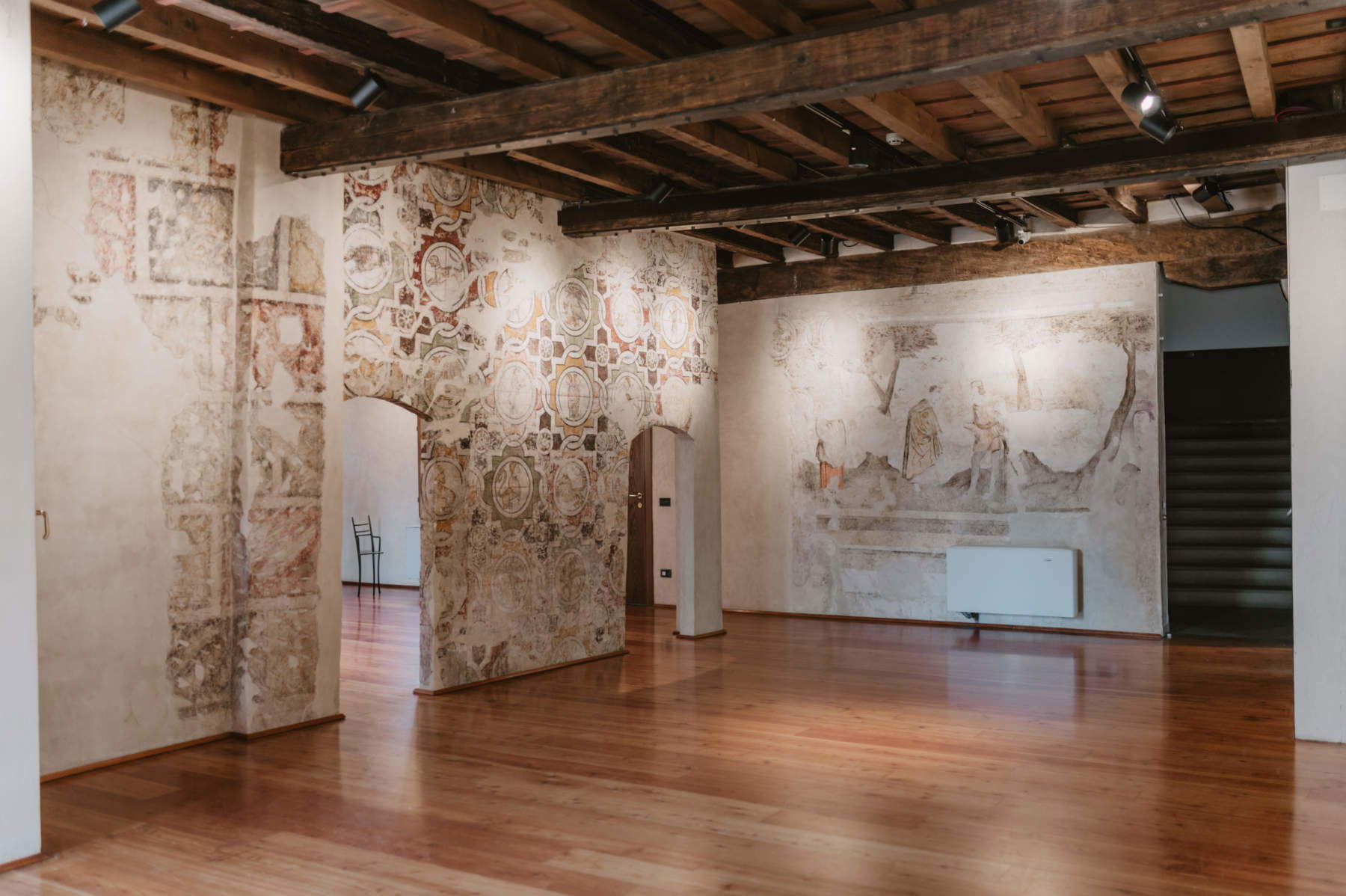
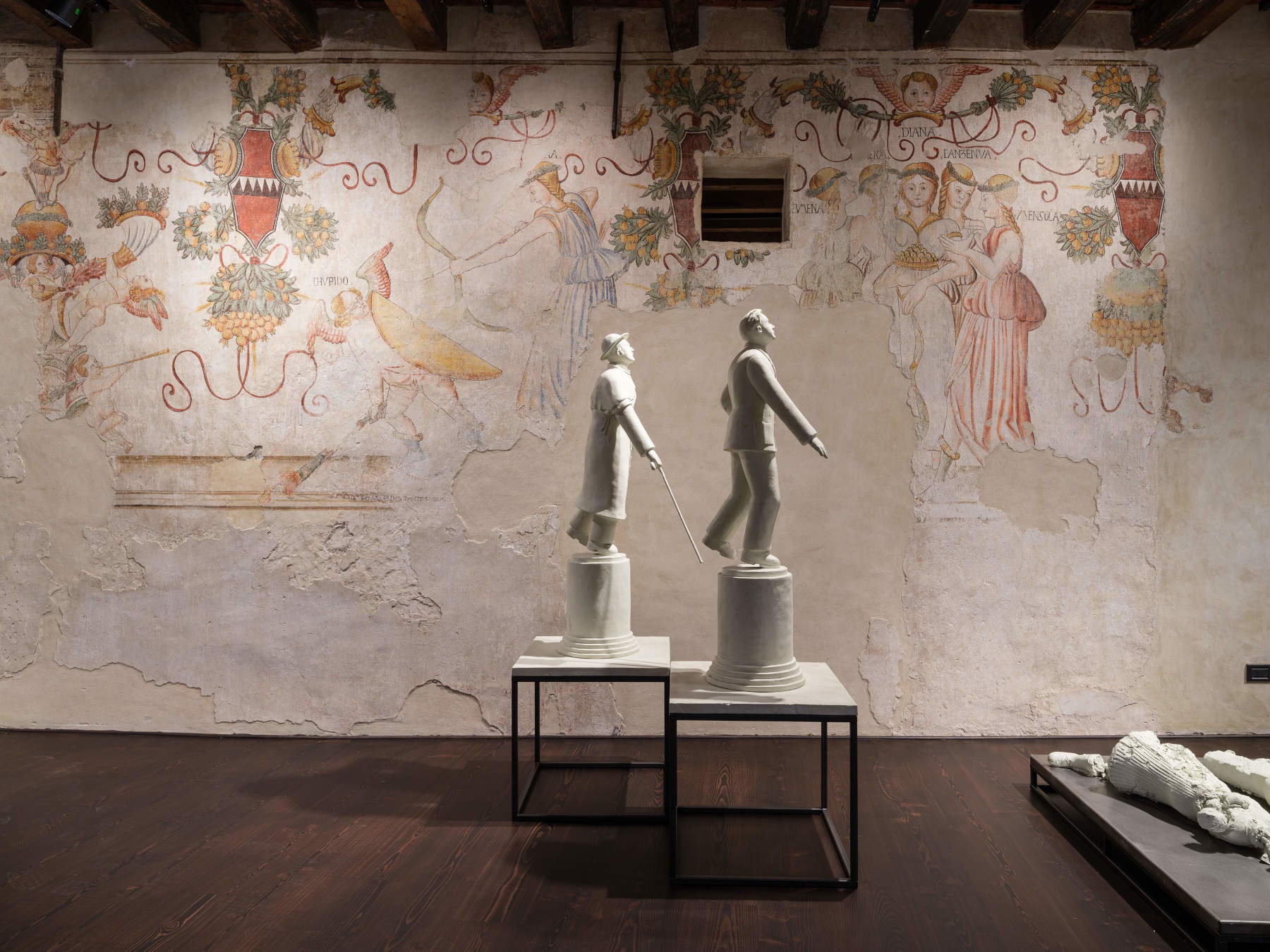
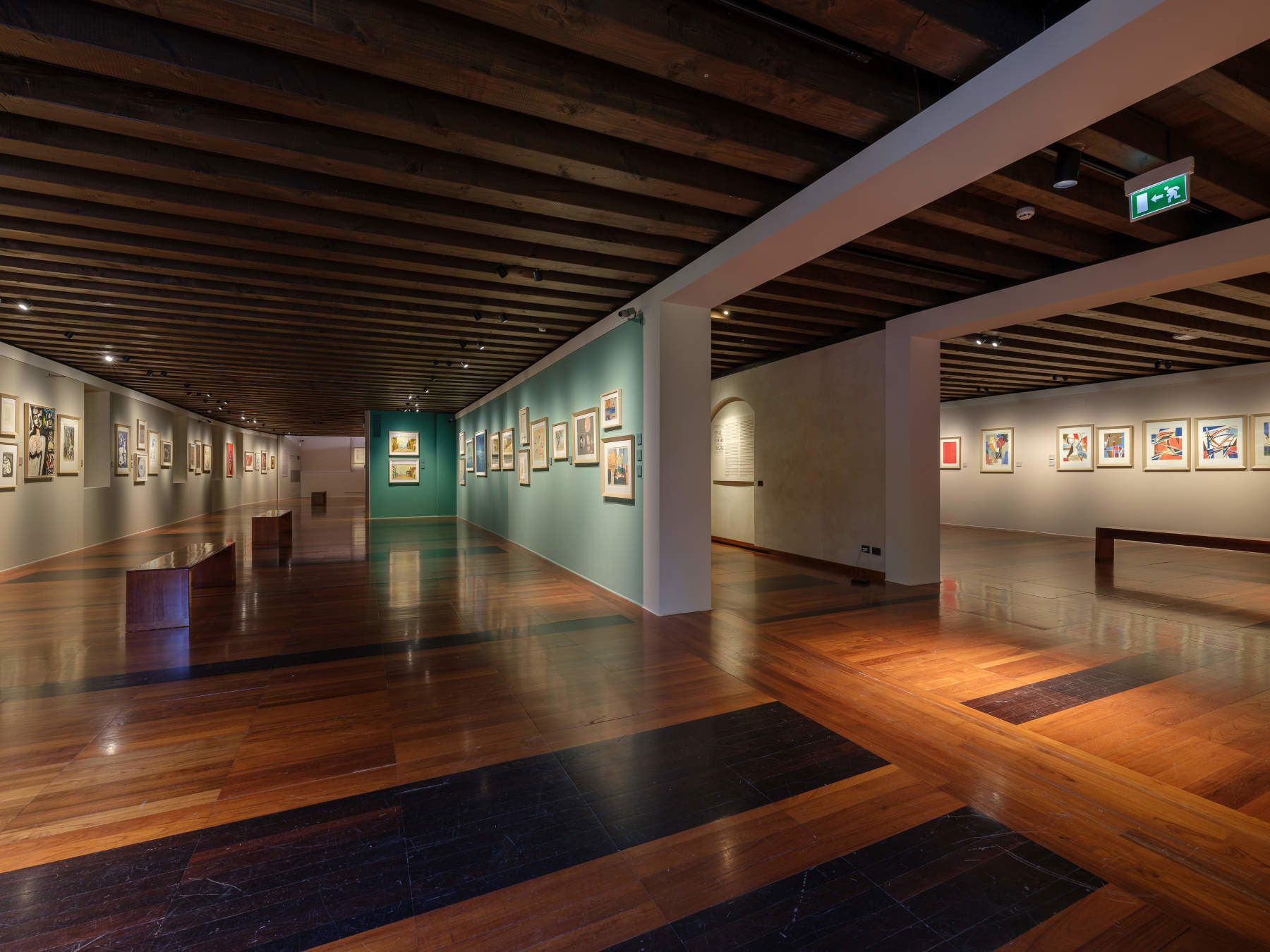
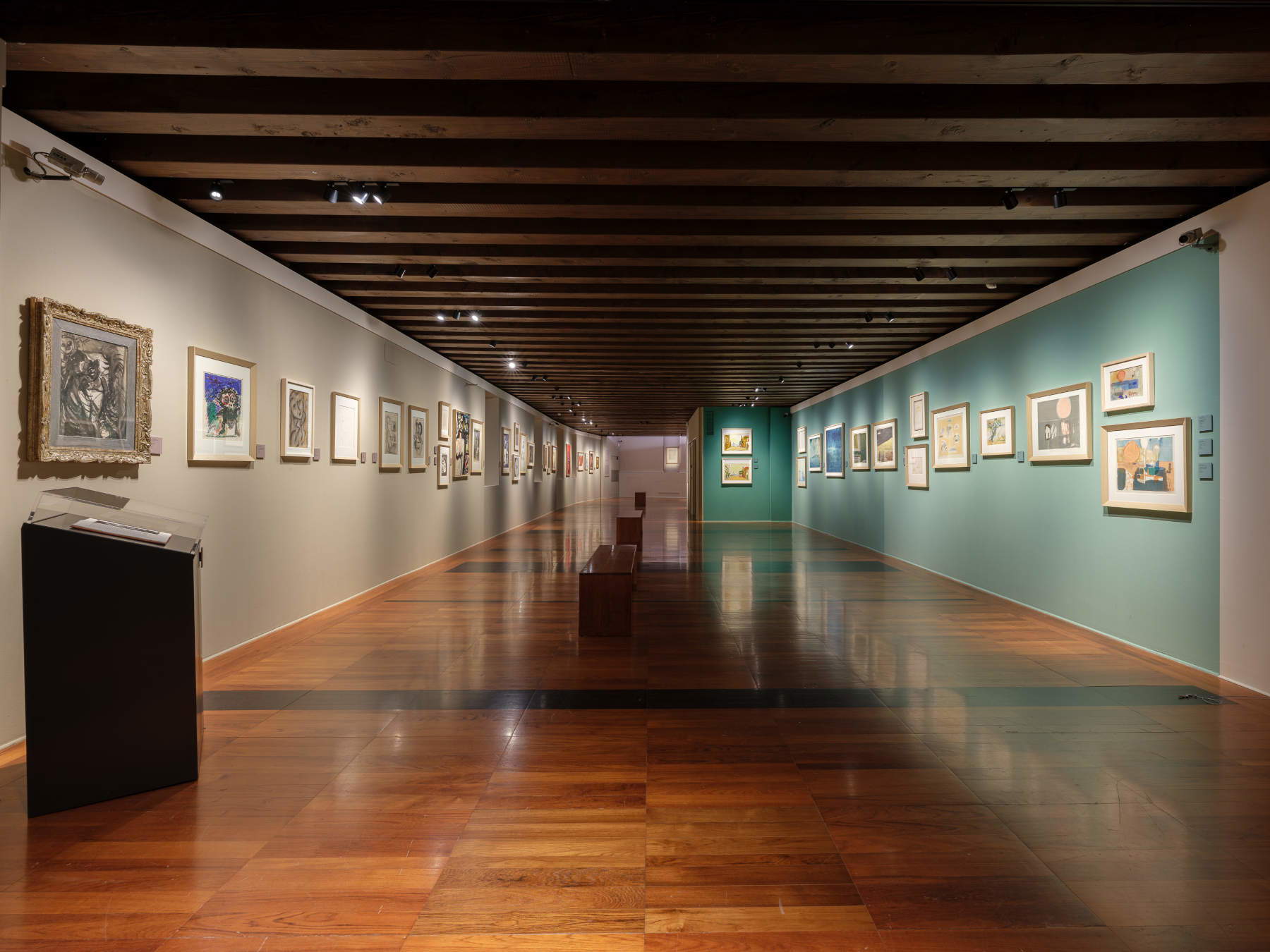
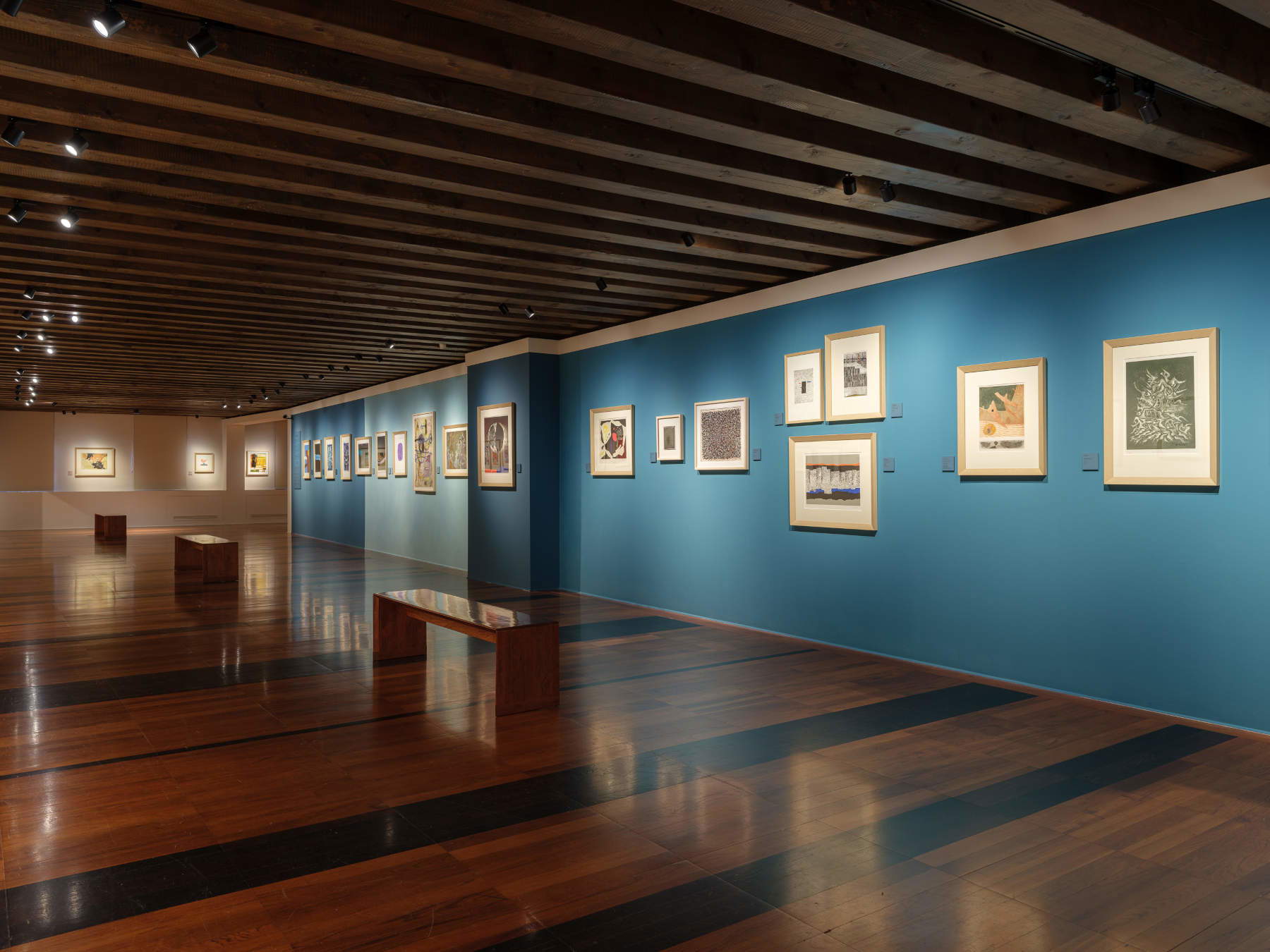
The exhibition layout does not follow a strictly chronological order. Instead, the curatorial approach aims to connect different works through forms, colors, artistic languages, and sensibilities, with specific attention also paid to the design of the walls and the lighting system. The exhibition layout thus allows for a non-linear experience, based on identifying analogies and correspondences between works belonging to different periods and artistic explorations.
The collection spans some of the major areas of 20th-century artistic exploration and is organized into three main sections: Spaces, Forms, and Figures. The first explores transformations in the representation of urban and rural landscapes; the second concerns the redefinition of the visual and perceptual languages of modernity; the third, meanwhile, focuses on transformations in the representation of the human figure.
Alongside the main exhibition, several galleries are dedicated to thematic explorations. The opening features a selection of drawings by Tancredi Parmeggiani and special sections dedicated to “Dante Illustrato,” “Zodiac Signs,” and “ The Female Face.” These sections aim to highlight the relationships that developed throughout the 20th century between the visual arts, literature, and popular culture.
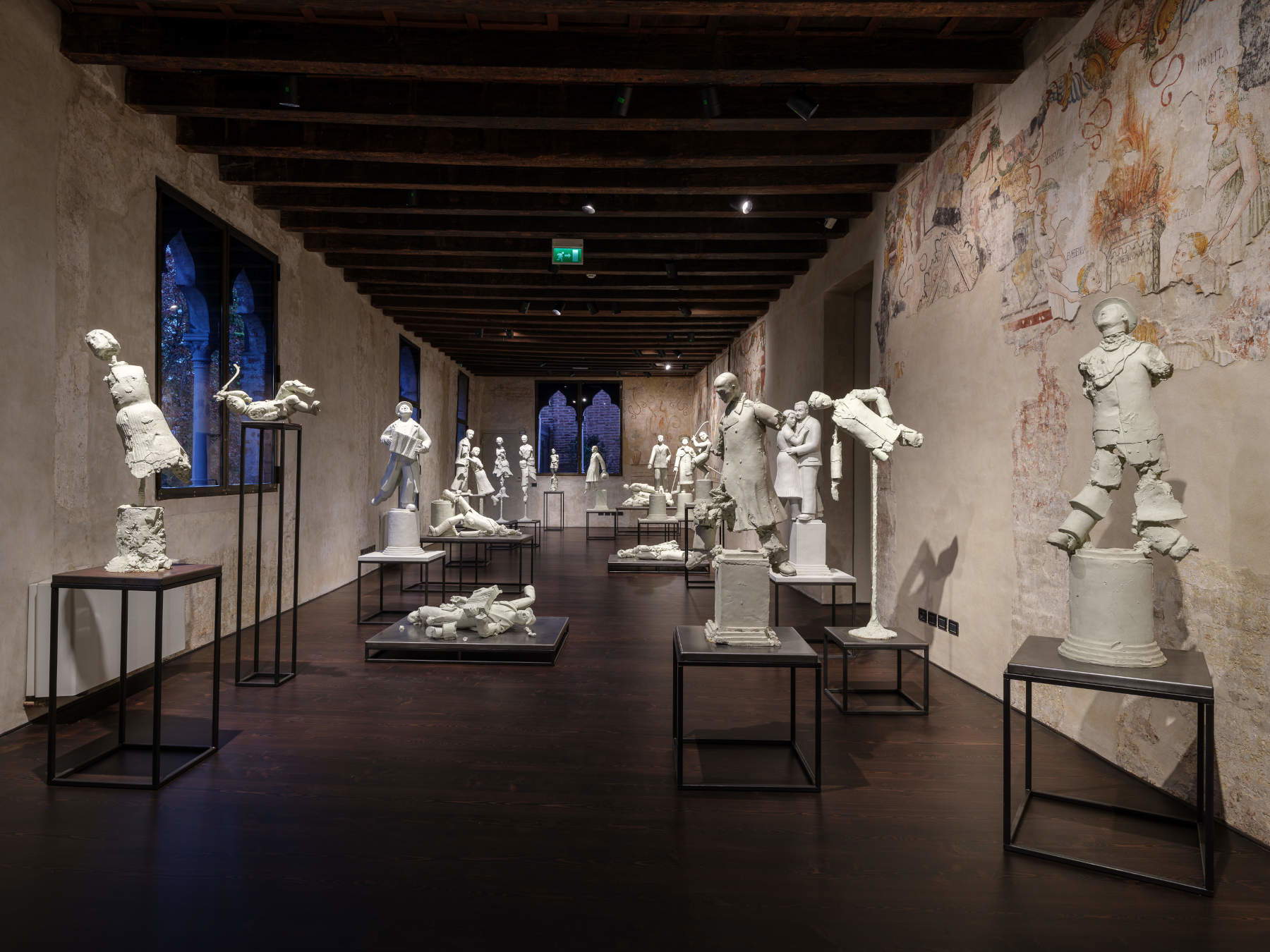
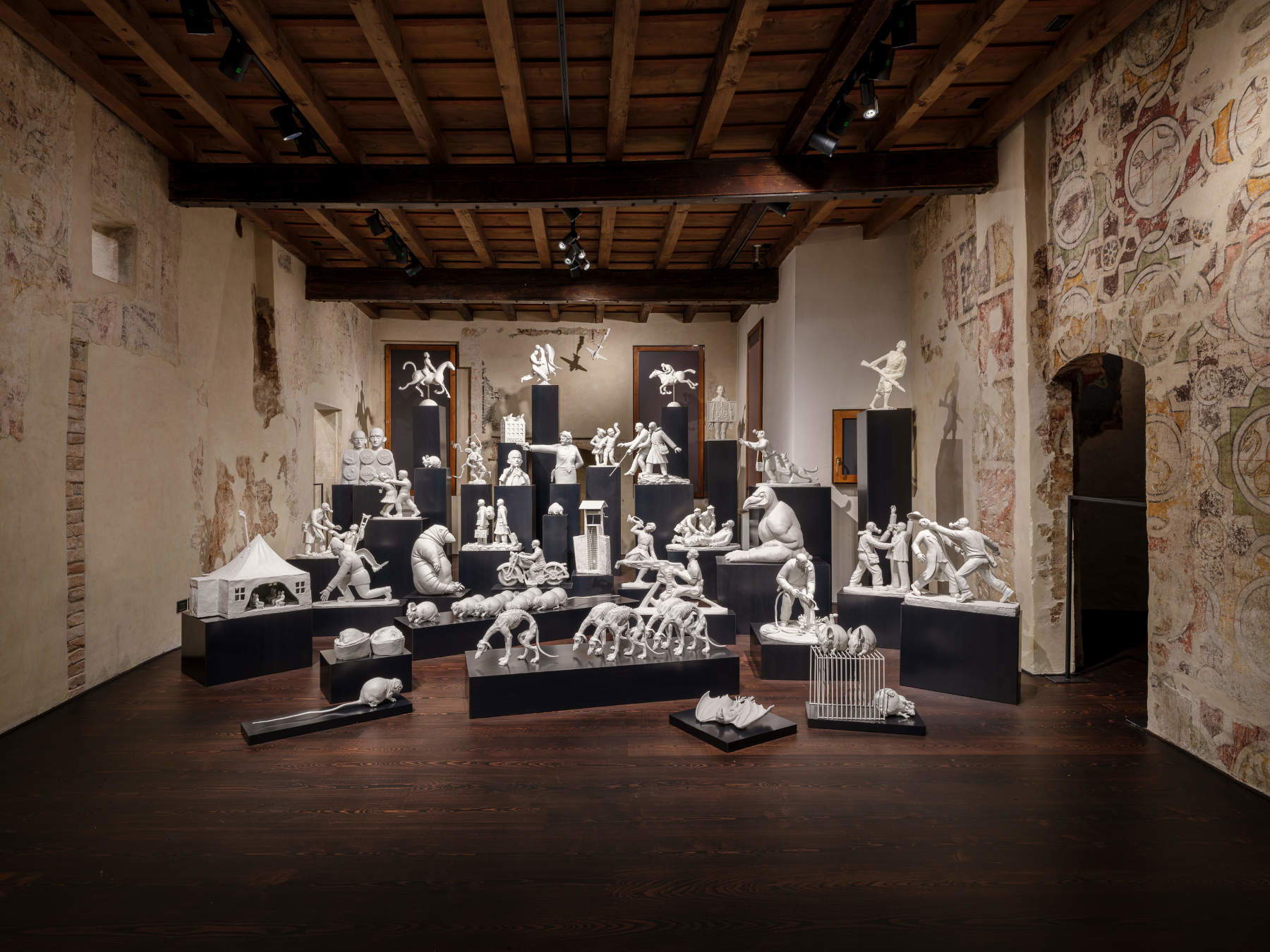
A specific part of the project concerns Ca’ dei Brittoni, where the architectural structure and medieval wall decorations house four large sculptural cycles by Grisha Bruskin. The Russian-born artist has, in fact, donated four installations to the Cassamarca Foundation, brought together under the title *On the Edge of Time*, chosen by Bruskin himself. These are *Life Is Everywhere*, *In the Balance*, *The Universe on the Table*, and *Hour X*—works that address recurring themes in his practice, ranging from memory to the transformation of power structures, from the fragility of existence to the myth of the enemy, and the relationship between past and future.
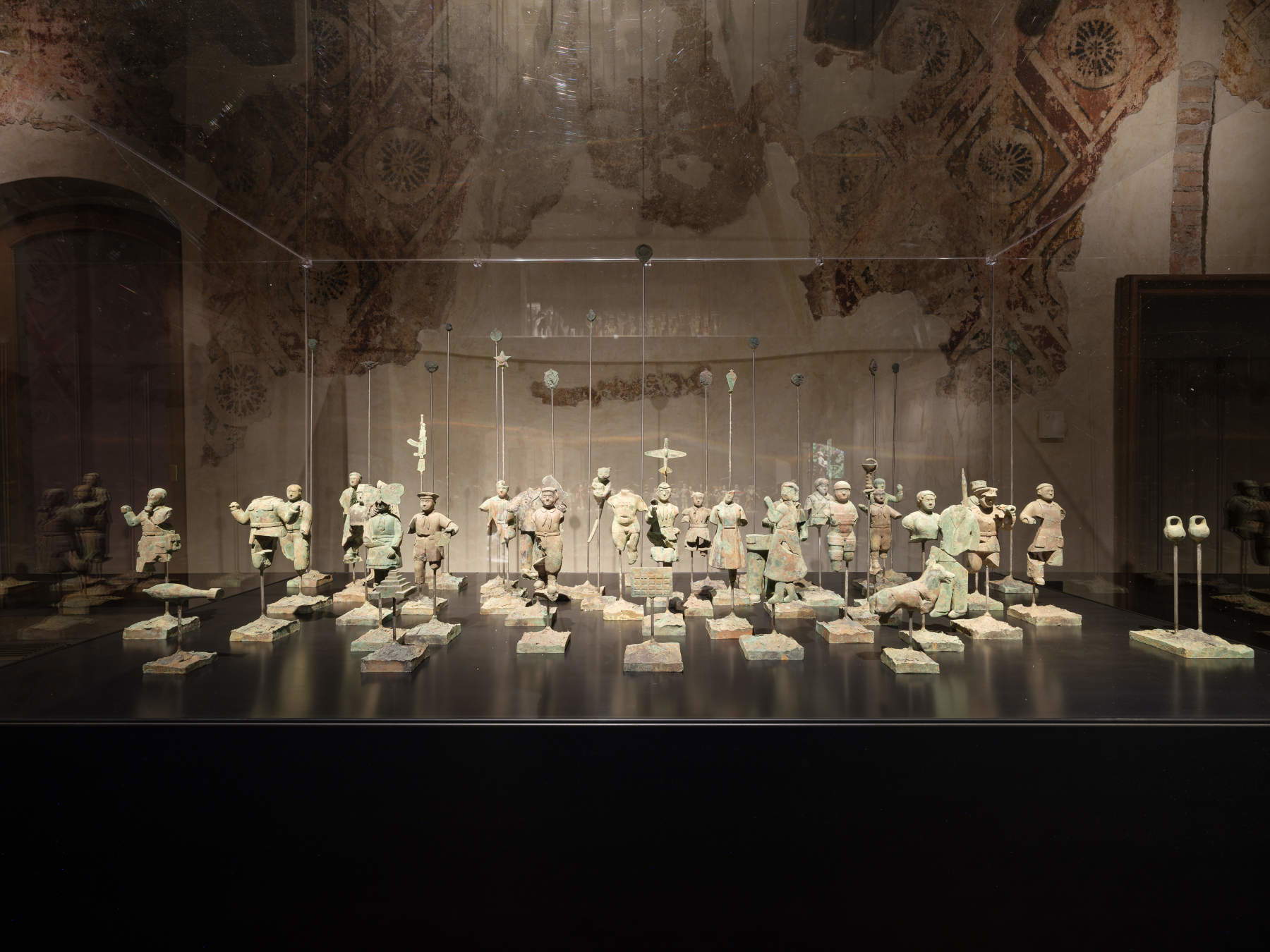
Two of the installations, *In bilico* and *L’ora X*, are being presented for the first time in Italy. Bruskin himself participated in designing the exhibition layout, contributing to the arrangement of the works and the lighting. The presence of these contemporary installations thus contrasts with the historic decorations of Ca’ dei Brittoni, bringing together different time periods and diverse forms of representation of memory, mythology, and human passions. The donation also includes the establishment of the Grisha Bruskin Archive, which will find a permanent home in the spaces adjacent to Ca’ dei Brittoni. The archive is intended to serve as a reference point for scholars and visitors and to grow over the years into a center for documentation and in-depth study of the artist’s work.
Finally, the exhibition project is part of the development of the Fondazione Cassamarca’s “Museo Diffuso” (Widespread Museum). Following the reopening of Casa dei Carraresi and Ca’ dei Brittoni, the initiative will continue with Ca’ Spineda, which is scheduled to open in December 2026. Works depicting landscapes from the 19th and 20th centuries and a selection of portraits are already on view here, and they will be complemented by new exhibition sections. In 2027, the Monte di Pietà—which houses important works of artistic furnishings—will be the next site to open.
The three venues will be progressively linked into a single cultural itinerary, connecting historic architecture, art collections, and 20th-century and contemporary research. The reopening of the 13th-century complex thus marks the first phase of a broader program conceived by the Cassamarca Foundation to once again make accessible—and organize into a unified system—a portion of the historical and artistic heritage preserved in the center of Treviso.
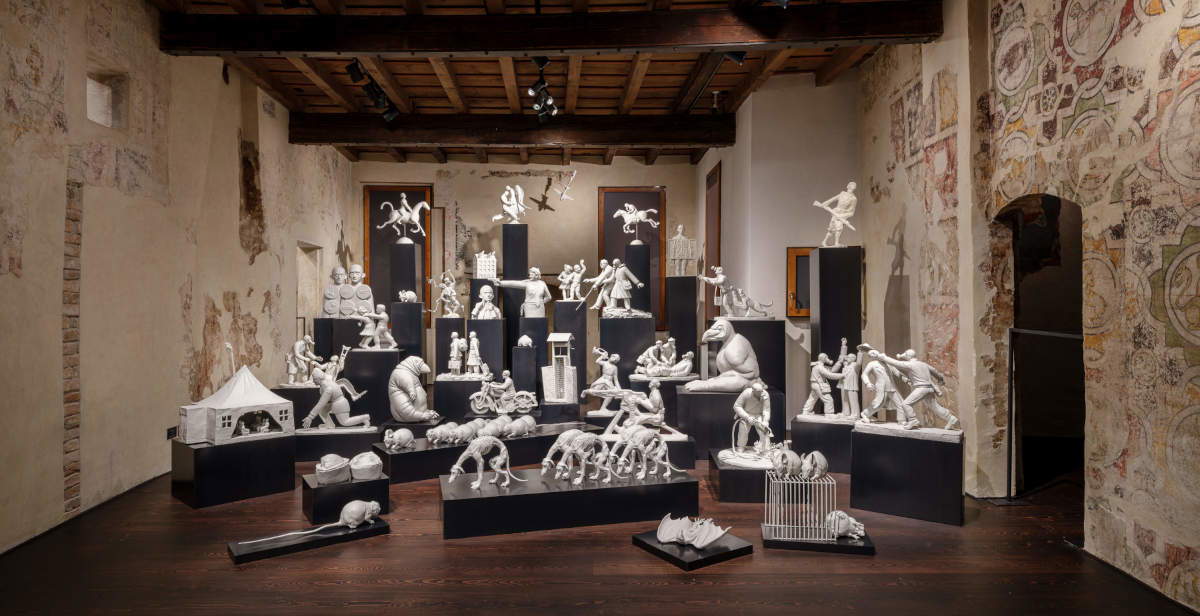 |
| In Treviso, the Casa dei Carraresi and the Ca’ dei Brittoni are reopening with over 200 works from the 20th century |

Warning: the translation into English of the original Italian article was created using automatic tools. We undertake to review all articles, but we do not guarantee the total absence of inaccuracies in the translation due to the program. You can find the original by clicking on the ITA button. If you find any mistake,please contact us.

























 IT
IT FR
FR DE
DE ES
ES CN
CN


