



by Redazione 21/11/2026


Categories: Museums / Disclaimer
From November 22, 2026, to February 28, 2027, an exhibition will tell the story of the San Francesco monastery complex in Lucca through documents, images, and multimedia content. The exhibition will offer visitors the chance to explore areas usually closed to the public, including the Guinigi Chapel.


Some of the most evocative and lesser-known spaces within the San Francesco complex in Lucca will be open to the public thanks to the exhibition *Vivere il San Francesco: Stories of Communities, Territories, and Cultures*. The exhibition, open from November 22, 2026, to February 28, 2027, offers a journey through the building’s long history, opening up spaces normally inaccessible to the public and showcasing artifacts from its past. The opening is scheduled for Sunday, November 22, starting at 3:00 p.m.

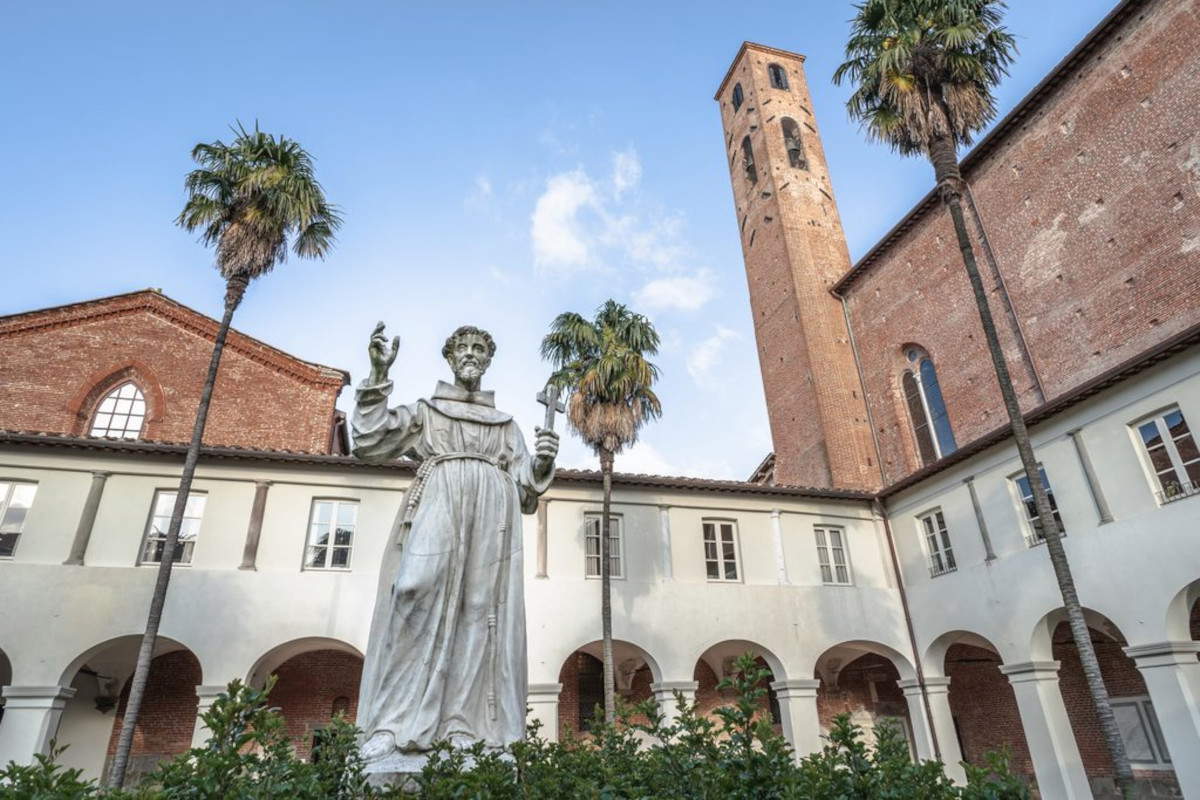
Now home to the IMT School for Advanced Studies in Lucca and an important cultural center in the region, the convent complex thus takes center stage in a project that traces its architectural transformations and diverse functions over the centuries. The exhibition was made possible thanks to the support of the Fondazione Cassa di Risparmio di Lucca and the IMT School for Advanced Studies, following more than two years of research conducted by Angela D’Alise and Camilla Marraccini, researchers at the IMT School and curators of the exhibition. Professor Maria Luisa Catoni is responsible for coordination and scientific direction.


The exhibition, which is completely free of charge, consists of fourteen panels located between the church and the rooms of the former convent. Through texts, images, archival documents, and multimedia presentations, visitors can trace the history of the complex from its foundation in 1228 to the present day. This narrative spans the Renaissance expansions, the difficulties of the 14th century, and the subsequent transformations and repurposing that took place between the 19th and 20th centuries, highlighting the various ways the spaces were used by the communities that frequented and inhabited them.

Among the main highlights of the initiative is the opportunity to enter areas that are not usually open to the public. This is the case with the Guinigi Chapel, where archaeological excavations in 2010 unearthed the remains of three women, including the so-called “lady with the ring”—a discovery that helped reignite the debate over the identification of Ilaria del Carretto’s tomb. Also accessible will be the church’s sacristy—adorned with exquisite frescoes and funded by the Del Testa family of Pisa—and the ancient hall of the Ca’ Nova, originally used as the convent’s storeroom.
Rounding out the exhibition is a self-guided digital learning system. By scanning the QR codes on the panels, visitors can listen to an audio guide in Italian and English, which will accompany them throughout their visit. From November through February, free guided tours lasting about an hour are also scheduled; reservations are required and can be made through the websites of the IMT School and the Fondazione Cassa di Risparmio di Lucca. To further explore the history of the complex, a printed guide created specifically for the occasion will also be available.
“Vivere il San Francesco” was created with the goal of fostering a dialogue between scientific research and public outreach, bringing little-known events to light through the study of archives, artifacts, and material evidence. The church and convent are thus presented not only as an important architectural heritage site, but as places that, over time, have continued to intertwine their history with that of Lucca, adapting to the needs, activities, and values of the various communities that have lived there.
“The long-standing effort to restore and highlight the role of the Church and Convent of San Francesco is enriched by a new chapter born of the shared vision and synergy between the Fondazione Cassa di Risparmio di Lucca and the IMT School for Advanced Studies,” says Massimo Marsili, President of the Fondazione Cassa di Risparmio di Lucca. “The exhibition ‘Vivere il San Francesco’ aims to share knowledge of its history, changes, transformations, and the artistic, civic, and symbolic value of its spaces. What was once a place of silence, of aid to the weak and the sick, and of charity—as well as a medieval center of study in theology, philosophy, and rhetoric—is now home to the IMT School for Advanced Studies in Lucca and part of the cultural program that the Fondazione Cassa di Risparmio di Lucca offers to the city.”
“The San Francesco complex is an extraordinary place, unique in the world. A perfectly restored building that lacks a function risks becoming a shell separated from the life of the city,” states Lorenzo Casini, rector of the IMT School. “The most sustainable preservation stems from a balance between respect for history and the ability to accommodate contemporary uses that are compatible with it. In the case of San Francesco, the establishment of the IMT School has made it possible to restore and make accessible an exceptional heritage site, ensuring its maintenance, care, and a daily presence. At the same time, it has contributed to the revitalization of an entire part of Lucca, strengthening the relationship between the historic center, the academic community, and the citizens. This exhibition, which stems from research conducted by the IMT School but was immediately conceived as an opportunity to rediscover and return a piece of the city’s history to everyone, bears witness to the vitality of this connection.”
The exhibition will be open to the public free of charge on Saturdays, Sundays, and holidays, except for Christmas Day. The Cassa di Risparmio di Lucca Foundation has also organized a schedule of free guided tours, all starting at 3:00 p.m.; reservations are required and subject to availability: November 22 and 28; December 8, 26, and 27; January 2, 6, 16, and 24; February 7, 13, 20, and 28.
For information and reservations: www.fondazionecarilucca.it and www.imtlucca.it
|
| Lucca Unveils the Hidden Treasures of the San Francesco Complex: Areas Previously Inaccessible to the Public Are Now Open |
Warning: the translation into English of the original Italian article was created using automatic tools. We undertake to review all articles, but we do not guarantee the total absence of inaccuracies in the translation due to the program. You can find the original by clicking on the ITA button. If you find any mistake,please contact us.