




by Redazione 22/07/2026



Categories: Museums / Disclaimer
The National Gallery of the Marche in Urbino is expanding its collection with the acquisition of a selection of ceramic artifacts from the Monastery of Santa Chiara. The artifacts provide insight into Urbino’s ceramic production between the 15th and 17th centuries and into daily life at the convent.


The National Gallery of the Marche is expanding the collection housed at its headquarters in the Ducal Palace in Urbino with a new selection of artifacts from the Monastery of Santa Chiara, thus offering visitors the opportunity to deepen their understanding of ceramic production in Urbino and throughout Italy during the early modern period. The new acquisitions are part of a broader project dedicated to showcasing the extraordinary tradition of majolica from the Duchy of Urbino between the 15th and 16th centuries, made possible thanks to the support of the City of Urbino and ISIA—the Higher Institute for Artistic Industries of Urbino.
The new artifacts have been displayed in the ceramics gallery on the second floor of the Ducal Palace and are now a permanent part of the tour of the National Gallery of the Marche. The inclusion of these artifacts expands the narrative dedicated to one of the artistic productions that most contributed to Urbino’s renown during the Renaissance, enriching an already significant collection with pieces from an archaeological context of particular interest.


This initiative is part of a project aimed at highlighting the majolica production that flourished in the Duchy of Urbino between the 15th and 16th centuries—one of the most important periods in Italian ceramics—by creating a dialogue between the artifacts from the Monastery of Santa Chiara and those already preserved in the museum’s collection. The works on display today document the richness and high quality of the ceramic artifacts produced in the Urbino area, complementing the fragments recovered during excavations conducted in the vaults of the Ducal Palace. The comparison between these different groups makes it possible to reconstruct the level of artistic craftsmanship achieved at the court of Federico da Montefeltro, his son Guidubaldo, and subsequently the Della Rovere dukes, highlighting the excellence of the workshops active in the region and the variety of productions intended both for the court and for other sectors of society at the time.
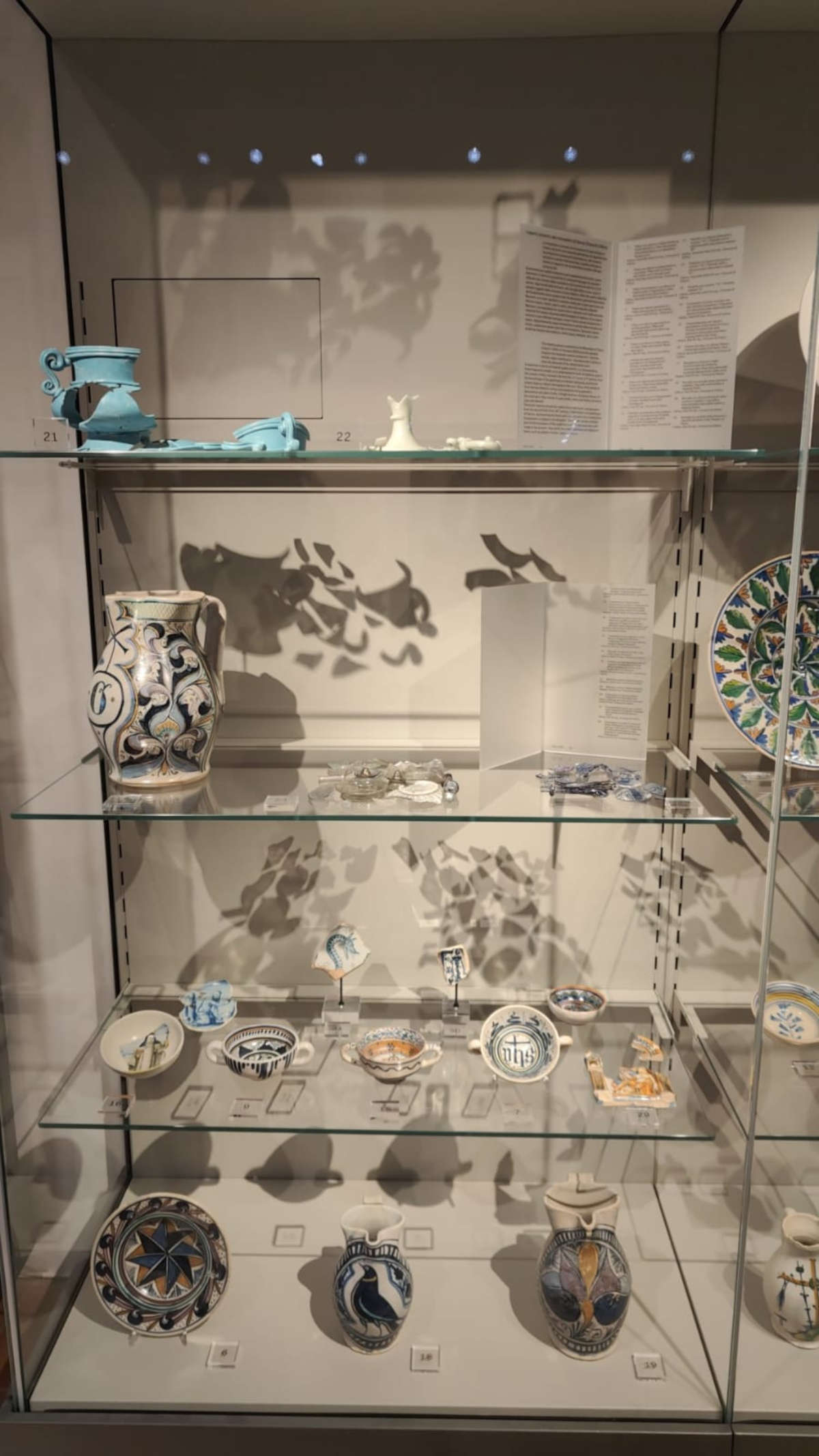
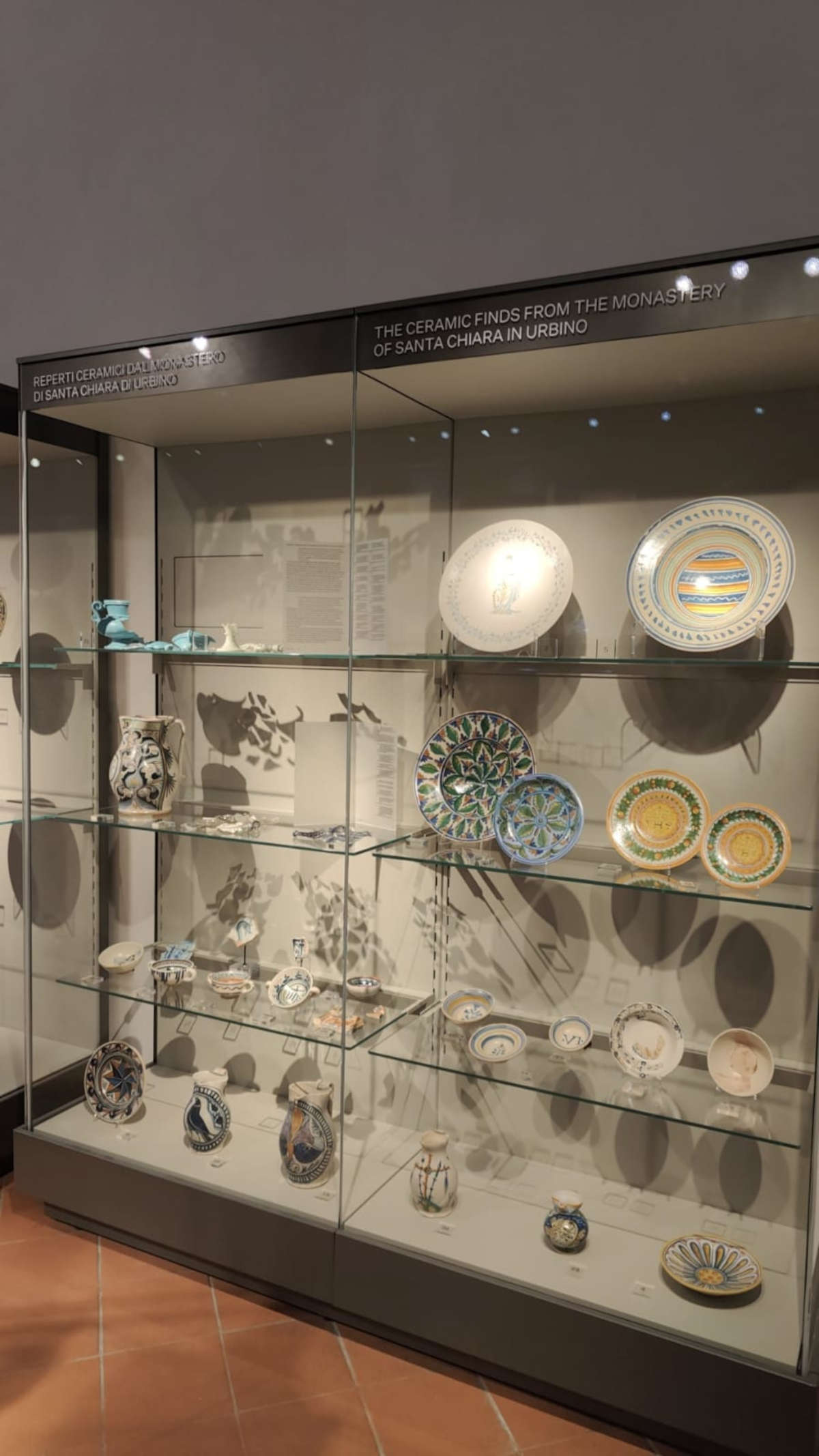
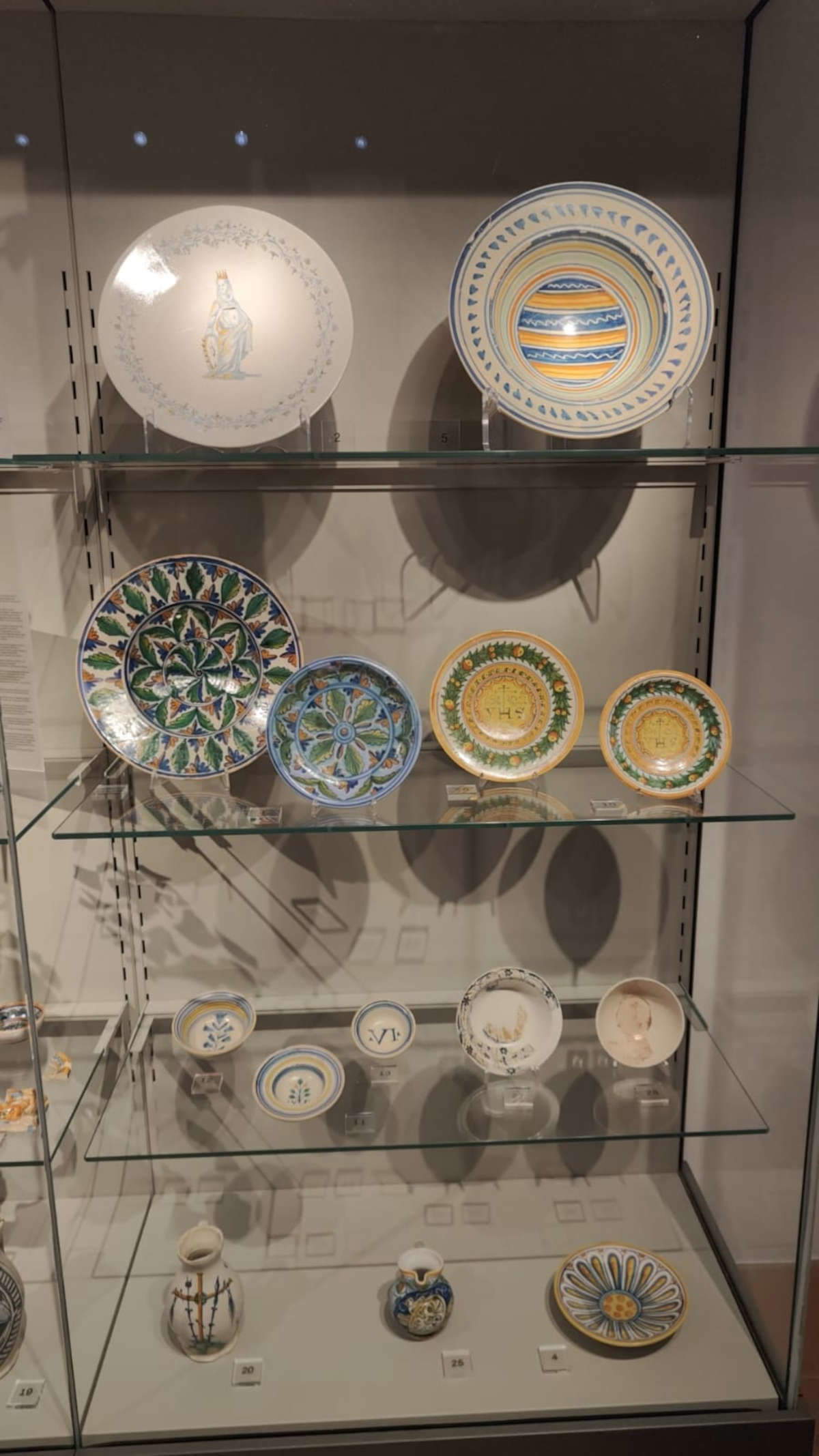
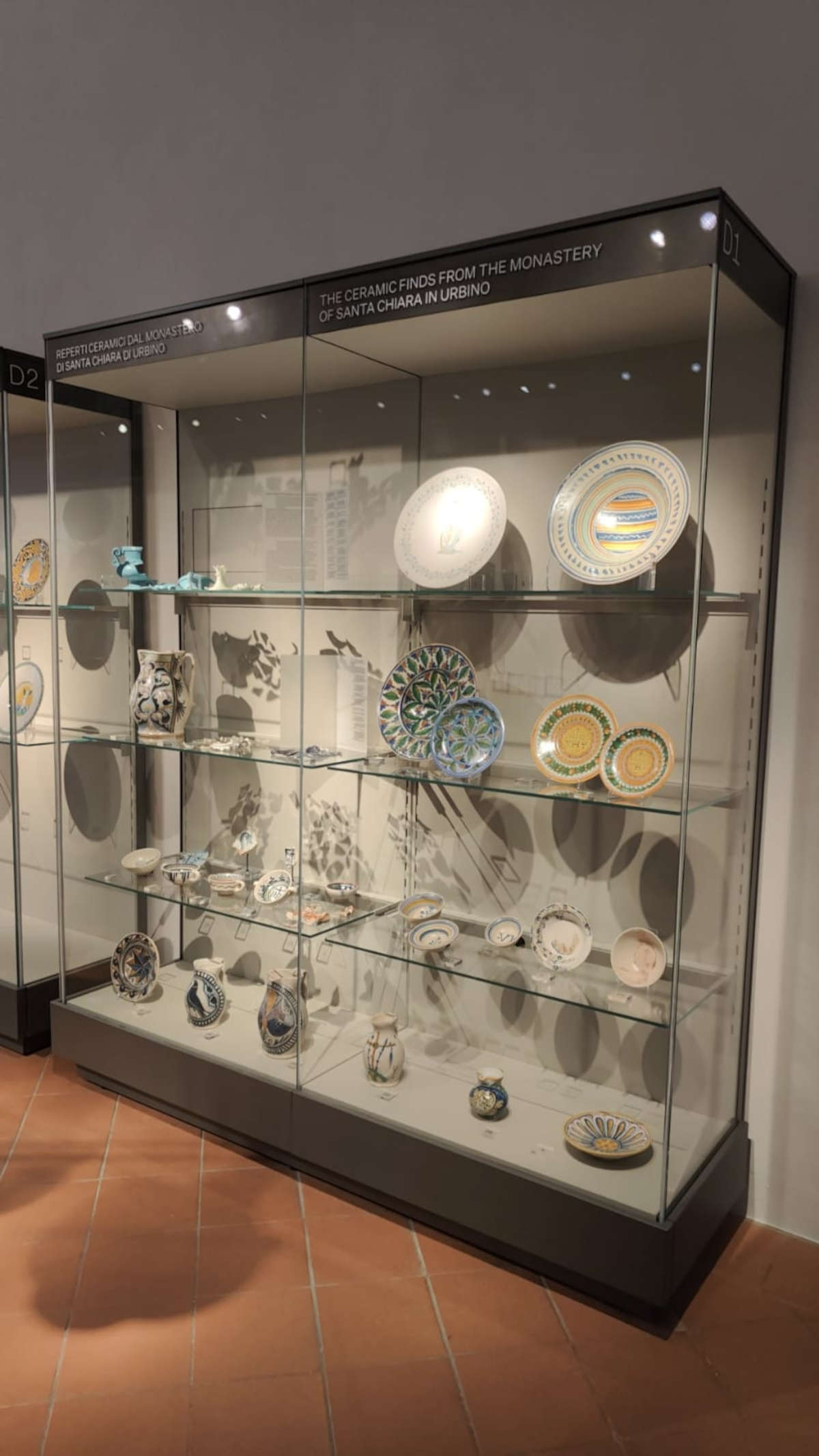
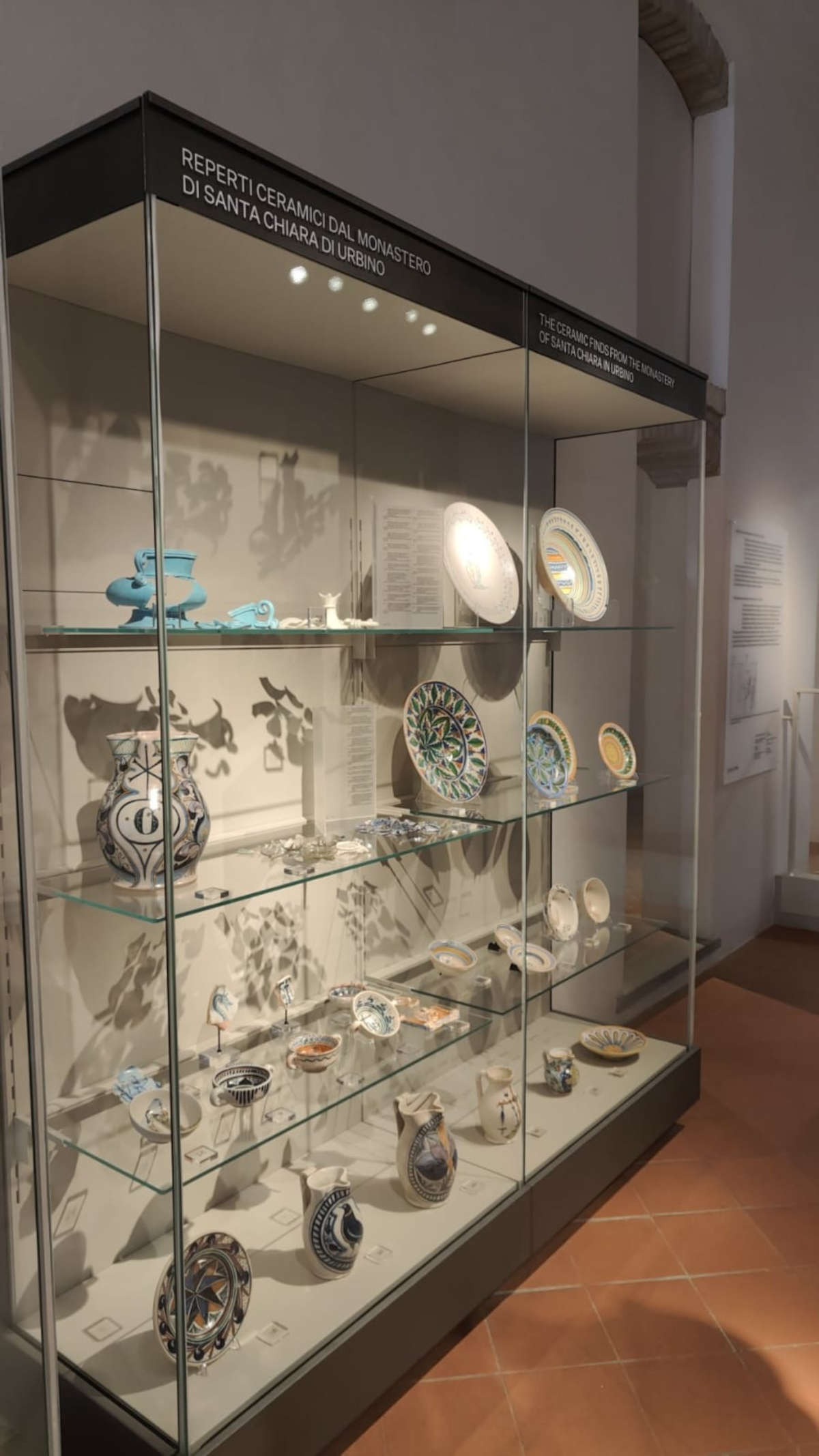
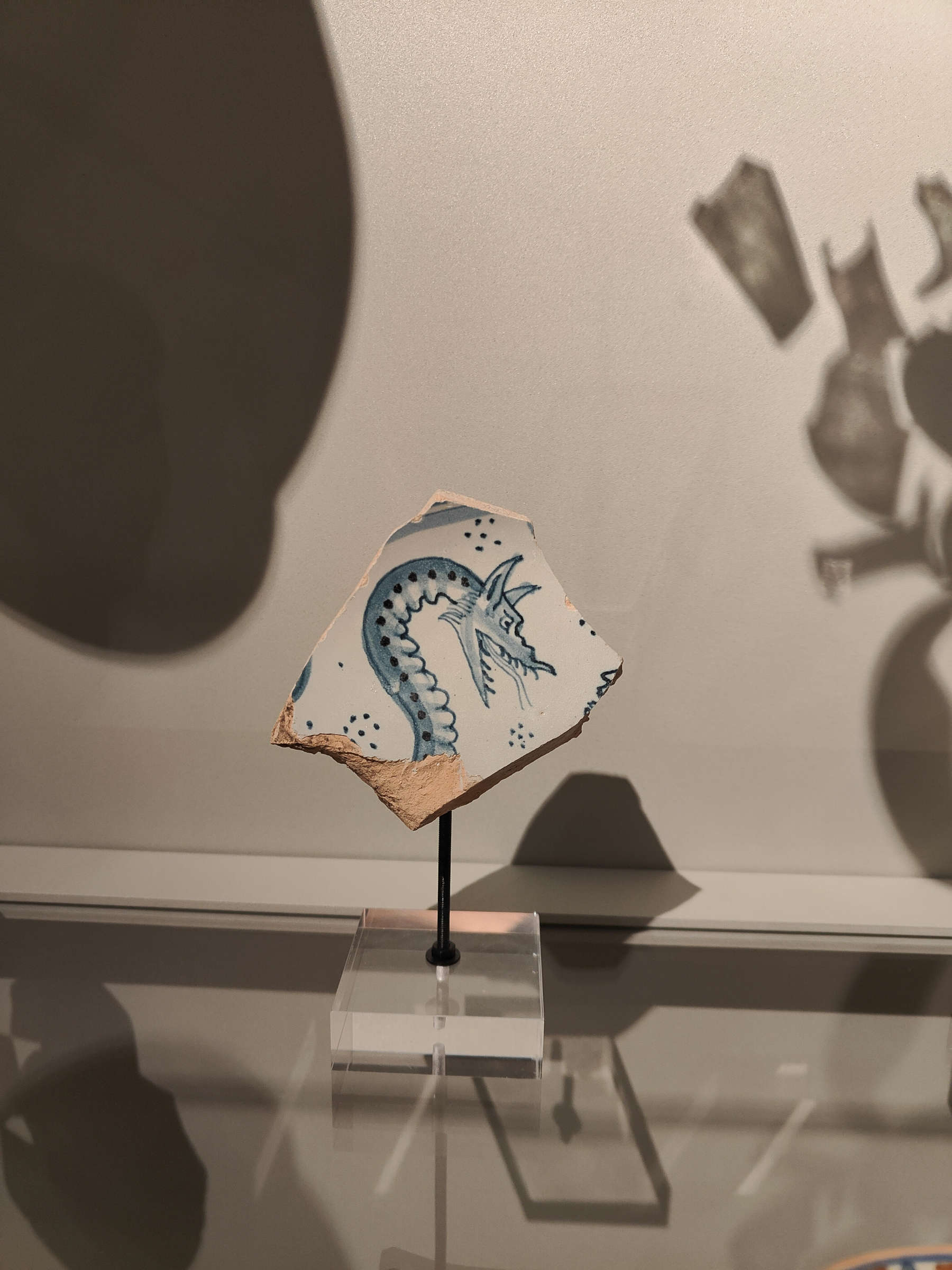
From a historical and artistic perspective, the artifacts discovered at the Monastery of Santa Chiara—unearthed during excavations conducted in the early 2000s—represent a valuable source for understanding the complexity of ceramic production in the early modern period. These objects, in fact, allow us to gain deeper insight into both the presence of imported artifacts from the Adriatic region and other international centers, and that of ceramics produced in the workshops of Urbino, highlighting the relationship between local production and the refined patronage of the ducal court.
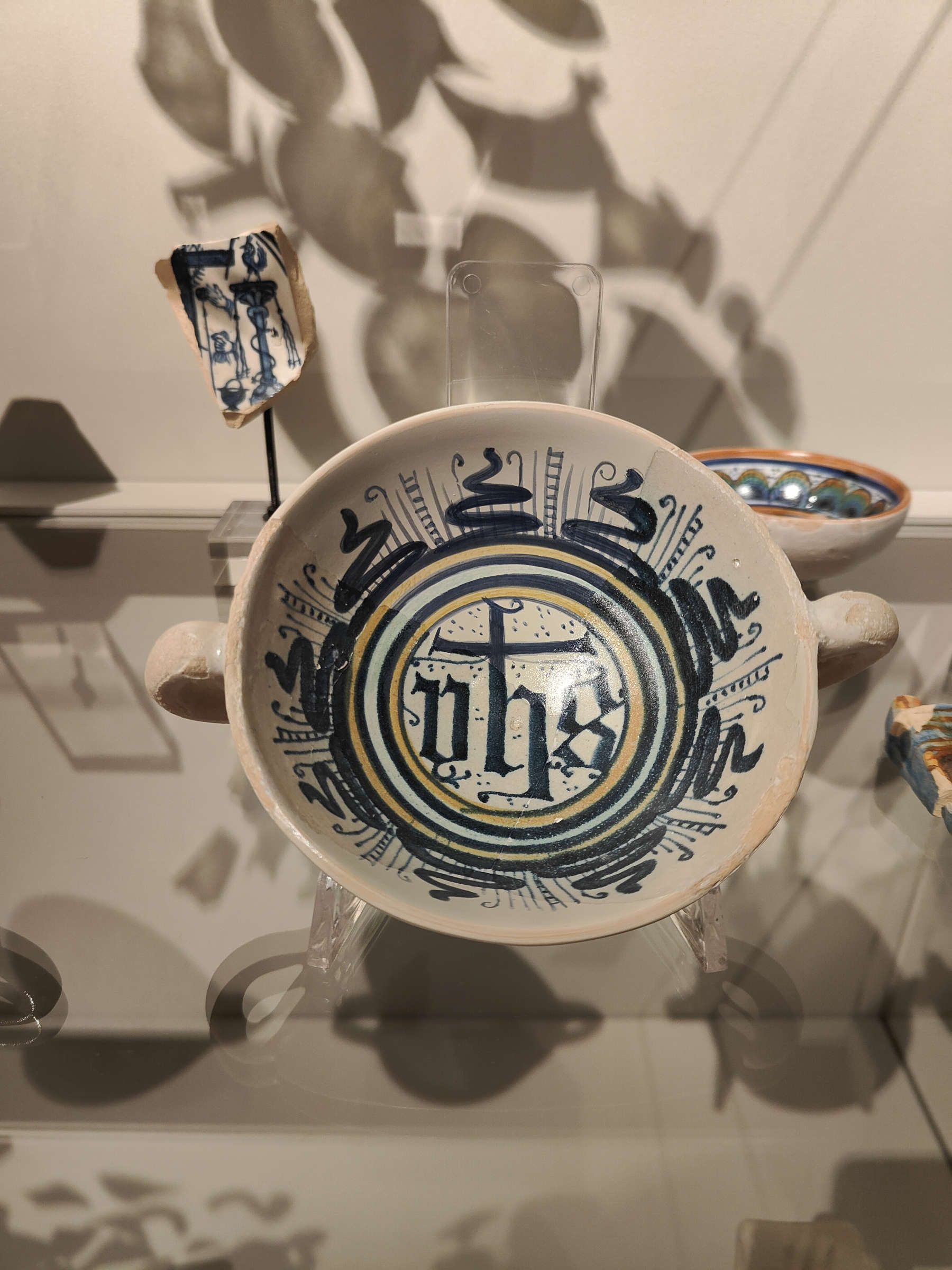
The items on display are distinguished by the high quality of their craftsmanship and their formal characteristics, which make it possible to reconstruct numerous aspects of daily life within the monastery. Through these fragments, it is possible to learn about the objects used by the nuns between the 15th and 17th centuries, offering a concrete glimpse into the material organization of the monastic community. The collection includes artifacts intended for a wide variety of uses: there are items from the monastery’s pharmacy, evidence of the preparation and storage of medicines carried out within the convent, as well as tableware used in the kitchen and simple religious objects intended for the nuns’ personal use. Together, these artifacts thus paint a multifaceted picture of daily life in the convent, where ceramic production served both practical needs and liturgical and devotional functions.
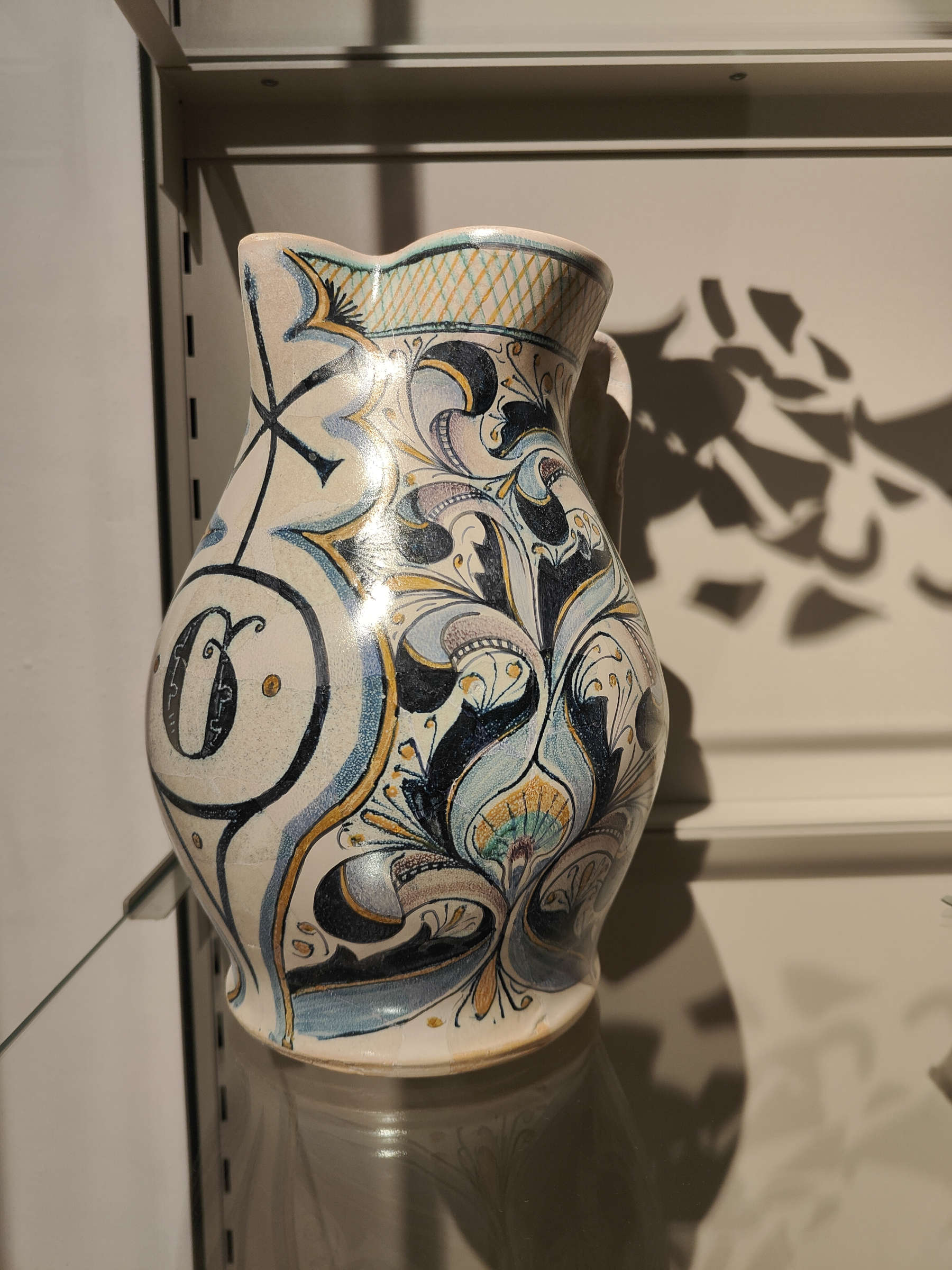
A significant portion of the artifacts dates to the late 15th century. These pieces are characterized by a decorative repertoire dominated by geometric motifs and plant ornamentation, executed in a vibrant palette rich in chromatic variations. This body of work attests to the technical and artistic level achieved by the workshops active in the Urbino area during a period of significant development in the applied arts.
From a typological perspective, the artifacts consist primarily of vessels intended for everyday use, such as cups, bowls, plates, and basins, alongside tankards and albarelli—ancient containers used for storing spices, medicinal herbs, and pharmaceutical preparations. The exhibition thus offers a close-up view of a very wide range of artifacts, highlighting not only their aesthetic value but also their function in everyday life.
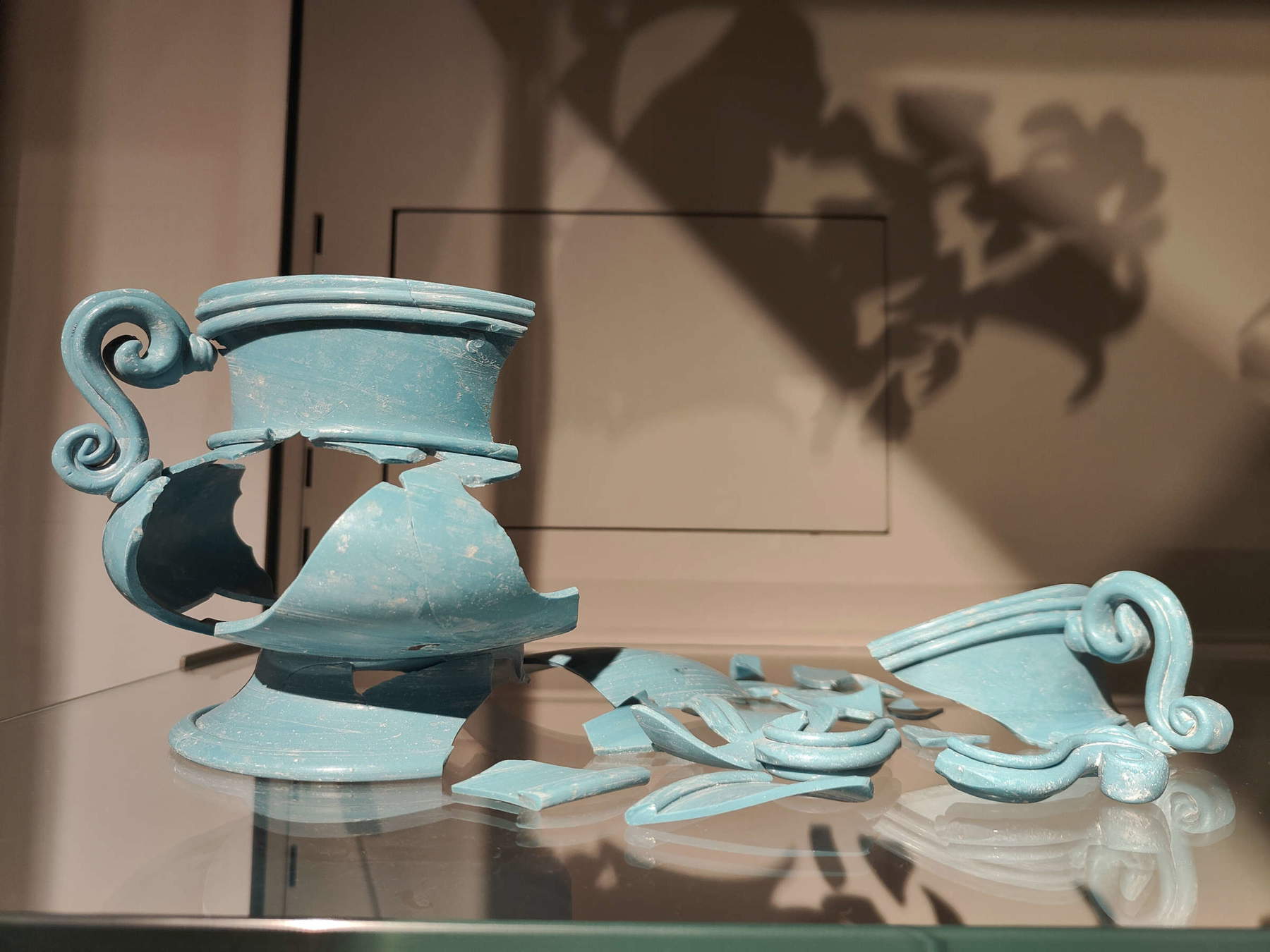
Among the exhibits, a small but exceptional collection of glassware dating to the second half of the 16th century stands out as one of the most valuable elements of the entire collection. These objects were imported from Venetian workshops and represent some of the most refined examples of Venetian glass production from that period. The collection includes pieces made of colored, transparent, and opaque glass, attesting to the high technical skill achieved by Venetian workshops and the widespread distribution of their products even in the Marche region. According to scholars, these artifacts likely belonged to the personal trousseaus of nuns from the wealthiest families or were brought to the monastery as gifts intended for the religious community. Their presence within the Santa Chiara complex thus offers important evidence of the relationships between the monastery and the local elite, while also documenting the prestige of objects intended to adorn the refectory and the convent’s reception rooms. The glassware includes goblets, bottles, vases, and chalices—objects distinguished by the elegance of their forms and the quality of their craftsmanship—which help to further expand the picture of artistic and artisanal production represented in the collection of the National Gallery of the Marche.
The inclusion of these artifacts in the permanent exhibition at the Palazzo Ducale thus provides a more complete picture of the material culture of the Urbino court and the surrounding region, complementing the famous works of Renaissance painting with a collection that illustrates daily life, commerce, commissions, and artistic relationships that developed between the 15th and 17th centuries. The expansion of the collection also reinforces the role of the National Gallery of the Marche as a point of reference for the study of Italian Renaissance ceramic production.
Through this initiative, the museum enriches its collection and offers the public an even more comprehensive exhibition experience, in which the majolica and other artifacts illustrate not only the excellence of Urbino’s workshops but also the complexity of a society in which art, craftsmanship, devotion, and daily life were closely intertwined.
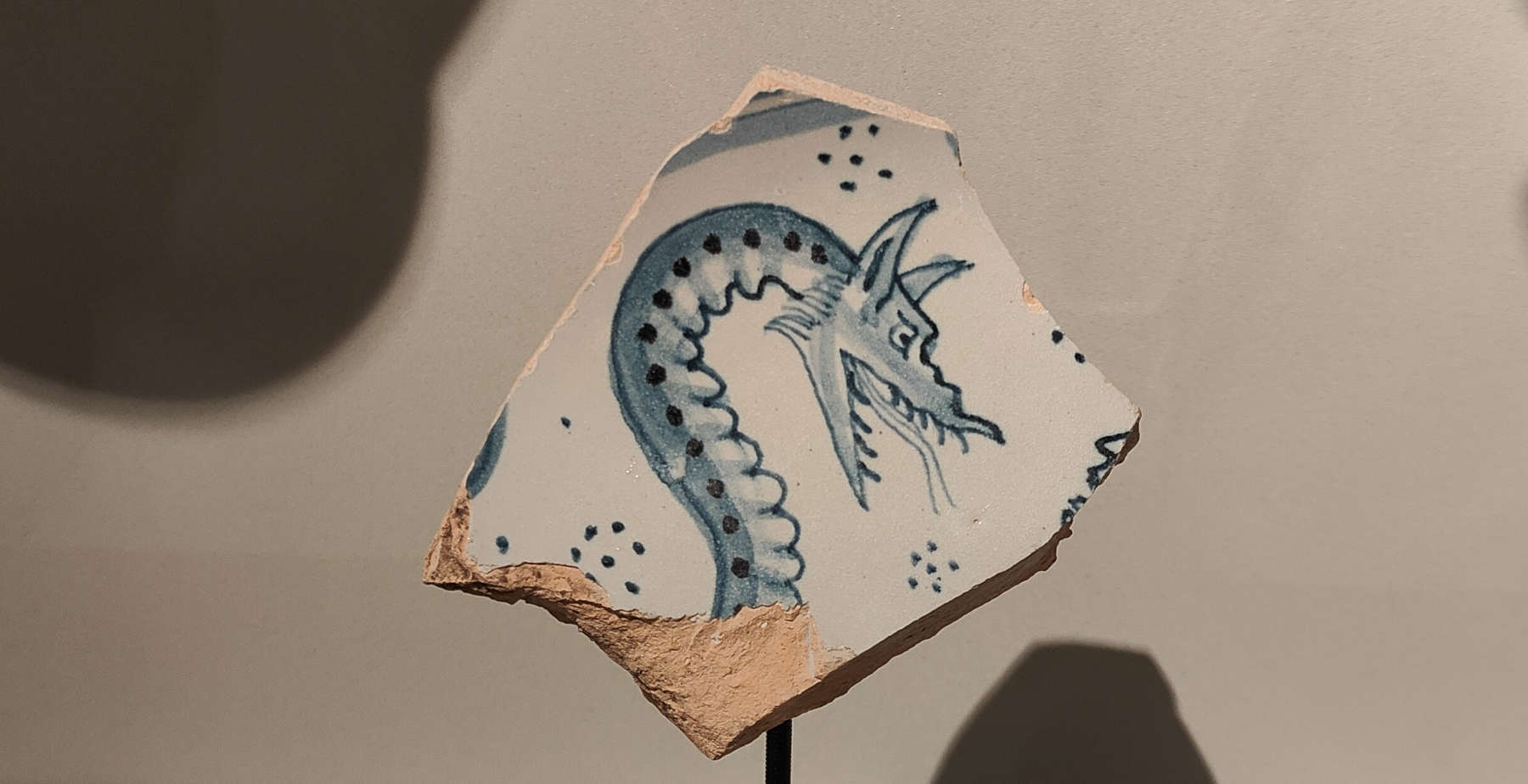 |
| New Renaissance majolica pieces acquired by the National Gallery of the Marche |
Warning: the translation into English of the original Italian article was created using automatic tools. We undertake to review all articles, but we do not guarantee the total absence of inaccuracies in the translation due to the program. You can find the original by clicking on the ITA button. If you find any mistake,please contact us.