





The National Archaeological Museum of Paestum has completed the most extensive renovation project in recent decades and is now open to the public with a completely revamped layout. With the inauguration of the “Paestum Outside the Walls” exhibition, the museum completes the renovation program launched in 2019 by the Archaeological Parks of Paestum and Velia, offering visitors a cohesive journey through more than forty thousand years of history and restoring full access to one of the most celebrated collections in Italian archaeology: the painted tombs from the Greco-Lucanian period. The new exhibition was inaugurated this morning by Minister of Culture Alessandro Giuli, accompanied by the director of the Archaeological Parks of Paestum and Velia, Tiziana D’Angelo. Also in attendance at the ceremony were Luca Mercuri, Deputy Director of the General Directorate of Museums, and Gaetano Paolino, mayor of Capaccio Paestum.
The opening of “Paestum Outside the Walls” does not mark the inauguration of a single section, but rather represents the completion of a project developed over seven years and carried out in several phases. The process began in 2019 with the start of renovation work on the museum building and the creation of the new permanent exhibition. In 2023, the sections dedicated to the prehistory and protohistory of the region were reopened, along with the spaces dedicated to the sanctuaries and the layout of the Greco-Lucanian city, as well as the new section “Beyond the Museum.” In 2024, the section “Paestum: From the Roman City to Today” was inaugurated. The final piece of the puzzle now comes with the opening of the new section “New Excavations and Research” and the reopening of the galleries dedicated to the necropolises, the region, and the painted tombs of the Greco-Lucanian city.
The result is a completely reimagined museum, where the visitor experience follows an organic and continuous flow. The new exhibition takes visitors from the earliest evidence of human presence in the area—dating back over forty thousand years—to the most recent archaeological research campaigns, covering the founding of the Greek colony of Poseidonia, the city’s transformation during the Lucanian and Roman periods, its rediscovery during the Grand Tour, and modern conservation and enhancement efforts. The title chosen for the new exhibition project encapsulates the approach that characterizes the entire museum. “Paestum Outside the Walls” shifts the focus beyond the perimeter of the ancient city, toward the surrounding territory that, during the Greek and Lucanian periods, was home to necropolises, suburban and rural sanctuaries, residential settlements, and productive areas. Not merely a peripheral space, therefore, but an essential element for understanding the relationship between Poseidonia and the surrounding landscape, between the city, religious worship, and the memory of the dead.
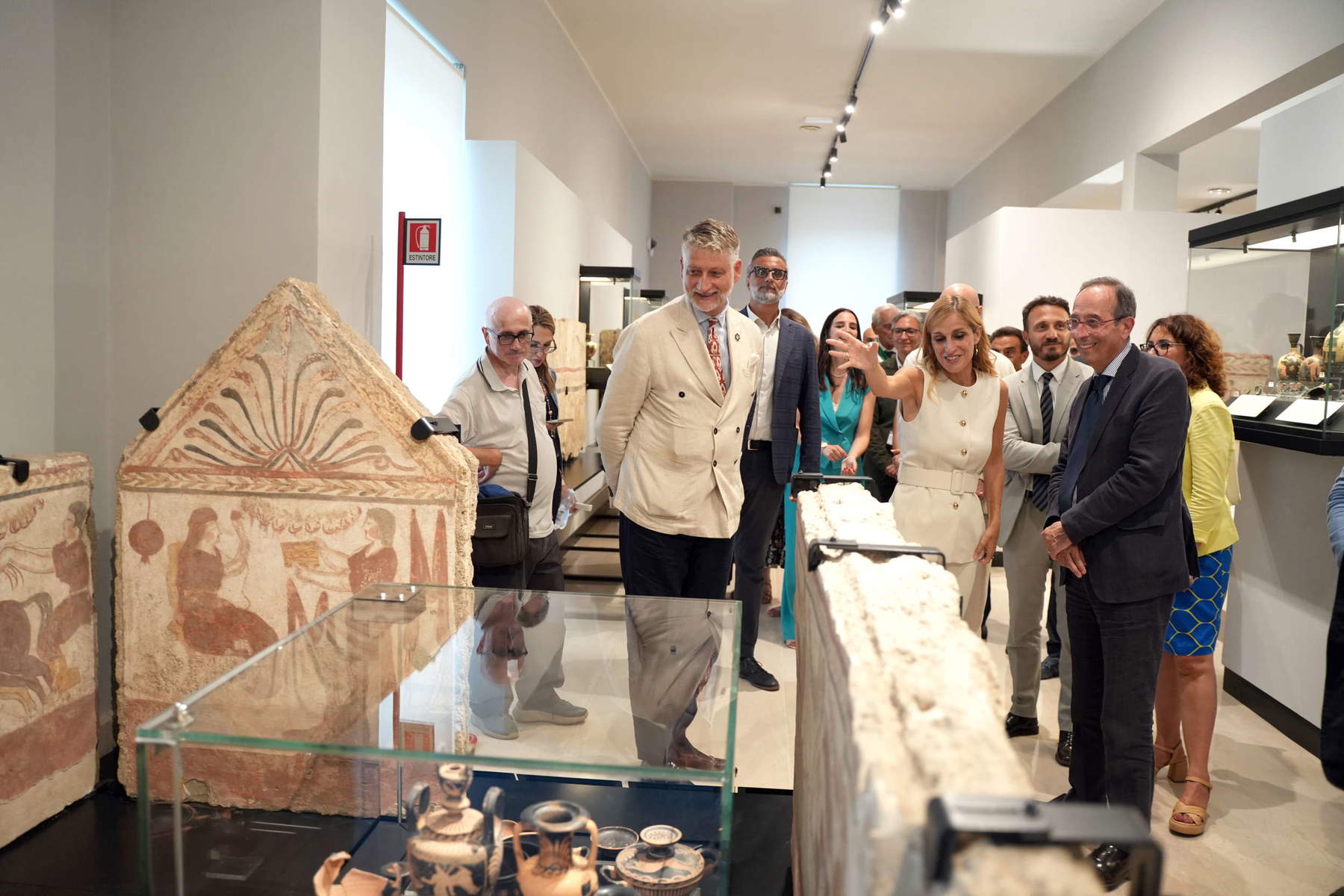
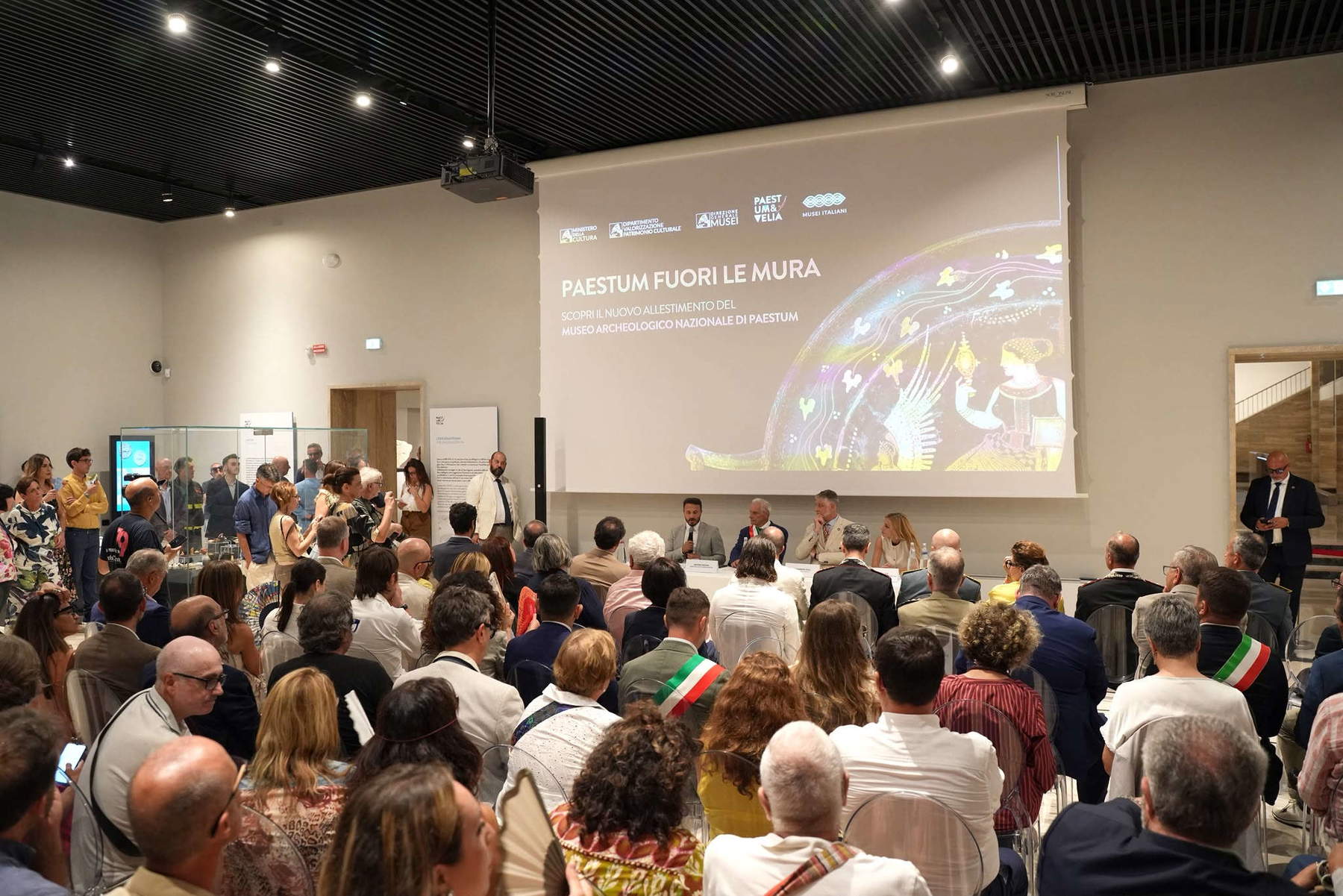
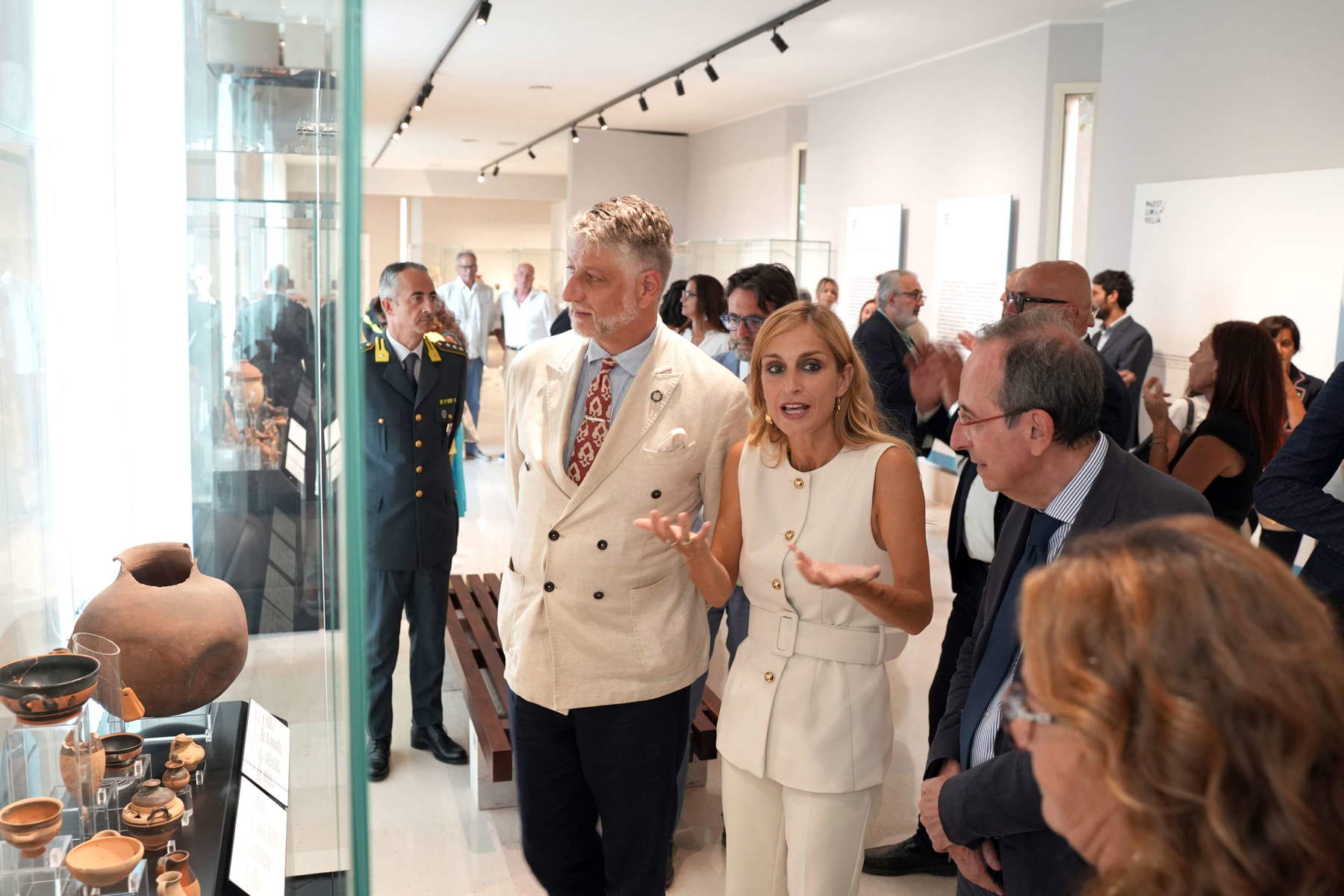
The entire exhibition has been designed to connect archaeological finds, their contexts of origin, educational materials, and multimedia tools, creating a narrative that transcends the traditional division into sections and presents a unified account of the territory’s historical development. Among the most anticipated features of the new exhibition is the return of the extraordinary collection of painted tombs, one of the defining elements of Paestum’s archaeological heritage. The famous funerary slabs from the Greek-Lucanian period, dating from the 5th century to the early decades of the 3rd century B.C., are once again fully accessible to the public, along with their respective grave goods, within completely renovated galleries. The new exhibition layout offers a different perspective than in the past: the painted tombs are no longer presented solely as masterpieces of ancient funerary art, but are repositioned within their original context, reconstructing the structure of the burials, the funerary rituals, and the circumstances of their archaeological discovery. The ongoing dialogue between the painted slabs and the grave goods provides a better understanding of the identities of the buried individuals, as well as the religious beliefs and social values of the Lucanian communities. The decorations depict scenes of the warrior’s return, battles, athletic competitions, processions, and farewells, offering direct evidence of conceptions of death, memory, and the representation of social prestige in southern Italy between the 5th and 3rd centuries B.C.
Alongside the tombs already familiar to the public, the museum is exhibiting new painted slabs in its permanent collection for the first time. Among these, those from Chamber Tomb 113 of the Spinazzo necropolis stand out, considered particularly valuable for the quality of their decorative program. The paintings underwent a delicate restoration process co-funded by the Ministry of Culture and a donation from the company Eutecne S.r.l. as part of the Art Bonus program.
The galleries dedicated to the necropolises and the surrounding territory further expand the narrative, illustrating the organization of the space outside the city during the Greek and Lucanian periods. Alongside already known artifacts are items previously stored in the museum’s vaults, which document the relationships between the urban center, the sanctuaries, the rural settlements, productive activities, and the burial grounds scattered throughout the chora of ancient Poseidonia.
“The National Archaeological Museum of Paestum has been a landmark for the region for years,” stated Minister of Culture Alessandro Giuli. “The new exhibition design makes it even more beautiful and expands the ways it can be enjoyed. Care and accessibility are the keywords of this day: a museum fully fulfills its purpose when it encourages participation and allows everyone to feel like an active part of the community. Professionalism, passion, and advanced technologies make it possible to reach ever-larger audiences. This is how the museum becomes a vital institution, capable of sustaining a network of relationships and strengthening a sense of belonging. Culture is also about being present and close to citizens.”
Alfonsina Russo, head of the Department for the Promotion of Cultural Heritage, also emphasized the significance of the project: “The new exhibition layout at the National Archaeological Museum of Paestum represents a major achievement for heritage preservation: it brings to a close a multi-year project that restores the museum’s narrative coherence and strengthens its role on the national stage and beyond. This achievement was made possible in part by the ability to integrate public resources and private contributions, thereby strengthening the museum’s ties to the local community and expanding its capacity to reach new audiences.”
The museum, founded in 1952 in the heart of ancient Poseidonia, houses one of the most important archaeological collections in the Mediterranean, assembled over more than a century of excavation campaigns and scientific research. The building, designed in the 1930s according to the principles of Rationalist architecture, was originally built to house the famous cycle of sandstone metopes from the sanctuary of Hera at the mouth of the Sele River, dating from between 570 and 560 B.C. Over time, the collection has been enriched with exceptional artifacts, among which the famous Tomb of the Diver, dating to 480–470 B.C., stands out; it remains the only tomb painted with figurative scenes known in the Greek world from this period.
Among the main new features is the “New Excavations and Research” section, inaugurated in conjunction with the museum’s completion. This space takes visitors behind the scenes of the daily activities of the Archaeological Parks, illustrating the phases of research, protection, restoration, conservation, and promotion. The display cases will host temporary exhibitions dedicated to collaborations with Italian and foreign universities, research institutes, schools, organizations, and associations engaged in the study of archaeological heritage.
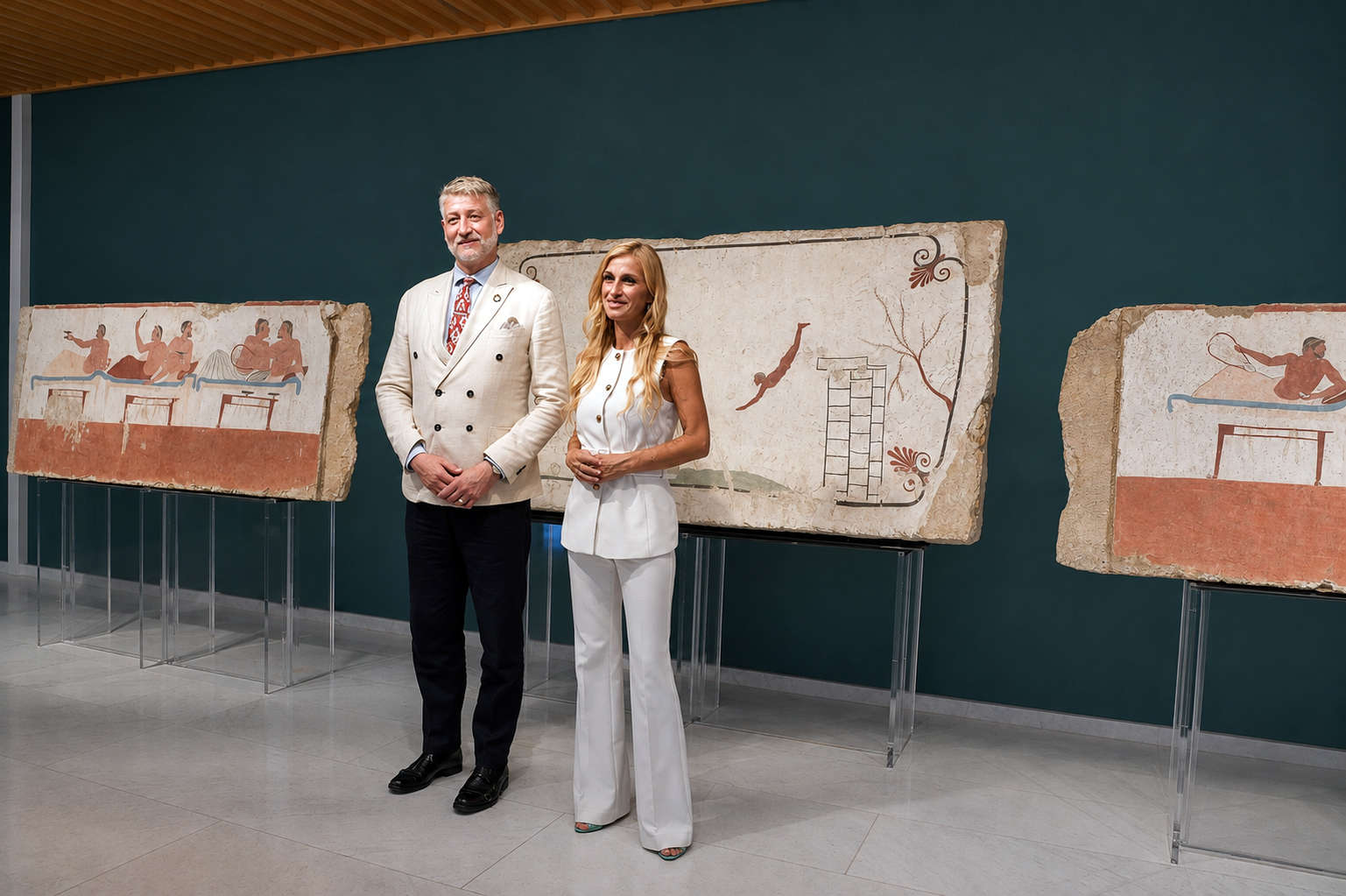
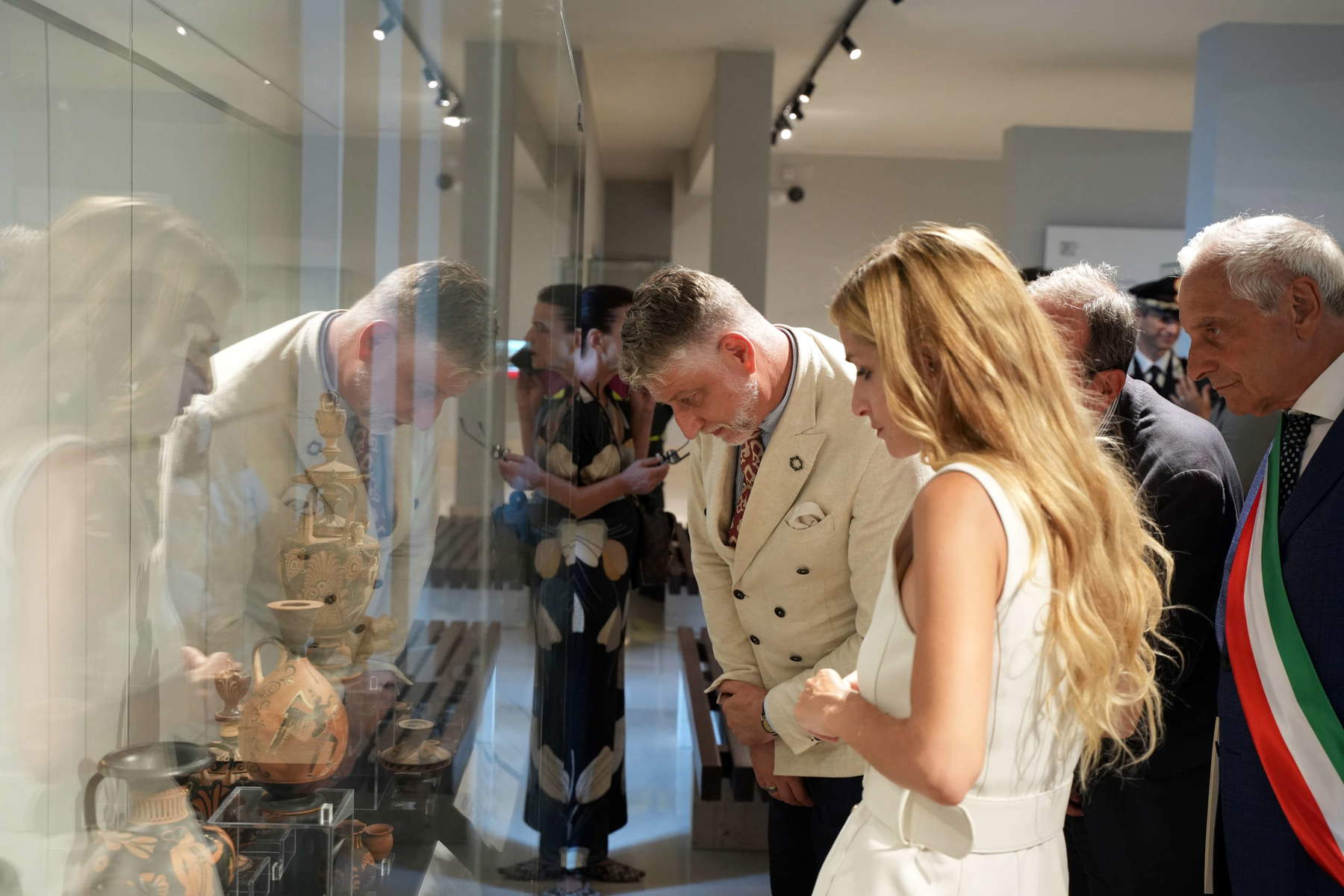
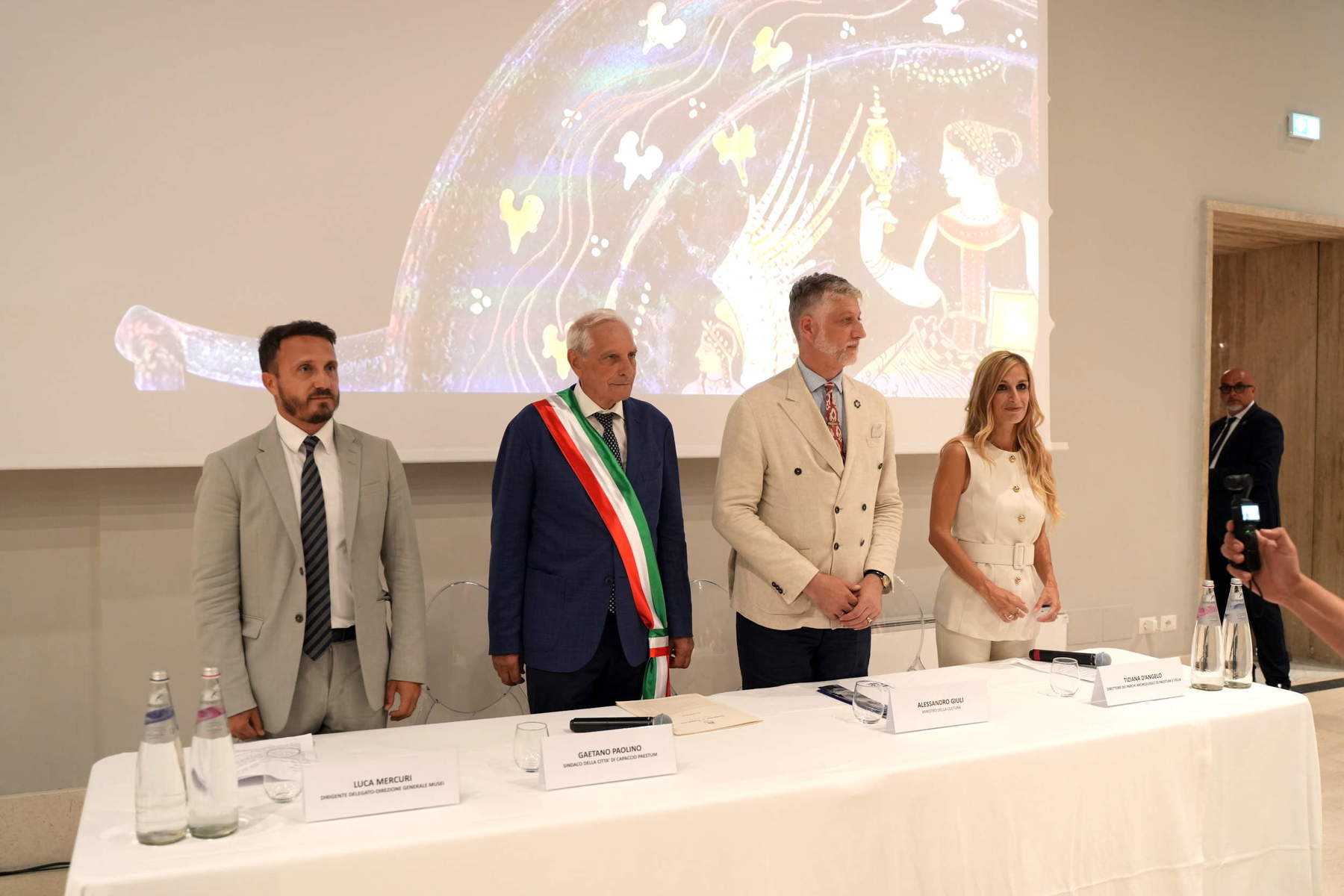
According to Tiziana D’Angelo, director of the Archaeological Parks of Paestum and Velia, “Paestum fuori le mura marks the completion of the renovation project for the National Archaeological Museum of Paestum and is a milestone of great significance. It is the result of a team effort that we are now presenting to the community and visitors. The new exhibition tells the story of what took place beyond the walls of the ancient city and the connection between Poseidonia and its surrounding territory, through artifacts from ongoing excavations, materials previously stored in the museum’s vaults, and restorations carried out in part thanks to the support of our patrons. “A museum is not merely a place of preservation, but a space where cultural heritage is interpreted, shared, and made accessible.”
One of the central aspects of the new museum isaccessibility. The renovation affects not only the display of the collections but also the ways in which the heritage is presented. Updated educational materials, multimedia content, tactile aids, and tours in Italian Sign Language allow for different levels of engagement and promote physical, cognitive, and sensory accessibility.
The projects were funded through the 2014–2020 PON Culture and ERDF Development programs, the Plan for the Elimination of Architectural Barriers, and various projects under the National Recovery and Resilience Plan dedicated to accessibility, the digitization of documentary heritage, and energy efficiency.
In particular, thanks to PNRR funding, the museum’s tactile tour—developed in collaboration with the Omero State Tactile Museum in Ancona—has been completed. The new tour includes twenty-five three-dimensional reproductions created using 3D printing, supports designed according to the principles of universal design, and bilingual captions in Italian, English, and Braille, all dedicated to the history of Poseidonia-Paestum. All elements have been designed to be easily moved and reused in temporary exhibitions while maintaining the coherence of the entire project.
The tactile tour also complements the E.LIS.A. project for Paestum, promoted by the Campania Region in collaboration with the National Deaf Association and coordinated by the IFEL Campania Foundation with funding from the Presidency of the Council of Ministers. The initiative provides multimedia content in Italian Sign Language and International Sign Language, further expanding opportunities for deaf visitors to enjoy the museum.
The connection with the local community is also evident in the restoration of the installation created in 1972 by Carlo Alfano in the museum’s courtyard. The work, restored thanks to the support of the Palmieri family of the Vannulo company, represents the first example of a contemporary art installation placed within an Italian archaeological museum. Conceived as the conclusion of the *Tempi prospettici* cycle following the discovery of the Tomb of the Diver in 1968, it now once again engages in a dialogue with the famous funerary painting through the system of reflections and refractions envisioned by the artist.
“With the completion of the new exhibition design, the National Archaeological Museum of Paestum offers the public a cohesive and accessible narrative of the ancient city, its territory, and the communities that inhabited it, highlighting the extraordinary richness of its collections,” concludes Luca Mercuri, deputy director of the General Directorate of Museums. “It is a project that combines scientific rigor with a focus on all audiences, strengthens Paestum’s role within the national museum system, and fully embodies the function of the contemporary museum: an open space where conservation, research, and public engagement work together to make our cultural heritage increasingly accessible and widely shared.”
|
| Paestum Completes Its New Museum: The “Paestum Outside the Walls” Tour Is Launched |

Warning: the translation into English of the original Italian article was created using automatic tools. We undertake to review all articles, but we do not guarantee the total absence of inaccuracies in the translation due to the program. You can find the original by clicking on the ITA button. If you find any mistake,please contact us.


















 IT
IT FR
FR DE
DE ES
ES CN
CN


