




by Redazione 13/10/2026


Categories: Museums / Disclaimer
Starting October 13, a new exhibition section in the Baroque Corridor brings together works by Michele Desubleo, Flaminio Torri, Simone Cantarini, Giovanni Lanfranco, and Giovan Battista Gaulli. The initiative marks the return of paintings that have long been stored in the museum’s vaults and highlights the Bolognese tradition of nude painting.
Starting Tuesday, October 13, the National Art Gallery of Bologna is presenting a new exhibition section dedicated to 17th-century Bolognese nude painting. The exhibition, located in the Baroque Corridor, brings together works by Michele Desubleo, Flaminio Torri, Simone Cantarini, Giovanni Lanfranco, and Giovan Battista Gaulli, known as “il Baciccio,” offering a comparison of the various interpretations of the human body developed by these artists throughout the 17th century.
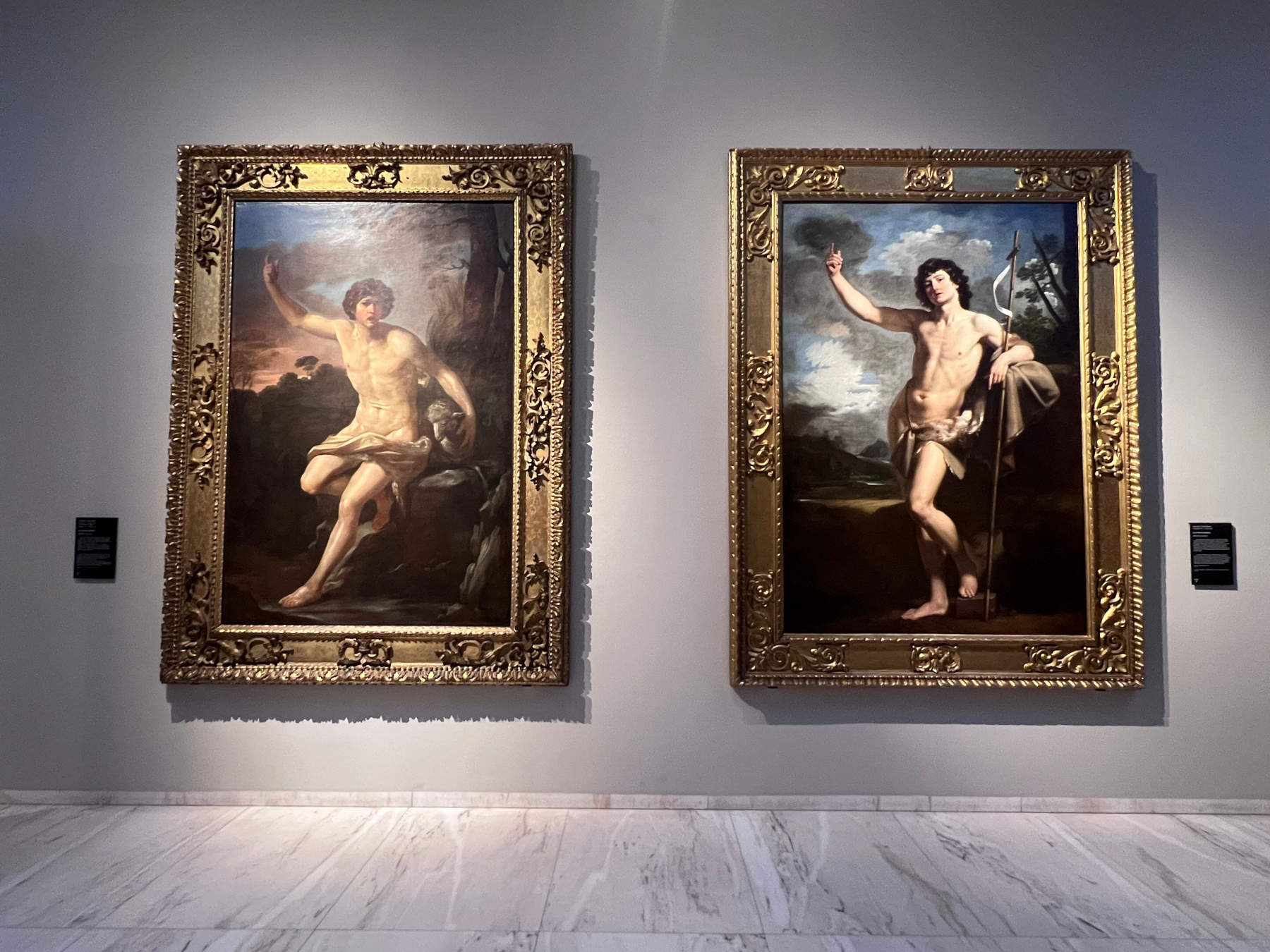
The initiative stems from the loan of Artemisia Gentileschi’s painting *Susanna and the Elders*, which is destined for the exhibition *Artemisia Gentileschi in Florence*, scheduled at the Museo degli Innocenti from October 21, 2026, to April 4, 2027. To replace the painting, the Pinacoteca is exhibiting two works from its own collection: *St. John the Baptist* by Michele Desubleo and *St. John the Baptist* by Flaminio Torri and Simone Cantarini. The paintings are displayed in dialogue with the works already on the opposite wall: *Saint Jerome* by Simone Cantarini, *Samson* by Giovanni Lanfranco, and*Abel* by Giovan Battista Gaulli.


The two paintings retrieved from storage are thus once again accessible to the public after a long period of conservation in the museum’s non-exhibition spaces. This initiative is part of Director Luigi Gallo’s efforts to bring the works held in storage to the public’s attention and to highlight the National Art Gallery’s collection. Of particular note is Desubleo’s Saint John the Baptist, the artist’s only work included in the museum’s permanent exhibition. The painting is being presented following a major restoration carried out by the Ottorino Nonfarmale Laboratory, made possible in part by a contribution from the pharmaceutical company Alfasigma S.p.A.
“This exhibition section invites visitors to discover the role of the nude in 17th-century Bolognese painting, where the body becomes an expression of a beauty that is both seductive and heroic,” says Gallo. “The two St. John the Baptists by Desubleo and Cantarini and Torri, which have been in storage for many years, are once again on display alongside the other masterpieces in the exhibition, demonstrating how Guido Reni’s ideal is renewed through a more intense pursuit of realism. The restoration, supported by Alfasigma—to whom we extend our thanks—restores full clarity to the extraordinary quality of Desubleo’s painting. Thus continues the work of showcasing the works in storage, which enriches the visitor experience and offers the public new opportunities to learn about our collections.”
An in-depth discussion titled “Inside the Painting: Michele Desubleo’s Saint John— Between History and Restoration,” scheduled for November 10 at 5:00 p.m., will also be dedicated to the restoration and history of the work . Speakers will include Luigi Gallo; Angelo Mazza, art historian, former honorary inspector for the Ministry of Culture responsible for the protection and oversight of historical and artistic heritage in the Emilia-Romagna region, and one of the curators of the general catalog of the National Art Gallery of Bologna; Giovanni Giannelli, technical director of the Ottorino Nonfarmale Restoration Laboratory; and Gisella Pollastro, restoration specialist at the National Museums of Bologna.
The new exhibition, titled “The Nude in 17th-Century Bologna,” offers an in-depth exploration of the popularity of a genre that found an important center of development in this Emilian city. Among the key figures is Guido Reni, whose *Victorious Samson*, on display in the room dedicated to him, represents one of the most significant expressions of his ideal of beauty. The hero’s monumental body, constructed according to proportions inspired by classical sculpture and characterized by a sensual yet harmonious pose, occupies the foreground of the composition.
The anatomical solutions developed by Reni influenced several generations of artists, who adopted and reworked his models, contributing to the continuity of nude painting throughout the 17th century. A comparison of the works gathered in the Baroque corridor reveals how that artistic language was progressively reinterpreted, including through a greater emphasis on the naturalistic rendering of the bodies.
In Desubleo’s *St. John the Baptist*, the young man’s languid pose echoes Reni’s style, while the chiaroscuro accentuates the naturalism of the flesh tones and the fur draped around his hips. The painting by Cantarini and Torri, on the other hand, develops the model in a more earthly and human direction. The sharp alternation of light and shadow contributes to the construction of the figure and distinguishes it from the solemn idealization of Reni’s heroes. Simone Cantarini’s SaintJerome, painted during the artist’s stay in Bologna, demonstrates a mature balance between his personal pursuit of realism and his adherence to the principles learned in Guido Reni’s workshop.
Rounding out the comparison is the *Samson* by Giovanni Lanfranco, an artist who, in his youth, collaborated with Reni in Rome on the creation of important fresco cycles. The work is juxtaposed with Baciccio’s*Abel*, a later painting with which it shares the diagonal composition of the figure and an interest in anatomical study. In both cases, the raw nature of the subjects is channeled into a composition in which formal balance and aesthetic exploration engage with the legacy of Reni’s poetic style.
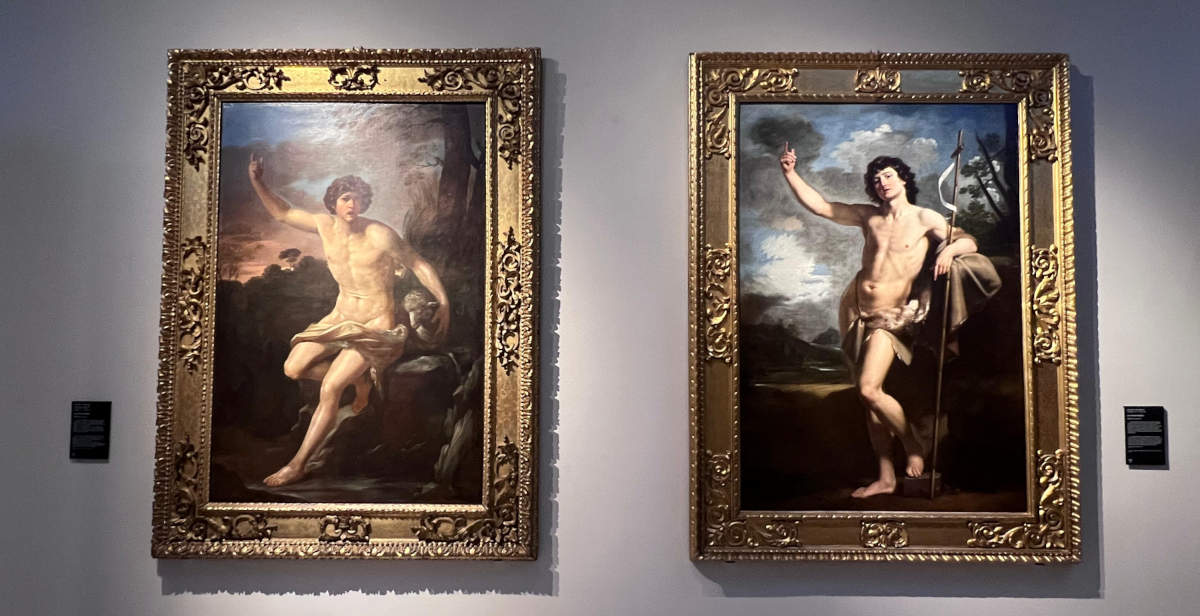 |
| The National Art Gallery of Bologna is bringing 17th-century nudes back into the spotlight from the museum's storage facilities |
Warning: the translation into English of the original Italian article was created using automatic tools. We undertake to review all articles, but we do not guarantee the total absence of inaccuracies in the translation due to the program. You can find the original by clicking on the ITA button. If you find any mistake,please contact us.