





For the first time, pieces from the Codex of San Gaudenzo will be performed live—a precious medieval musical repertoire brought to light thanks to a research project led by musicologist Francesco Zimei of the Department of Literature and Philosophy atthe University of Trento. The event will take place on September 4, as part of the Sagra Musicale Malatestiana, at the Teatro Galli in Rimini. Performing these pieces, which have lain silent for over five centuries, will be the renowned Ensemble Micrologus of Assisi, one of Europe’s leading ensembles specializing in the performance of medieval music on reconstructed historical instruments.
The history of the manuscript is nothing short of incredible. The musical scores were preserved on 179 thin strips of parchment, which had been reused as backing and reinforcement for the binding of an accounting ledger from the Benedictine Abbey of San Gaudenzo, near Rimini, compiled between 1398 and 1503. For centuries, these fragments remained hidden among the pages of the volume, until they were recovered in 2025 thanks to the interventionof the Central Institute for the Pathology of Archives and Books (ICPAL). Following careful restoration, each fragment was cleaned, digitized at high resolution, and entrusted to researchers at the University of Trento. There, Francesco Zimei reconstructed the original order of the parchments, while Giacomo Pirani carried out the digital reconstruction of the codex, piecing it together virtually like a giant jigsaw puzzle. The research project, which began in 2016 and concluded in 2025, has made it possible to return to the scientific community one of the most important discoveries related to medieval secular music to emerge in Italy in recent decades.
The San Gaudenzo Codex contains 85 compositions, including 72 Italian pieces and 13 French ones, with as many as 19 unique works—that is, works not attested elsewhere in the musical tradition of the period. The repertoire includes ballads, madrigals, rondeaux, and chansons, bearing witness to the lively exchange of musicians and cultural influences between Italy and Europe during the 14th and 15th centuries. The first sections feature masterpieces of the Italian Ars Nova, linked to the tradition of composers such as Francesco Landini, while the final section documents the arrival in Italy of Franco-Flemish chansons, with music also attributed to Guillaume Du Fay, foreshadowing a trend that would become central in the decades to follow.
The concert will thus offer a once-in-a-lifetime opportunity to hear melodies that have remained silent for over five hundred years. On stage, the Ensemble Micrologus will use historical instruments such as the viella, lute, portative organ, flute, and cennamella, recreating the original sound of medieval polyphony through an interweaving of voices and instrumental accompaniments. The event is part of the “Special Projects” section of the Sagra Musicale Malatestiana, which highlights initiatives that combine scientific research, historical reconstruction, and artistic experimentation.
The concert will also feature the presentation of the two-volume set*Rimini, Ms. San Gaudenzo III: The New Life of a Dismembered Songbook*, published in the new *Ars Renovata* series by the Libreria Musicale Italiana. The volumes bring together scholarly studies on the manuscript and a complete reproduction of the reconstructed codex, offering a reference tool for scholars and contributing to the promotion of one of the most significant recoveries of medieval European music.
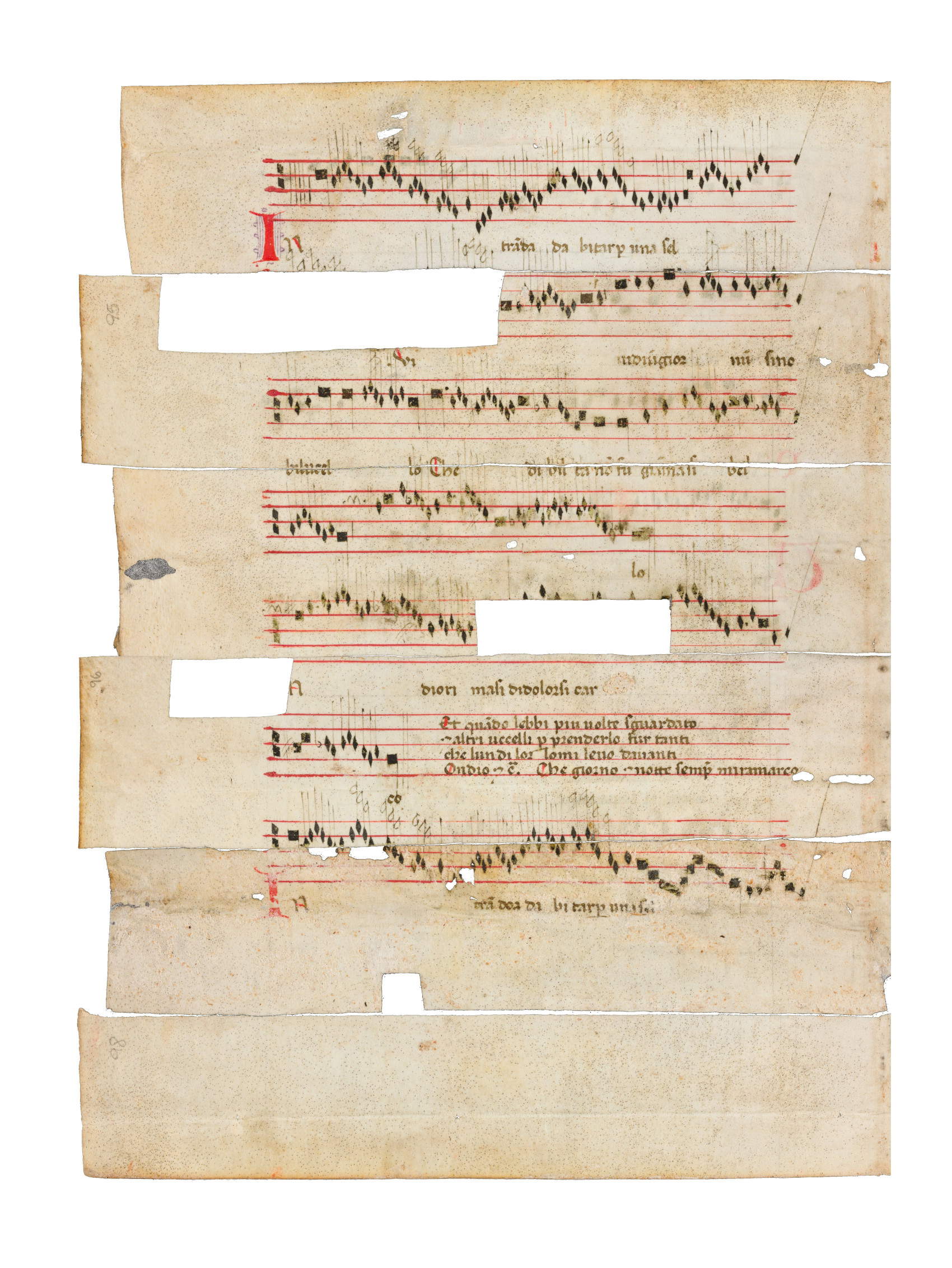
“It was clear that those narrow strips of parchment concealed valuable content,” stated Francesco Zimei. “After years of outreach efforts, I secured the cooperation of the Rimini State Archives—the custodian and preserver of the documents—and the support of the Ministry of Culture, through the Central Institute for the Pathology of Archives and Books in Rome (ICPAL), to undertake the restoration work.” “This is undoubtedly one of the most important collections of medieval secular music to have resurfaced in Italy,” Zimei emphasized. “To recover a manuscript in this condition—completely shredded and warped—and transform it into something usable that is brought back to life is truly exceptional. We are publishing a manuscript that no longer exists. Only fragments remain, now separated and locked away in a box. We are convinced that our work will set a precedent.”
“The San Gaudenzo Codex,” explained Giacomo Pirani, “consisted of eleven volumes. We have recovered five of them so far, amounting to fifty pages of the original volume. We do not rule out the possibility that other fragments of the songbook may turn up in the future in some repository of Malatesta artifacts.”
“The recovery of the San Gaudenzo Codex demonstrates how restoration, when based on advanced scientific methodologies and constant dialogue among different fields of expertise, can return to scholarship evidence that seemed irretrievably lost. ICPAL’s work has made a documentary heritage of exceptional value legible once again, creating the conditions for its reconstruction and for a new era of scholarship,” stated ICPAL Director Michela Palazzo.
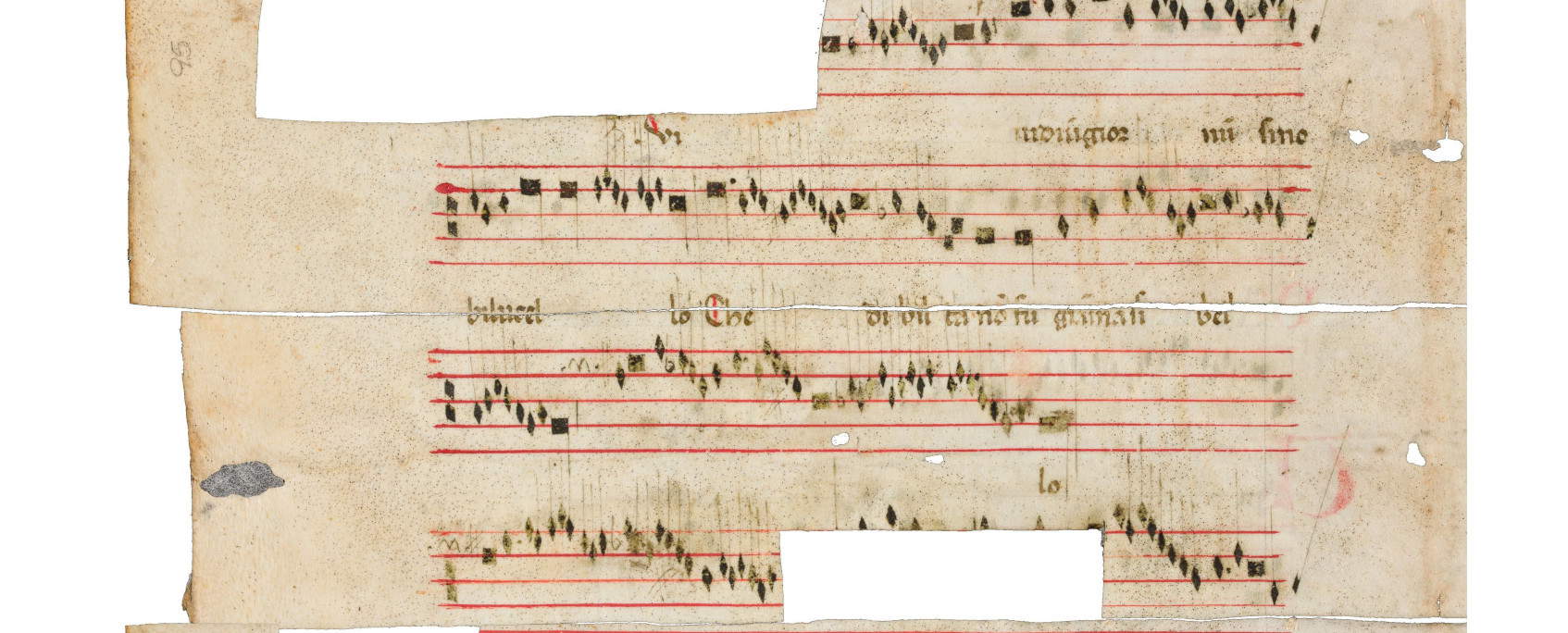 |
| Rimini: Medieval passages from the Codex of San Gaudenzo, discovered by the University of Trento, are brought to life for the first time |

Warning: the translation into English of the original Italian article was created using automatic tools. We undertake to review all articles, but we do not guarantee the total absence of inaccuracies in the translation due to the program. You can find the original by clicking on the ITA button. If you find any mistake,please contact us.
























 IT
IT FR
FR DE
DE ES
ES CN
CN


