




by Redazione 27/11/2026



Categories: News / Disclaimer
In anticipation of Ancona’s designation as the 2028 Italian Capital of Culture, the city’s Francesco Podesti Civic Art Gallery will host an international conference on December 5 dedicated to the exchange of artists, works of art, and cultural models between the two shores of the Adriatic in the 16th century.


The Adriatic in the 16th century was a hub of commercial and cultural exchange, traversed by artists, works of art, materials, and architectural models that helped forge connections between cities and regions on both shores. This theme is the focus of the international conference *Vie d’Arte e di Mare nel Cinquecento. International Dialogues on the Adriatic Renaissance, scheduled for Saturday, December 5, 2026, at the Francesco Podesti Civic Art Gallery in Ancona. The event, held in memory of Fabio Mariano, will bring together Italian and Croatian scholars to explore the artistic relationships that developed in the Adriatic region during the 16th century.


The conference is curated by Francesca Coltrinari and Caterina Paparello and is sponsored by the Forum of Adriatic and Ionian Cities (FAIC), chaired by Luigi Albore Mascia, with Marta Paraventi serving as secretary general. The organization is headquartered in Ancona. The initiative is made possible with support from the Ministry of Culture and the Permanent Secretariat for the Adriatic-Ionian Initiative, chaired by Ambassador Castellaneta, under the patronage of the City of Ancona, and in collaboration with the University of Macerata and Ca’ Foscari University of Venice.


The event is part of the lead-up to Ancona’s designation as the 2028 Italian Capital of Culture and explores some of the central themes of the bid dossier: the sea as a space for connections and the city’s orientation toward the East. In the 16th century, in fact, the Adriatic was not merely a shipping route but a territory of connections where different artistic and architectural traditions came into contact, interacted, and transformed one another. Venice, Ancona, Ragusa, and Bari were among the main centers of cultural exchange, connected to other coastal cities and inland regions.


While the 15th century in the Adriatic has been the subject of numerous studies, the 16th century remains relatively less explored from a comprehensive perspective. The conference aims to contribute to expanding our knowledge of this period, moving beyond interpretations limited to individual local or regional contexts. The discussion will bring together new documentary research, case studies, and diverse interpretive perspectives, examining painting, sculpture, architecture, and cultural history. Part of the proceedings will also be dedicated to historiography, criticism, and heritage preservation, with particular attention to the formation of an Adriatic cultural identity, the history of scholarship, and practices of conservation and promotion.
The choice of the Francesco Podesti Civic Art Gallery as the venue for the conference aims to connect scientific research with the city’s cultural heritage, while highlighting Ancona’s historical role in cross-Adriatic connections.
“As the Councilor for Culture of the City of Ancona and secretary of FAIC, the organizing body, I am particularly pleased that this conference is taking place in our city,” states Marta Paraventi. “The Adriatic Renaissance tells a story of relationships, mobility, and exchanges that is deeply rooted in Ancona. It is a perspective that resonates with the dossier *Ancona. This Now*: a city that, starting from its port and the Adriatic, renews its vocation as a crossroads and turns its gaze toward the East. I would also like to emphasize that the initiative is dedicated to the memory of Fabio Mariano (1949–2023) and includes a presentation by Mauro Saracco on his relationship with Adriatic culture. In the wake of his scholarly work, we are forging ties between the art gallery and prestigious universities and research centers such as Macerata and Ca’ Foscari, with which we also collaborate on the scientific study of the Ancona dialect led by Prof. Giuliana Giusti.”

The conference program
The proceedings will begin at 9 a.m. with opening remarks by Marta Paraventi, Councilor for Culture of the City of Ancona and Secretary General of the FAIC, and Luigi Albore Mascia, President of the Forum.
The first session, titled “Artistic Geographies, Networks, and Circulation in the Adriatic Renaissance,” will be moderated by Jasenka Gudelj of Ca’ Foscari University of Venice. Speakers will include Francesca Coltrinari (University of Macerata), who will present a paper on documents, works of art, and artistic connections in 16th-century Adriatic culture; Luca Andreoni (Polytechnic University of the Marche), who will explore Ancona and the mercantile hierarchies of the Adriatic; Laris Borić (University of Zadar), who will present a study on classical architectural models in Ancona, Zadar, and Dubrovnik; Luca Pezzuto (University of L’Aquila), who will discuss the circulation of writings on the Franciscan Observance between Abruzzo and Venice through the figure of Antonio Amici; and Mattia Biffis (University of Messina), with a presentation on artistic exchanges via Messina during the 16th century. After a break scheduled from 11:45 a.m. to 12:00 p.m., the proceedings will resume with the second session.
“Artists and Works in the 16th-Century Adriatic,” moderated by Caterina Paparello of Ca’ Foscari University of Venice, will feature Jasenka Gudelj, who will analyze art patronage in Ancona in the 16th century through the figure of Alvise Gozzi, and Marco Tittarelli (University of Macerata), who will focus on the funerary monument of Blessed Girolamo Ginelli. Tanja Trška (University of Zagreb) will present research on the furnishings of the Church of St. Savior in Dubrovnik, while Giuseppe Bonaccorso (University of Camerino) will trace the evolution of the artistic and architectural professions, from the stonemason-sculptor to the intellectual-architect.
After the lunch break, from 1:30 p.m. to 3:30 p.m., the conference will resume with the third and final session, “The Adriatic Renaissance: Historiography, Criticism, and Preservation, ” moderated by Francesca Coltrinari. Isabella di Liddo (University of Bari Aldo Moro) will present a historiographical overview of artistic trajectories, artistic presences, and the circulation of models in Apulia during the sixteenth century. Patrizia Dragoni (University of Macerata) will examine 20th-century appropriations of the Venetian past in the Adriatic region, focusing on the story of the lion contested between Šibenik and the Vittoriale. Caterina Paparello will explore the figure of Pietro Zampetti and his contribution to the study of Adriatic figurative culture, while Mauro Saracco (University of Macerata) will dedicate his presentation to Fabio Mariano and Adriatic culture.
The final discussion and conclusions are scheduled from 5:00 p.m. to 5:30 p.m.
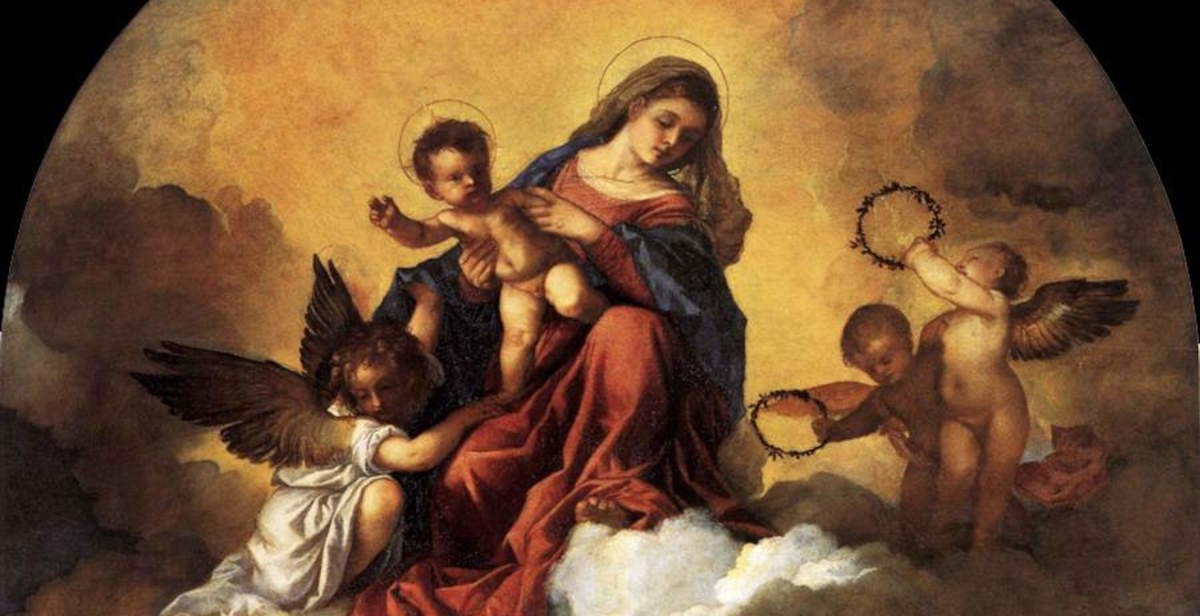 |
| Art Routes in the 16th Century: Ancona Explores the Cultural Ties of the Adriatic |
Warning: the translation into English of the original Italian article was created using automatic tools. We undertake to review all articles, but we do not guarantee the total absence of inaccuracies in the translation due to the program. You can find the original by clicking on the ITA button. If you find any mistake,please contact us.