



by Redazione 19/11/2026


Categories: News / Disclaimer
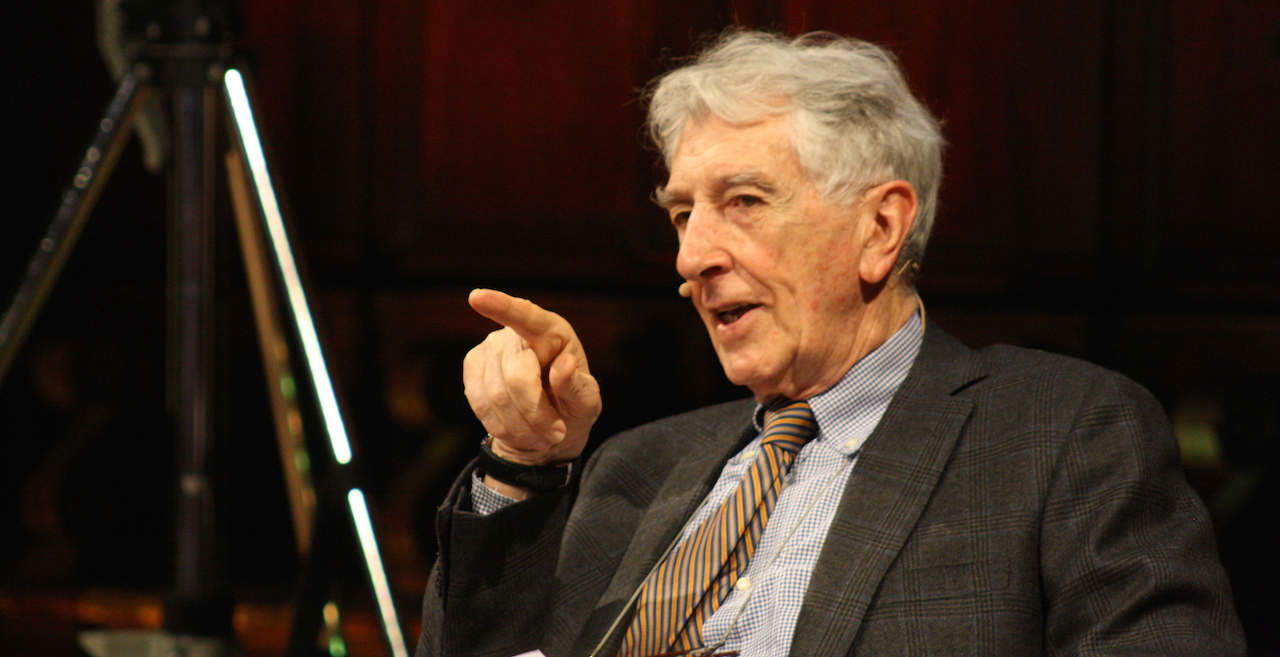
Journalist and writer Corrado Augias has passed away at the age of 91. He served as a correspondent in New York and Paris and, for twenty years, responded to letters from *La Repubblica* readers. Through his books and television appearances, he wrote about major cities, history, music, art, and religion.


Journalist and writer Corrado Augias passed away today in Rome at the age of 91. The news was reported by *La Repubblica*, the daily newspaper where he had been one of the leading columnists. In the world of culture, Augias was best known for his books about cities: Paris in 1996, New York in 2000, London in 2003, Rome in 2005, and Istanbul in 2016. For twenty years, Corrado Augias chronicled the world’s great cities, beginning with their secrets: famous or forgotten anecdotes, customs, stories of art and culture, and the charm of metropolises he knew intimately, having lived in them as a correspondent. That series of books aptly summarizes his approach to writing—always straddling the lines between journalism, the essay, and the narrative—with a broad audience in mind.

Born in Rome in 1935 and raised in the capital, he came from a family of French origin—from Toulon—and, further back, of Sardinian descent on his father’s side; his father, Carlo Augias, was an officer in the Royal Italian Air Force. His maternal grandmother was Jewish. Baptized into the Catholic faith of his parents, Augias would later declare himself an atheist, and religion was indeed one of the topics he wrote about most frequently. His career began at RAI in 1960 as a staff member. He became a professional journalist on April 1, 1969, serving as RAI’s correspondent in New York from 1966 to 1968 and later in Paris for the weekly magazines *L’Espresso* and *Panorama*. In November 1975, he returned to New York as a correspondent for *la Repubblica*, which would be launched a few months later. He maintained a very long-standing relationship with the Rome-based daily. From 2001 until March 1, 2021, he edited the readers’ letters column, responding to nearly 6,000 messages. Recurring themes included pluralism, secularism, ethical issues, democracy, and human rights; a selection of those letters and his responses was published in a book in 2021.


Meanwhile, Augias had become a familiar face on television. Beginning in 1987, he created and hosted *Telefono giallo*, a program dedicated to unsolved cases, which also inspired a book. An episode on the Ustica massacre has gone down in the history of Italian television. During the broadcast, an anonymous phone call came in that opened up new possibilities regarding the massacre: on the line was a soldier who had been on duty the evening of the tragedy, and he provided details so significant that they prompted the reinvestigation of the case. The show was abruptly canceled in 1992, following various controversies, including legal ones. During those same years, Augias hosted *Babele*, a program entirely dedicated to books.

After leaving RAI for Telemontecarlo, he conceived and hosted *Domino* in 1994. During that year’s election campaign, he co-hosted—along with Luciano Rispoli, Sandro Curzi, and Federico Fazzuoli—a series of programs featuring the main political leaders. It was on *Domino*, on March 19, 1994, that he clashed with Silvio Berlusconi. Augias asked him about his membership in the P2 Masonic lodge, and the leader of Forza Italia responded by speaking of “provocation” and “the usual tactics the left learned from the KGB”. Augias recounted that it was after that confrontation that he made the decision—which he had already been mulling over—to run for office. In the 1994 European elections, he was elected as an independent on the Democratic Party of the Left’s ticket in the Southern Italy constituency, with 168,735 votes. In 1999, he ran again with the Democrats of the Left, but with 48,529 votes, he was not re-elected. His alleged ties, dating back to the late 1960s, with the Czechoslovak secret services were also the subject of an investigation.
His return to Rai 3 in 2003 marked the beginning of what is perhaps the most recognizable phase of his television career. First with the morning segment *Le storie*, part of *Cominciamo bene*, and then with the standalone program *Le storie – Diario italiano*, which he hosted until May 2013, Augias presented about half an hour of in-depth cultural coverage every day: music, literature, recent history, and the visual arts. Starting in 2005, he periodically hosted *Enigma*, dedicated to historical events and figures. On April 7, 2014, the first episode of *Visionari* aired, in which the journalist “interviewed”—in a scripted format—women and men who had changed the world through their innovations. The debut episode, dedicated to Charles Darwin, drew 1,146,000 viewers and a 6.69% share. From 2016 to 2019, he wrote and hosted *Quante storie*, which aired at 12:45 p.m. Monday through Friday and focused on current events and new book releases. Starting in 2018, he hosted *Città segrete*, which featured a different city each episode, often through the biographies of famous figures associated with that place. This brought the theme of his books on cities back to television. Together with maestro Giuseppe Modugno, he also produced the DVD series *I segreti della musica* (*The Secrets of Music*), distributed with *L’Espresso* and *La Repubblica*, on the lives and works of the great composers of Western music. Starting in 2021, he co-hosted *Rebus* with Giorgio Zanchini on Sundays on Rai 3. In 2023, he left Rai for LA7, where he has hosted *La Torre di Babele* since December 4 of that year.
Radio was also part of his career. From March 1 to April 2, 1982, his segment *I giorni*(“daily musings on the flow of time in human history”) woke up Radiodue listeners Monday through Friday, from 6:00 to 8:30 a.m., directed by Giorgio Onetti. Before that came the theater: Augias had been part of the Roman avant-garde group Teatro del 101, for which he wrote *Direzione Memorie*, *Riflessi di conoscenza*, and *L’onesto Jago*.
As a novelist, he made his debut with a mystery. His trilogy—comprising *Quel treno da Vienna*, *Il fazzoletto azzurro*, and *L’ultima primavera* —is set in the early decades of the 20th century. The protagonist is Giovanni Sperelli, the half-brother of Andrea Sperelli, whom d’Annunzio had placed at the center of *Il Piacere*. The miniseries *Guerra di spie* was adapted from the trilogy. Other novels followed: *Seven Almost Perfect Murders*, *A Girl for the Night*, *That July Morning*, and *Three Columns in the News*—the latter co-written with his wife, Daniela Pasti. In the book *Newspapers and Spies*, he reconstructed a real-life espionage incident that took place in 1917.
For art lovers, *Il viaggiatore alato* stands out in particular—an essay-narrative dedicated to the life of Amedeo Modigliani. Augias’s body of essays, moreover, is vast. In 2006, he published *Inchiesta su Gesù* with the Bologna professor Mauro Pesce, a dialogue between the two authors on the person and the figure of Jesus. The book sold very well and sparked controversy among Catholics, who accused the authors of “launching a direct attack on the faith,” and among Evangelicals. In 2007, Mondadori published *Leggere. Perché i libri ci rendono migliori, più allegri e più liberi*(*Reading: Why Books Make Us Better, Happier, and Freer*), a passionate defense of reading. In 2008, *An Inquiry into Christianity: How a Religion Is Built*, written in collaboration with Remo Cacitti, a professor of ancient Christian literature at the University of Milan, was published. In 2009, he co-authored *Dispute on God and Related Matters* with Vito Mancuso, in which he reaffirmed his atheism. This book, too, was at the center of controversy—even with his co-author—due to accusations of plagiarism regarding its conclusions, which were nearly identical to a passage from *The Creation* by Harvard biologist Edward Osborne Wilson. This was followed by *I segreti del Vaticano* (2010), on the power dynamics surrounding the Papal States and the need for secularism in public life; *Il disagio della libertà. Perché agli italiani piace avere un padrone* (Rizzoli, 2012); and, in the same year, *I segreti d’Italia*. In 2022, Einaudi published *The End of Rome: The Triumph of Christianity, the Death of the Empire*, on the Roman Empire’s transition from paganism to Christianity. Until the very end, he continued to host *Babele* on La7. Over the course of his career, he received the Flaiano Lifetime Achievement Award in 2002 and, twenty years later, in 2022, the Chiara Lifetime Achievement Award.
|
| Farewell to Corrado Augias. From *I Segreti delle città* to *Babele*, a life dedicated to chronicling culture |
Warning: the translation into English of the original Italian article was created using automatic tools. We undertake to review all articles, but we do not guarantee the total absence of inaccuracies in the translation due to the program. You can find the original by clicking on the ITA button. If you find any mistake,please contact us.