



by Redazione 29/08/2026



Categories: News / Disclaimer
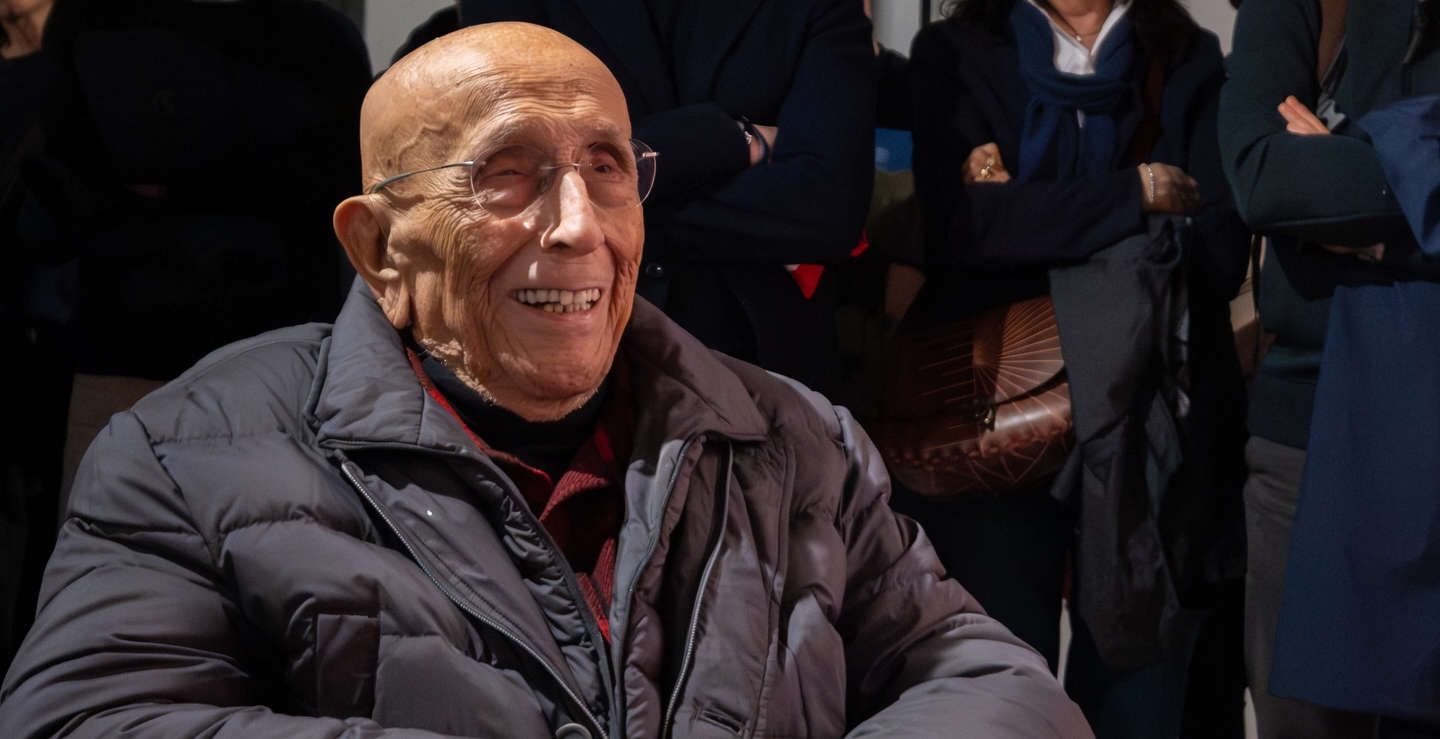
Franco Fontana, one of the most important figures in color photography, has passed away at the age of 92. He had more than 400 solo exhibitions to his credit, and his works are featured in more than 50 museums around the world.

Franco Fontana, one of Italy’s greatest masters of contemporary photography, has passed away at the age of 92. The Modena-based photographer, considered one of the world’s leading figures in contemporary art photography, died at his home.
Born in Cognento, a hamlet of Modena, in 1933, Fontana began taking photographs in 1961, initially frequenting photography clubs and working primarily as an amateur, though even in those early years he was already conducting aesthetic explorations on various themes. Among these, his explorations of the abstract expression of color were particularly significant , conducted during a historical period when abstract photography was pursued almost exclusively in black and white. His personal style took shape in the late 1960s, under the influence of Abstract Expressionism and Minimalism: among his points of reference were contemporary artists slightly older than him, such as Mark Rothko, Barnett Newman, and Ed Reinhardt. Fontana’s work, centered on form and color, stood in sharp contrast to the classical black-and-white art photography that dominated the scene in those years.
In 1963, he exhibited at the Third International Biennial of Color in Vienna, and the following year, *Popular Photography* magazine dedicated a portfolio to him for the first time, accompanied by a critical essay by Piero Racanicchi. His first solo exhibitions took place in 1965 in Turin, at the Società Fotografica Subalpina, and in 1968 in Modena, at the Galleria della Sala di Cultura: it was precisely this exhibition in his hometown that marked a significant turning point in his artistic journey.


Fontana has always shown a particular interest in the interplay of colors, and his early experiments in color photography, as early as the 1960s, had a profoundly innovative and disruptive impact on style. Fontana worked with 35-millimeter cameras and adopted distant viewpoints through the use of telephoto lenses, a technique that allowed him to flatten the contours of the landscape, transforming fields and crops into bands of intense, saturated color. The photographer and critic Franco Lefèvre defined this particular approach as a form of “dialectical landscape photography.” In 2019, on the occasion of the retrospective dedicated to him titled *Sintesi*, held at the Fondazione Modena Arti Visive, curator Diana Baldon described his geometric compositions as characterized by brilliant colors, flat perspectives, and a geometric, formal, and minimalist language, emphasizing how this approach—adopted as early as the 1960s—had brought new vitality to the field of creative color photography at a time when multicolored imagery was by no means in vogue in artistic photography. The curator also noted how Fontana’s photographic style ultimately dematerialized the objects he captured, which lost their three-dimensionality and realism to become part of an abstract design.
In addition to the rural landscape—which remains perhaps the subject most closely associated with his work—Fontana applied his graphic sensibility to other fields as well, ranging from urban architecture to portraiture, from fashion to still life, and even to the nude. His photographs have also been used as album covers for several records released by the jazz label ECM Records.
Over the course of his long career, Fontana has held over four hundred solo exhibitions and participated in numerous group shows at leading international institutions, including the Maison Européenne de la Photographie in Paris, the National Museum of Fine Arts in Buenos Aires, the Tokyo Metropolitan Museum of Photography, and Palazzo Reale in Milan. The photographer has also collaborated with international publications such as *Time*, *Life*, *Vogue USA*, *Vogue France*, *Il Venerdì* (of *La Repubblica*), *Sette* (of *Corriere della Sera*), *Panorama*, *Class*, and the German *Frankfurter Allgemeine*, in addition to having worked on numerous occasions on advertising campaigns for brands such as Fiat, Volkswagen, Sony, Volvo, Canon, Kodak, Snam, Robe di Kappa, and MaxMara.
His works are held in more than fifty museums worldwide, including—in addition to the aforementioned museum in Tokyo—the George Eastman House International Museum of Photography and Film in Rochester, the Ludwig Museum in Cologne, the San Francisco Museum of Modern Art, the Museum of Fine Arts in Boston, the Museum of Modern Art in Paris, the Pushkin State Museum of Fine Arts in Moscow, the National Gallery of Victoria in Melbourne, the Victoria and Albert Museum in London, the Gallery of Modern Art in Turin, and the Museum of Fine Arts in Houston, Texas, as well as major corporate collections such as those of Deutsche Bank, UniCredit, and UBS. Other institutions that hold works by the Modena-born photographer include the Museo Nacional de Bellas Artes in Buenos Aires, the Muscarelle Museum of Art in Williamsburg, the WestLicht Museum in Vienna, the IVAM —Valencian Institute of Modern Art, the Musée de l’Elysée in Lausanne, the MAXXI and MACRO in Rome, the MyArt Museum in Seoul, the Santa Giulia Museum in Brescia, and the Ara Pacis Museum, also in Rome.
As a testament to the complexity and international significance of his work, over seventy books have been dedicated to Fontana’s life and work, published by Italian, French, German, Swiss, Spanish, American, and Japanese publishers. Throughout his career, the photographer has exhibited in public museums and private galleries around the world, for a total of over four hundred exhibitions, including both solo and group shows.
|
| Farewell to Franco Fontana, Master of Color Photography |
Warning: the translation into English of the original Italian article was created using automatic tools. We undertake to review all articles, but we do not guarantee the total absence of inaccuracies in the translation due to the program. You can find the original by clicking on the ITA button. If you find any mistake,please contact us.