




by Redazione 17/08/2026



Categories: News / Disclaimer
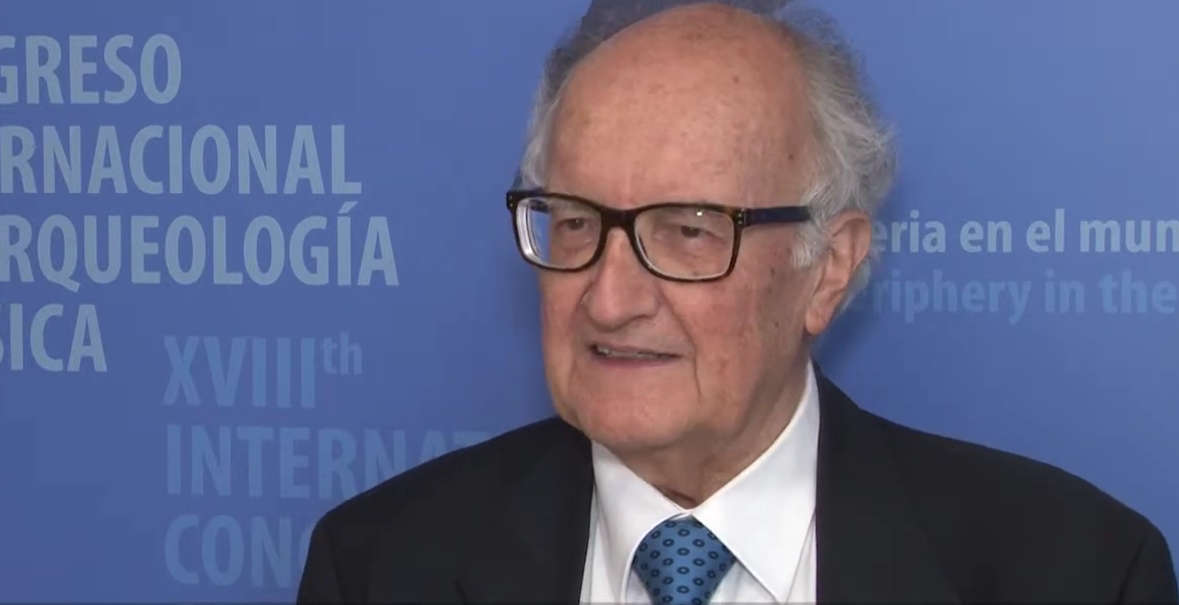
Archaeologist Lorenzo Quilici has passed away in Rome at the age of 88. He was a scholar who revolutionized the study of ancient topography, road networks, and the historical development of territories through a rigorous method based on direct observation and surveying.

Italian archaeology has lost one of its most authoritative and prominent figures with the passing of Lorenzo Quilici, a leading scholar who dedicated his entire life to the study of ancient topography, road networks, the evolution of settlements, and the historical formation of territorial contexts. He passed away in Rome on August 13 at the age of 88. Born in 1938, Quilici distinguished himself through a methodological approach that successfully combined field research with a broad perspective capable of connecting monuments, infrastructure, and the landscape.

Lorenzo Quilici’s career unfolded across the country’s leading research institutions. Between 1969 and 1990, he served as a researcher at the National Research Council (CNR), beginning his career at the Institute for Aegean-Anatolian Studies before moving on to work at the Center for Etruscan-Italic Archaeology. This solid foundation within the CNR laid the groundwork for his work in academia. From the 1990–1991 academic year until 2010, he held the chair of Topography of Ancient Italy at the University of Bologna, where he also directedthe Institute of Archaeology and coordinated the doctoral program in that field, training generations of scholars and instilling the scientific rigor that has always distinguished his work.


Quilici’s research spanned a vast and diverse geographical area. The excavations he directed were widely distributed throughout Rome and Lazio, extending into Etruria, Molise, Basilicata, and Calabria, and even reaching Cyprus and Turkey. This spatial scope was accompanied by an equally broad chronological range, spanning from the Bronze Age to the Renaissance. The core of his methodology, however, remained consistently rooted in surface surveys and topographic mapping— the primary tools for examining the Roman road network, the layout of cities, and the complex organization of inhabited spaces.
A central chapter of his work is represented by his long-standing collaboration with his wife and colleague Stefania Quilici Gigli: between 1974 and 1992, the two scholars conducted a systematic survey of Latium vetus, a wide-ranging project sponsored by the CNR’s Center for Etruscan-Italic Archaeology. This collective effort gave rise to the Latium vetus series of publications, which began in 1978 with a volume dedicated to Antemnae—featuring a preface by Massimo Pallottino—and continued with seminal monographs on Crustumerium, Fidenae, and Ficulea. This impressive body of documentation remains a milestone to this day for our understanding of the settlement patterns of ancient Latium.
Quilici’s commitment was also evident in her tireless editorial work, aimed at providing the scientific community with tools for ongoing discussion and updates. In 1992, once again together with Stefania Quilici Gigli, he foundedthe *Atlante tematico di topografia antica*, an annual journal published by L’Erma di Bretschneider and edited by him until the very end. The journal, which benefited from Quilici Gigli’s co-editorship, is currently classified in Category A by ANVUR. In addition to this important journal, starting in 2000, he served as editor-in-chief of the journal *Orizzonti*. This archaeological journal, once again run in tandem with his wife, reaffirmed his commitment to creating spaces for reflection dedicated to the discipline.
Lorenzo Quilici’s prestige has been recognized over the years through numerous prestigious academic affiliations. He was an honorary member of the British School at Rome, the American Philological Association, and the Archaeological Institute of America. He was also admitted as a scholar to the Pontifical Roman Academy of Archaeology, the German Archaeological Institute, and the Academy of Archaeology, Letters, and Fine Arts of Naples, in addition to holding corresponding membership in the National Institute of Etruscan and Italic Studies. In 2020, as the culmination of a career dedicated to the preservation and understanding of the national heritage, President of the Republic Sergio Mattarella awarded him the honor of Grand Officer of the Order of Merit of the Italian Republic.
“It is with deep sorrow that I learn of the passing of Lorenzo Quilici, a distinguished archaeologist and master of ancient topography,” stated Minister of Culture Alessandro Giuli. “A rigorous and passionate scholar, he dedicated his life to research, making a decisive contribution to archaeological studies and our understanding of ancient Italy. My heartfelt condolences go out to Simone Quilici, Director of the Colosseum Archaeological Park, to his family, and to all who loved him.”
|
| Farewell to Lorenzo Quilici, a leading figure in Italian archaeology and a scholar of the ancient landscape |
Warning: the translation into English of the original Italian article was created using automatic tools. We undertake to review all articles, but we do not guarantee the total absence of inaccuracies in the translation due to the program. You can find the original by clicking on the ITA button. If you find any mistake,please contact us.