




The trained body, competition, training, social prestige, and memory form the central themes of ATHLETÉS – The Icon Beyond Time. Athletics, Society, and Funeral Rites in the Peucetan Aristocracies of the Bari Region: this exhibition, organized by the Superintendence of Archaeology, Fine Arts, and Landscape for the Metropolitan City of Bari, will be open to the public at Palazzo Simi in Bari starting Saturday, September 26, 2026. The opening is scheduled for 8:30 p.m., as part of the European Heritage Days, with free admission. Curated by Caterina Annese, Elena Dellù, and Francesca Romana Paolillo, the exhibition will remain open to the public through March 28, 2027.
The project is part of the institutional activities of the Ministry of Culture, through the Department for the Protection of Cultural Heritage and the General Directorate of Archaeology, Fine Arts, and Landscape, aimed at combining conservation, research, and knowledge of the archaeological heritage with its return to the community. The opening of ATHLETÉS is also part of the program for the 65th International Conference on Magna Graecia Studies, dedicated in 2026 to Games and Athletics in Magna Graecia and the Ancient Mediterranean. On September 26, the conference will make a stop in Bari, with a session hosted at the Superintendency’s headquarters, prior to the opening of the exhibition at Palazzo Simi.
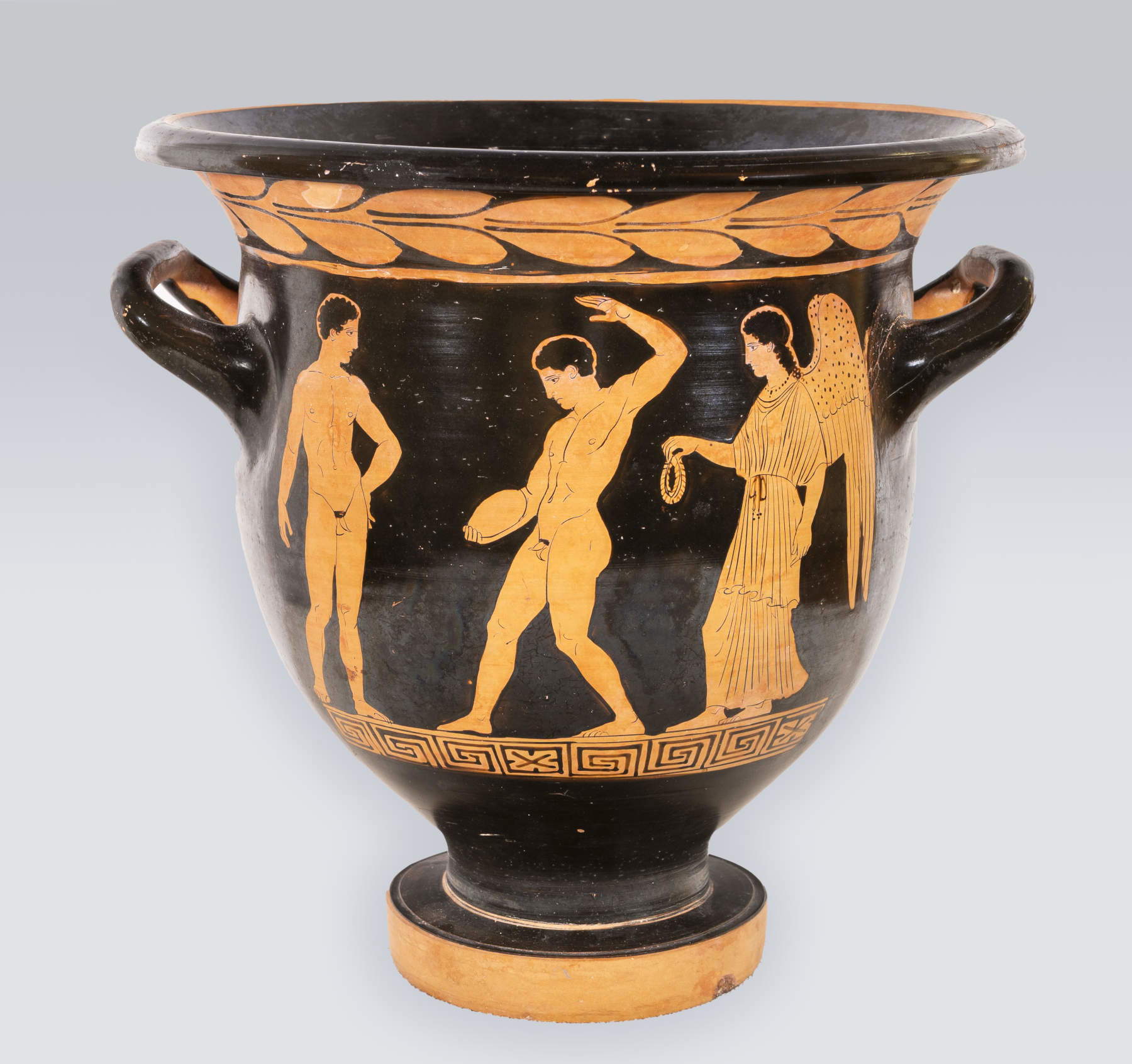
The exhibition begins with the figure of the athlete and broadens its scope to examine the society that shaped and utilized that image. In the ancient world, in fact, the trained body was associated with discipline, education, and self-control, while individual success could take on public and collective significance. As these models spread throughout Puglia, local communities did not simply accept them passively but selected and reinterpreted them within their own cultural and symbolic systems.
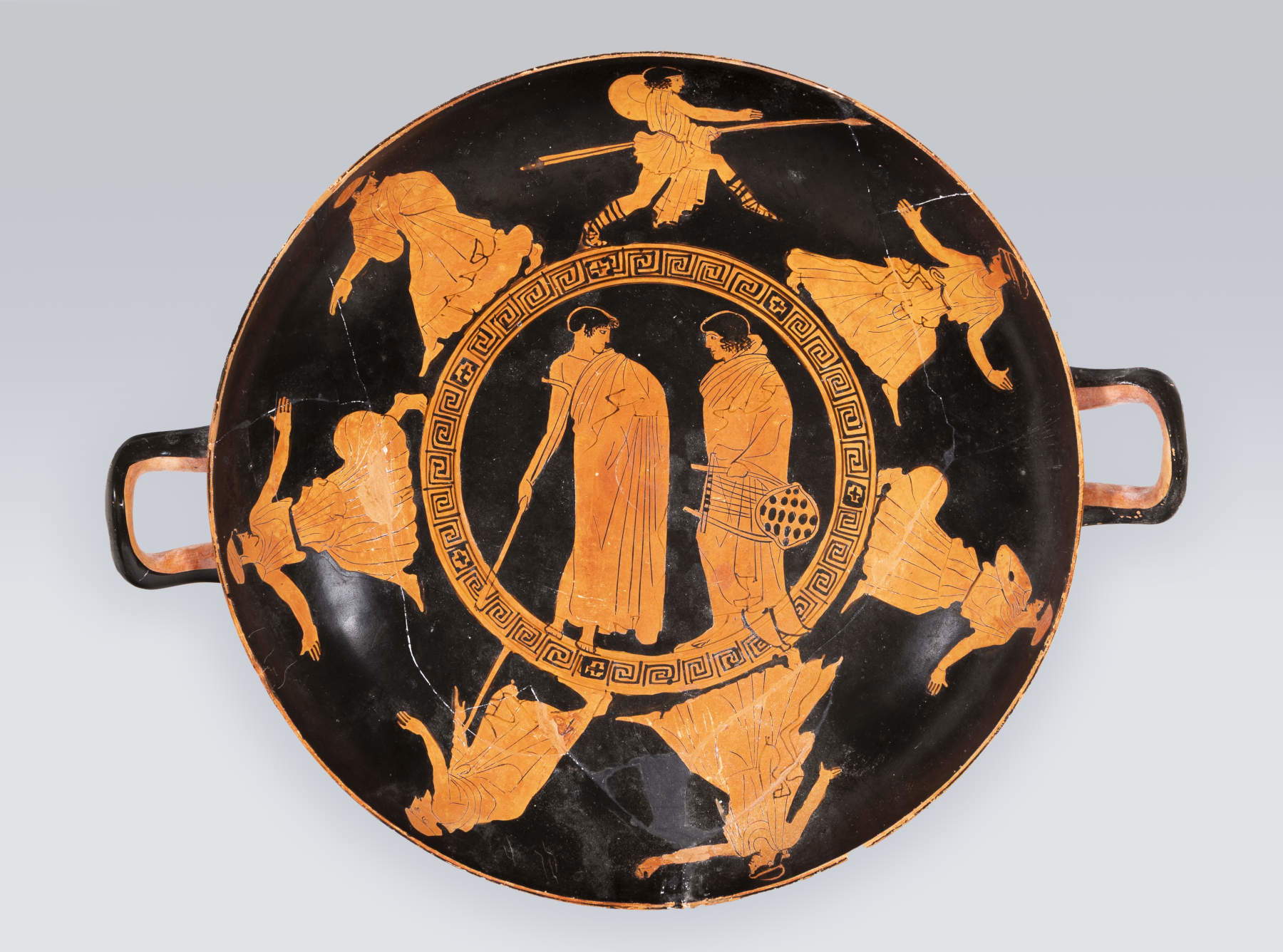
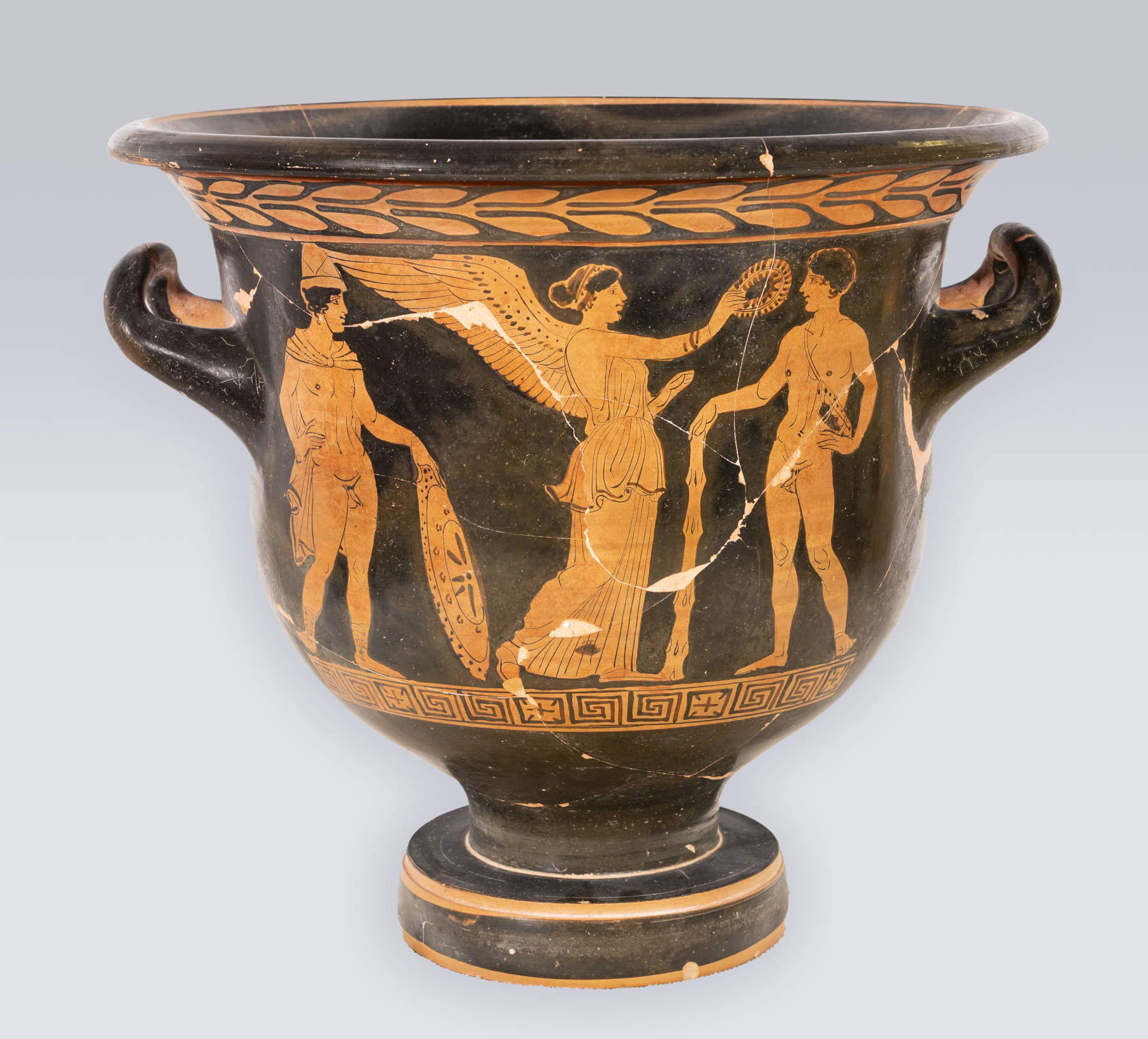
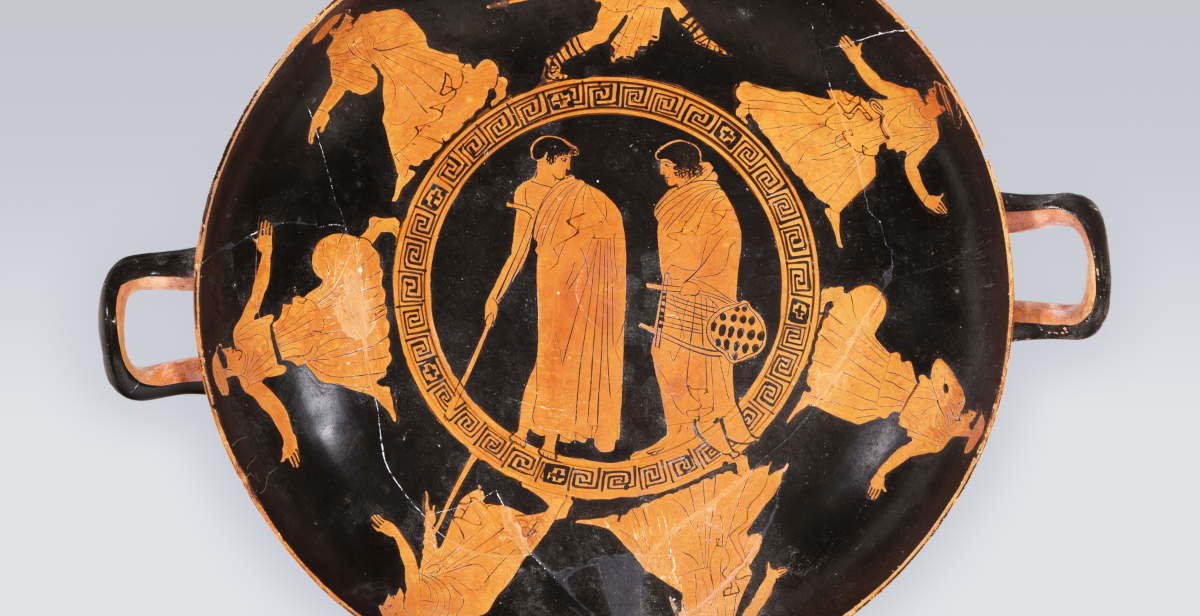
Through artifacts from the archaeological sites of Rutigliano, Turi, Conversano, Gravina in Puglia, and Ruvo di Puglia, the exhibition examines the relationships between the body, training, competition, aristocratic prestige, myth, and memory. Figurative pottery, tools related to body care and preparation, numismatic finds, and grave goods document how the image of the athlete became part of the representational systems of the Peucetian aristocracies. Among the items on display are vases attributed to some of the leading figures in ancient ceramic art, from the Painter of Eretria to the Painter of Amykos, from the Painter of Creusa to the Circle of the Painter of Pan.
A significant portion of the artifacts is being presented to the public for the first time. These are largely items previously stored in the museum’s vaults, now incorporated into an exhibition that reconstructs their meaning based on their respective contexts of origin. The exhibition also represents the outcome of the research, documentation, and conservation work carried out by the Superintendence for the Archaeological Heritage of the Bari Region, along with outreach activities aimed at raising public awareness of the collections.
A second theme of the exhibition concerns the relationship between the ancient world and the history of contemporary sports. In the year that Puglia has once again become a meeting place for the peoples of the Mediterranean through sports, ATHLETÉS offers a reflection on the continuity of competitive sport and the enduring nature of images, values, and memories associated with the figure of the athlete.
The connection to the modern era is also illustrated by the story of Pietro Lombardi, an athlete from Bari who won the gold medal in Greco-Roman wrestling at the 1948 Olympic Games in London—the first edition of the Olympics following World War II. The exhibition commemorates his achievement thanks to the collaboration of his daughter, Vittoria Lombardi, and the “Andrea Angiulli” A.S.D. Gymnastics Club of Bari, incorporating a testament to the city’s sporting history into the exhibition itinerary.
Also dating back to London 1948 is the Olympic torch preserved by Alceste Maurizio Lo Buono and featured in the exhibition. The artifact directly refers to an edition of the Games that marked the return of Olympic competition after a twelve-year hiatus and coincides with the moment when Lombardi reached the pinnacle of his athletic career. The torch thus serves to connect the experience of the ancient athlete with that of the modern athlete, while simultaneously evoking the themes of journey, transmission, and continuity. Lombardi’s victory and the presence of the torch therefore intertwine archaeological heritage, sports history, and the memory of the region.
The opening at Palazzo Simi, in the center of Bari, during the European Heritage Days further underscores the public nature of the initiative and the relationship between heritage, institutions, and the community. The exhibition is organized by the Superintendence of Archaeology, Fine Arts, and Landscape for the Metropolitan City of Bari in collaboration with the City of Bari, ISAMG – Institute for the History and Archaeology of Magna Graecia, CONI – Puglia Regional Committee, the Italian Paralympic Committee – Puglia Region, the Ettore Pomarici Santomasi Foundation of Gravina in Puglia, MUSeCO – Museums in Conversano – City of Conversano, the “Grazia and Pietro Di Donna” Civic Archaeological Museum – Municipality of Rutigliano, Civic Museum of Bari, and “Andrea Angiulli” A.S.D. Gymnastics Club of Bari. Also collaborating are Vittoria Lombardi, daughter of Pietro Lombardi, and Alceste Maurizio Lo Buono, custodian of the 1948 Olympic torch.
Accompanying the exhibition is a catalog published by Mario Adda Editore, featuring institutional and scholarly contributions dedicated to the themes explored in the exhibition. Through an analysis of the artifacts and their contexts, the volume explores the relationship between athletics, society, identity, and memory in Peucezia and within the broader Mediterranean context.
The scientific concept for the exhibition was developed by Caterina Annese, Francesco Carofiglio, Lucia Ceci, Elena Dellù, Francesca Romana Paolillo, and Azurra Tenore, with contributions from Stefania Montanaro regarding the numismatic artifacts. The exhibition was produced by the IDRIA Consortium.
“The ancient athlete is not simply a man who competes,” states Fabrizio Magani, Director General of Archaeology, Fine Arts, and Landscape. “He is a reflection of the world. In his body, his gestures, and the forms of his representation, a civilization imbues him with its own ideals of measure, discipline, prestige, beauty, and memory. ATHLETÉS explores this idea starting from a region—ancient Apulia—which was never a passive periphery of the Mediterranean, but rather a laboratory where the Peucetian, Daunian, and Messapian communities selected, adapted, and reinterpreted Greek models, developing original forms of cultural expression. The figure of the athlete thus becomes one of the key points of reference for overcoming the dichotomy between the “Greek” world and the “indigenous” world, and for restoring the profoundly relational nature of Mediterranean societies. After all, the past never returns as an exact replica of itself: it returns only if we know how to ask it the right questions.”
“ATHLETÉS explores, through the archaeological evidence from the Terra di Bari region, some of the central themes of the 65th Conference and represents a collaboration on projects and perspectives for study and research between the Institute and the Superintendency,” says Aldo Siciliano, President of the Institute for the History and Archaeology of Magna Graecia. “Through the archaeological record of the Terra di Bari, it is possible to observe how the models and values of Greek competitive culture were embraced and reinterpreted by the communities of Peucezia. The dialogue between scientific research and conservation efforts thus allows us to forge shared paths of knowledge and heritage restoration, of which ATHLETÉS is a significant example.”
“ATHLETÉS stems from the heritage we preserve and from the work of understanding that preservation makes possible,” states Francesca Romana Paolillo, Superintendent of Archaeology, Fine Arts, and Landscape for the Metropolitan City of Bari. “We chose the athlete as the central theme to tell, through the artifacts from the Bari region, a story that goes far beyond sport in the ancient world: the body and its training, social prestige, identity, the relationship with the hero, and the construction of memory. Bringing such a significant part of this heritage to the public’s attention for the first time means transforming the daily work of preservation and research into an opportunity for shared knowledge and returning to the region the artifacts that belong to it.”
“ATHLETÉS,” states Vito Leccese, Mayor of Bari, “reminds us that Rutigliano, Turi, Conversano, Gravina, and Ruvo have a history that predates the administrative boundaries we know today by far. It is a history made up of bodies, training, competition, and rituals. One of the most interesting aspects is that many of the artifacts that tell this story—which were previously stored in the Superintendency’s warehouses—are now accessible to the public, ensuring that the purpose of an institution and an exhibition remains alive: to preserve memory and share it with future generations. Among the items on display, there is one that struck me in particular: the torch from the 1948 London Olympic Games. It was the same Olympics in which Pietro Lombardi, a native of Bari, won the gold medal in Greco-Roman wrestling. Through that torch, we retrace two thousand years of history: from the athletes of antiquity to the modern Olympic spirit embodied in a young man from Bari who stood on the top step of the Olympic podium. I would like to thank the Lombardi family, Alceste Maurizio Lo Buono, and the “Andrea Angiulli” A.S.D. Gymnastics Club for preserving that memory and for choosing to share it with the city.”
 |
| From Ancient Athletes to the 1948 Olympics: An Exhibition at Palazzo Simi in Bari |

Warning: the translation into English of the original Italian article was created using automatic tools. We undertake to review all articles, but we do not guarantee the total absence of inaccuracies in the translation due to the program. You can find the original by clicking on the ITA button. If you find any mistake,please contact us.




















 IT
IT FR
FR DE
DE ES
ES CN
CN


