



by Redazione 02/11/2026


Categories: News / Disclaimer
The early closure of the art fair at the Grand Palais—decided upon to avoid weekend protests—has sparked a debate over the costs incurred by exhibitors. As reported by Artnnews, some galleries are seeking financial compensation.

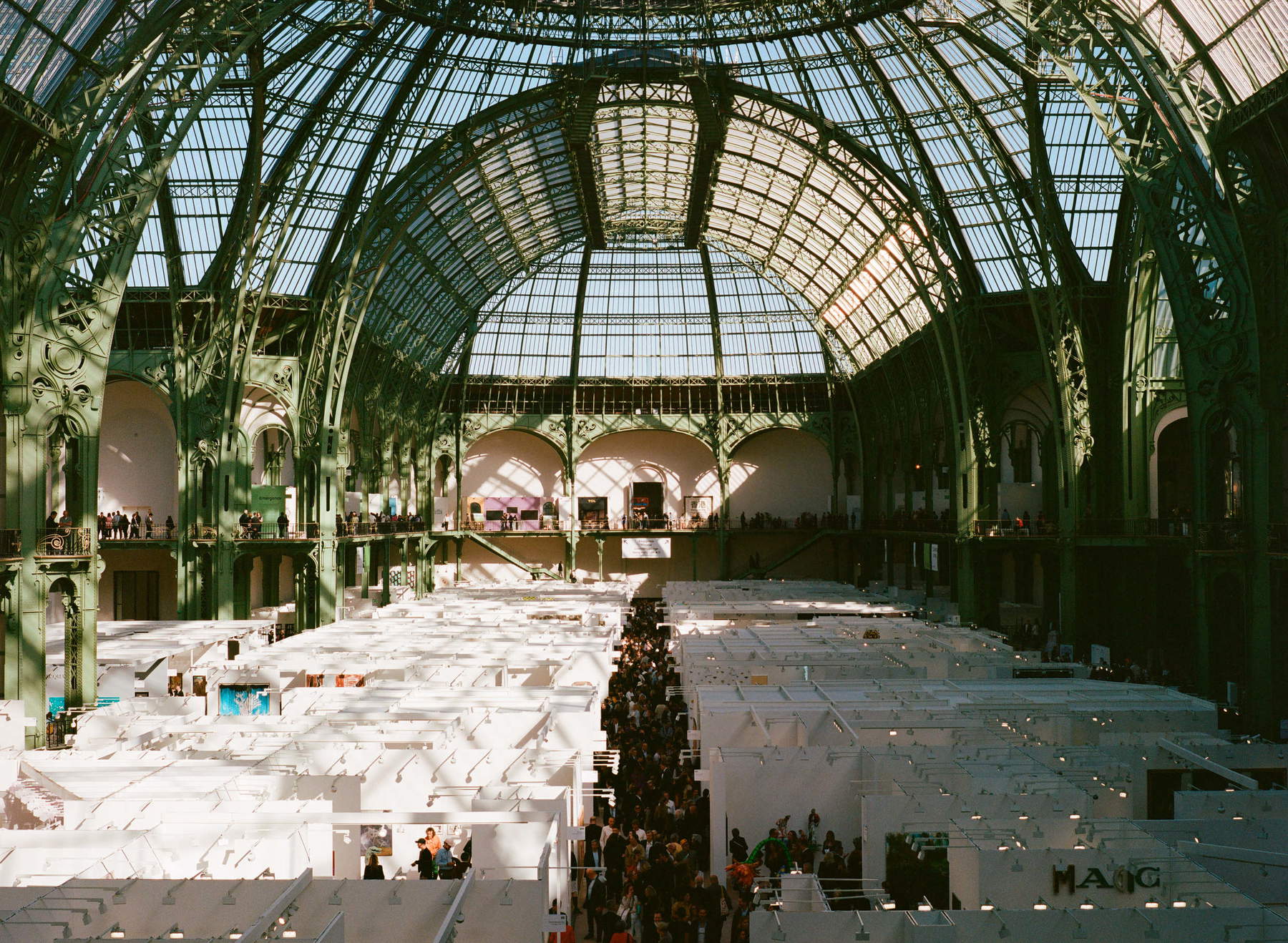
The early closure of Art Basel Paris has left an unresolved financial issue for participating galleries: who will reimburse exhibitors for the two canceled days of the fair? This is the issue that, in the days following the event’s conclusion, has been the focus of conversations among art dealers, some of whom have considered sending a joint letter to the organizers to request concessions for future editions.


As reported in an Artnet article by Katya Kazakina, dozens of galleries reportedly discussed the possibility of submitting a collective request to Art Basel, proposing discounts on future participations. However, according to a person familiar with the negotiations, the initiative stalled due to disagreements among the exhibitors. In fact, there is no consensus on the form such compensation should take: a partial refund, reduced costs for a future edition, or other financial measures.
The decision to cut short the fifth edition of Art Basel Paris by two days was made last week following protests scheduled for the weekend, related to conditions in the education system and the cost of living. The event, held at the Grand Palais, opted for an early closure given the risks to the more than 200 participating galleries and the works on display, some of which are particularly valuable. Among these were a portrait by Pablo Picasso estimated at $45 million (approximately 40.3 million euros) and a nude by Amedeo Modigliani valued at over 100 million (more than 89.6 million euros).




Initially, the priority for organizers and exhibitors was to secure the artworks and arrange for their removal from the building before the protests began. Shortly thereafter, however, the issue of the costs incurred by the galleries to participate in the fair came to the fore. In addition to booth fees, exhibitors had to pay thousands of euros for walls, lighting, and electrical hookups. Visitors who had planned to go to the Grand Palais over the weekend were advised to move their visit up to Friday.
The issue seems particularly significant given the event’s economic impact. Last September, MCH, the group that organizes Art Basel, reported an increase in revenue and profits for the first half of 2026 compared to the same period the previous year. Net profit quadrupled, rising from 4.4 to 18.4 million Swiss francs, equivalent to approximately 22.3 million dollars. The growth was attributed primarily to the division responsible for art fairs.
However, exhibitors’ reactions were mixed. Some dealers expressed skepticism about the possibility of receiving compensation, while others acknowledged the necessity of the closure without placing blame on the organizers, even though they had lost potential weekend sales.
Dismantling operations began on Friday at 7 p.m. and continued through the night. Jeffrey Deitch, who shared a booth with the Michael Rosenfeld Gallery in a presentation dedicated to emerging artist Alteronce Gumby and modernist Beauford Delaney, reported that the movers from Dietl International had finished the job by 1 a.m. Other galleries, however, chose to leave the works inside the Grand Palais over the weekend, awaiting guidance on possible compensation for lost revenue.
As Artnet further reports, some exhibitors had already begun speeding up their dismantling operations on Friday. Hauser & Wirth had almost completely cleared out its booth, leaving only three paintings by Hélène Delprat, while David Zwirner had removed paintings and sculptures, replacing them with photographs.
Among the galleries that may have been most affected by the early closure was Warsaw’s Stereo Gallery, located on the upper balcony of the Grand Palais—an area typically characterized by lower visitor traffic. The space featured a solo project by Ant Łakomsk, consisting of projections, paintings, and sculptures, dedicated to reflecting on the body within the context of an art fair.
However, the gallery’s situation turned out differently than expected. Founder Michal Lasota, who opened Stereo eighteen years ago, stated that he had sold the entire presentation to a Polish collector for 37,000 euros, approximately $41,300. The deal had been finalized on Wednesday, before the early closure was announced on Thursday. The gallery team had therefore already expressed full satisfaction with the commercial outcome.
To return the works to Poland, Stereo ultimately organized transportation together with three other exhibitors—two Polish and one German—by sharing the cost of renting a van. However, the main question for many of the other participants remains unanswered: whether Art Basel will provide a refund for the lost days of the event and in what form it intends to compensate the galleries.
|
| Galleries are seeking compensation from Art Basel Paris for the early closure |
Warning: the translation into English of the original Italian article was created using automatic tools. We undertake to review all articles, but we do not guarantee the total absence of inaccuracies in the translation due to the program. You can find the original by clicking on the ITA button. If you find any mistake,please contact us.