



by Redazione 20/08/2026



Categories: News / Disclaimer
The Russian House of Science and Culture in Berlin is run by Rossotrudnichestvo, which has been subject to EU sanctions since 2022. Allegations of possible Russian intelligence activities have reignited the debate over its closure, while the German government is also assessing the implications for the Goethe-Institut in Russia.


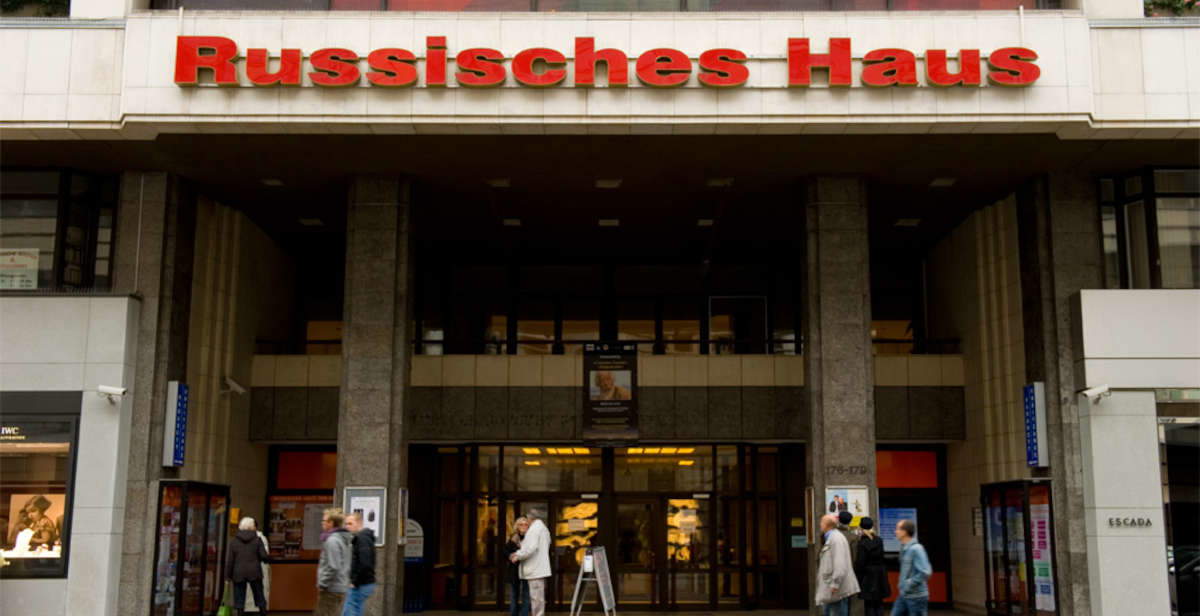
The Russisches Haus in Berlin—or the Russian House of Science and Culture (Russisches Haus der Wissenschaft und Kultur)—is currently at the center of a heated political debate in Germany: The building at Friedrichstraße 176–179, in the heart of the capital, has been the subject of controversy for years, but recent allegations by French authorities—claiming the facility is linked to Russian intelligence activities—have reignited calls for its closure. The issue, however, is not merely political: the institution’s future is in fact weighed down by European sanctions, judicial investigations, and a complex network of bilateral agreements that also involves the Goethe-Institut—the German cultural institute—in Russia.

In early August, an investigation conducted by three newspapers (Tagesschau, WDR, and Süddeutsche Zeitung) uncovered a document from the French Ministry of the Interior linking the Russian House to possible activities by Moscow’s intelligence services. The organization is managed by Rossotrudnichestvo, the Russian state agency for cultural cooperation, which reports to the Russian Foreign Ministry and has been subject to European Union sanctions since 2022, imposed following Russia’s invasion of Ukraine. The German government has not yet publicly confirmed the French allegations. On August 10, however, during a press conference in Berlin, Foreign Ministry spokesperson Martin Giese stated that, “in light of the actions taken against German cultural operators and organizations,” Germany is conducting a comprehensive and ongoing review of the international legal frameworks governing the activities of the Russian House. The issue is made particularly sensitive by the existence of two bilateral agreements between Germany and Russia concerning real estate and cultural cooperation, respectively.


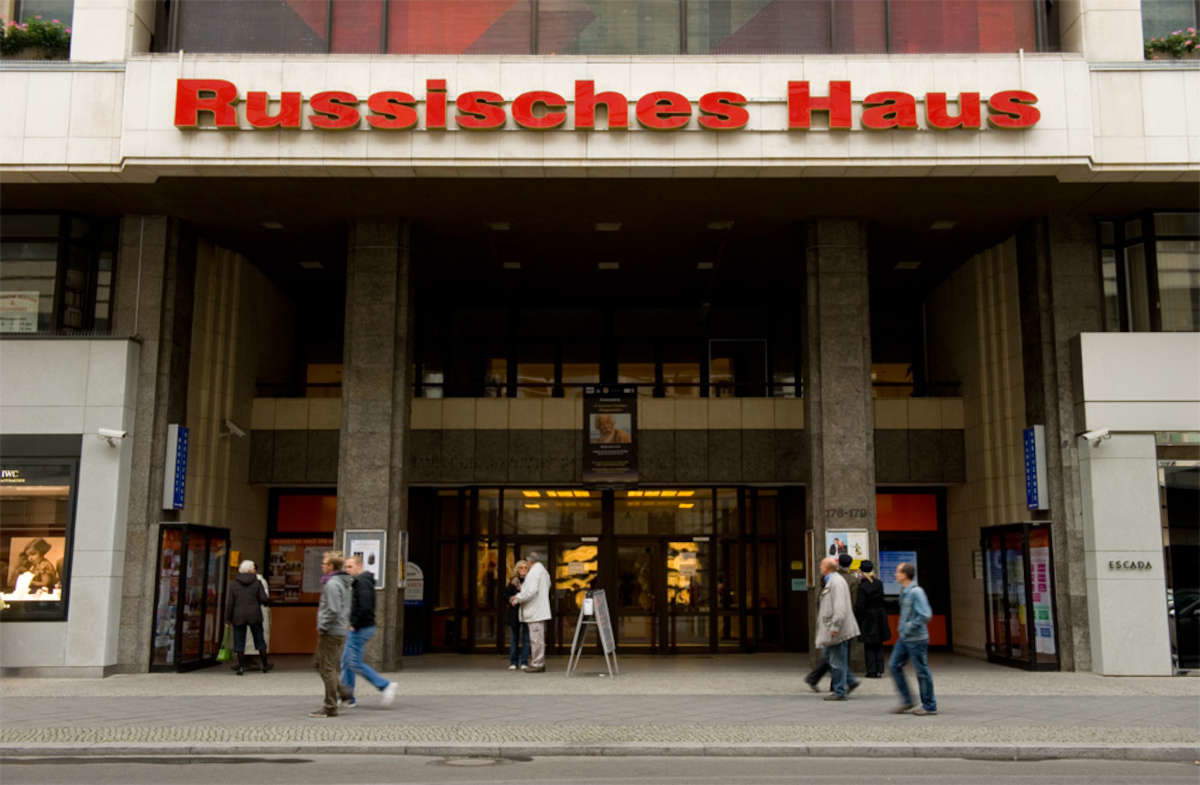
The Russian House has occupied the building on Friedrichstraße since 1984: at the time of the German Democratic Republic and the Soviet Union, it was the largest Soviet cultural institute abroad. Today, the seven-story complex houses exhibition spaces, a concert hall, a movie theater, a bookstore, and a branch of the Russian postal service. Its program includes Russian language courses, ballet, and drawing classes, as well as film screenings, events dedicated to Alexander Pushkin, initiatives related to the memory of World War II, and performances by German Cossack choirs. For its supporters, these are cultural activities; for critics, however, the problem lies precisely in the way these initiatives help maintain an apparently normal relationship with Russia despite the war in Ukraine and promote Moscow’s worldview.
Among those advocating for its closure is Green Party MP Robin Wagener, who believes the French allegations are plausible. He told *Die Welt* that, in his view, the Russian House is part of the “information war” waged by Moscow and, since it is subject to sanctions, should be shut down. “A state governed by the rule of law must also be willing to enforce the law,” he said. The issue has also become part of the campaign for the Berlin House of Representatives elections, scheduled for September 20. The SPD’s leading candidate, Steffen Krach, visited the facility and called for the property to be expropriated. The left-wing BSW party, on the other hand, has spoken out against the closure. During a meeting organized by the party, Berlin mayoral candidate Alexander King argued that cutting off all channels of dialogue with Russia would not prepare the city and Germany for peace. Petitions against the closure have been launched, and a demonstration has been announced.
Another aspect of the story concerns European sanctions. Since Rossotrudnichestvo is on the EU’s list of sanctioned organizations, the Russian House cannot freely receive funds and may accept from third parties only what is necessary for the building’s upkeep. Despite this, the facility collects rent. According to the Tagesschau investigation, 115 people were living in the building in June 2023. The Berlin Public Prosecutor’s Office has opened an investigation into a possible violation of the Foreign Trade Act.
Furthermore, the Russian House does not enjoy diplomatic immunity, even though the terms of use for the property are governed by an agreement signed in 2013 between the German and Russian governments regarding the Russian House in Berlin and the Goethe-Institut in Moscow. The agreement has a term of 99 years and stipulates, among other things, that each of the two states shall bear the property tax on the building used by the other country. For 2026, the German government’s share of the tax for the Russian House amounts to 70,000 euros. The agreement also stipulates that buildings used for sovereign functions are immune from enforcement measures and that neither party may sell the properties or grant full use of them to third parties without the other party’s consent.
In addition, there is the intergovernmental agreement on cultural cooperation between Germany and Russia, signed in December 1992 and entered into force in May 1993. The treaty has a term of five years, with automatic renewal for periods of the same duration, unless notice of termination is given at least six months prior to expiration. The agreement stipulates that the two countries shall promote cultural cooperation at all levels, ensure broad access to their respective cultures, and facilitate the establishment and operation of the other party’s cultural institutions. It also provides for the possibility of offering scholarships and training opportunities to students, doctoral candidates, and researchers from the other country, as well as facilitating the issuance of residence permits.
However, these very provisions are proving increasingly difficult to implement in light of the international situation and the measures taken by Russia against German institutions. The Goethe-Institut, Germany’s leading organization for the promotion of the German language and international cultural cooperation, was forced to drastically scale back its activities in Russia in May 2023, following restrictions imposed by Russian authorities on the number of German officials authorized to operate in the country. A few weeks earlier, the Goethe-Institut’s bank accounts in Russia had been frozen at the request of the Russian Central Bank, following proceedings initiated by the Berlin Public Prosecutor’s Office against the Russian House for an alleged violation of sanctions.
However, despite these difficulties, the Goethe-Institut’s digital services, including language courses, remain accessible. The libraries at its Moscow and St. Petersburg locations also continue to receive new German literature, albeit with logistical challenges. The Goethe-Institut has explained that it has not yet been subject to state censorship, while emphasizing its commitment to complying with Russia’s strict legal provisions.
The issue of security adds another layer to the controversy. In a report published in June, the Berlin Regional Office for the Protection of the Constitution described the threat level posed by Russian intelligence services as “unchanged and high.” The Russian House is not mentioned directly in the document, which nevertheless notes that Russian intelligence services have increasingly fewer opportunities to operate under the diplomatic cover of embassies and consulates. According to the report, it must therefore be assumed that such activities may continue in a modified form within the Russian state or semi-state institutions still present in Germany.
It is therefore not possible to determine, based on the information made public, whether the Russian House is in fact being used as an operational center for Russian intelligence services. The French allegations, however, have brought the issue to the forefront of German political attention, while Rossotrudnichestvo’s inclusion on the list of European sanctions and the investigation into rental income make the case particularly sensitive. The German authorities’ final decision will also have to take into account the consequences for Germany’s cultural presence in Russia: the Foreign Ministry fears that closing the Russian House could trigger further restrictions against the Goethe-Instituts in Moscow and St. Petersburg, which, despite the limitations, continue to maintain direct contact with sectors of Russian civil society. At the same time, some politicians believe that the risk of losing these institutions is now a necessary price to pay in order to respond to pressure from Moscow.
From a legal standpoint, there is a specific deadline. The 2011 agreement governing the activities of cultural institutions could be terminated by Germany effective June 2027. Notice of termination must be submitted by December 6, 2026. Such a decision would lead to the cessation of the Russian House’s cultural activities, but would not automatically result in the loss of the property, which would remain under Russian ownership. The Foreign Ministry, however, has not yet taken a definitive position. The official line remains that of reviewing the international agreements governing the institution. Meanwhile, the December 6 deadline is approaching, and with it the decision of whether to terminate the cultural cooperation agreement or keep it in force, thereby keeping the Russian House open—and with it, one of the most controversial channels of Russia’s cultural presence in Germany today.
 |
| Germany: Berlin's Russian House at the Center of the Debate—Should It Be Closed or Not? |
Warning: the translation into English of the original Italian article was created using automatic tools. We undertake to review all articles, but we do not guarantee the total absence of inaccuracies in the translation due to the program. You can find the original by clicking on the ITA button. If you find any mistake,please contact us.