




by Redazione 23/11/2026



Categories: News / Disclaimer
In Epsom, England, artist Glynis Lamond has transformed salvaged parts of the organ from the chapel of the former Horton Psychiatric Hospital into a monumental sculpture. The work, titled *The Music of Life*, brings to light a history linked to the earliest European experiences with music therapy.


More than 120 years after it first filled the chapel of the Horton Psychiatric Hospital in Epsom, Surrey (England), with its music, an antique organ is once again taking center stage in an art project. No longer as a musical instrument, but as the material for a new work of contemporary art. Titled *The Music of Life*, the sculpture was created by multidisciplinary artist Glynis Lamond, who salvaged and reworked the original components of the antique instrument—now unusable—transforming them into a large-scale three-dimensional installation.


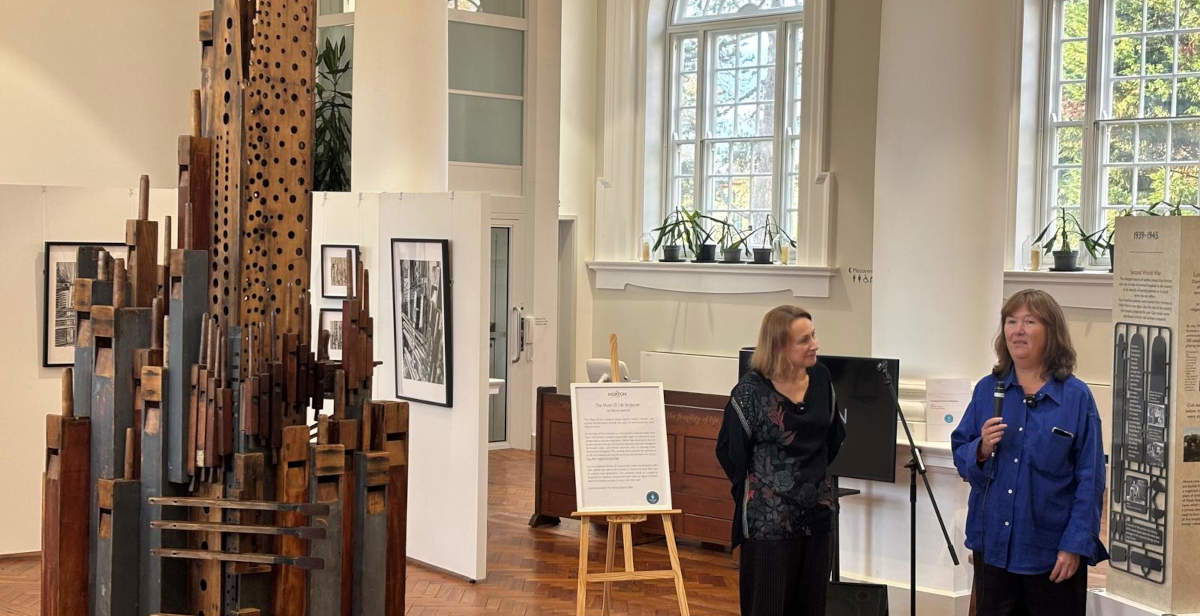
The work was unveiled to the public on November 21, 2026, at 2:00 p.m., at The Horton Art Center, the former hospital complex in Epsom. The sculpture will remain on display in the building’s atrium until February 13, 2027, before being moved to its permanent outdoor location in the gardens of The Horton.
The instrument’s story begins in the early 20th century, when the organ—purchased secondhand—was moved to the chapel of Horton Asylum. More than 120 years ago, its first notes rang out before over a thousand patients and hospital staff members. For decades, the instrument was a part of the facility’s community life, until neglect and vandalism gradually compromised its condition. Declared beyond repair, the organ seemed destined to disappear, along with a part of the complex’s historical memory.




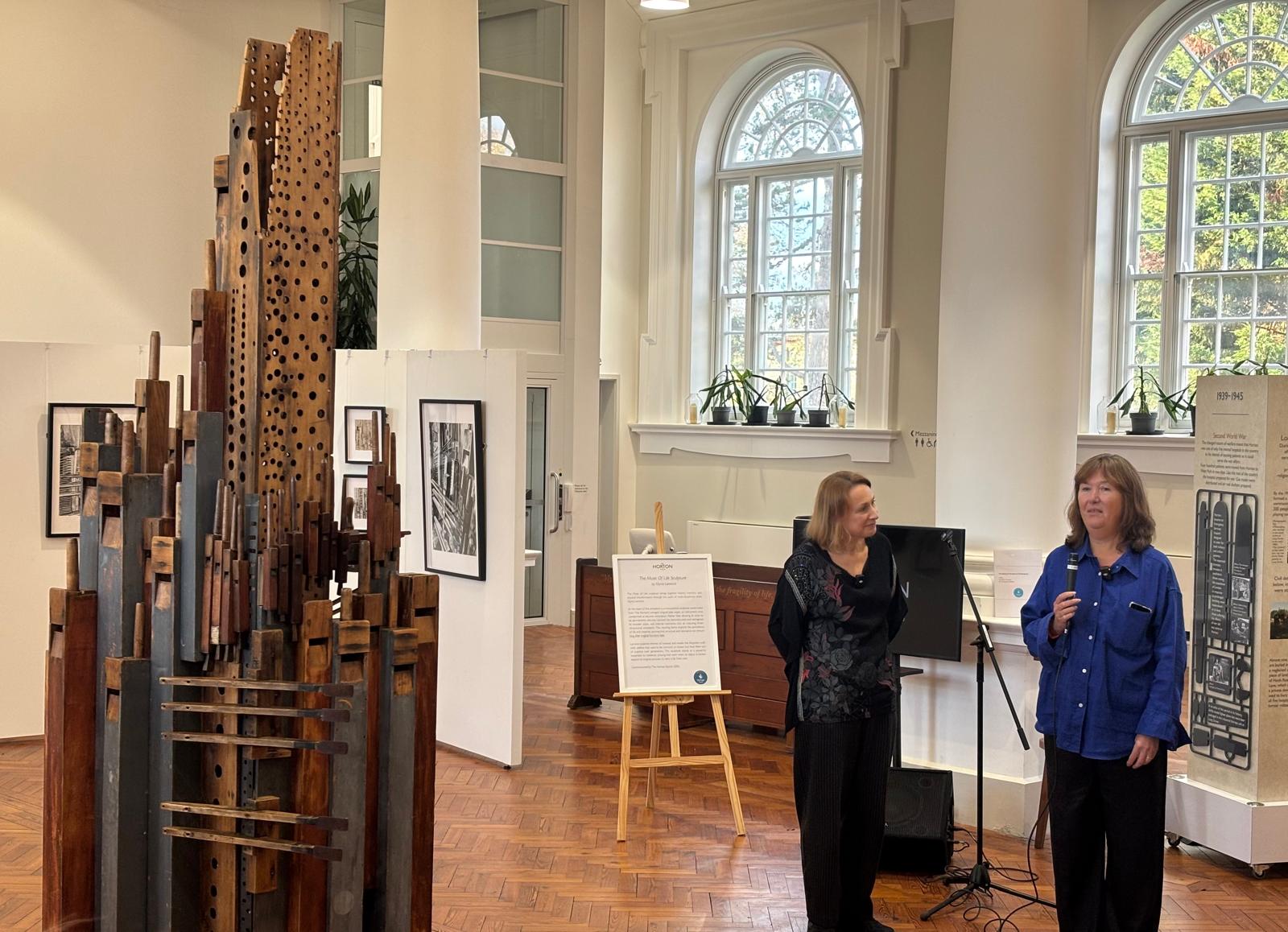
The project, entrusted to Glynis Lamond and supported by the National Lottery Heritage Fund, identified a different approach: rather than restoring an instrument that could no longer be repaired, the artist chose to completely rethink its structure, using the original wooden pipes and the internal components of the mechanism. The result is a sculpture that retains a material connection to the original organ but alters its function and meaning, transforming the remains of a now-unusable object into a new presence in public space.
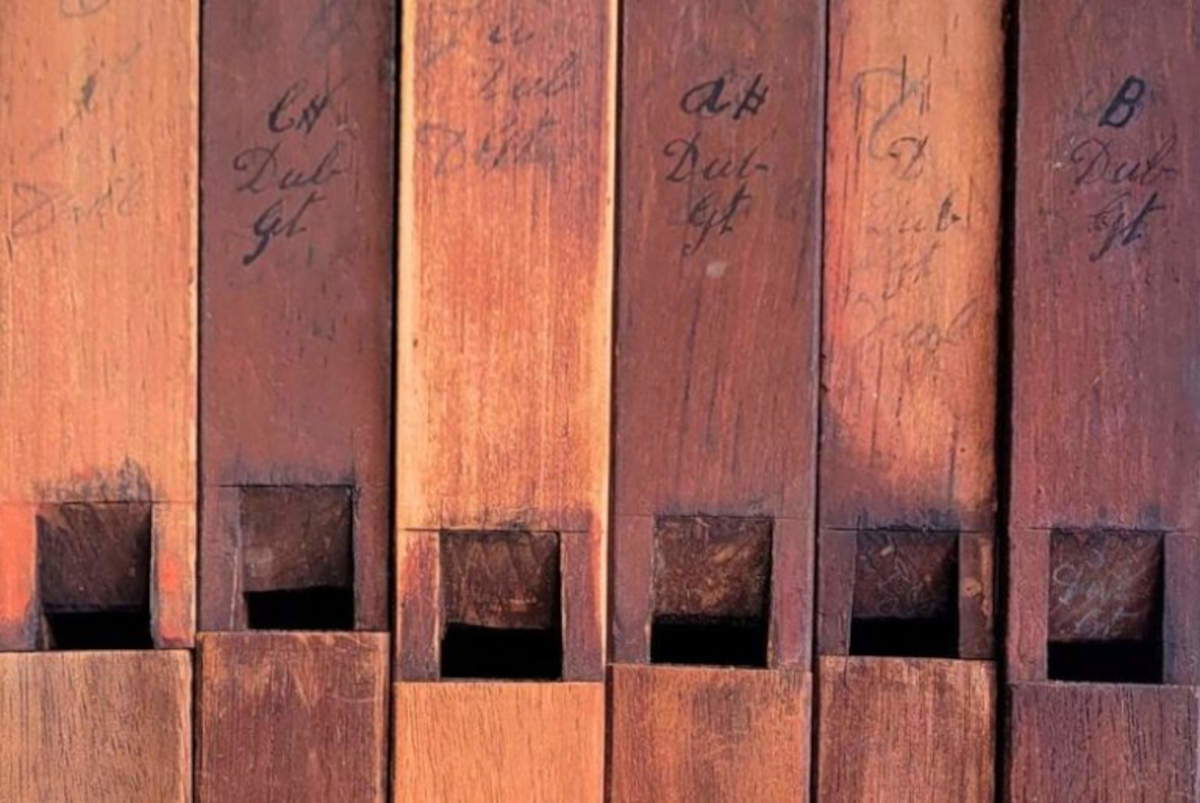
While removing the varnish from the wooden parts, Lamond also discovered some handwritten notes engraved on the organ pipes. The artist decided to preserve them in their entirety and incorporate them into the work. Handwriting, viewed as a practice gradually destined to disappear, thus becomes an additional element of the sculpture: not only a trace of the instrument’s past, but also a testament to the work and the people who contributed to its history.
*The Music of Life* takes its name from the annual project of the same name promoted by The Horton, created to celebrate the 70th anniversary of the start of the first music therapy initiatives at the facility. The program aims to reconstruct and preserve the memory of what is considered the first European psychiatric music therapy program, developed right in the Horton Chapel within the Epsom psychiatric hospital complex.
The historical research involves a group of scholars from King’s College London and volunteers, who are engaged in consulting archives and collecting oral histories. The materials will be incorporated into the expansion of the permanent exhibition dedicated to the history of the hospital and its community. Music is explored both as an artistic practice and as a tool for connection, sharing, and well-being.
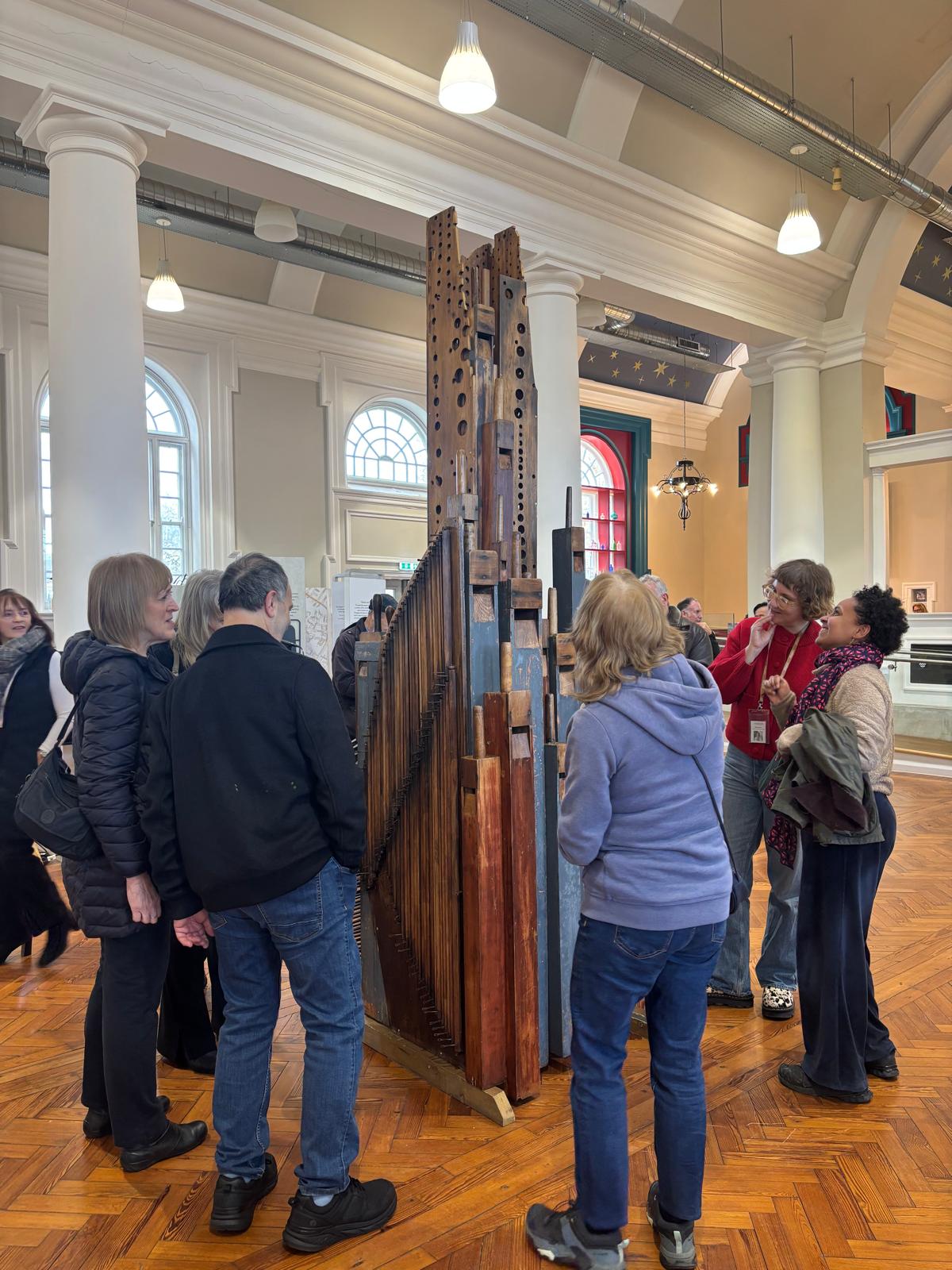
Lamond’s sculpture is one of the project’s main artistic installations, which also includes activities aimed at engaging the local community. In May 2026, during Mental Health Awareness Week, students from the University for the Creative Arts in Epsom participated in a musical event organized in collaboration with students from the Music Masters program. The event took place in the Performance Space—the site of the original music therapy center—and brought together young musicians for an evening celebrating diverse cultures and the power of sound to foster connection.
In October 2026, a project was also launched to create a permanent mosaic in the facility’s gardens. Guided by artist Tina De Domingo, participants designed a composition inspired by the pipes of the historic organ and the decorations on the chapel’s Victorian floor. The activities also involved people with firsthand experience of mental health challenges, offering opportunities for participation and shared creativity.
The Music of Life program will continue starting in January 2027 with concerts, gatherings, and workshops. Meanwhile, Glynis Lamond’s sculpture brings back into the spotlight an object that has been part of Horton’s history for over a century. Its parts, saved from destruction, thus become the starting point for a new work, in which the transformation of the material coincides with the recovery of a shared memory.
Statements
“As I cleaned the individual components of the organ, I couldn’t help but wonder whose hands had originally crafted them,” said Glynis Lamond. “At the time, there were no power tools or modern materials, yet every element had been built with great precision and care. Through my work, I wanted to encourage reflection on the traditional craftsmanship that we unfortunately risk losing with technological progress. I’m happy that part of the original organ from Horton Chapel has been salvaged and given a new lease on life.”
“We are very pleased with the work Glynis has created,” said Maria Reeves, director of The Horton Arts Centre. “It is an imposing sculpture rich in interesting elements, capable of drawing visitors’ attention to its details while also conveying the weight of the human experiences lived in Epsom’s psychiatric hospitals. It represents resilience: that of the parts of the organ that survived, of the building—now transformed into a much-loved place—and of the people who passed through these institutions over the course of the last century.”
 |
| In England, an organ from a former mental hospital becomes a sculpture |
Warning: the translation into English of the original Italian article was created using automatic tools. We undertake to review all articles, but we do not guarantee the total absence of inaccuracies in the translation due to the program. You can find the original by clicking on the ITA button. If you find any mistake,please contact us.