




by Redazione 03/09/2026



Categories: News / Disclaimer
Work is currently underway in Turin to move the four monumental allegorical sculptures created by Giovanni Baratta in 1726 to the Carlo Emanuele I Gallery. Removed from the Juvarra façade in 2022, the sculptures will be housed inside the museum, while replicas will be installed on the terrace in October.


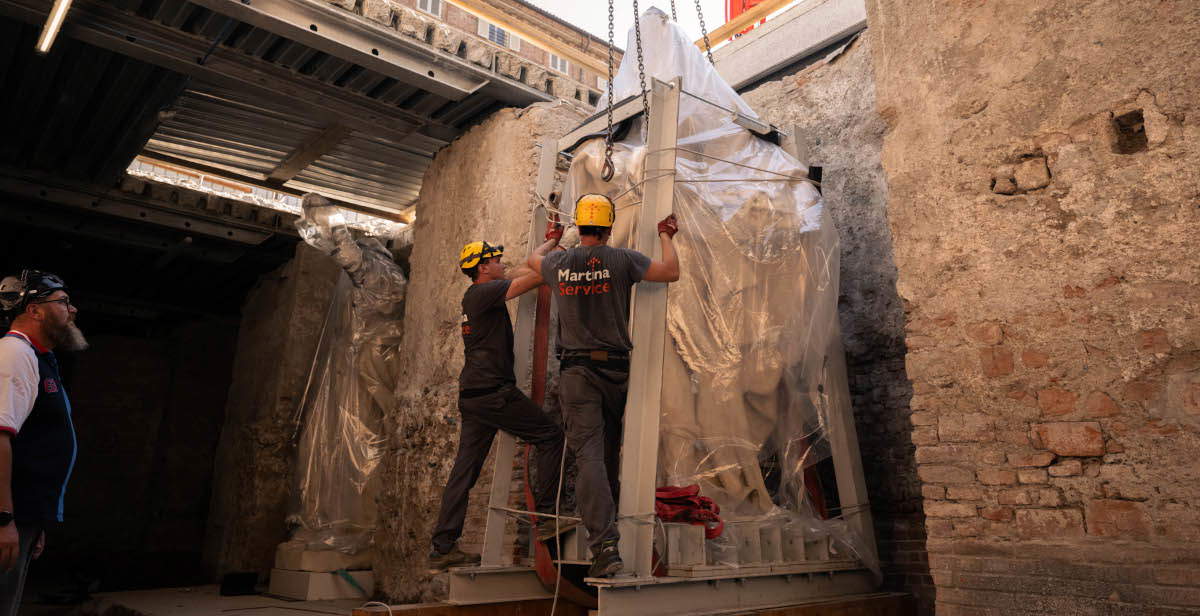
Work is currently underway in Turin to relocate the four monumental allegorical statues of Good Government from Palazzo Madama. The sculptures, representing Justice, Liberality, Magnanimity, and Abundance, are being moved to the Carlo Emanuele I Gallery, where they will find their permanent home. The space is still undergoing museum preparation and installation work and will be open to the public once the entire project is complete.

The relocation of the four statues marks a new phase in the restoration and enhancement project for Palazzo Madama, promoted by the Fondazione Torino Musei and listed among the key initiatives in the Foundation’s Strategic Plan. The project is significantly supported by the Fondazione CRT, the museum’s long-standing primary private sponsor, which also supported and funded the major restoration and consolidation of the Juvarra façade.
The program focuses on the conservation of the building and includes a redesign of the museum’s exhibition routes, visitor experience, and spaces accessible to the public. The goal set by the Fondazione Torino Musei is to restore clarity to the more than two thousand years of history contained within the palace and to strengthen its role as the City Museum. Within this framework, the enhancement of the interior spaces and the revitalization of the visitor routes represent one of the cornerstones of the revitalization project, aimed at creating a unified interpretation of the building’s various historical layers.




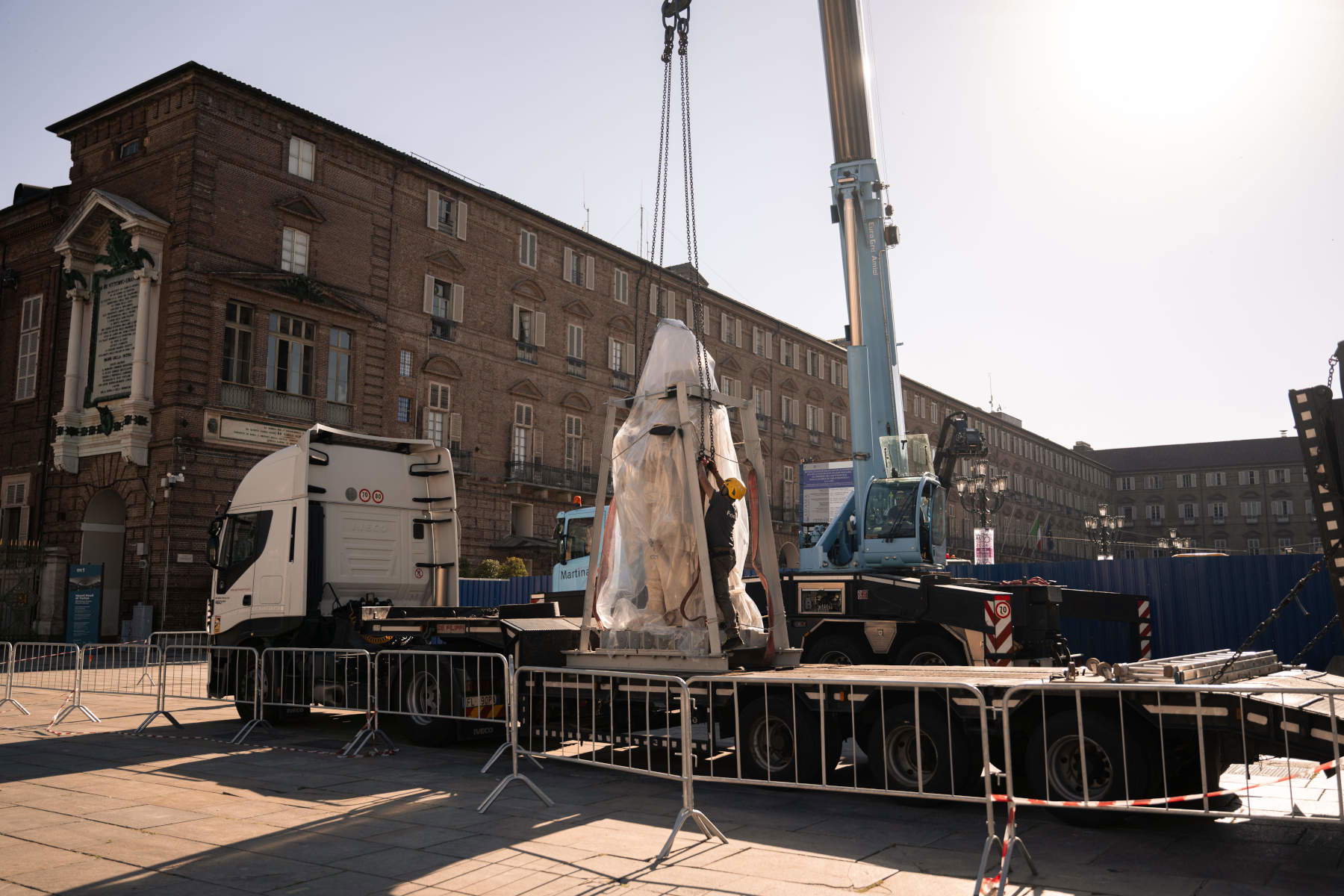
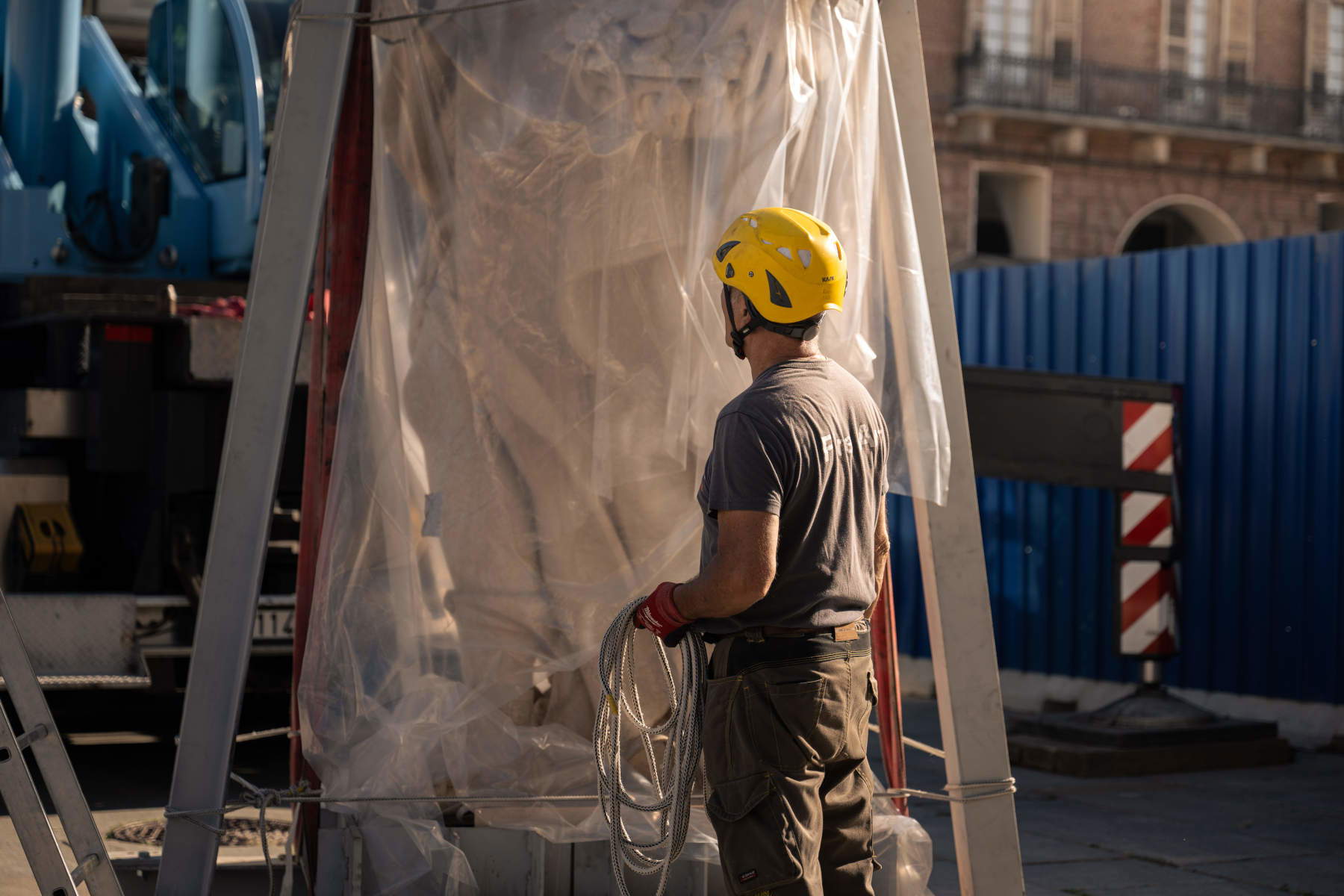
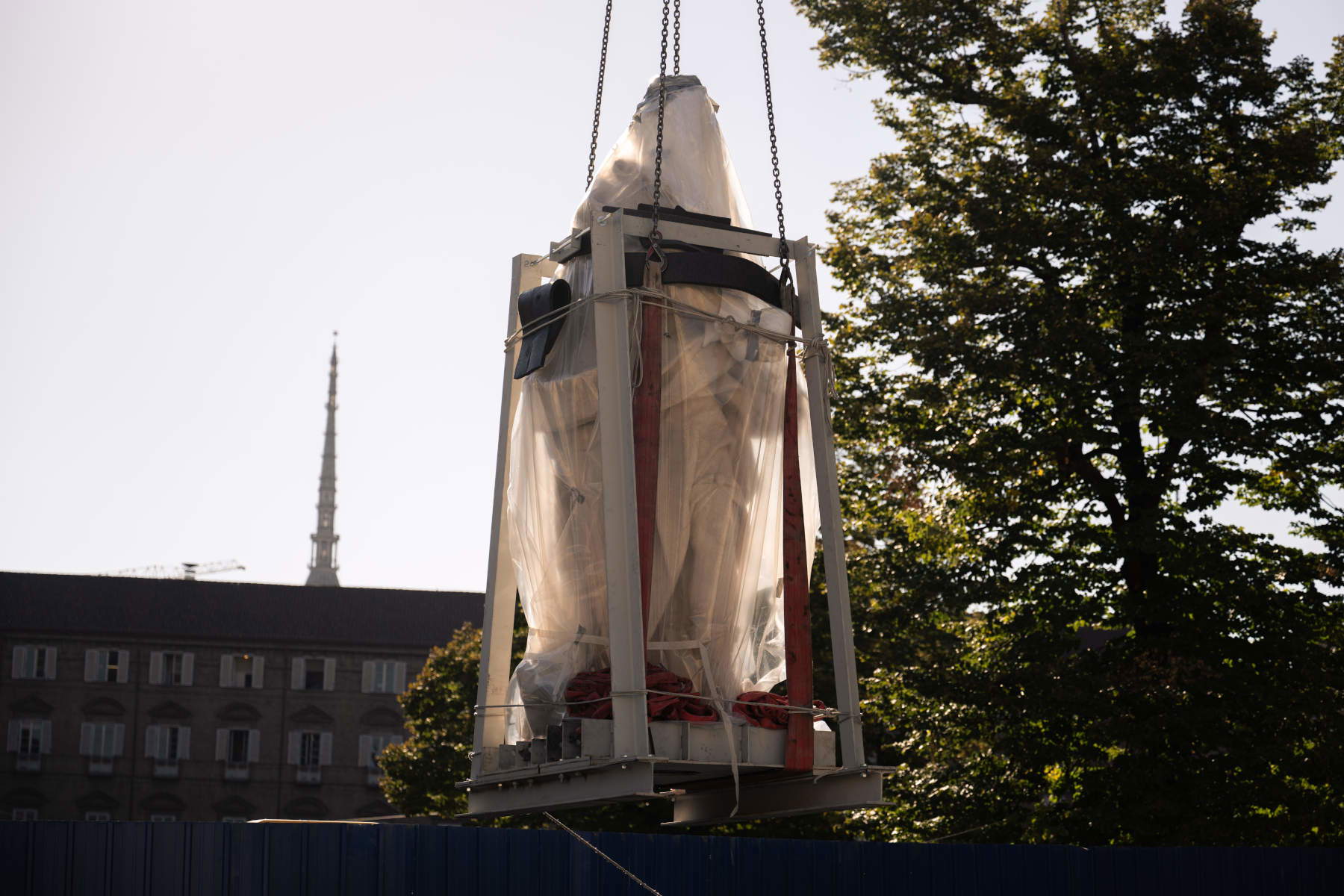
The Carlo Emanuele I Gallery is specifically intended to become a strategic space within the future museum itinerary. Its purpose will be to connect Turin’s Roman origins, the architectural evolution of the palace, and the city’s transformation following the establishment of the capital. Once the museum conversion and installation work is complete, the Gallery will be reopened to the public, integrating the original sculptures into the historical and architectural narrative of Palazzo Madama.
The four statues were removed in July 2022 from the balustrade of the central section of the Juvarra façade during one of the most complex operations of the restoration project. The sculptures, each over four meters tall and weighing more than three metric tons, were disassembled and secured within special structures before being lowered to the ground from a height of approximately 27 meters using a dedicated hoisting system. The project was carried out by the Cooperativa Archeologia of Florence and by Arte Restauro Conservazione, led by Cristina Maria Arlotto, under the direction of architect Gianfranco Gritella. Martina Service srl, which had already overseen the removal of the statues from the balustrade in 2022, was also entrusted with their subsequent transfer inside the Carlo Emanuele I Gallery.
The works were created in 1726 by the Carrara-born sculptor Giovanni Baratta and are carved from Brossasco marble. The four allegorical figures are one of the most recognizable elements of the façade’s monumental design. Their removal was necessary due to their condition—resulting from prolonged exposure to the elements—and the critical issues identified by the in-depth diagnostic surveys conducted prior to the start of the work.
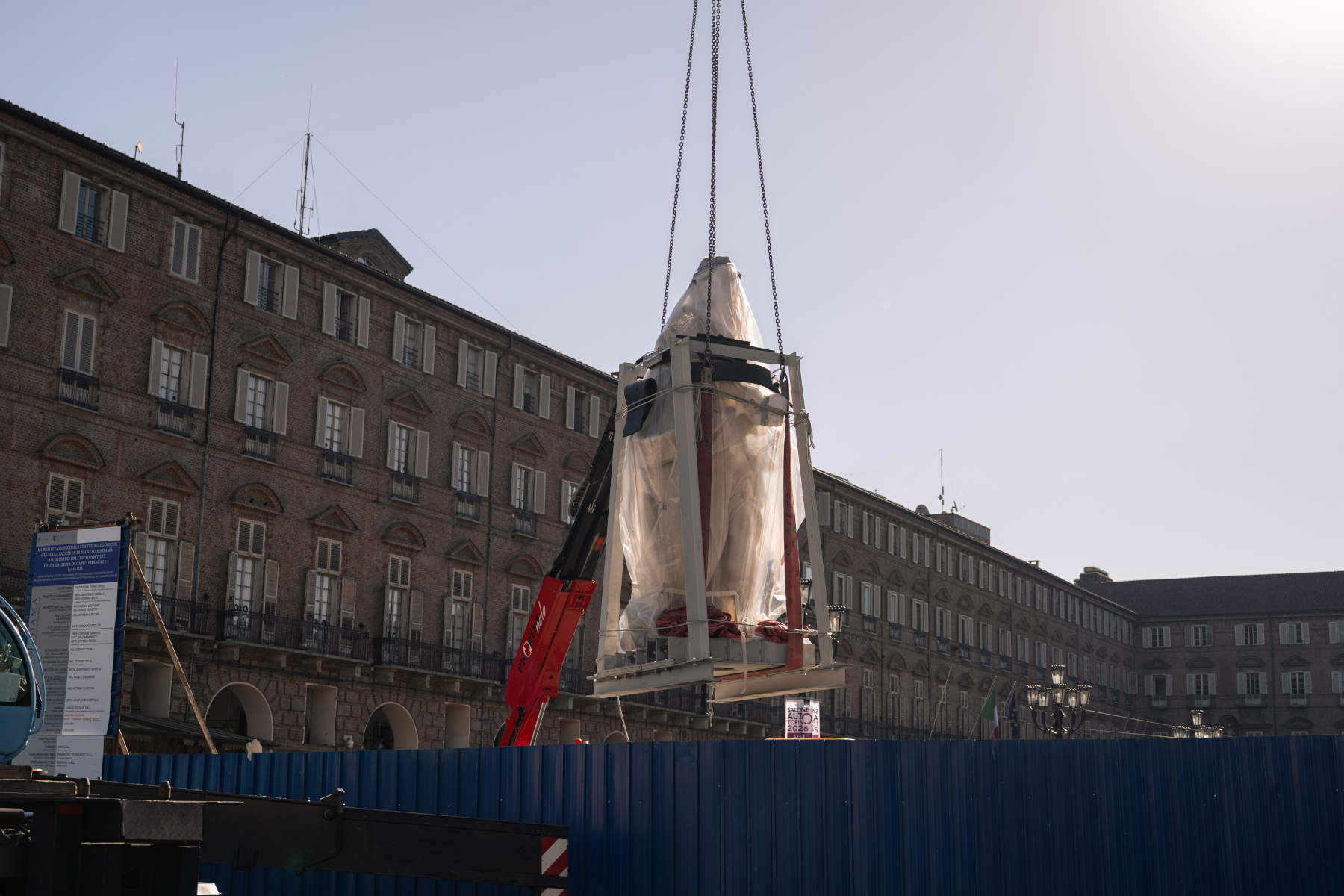
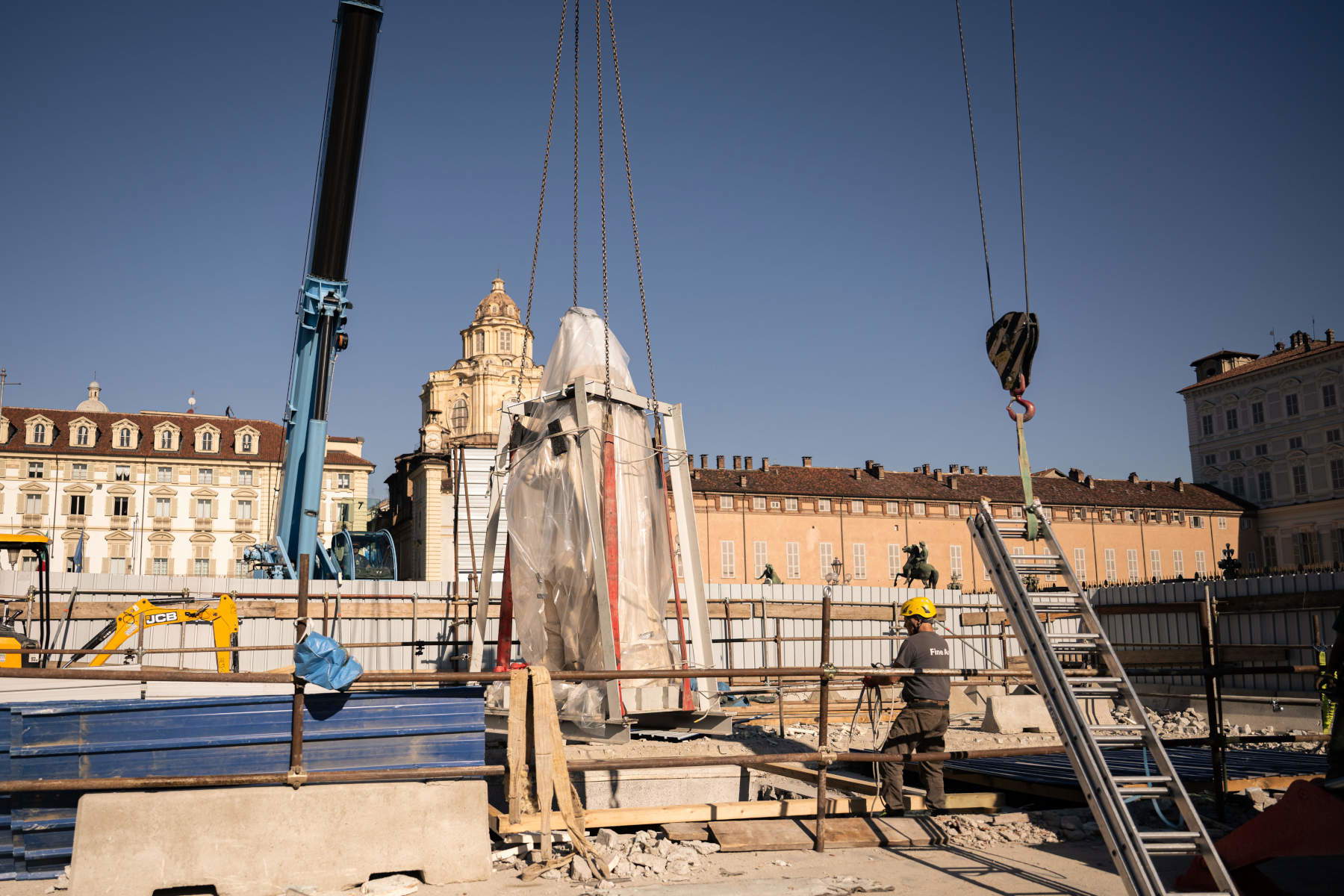
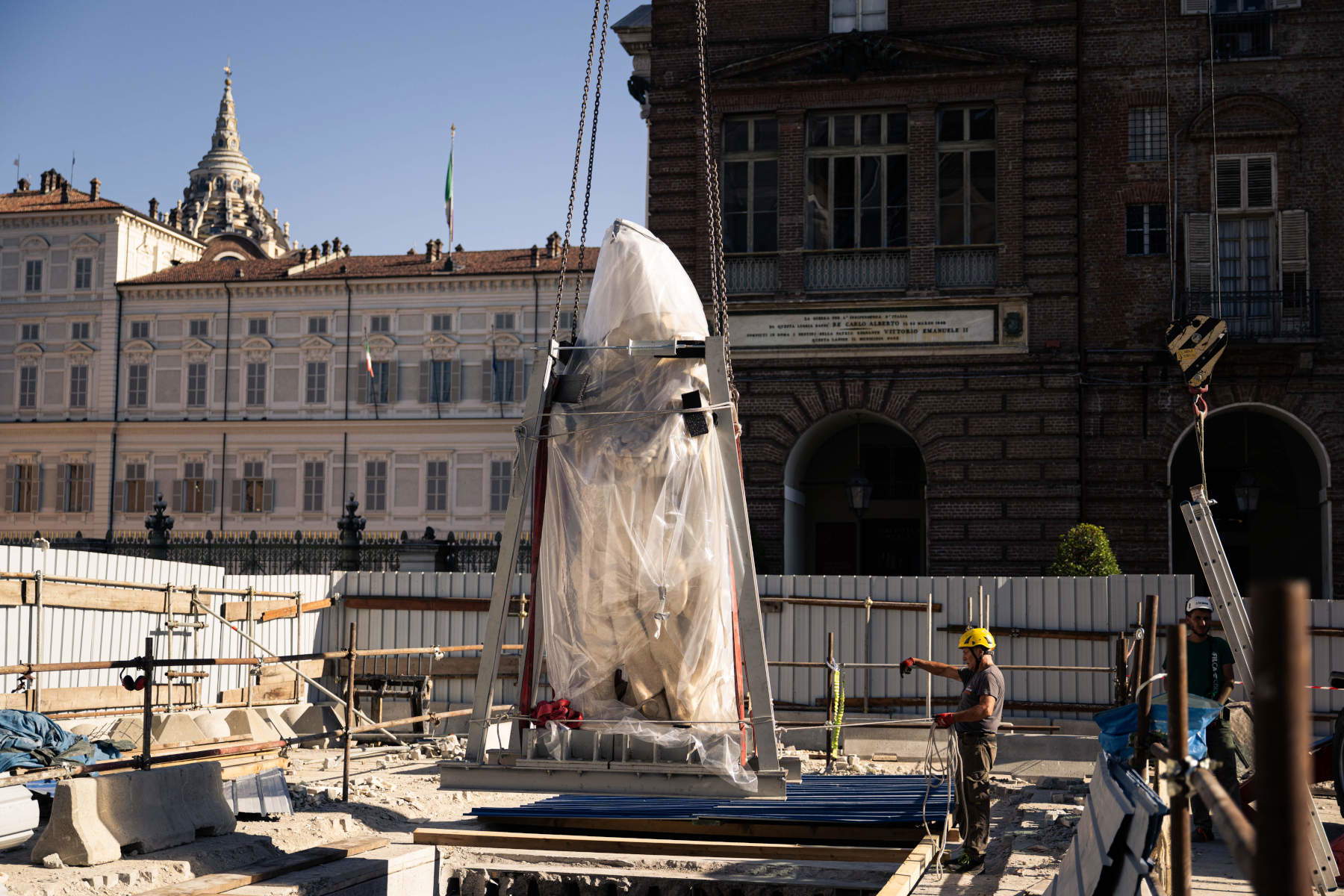
After being removed from the facade, the sculptures underwent a comprehensive restoration, consolidation, and safety stabilization process. Part of the work was also carried out inside the transparent pavilion specially erected in Piazza Castello, which allowed the public to observe the various stages of the project. This project was also made possible by the support of the CRT Foundation. The restoration focused on the marble surfaces, the consolidation of the most fragile parts, and the restoration of the works’ overall clarity, using the original material as a reference.
The restoration of the statues was part of the project dedicated to the Juvarra façade, which began in 2022 and was carried out in several phases. The first phase focused on the central section, where structural consolidation work was carried out, along with the restoration of the marble cladding and the restoration of the eleven large Baroque windows and doors. The project then continued on the two side sections of the facade, progressively completing the restoration of the entire monumental facade. This phased approach allowed for a comprehensive addressing of issues related to conservation, structural safety, and the architectural enhancement of the façade—one of the defining features of Piazza Castello and Turin’s urban landscape.
The restoration of the façade, however, constitutes only one part of the transformation program planned for Palazzo Madama. The Strategic Plan of the Fondazione Torino Musei has identified the comprehensive revitalization of the museum as one of its priorities, defining a unified project in which monumental restoration, structural consolidation, the opening of new spaces, the redesign of exhibits, and the redefinition of visitor routes are addressed as components of a single initiative. The program is divided into several functional phases that have involved—and continue to involve—the facades, the upper structures, the terrace, the interior spaces, and the visitor routes. The terrace, in particular, will be opened to the public as part of the project. The goal is to make the palace more complete and accessible throughout, allowing visitors to experience the building’s history in a continuous narrative and to connect it with the collections of the Civic Museum of Ancient Art.
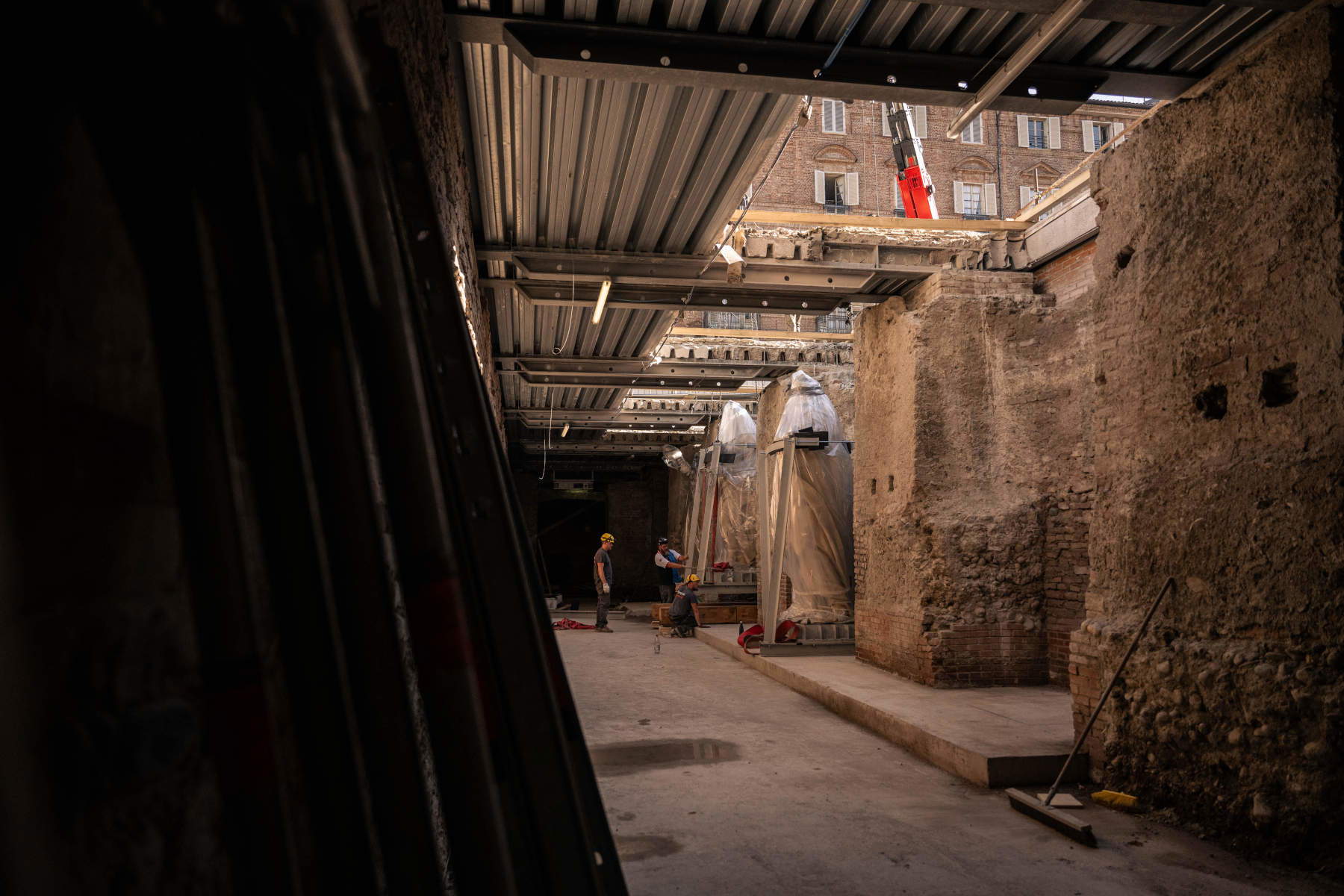
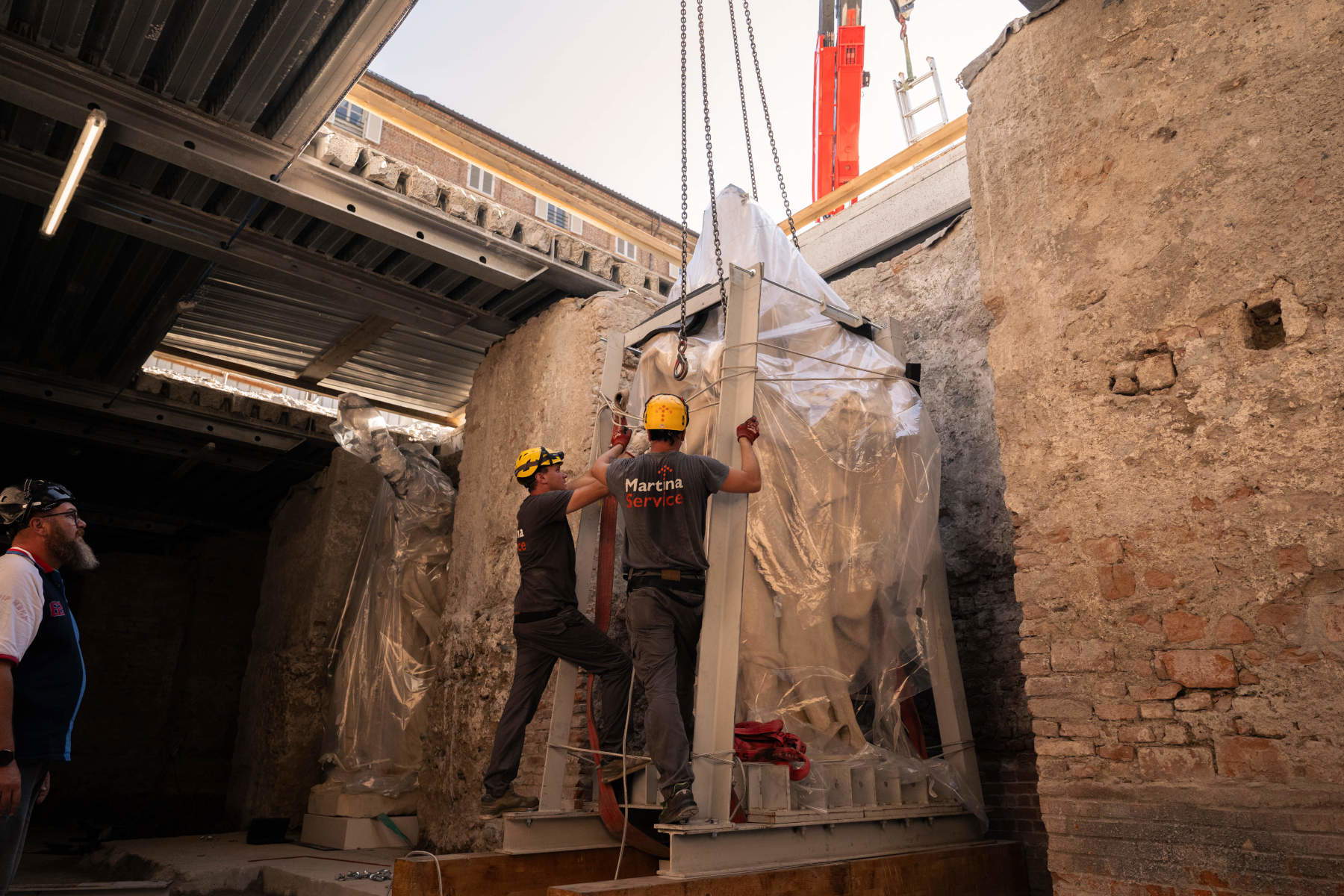
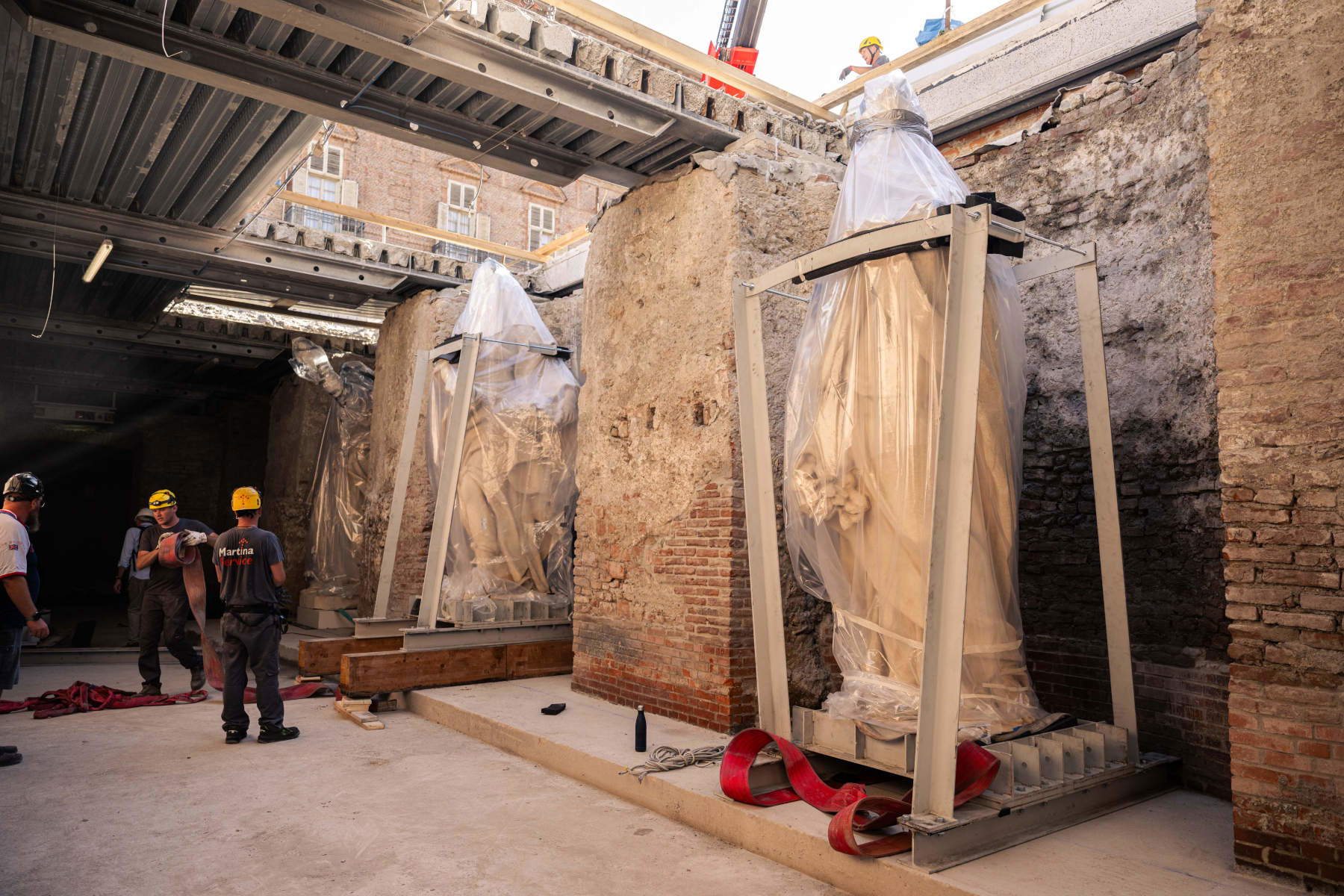
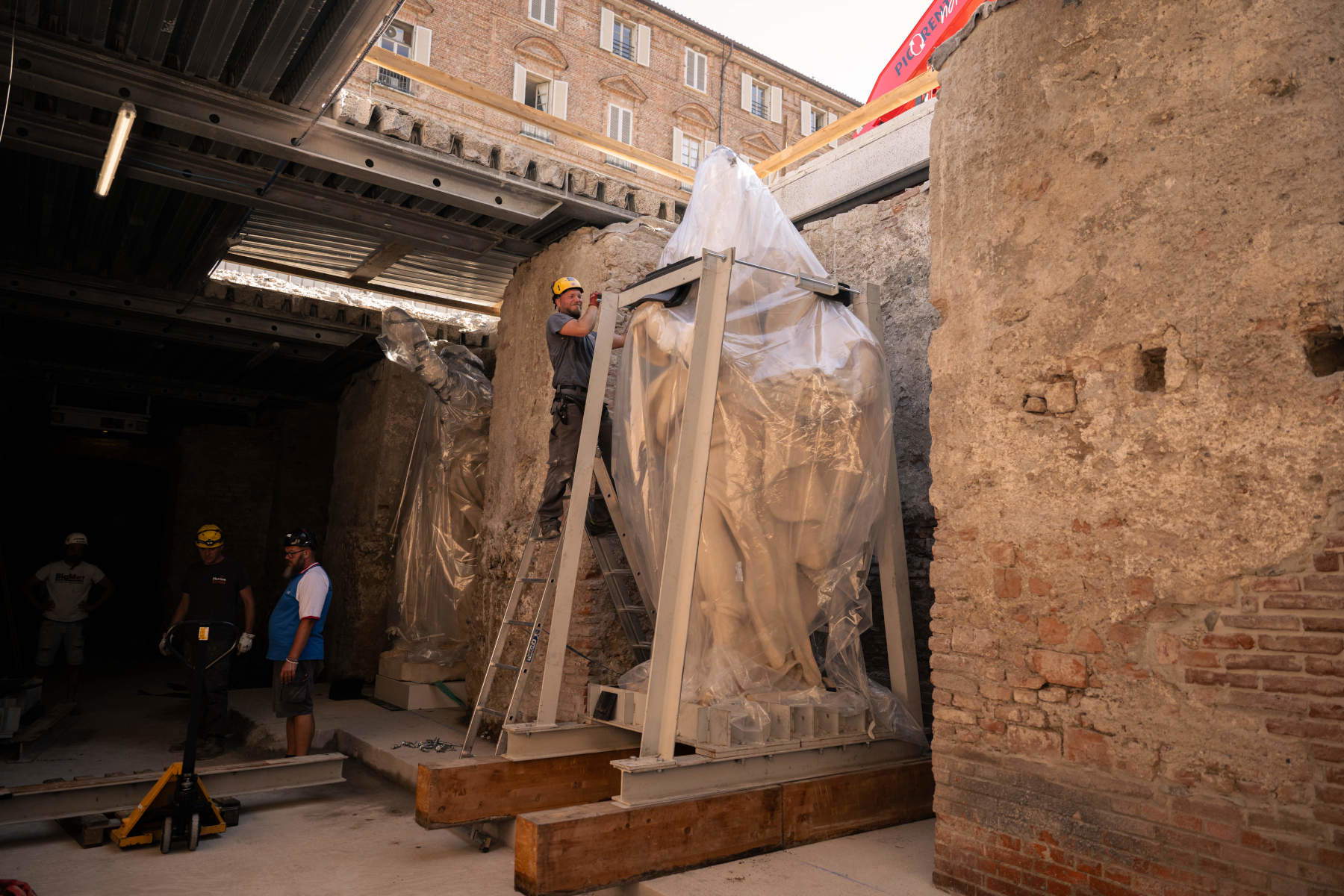
The new placement of the four statues in the Carlo Emanuele I Gallery is thus part of the overall redesign of the museum’s layout. The originals will be housed inside the palace, under conditions better suited to their preservation, while the connection to the Juvarra façade will remain intact. In fact, copies of the four statues are scheduled to be placed on the terrace in October, which will restore the facade to its original monumental configuration while keeping the originals inside the gallery.
“The relocation of the four statues represents a particularly significant milestone in the broader process of transformation and enhancement currently underway at Palazzo Madama,” states Massimo Broccio, President of the Fondazione Torino Musei. “Through its Strategic Plan, the Foundation has decided to invest in this extraordinary heritage site—a symbol of the city—not only to preserve it, but to fully restore its ability to tell the story of Turin and to open up new ways of visiting and learning about it. The restoration of the Carlo Emanuele I Gallery and the display of the large acroterial statues as museum pieces are part of this vision: they highlight monumental works, reclaim new spaces within the palace, and strengthen the connection between architecture, collections, and the city’s history. A comprehensive project of this scale—carried out in phases, from the facades, the Carlo Emanuele I Gallery, and the marvelous panoramic terrace, is made possible only thanks to the ongoing commitment of the City of Turin and the essential support of the CRT Foundation, which I would like to sincerely thank for accompanying the Turin Museums Foundation in one of the most significant projects undertaken in the recent history of Palazzo Madama. It is a process that is gradually restoring to the city a Palazzo that is more accessible, easier to understand, and increasingly capable of establishing itself as the City Museum and as one of the symbolic landmarks of Turin’s cultural identity.”
 |
| Palazzo Madama: The Four Statues of Good Government Find a Home in the Carlo Emanuele I Gallery |
Warning: the translation into English of the original Italian article was created using automatic tools. We undertake to review all articles, but we do not guarantee the total absence of inaccuracies in the translation due to the program. You can find the original by clicking on the ITA button. If you find any mistake,please contact us.