





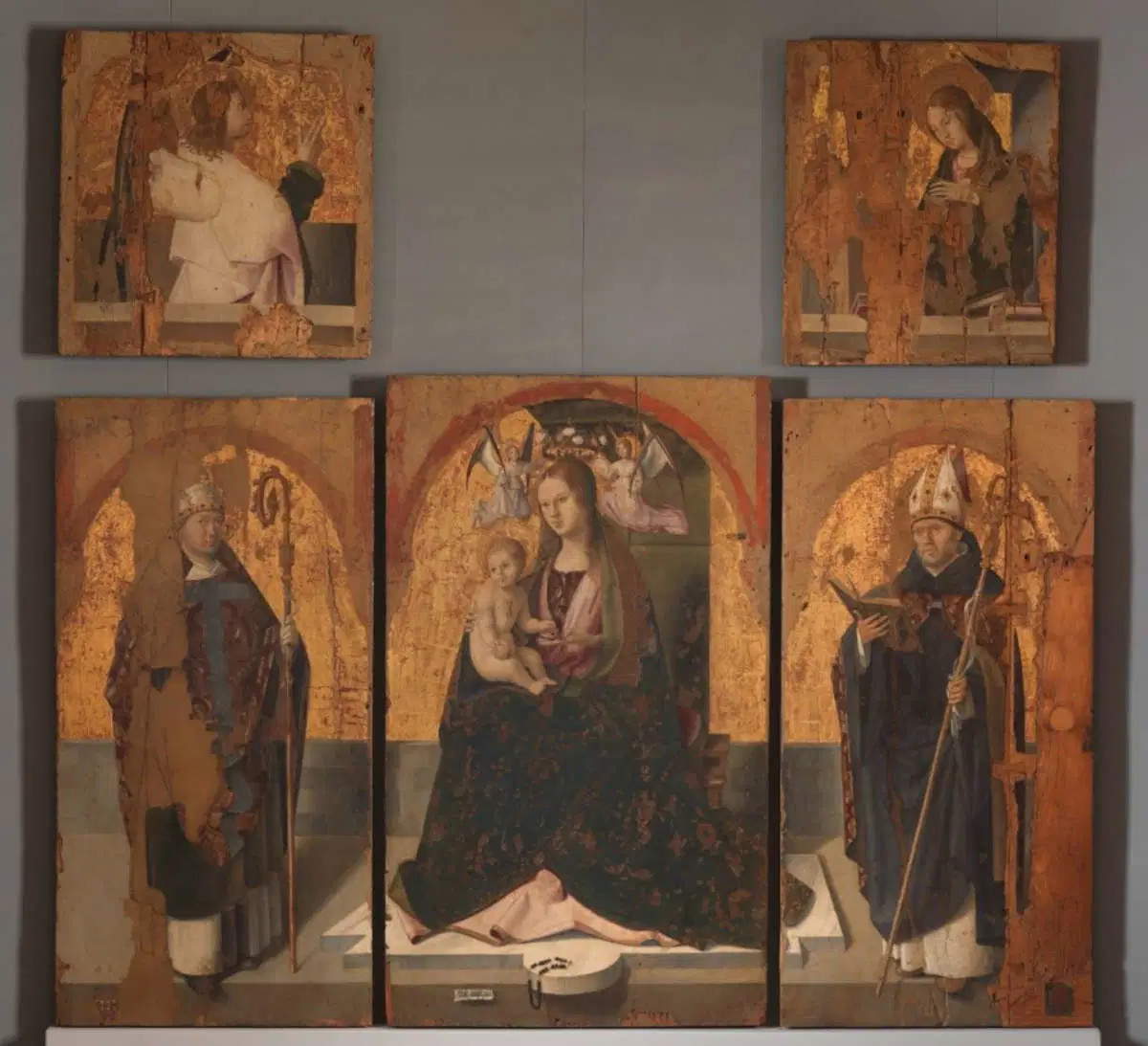
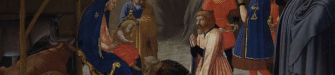
The theft of the three surviving panels from the San Gregorio Polyptych and the double-sided panel by Antonello da Messina did not come as a surprise tothe National Association of Art Historians, which issued a statement on the matter. President Silvia Mazza, in commenting on the incident, sought to dispel any notion of unpredictability, stating that bewilderment would imply an unexpected event—a factor that, in the specific case of cultural heritage security in Sicily, does not exist at all. In fact, less than two weeks before the incident, the Association had sent a formal letter to the Sicilian Regional Government, emphasizing the essential need for rigorous specialization in the field of cultural heritage. This appeal takes on dramatic significance today, especially in a context marked by the absence of the role of art historian in the recent definition of the regional professional framework.
“Art historians working for the Superintendence offices,” the association notes, “are responsible for the protection of the historical and artistic heritage, including that preserved in museums. The monitoring and safeguarding of the works, however, fall to the security and surveillance staff of cultural institutions: professionals who must possess specific skills in the areas of monitoring, prevention, and emergency management. Their duties include monitoring exhibition halls and areas, inspecting and protecting works of art, manning access points, monitoring public behavior, safeguarding buildings and the assets they contain, as well as ensuring the safety of staff and visitors. In addition, they manage procedures in the event of an alarm, report malfunctions, and prepare documentation regarding any critical issues. It is therefore clear that this is a professional role entrusted with significant responsibility for the conservation and protection of cultural heritage. In light of this need for professionalism, in the Sicilian Region, the security system for cultural institutions has been largely entrusted to employees of SAS – Servizi Ausiliari Sicilia, an in-house company in which the regional administration holds an absolute majority stake (85.13%). Among the services entrusted to the company is “unarmed security at regional offices and agencies,” which includes monitoring access, managing the opening and closing of facilities, providing initial response in emergency situations, activating security procedures, and managing alarm systems. SAS staff operate in various strategic regional sectors: in addition to healthcare facilities and administrative offices, they also work in cultural institutions, including archaeological parks, regional museums, libraries, and art galleries. A significant portion of this staff has historically come from the ASU (Socially Useful Activities) pool—workers who remained in precarious employment for years and were subsequently included in stabilization programs through specific regional hiring plans.”
The crux of the issue raised by AStArte lies in the mismatch between the required skills and the staff’s training. These employees were not selected through competitive hiring processes designed specifically for the cultural heritage sector, nor did they receive training commensurate with the sensitivity of the security duties required in a museum. In addition to the lack of specialization, there is the issue of staffing levels: the number of staff is often insufficient to meet the needs of the institutions. Confirmation of this managerial instability came a few months ago in a circular from the Regional Department of Cultural Heritage, which had to intervene urgently regarding work shifts precisely to try to address the serious difficulties in staffing the service.
Although SAS security personnel perform non-managerial security duties classified under the Sicilian Region’s Regional Collective Bargaining Agreement, a conflict with the provisions of that very agreement has emerged. Article 31 of that same regulatory text clearly establishes that the allocation of staff to the various shifts must be based on the professional skills required for each shift. It is precisely the concept of “required professional skills” that constitutes the Gordian knot of this matter. “The same contract,” explains AstArte, “also regulates the use of night and holiday shifts, establishing limits and specific allowances precisely in light of the demanding nature of a job that requires continuity, attention, and responsibility. The issue becomes even more problematic when one considers that security personnel at certain regional museums—which house other works by Antonello da Messina, along with other masterpieces—are also recruited from individuals with criminal records who are enrolled in specific rehabilitation programs. The problem certainly does not concern the personal circumstances or individual backgrounds of the workers, but rather the fact that a task of such responsibility—the surveillance of works of extraordinary historical and artistic value—requires staff who are selected, trained, and qualified according to criteria consistent with the needs of cultural heritage protection.”
President Mazza’s conclusion is an indictment of regional policies: “Entrusting the security of works of art without specific professional training,” she states, “means exposing our heritage to a level of vulnerability that cannot be considered acceptable.”
 |
| Theft of Antonello da Messina’s Works: AStArte Highlights Security Flaws |

Warning: the translation into English of the original Italian article was created using automatic tools. We undertake to review all articles, but we do not guarantee the total absence of inaccuracies in the translation due to the program. You can find the original by clicking on the ITA button. If you find any mistake,please contact us.

























 IT
IT FR
FR DE
DE ES
ES CN
CN


