



by Redazione 22/10/2026


Categories: News / Disclaimer
What if a road were much more than just a point on a map? At the National Archaeological Museum of Pontecagnano (Salerno), Mimmo Martorelli’s project has gathered the memories and emotions of residents from fifteen municipalities, transforming them into a collective work of art.


How can we tell the story of a region through the experiences of those who live there every day? That is the question that sparked “Oltre la Mappa.” This grassroots counter-mapping project—a participatory art initiative conceived by Mimmo Martorelli—concluded on October 4, 2026, at the National Archaeological Museum of Pontecagnano (Salerno).

Promoted by IPACS – Institutional & Public Coaching Services as part of the City Competent project, in collaboration with the museum, under the patronage of the Province of Salerno and six municipalities, and with the support of fifteen others (Acerno, Felitto, Montecorvino Rovella, Pontecagnano Faiano, Roccadaspide, and with the support of the municipalities of Bellizzi, Bellosguardo, Cannalonga, Cardile, Controne, Corleto Monforte, Giffoni Sei Casali, Magliano Vetere, Monteforte Cilento, Perito, Piaggine, Ottati, San Mango Piemonte, and Stio), the project presented a representation of the territory based not only on geographic coordinates, boundaries, and place names, but also on the emotions and memories of its inhabitants.
From August 18 to September 11, Martorelli traveled through fifteen municipalities in the Picentini and the inland Cilento regions, meeting with residents during a series of local events. In each town, he set up a small film set, inviting participants to describe a road that was significant to a memory, an experience, a person, an emotion, or a particular perception of the place.


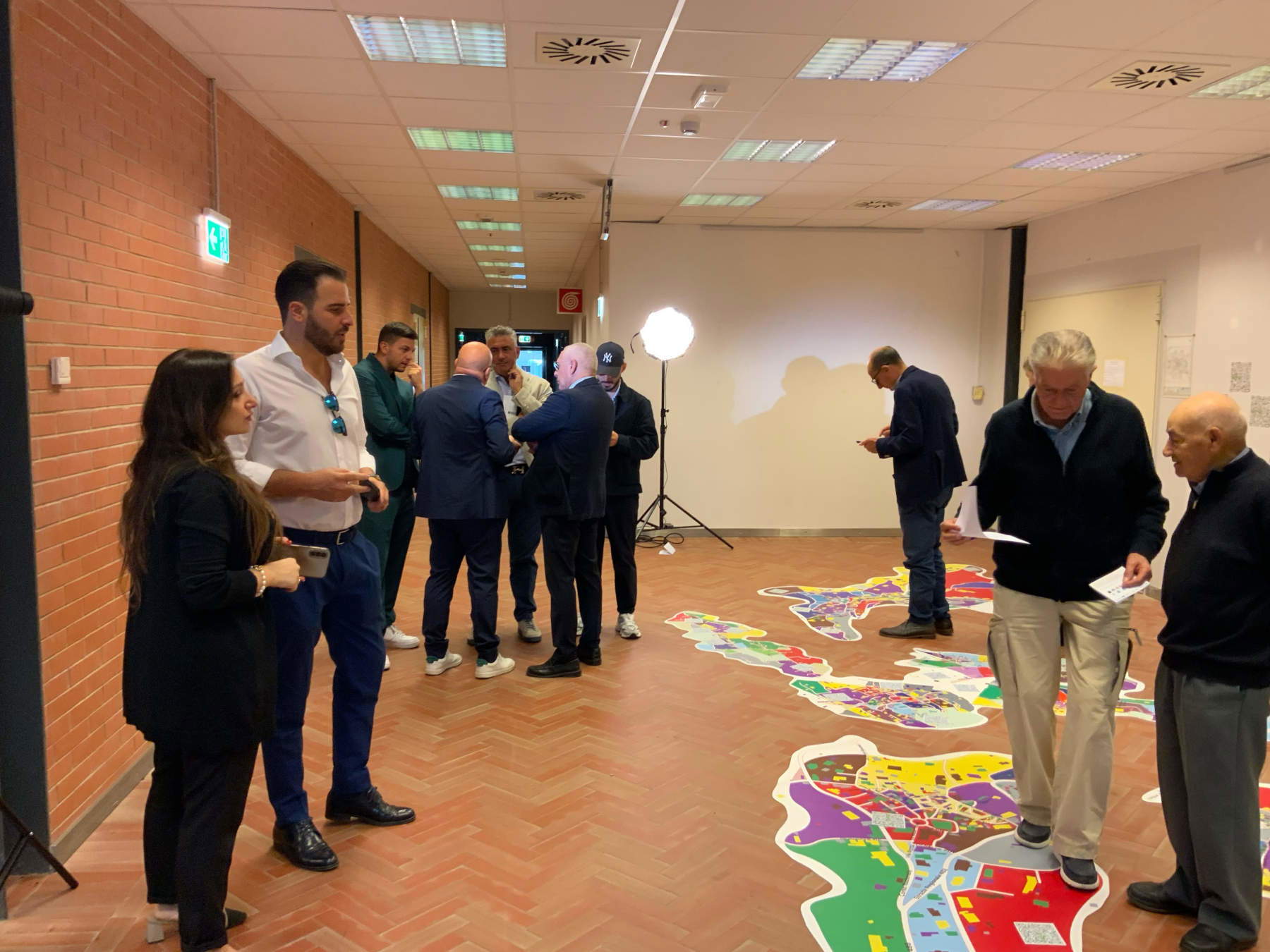
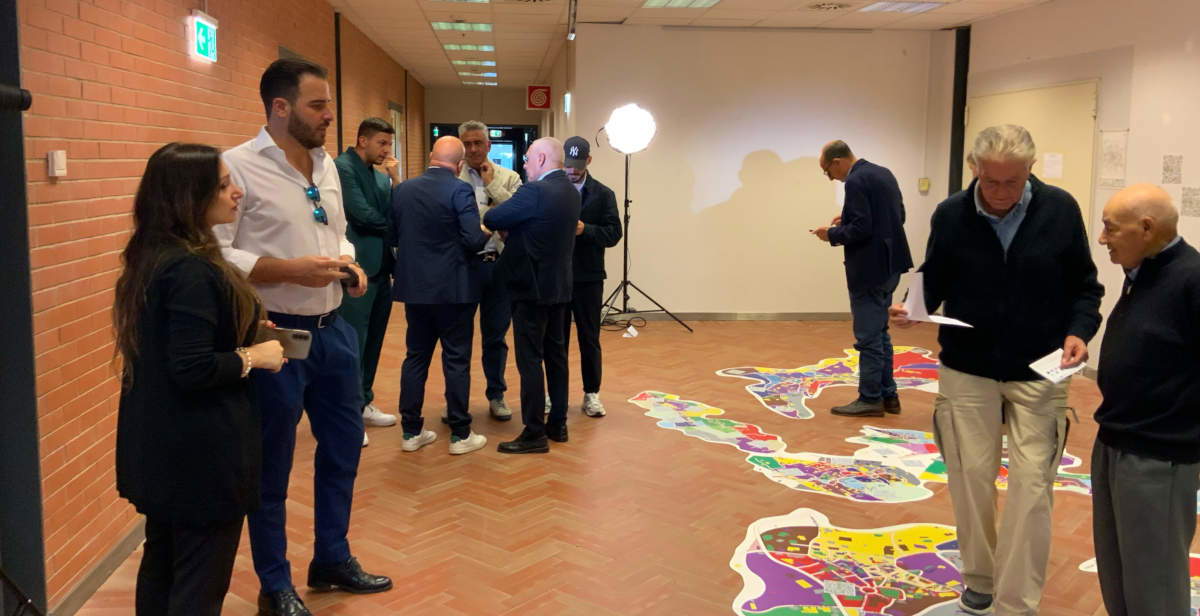
The testimonies collected were compiled into a collective work consisting of video narratives and walkable artistic maps of the participating municipalities. The choice of the archaeological museum as the final venue brought together two forms of memory: the material traces of the communities that have inhabited the territory over the centuries and the immaterial, emotional, and contemporary traces left by its current inhabitants.
The large map brought together the experiences gathered in the various locations, connecting people, memories, and identities. Visitors were able to physically walk across it and use the QR codes placed next to the depicted locations to hear the citizens’ testimonies directly. The geographical dimension was thus transformed into a space to explore and listen to, constructed through individual and collective stories.
The project also raises questions about the role of art in public life: who helps define a territory’s identity, and which stories are recognized as part of its collective memory? Through the direct involvement of residents, *Oltre la Mappa* shifted the focus from geographical representation to the opportunity for citizens to tell the stories of the places where they live, making artistic practice a tool for participation and dialogue.
Statements
“Participatory art transforms citizens from mere spectators into co-authors of the work. Their stories become the material with which to construct a new geography of the territory, made up of emotions, relationships, memories, and a sense of belonging,” explains artist Mimmo Martorelli.
“Artistic action within an archaeological museum,” comments curator and art critic Massimo Sgroi, “the quintessential place for preserving the material traces of history, takes on a strong poetic and cultural significance. The testimonies of citizens bring a living, contemporary memory into the museum, creating a dialogue between the traces of the past and those of the present.”
“Oltre la Mappa represents an innovative way to promote the identity of the region and its communities, as well as its cultural heritage, and to contribute to a greater awareness of the potential of the Salerno area,” says the president of the Province of Salerno, Giuseppe Parente.
“Memory and identity are fundamental elements for promoting our region. Directly involving citizens means valuing their experiences and their daily relationship with the places they call home,” emphasizes the mayor of Pontecagnano Faiano, Giuseppe Lanzara.
“The archaeology of our region is represented in the museum through the material traces of past communities,” concludes Serena De Caro, director of the National Archaeological Museum of Pontecagnano. “With ‘Oltre la Mappa,’ those traces enter into a dialogue with the emotional dimensions of contemporary communities: the museum thus also becomes a space where historical memory, identity, and the present converge.”
 |
| What if the people who live in a place were the ones to draw a map of it? What’s happening in Pontecagnano |
Warning: the translation into English of the original Italian article was created using automatic tools. We undertake to review all articles, but we do not guarantee the total absence of inaccuracies in the translation due to the program. You can find the original by clicking on the ITA button. If you find any mistake,please contact us.