



by Giovanni Negri da Brusciano 17/11/2026


Categories: Opinions / Disclaimer
Created after the 1980 earthquake at the initiative of Lucio Amelio, the extraordinary collection of contemporary art housed at the Royal Palace of Caserta could find a new home at the Royal Palace of Carditello to launch a major new museum complex. The proposal by Giovanni Negri from Brusciano.


The Terrae Motus contemporary art collection is one of a kind: it is the largest body of work conceived around a single historical event. The collection consists of more than seventy works inextricably linked by the earthquake of November 23, 1980, which struck Irpinia (Avellino) and other cities in southern Italy. Lucio Amelio (Naples, 1931–1994), a Neapolitan gallery owner, like a modern-day Pliny the Elder, was so deeply moved by the 1980 earthquake that he decided to examine it more closely: through the lens of contemporary art. He therefore asked his artist friends to contribute. Sixty-six artists from all over the world accepted the invitation, working on that single theme. Like a chimera, the Terrae Motus collection is a perfect whole made up of many different parts. The works, in fact, encompass the major avant-garde movements of the 20th century, ranging from Pop Art to Arte Povera, from Conceptual Art to Minimalism.

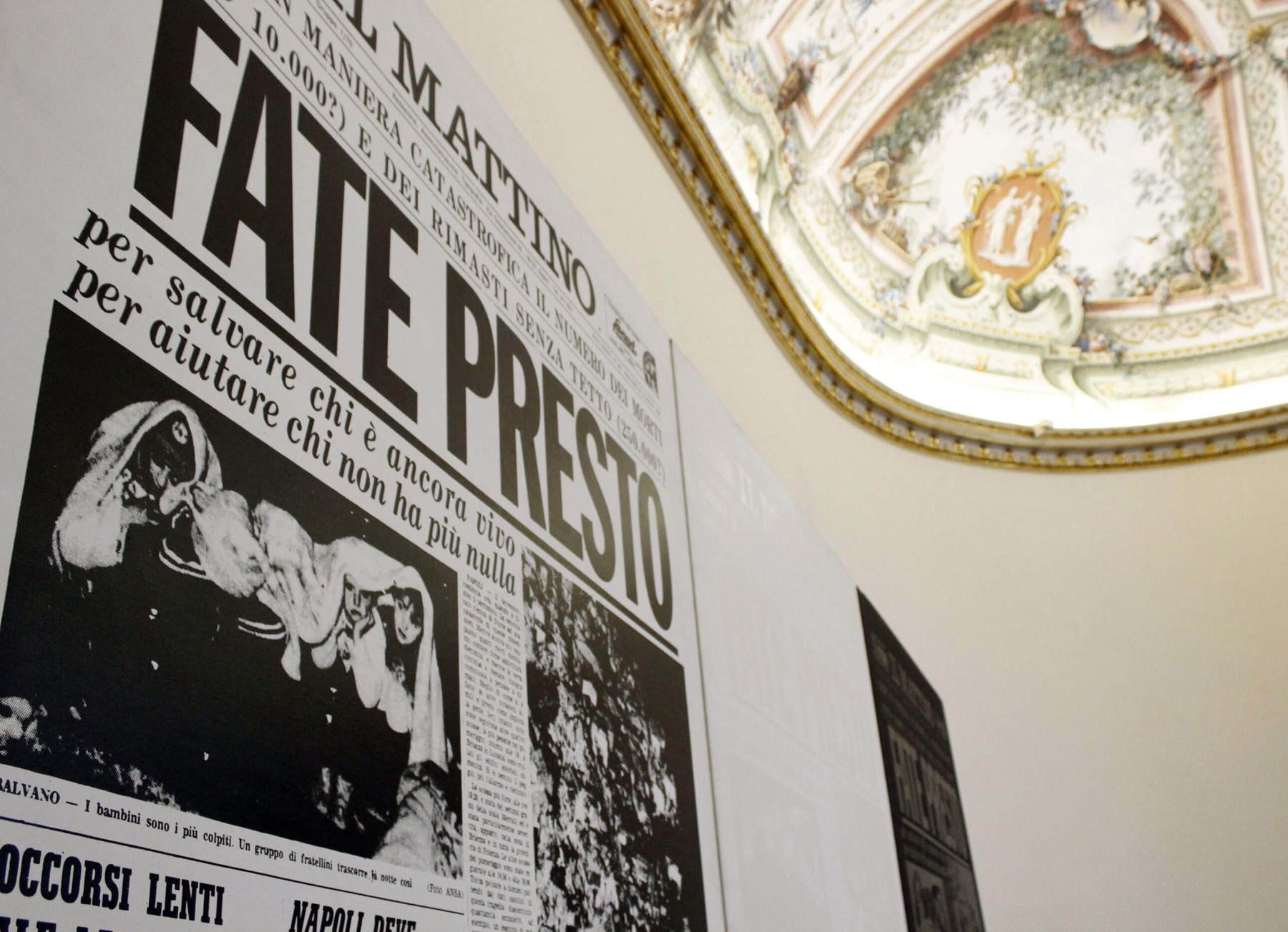
Just as the eruption of 79 A.D., which buried Pompeii while preserving its soul intact in history, the destruction caused by the 1980 earthquake finds its counterpart in this artistic intervention. In fact, Lucio Amelio’s collection is not a memorial to a tragedy, but a representation of the profound relationship between human existence and the mystery of nature.


*Terrae Motus* was presented to the public in 1984 at Villa Campolieto in Herculaneum; it was subsequently taken on a tour around the world before arriving at the Royal Palace of Caserta, where it is now housed. In a 1993 video interview with Mario Martone, Lucio Amelio stated that *Terrae Motus* and the other paintings in his collection were intended for a Neapolitan museum. Subsequently, amid controversy with local politicians, the works were bequeathed to the Royal Palace of Caserta “on the condition that they be on permanent display, as is currently the case,” Amelio wrote in his will.

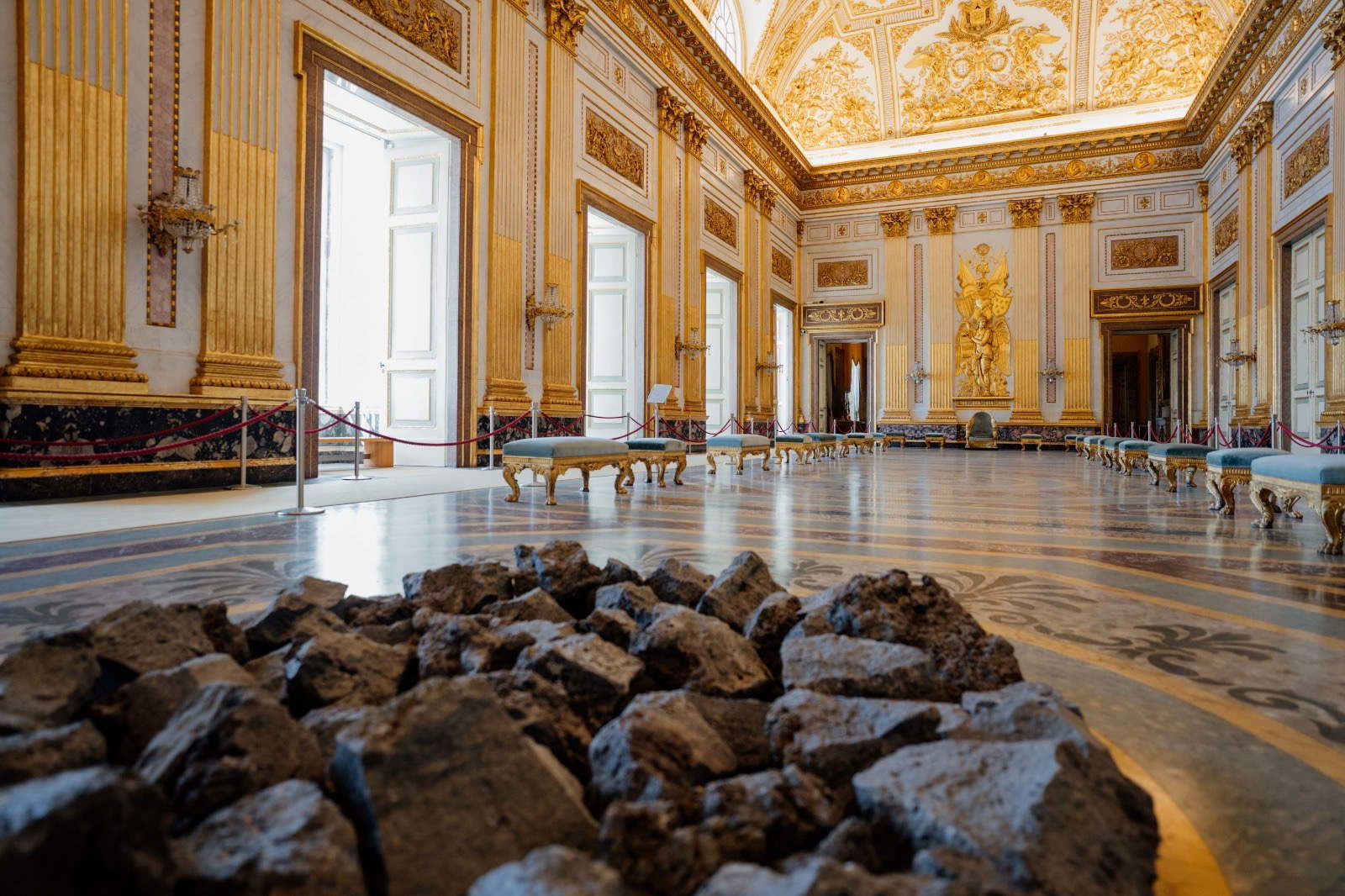
In recent years, the Royal Palace of Caserta has repeatedly curated and reimagined the collection among the royal furnishings. Just a few days ago, news broke of the appointment of a commission of experts dedicated exclusively to the Terrae Motus collection, marking an important step forward in promoting and enhancing the enjoyment of these works. As an enthusiast of art and the local area, I am therefore making a personal proposal: to exhibit “Terrae Motus” at the Royal Palace of Carditello (Caserta), located just a few minutes from the Royal Palace of Caserta. Purchased by Minister of Culture Massimo Bray in 2014, Carditello is effectively an annex of the Vanvitellian Royal Palace and could become so by right as part of a single, large museum complex: “The Royal Palaces of Caserta and Carditello.”
An agreement between the Royal Palace of Caserta—which holds the collection as a bequest—and the Royal Palace of Carditello—which currently contains no furnishings—could fulfill Amelio’s dream: to present the entire collection in its entirety. At the same time, it would also celebrate the figure of the important Neapolitan gallery owner, who was able to capture the spirit of the 20th-century avant-garde and bring it from New York to Southern Italy. The works in the collection—by artists such as Warhol, Beuys, Kiefer, Twombly, Kounellis, Mapplethorpe, Haring, Paladino, Vedova, and many others—would find an ideal setting within the spaces of the Royal Palace of Carditello to express their full impact. Finally, the partnership between the Terrae Motus collection and the Reggia di Carditello would create the largest and most prestigious contemporary art museum complex in Italy.
Warning: the translation into English of the original Italian article was created using automatic tools. We undertake to review all articles, but we do not guarantee the total absence of inaccuracies in the translation due to the program. You can find the original by clicking on the ITA button. If you find any mistake,please contact us.