




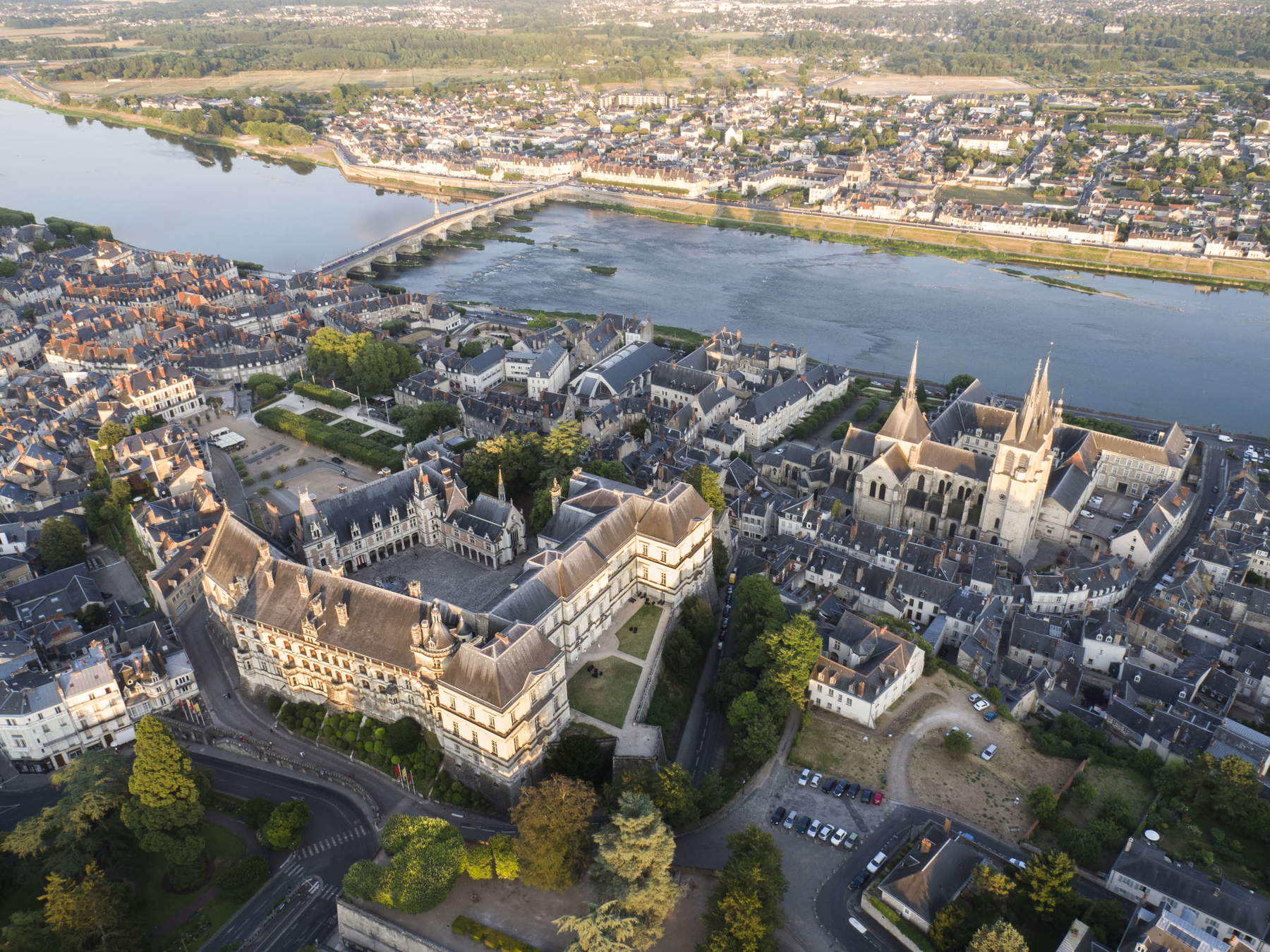
There are places where a work of art almost seems to take on a different character when it is moved from a museum and placed in a historic setting, in a garden, in front of a building, or within the landscape for which it was conceived. This is the perspective from which the fourth edition of the AR(t]CHIPEL festival, in the Centre-Loire Valley region, will create a lengthy itinerary dedicated to Alexander Calder (Philadelphia, 1898 – New York, 1976) in the fall of 2026. Not an exhibition confined to a single building, but a project spread across fifteen venues, including castles, museums, contemporary art centers, and spaces directly linked to the artist’s history. Starting October 15, Calder’s works will thus enter into dialogue with some of the region’s most significant sites: from the Royal Castle of Blois to Chambord, from Azay-le-Rideau to the Château du Rivau, from the museums in Tours, Orléans, Chartres, and Issoudun to the contemporary art centers in Tours, Amilly, and Dreux, all the way tothe Atelier Calder in Saché, a place with which the artist had a particularly close relationship.
The initiative aims to highlight a region known primarily for its castles and the Loire landscape, but which AR(t]CHIPEL proposes to interpret also as a territory of artistic production and experimentation. The relationship between contemporary art and historical heritage is, in fact, the guiding principle around which the festival has been structured since its inception. The result of a collaboration between the Centre-Val de Loire region and the Centre Pompidou, AR(t]CHIPEL invites visitors each year to seek out art beyond traditional exhibition circuits, entering artists’ studios and encountering works in both cities and the countryside. For its fourth edition, this principle finds a particularly fitting protagonist in Calder. The American artist lived and worked in France for many years and established one of his main studios in Saché, in the Touraine region. The works scattered throughout the region thus allow us to connect his artistic exploration with places that are not merely a backdrop but help define the experience of the sculptures.
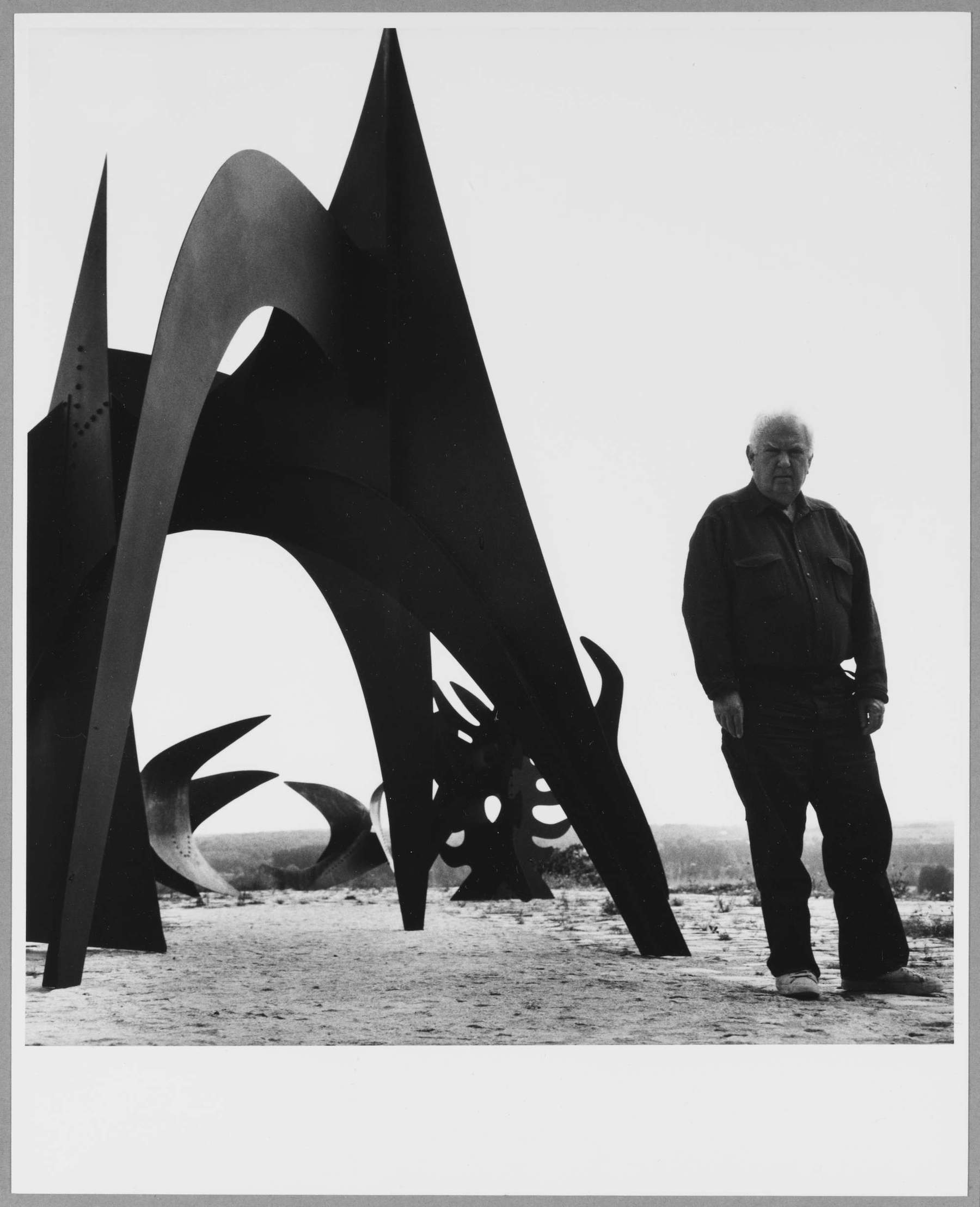
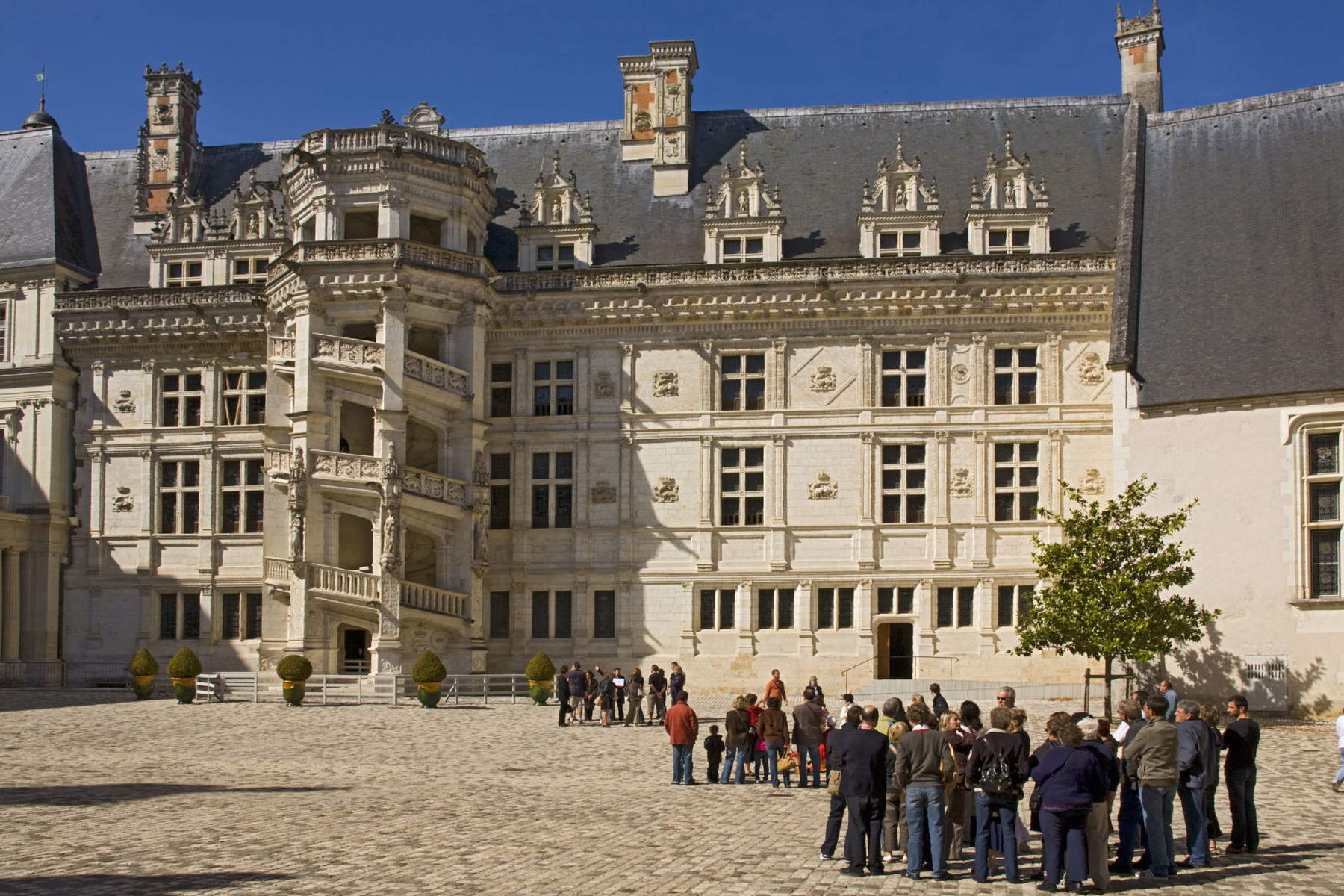
One of the most striking examples is the Château de Blois. In the main courtyard of the royal residence, *Black Flag*—one of the last monumental works created by Calder in his studio in Saché—will be installed. The sculpture stands over seven meters tall and, through the interplay of solid forms, voids, and large black surfaces, alters how it is perceived depending on the vantage point from which it is viewed. Set against the castle’s Renaissance architecture, *Black Flag* thus introduces a radically different element without overshadowing the site that hosts it. On the contrary, this juxtaposition makes both the sculpture’s structure and that of the building more clearly discernible. The viewer’s movement becomes part of the experience of the work: with every shift in position, the relationships between the surfaces, the empty spaces, and the surrounding architecture change. Blois is also a place deeply rooted in French history. The castle served as the residence of seven kings and ten queens of France and was also linked to Catherine de’ Medici, who died here in 1589. The placement of Calder’s work in the Cour d’Honneur thus creates an overlap between different periods in the site’s history, from the Renaissance to 20th-century sculpture.
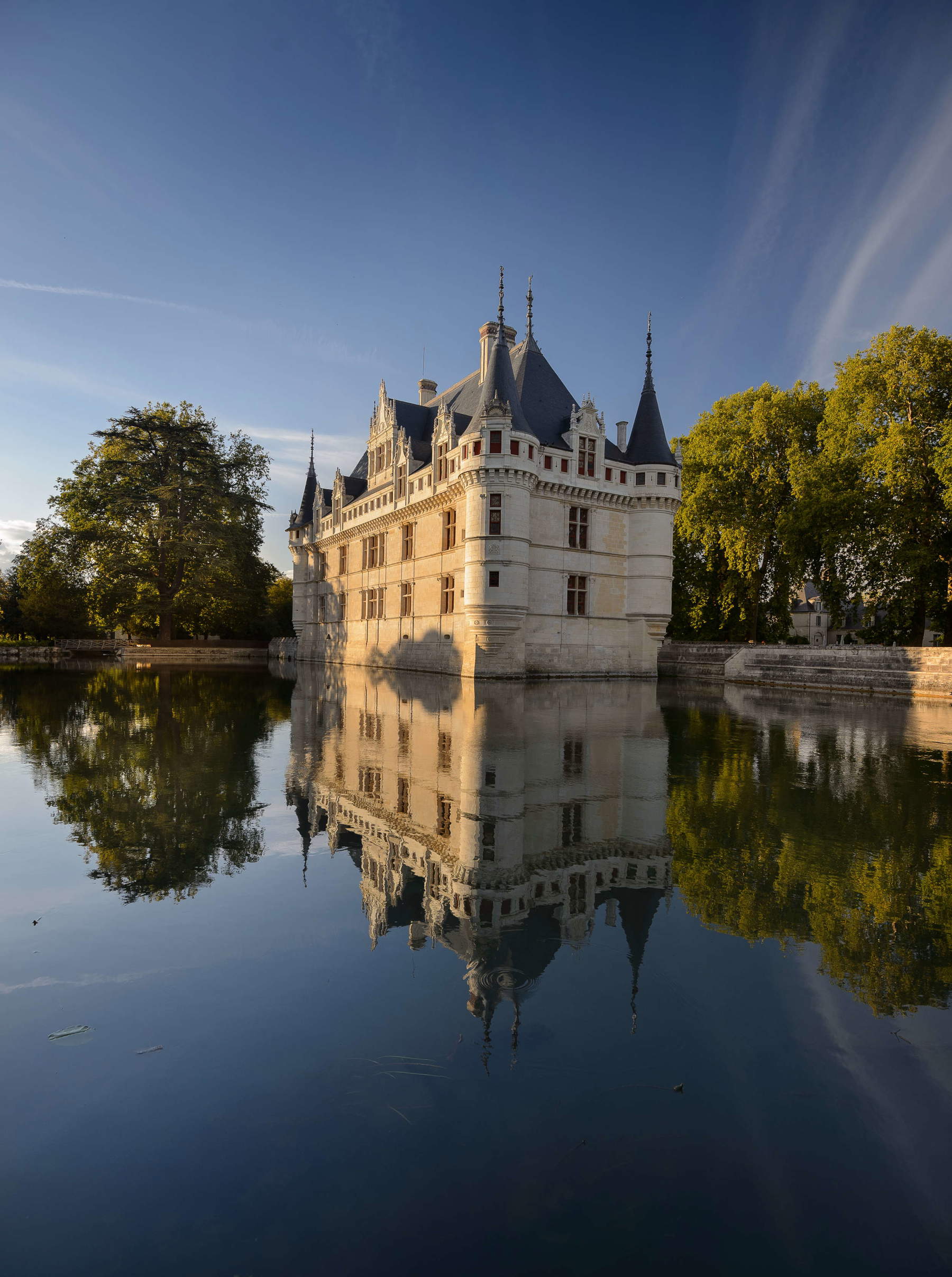
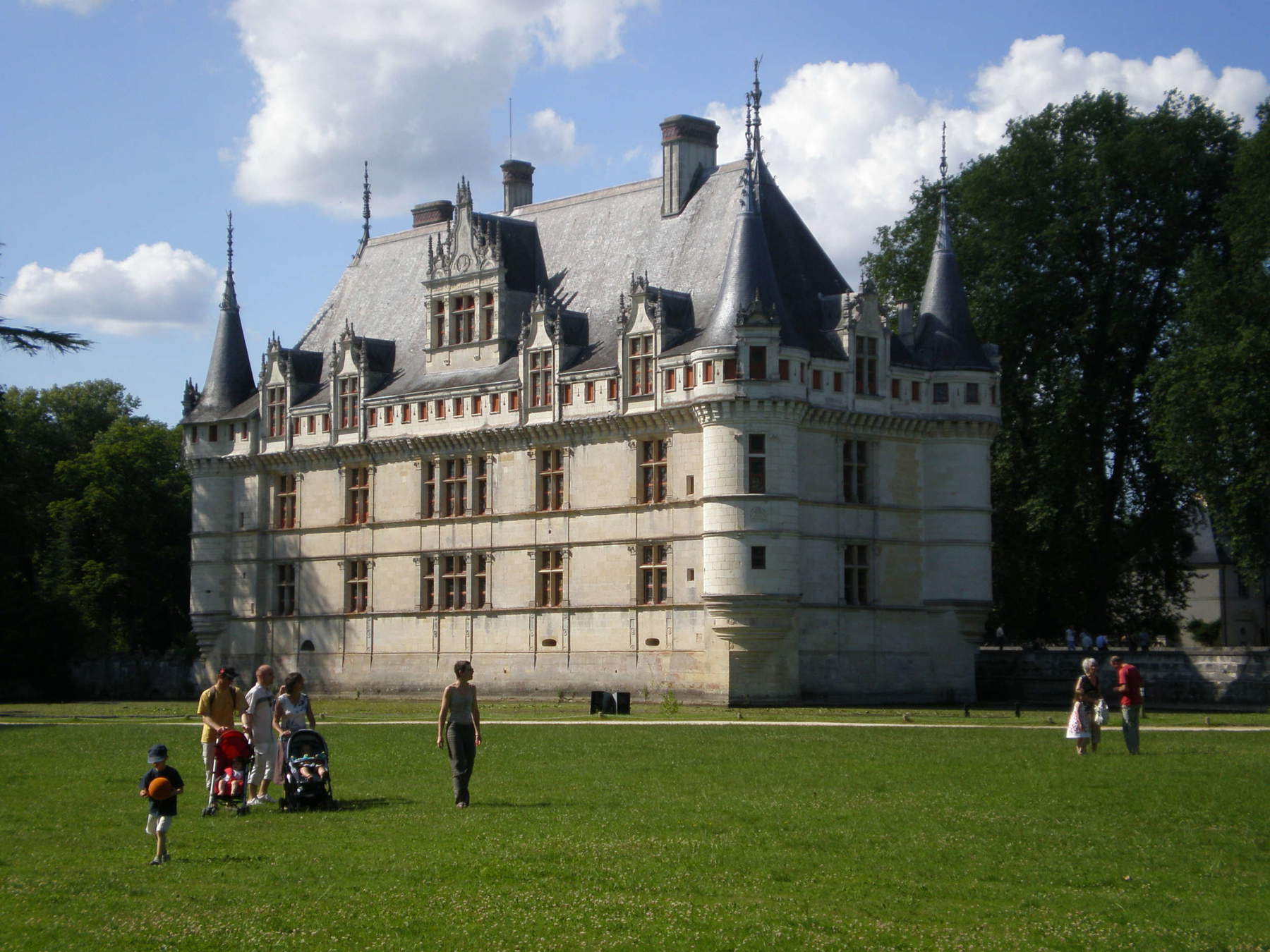
Another particularly significant dialogue will be with the Château d’Azay-le-Rideau, where Reims Croix du Sud, a monumental work by Calder, will be presented. Here, the sculpture will be set in relation to the Renaissance architecture and the castle’s tree-lined park, in a manner consistent with the overall logic of AR(t]CHIPEL: not to separate the contemporary from the heritage, but to bring together different artistic languages and eras within the same space.
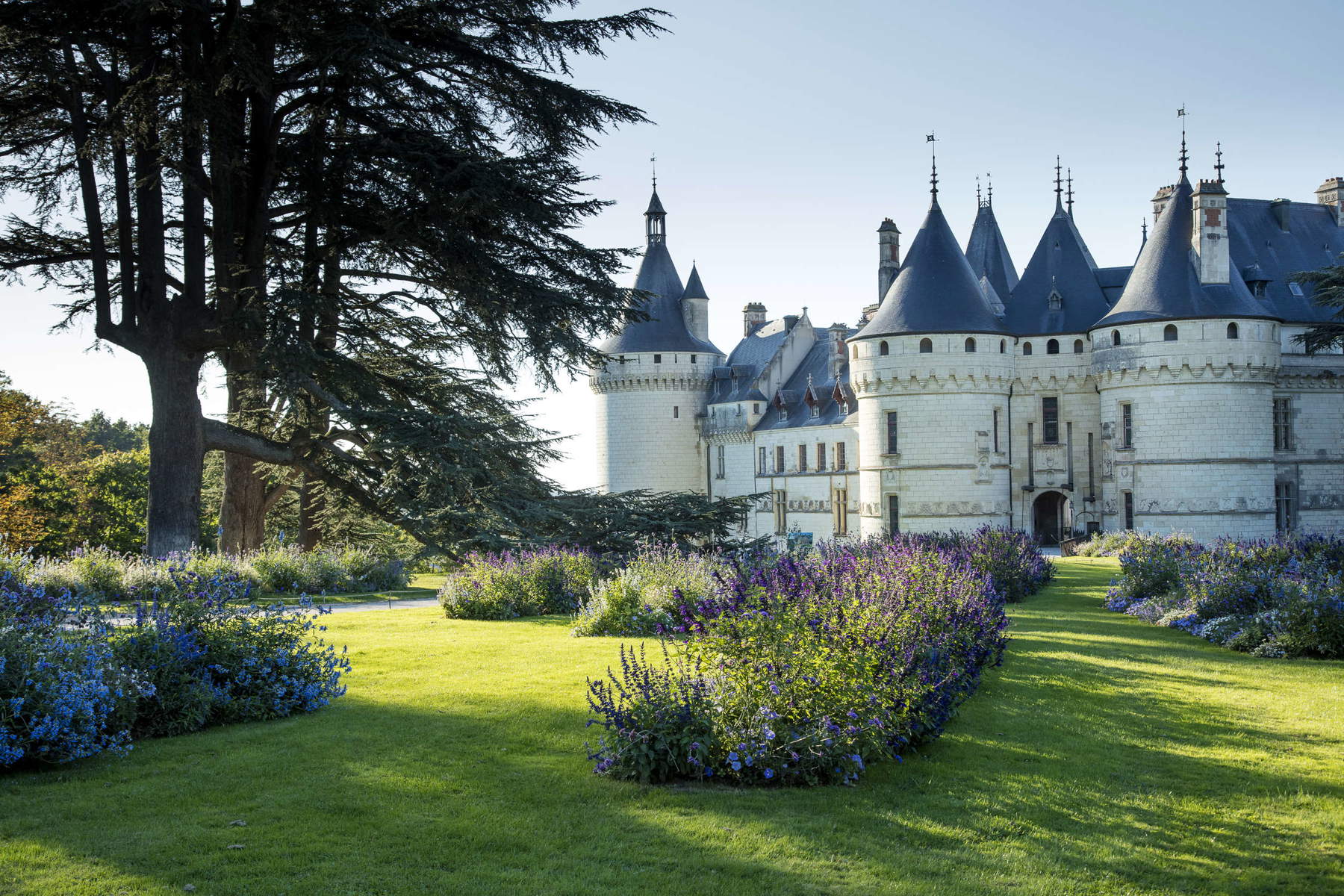
At Chambord, on the other hand, two monumental “stable-mobiles” created by Calder in the 1970s will be placed in the castle’s French-style gardens. These are *Théâtre de Nice*(1970) and *Horizontal*(1974), works conceived for urban public spaces and now transferred to a completely different context. The juxtaposition with the garden’s geometry and the architecture of Chambord will allow visitors to view the sculptures in relation to a landscape constructed according to principles very different from those of modern art.
The tour continues to the Château du Rivau, where the documentary film *Le Grand Cirque Calder 1927*, directed by Jean Painlevé in 1953, will be screened alongside animal sculptures from the 1930s. The film offers a glimpse into a particular phase of the artist’s creative exploration and his famous “little circus,” constructed with miniature figures and objects.
In Saché, however, the relationship with Calder takes on a personal and biographical dimension. The artist began settling in the village in the 1950s and, about ten years later, had a large studio built with an attached house. As a testament to his connection to the place, he left the municipality a monumental sculpture, *Totem Saché*(1974), which still stands in the town square. Today, the Atelier Calder also serves as an artist residency: since 1989, it has hosted visiting artists, and in the fall of 2026, it will open its doors to showcase the work of Mimi Park during her residency.
While Saché offers a glimpse into the place where Calder worked, the region’s museums provide a comprehensive overview of the breadth of his artistic exploration. The Musée des Beaux-Arts in Tours will exhibit a collection of wire works created at the start of the artist’s Parisian career in the 1920s. The linear lightness of these works offers a glimpse into a fundamental phase in the development of Calder’s artistic language, prior to the large kinetic sculptures that would later cement his fame.At the Hôtel Goüin, also in Tours, visitors will be able to view the sculpture *Untitled* in the courtyard, commissioned in 1973 for the University Institute of Technology in Tours, where it is normally located. Inside the building, works on paper—ranging from gouaches to engravings—will be on display, along with photographs of the artist in his studio in Saché. The CCCOD, the Centre de Création contemporaine Olivier Debré in Tours, will feature three monumental mobiles and stabiles in the nave, flanked in the black gallery by a selection of seven artists who participated in the Atelier Calder residency program. The relationship between Calder and artists of subsequent generations thus becomes an integral part of the exhibition. In Amilly, at Les Tanneries, the focus will instead be on the transition from concept to finished work. In the Grande Halle, models of stabiles will be displayed alongside the final works—whether physical pieces or reproductions—allowing visitors to observe the transformation of the original design into a monumental realization.
Furthermore, in Orléans, the Musée des Beaux-Arts will present a particularly extensive selection, including a collection of jewelry, rare sculptures, ink drawings, and gouaches from the 1930s. In the same city, the FRAC Centre-Val de Loire will present the “Circus” project, which will feature the work of architect and urban planner Patrick Bouchain—creator of numerous circus tents— and the graphic design of Fanette Mellier, alongside films in which Calder presents his small traveling circus, created in the 1920s during his first stay in France. The Musée des Beaux-Arts in Chartres is also participating in the exhibition with works that offer a glimpse into two distinct periods and aspects of the artist’s creative exploration. A large collection of drawings, gouaches, ink drawings, and watercolors from the 1960s and 1970s will be on display, along with two “Stables” and a “Standing Mobile” installed in the chapel space. In Bourges, meanwhile , the Estève Museum will present the monumental, recently restored stable Caliban, placing it in dialogue with the work of Maurice Estève (both artists, in fact, had studios in the region). Caliban was commissioned by the French government in 1964 for the Maison de la Culture in Bourges and is now part of the collections of the Centre national des arts plastiques. It is one of four monumental sculptures by Calder located in the region. Finally, the Hospice Saint-Roch Museum in Issoudun will bring together a significant collection of mobiles—the works that, more than any others, have helped reshape the history of 20th-century sculpture by introducing actual movement as an integral component of the artwork.
This itinerary is complemented by a program linked to Amboise, where the exhibition *Beyond the Line: Contemporary Resonances Following Alexander Calder and Max Ernst* will also serve as an opportunity to present the recent acquisition of Max Ernst’s *Petite Tortue *. The city will also highlight two public sculptures by the two artists that belong to the State and are held by the Centre national des arts plastiques: Ernst’s fountain *Aux cracheurs, aux drôles, au génie*(1967–68) and *Crinkly*, created by Calder in 1969.
The project dedicated to Calder thus aims to trace the artist’s evolution through different techniques, periods, and scales: from drawings to photographs, from jewelry to models, from small objects to the miniature circus, all the way to large-scale sculptures intended for public spaces; but above all, it aims to highlight how the meaning of these works can shift as they interact with different architectures and landscapes. This is the principle that unites the fifteen venues: the sculpture is not isolated from its setting but is used to reinterpret it. Renaissance castles, gardens, cities, and contemporary buildings thus become part of the experience of the works.
Alongside the Calder exhibition, AR(t]CHIPEL is also presenting a special exhibition dedicated to Max Ernst in Chaumont-sur-Loire. The exhibition *De Natura*, featuring works from the collections of the Centre Pompidou, will be on view from October 16, 2026, to February 28, 2027, at the Domaine de Chaumont-sur-Loire. The choice of venue is no coincidence: for years, the Domaine has been one of Europe’s leading centers dedicated to the relationship between art, gardens, and landscape, hosting exhibitions and projects that explore the connection between contemporary creation and the natural world. In this context, Ernst is presented from a perspective that spans his entire body of work: nature as the material of the imagination.
When discussing Max Ernst, attention often focuses on Surrealism, collage, the techniques he invented, or the worlds populated by fantastical creatures. Nature, however, accompanies the artist’s entire career and constitutes one of his primary fields of exploration. De Natura therefore proposes interpreting Ernst’s works not simply as representations of the landscape, but as an investigation of living things and their transformations. Nature is not merely what the artist observes: it is something that is altered, transfigured, and blended with the imagination.
The comparison with Chaumont-sur-Loire makes this perspective particularly significant: the works from the Centre Pompidou are, in fact, entering a place where the relationship between art and nature is already part of the Domaine’s very identity, and the exhibition thus aims to become an opportunity to reinterpret the region’s landscapes and gardens through the eyes of an artist who has transformed the natural world into one of the great realms of his own imagination. Calder and Ernst are therefore presented within the same festival without being confined to a single artistic language: on the one hand, there is Calder’s sculpture, which introduces movement, balance, and real space into the sites of the Loire Valley; on the other, there is nature transformed by Ernst’s imagination. Two distinct paths, united by their connection to a region where both artists lived and worked.
It is this relationship with the territory that forms the core of the fourth edition of AR(t]CHIPEL. The Loire Valley is presented not only as a concentration of historical monuments, castles, and landscapes, but as a place where heritage and contemporary artistic production can interact. The project also fits into the cultural vision looking ahead to Bourges 2028, when Bourges will be the European Capital of Culture. The initiative dedicated to Calder and Ernst represents, in the organizers’ view, one of the milestones in the cultural momentum that will carry the region toward that event.
|
| Calder in the Loire Valley: Fifteen Places to Rediscover the Artist |

Warning: the translation into English of the original Italian article was created using automatic tools. We undertake to review all articles, but we do not guarantee the total absence of inaccuracies in the translation due to the program. You can find the original by clicking on the ITA button. If you find any mistake,please contact us.



















 IT
IT FR
FR DE
DE ES
ES CN
CN


